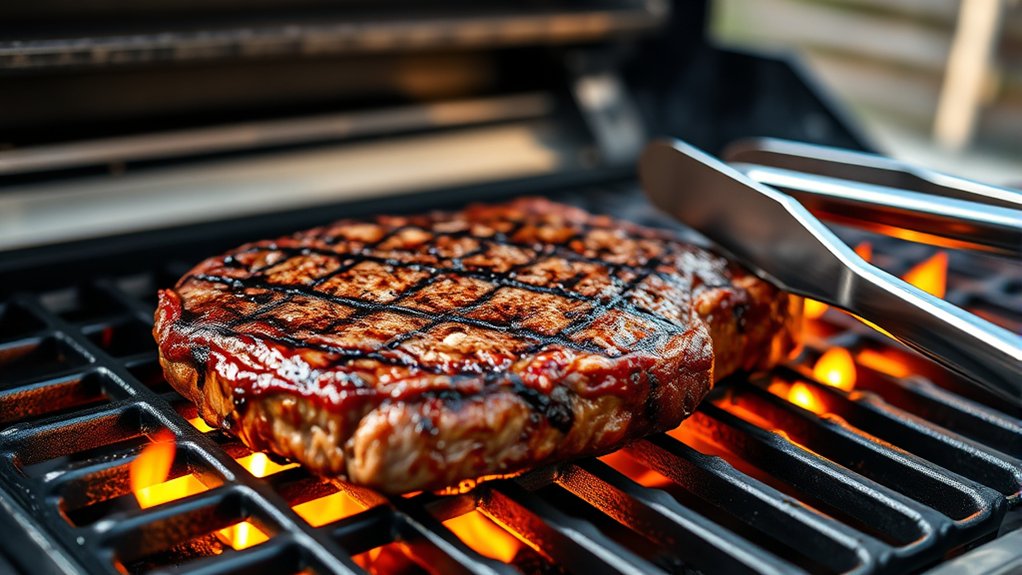
5 Simple Steps to Grill Ribeye Steak Perfectly on a Gas Grill
Many people love a perfectly grilled ribeye steak but struggle to get that ideal sear and juicy interior at home. You’re not alone—grilling steak to perfection can be tricky, especially if you’re new to gas grills. But with a few simple steps, you’ll be turning out restaurant-quality steaks in no time.
Start by marinating your ribeye with olive oil, garlic, or balsamic vinegar, then season generously with salt, pepper, and herbs.
Preheat your gas grill on high, creating a two-zone setup for searing and indirect cooking.
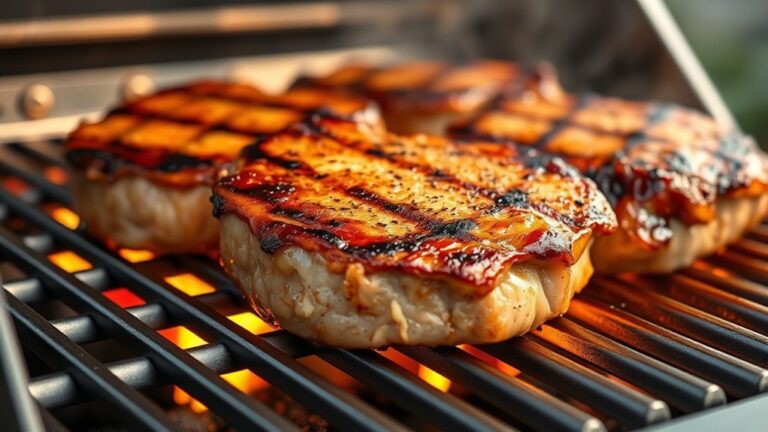
Sear the steak for 2-3 minutes per side, then move it to indirect heat until it reaches your desired doneness, checking temp with a thermometer.
Rest the steak briefly before serving for maximum flavor—continue on for more essential tips.
Key Takeaways
- Preheat your grill to 450-500°F and set up a two-zone cooking area for searing and indirect cooking.
- Season the steak generously with salt, pepper, herbs, and marinate if you like. Then pat it dry before placing it on the grill.
- Sear the steak 2-3 minutes per side over direct heat to develop a crust, then move it to indirect heat to cook to your preferred doneness.
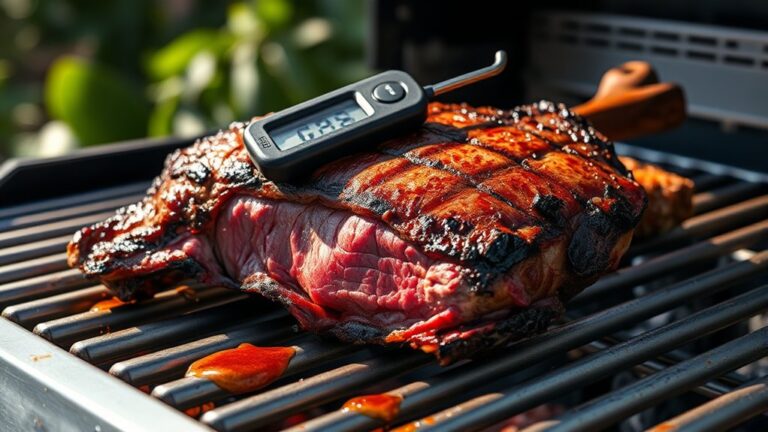
- Use a meat thermometer to check the internal temperature—130-135°F for medium-rare, 140-145°F for medium.
- Rest the steak for 5-15 minutes loosely covered with foil before slicing to lock in juices and maximize flavor.
Prepare and Season Your Ribeye Steak for Grilling
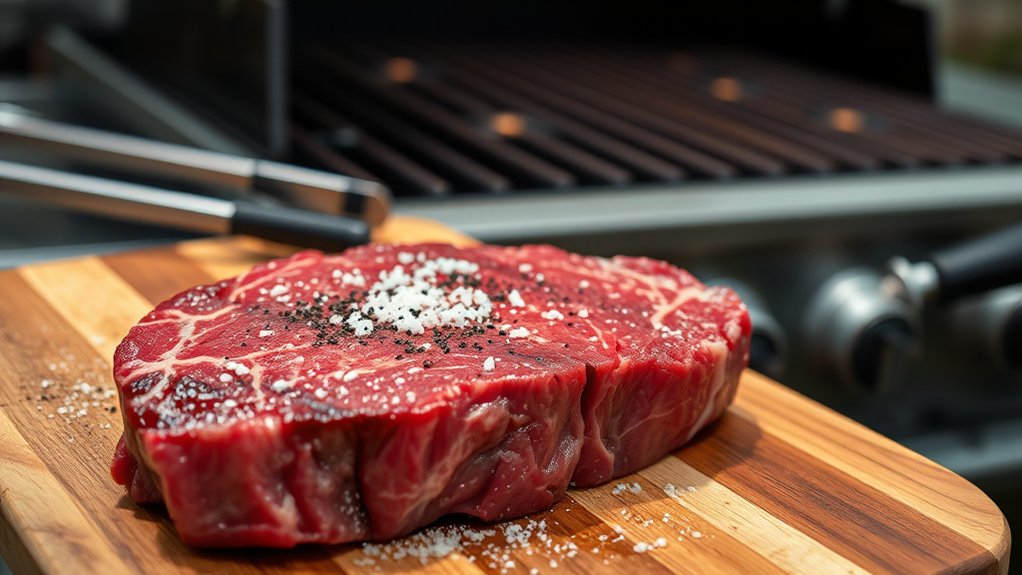
Before you start grilling, it’s essential to prepare and season your ribeye steak properly. First, choose your marinade options if you want extra flavor; simple olive oil and garlic or balsamic vinegar work well. Marinating for 30 minutes to a few hours can improve tenderness and taste.
For seasoning techniques, generously apply salt and freshly ground black pepper, pressing them into the meat’s surface. You can also add herbs like rosemary or thyme for extra aroma. Pat the steak dry before seasoning to guarantee a good sear.
Avoid over-marinating, as it can make the meat mushy. Keep it straightforward if you prefer a more traditional flavor. Remember, the goal is to enhance the natural richness of the ribeye without overpowering it.
Proper preparation and seasoning set the foundation for a perfectly grilled steak. This ensures each bite is juicy, flavorful, and cooked to your desired doneness.
Set Up Your Gas Grill for Perfect Steak Cooking
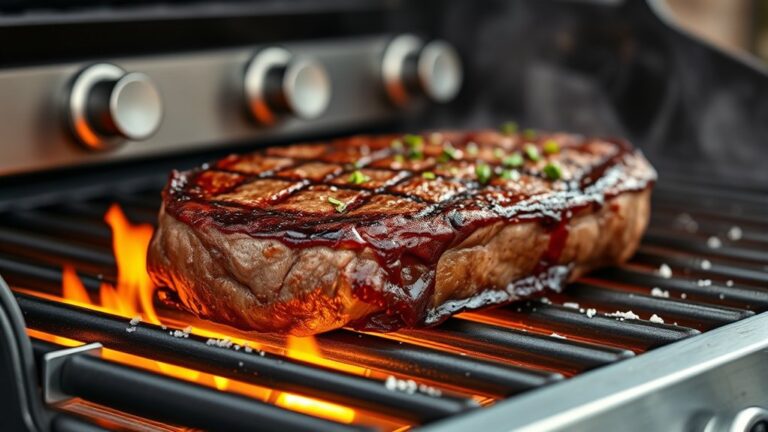
How you set up your gas grill can make all the difference in getting that perfect sear and juicy inside. Start by preheating your grill on high heat for about 10-15 minutes. This ensures the grill is hot enough to sear the steak right when you put it on.
Once it’s hot, turn off one side of the burners to create a two-zone setup for indirect heat. This helps you control the cooking temperature and prevent flare-ups. Keep the lid closed during preheating to maintain consistent heat and save fuel.
A properly set-up grill also makes your fuel last longer, which is great for future cookouts. Use a grill thermometer to keep an eye on the temperature, aiming for around 450-500°F for that perfect sear. Adjust the burners as needed to stay in the right temperature zone.
Having an even, well-prepared grill surface helps your steak cook evenly. It locks in flavor and juices while also being more fuel-efficient.
Cook Your Ribeye: Timing, Temperature, and Doneness
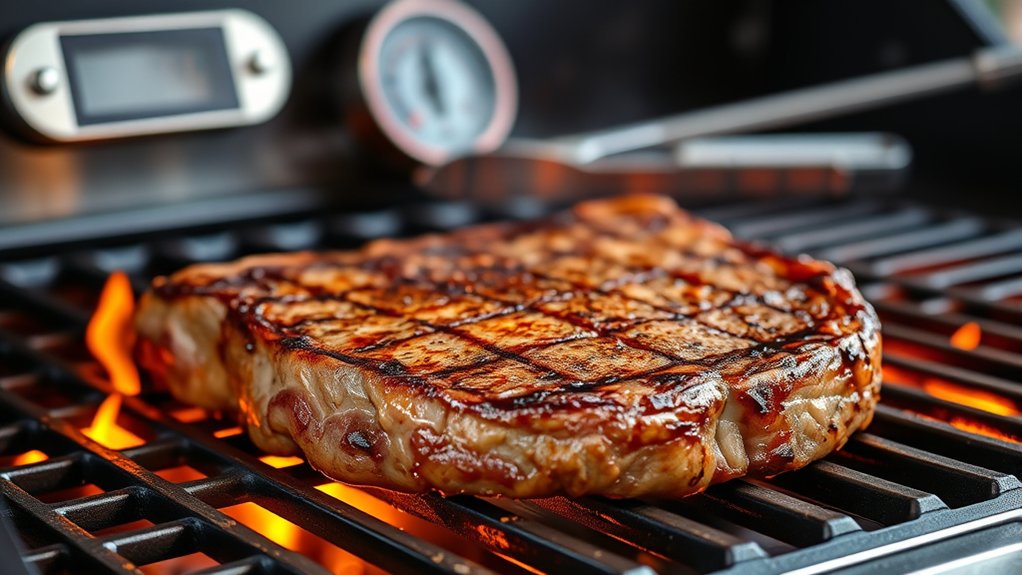
Mastering the perfect ribeye means paying close attention to timing and internal temperature because these decide how well done your steak is. Start by thinking about your steak’s thickness—thicker cuts need more time, while thinner ones cook faster.
Use a meat thermometer to be precise. For medium-rare, aim for 130-135°F; for medium, 140-145°F; and for well-done, 160°F. Marinades can change cooking time a bit, but don’t rely on them for doneness—focus on temperature instead.
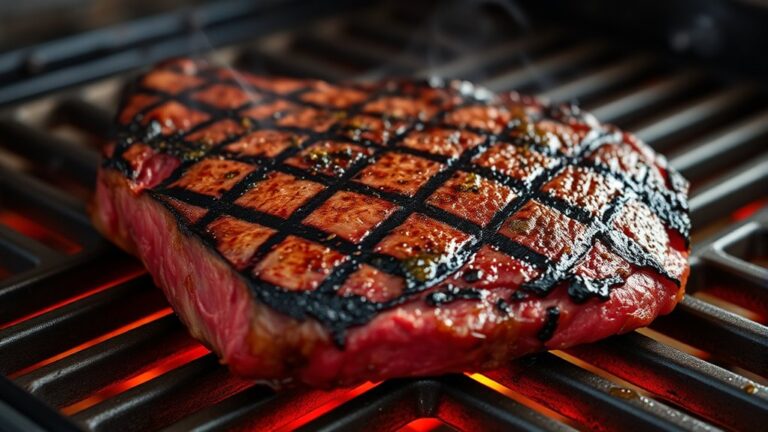
Preheat your grill properly and sear both sides for about 2-3 minutes to develop a nice crust. Then, move the steak to indirect heat and cook until it reaches your preferred internal temperature.
Rest the steak for 5 minutes before slicing. This helps juices redistribute, leaving you with a tender, flavorful ribeye cooked just right.
How to Tell When Your Ribeye Is Perfectly Cooked?
Knowing exactly when your ribeye is perfectly cooked comes down to observing specific signs and using your senses. The marbling plays a big role here; well-marbled steaks tend to stay juicy and flavorful when cooked just right.
As you cook your steak, pay attention to the edges and surface—notice how the color and texture change. Thicker steaks will take longer, so using a meat thermometer is a good idea.
Aim for 125°F for rare, 135°F for medium-rare, 145°F for medium, and 155°F for well-done. Gently press the center of the steak with tongs or your finger; it should feel firm but springy for medium-rare.
Look for visual cues like a nicely browned crust, which also helps indicate doneness. Remember, thicker steaks need more precise timing, so combining sensory cues with a thermometer ensures you get it just right every time.
Rest and Serve Your Grilled Ribeye for Maximum Flavor
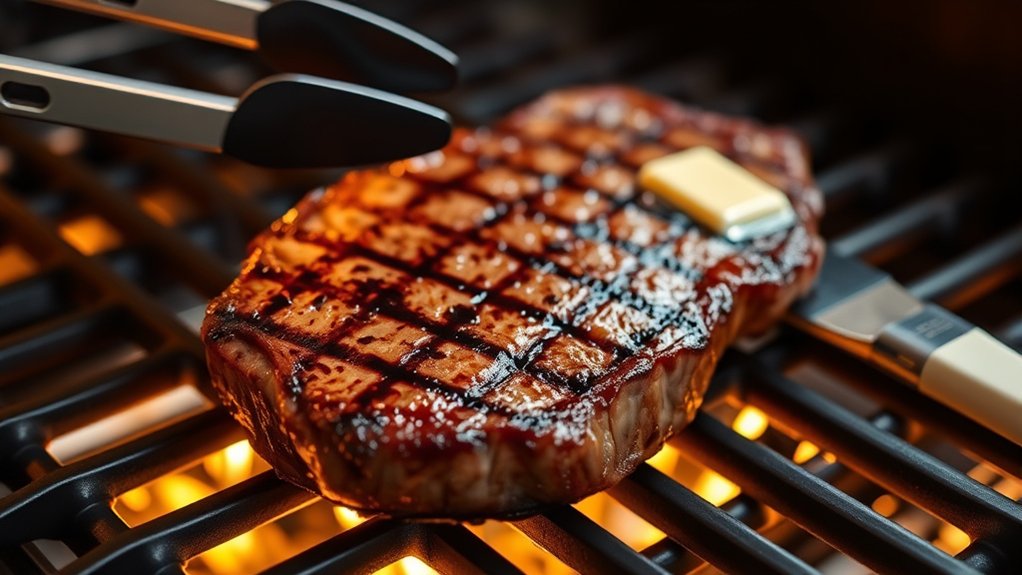
Once your ribeye hits the perfect internal temperature, it’s time to let it rest. Resting allows the juices to redistribute, making every bite juicy and flavorful. Don’t skip this step—it’s key for maximum flavor. You can loosely cover the steak with foil to keep it warm while it rests.
If you marinated your steak, resting helps the flavors settle and enhances tenderness. Just remember, slicing too early lets the juices escape, leaving your steak dry and less tasty.
Here’s a quick guide to resting and serving:
| Resting Time | Tips for Serving |
|---|---|
| 5-10 minutes | Slice against the grain for tenderness |
| 10 minutes | Let the juices settle for richer flavor |
| 15 minutes | Add a pat of butter or finishing salt |
While marinating boosts flavor, proper resting maximizes juiciness. Serve immediately for the best experience.
Frequently Asked Questions
What Types of Wood Chips Can Enhance Grilled Ribeye Flavor?
You can improve your grilled ribeye flavor with apple, cherry, hickory, or mesquite wood chips. These woods create rich smoke that infuses your steak with a smoky aroma and depth of flavor.
Apple and cherry wood chips offer a sweeter, milder smoke, perfect if you want a subtle touch. Hickory and mesquite give a bolder, more intense smoky taste for those who like a stronger flavor.
Use these wood chips carefully to reach the right balance. You want to enhance the beef’s natural flavor without overpowering it.
How Can I Prevent My Steak From Sticking to the Grill?
Ironically, preventing your steak from sticking is easier than you think. Start with proper marinade techniques to create a barrier, and always make sure your grill is clean—residue can cause sticking.
Preheat your grill thoroughly, then oil the grates using a paper towel dipped in oil. This simple step, combined with good grill cleaning habits, guarantees a non-stick surface.
With these tips, your ribeye will flip effortlessly and taste even better.
What Are Alternative Seasoning Options for Ribeye?
You can try different marinade variations like balsamic, soy, or garlic herb to add flavor and tenderness.
Spice blends such as smoked paprika, black pepper, or cayenne give the steak a smoky or spicy kick.
Experimenting with these options lets you customize your ribeye to match your flavor preferences, making each grilling session unique and delicious. Just remember to let the steak marinate for maximum flavor absorption.
How Do Outdoor Conditions Affect Grilling Times and Temperatures?
Weather variations are like unpredictable brushstrokes on your grilling canvas, directly influencing your cooking times and temperatures.
Wind, humidity, or rain can cool down your grill or cause flare-ups.
To keep your steak perfect, adjust your heat and monitor closely. Regular grill maintenance, like cleaning and checking vents, guarantees consistent performance despite outdoor conditions.
Think of it as tuning your instrument for a flawless symphony of flavors.
What Are Some Common Mistakes to Avoid When Grilling Ribeye?
When grilling ribeye, avoid common mistakes like over-marinading, which can overpower the meat’s natural flavor. Also, don’t neglect checking the proper meat temperature to get it just right.
Use marinade techniques sparingly and evenly, and always use a meat thermometer to check for doneness. Don’t cut into the steak prematurely, as it releases those tasty juices.
Rest the steak after grilling to ensure it stays juicy and tender. These simple steps help you get a perfectly grilled ribeye every time.
Conclusion
Now that you’ve mastered the art of grilling ribeye, you’re ready to channel your inner culinary hero, much like a modern-day Achilles wielding his mighty spear. With a little practice, your steak will rival those served at legendary steakhouses, impressing everyone at your table.
Remember, the secret lies in patience and passion. So fire up that grill and turn every meal into a heroic feast worth celebrating. Your perfect ribeye awaits!