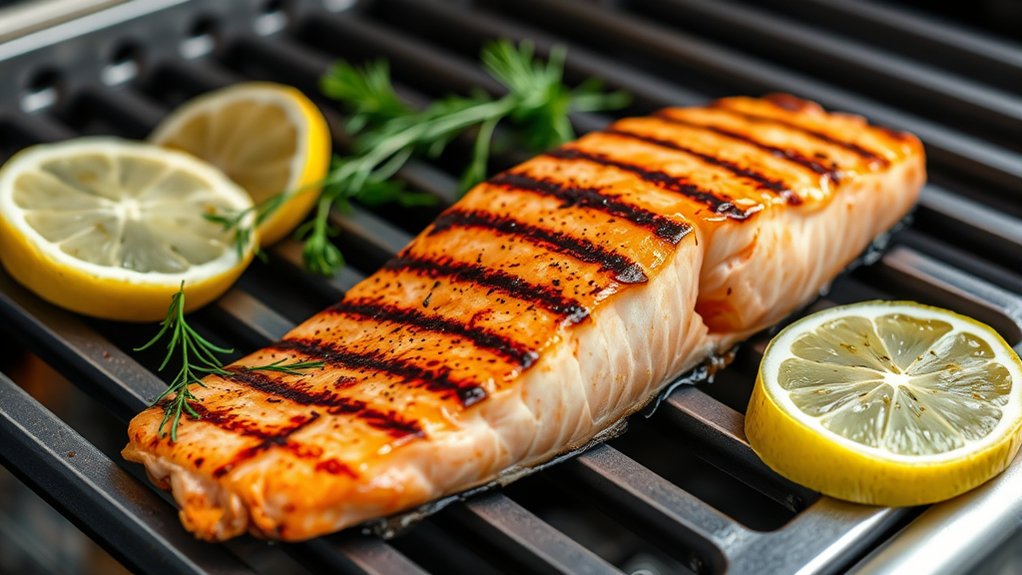
Mastering the Art of Grilling Salmon on a Gas Grill
Cooking perfect salmon on a gas grill can be tricky, and many grillers feel frustrated trying to get it just right. You’re not alone—struggling with sticking, uneven cooking, or losing that tender, flaky texture happens to the best of us. But don’t worry, with a few simple tips, you can master grilling salmon and impress everyone at your next cookout.
To master grilling salmon on a gas grill, start by selecting fresh, responsibly sourced fish with firm flesh and a clean smell. Preheat your grill to medium-high and oil the grates to prevent sticking.
Season or marinate your salmon for flavor, then use a thermometer to maintain consistent heat and cook it until it’s flaky and opaque.
To add smoky aroma, soak wood chips and place them directly on the heat. For a perfect finish, check your progress regularly; delve into these tips further to boost your grilling game.
Key Takeaways
- Preheat your gas grill to medium-high, around 375°F–400°F, and make sure to clean the grates well before you start grilling.
- Use skin-on salmon fillets because they help keep the fish moist and cook evenly. Feel free to season or marinate for extra flavor.
- Keep the heat steady with a two-zone setup and watch the internal temperature, aiming for 125°F–130°F for perfect doneness.
- Add smoky flavor by tossing in soaked wood chips or smoked spices. Place the chips on the heat source to get that nice, smoky aroma.
- Use a wide spatula to support delicate fish and avoid overcooking. Serve with fresh herbs or lemon to make your presentation pop.
What You Need to Know Before Grilling Salmon
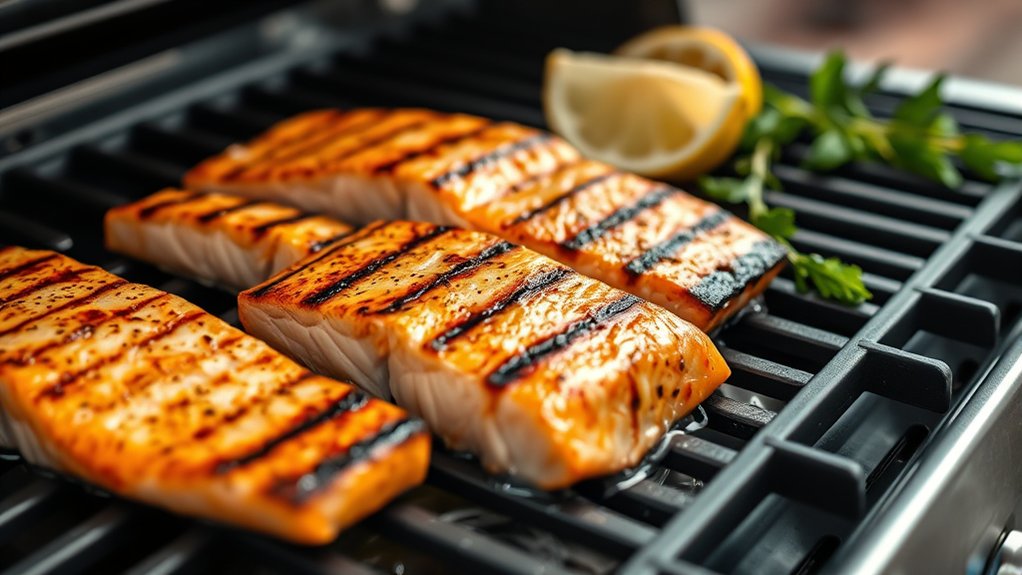
Before you start grilling salmon, it’s important to understand a few key basics. Knowing about salmon nutrition helps you appreciate its health benefits, like omega-3 fatty acids, high-quality protein, and essential vitamins. This makes your grilled salmon not just delicious but also nourishing.
Understanding salmon nutrition enhances your grilling experience with healthy, delicious, and nourishing choices.
Furthermore, consider salmon sustainability. Opt for wild-caught or responsibly farmed options to support environmental health and fish populations. Sustainable sources ensure you’re making eco-friendly choices that help maintain healthy ecosystems.
When selecting salmon, look for labels indicating sustainability certifications, such as MSC or ASC. Freshness matters too; fresh salmon should smell clean and have firm flesh. Properly understanding these aspects ensures you’re making informed decisions before grilling, leading to a better experience and a healthier, more sustainable meal.
Focusing on nutrition and sustainability allows you to enjoy grilled salmon with confidence, knowing you’re supporting your health and the planet.
Select the Best Salmon Cut for Grilling
What’s the best salmon cut for grilling? For great results, choose salmon fillets with skin on. They stay together better on the grill and help lock in moisture.
When picking your cut, think about sustainability. Wild salmon from responsible sources supports healthy fish populations and eco-friendly practices. If you prefer farmed salmon, look for certifications like ASC or MSC to ensure sustainability.
Salmon is packed with omega-3 fatty acids, high-quality protein, and essential vitamins. Thicker cuts, like center-cut fillets, cook evenly and are less likely to fall apart. Avoid thinner or overly fatty sections, which can overcook quickly or become greasy.
Prepare Your Gas Grill for Perfect Salmon Cooking
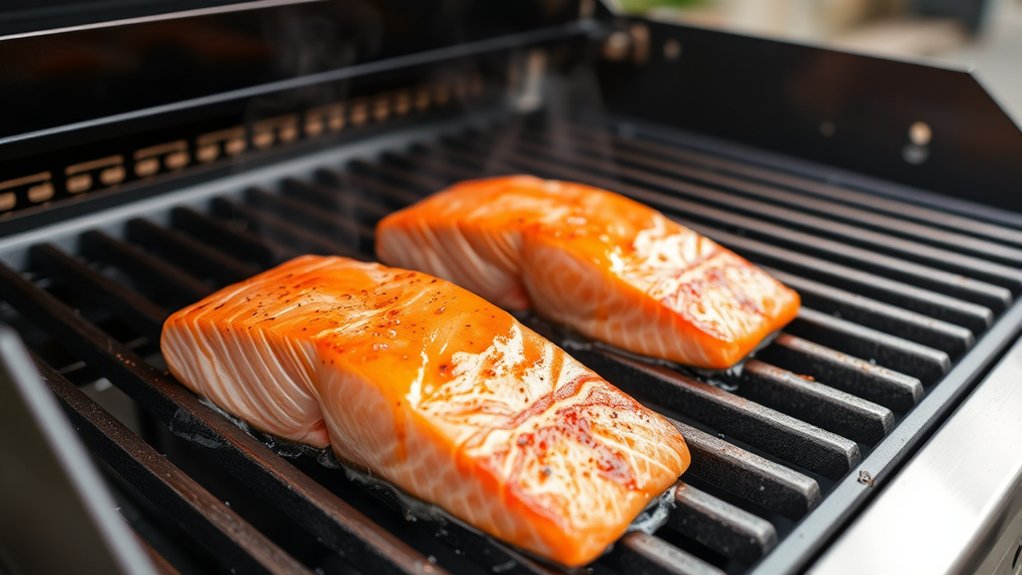
Getting your gas grill ready is key to perfectly cooked salmon. Start with good grill maintenance by cleaning the grates thoroughly to prevent sticking and ensure even heat distribution.
Preheat your grill to medium-high, giving it time to reach the right temperature before placing the fish on. Consistent heat helps cook salmon evenly and keeps it moist.
When sourcing salmon, choose fresh, high-quality fillets or steaks, ideally from reputable suppliers, to guarantee the best flavor and texture. Rinse the salmon gently and pat it dry; moisture can cause sticking and flare-ups.
Oil the grill grates lightly or brush the salmon with oil to prevent sticking. Check your propane tank or natural gas connection to avoid interruptions during cooking.
Properly prepared grills, combined with fresh salmon, set the foundation for a delicious grilling experience. Taking these steps ensures your salmon cooks perfectly every time.
Marinate and Season Salmon for Maximum Flavor
Once your grill is preheated and the salmon is ready, adding the right marinade or seasoning can really boost the flavors and make your dish unforgettable. Experimenting with different flavor combinations helps infuse the fish with depth and complexity.
A simple marinade of lemon, garlic, and dill brightens the salmon, while soy sauce, ginger, and honey give it a sweet-savory touch. You can also use dry seasonings like paprika, cumin, and sea salt for a quick, flavorful crust.
Here’s a quick guide:
| Flavor Profile | Marinade Techniques | Suggested Seasonings |
|---|---|---|
| Citrus & Herb | Marinate 30 mins in lemon & dill | Lemon zest, thyme |
| Asian-inspired | Soak in soy, ginger & honey | Sesame seeds, green onion |
| Spicy & Smoky | Rub with paprika & cumin | Smoked paprika, chili powder |
Pick your favorite combinations and marinate accordingly to boost the flavor.
How to Control Temperature for Flawless Salmon
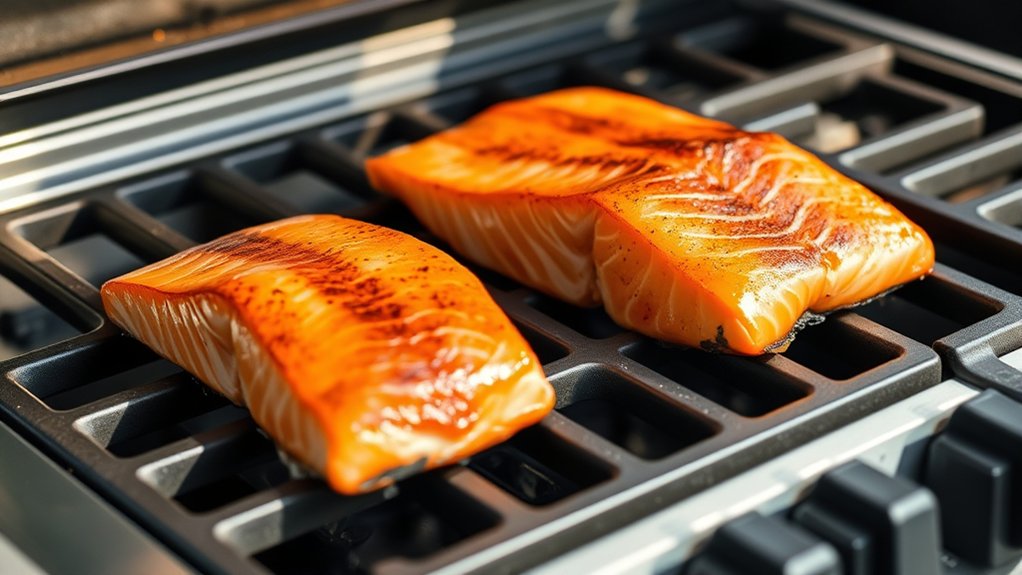
Controlling the temperature is key to cooking salmon perfectly. It helps keep the fish tender and moist instead of dry and overcooked. Focus on managing your grill’s temperature zones effectively.
Managing grill temperature ensures tender, moist salmon and perfect results every time.
Use grill thermometers to keep an eye on the heat levels. This way, you can make sure the temperature stays just right throughout cooking.
Here are some helpful tips:
- Keep one side of the grill at a moderate heat, about 375°F to 400°F, for direct cooking.
- Use the cooler side of the grill for indirect heat, which is great for gentle cooking and finishing.
- Check your grill thermometers regularly to maintain consistent temperatures and avoid hot spots.
Tools and Techniques for Perfectly Grilled Salmon
If you want to get that perfectly grilled salmon, it all starts with having the right tools. Think of a good quality grill, a fish spatula that’s gentle yet sturdy, and a reliable meat thermometer to check doneness. These little things make a big difference in making sure your salmon turns out just right.
Now, when it comes to techniques, preheating your grill properly is key. You want it hot enough so the salmon gets a nice sear, but not so hot that it burns. And knowing exactly when to flip the fish is an art—wait until you see those beautiful grill marks and the fish starts to release easily from the grates. With these tools and tips in your back pocket, you’ll be serving up salmon that looks and tastes like it came from a restaurant every single time.
Essential Grilling Tools
Achieving perfectly grilled salmon starts with having the right tools in your arsenal. Essential grilling tools guarantee you can handle every step, from prep to cleanup.
First, a good quality spatula helps flip the salmon gently without breaking it. Second, a reliable brush is key for applying marinade or oil, which keeps the fish moist.
Third, tongs allow precise movement and turn the fillets without damage. Along with tools, regular grill maintenance keeps your grill clean and heat-efficient, preventing sticking and uneven cooking.
Also, sourcing fresh, high-quality salmon makes a difference in flavor and texture. With these tools and practices, you’re set for a successful grilling experience that highlights the best of your salmon.
Precise Cooking Techniques
Mastering the right cooking techniques is essential to guarantee your salmon turns out perfectly grilled every time. To do this, focus on maintaining a consistent, medium-high heat to prevent overcooking.
Use a two-zone setup on your gas grill to control cooking speed and ensure even heat distribution. Remember, properly timing the grilling process preserves the salmon’s omega-3 fatty acids, which are key to its excellent nutrition.
Opt for sustainably sourced salmon whenever possible, as it’s better for the environment and supports responsible fishing. Keep the skin on to help hold the flesh together and add flavor.
Use a meat thermometer to check for an internal temperature of 125°F to 130°F for moist, tender results. These precise techniques will help you maximize flavor, nutrition, and sustainability.
Prevent Salmon From Sticking or Falling Apart
Salmon can be tricky to grill without sticking or falling apart, but you can prevent this by taking a few simple steps. First, make sure your grill grates are clean and well-oiled to reduce sticking.
When grilling salmon with skin, leave the skin on because it acts as a natural barrier and helps hold the fish together. To keep those vibrant marine flavors, avoid over-marinating, which can make the fish fragile.
Here are some additional tips: Use a fish-specific or non-stick grill mat to prevent sticking. Preheat the grill to a medium-high temperature to get a nice sear.
Carefully flip the salmon once, using a wide spatula to support the fish and minimize breaking. Following these steps will help you get perfectly grilled salmon every time.
How to Add a Smoky Flavor on a Gas Grill
Want to add a smoky flavor to your grilled salmon? It’s easier than you might think! One simple trick is to use wood chips. Just soak some in water for about 30 minutes, then place them in a smoker box or wrap them in foil with a few holes punched in it. That way, they’ll smolder and release that delicious smoky aroma as you cook.
You can also spice things up by mixing smoked spices like paprika or chipotle into your seasoning blend. It’s a great way to give your salmon an extra layer of smoky flavor that really stands out. With these easy tips, you’ll be able to enjoy a rich, smoky taste right from your gas grill—no need for a traditional smoker!
Using Wood Chips Effectively
Adding a smoky flavor to your grilled salmon is easier than you might think, especially on a gas grill. To get the most smoke infusion, choose wood chips like alder, cedar, or hickory, which each offer unique flavors.
Soak the wood chips in water for at least 30 minutes before using. This helps create a steady release of smoke during grilling.
Place the soaked chips in a smoker box or wrap them in aluminum foil with small holes for ventilation. Then, put them directly on your grill’s heat source.
Turn on the grill and close the lid after adding the wood chips. This ensures consistent smoke and that rich, smoky flavor in your salmon.
Incorporating Smoked Spices
After soaking your wood chips, another way to add a smoky flavor to your salmon is by incorporating smoked spices directly into your seasoning. Use spice blends that include smoked paprika, chipotle, or smoked cumin to bring in natural smoky notes.
Mix these spices into your salt, pepper, and herbs to create a well-balanced rub. Applying smoked spices enhances the flavor without overpowering the fish’s delicate qualities.
You can also sprinkle some directly onto the salmon before grilling to intensify the smoky aroma. This method lets you customize your flavor profile and gives your salmon a rich, smoky scent that complements its natural oils.
Incorporating smoked spices is an easy and effective way to elevate your gas grill salmon with authentic, smoky flavor.
Troubleshooting Common Salmon-Grilling Issues
Grilling salmon can sometimes be tricky, but many common issues are easy to fix with the right techniques. If your salmon sticks to the grill, make sure the grill is properly preheated and oiled to prevent sticking.
Overcooking can dry out your fish, so keep an eye on the internal temperature—about 125°F is perfect for medium doneness—and use a timer. Undercooked salmon might be unsafe to eat, so always check for a flaky texture and opaque flesh before serving.
To troubleshoot effectively, use clean, well-oiled grill grates to prevent sticking. Keep a close eye on cooking time to avoid drying out the fish. Also, check the internal temperature to ensure safety and that you’re getting the best flavor and nutrition.
Addressing these issues means you’ll end up with perfectly grilled salmon that’s safe, tasty, and healthy.
Serve and Enjoy Your Impressive Grilled Salmon
Once your salmon is perfectly grilled, it’s time to serve and enjoy your impressive creation. To bring out its freshness, try pairing it with colorful, seasonal vegetables or a light lemon-dill sauce. It enhances the flavor and highlights the health benefits of salmon, which is packed with omega-3 fatty acids that boost your heart and brain health.
When selecting your salmon, always go for sustainable sources. This helps support eco-friendly fishing practices and protects marine ecosystems. So, your meal isn’t just delicious but also environmentally responsible.
For presentation, place the salmon on a platter and garnish with fresh herbs or lemon wedges for a professional touch. Remember, serving at the right temperature and good presentation can elevate the whole dining experience.
Whether you’re sharing with family or friends, your beautifully grilled salmon will wow everyone. It shows off your grilling skills and your commitment to healthy, sustainable eating.
Enjoy every bite of your culinary masterpiece!
Frequently Asked Questions
How Can I Tell if Grilled Salmon Is Fully Cooked?
You can tell if your grilled salmon is fully cooked by checking its internal temperature and visual cues. Aim for a cooking temperature of about 125-130°F for medium doneness.
Look for visual cues like opaque flesh and flakes easily with a fork. When the salmon turns from translucent to opaque and flakes effortlessly, it’s done.
Use a thermometer for accuracy, ensuring your salmon is perfectly cooked and safe to eat.
What Are Alternative Methods if I Don’T Have a Gas Grill?
Oh, no gas grill? Don’t fret! Grab your trusty grilling accessories—think cast iron skillet or foil packets—and adopt alternative cooking methods.
You can pan-sear your salmon on the stovetop, bake it in the oven, or even try steaming. Each method yields tender, flavorful results.
Can I Prepare Grilled Salmon Ahead of Time?
Yes, you can prepare grilled salmon ahead of time. Just marinate the salmon with your favorite seasonings and keep it in the fridge.
When you’re ready to cook, make sure your grill is preheated to about medium-high. This helps keep the salmon moist and flavorful.
Be careful not to overcook it, and if you need to reheat, do so gently to preserve its texture and taste.
How Do I Store Leftover Grilled Salmon Safely?
To store leftover grilled salmon safely, make sure to refrigerate it within two hours of cooking.
Use airtight containers or wrap it tightly in aluminum foil to keep it fresh.
Follow food safety guidelines by eating leftovers within three to four days.
If you want to store it longer, freeze the salmon in a sealed bag or container.
These tips help prevent bacteria growth and keep your salmon tasty and fresh.
What Side Dishes Pair Best With Grilled Salmon?
Did you know that pairing salmon with fresh side dishes can really boost both flavor and nutrition?
For a light, vibrant meal, try a crisp green salad or a tangy citrus salad.
Grain side dishes like quinoa, wild rice, or couscous pair beautifully with the rich, flaky salmon.
These salads and grain sides add texture and balance, making your grilled salmon dinner more satisfying and colorful.
Conclusion
Now that you’ve mastered grilling salmon, you’re ready to impress your guests with flavors as rich as a Renaissance masterpiece. With a little patience and practice, you’ll create perfectly cooked, smoky, tender salmon on your gas grill every time.
Think of it as wielding a sword at a grand feast—every flip and season adds to your mastery. So fire up that grill and let your culinary artistry shine like a torch in the night.
When you focus on mastering the art of grilling salmon on a gas grill, you’ll find yourself turning simple ingredients into memorable dishes. Keep honing your skills, and soon you’ll be known for your expert salmon grilling.