8 Simple Steps to Cook Tomahawk Steak on a Gas Grill
Cooking a perfect tomahawk steak on a gas grill can seem intimidating, especially if you’re not sure where to start. Many grill enthusiasts struggle to get that ideal sear and don’t know how to control the heat for a juicy, evenly cooked steak. But don’t worry—you’re not alone, and with a little guidance, you’ll be impressing everyone with your grilling skills.
To cook a tomahawk steak on a gas grill, start by gathering your tools and seasoning the meat generously. Set up your grill with a two-zone system for searing and finishing. Preheat to high, then sear each side for 2-3 minutes until a crust forms.
Move the steak to indirect heat to reach your preferred doneness. Let it rest, then slice against the grain for a juicy, perfect presentation. Keep going for expert tips to master every step.
Key Takeaways
- Preheat your gas grill to 450-500°F and set up a two-zone cooking area for searing and finishing.
- Generously season the steak with salt, pepper, garlic, and herbs. Let it rest for at least 30 minutes.
- Sear each side of the steak for 2-3 minutes until a deep crust forms.
- Move the steak to indirect heat to cook to your desired doneness, checking the internal temperature regularly.
- Rest the steak for 10 minutes, then carve against the grain and serve immediately for the best flavor and juiciness.
Gather Tools and Ingredients for Your Tomahawk Steak
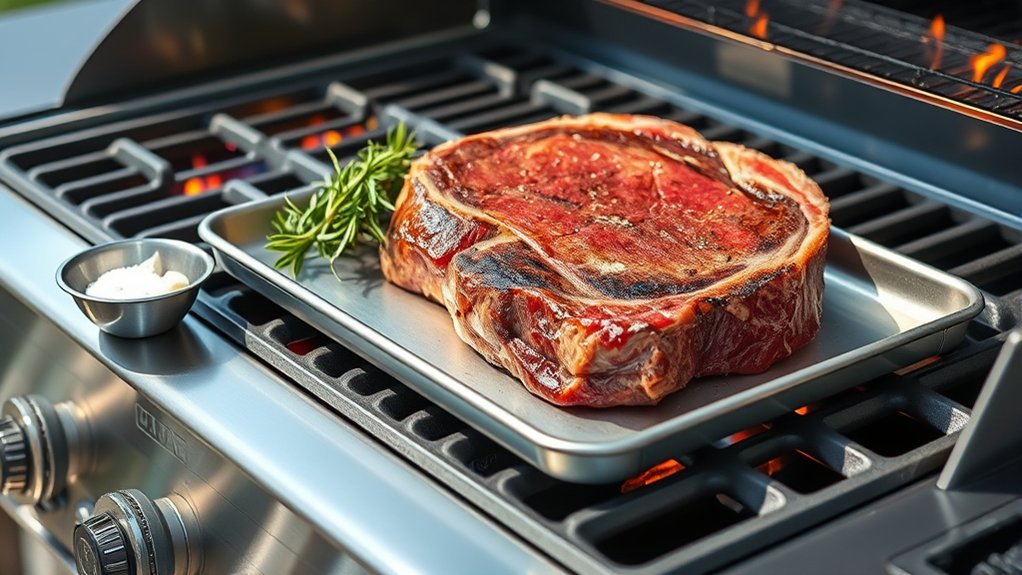
Before you start grilling, make sure you have all the tools and ingredients you need. Having the right equipment keeps things safe and helps prevent accidents—so keep a fire extinguisher nearby and use long-handled tools.
Prepare your tools and ingredients first for safe, flavorful grilling success.
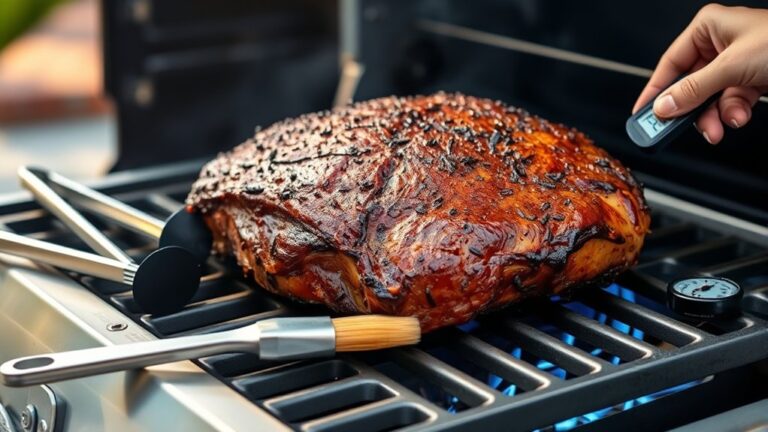
Gather a sharp knife, tongs, a meat thermometer, and a sturdy grill brush for cleaning and maintenance. For ingredients, pick a high-quality tomahawk steak, and think about substitutions like different seasonings or oils based on your taste or dietary needs.
Keep salt, pepper, garlic, and herbs ready for seasoning. Don’t forget some oil or butter for finishing touches. Making sure your tools are clean and your ingredients are prepped sets you up for better safety and flavor.
Once everything’s in place, you’re ready to grill confidently and enjoy your delicious steak.
Prep and Season Your Tomahawk Steak for Maximum Flavor
To really make your tomahawk steak burst with flavor, start by picking a high-quality cut that has good marbling—that’s the fat running through the meat, which keeps it juicy and tender. Once you’ve got your steak, don’t be shy with the seasoning! You can go for a dry rub or marinate it—both are great ways to boost the flavor and add some extra flair.
After you’ve seasoned it, give the steak a little rest before grilling. This step is super important because it allows the flavors to really settle in and develop, making your steak even more delicious when it hits the grill.
Choosing the Right Cut
Are you selecting the perfect tomahawk steak to guarantee maximum flavor? Focus on marbling quality—look for a steak with fine, abundant fat streaks throughout the meat. High marbling ensures tenderness, juiciness, and rich flavor, making your grilling experience much better.
Also, choose a cut with the bone in benefits, as the bone adds flavor during cooking and helps insulate the meat. This results in more even heat distribution, so your steak cooks just right.
Inspect the meat for a deep, vibrant color and firm texture. Avoid any that appear dull or mushy. Opting for a well-marbled, bone-in tomahawk guarantees a more flavorful, juicy steak with improved aroma.
Selecting the right cut sets the foundation for a delicious grilling experience that highlights the steak’s natural qualities.
Proper Seasoning Techniques
Proper seasoning is the key to bringing out the full flavor of your tomahawk steak, and it all starts with a simple yet effective approach. Use high-quality seasoning blends to enhance the meat’s natural richness.
Before grilling, generously apply salt and pepper, which are classic flavor enhancers. For added depth, try incorporating garlic powder, smoked paprika, or herbs like thyme and rosemary.
Let the steak sit for at least 30 minutes to absorb the seasonings and develop a flavorful crust. Be sure to use a balanced seasoning blend for even flavor.
Don’t skimp on salt—it’s essential for flavor enhancement. Incorporate herbs and spices to add complexity and richness.
Apply your seasonings evenly across the surface for the best results. After seasoning, allow the steak to rest to maximize flavor and crust development.
Resting and Marinading
Ever wonder why some steaks taste more flavorful than others? It’s often because of proper resting and marinading. Resting lets the juices redistribute, making each bite tender and flavorful.
After cooking, let your steak rest for at least 10 minutes before slicing. Marinade timing is just as important for flavor infusion; marinate your steak for at least 1-2 hours, or up to overnight for a deeper flavor.
A good marinade helps the meat absorb flavors and become more tender. Just be careful not to over-marinade, as it can overpower the natural taste of the meat.
Resting and marinading work together to maximize flavor, making every bite of your tomahawk steak rich, juicy, and delicious.
Set Up Your Grill for Two-Zone Cooking
To get that perfect sear and a tender inside, set up your grill for two-zone cooking. This means creating a hot zone for searing and a cooler zone for finishing the steak.
Start by turning on half of your gas grill burners to high heat, leaving the other half off. This setup helps you control the temperature easily. Make sure your grill is clean and in good working order for safety and efficiency.
Preheat the grill for at least 15 minutes before you start cooking. Use a thermometer to keep an eye on the ambient temperature. Keep the lid closed to trap heat and save fuel.
Place the steak over the direct heat for a nice sear, then move it to the indirect heat zone to finish cooking without burning. This method makes sure your tomahawk steak cooks evenly while keeping safety and fuel efficiency in mind.
Sear Your Tomahawk Steak for a Perfect Crust
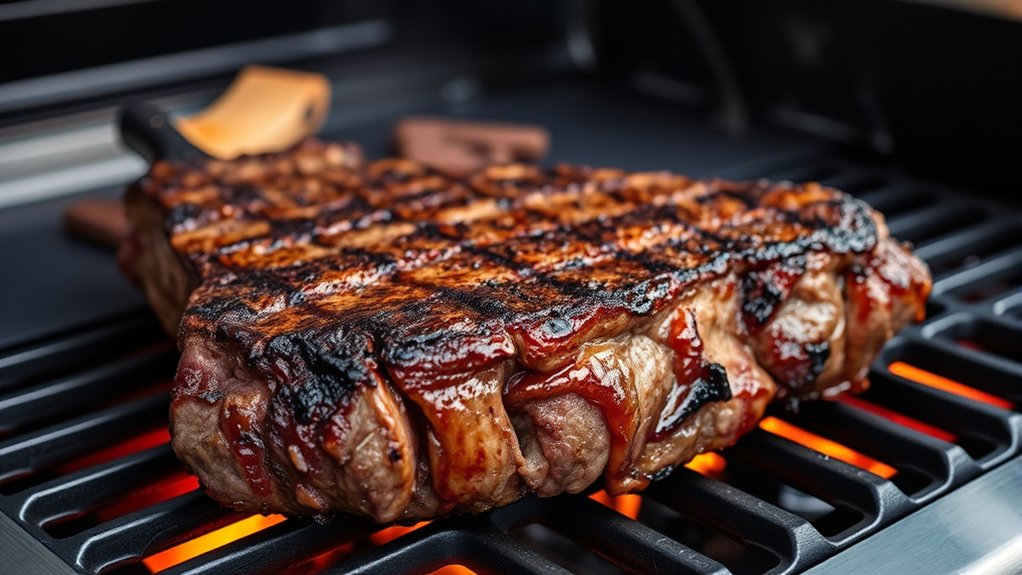
Achieving a perfect crust on your tomahawk steak starts with making sure your grill is hot enough. Preheat your gas grill to high heat, around 450-500°F, to create that ideal sear. Proper steak sourcing ensures you’re working with quality meat, which will develop better crust and flavor.
Before placing your steak, clean the grates thoroughly to prevent sticking and promote even browning. When searing, follow grilling safety precautions: wear heat-resistant gloves, keep a spray bottle handy for flare-ups, and never leave the grill unattended.
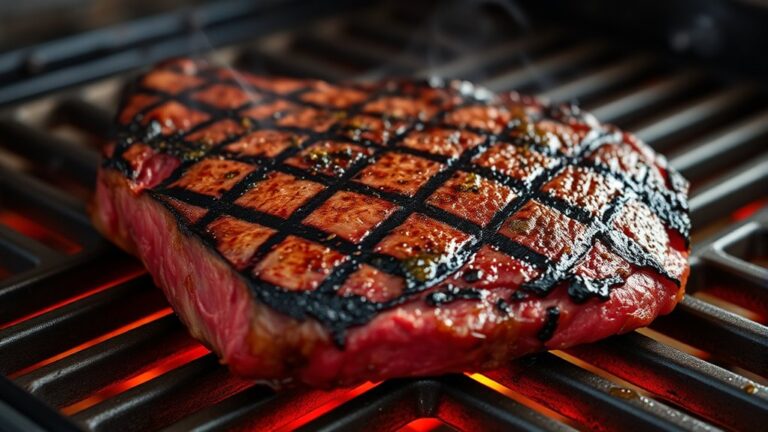
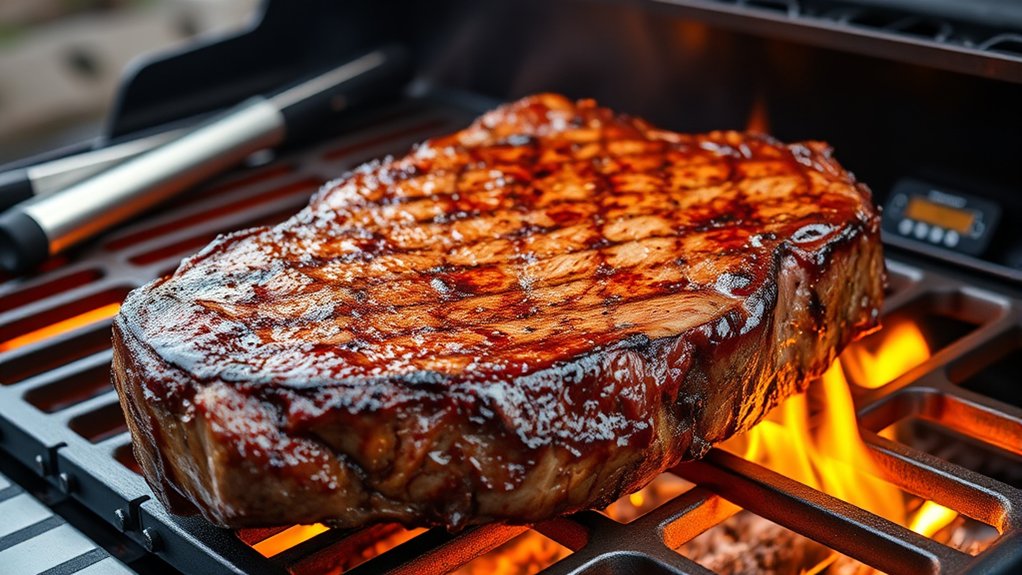
Place the steak directly over the heat, pressing gently to establish good contact with the grates. Sear each side for 2-3 minutes until a deep, golden-brown crust forms. This initial high-heat sear locks in juices and creates that desirable texture.
Once seared, you can move on to the next cooking phase, confident your crust is perfectly developed.
Finish Cooking to Your Desired Doneness
After searing your tomahawk steak, it’s time to finish cooking it to your preferred level of doneness. Use a meat thermometer to monitor the temperature and make sure you hit your target don’t just guess. For medium-rare, aim for about 130°F; medium, around 140°F; and well-done, 160°F or higher.
Adjust the grill’s heat if needed to keep the cooking process steady. Keeping the steak tender and juicy is all about controlling the temperature. Remember, getting the right temperature is key to a tender steak, so don’t rush this step.
For consistent results, use indirect heat to slowly bring the steak up to temperature. Flip it occasionally so it cooks evenly and keep the lid closed to hold in heat and moisture. After cooking, let the steak rest for a few minutes to let the juices settle.
Make sure to check the temperature regularly to prevent overcooking. This way, you’ll get the perfect doneness every time.
Rest Your Steak for Juicy Perfection
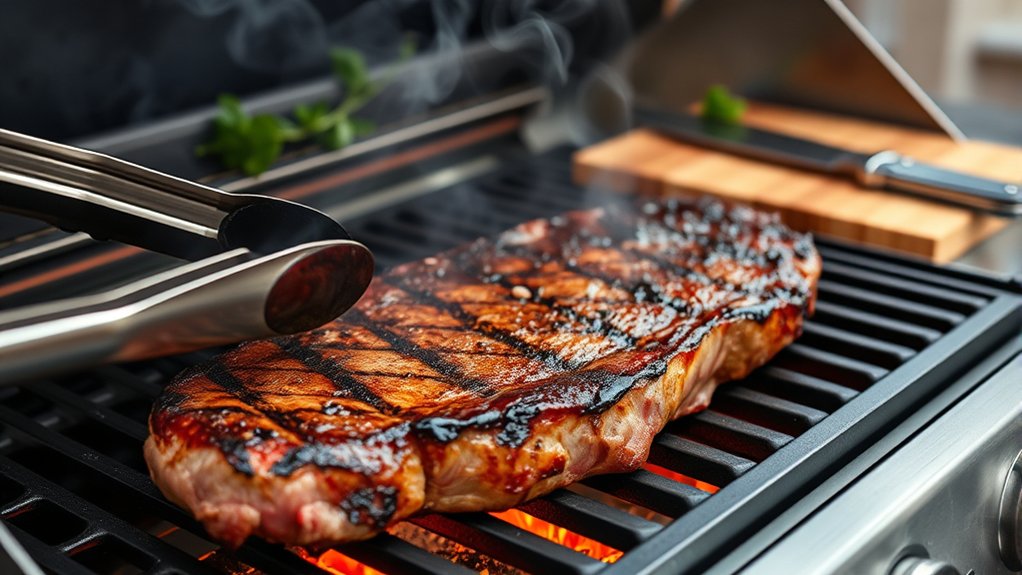
Ever wonder why resting your steak matters? Resting lets the juice inside the meat redistribute, keeping each bite juicy and tender.
When you take the steak off the grill, the juices are still moving around. Cutting into it immediately lets those flavorful juices escape, leaving it dry.
Waiting about 10 minutes gives the meat time to reabsorb the juices. This makes your steak more flavorful and moist.
Resting also helps the natural flavors deepen as the juices settle and intensify the steak’s richness. Cover it loosely with foil to keep it warm without trapping too much moisture.
This simple step boosts both taste and texture, turning a good steak into something truly mouthwatering. Patience really pays off here.
Slice and Serve Your Impressive Tomahawk Steak
When you’re slicing up that beautiful tomahawk steak, grab a sharp knife and cut against the grain. It makes all the difference—your steak will be way more tender and easier to enjoy.
And don’t forget about presentation! Take a moment to arrange those slices nicely on your plate and add some tasty sides that complement the steak. Following these simple tips will make your impressive steak look just as amazing as it tastes.
Carving Techniques Matter
Carving your tomahawk steak correctly is key to showing off its impressive look and making sure each piece is tender and full of flavor. Focus on precision to avoid tearing the meat and to keep those juicy flavors in.
Use a sharp knife and follow the grain of the meat for clean, even slices. Proper presentation starts with a steady hand and confident cuts, highlighting the steak’s length and marbling.
Here are some tips to improve your technique:
- Rest the steak before carving to lock in juices
- Slice against the grain for maximum tenderness
- Keep your knife sharp for clean cuts
- Use smooth, even strokes without sawing
- Arrange slices attractively on the plate for visual appeal
Mastering these techniques will boost your steak’s presentation and flavor every time.
Proper Plating Tips
To showcase your tomahawk steak at its best, focus on thoughtful plating that highlights its impressive size and marbling. Use a large, clean plate to give the steak room to stand out.
Slice the steak against the grain for easy eating, then arrange the slices neatly, fanning them out or stacking them for visual appeal. Adding garnishes like fresh herbs, roasted vegetables, or a drizzle of sauce can add color and contrast.
Keep the presentation simple and elegant, avoiding clutter that distracts from the main attraction. Garnish enhancements should complement the steak’s rich flavor without overpowering it.
Troubleshoot Common Grilling Problems
Even experienced grillers can run into issues when cooking a tomahawk steak on a gas grill. Common problems include flare-ups, uneven cooking, or dryness. To prevent these, focus on grilling safety and proper meat storage.
Here are some tips to troubleshoot:
- Keep a spray bottle nearby to manage flare-ups quickly and safely.
- Use a two-zone setup to ensure even heat distribution and avoid overcooking.
- Always let the steak rest before slicing to retain juices and prevent dryness.
- Check your grill’s temperature regularly with a thermometer for precision.
- Store meat properly in the refrigerator until ready to cook, ensuring freshness and safety.
Addressing these issues helps you avoid common pitfalls and results in a perfectly cooked tomahawk steak. Being mindful of grilling safety and meat storage ensures a delicious, safe, and satisfying grilling experience every time.
Frequently Asked Questions
How Long Should I Let the Steak Rest Before Slicing?
You should let your steak rest for about 10 minutes before slicing. This helps keep it juicy and lets the juices spread out evenly throughout the meat.
If you cut into the steak too soon, all those tasty juices will escape, making the meat drier.
Cover the steak loosely with foil during this time to keep it warm.
This way, every bite stays tender and flavorful.
What’s the Best Way to Prevent Flare-Ups on a Gas Grill?
Think of your grill as a gentle garden fire. Careful flame control keeps everything safe.
To prevent flare-ups, keep the lid closed when you’re not flipping, and trim excess fat from your steak.
Using two-zone grilling gives you better control over the heat. Regularly clean your grill grates to remove grease buildup.
Practicing good grill safety helps you enjoy perfectly cooked steak without surprises. This way, flare-ups won’t disrupt your feast.
Can I Cook a Tomahawk Steak Indoors if I Don’T Have a Grill?
Yes, you can cook a tomahawk steak indoors, but you’ll want to use a cast-iron skillet or oven-safe pan. Start with steak seasoning to boost flavor, then sear the steak over high heat to lock in juices.
Finish cooking in the oven at a lower temperature until it reaches your desired doneness. Just make certain you have good ventilation, as indoor cooking can produce smoke.
What Internal Temperature Indicates a Rare, Medium, and Well-Done Steak?
Like a symphony reaching its crescendo, your steak’s perfect doneness hinges on the right internal temperature.
For rare, aim for 120-125°F; medium is 130-135°F; and well-done hits 160°F.
Look for marbling patterns that indicate juiciness and flavor, but remember, cooking temperature guides the final note.
Use a meat thermometer to guarantee precision, and you’ll enjoy a steak cooked exactly to your liking.
How Do I Know When My Steak Has Developed a Perfect Crust?
You’ll know your steak has a perfect crust when the surface is deep golden-brown and has a slight, firm resistance. Marbling is key because it helps develop that crust, adding flavor and juiciness.
Keep the grill hot—around 450-500°F—and sear the steak for 2-3 minutes per side. Then, finish cooking to your preferred doneness.
Use tongs to flip the steak; avoid piercing it, so the juices stay inside.
Conclusion
So, after all that effort, you’ve mastered the art of grilling a tomahawk steak—an impressive feat indeed. Ironically, the hardest part might be resisting the urge to show off your culinary skills.
But hey, with a perfectly seared, juicy tomahawk steak in hand, you’ve definitely earned it. Just don’t forget: the true test isn’t just in the taste but in keeping your cool when everyone’s eyes are on that mouthwatering masterpiece.