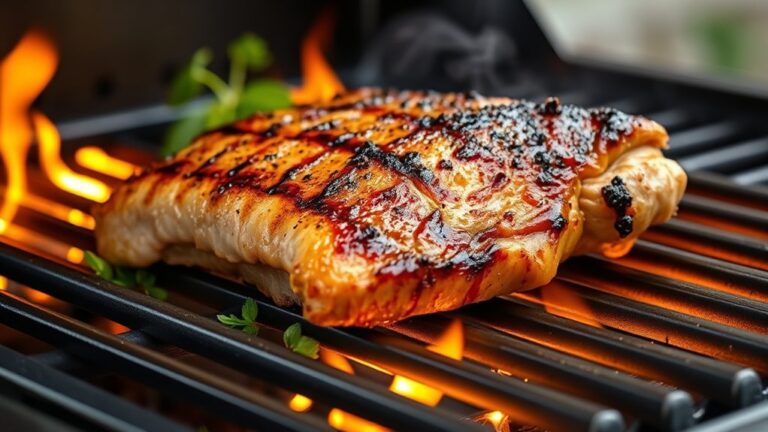
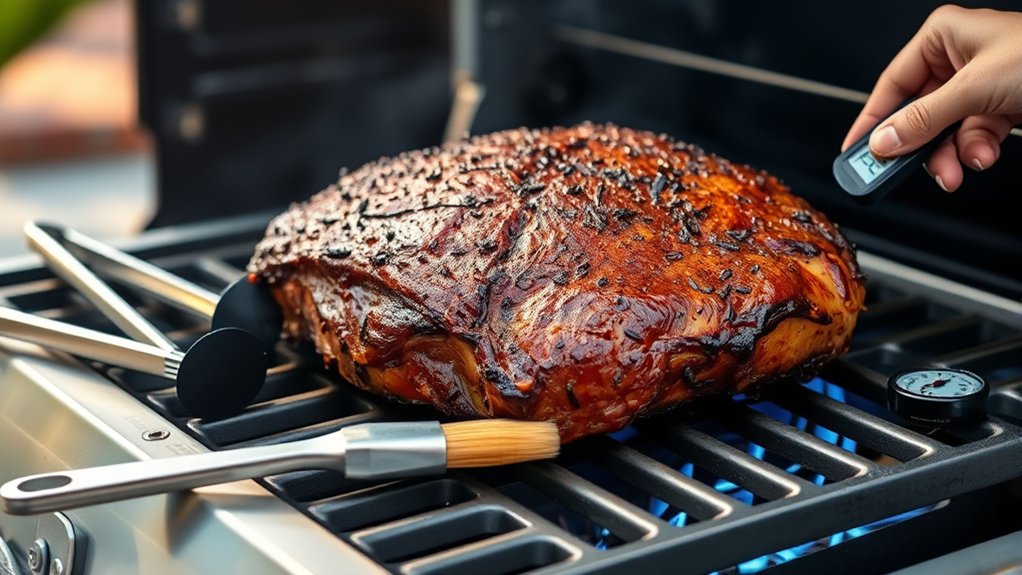
6 Simple Steps to Cook Brisket on a Gas Grill
Cooking a perfect brisket on a gas grill can feel intimidating, especially if you’re new to grilling or trying it for the first time. Many people struggle with getting that tender, flavorful result they crave. But don’t worry—you’re not alone, and with a little guidance, you can master the art of grilling brisket.
To cook brisket on a gas grill, start by trimming excess fat and marinating it overnight for flavor and moisture.
Preheat your grill to 225-250°F using indirect heat and keep the lid closed to maintain a steady temperature.
Apply a flavorful rub and monitor the internal temperature closely.
Once it reaches 195-205°F, let it rest before slicing against the grain.
For more tips to perfect your brisket, keep exploring this guide.
Key Takeaways
- Preheat your gas grill to 225-250°F and set it up for indirect heat with one burner off.
- Prepare and season the brisket with a generous rub, then let it marinate or rest as you like.
- Place the brisket on the cool side of the grill, keeping the temperature steady, and add wood chips for some smoky flavor.
- Keep an eye on the internal temperature until it hits 195-205°F, checking for a nice bark and tenderness.
- Let the brisket rest for 15-20 minutes, then slice against the grain for the best tenderness and presentation.
Prepare Your Brisket for the Grill
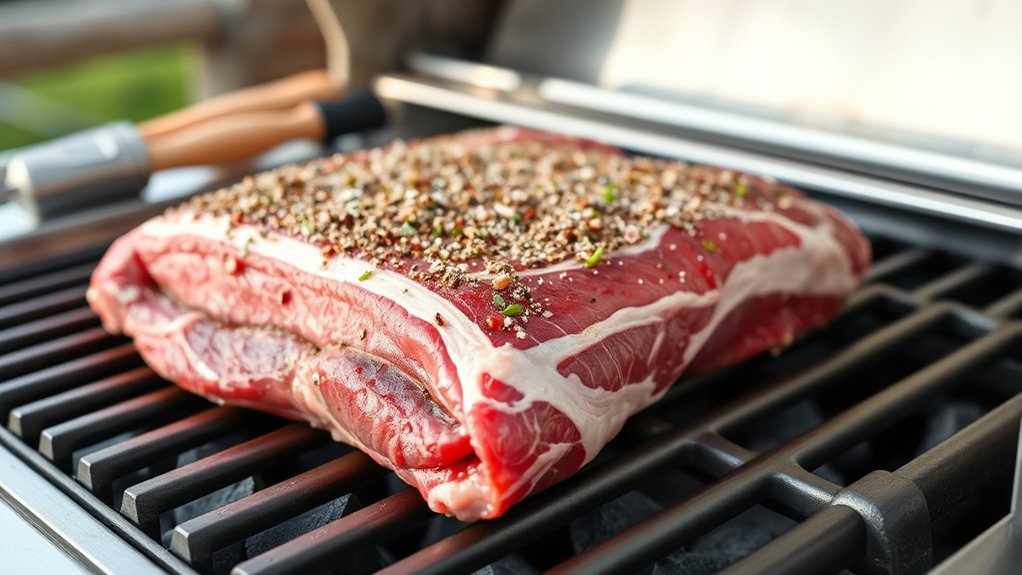
Before you start cooking, you need to prepare your brisket properly. Begin with brisket trimming, removing excess fat and silver skin to prevent flare-ups and ensure even cooking. Use a sharp knife to trim the fat cap, leaving about a quarter-inch for moisture and flavor.
Next, focus on marinade techniques. Marinate your brisket for at least a few hours or overnight to boost tenderness and taste. A good marinade can include ingredients like soy sauce, garlic, onion, and spices, which penetrate the meat and keep it juicy during grilling.
Be sure to pat the brisket dry after marinating to promote better browning. Proper preparation sets the foundation for a flavorful, tender brisket with the right balance of moisture and seasoning. Taking these steps before grilling helps you achieve a delicious, perfectly cooked brisket.
Set Up Your Gas Grill for Temperature Control
To achieve perfectly cooked brisket on your gas grill, you need to set it up for precise temperature control. Start by turning on your grill and preheating it to the desired temperature, usually around 225-250°F.
Use the burners strategically—light one side for indirect heat and keep the other side off for smoking. Regularly monitor the temperature with a reliable probe thermometer to prevent flare-ups and ensure even cooking.
Remember, grill safety is key. Keep the lid closed to maintain consistent heat and avoid accidents. Cleaning and maintenance are just as crucial; clean the grates and drip trays before and after grilling to prevent flare-ups and guarantee safe operation.
Feel confident knowing your grill is safe and ready. Enjoy the satisfaction of perfect heat control. Minimize flare-ups and keep your brisket tender.
Maintain a clean grill for maximum safety. Achieve delicious results with confidence.
Season and Apply Rubs for Flavor
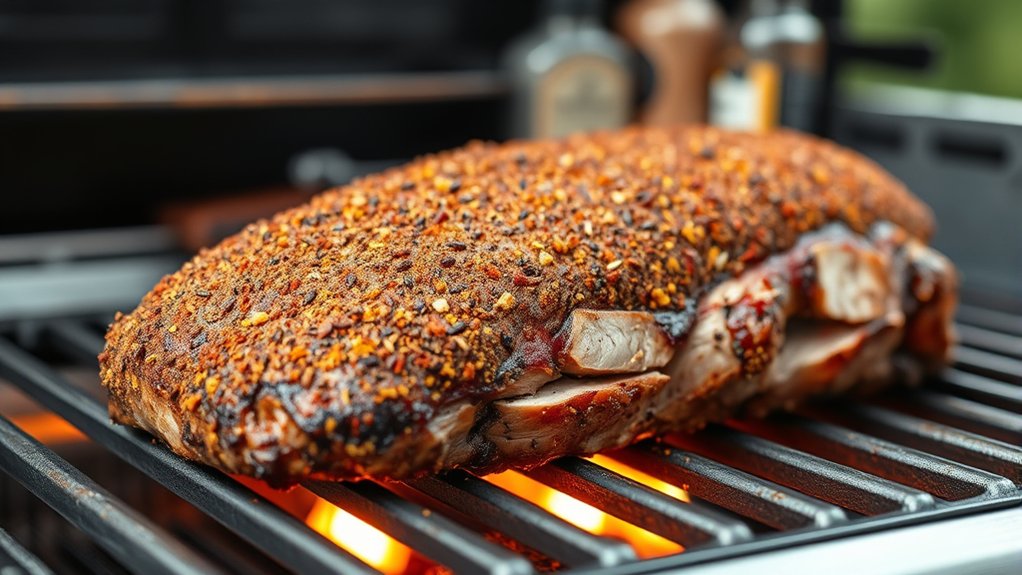
Seasoning and applying rubs is a crucial step in building flavor for your brisket. Start with a base rub, usually a mix of salt, pepper, garlic powder, and paprika. You can also add marinade variations like apple cider vinegar or Worcestershire sauce to boost depth and moisture.
When applying the rub, be generous and coat the entire surface evenly. Press it into the meat for better adhesion. If you like, you can swap out ingredients like cumin, chili powder, or brown sugar for a unique flavor profile.
Let the seasoned brisket rest for at least an hour or refrigerate it overnight. This allows the flavors to penetrate the meat. Remember, balancing saltiness, sweetness, and spice is key to a tasty brisket.
Proper seasoning really boosts the smoky flavor during grilling. It also helps keep your brisket juicy and flavorful from the very first bite.
Monitor Temperature and Smoke During Cooking
Keep an eye on your grill’s temperature to make sure it stays steady while you’re cooking. If it starts to fluctuate, don’t hesitate to adjust the burners to bring the heat back to where it should be. Consistent heat is key to getting that tender, perfectly cooked brisket.
And while you’re at it, keep an eye on the smoke levels too. You want just enough smoke to add flavor without overpowering the meat. Too much smoke can make the flavor bitter, while too little might leave the brisket tasting a bit bland. So, find that sweet spot and you’ll be well on your way to a delicious cook!
Maintaining Consistent Heat
Maintaining consistent heat is key for a perfectly cooked brisket. Keep an eye on your grill’s temperature and smoke levels throughout the process.
Use a reliable digital thermometer to monitor the internal temps so you don’t overcook or undercook. Staying steady with your heat helps the marinade penetrate evenly, boosting flavor and tenderness.
Keep a close watch on your grill’s temperature gauge. Adjust vents or burners as needed to hold that steady 225-250°F. Consistent heat helps build that beautiful bark and keeps the inside juicy.
Stay attentive and patient, knowing that small adjustments bring you closer to brisket perfection. Your dedication will pay off with tender, flavorful meat everyone will rave about.
Managing Smoke Levels
Ever wonder how to balance smoke for the perfect brisket? Managing smoke levels is key. You want enough smoke to infuse flavor without overpowering the meat. Keep an eye on your grill’s temperature to prevent excess smoke production.
Use chimney management by controlling how much fuel and wood chips you add—adding too much creates excess smoke. Adjust the vents to regulate airflow, ensuring steady, light smoke instead of thick clouds. Periodically check the smoker box or wood chip tray and replenish as needed.
If the smoke gets too heavy, open the vents slightly to increase airflow and reduce buildup. Consistently monitoring both temperature and smoke during cooking guarantees a tender, flavorful brisket with a desirable smoke ring.
Check for Doneness and Troubleshoot
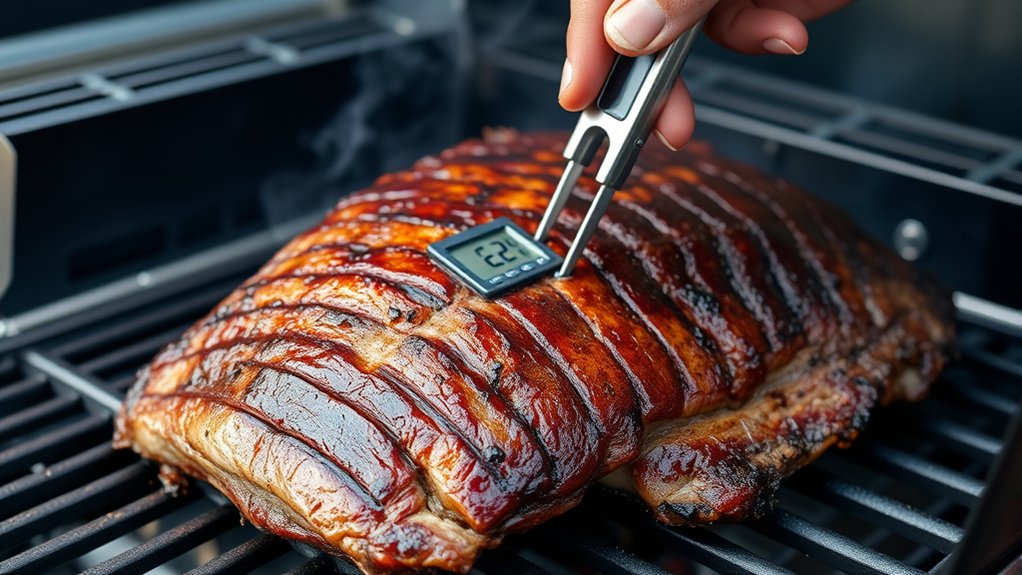
Want to know if your brisket is ready? Just look for some visual clues — it should have a dark, firm crust, and when you poke it, it should feel tender. Using a good meat thermometer is also super helpful to double-check the internal temperature. That way, you can be sure it’s cooked all the way through without going overboard.
If you notice your brisket turning out dry or cooking unevenly, don’t worry. Try turning down the heat on your grill a bit, or you can wrap the brisket in foil to help it stay moist and cook more evenly. These little tricks can make a big difference!
Visual Doneness Indicators
Checking for doneness is key to making sure your brisket is cooked just right and tender. Visual cues help you see if it’s reached that perfect point, so you don’t overdo or underdo it.
Look for a rich, dark bark with a slight crust—that’s a sign of good flavor from your cooking process. The meat should feel tender but still firm when you press on it, and the juices should run clear.
If it’s a bone-in cut, you might notice the meat pulling back from the bones. The surface could develop a glossy, caramelized look as it finishes up.
These signs give you confidence that your brisket is ready to serve. Keep an eye out for these visual clues—they’re your best guide to a delicious, perfectly cooked brisket.
Temperature Testing Methods
Using a reliable meat thermometer is the most accurate way to check if your brisket is done. Just insert it into the thickest part of the meat, avoiding fat or bone.
Aim for an internal temperature of around 195-205°F for the best tenderness. If you’re using other methods like sous vide or oven roasting, a digital probe is great for keeping an eye on the temps.
When buying brisket, look for well-marbled cuts with even color, since quality really impacts how it turns out in flavor and doneness. Temperature testing helps prevent overcooking or undercooking, making sure your brisket is perfectly tender.
Common Troubleshooting Tips
Wondering if your brisket is ready? To check for doneness, rely on a meat thermometer—aim for an internal temp of 195-205°F. If you’re unsure, gently probe the brisket; it should feel tender and yield easily during slicing.
Troubleshoot common issues like dry texture by wrapping the meat in foil or butcher paper to trap moisture, which boosts flavor. If the brisket isn’t tender enough, give it more time on the grill, keeping the heat low.
Keep an eye on the smoke and heat levels to avoid overcooking. Remember, patience is key—rushing can ruin your brisket. Properly sliced, your brisket will be juicy, flavorful, and perfect for sharing.
Trust your senses and enjoy the process.
Rest and Slice Your Brisket Before Serving
Once your brisket is done cooking, it’s really important to let it rest before slicing. Resting helps the juices redistribute, so your meat stays moist and full of flavor. Wrap the brisket loosely in foil and let it rest for at least 15-20 minutes.
This step prevents juices from spilling out when you cut into it. When you’re ready to slice, grab a sharp knife and follow the grain of the meat. For tender slices, cut against the grain, which shortens the muscle fibers and makes each bite easier to chew.
Resting also makes the meat easier to handle, so you can get clean, even slices. Don’t rush this part—patience pays off for a juicy, flavorful brisket. Proper resting and slicing are key to serving a perfect, restaurant-quality brisket right from your grill.
Frequently Asked Questions
What Type of Wood Chips Enhance the Flavor When Grilling Brisket?
You should use hickory or oak wood chips for grilling brisket, as they improve flavor infusion with rich, smoky notes. These wood types produce a balanced smoke that complements the beef’s natural flavors and adds depth.
Soak the chips first for better smoke production, then add them to your grill. The result is a delicious, smoky flavor that lifts your brisket to restaurant-quality perfection.
How Long Should I Let the Brisket Rest Before Slicing?
You should let your brisket rest for at least 20 to 30 minutes before slicing. During this time, keep the cooking temperature steady to help the juices redistribute evenly throughout the meat.
Resting is key to improving tenderness and flavor. It makes sure your brisket stays juicy and tasty with every bite.
Don’t skip this step. It’s essential for getting that perfect texture and flavor after grilling.
Can I Cook Brisket Directly on the Grill Grates Without Foil?
Yes, you can cook brisket directly on the grill grates without foil. Just keep your grill temperature around 225-250°F to ensure even cooking and keep the meat tender.
Place the brisket fat side up to lock in moisture and add flavor. Monitoring the temperature helps prevent drying out, and cooking directly on the grates gives you a nice bark.
Be sure to turn the brisket occasionally for even cooking and check for doneness as you go.
What’s the Best Way to Prevent Flare-Ups During Grilling?
Flare-up causes often come from fat drippings and high grill temperatures. To prevent them, keep your grill temperature in check and avoid piling up too much fat.
Use indirect heat and position your brisket away from direct flames. Keep a spray bottle of water nearby to quickly tame any unexpected flare-ups.
Make sure to regularly monitor your grill. Adjust the vents or burners as needed to keep the heat even and your grilling safer.
How Do I Store Leftover Brisket Safely?
To store leftover brisket safely, quickly refrigerate it in airtight containers or wrap it tightly in foil or plastic wrap. Keep the meat at or below 40°F to stop bacteria from growing.
If you want to keep it longer, freezing is a good option. Proper storage helps keep the flavor and makes sure the meat stays safe to eat.
Make sure to eat leftovers within 3-4 days. When reheating, do it thoroughly to ensure it’s safe before enjoying again.
Conclusion
Now that you’ve mastered the art of grilling brisket, you’re ready to turn your backyard into a smoky, savory sanctuary. With each step, you’re painting a masterpiece of flavor, like tending a gentle fire that whispers secrets of tenderness and smoke.
As you carve into that juicy, melt-in-your-mouth brisket, remember: you’re not just cooking. You’re creating memories that will linger long after the feast ends, just like a warm, comforting breeze.