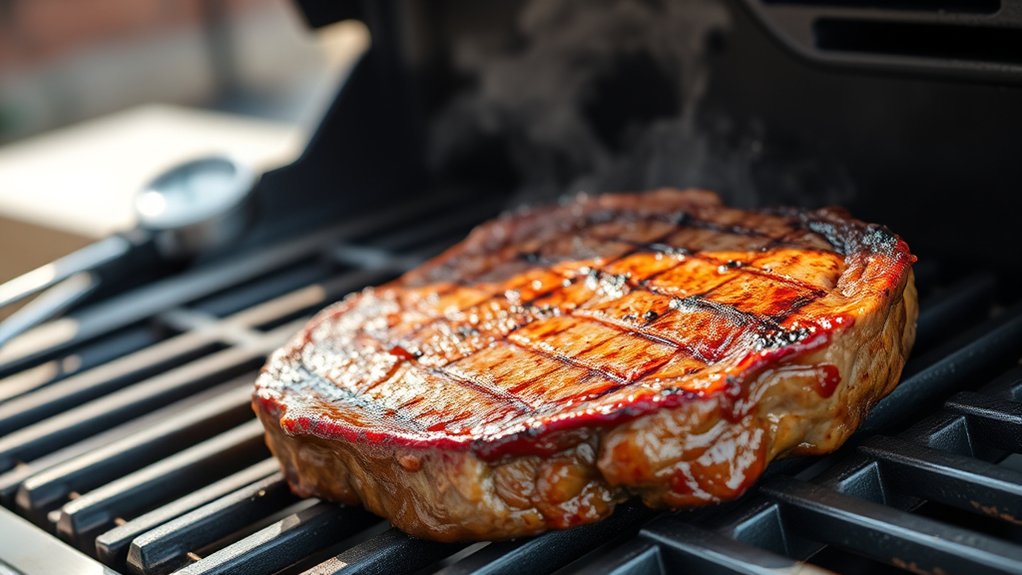
Grill a Perfect Ribeye Steak on a Gas Grill in 6 Simple Steps
Cooking the perfect ribeye steak on a gas grill is something many burger lovers dream of, but it can feel tricky to get it just right. You’re not alone—everyone wants that beautiful sear and juicy interior, without overcooking or under-seasoning.
Luckily, with a few simple steps, you can master grilling a delicious ribeye every time.
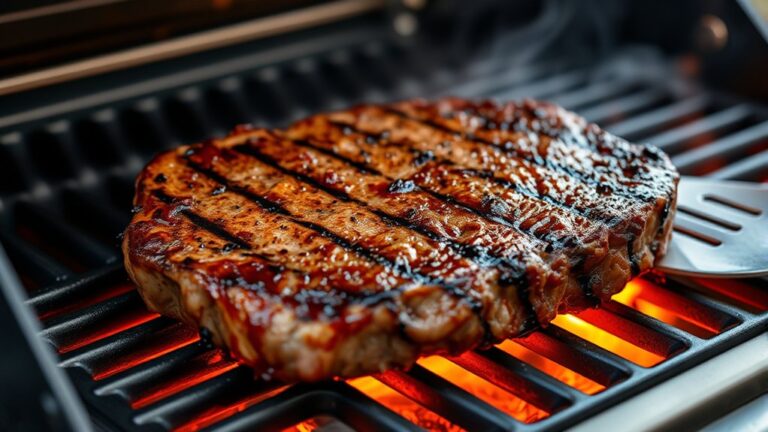
To grill a perfect ribeye on your gas grill, start by choosing a 1.5–2 inch thick steak with good marbling and letting it rest at room temperature for 30 minutes.
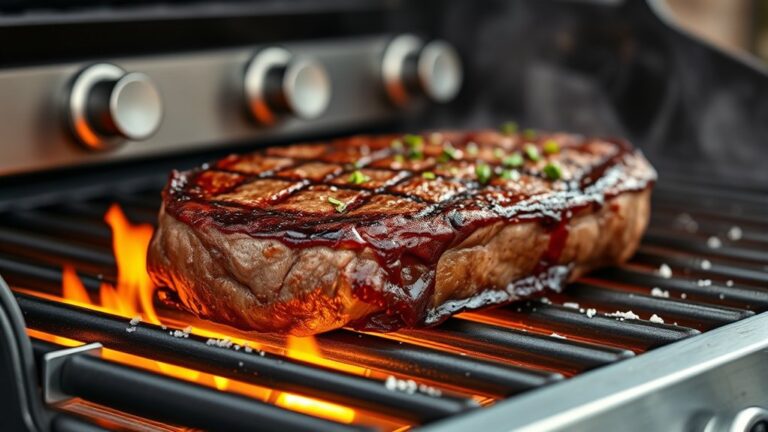
Preheat the grill to 450-500°F, then season your steak evenly with coarse salt and pepper just before grilling.
Grill for a few minutes per side until the desired doneness, then rest for 5-10 minutes.
For step-by-step tips to enhance your steak, keep exploring.
Key Takeaways
- Preheat the gas grill to 450-500°F for the best sear and even heat.
- Prepare the ribeye by letting it rest, patting it dry, and seasoning with coarse salt, pepper, and herbs.
- Grill the steak over high heat, flipping once, until it reaches your preferred internal temperature.
- Use a meat thermometer to check doneness and take the steak off at the right time.
- Let it rest for 5-10 minutes before slicing against the grain for maximum tenderness.
Pick and Prepare Your Ribeye for Perfect Grilling
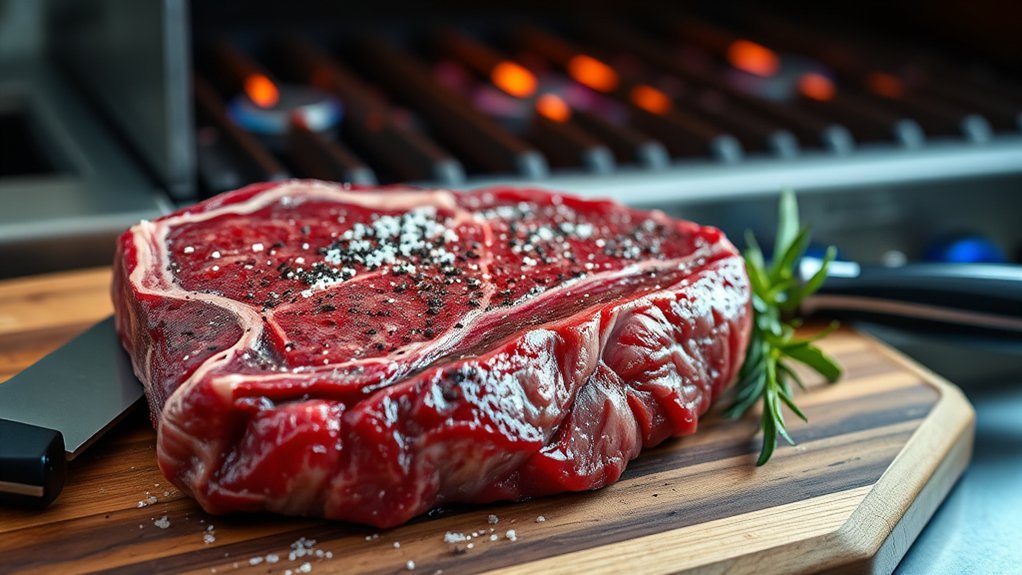
Choosing the right ribeye is essential for a perfect grill. Start by examining the steak’s marbling techniques—look for even, white streaks of fat throughout the meat. These intramuscular fats melt during grilling, adding flavor and juiciness.
Choose a ribeye with even marbling for maximum flavor and juiciness.
Aim for a ribeye with abundant marbling but not excessive fat, which guarantees a tender, flavorful bite. Next, consider the steak thickness; ideally, a 1.5 to 2-inch cut works best for grilling.
Thicker steaks allow you to develop a good crust without overcooking the interior. When preparing, let the steak sit at room temperature for about 30 minutes to promote even cooking.
Pat it dry with paper towels to remove excess moisture, which helps achieve a better sear. Season generously with salt and pepper just before grilling.
Properly selecting and preparing your ribeye guarantees it’s ready to deliver maximum flavor and perfect texture once cooked.
Preheat Your Grill to the Right Temperature
So, to get those nice grill marks and a juicy steak, you want to preheat your grill to the right temperature—usually between 450°F and 500°F. It’s a good idea to use a thermometer to make sure you hit that perfect range; that way, you avoid ending up with undercooked or overcooked meat.
Just give your grill about 15 minutes to preheat. This helps ensure the heat is evenly distributed across the grates before you toss on your ribeye.
Ideal Temperature Range
Getting your grill to the right temperature is key for cooking a perfect ribeye steak. The ideal range is between 450°F and 500°F.
This high heat helps you get a nice sear and keeps the inside juicy. It’s all about balancing that crust with the right level of doneness inside.
Keeping your grill within this range lets you control the cooking process better. It’s the best way to make sure your steak turns out just right.
If the grill is too hot, the outside might burn before the inside is done. If it’s too cool, you won’t get that beautiful sear.
Stick to this temperature range, and you’ll have a perfectly cooked ribeye every time.
Use a Thermometer
Before placing your steak on the grill, make sure to use a reliable thermometer to check that it’s preheated to the right temperature. Proper preheating helps ensure even cooking, highlights the meat’s marbling, and boosts flavor.
To check, insert the thermometer probe into the grill’s lid or side vent, away from direct flames. Wait until it reaches your target temperature, usually around 450-500°F.
Adjust the grill’s heat as needed so it’s evenly heated before adding your seasoned ribeye. This precision helps the seasoning develop fully and melts the marbling, making the meat juicy and tender.
Skipping this step can lead to uneven cooking and less flavor. Investing in a good thermometer is worth it for perfect results every time.
Preheat Time Duration
Allow the grill to preheat for at least 10 to 15 minutes to reach the ideal temperature of 450-500°F. Proper preheating guarantees even cooking and helps maintain grill safety.
While waiting, check your equipment maintenance—clean grates and burners to prevent flare-ups. A well-preheated grill creates a sear that locks in flavor and juices.
Use the table below to understand optimal preheat times based on grill type and weather conditions:
| Grill Type | Preheat Time | Notes |
|---|---|---|
| Gas Grill | 10-15 mins | Ensure burners are clean |
| Charcoal Grill | 15-20 mins | Create a consistent ash bed |
| Electric Grill | 10 mins | Check power connection |
This attention to preheat time promotes safe, effective grilling.
Season Your Steak for Maximum Flavor
Seasoning your steak properly is key to unlocking its full flavor potential. To boost the taste, try marinades that infuse the meat with complementary flavors. Proper seasoning helps create a savory crust and makes sure every bite is packed with flavor.
Here are three ways to maximize that deliciousness:
- Apply a dry rub: Mix salt, pepper, and your favorite herbs for a balanced seasoning. Let it sit for at least 30 minutes before grilling.
- Use marinades: Add acid, oil, and aromatics to tenderize and deepen the flavor. Marinate for 1-2 hours for the best infusion.
- Season just before grilling: Lightly season with salt and pepper right before placing your steak on the grill. This helps form a tasty crust without drawing out moisture.
Try out these techniques to find your perfect flavor profile and make sure every bite of your ribeye is bursting with deliciousness.
Grill to Your Desired Level of Doneness
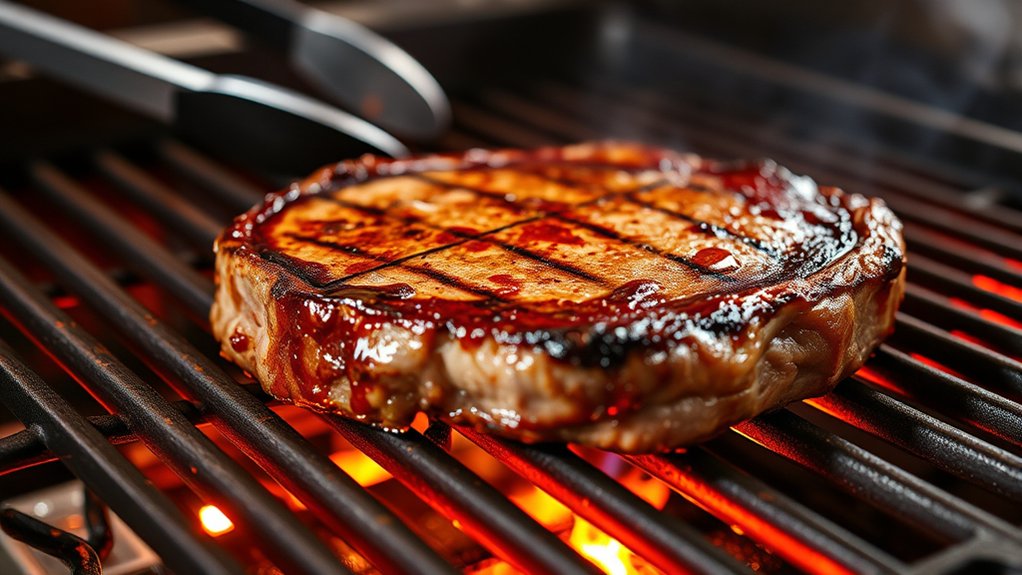
Once your steak is seasoned to perfection, the next step is to cook it to your preferred level of doneness. This involves using the right techniques to hit the right internal temperature.
Use a meat thermometer to check how your steak is doing. For rare, aim for 120-125°F, while medium-rare is around 130-135°F. Medium takes about 140-145°F, and well-done is 160°F or higher.
Adjust your grill’s heat as needed to control the cooking process and avoid overcooking. Remember, the longer you cook, the less tender the meat gets, so timing is key for tender, juicy steak.
Turn the steak regularly for even cooking. Keep in mind that residual heat will continue to cook the steak slightly after you remove it from the grill.
Following these tips helps ensure your ribeye reaches the perfect doneness while staying tender and flavorful.
Rest Your Steak to Lock in Juices
After you finish grilling your steak, give it a few minutes to rest. This little pause helps the juices settle back into the meat, making sure every bite is juicy and flavorful.
If you skip this step, your steak might end up a bit drier and less tasty because those juices will just run out when you cut into it. So, patience really pays off for a perfect, juicy steak!
Rest Time Matters
Resting your steak after grilling is key to locking in those juicy flavors and getting that perfect tenderness. During this time, the meat lets its juices settle, so they don’t spill out when you slice into it.
To make the most of this, try marinating your steak beforehand to boost flavor and moisture. Cover it loosely with foil or a resting tent to keep it warm without trapping too much steam.
Wait at least 5-10 minutes, depending on how thick your steak is, before slicing. This little break helps the juices redistribute, giving you a juicier, more flavorful steak.
Juices Redistribute Properly
When you let your steak sit after grilling, the juices inside have a chance to settle and redistribute throughout the meat. This resting period guarantees every bite stays juicy and flavorful. Proper resting allows the meat’s natural juices, improved by marinating techniques or steak sourcing, to spread evenly and prevents them from spilling out when sliced.
For the best results, wait about 5-10 minutes, loosely tenting the steak with foil if needed. This step is vital whether you chose high-quality, well-sourced steak or a simple marinade. Resting locks in moisture and tenderness so your ribeye stays juicy and satisfying.
Skipping this step can cause your steak to lose its juices, resulting in a drier, less flavorful experience.
Serve and Enjoy Your Restaurant-Quality Ribeye
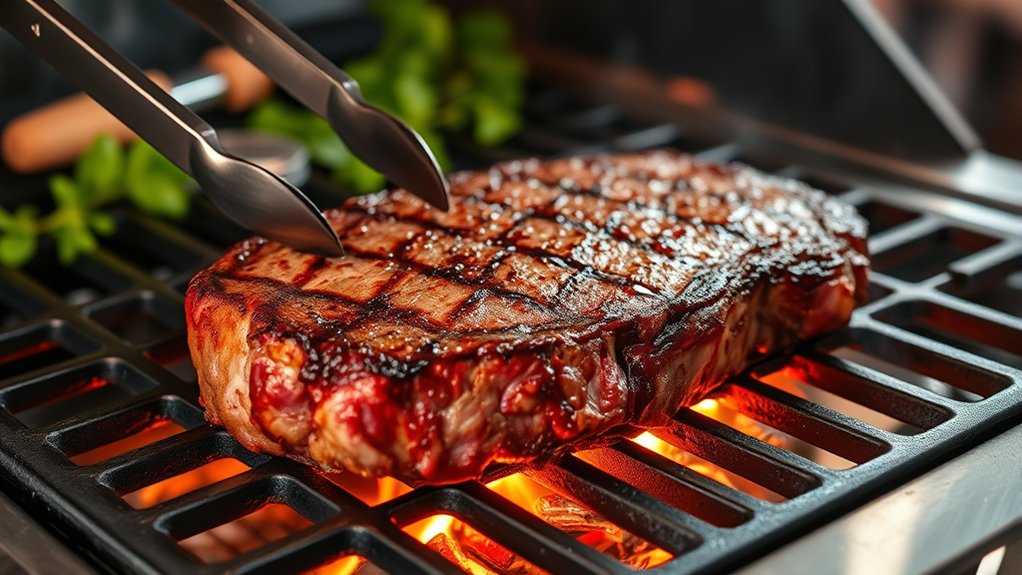
Are you ready to savor your perfectly cooked ribeye? Before serving, let the steak rest for a few minutes. This helps the juices settle, so each bite stays flavorful and juicy.
When it’s time to serve, keep these tips in mind:
- Assess the marbling patterns to make sure the fat is evenly distributed. This boosts both flavor and tenderness.
- Check the steak thickness and slice against the grain for maximum tenderness.
- Plate with finesse by placing the ribeye on a warm plate to keep it at the perfect temperature.
Slice the steak carefully, and highlight the marbling for a visually appealing presentation. Resting and proper slicing really elevate the dining experience, making it feel restaurant-quality.
Pair your ribeye with your favorite sides and a glass of bold red wine. Now, sit back, relax, and enjoy every delicious, perfectly cooked bite!
Frequently Asked Questions
What Is the Best Type of Charcoal or Wood Chips for Grilling Ribeye?
For the best flavor infusion and smoke improvement, opt for hickory or mesquite wood chips. They add a rich, bold smoky taste to your ribeye.
If you prefer a milder flavor, cherry or apple wood chips work well, offering a sweeter aroma. Avoid softwoods like pine, which can produce harsh, unpleasant flavors.
Soak your chosen wood chips before grilling to ensure they smolder slowly and infuse your steak beautifully.
How Do I Prevent My Steak From Sticking to the Grill?
Your steak’s sticking? It’s like trying to stick a magnet to a non-magnetic surface! To prevent this culinary catastrophe, use marinade techniques that create a natural barrier—think of it as a non-stick magic potion.
Seasoning secrets also matter: brush your steak with oil before grilling, ensuring a slick surface that slides right off the grill grates. This combo keeps your steak perfect, juicy, and effortlessly delicious!
Can I Cook a Ribeye Directly From the Refrigerator?
Yes, you can cook a ribeye directly from the refrigerator, but letting it sit at room temperature for about 30 minutes can help it cook more evenly.
This small step makes a big difference in how your steak turns out.
Before grilling, try marinating or seasoning your steak to boost flavor.
A well-seasoned or marinated ribeye will develop a tasty crust and stay juicy.
Cooking it straight from the fridge is fine, but these tips can help you get a perfectly cooked, flavorful steak.
What’s the Ideal Thickness for a Perfect Ribeye Steak?
For a perfect ribeye, aim for about 1.5 inches thick. This reveals stunning marbling patterns that melt with each bite.
Visualize the rich, velvety fat intertwined throughout the meat, a sign of quality from the steak aging processes.
This thickness balances tenderness and flavor, allowing you to achieve a beautiful sear while keeping the interior juicy.
Too thin, and you risk overcooking. Too thick, and it won’t cook evenly.
How Do I Clean and Maintain My Gas Grill After Cooking?
After cooking, clean the grates with a wire brush while they’re still warm to get rid of food residue. It’s a quick step that keeps your grill in good shape.
Use a damp cloth or sponge to wipe down the exterior surfaces. Checking the burners for blockages is also important to keep everything working smoothly.
Regularly empty the drip tray and inspect the propane connections for leaks. Proper maintenance helps your gas grill last longer and makes sure your meals are safe and delicious every time.
Conclusion
Now that you’ve mastered the art of grilling a perfect ribeye, remember that patience and precision are your best tools. As the steak rests, it’s a quiet moment of anticipation—like the calm before a storm.
When you finally cut into it, the tender, flavorful interior contrasts beautifully with the smoky char on the outside. It’s a reminder that great grilling, like life, is about savoring the process and enjoying the reward.