How Long to Grill Chicken Kabobs on a Gas Grill
Many people struggle with getting chicken kabobs perfectly grilled—juicy inside, charred outside, and cooked just right. If you’re tired of unevenly cooked meat or guessing when they’re done, you’re not alone. Achieving that ideal grill mark and tender texture can be tricky without the right techniques.
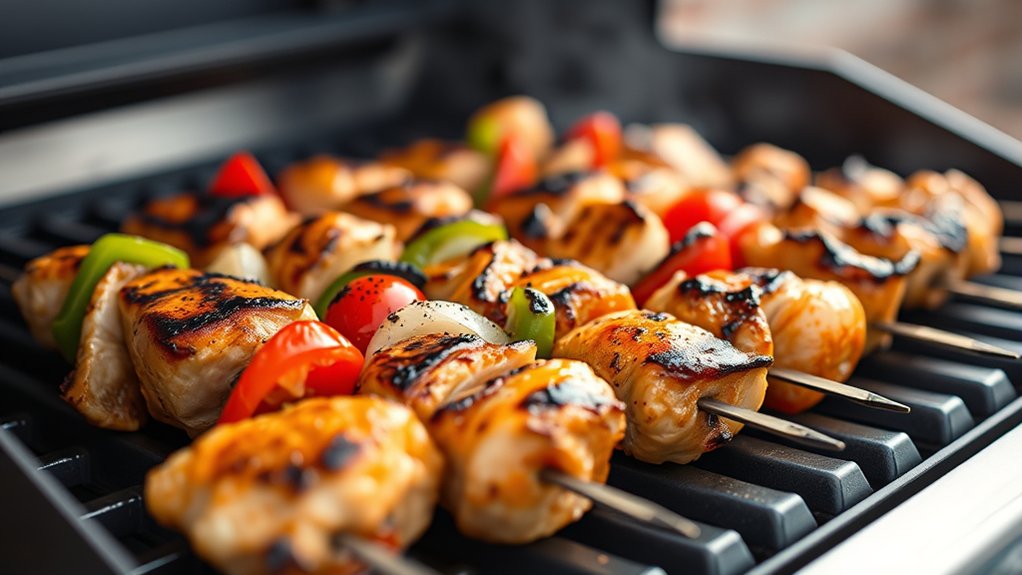
Grill chicken kabobs on a gas grill for about 10 to 15 minutes over medium-high heat, turning every few minutes for even cooking. The key is to maintain a grill temperature around 375°F to 400°F and use a two-zone setup—searing over direct heat then finishing on indirect heat.
Keep an eye out for clear juices, firm but slightly springy meat, and a golden-brown color. For tips on perfecting your technique, delve into the details ahead.
Key Takeaways
- Grill chicken kabobs over medium-high heat (375°F–400°F) for about 10 to 15 minutes.
- Turn the skewers every few minutes to ensure even cooking and prevent burning.
- Use a meat thermometer to check the internal temperature; aim for 165°F for safety.
- Keep in mind, smaller chicken pieces will cook faster, so adjust the time as needed.
- Let the kabobs rest for 3 to 5 minutes after grilling to keep the juices in and boost the flavor.
How Long Should You Grill Chicken Kabobs on a Gas Grill?
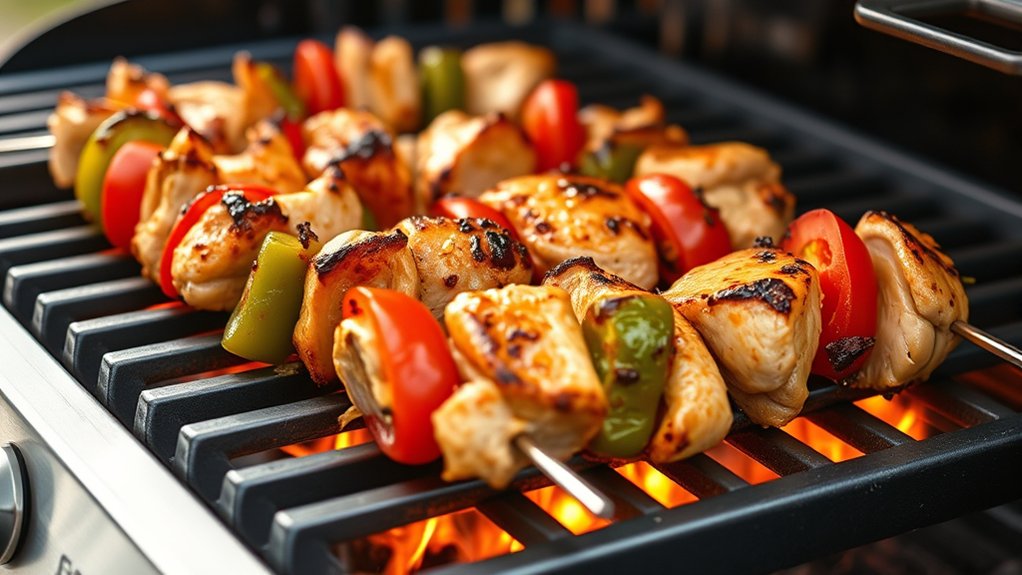
When grilling chicken kabobs on a gas grill, the typical cooking time is about 10 to 15 minutes. To make sure they cook evenly, start with a good marinade—marinate the chicken for at least 30 minutes to boost flavor and tenderness.
When preparing your kabobs, think about your skewer options. Metal skewers conduct heat better and don’t need soaking, while wooden skewers should be soaked in water for 30 minutes to prevent burning.
Place the skewers on the grill over medium-high heat, turning every few minutes. This helps cook the chicken evenly and prevents sticking. Keep an eye on the internal temperature, aiming for 165°F to ensure it’s safe to eat.
What Factors Affect the Cooking Time of Chicken Kabobs?
Several factors can influence how long it takes to cook chicken kabobs, so it’s important to consider variables like the size of the chicken pieces, the heat level of your grill, and the type of skewer you use. These elements directly affect cooking techniques and flavor, impacting both timing and taste.
Think about these factors:
- Size of chicken chunks – bigger pieces will take longer to cook all the way through.
- Grill temperature – higher heat speeds up cooking but can cause charring if not careful.
- Type of skewer – metal skewers conduct heat differently than wooden ones.
- Marinade and seasoning – ingredients like sugars or acids can influence cooking time, especially if they caramelize or break down during grilling.
Adjusting these variables helps ensure your kabobs are cooked perfectly, juicy inside, and flavorful. Understanding these factors lets you master timing for delicious, evenly cooked chicken kabobs every time.
How to Prepare Chicken and Vegetables for Even Grilling
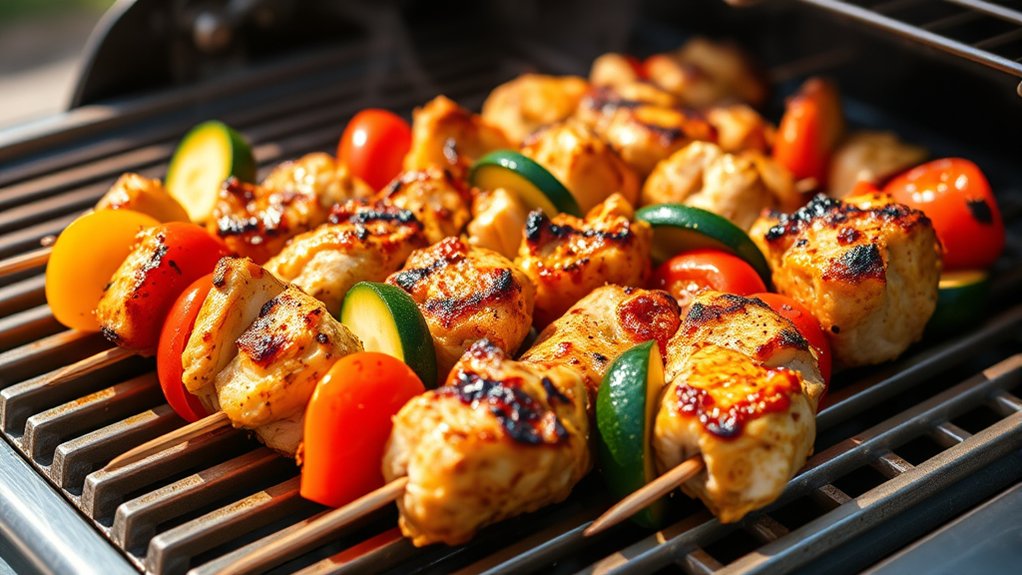
To make sure your chicken and vegetables grill evenly, it’s a good idea to start with proper cutting and marinating. When everything’s prepared well, they’ll cook uniformly and stay full of flavor.
Make sure to cut your vegetables into similar sizes. That way, none of them will overcook or stay underdone—everything comes off the grill at just the right time. When your kabobs are prepared this way, they’ll cook evenly and taste amazing from start to finish.
Properly Cut and Marinate
Properly cutting and marinating your chicken and vegetables is key for even grilling and great flavor. When prepping, aim for uniform sizes so everything cooks evenly.
For flavor, try marinating chicken in lemon, garlic, and herbs. Vegetables can soak up soy sauce, honey, or your favorite spices. Cut chicken into 1.5-inch cubes, and vegetables into similar-sized pieces.
Store marinated ingredients in airtight containers in the fridge. This prevents contamination and keeps the flavors fresh. Marinate for at least 30 minutes, but no longer than 4 hours for the best taste.
Uniformly Size Vegetables
Cutting your vegetables into uniform sizes guarantees they cook evenly alongside the chicken. When prepping, aim for pieces roughly the same size to ensure consistent grilling. This also allows the vegetables to absorb your favorite seasoning evenly, boosting flavor.
Use a sturdy skewer material, like metal or soaked wooden skewers, to prevent burning or splintering during grilling. Uniform pieces help avoid some vegetables overcooking while others remain underdone.
Keep in mind that thicker vegetables may need a bit more time, so cut them slightly smaller if necessary. Properly sized vegetables not only cook evenly but also look more appealing on the skewer.
This simple step makes your grilled chicken kabobs more delicious and visually attractive, ensuring a perfect meal every time.
What Are the Best Gas Grill Settings for Chicken Kabobs?
When grilling chicken kabobs on a gas grill, setting the right temperature is key for juicy, evenly cooked meat. Aim for around 375°F to 400°F — this strikes a good balance between proper cooking and getting that smoky flavor.
Start by preheating your grill to medium-high heat. Make sure the heat is evenly distributed so your kabobs cook uniformly. Keep the lid closed as much as possible to maintain a consistent temperature and trap that delicious smoke.
Preheat your grill to medium-high, ensuring even heat distribution and keeping the lid closed for consistent temperature and smoky flavor.
Use direct heat to sear the kabobs and develop a nice crust, then move them to indirect heat to finish cooking. This avoids burning the outside while keeping the inside juicy.
Adjust your burners to keep the temperature steady. Be cautious of flare-ups, which can char your chicken.
Sticking to this temperature range helps you get that rich smoky flavor without overcooking. The right settings make sure your chicken kabobs are juicy inside and full of smoky aroma outside — making your grilling session a success.
How Do You Check If Your Chicken Kabobs Are Done?
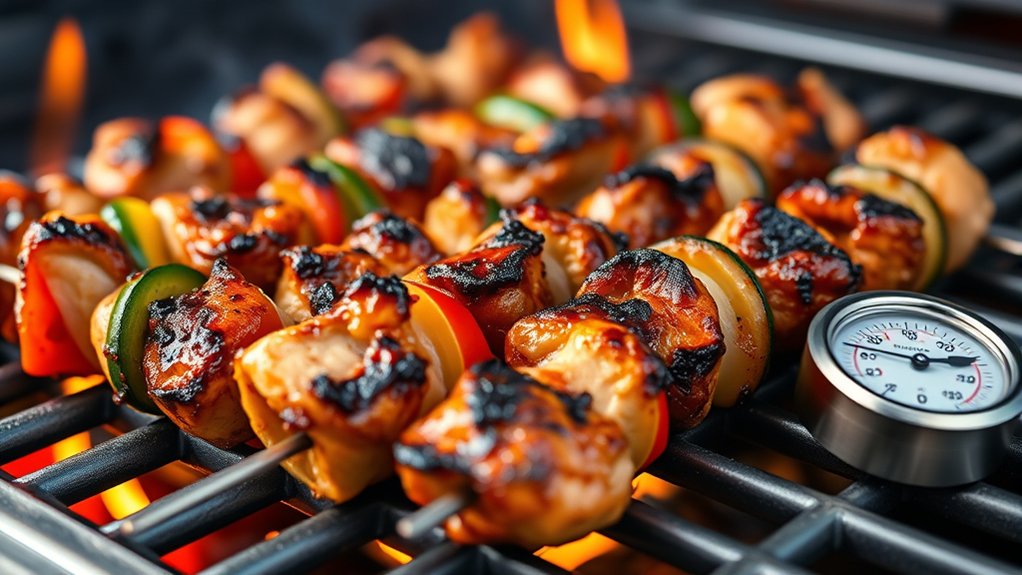
Want to know if your chicken kabobs are ready? One easy way is to look for a color change—they should turn a nice, firm, and opaque color. But if you really want to be sure, grab a meat thermometer. Just stick it into the thickest part of the chicken, and make sure it hits 165°F. That way, you’ll know they’re safely cooked and still juicy and delicious.
Visual Color Change
Checking the color of your chicken kabobs is one of the easiest ways to see if they’re done. Look for a clear change from raw to cooked. As the chicken cooks, it goes from a pinkish hue to a solid white or opaque look.
Use these visual clues: The raw pink fades away and is replaced by a white, opaque color. Juices run clear when you press on the meat. The surface gets a slight golden-brown color.
You’ll also notice the meat’s texture firming up and losing its glossy, raw appearance. These visual cues show your chicken is properly cooked, helping you avoid under or overcooking.
Focusing on the color change is a quick, reliable way to check if your chicken kabobs are ready without slicing into them.
Internal Temperature Check
While visual cues like color change are helpful, checking the internal temperature gives a more accurate way to make sure your chicken kabobs are fully cooked. Use a meat thermometer and insert it into the thickest part of a piece for the best reading.
For safety and flavor, chicken needs to reach an internal temperature of 165°F (74°C). This means the juices run clear, and the meat stays juicy and safe to eat.
Use grilling tools like tongs or a skewer holder to handle the kabobs easily. A quick temperature check guarantees your kabobs come out perfectly cooked and full of flavor.
Signs That Your Chicken Kabobs Are Fully Cooked and Ready to Serve
Knowing when chicken kabobs are fully cooked is really important for safety and flavor. You want to make sure the meat is safe to eat while still looking appetizing. Here are some signs to watch for:
The juices should run clear when you pierce the meat, with no pink or red remaining.
The surface of the meat should have a golden-brown color and some slight charring, which shows it’s cooked well and looks appealing.
The chicken should feel firm but still slightly springy to the touch, indicating it’s cooked through.
Using a meat thermometer, check that the internal temperature has reached 165°F (74°C). That’s a key sign it’s safe to eat.
Pay attention to these signs to avoid undercooking or overcooking your kabobs. Properly cooked chicken makes your dish look great and ensures everyone stays safe and happy.
Common Mistakes That Ruin Your Chicken Kabobs
A big mistake people often make is overcrowding the grill. When that happens, your chicken can end up cooking unevenly, and those nice grill marks might be missing too. It’s all about giving each piece enough space so they cook properly and look good.
Another thing to watch out for is skipping on the marinade or not letting the chicken soak up enough flavor. Without it, your kabobs can turn out dry, flavorless, and not as juicy or tender as you want. Paying attention to these little details really makes a difference and helps ensure your chicken turns out perfect every time.
Overcrowding Grill Space
Overcrowding your grill can quickly turn a perfect batch of chicken kabobs into a mess. When you pack too many skewers, heat doesn’t circulate properly, which can lead to uneven cooking and safety hazards. To avoid this, keep these tips in mind:
- Leave space between kabobs for airflow and even heat distribution.
- Use kitchen tools like tongs to handle skewers without jostling others.
- Keep a safe distance from flames to prevent flare-ups.
- Don’t stack skewers on top of each other—this can compromise grill safety and cooking quality.
Overcrowding can cause food to stick, burn, or cook unevenly, ruining your meal. Keep your grill well-spaced and organized to guarantee perfect chicken kabobs every time.
Ignoring Proper Marinade
Failing to properly marinade your chicken can lead to dry, bland, or tough kabobs. Marinade neglect is a common mistake that robs your chicken of flavor and moisture.
Without a good marinade, your seasoning oversight results in dull taste and less tender meat. A well-balanced marinade not only adds flavor but also helps keep the chicken juicy during grilling.
Skipping this step means missing out on the chance to infuse your kabobs with herbs, spices, and acids that break down muscle fibers. If you don’t marinate long enough or ignore this step altogether, your chicken won’t develop the flavor or tenderness you want.
Proper marination is essential for juicy, flavorful chicken kabobs that impress every time.
How to Achieve a Perfect Char Without Burning the Chicken
Achieving a perfect char on your chicken kabobs without burning them requires careful control of the heat and timing. To prevent charring, start by managing your grill’s temperature, keeping it at medium-high. Focus on flavor pairing; choosing ingredients that complement the marinade helps elevate taste without overcooking. Use marinade techniques that add moisture and barrier protection, like oil-based marinades that prevent sticking and burns.
Here are key tips:
- Preheat the grill evenly to avoid hotspots that cause uneven charring.
- Keep the chicken moving, turning kabobs frequently for a uniform color.
- Use a two-zone setup—direct heat for searing and indirect heat for finishing.
- Brush with marinade or oil during grilling to keep the chicken moist and prevent sticking.
Mastering these steps ensures a beautifully charred exterior while keeping the chicken juicy and flavorful.
How to Adjust Cooking Time Based on Chicken Size and Skewer Type
Adjusting cooking time based on chicken size and skewer type is key to making sure your kabobs cook evenly without drying out.
Smaller chicken pieces cook faster, so cut down on grilling time to avoid overcooking. Larger chunks need a bit more time, but keep an eye out for flare-ups or uneven heat.
The type of skewer also affects cooking. Metal skewers conduct heat more evenly, which can speed things up, so check for doneness sooner.
Wooden skewers, especially if soaked beforehand, might insulate the chicken a bit, meaning you’ll need to cook a little longer. When setting your grill temperature, aim for a steady medium-high heat around 375°F to 400°F.
This helps the chicken cook through without burning the outside. Always keep an eye on your grill’s temperature and adjust as needed.
How Long Should You Rest Your Chicken Kabobs Before Serving?
After removing your chicken kabobs from the grill, it’s important to let them rest for a few minutes before serving. Resting allows the juices to redistribute, which boosts flavor and keeps the meat moist.
During this short break, the heat keeps working through the chicken, making each bite tender and flavorful.
Picture the juices settling back into the meat, so they don’t spill out when you cut. The kabobs will steam slightly as residual heat finishes cooking, and the aroma will intensify, hinting at the delicious flavors inside.
You might notice a slight, appetizing sheen on the surface, showing the moisture is locked in. Waiting 3 to 5 minutes is just right—it balances flavor development with freshness.
Skipping this step can lead to dry meat and muted flavors, so give your kabobs this quick rest for the best taste.
Frequently Asked Questions
Can You Grill Chicken Kabobs Directly on the Grill Grates?
Yes, you can grill chicken kabobs directly on the grill grates, but using skewer alternatives like a grilling basket or cast-iron pan can make flipping easier and prevent pieces from falling through.
Set your grill to a medium-high temperature, around 375°F to 400°F, to ensure even cooking. Keep an eye on the kabobs and turn them regularly for a juicy, perfectly grilled result.
What’s the Ideal Marinade Duration for Tender Chicken Kabobs?
For tender chicken kabobs, aim for a marinade time of at least 30 minutes, but ideally 2 to 4 hours. This allows the flavors to really soak into the meat, making each bite juicy and tasty.
If you want an even more intense flavor, marinate for up to 24 hours. Just keep in mind that longer marinating helps with flavor but can affect the chicken’s texture if left too long.
Should You Soak Wooden Skewers Before Grilling?
You should soak wooden skewers before grilling to prevent them from burning, which is a no-brainer. Soaking guarantees skewer safety and keeps your kabobs intact.
If you prefer, choose wooden skewer alternatives like metal or bamboo skewers that don’t need soaking. This way, you avoid any mishaps and enjoy your grilling session without worry.
Making the whole process smooth as silk is just a matter of picking the right skewers. So, either soak your wooden ones or go for the hassle-free options!
How Do You Prevent Chicken From Sticking to the Grill?
To prevent chicken from sticking to the grill, start by preheating your grill to a medium-high temperature, around 375-450°F. Make sure your grill grates are clean and lightly oiled before placing the skewers.
Maintain proper skewer spacing to prevent overcrowding, allowing heat to circulate evenly. Also, avoid flipping the chicken too early; let it develop a good sear.
These steps help keep your chicken tender and intact.
What’s the Best Way to Keep Vegetables From Overcooking?
To keep vegetables from overcooking, you need to watch them closely, making sure they stay tender without turning to mush.
Use skewers or a grill basket to control their exposure, and turn them frequently for even cooking.
Start checking for tenderness early, and remove them promptly once they reach your preferred texture.
This way, you prevent overcooking and enjoy perfectly grilled, flavorful veggies every time.
Conclusion
Cooking chicken kabobs on a gas grill usually takes about 10-15 minutes, depending on their size and the heat level. Keep an eye on them to prevent overcooking.
About 75% of grill enthusiasts have overcooked their kabobs at least once, which makes the meat dry and less flavorful. Monitoring your chicken and maintaining proper grill settings is the key to juicy, delicious results.
With a little practice, you’ll be able to master perfect chicken kabobs that impress everyone at your next cookout. Remember, proper grilling techniques are essential for flavorful chicken kabobs on a gas grill.