Mastering Gas Grill Pork Chops for Perfection
Cooking perfect gas grill pork chops can be tricky, and you’re not alone if you’ve struggled with dryness or uneven cooking. Many people want juicy, flavorful chops but aren’t sure how to get that restaurant-quality result at home.
To master gas grill pork chops for perfection, start by choosing 1.5-inch thick, bone-in cuts for flavor and juiciness. Preheat your grill to 375°F-400°F and control heat zones for even cooking. Season or marinate your chops beforehand, then sear over high heat for grill marks.
Cook to 145°F internal temperature, then let them rest. For expert tips on avoiding common issues and adding flavor, keep exploring to enhance your grilling skills.
Key Takeaways
- Preheat the grill to 375°F-400°F, clean the grates, and create consistent heat zones for even cooking.
- Choose 1.5-inch thick bone-in or boneless pork chops. Marinate them for flavor, then pat dry before grilling.
- Sear the chops over high heat, around 450-500°F, for 2-3 minutes per side to get those nice grill marks and a crust.
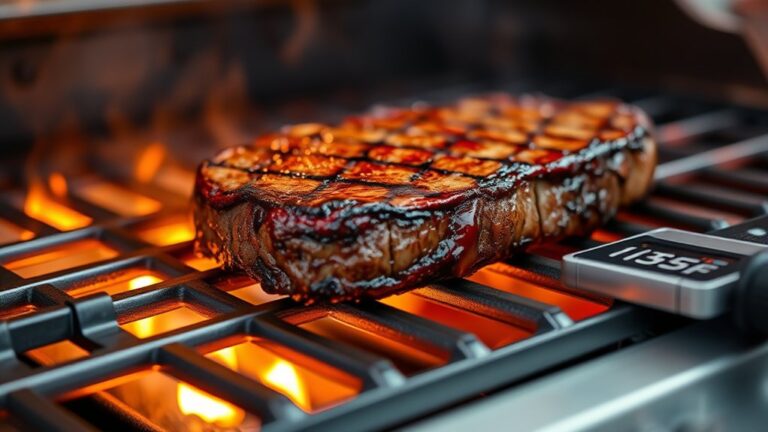
- Use a meat thermometer to cook the pork chops to an internal temperature of 145°F. This ensures they’re safe and juicy.
- Let the meat rest for 5 minutes after grilling. Finish with herbs or citrus to boost the flavor.
Why Juicy, Perfectly Cooked Pork Chops Make All the Difference
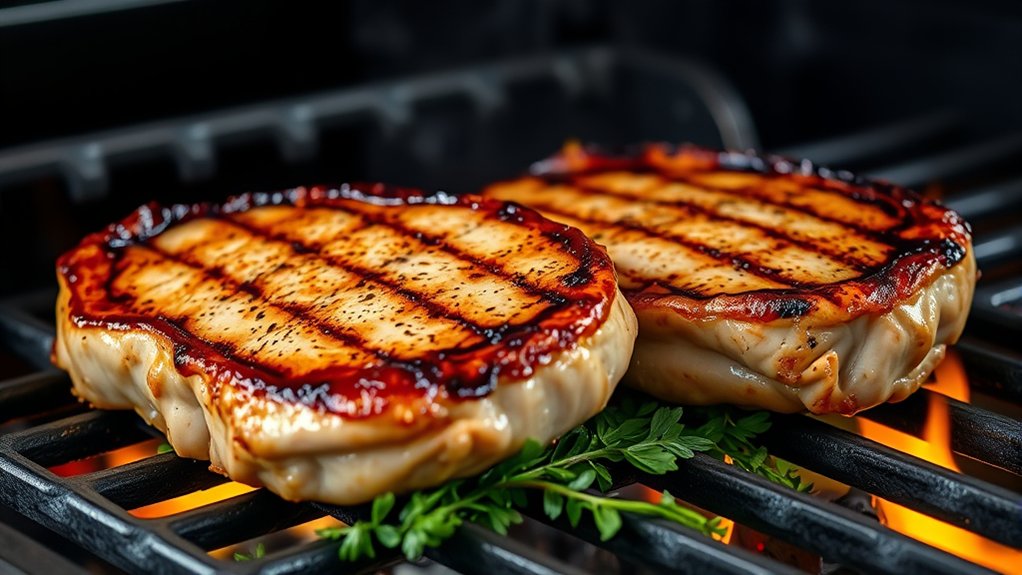
Juicy, perfectly cooked pork chops elevate any meal and leave everyone craving seconds. Paying attention to thickness helps you cook them evenly, keeping the meat moist without drying it out.
Juicy, perfectly cooked pork chops come from even cooking and careful thickness attention.
Thicker cuts, around ¾ to 1 inch, give you more room to master the perfect doneness. Thinner chops cook quickly and can become tough if you’re not careful.
Marination is also key—helping tenderize the meat and infusing it with flavor. A good marinade with acids, oils, and seasonings improves moisture retention and adds depth.
When you combine the right thickness with effective marination, you’re setting yourself up for success. Juicy pork chops aren’t just about taste—they’re about biting into tender, flavorful meat cooked just right.
This makes all the difference in creating a memorable grilling meal.
How to Pick the Best Pork Chops for Grilling
Here’s a quick comparison:
| Aspect | Details |
|---|---|
| Pork chop thickness | ¾ inch is less ideal, while 1.5 inches is best |
| Bone in vs. boneless | Bone-in adds flavor, boneless cooks faster |
Bone-in chops tend to be more flavorful, but boneless cuts are easier to handle. For the best grilling results, go for thicker, bone-in chops to keep the meat juicy and tender every time.
Preparing Pork Chops for Maximum Juiciness and Flavor
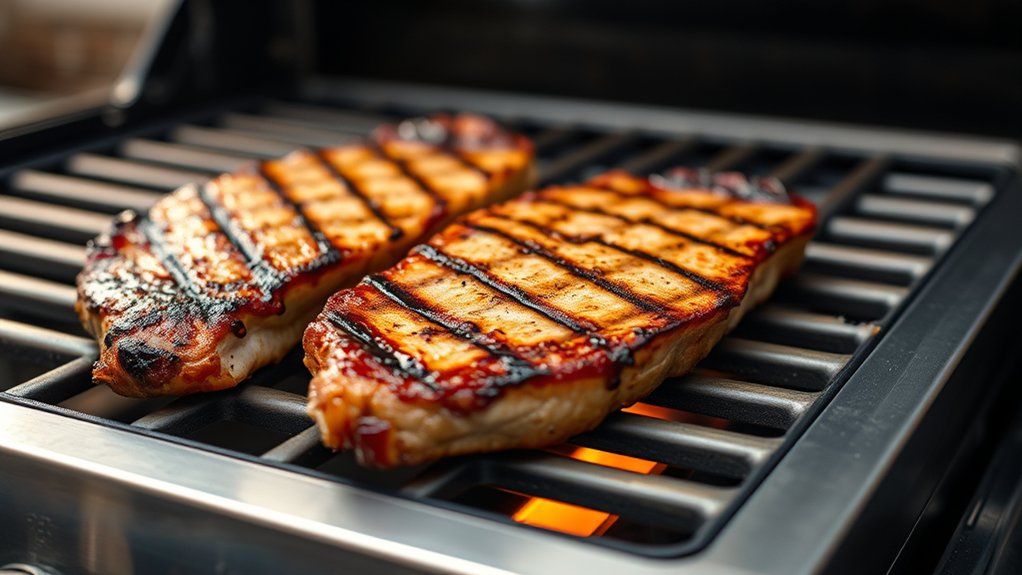
To guarantee your pork chops turn out tender and full of flavor, proper preparation is essential. Start by choosing pork chops with even thickness, ideally about 1 to 1.5 inches, to ensure they cook evenly and stay juicy.
Thicker cuts also absorb marinades better, infusing more flavor and keeping the meat moist. Before grilling, season your chops generously or marinate them for at least 30 minutes to an hour. A good marinade penetrates the meat, boosting flavor and tenderness.
Pat the chops dry before grilling to promote a good sear, which locks in the juices. Avoid over-marinating, as too much acid can break down the meat’s texture. Rest your pork chops after cooking for a few minutes so the juices can redistribute. Properly prepared, your pork chops will be juicy, flavorful, and perfectly tender every time.
How to Control Your Gas Grill Temperature for Perfect Results
Controlling your gas grill temperature is key to getting perfect pork chops. Inconsistent heat can lead to overcooked or undercooked meat, so it’s important to manage it well.
Start by regularly cleaning the grates and checking the burners for clogs or leaks. Preheat your grill and use the built-in thermometer to keep an eye on the temperature zones.
Adjust the heat sliders to maintain a steady temperature, usually around 375°F to 400°F for grilling pork chops. Always follow safety precautions—keep a fire extinguisher nearby, ensure gas connections are secure, and don’t leave the grill unattended.
Proper temperature control helps prevent flare-ups and ensures even cooking, giving you juicy, tender pork chops. Remember, a well-maintained grill not only improves your results but also keeps you safe during grilling.
With consistent heat and regular maintenance, you’ll master perfect pork chops every time.
Top Marinades and Seasonings to Elevate Your Pork Chops
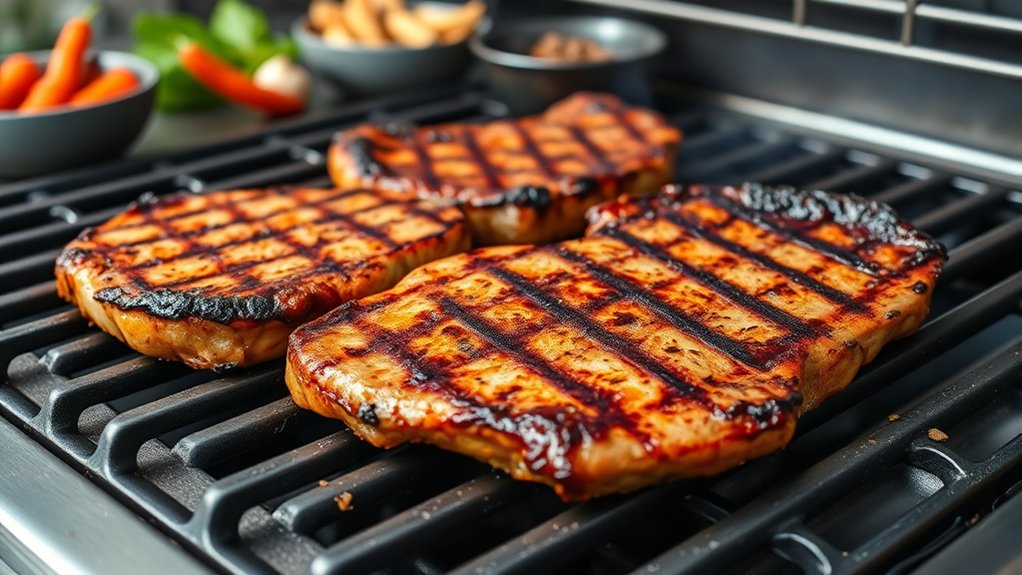
Once you’ve got your grill temperature dialed in, the next step is to boost the flavor of your pork chops with a good marinade or seasoning. Ingredients like soy sauce, garlic, honey, apple cider vinegar, and olive oil make a savory, tender base.
For extra depth, add herbs like rosemary or thyme, along with spices such as paprika or cumin. Let the chops soak in this mixture for at least 30 minutes to infuse flavor and moisture.
Alternatively, seasoning blends can give your chops a flavor boost with little effort. Try dry rubs that mix salt, pepper, garlic powder, onion powder, and a touch of brown sugar for a balanced sweet and savory taste.
You can also experiment with blends like Cajun or Italian seasoning for a different twist. Both marinades and seasoning blends add layers of flavor, making every bite more satisfying.
How to Achieve Beautiful Grill Marks and a Seared Crust
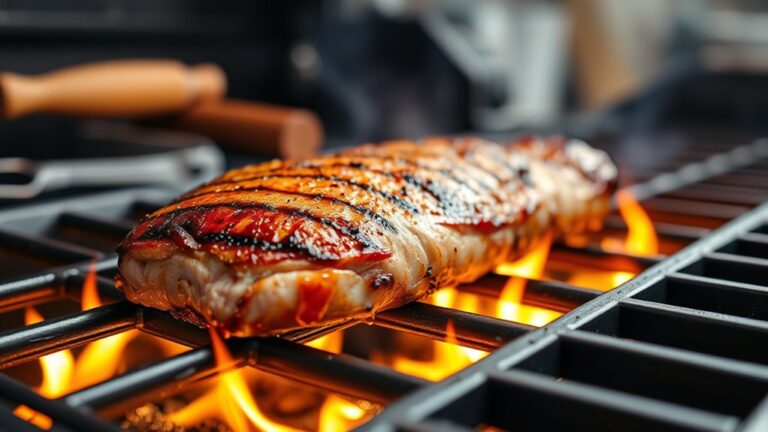
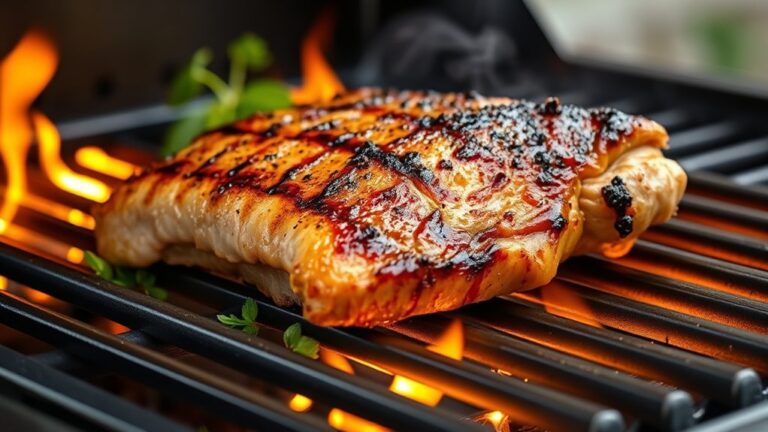
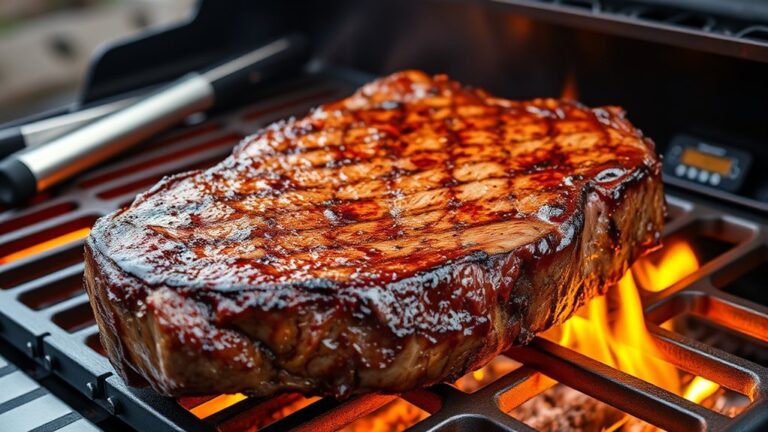
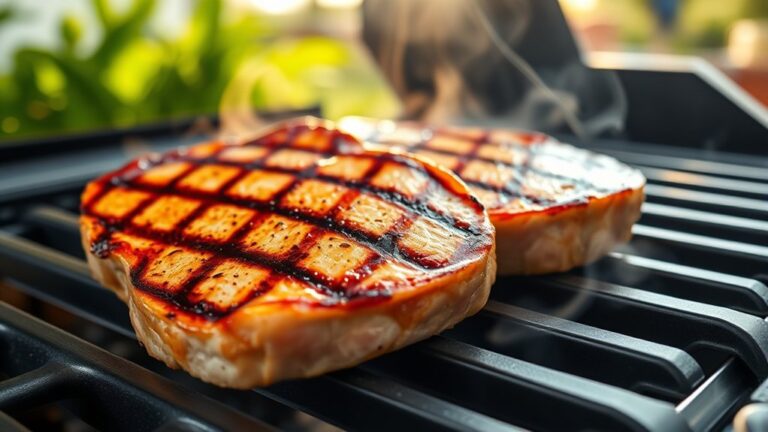
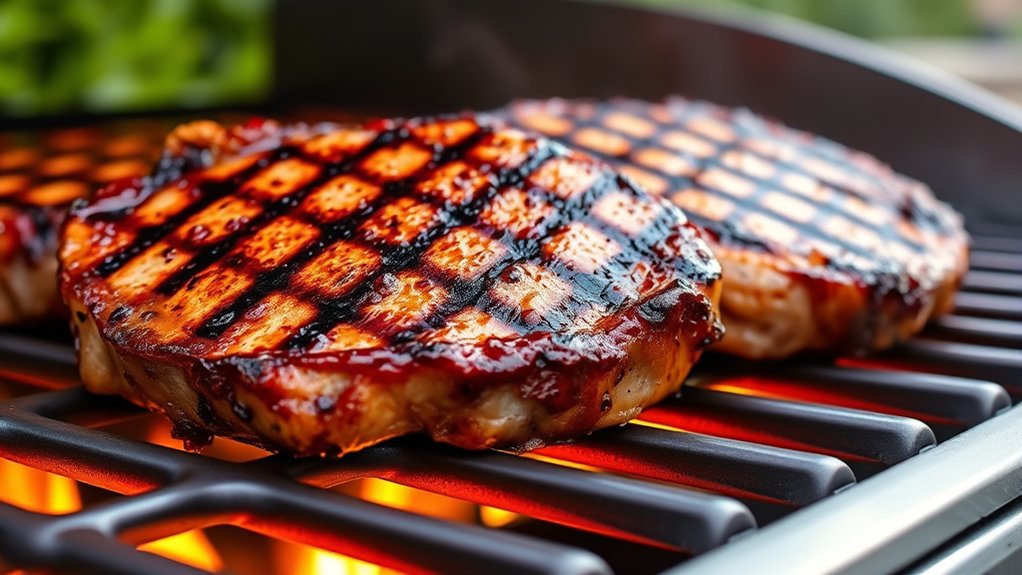
Achieving beautiful grill marks and a perfect seared crust starts with proper grill temperature and clean grates. Set your grill to high heat, around 450-500°F, to get a quick sear that locks in juices and makes the meat tender.
Before placing the pork chops, make sure to clean the grates thoroughly. This helps prevent sticking and creates those clear, distinct grill marks. When you lay the chops down, don’t move them right away; wait about 2-3 minutes to develop those beautiful crosshatch marks.
Using tongs, rotate the chops 90 degrees to form a diamond pattern. This not only looks great but also helps caramelize the surface and add flavor. Remember, a high grill temperature is key to getting that crust while keeping the inside juicy and tender.
With the right heat and technique, you’ll achieve striking grill marks and a mouthwatering crust every time.
What Temperature and Time Are Best for Cooking Pork Chops?
To guarantee your pork chops turn out juicy and flavorful, setting the right cooking temperature and time is key. Using proper techniques ensures even doneness and better flavor.
For thick-cut chops, aim for an internal temperature of 145°F (63°C) and cook over medium heat. Thin chops cook faster, so keep a close eye to prevent drying out.
Here’s a quick guide:
| Thickness | Grill Temperature | Approximate Time | Internal Temp | Notes |
|---|---|---|---|---|
| ¾ inch | Medium (350°F/175°C) | 4-6 minutes per side | 145°F | Rest before serving |
| 1 inch | Medium-high (375°F/190°C) | 6-8 minutes per side | 145°F | Use a meat thermometer |
| 1½ inches | Medium (350°F/175°C) | 8-10 minutes per side | 145°F | For thicker cuts |
Adjust times based on thickness, and always verify with a thermometer for perfect results.
Rest and Serve Your Gas-Grilled Pork Chops for Maximum Juiciness
After removing your pork chops from the grill, letting them rest is key to locking in their juices. Resting helps the internal temperature stabilize, so each bite stays moist and flavorful. Cover the chops loosely with foil if you want, but avoid wrapping tightly because that can cause sweating.
While they rest, you can add some flavor with a squeeze of fresh lemon or a drizzle of herb-infused oil to enhance their natural taste. Using direct heat for searing and indirect heat for finishing ensures even cooking and tender pork chops that are perfect for resting.
Resting also helps the juices redistribute, so they don’t spill out when you cut into the meat. Once rested, serve your pork chops with your favorite sides and enjoy their maximum juiciness and flavor.
This simple step really elevates your grilling game, making every bite succulent and satisfying.
Common Grilling Problems and How to Troubleshoot Them
Grilling pork chops can sometimes be tricky. You might run into problems like uneven heat, flare-ups, or even overcooking, and honestly, those can really mess up your chops if you’re not careful. But don’t worry — once you know what to look out for and how to fix these issues, you’ll be able to get perfect results every time. Let’s take a quick look at some common problems and simple tips to troubleshoot them so your next grilling session is a success.
Uneven Heat Distribution
Have you ever noticed hot spots or cold zones on your grill? This uneven heat can make cooking pork chops a bit tricky.
If you’re using propane or natural gas, heat zones often develop because of uneven burner flames or clogged ports. To fix this, preheat your grill thoroughly and adjust the burners to create consistent heat zones.
Rotating your pork chops during cooking helps expose them to even heat. Also, try placing the meat over the most even heat zone—usually the center or one side of the grill.
Regularly cleaning your burners and ensuring proper fuel flow can keep heat zones balanced. This prevents hot spots and cold zones, so your pork chops cook evenly and stay juicy.
Flare-Ups and Charring
Flare-ups and charring are common issues that can quickly ruin perfectly seasoned pork chops if not managed properly. To prevent flare-ups, avoid using too much marinade with lots of sugar or oil on the surface, as they can catch fire easily. Keep a close eye on your grill and adjust the heat as needed.
Regularly cleaning your grill tools is essential; make sure to scrub the grates thoroughly to remove grease buildup that could cause flare-ups. When flare-ups happen, move the pork chops to cooler parts of the grill and spray a little water to tame small flames.
Charring can be minimized by flipping the chops often and keeping the heat at a controlled, medium level. With these techniques, you can keep your pork chops juicy and perfectly grilled without burning them.
Overcooking or Undercooking
Even with careful attention to flare-ups and charring, overcooking or undercooking your pork chops is a common challenge that can ruin their texture and flavor. The key is to monitor the thickness of the chops and use a reliable meat thermometer to ensure they’re safe to eat.
Thicker chops need more time on the grill, but you don’t want to dry them out. To avoid mistakes, remove overcooked chops early and check that they reach an internal temperature of 145°F. If they’re undercooked, cook them a bit longer and verify the temp.
When your pork chop thickness doesn’t match the grilling time, just adjust accordingly. Always use a meat thermometer to take the guesswork out of cooking. This way, you’ll get juicy, perfectly cooked pork chops every time.
Creative Flavors and Variations for Gas-Grilled Pork Chops
Exploring creative flavors and variations can take your gas-grilled pork chops from simple to extraordinary. Start by trying different marinades—maybe a tangy apple cider vinegar with rosemary or a spicy honey mustard glaze.
Experiment with marinades like apple cider vinegar or honey mustard to elevate your grilled pork chops.
Adjusting the thickness of your pork chops helps you control how much flavor they absorb and how long they cook, so you’ll get juicy, perfectly cooked results. Keep your grill grate clean and well-oiled to prevent sticking and boost flavor.
For more variety, try dry rubs like smoked paprika, cumin, or brown sugar for a caramelized crust. You can also stuff pork chops with herbs, cheese, or fruit for a fun twist.
Finally, finish with fresh herbs or a squeeze of citrus to brighten the flavors. By experimenting with these flavors and paying attention to thickness and grill maintenance, you’ll elevate your grilling game and impress every time.
Frequently Asked Questions
Can I Grill Pork Chops Directly From Frozen?
You can grill pork chops directly from frozen, but it’s not ideal. Frozen meat needs proper thawing to ensure even cooking and safety.
Use thawing methods like refrigeration or cold water baths to defrost your pork chops before grilling. If you decide to grill from frozen, expect longer cook times and possible uneven doneness.
Always use a meat thermometer to check for doneness and make sure your pork reaches 145°F for safe, juicy results.
How Do I Prevent Pork Chops From Sticking to the Grill?
Think of your grill as a dance floor and pork chops as enthusiastic partners. To prevent sticking, start with a properly prepared grill grate that’s clean and oiled so the meat glides smoothly.
Use marinade techniques with a bit of oil and acid to create a barrier. Let the pork chops come to room temperature before grilling, and avoid flipping too early.
These tricks will keep your chops from sticking and guarantee a perfect dance.
What Is the Best Way to Store Leftover Grilled Pork Chops?
To store leftover grilled pork chops, put them in airtight containers to keep them fresh and stop odors from escaping. Let the chops cool a bit before sealing them up for the best results.
You can also add a splash of marinade or broth to keep the meat moist. Remember to refrigerate leftovers within two hours, and try to eat them within 3-4 days for the best flavor and safety.
Are Bone-In or Boneless Pork Chops Better for Grilling?
Imagine you’re getting ready for a summer cookout and wondering which pork chop type is better—bone-in or boneless. Bone-in chops tend to stay juicier because the bone helps retain heat during cooking.
They also soak up marinades more deeply, which boosts the flavor. On the other hand, boneless chops cook faster and are easier to handle on the grill.
Choose based on your cooking style, but both can turn out delicious with the right technique.
How Can I Tell if My Pork Chops Are Fully Cooked Without a Thermometer?
You can tell your pork chops are fully cooked by checking their color and texture. When they reach a cooking temperature of 145°F, the juices run clear, and the meat is no longer pink.
To keep them juicy, avoid overcooking. Instead, cut into a chop and see if the meat is firm but still slightly pink inside.
These signs help you judge doneness without a thermometer, so your chops stay tender and flavorful.
Conclusion
So, now you’re practically a pork chop whisperer, huh? Remember, even the best grill master can’t rescue a dry chop, so don’t forget the marinade, temperature, and patience.
With these tips, you’re all set to impress your friends and maybe even yourself. Just don’t get too cocky. Even the most seasoned grillers slip up.
Keep practicing, stay saucy, and soon you’ll be the legend of the backyard barbecue—pork chops perfected with a side of smug satisfaction.