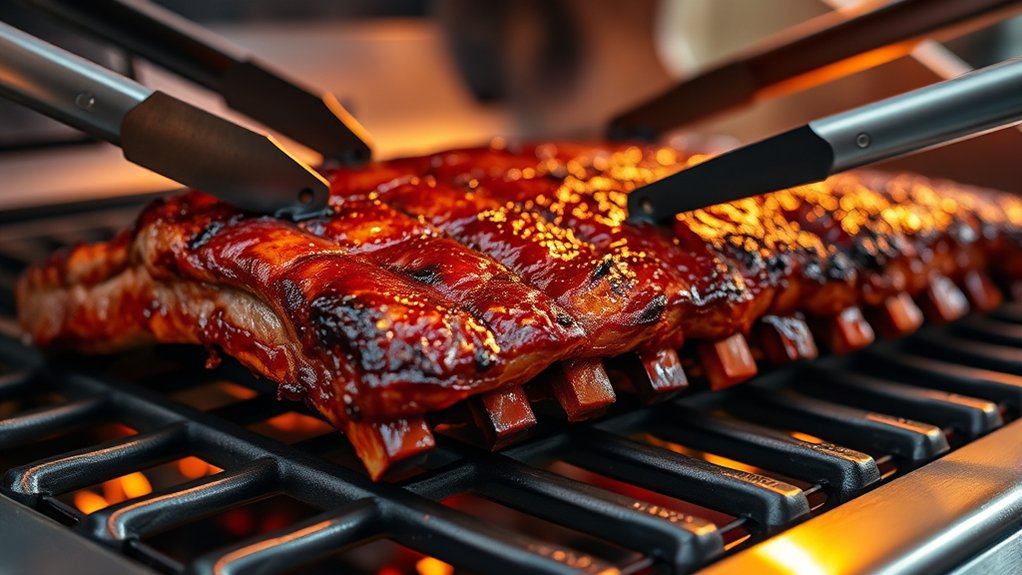
Mastering Gas Grills: How Long to Cook Pork Ribs
Cooking perfect pork ribs on a gas grill can feel tricky, especially if you’re aiming for tender, juicy results every time. You’re not alone—many people struggle to get that ideal balance of smoky flavor and melt-in-your-mouth tenderness.
To master cooking pork ribs on a gas grill, aim for about 1.5 to 2 hours at 225°F–250°F using indirect heat. Keep the lid closed to maintain a consistent temperature, and measure the internal temp—when it hits 190°F–203°F, your ribs are tender and ready.
Wrapping in foil and adding sauce near the end helps lock in moisture. Want tips for perfect, juicy ribs? There’s more to learn below.
Key Takeaways
- Cook pork ribs on a gas grill at 225°F to 250°F for about 1.5 to 2 hours for tender results.
- Use indirect heat and keep the lid closed to maintain a steady temperature and keep the ribs moist.
- Keep an eye on the internal temperature, aiming for 190°F to 203°F for the best tenderness.
- Wrap the ribs in foil during cooking to lock in moisture and make them even more tender.
- Add your sauces during the last 10 to 15 minutes so they flavor the ribs without burning.
What Are the Best Types of Pork Ribs for Grilling?
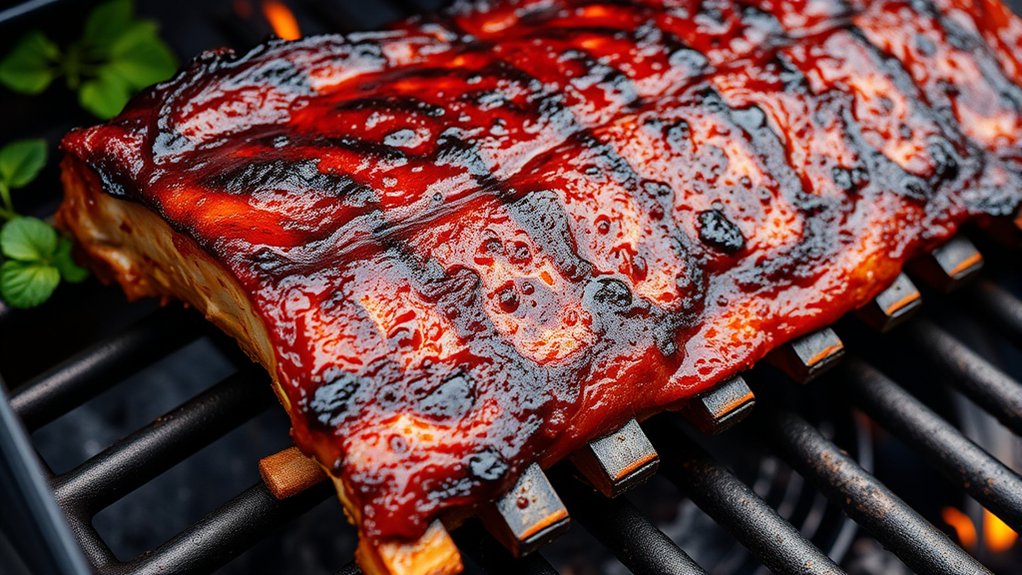
When it comes to grilling pork ribs, choosing the right type can really impact the flavor and tenderness. Baby back ribs are a favorite because they cook quickly and are tender, offering a good balance of pork tenderness and rich flavor.
St. Louis-style ribs come from the belly area and have a uniform, meaty shape that’s perfect for grilling. They have a bit more fat, which helps keep them moist and flavorful during cooking.
Spare ribs, which come from the lower part of the rib cage, are larger and meatier. They do need longer cooking time to become tender but are worth the wait for their hearty meatiness.
Each type varies in nutrition too. Baby back ribs are generally leaner than spare ribs, making them a slightly healthier option. Your choice depends on what you prefer in terms of tenderness, flavor, and health.
Pick ribs that match your grilling style and your desired level of tenderness. That way, you’re sure to enjoy a delicious, flavorful meal every time.
How Long Should You Cook Pork Ribs on a Gas Grill?
Cooking pork ribs on a gas grill takes a bit of patience and attention to detail. You’ll want to cook them for about 1.5 to 2 hours at a steady temperature of 225°F to 250°F. Keep the lid closed as much as possible to maintain consistent heat.
During grilling, focus on building flavor with your favorite rubs and marinades. Using a probe thermometer can help you keep track of the internal temperature so you don’t overcook or undercook the ribs.
For tender, fall-off-the-bone results, cook until the meat hits an internal temperature of 190°F to 203°F. Slow cooking allows the connective tissues to break down, making the ribs juicy and delicious.
Adjust your cooking time slightly depending on how thick your ribs are and how steady your grill’s heat is. Don’t forget to baste or add layers of flavor with your preferred sauces to enhance the taste.
How to Prepare Your Gas Grill for Perfect Ribs
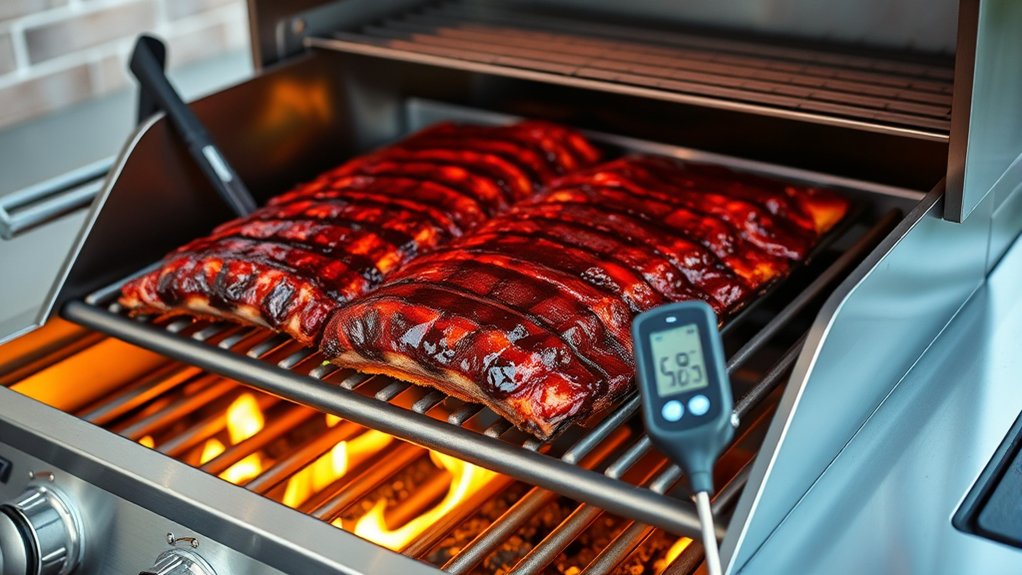
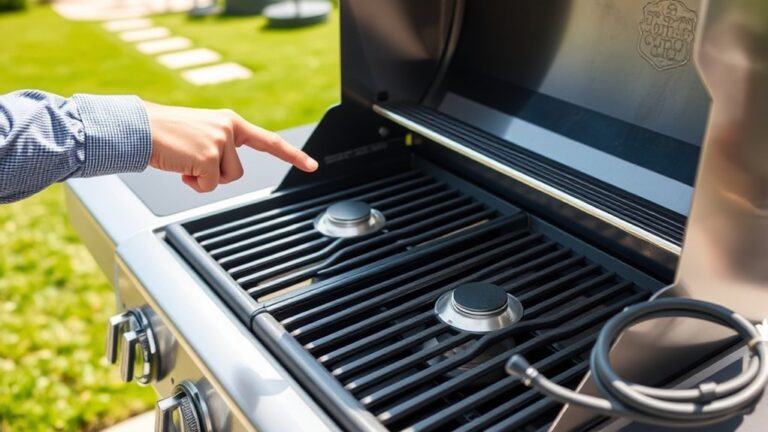
Before placing your ribs on the grill, make sure to properly prepare your gas grill to guarantee even heat and ideal flavor. Start by cleaning the grill grates thoroughly—removing any old residue ensures your ribs won’t pick up unwanted flavors. Use a grill brush to scrub away debris, then wipe the grates with a damp cloth.
Once clean, preheat the grill to your desired temperature, usually around 225°F to 250°F for ribs. While it heats, apply a generous layer of rib seasoning to your meat, making sure it’s evenly coated to boost flavor.
For consistent results, set up your grill for indirect heat by turning on only one side or using a two-zone setup. This allows the ribs to cook slowly and stay moist.
Proper grill preparation, including clean grates and well-seasoned ribs, creates the perfect environment for tender, flavorful pork ribs.
What Are the Best Cooking Methods for Tender, Juicy Ribs?
To get tender, juicy ribs, choosing the right cooking method is key. Low and slow techniques like indirect grilling or smoking work best because they break down the connective tissues, making the meat fall-off-the-bone tender.
Before cooking, think about marinades—apple cider vinegar, honey, or soy sauce can boost flavor and keep the ribs moist. Seasonings are just as important; a mix of paprika, garlic powder, onion powder, and a little cayenne creates a flavorful crust.
Wrapping ribs in foil during part of the cook helps lock in moisture and tenderize the meat even more. For extra juiciness, baste the ribs with barbecue sauce or a simple blend of apple juice and vinegar toward the end. These tips work together to produce ribs that are tender, juicy, and full of flavor, making your grilling experience truly satisfying.
How to Maintain the Right Grill Temperature Throughout
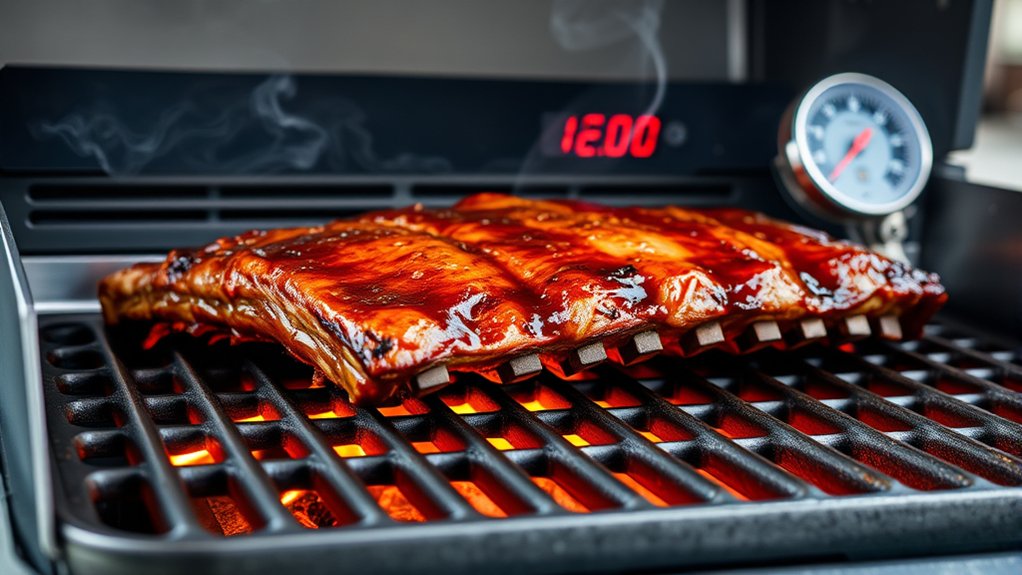
Maintaining a steady grill temperature is key to perfectly cooked ribs. It all starts with understanding your grill’s heat sources and how to control them.
Keeping your grill clean is crucial. Regularly scrub the grates and burners to prevent blockages that can mess with the heat flow.
Use a reliable thermometer to keep an eye on the internal temperature. This helps you make precise adjustments on the fly.
Adjust the vents or gas flow as needed. Aim to keep the temperature steady between 225 and 250°F for ideal smoking conditions.
Finally, try to keep the lid closed as much as possible. This helps retain heat and prevents annoying temperature swings.
Should You Use the 3-2-1 Method for Ribs on a Gas Grill?
The 3-2-1 method is a popular way to smoke ribs, but whether it works on a gas grill depends on your setup and what you like. Gas grills are built for quick, controlled cooking, so the longer smoking process of the 3-2-1 might not be the best fit unless you have the right accessories.
If you love deep smoky flavor, this method can give you tender, flavorful ribs. But you’ll need tools like a smoker box or foil to trap moisture and add smoke. Keep in mind, using the 3-2-1 on a gas grill usually involves indirect heat and extra smoke elements.
If you want a faster cook or don’t want to fuss with multiple steps, another approach might be better. The choice really depends on what your grill can do and how you like your ribs. Still, the 3-2-1 is a solid option if you’re aiming for fall-off-the-bone tenderness.
How to Tell When Your Ribs Are Done and Ready to Serve
Want to know when your ribs are just right and ready to serve? Well, start by looking for some visual clues. When the meat begins to pull back from the bones and you see a nice, shiny glaze, those are good signs that they’re getting close.
But don’t stop there—it’s also a good idea to check the internal temperature. Aim for around 190°F to 203°F, and you’ll end up with ribs that are perfectly tender and juicy. Following these hints will help you make sure your ribs are cooked through and ready to enjoy!
Visual Cues for Doneness
Watching for visual cues is one of the easiest ways to tell when your pork ribs are perfectly cooked and ready to serve. Visual inspection reveals key signs of doneness, while aroma cues can confirm the cooking process.
To gauge doneness, look for:
- Color Change: Ribs develop a deep, caramelized exterior with a rich, brown hue.
- Pullback of Meat: The meat slightly pulls away from the bones, exposing the ends.
- Crackling Bark: A firm, glossy crust forms on the surface, indicating proper caramelization.
- Aroma Cues: A fragrant, smoky aroma signals that flavors are fully developed and ribs are ready.
Combine these visual and aroma clues for the most reliable indication that your ribs are perfectly cooked and ready to serve.
Internal Temperature Indicators
Measuring internal temperature is one of the most reliable ways to tell when your pork ribs are perfectly cooked. When the ribs reach about 190°F to 203°F, they become tender enough to bite through easily, showing they’re at the ideal pork tenderness.
This temperature range also helps break down the collagen, giving you that melt-in-your-mouth texture. Proper internal temperature lets the smoke absorption improve flavor without overcooking the meat.
Use a dependable meat thermometer to check the thickest part of the ribs, making sure not to touch the bone for an accurate reading. When your ribs hit the right temperature, they’re ready to serve—juicy, tender, and packed with smoky flavor.
This precise method guarantees consistent results every time you grill.
Common Mistakes That Can Ruin Your Ribs and How to Avoid Them
One of the biggest pitfalls when cooking pork ribs is overcooking or undercooking them, which can lead to tough, dry meat or mushy texture. To prevent this, focus on proper techniques.
First, neglecting to apply the right rib seasoning can result in bland flavor; be generous but balanced. Second, ignoring grill safety can cause flare-ups or uneven heat, ruining your ribs.
Third, rushing the process by skipping low and slow cooking sacrifices tenderness. Fourth, opening the grill too often causes temperature fluctuations, prolonging cooking time and risking dryness.
Remember, maintaining consistent heat and using a meat thermometer helps guarantee perfect doneness. Proper rib seasoning heightens flavor, but safety precautions keep your cooking controlled.
Avoid these common mistakes, and you’ll achieve tender, juicy ribs every time. Attention to detail makes all the difference in mastering the art of grilling ribs.
Finishing Touches: Sauces, Wraps, and Final Tips for Perfect Ribs
The final touches really can make all the difference when you’re cooking ribs. Picking the right sauce adds that burst of flavor and gives your ribs a beautiful, shiny glaze that looks as good as it tastes.
Wrapping your ribs is a game-changer too. It helps lock in moisture, making sure they stay tender and juicy from start to finish. Just keep these tips in mind, and you’ll end up with perfectly cooked, mouthwatering pork ribs every single time.
Choosing the Right Sauces
Have you ever wondered how the right sauce can turn your pork ribs from good to unforgettable? Choosing the perfect sauce really depends on the flavor you’re aiming for.
First, go for a tangy, vinegar-based sauce to cut through the richness of the meat. It adds a bright, refreshing contrast.
Next, a sweet, smoky barbecue sauce can really boost the depth of flavor. It’s a classic for a reason.
You might also try a spicy blend inspired by craft beer. It adds some warmth and complexity to your ribs.
Don’t forget experimenting with spice blends like paprika or chili powder for an extra kick. They can really elevate the flavor.
Remember, balancing sweet, smoky, and spicy elements creates a memorable taste experience. The sauce should complement your ribs without overpowering them.
A good rule of thumb is to apply sauces during the last stages of grilling. That way, you build layers of flavor without burning the sauce.
With the right choice, your ribs will reach new levels of deliciousness and impress everyone at the table.
Wrapping Techniques for Moisture
Wrapping your ribs during the final stages of grilling helps lock in moisture and tenderize the meat, making sure they stay juicy and flavorful. Use marinade variations to add depth and complexity, with options like apple cider, spicy chipotle, or honey mustard.
When wrapping, apply your ribs’ seasoning generously to boost flavor, then seal them with foil or butcher paper. This traps steam and juices, preventing the ribs from drying out. The wrap also helps the seasoning and marinade flavors meld together.
Keep an eye on the timing—about 30 minutes is usually enough—to avoid overcooking. Wrapping is a simple but effective way to get moist, fall-off-the-bone ribs with improved taste from your marinade choices and seasoned rubs.
Final Tips for Perfection
To achieve perfectly cooked ribs, finishing touches like sauces and wraps can make all the difference. Incorporate your favorite marinade recipes to *boost* flavor before the final cook. Use smoking techniques during the last stages to deepen the smoky aroma and tenderize the meat. Here are four tips for perfection:
- Apply a flavorful sauce in the last 10-15 minutes to avoid burning.
- Wrap ribs in foil with a splash of apple juice to lock in moisture.
- Use indirect heat to prevent overcooking and maintain tenderness.
- Rest the ribs for 10 minutes before serving to allow juices to redistribute.
Mastering these final steps *guarantees* your ribs are juicy, tender, and bursting with flavor.
Troubleshooting Undercooked or Overcooked Ribs
When ribs turn out undercooked or overcooked, it’s usually because the temperature was off or the cooking time was too long or too short. To fix undercooked ribs, check your grill’s temperature with a reliable thermometer—aim for around 225°F to 250°F.
Undercooked or overcooked ribs? Check your grill’s temperature and adjust for perfect results.
If they’re overcooked, the meat may be dry or tough; reduce cooking time next round or wrap ribs in foil to retain moisture. Using marinade recipes can help keep ribs tender and flavorful, especially if you notice dryness.
Always prioritize grill safety: keep the lid closed to maintain consistent heat and avoid flare-ups. If you’re unsure about doneness, use a meat thermometer; ribs are ready when the internal temperature reaches about 190°F to 203°F.
Adjust your cooking process accordingly, and avoid opening the grill too often, which can cause temperature fluctuations. Proper monitoring and tweaking will help you perfect your ribs every time.
Frequently Asked Questions
Can I Cook Pork Ribs Directly on the Gas Grill Grates?
Yes, you can cook pork ribs directly on gas grill grates, but make sure to preheat and clean the grates first to prevent sticking.
For the best presentation, consider using indirect heat and keeping the temperature steady. This helps you get tender, evenly cooked ribs with nice grill marks.
Keep an eye on the heat to avoid flare-ups, and remember that indirect grilling boosts flavor without burning the meat.
What’s the Ideal Internal Temperature for Fully Cooked Pork Ribs?
The ideal internal temperature for fully cooked pork ribs is about 190°F to 203°F.
For perfect results, keep the temperature consistent throughout the cooking process. Use a reliable meat thermometer to check the ribs’ internal temperature.
Make sure they reach this range for tender, juicy, and thoroughly cooked ribs. Remember, patience and proper temperature control are key to getting those delicious, fall-off-the-bone ribs.
Should I Marinate or Brine Ribs Before Grilling?
Did you know marinating can boost flavor and tenderness in ribs by up to 50%? You should marinate or brine ribs before grilling because marinade benefits include adding moisture and enhancing taste, while brine techniques help lock in juiciness.
Both methods are excellent; marinate for flavor, brine for moisture. Choose based on your goal, but either way, they’ll make your ribs more delicious.
How Long Can Pork Ribs Stay on the Grill Before Drying Out?
You should avoid leaving pork ribs on the grill for more than 2 hours to prevent drying out and ensure grill safety. Keep an eye on the rib seasoning and maintain a consistent temperature, ideally around 225°F to 250°F.
Use a meat thermometer to check doneness, and remove the ribs promptly once they reach your desired internal temperature. This way, your ribs stay juicy, flavorful, and safe to eat.
What Wood or Smoke Flavor Complements Grilled Pork Ribs?
You might think all woods are created equal, but for pork ribs, apple or cherry wood really shines. They offer a sweet, fruity smoke flavor that pairs perfectly with the meat.
Choose mild woods to keep the smoke subtle and flavorful, rather than overpowering. Ironically, the best smoke flavor doesn’t come from intense woods like mesquite.
Instead, it’s from those that gently enhance the meat, creating a balanced, mouthwatering experience.
Conclusion
Now that you know the secrets to perfect gas-grilled pork ribs, it’s time to put your skills to the test.
But remember, even the best techniques can lead to surprises—overcooking or undercooking can sneak up on you. The true mastery lies in your ability to read those ribs and trust your instincts.
Are you ready to uncover the final, essential step that guarantees ribs everyone will remember? The answer awaits—dare to find out.