5 Steps to Perfectly Grill Chicken Legs on Gas Grill
Grilling chicken legs on a gas grill can be a bit tricky, especially if you’re aiming for that perfect balance of juicy meat and crispy skin. Many people struggle with getting the chicken cooked through without burning the outside. You’re not alone—perfect grilling takes some practice, but with the right tips, you’ll get it right every time.
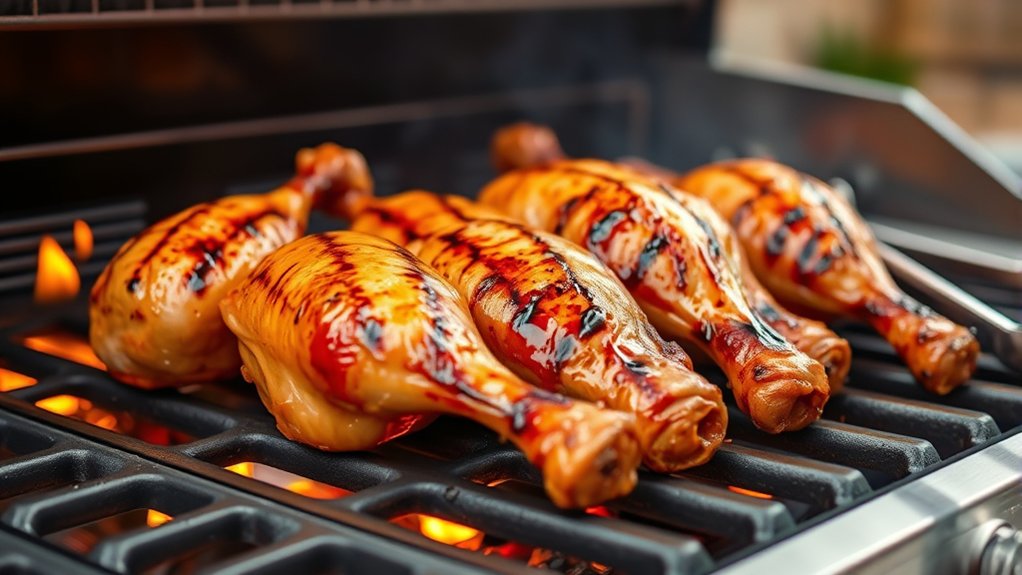
To perfectly grill chicken legs on a gas grill, start by cleaning and preheating your grill to medium heat, ensuring even temperature.
Marinate or season the chicken for flavor and tenderness.
Use indirect heat first, then finish with direct heat to crisp the skin.
Turn regularly and monitor internal temperature to reach at least 165°F.
Let the chicken rest before serving for juicy results.
Keep experimenting with these tips for consistently great grilled chicken.
Key Takeaways
- Preheat the grill to medium heat (350°F–375°F) and clean the grates. This helps ensure even cooking and adds flavor.
- Pat the chicken legs dry, then season or marinate them. Be sure to discard any marinade that touched raw meat for safety.
- Start with indirect heat to cook the chicken through. Then, finish with direct heat to crisp up the skin nicely.
- Turn the chicken legs regularly, baste to keep them moist, and keep an eye on the internal temperature. Aim for 165°F.
- Let the chicken rest for 5–10 minutes before serving. This helps juices redistribute and makes it more tender.
How to Get Your Gas Grill Ready for Juicy, Crispy Chicken Legs
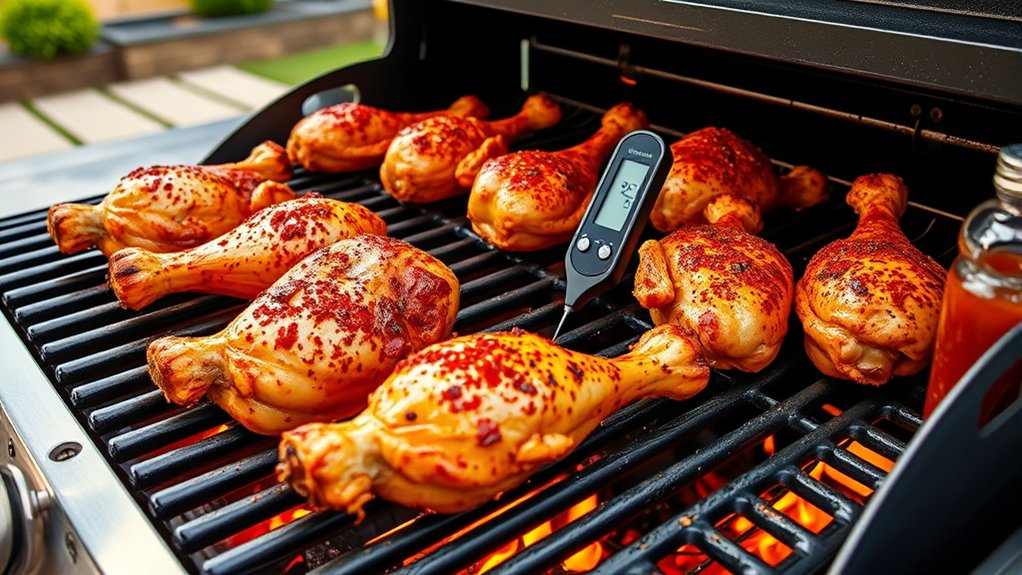
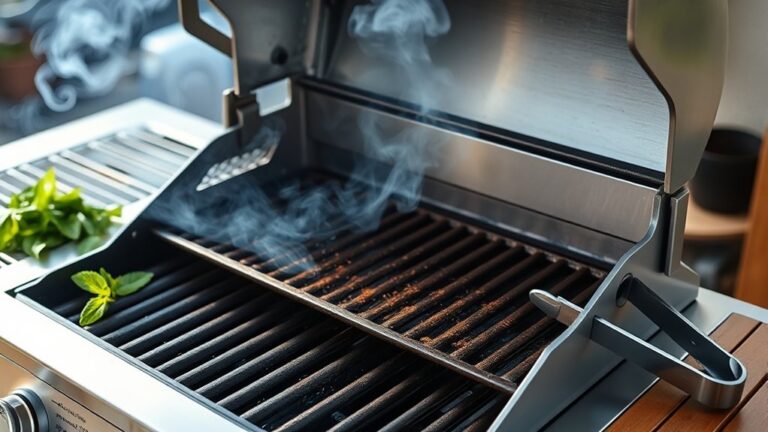
Ready to achieve perfectly juicy and crispy chicken legs? First, make sure your gas grill is clean and in good condition to promote grill safety and prevent flare-ups. Remove any leftover debris or grease from previous cookouts using a grill brush.
Check that the burners are working properly and inspect hoses for leaks. This keeps your grill safe during use. Preheat the grill to the right temperature, which helps with fuel efficiency by reducing unnecessary gas consumption.
Adjust the burners to an even heat, avoiding hot spots that can burn the chicken or cause uneven cooking. Keep the lid closed as much as possible to maintain consistent heat and conserve fuel.
Properly prepared, your grill will give you a safe, efficient cooking experience that results in juicy, crispy chicken legs. Taking these steps ensures safety, maximizes fuel efficiency, and sets the stage for delicious grilling.
Best Seasonings and Marinades for Flavorful Chicken Legs
Once your grill is preheated and clean, the next step is to infuse your chicken legs with bold flavors using the right seasonings and marinades.
Marinade options are endless, from classic buttermilk and lemon to spicy chipotle or honey mustard. These marinades tenderize the meat and add depth of flavor.
Marinades like buttermilk, lemon, chipotle, or honey mustard add flavor and tenderize the meat.
If you prefer dry rubs, spice blends like paprika, garlic powder, cumin, and black pepper work beautifully. For a smoky kick, consider adding chili powder or smoked paprika.
Marinate the chicken legs for at least 30 minutes or up to a few hours to let the flavors penetrate. Make sure to coat the meat evenly and discard any leftover marinade that’s been in contact with raw chicken.
Combining the right marinade options with flavorful spice blends guarantees juicy, tender, and irresistibly seasoned chicken legs that will impress everyone at your barbecue.
How to Grill Chicken Legs Perfectly: Techniques and Temperature Tips
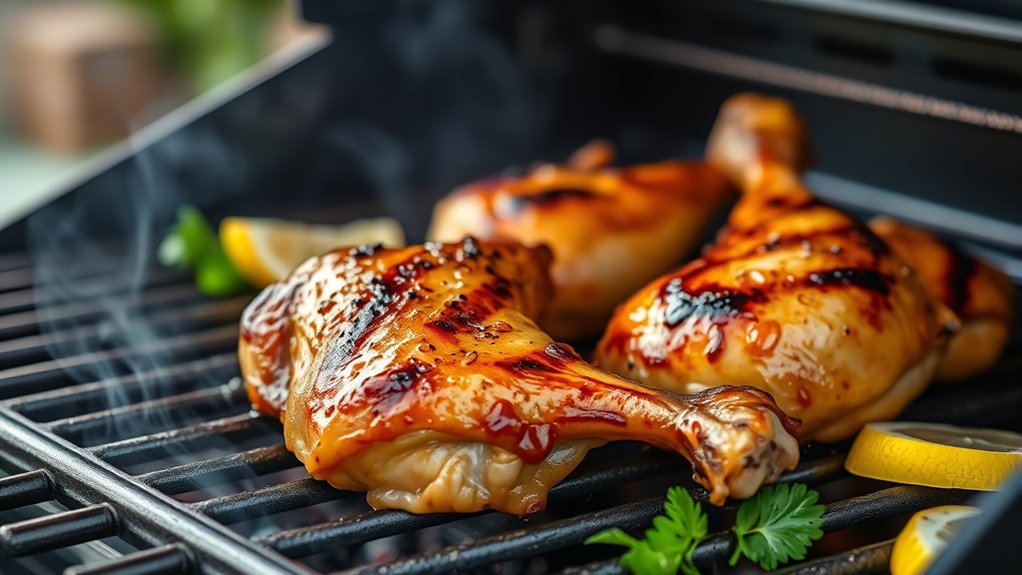
Achieving perfectly grilled chicken legs depends on mastering the right techniques and keeping an eye on the right temperatures. Start by trying different marinades to add flavor and tenderize the meat, but be careful not to marinate for too long or the chicken might become too soft.
When grilling, keep the heat at a medium level, around 350°F to 375°F. This helps cook the chicken evenly without burning the outside. Use a meat thermometer to check that the internal temperature hits at least 165°F for juicy, fully cooked chicken.
Invest in grilling accessories like a meat thermometer or a grill basket to prevent sticking and ensure even heat. Turn the chicken legs regularly so they develop a nice, even color and avoid flare-ups.
Patience is key here. Cooking too quickly can burn the outside while leaving the inside undercooked. With good temperature control and the right tools, your chicken legs will turn out flavorful, tender, and perfectly cooked every time.
How to Achieve Crispy Skin and Juicy Meat on Your Chicken Legs
To get crispy skin and juicy meat on your chicken legs, start by patting the chicken dry with paper towels before seasoning. Proper dryness helps the skin crisp up nicely.
Pat dry chicken legs before seasoning for perfectly crispy skin and juicy meat.
Next, use effective skin crisping methods like starting with indirect high heat and finishing with direct heat. This creates a crispy exterior while keeping the meat moist inside.
To boost flavor and texture, try basting techniques. Brush the chicken with a flavorful marinade or butter during grilling to add moisture and help the skin become crispy.
Here are the key steps:
- Pat dry and season generously to help the skin crisp.
- Use indirect heat first, then finish with direct heat for crunch.
- Baste regularly with flavorful liquids to lock in juiciness and improve skin texture.
Resting, Serving, and Troubleshooting Your Grilled Chicken Legs
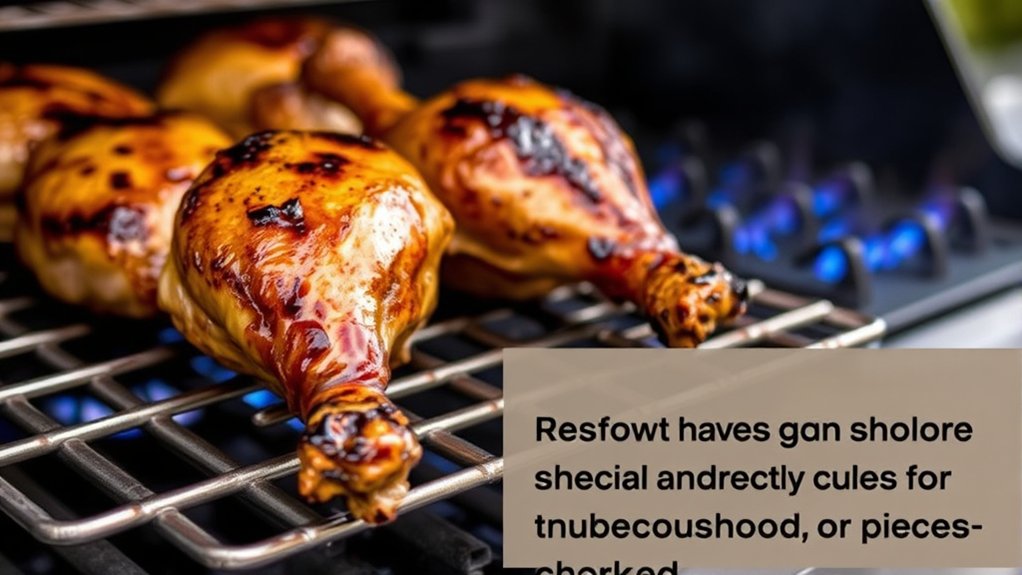
After removing the chicken legs from the grill, let them rest for about 5 to 10 minutes. This helps the juices redistribute, making the meat moist and flavorful. While resting, you can also think about how you want to present the chicken on the platter.
Arrange the chicken attractively to impress your guests. For an extra touch, drizzle a complementary sauce like smoky barbecue or tangy citrus just before serving to boost flavor and visual appeal.
| Tip | Why it Matters |
|---|---|
| Rest the chicken | Keeps meat juicy and tender |
| Use appealing plating | Enhances visual appeal and appetite |
| Pair sauces thoughtfully | Complements flavors and lifts the dish |
If the chicken isn’t fully cooked, return it to the grill briefly. Just be careful not to overcook it. Proper resting and presentation will make your grilled chicken legs truly irresistible.
Frequently Asked Questions
How Long Should I Marinate Chicken Legs Before Grilling?
You should marinate chicken legs for at least 1 to 4 hours to let the flavors really soak in.
But if you have the time, overnight marination—up to 12 hours—can make the taste even better.
Keep in mind, longer marination helps the flavors penetrate more deeply, making your chicken more delicious.
Just be careful not to marinate for too long, as it can change the texture.
Try to find a balance that fits your schedule and flavor preferences.
Can I Grill Chicken Legs Directly on the Grill Grates?
Yes, you can grill chicken legs directly on the grill grates. This method adds boneless simplicity and helps the skin get a satisfying crunch.
Just make sure your grill is preheated and clean before you start. Place the chicken legs skin side down first to develop a crispy exterior, then flip them to cook through.
Direct grilling keeps things straightforward and gives you juicy, flavorful results with that perfect skin crunch.
What Charcoal or Wood Chips Enhance Grilled Chicken Flavor?
Think of wood chips as the orchestra’s conductor, guiding your chicken’s flavor. Use hickory or applewood chips for a rich, smoky symphony that elevates your grilled chicken’s taste.
The wood smoke creates a warm hug, infusing each bite with depth and complexity. Toss soaked chips onto your grill, and let the aroma and flavor infusion turn your chicken into a masterpiece of smoky perfection.
How Do I Prevent Flare-Ups When Grilling Chicken Legs?
To prevent flare-ups when grilling chicken legs, keep your grill temperature steady and avoid excessive fat buildup. Use flame control by adjusting the vents and burners to maintain a moderate heat, around 350°F.
Keep a two-zone setup with direct and indirect heat, so you can move the chicken away from flames if flare-ups happen. Regularly clean grease from the grill to reduce flare-ups and help ensure even cooking.
What Are the Best Tools for Handling Hot Chicken on the Grill?
To handle hot chicken on the grill safely, you need the right tools. Use long-handled tongs to turn and move the chicken, keeping your hands away from heat.
Always wear heat-resistant gloves for added safety, especially when dealing with flare-ups or moving hot items. Prioritizing grill safety helps prevent burns and accidents.
This way, you can enjoy grilling without unnecessary risks. These tools make handling hot chicken easier, safer, and more efficient.
Conclusion
So, after all that fuss, you might think grilling chicken legs is rocket science. Turns out, it’s just about patience, heat, and a little seasoning. Ironically, the simplest steps often produce the tastiest results—no fancy gadgets needed.
So go ahead, master those flames and enjoy perfectly crispy, juicy chicken. Because sometimes, the secret to great grilling isn’t in the tools but in trusting your instincts—and maybe a little bit of luck.
When it comes to grilling chicken legs on a gas grill, keep it straightforward. Focus on consistent heat, proper seasoning, and patience. That’s all it takes to get perfectly grilled chicken every time.