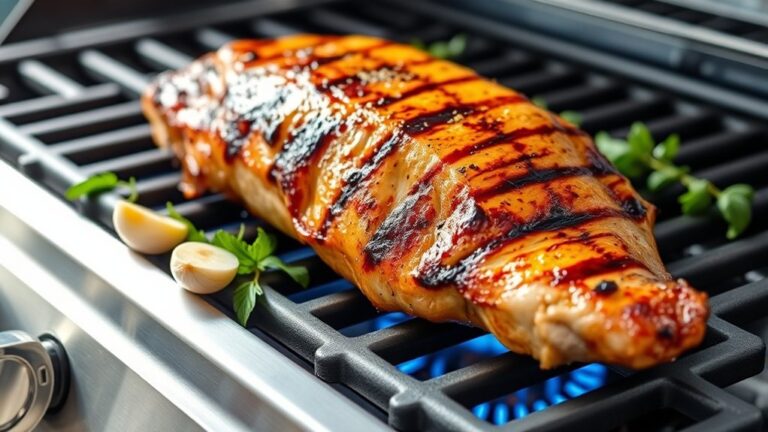
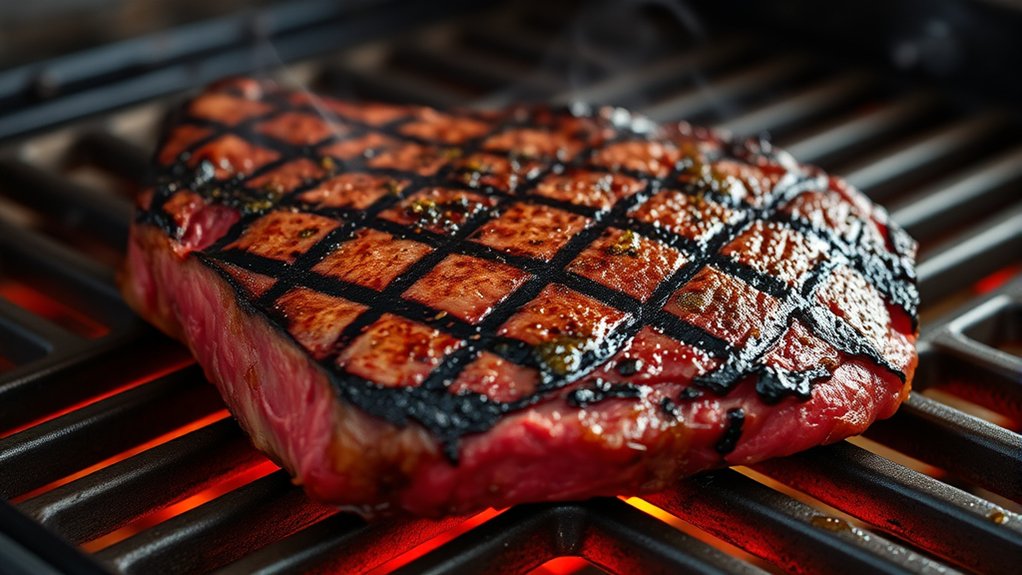
How to Perfectly Grill Flank Steak on Gas Grill
Many people struggle with grilling flank steak just right—getting it tender, flavorful, and perfectly cooked can feel tricky. You’re not alone; mastering the art of grilling this cut takes a bit of know-how. But don’t worry, with some simple tips, you’ll be grilling like a pro in no time.
To perfectly grill flank steak on a gas grill, start by choosing a fresh, well-marbled cut and marinate it for at least 30 minutes to enhance flavor and tenderness.
Preheat your grill to high, then sear the steak for 2-3 minutes per side, keeping the lid closed for even heat.
Use a thermometer to reach 130-135°F for medium-rare.
Once done, let the steak rest for 10 minutes before slicing against the grain.
Keep exploring further for more tips to perfect your grilling game!
Key Takeaways
- Preheat your gas grill to high, around 450°F-500°F, and give the grates a thorough clean before you start cooking.
- Marinate the flank steak for at least 1-2 hours to boost flavor and tenderness.
- Sear the steak for 2-3 minutes per side over high heat, flipping with tongs to build a nice crust.
- Use a meat thermometer to cook the steak to 130–135°F for medium-rare, then let it rest for about 10 minutes.
- After resting, slice against the grain for maximum tenderness and juiciness.
How to Choose the Best Flank Steak for Grilling
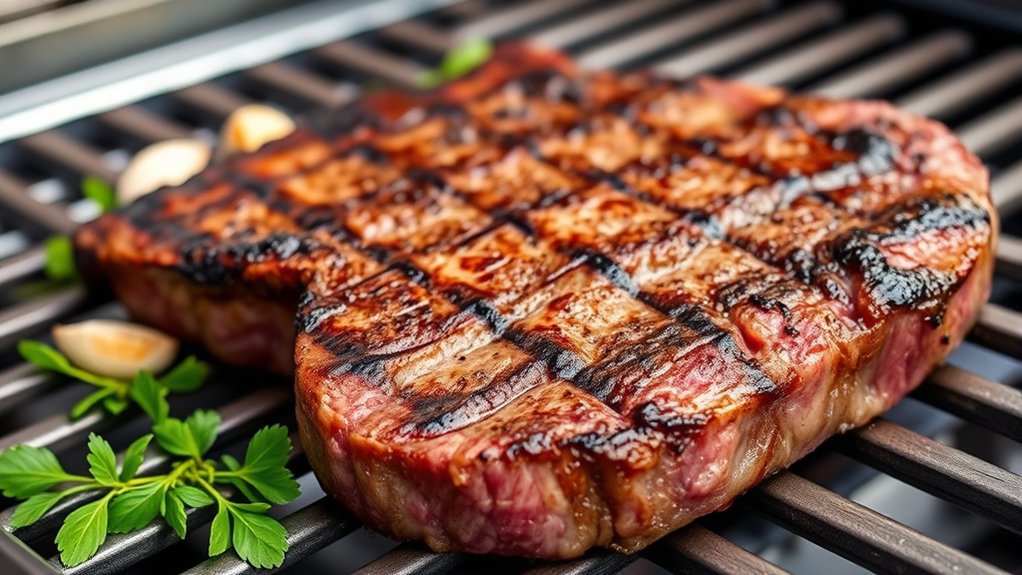
Wondering how to pick the perfect flank steak for grilling? The key is to look at beef tenderness and meat marbling.
Choose a cut with good marbling—thin streaks of fat woven through the muscle—as it boosts flavor and keeps the meat moist during grilling. While flank steaks are naturally lean, some marbling shows better tenderness and juiciness.
Avoid thicker, overly dense cuts since they can be tougher. Instead, opt for a steak with a bright, even color and minimal discoloration or drying.
Feel the meat; it should be firm but not hard, which indicates freshness. Check for a consistent thickness to ensure even cooking.
Preheat Your Gas Grill for Perfect Searing
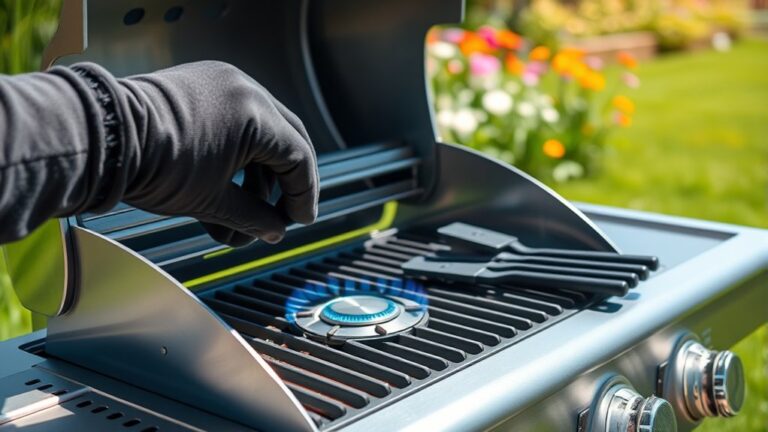
Before you start grilling, turn your gas grill up to high heat. This helps get the temperature just right for a nice, hot sear. Oh, and don’t forget to give those grates a good cleaning beforehand. Nobody wants sticking or uneven grill marks, right?
Once everything’s hot and clean, keep the lid closed while cooking. That way, the heat stays trapped inside, helping your steak cook evenly and get that perfect sear on the outside.
Maximize Grill Temperature
To get that perfect sear on your flank steak, you want to maximize your grill’s temperature before you start cooking. Turn on your gas grill and set it to high heat, then let it preheat thoroughly.
This ensures the grates reach the ideal temperature for searing, which creates those beautiful grill marks and locks in the juices. Always keep safety in mind—close the lid during preheating and check for gas leaks beforehand.
Remember, outdoor cooking is fun but also requires caution. Keep a fire extinguisher nearby and avoid loose clothing. A hot grill sets the stage for flavorful, evenly cooked steak.
Once it’s preheated, you can lower the heat slightly if needed, but make sure the surface stays hot enough for that perfect sear.
Clean Grates Thoroughly
A clean grill is essential for getting that perfect sear, so make sure to thoroughly clean your grates before preheating. Proper maintenance keeps leftover residue from sticking to your steak and helps you get those nice grill marks.
Use a wire brush to scrub the grates, removing grease and food particles that can cause flare-ups or uneven cooking. Cleaning also promotes safety by preventing flare-ups caused by built-up grease and reduces the risk of burning your steak or causing accidents.
Once the grates are spotless, preheat your grill to high heat. A clean surface allows heat to distribute evenly, helping your flank steak sear perfectly and stay juicy inside. Regular maintenance keeps your grill in top shape and boosts your grilling results.
Use Lid for Heat
Using the lid on your gas grill is key to getting that perfect sear. The lid traps heat inside, creating an oven-like environment that helps with even cooking and better heat retention.
When preheating, keep the lid closed to build up a steady, high temperature—around 450°F to 500°F—for searing the flank steak. This method ensures the heat surrounds the meat, searing it quickly and locking in juices.
Once you place the steak on the grill, try to keep the lid closed as much as possible. It maintains steady heat, speeds up cooking, and results in a more flavorful, evenly cooked steak.
Using the lid effectively is essential if you want to master grilling flank steak to perfection.
How to Prepare Flank Steak With Marinades and Seasonings
Marinating flank steak boosts its flavor and tenderizes the meat, making it more enjoyable to eat. You can try different marinades to add depth and complexity, like soy-based, citrus, or herb-infused options.
Seasoning blends such as garlic, paprika, cumin, or chili powder enhance the steak’s natural flavor and help create a delicious crust when grilled.
Here’s a quick guide to popular marinade types:
| Marinade Type | Key Ingredients | Flavor Profile |
|---|---|---|
| Citrus | Lime juice, orange zest | Bright, tangy |
| Herb | Rosemary, thyme, garlic | Earthy, aromatic |
| Spicy | Chili powder, cumin | Bold, smoky |
| Sweet | Honey, soy sauce | Savory, sweet |
Pick your favorite marinade and coat the steak evenly. Let it sit for at least 1-2 hours before grilling for the best flavor and tenderness.
What Temperature Should Flank Steak Be Cooked To?
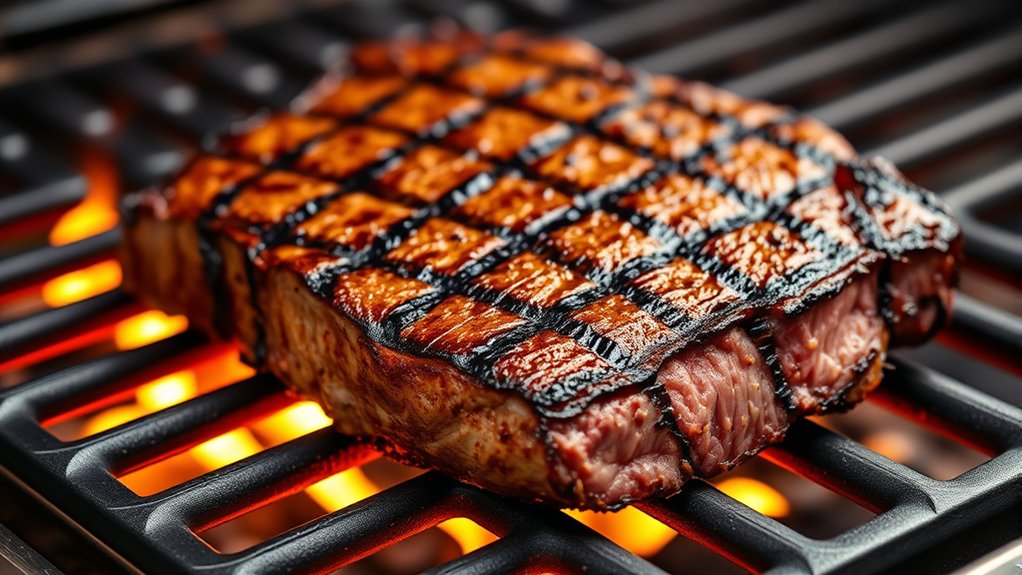
To cook flank steak just right, it’s important to know the perfect internal temperature. Using a meat thermometer is the best way to make sure you don’t overcook or undercook it.
Generally, for flank steak, aim for about 125°F (52°C) for rare, 135°F (57°C) for medium-rare, 145°F (63°C) for medium, and 155°F (68°C) for well done.
And don’t forget to let the steak rest for a few minutes after cooking. That way, the juices stay in, making your steak juicy and full of flavor when you slice into it.
Ideal Internal Temperature
What’s the perfect internal temperature for flank steak? For a juicy, tender result, aim for 130°F to 135°F for medium-rare. Keep in mind, marinade types can affect cooking time, so adjust accordingly.
Thinner steaks cook faster and may reach your target temperature sooner, while thicker cuts need more time. To enjoy the best flavor and texture, remove the steak from the grill once it hits your desired temperature and let it rest.
Resting allows the juices to redistribute, making the meat more tender. Remember, overcooking leads to tough meat, so stay attentive. Use these tips for perfect results:
- Monitor internal temp closely
- Consider steak thickness
- Adjust cooking time based on marinade
- Remove at the right temperature
- Rest before slicing
Use a Meat Thermometer
Using a meat thermometer is the most reliable way to guarantee your flank steak reaches the perfect doneness. For flank steak, aim for an internal temperature of 130°F to 135°F for medium-rare, 140°F for medium, and 150°F for medium-well.
Different marinade options can influence flavor but won’t affect the target temperature. Keep in mind, the steak cut variety can vary in thickness, so monitoring temperature helps prevent overcooking.
Use a digital instant-read thermometer and insert it into the thickest part of the meat for accurate readings. Here’s a quick guide to target temperatures:
| Doneness | Temperature | Steak Cut Variety |
|---|---|---|
| Rare | 125°F | Thin flank slices |
| Medium-Rare | 130–135°F | Standard flank steaks |
| Medium | 140°F | Thicker cuts |
| Well Done | 150°F+ | Less common, tougher |
Rest Before Serving
Once you’ve taken the flank steak off the grill, it’s really important to let it rest before slicing. Resting helps the juices spread out, giving you a tender and flavorful bite.
Aim for a temperature of about 130-135°F for medium-rare or 140°F for medium. You can use foil to tent the steak and keep it warm without cooking it further.
During this time, resist the urge to slice right away—juices can escape and dry out the meat. Resting also helps marinating flavors soak in and makes the steak more tender.
Let it rest for 5 to 10 minutes before slicing. Use a meat thermometer to check the temperature and cover loosely with foil to keep the heat in.
When you’re ready to cut, slice against the grain for maximum tenderness. If you marinated your steak, resting will help get the most flavor and texture out of it.
The Best Marinades and How Long to Marinate
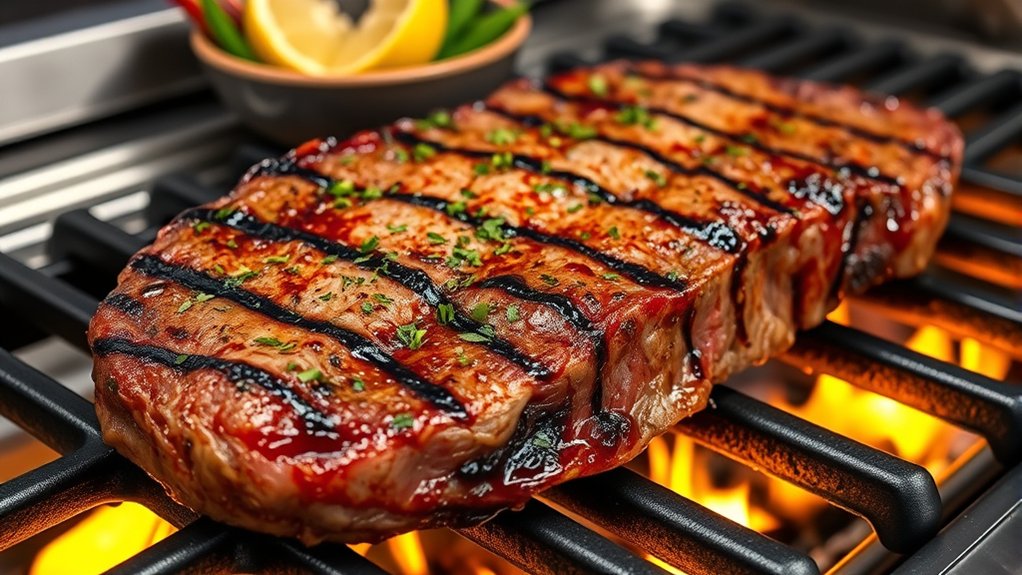
Marinating flank steak is an important step to boost its flavor and tenderness, but picking the right marinade and timing are key. The best marinade ingredients include soy sauce, garlic, olive oil, lemon juice, and herbs, which add rich flavor and help break down muscle fibers.
Marinating times can vary; for good flavor and tenderness, aim for at least 1 to 4 hours. If you’re short on time, even 30 minutes can make a difference. However, longer marinating allows for deeper flavor penetration.
Be careful not to marinate for more than 24 hours because the acid can break down the meat too much, making it mushy. Keep the steak in the fridge during marinating and turn it occasionally to ensure even coverage.
When you’re ready, remove any excess marinade, pat the steak dry, and then grill it for a flavorful, tender flank steak.
Step-by-Step Guide to Searing Flank Steak on a Gas Grill
To get a perfectly seared flank steak on your gas grill, start by preheating it to high heat—around 450°F to 500°F—and make sure the grates are clean. Proper searing locks in flavor and gives you a beautiful crust. Use marinade tips to boost the taste, but avoid excess liquid that can stop the steak from searing properly. When you’re ready, pat the steak dry to help it brown better.
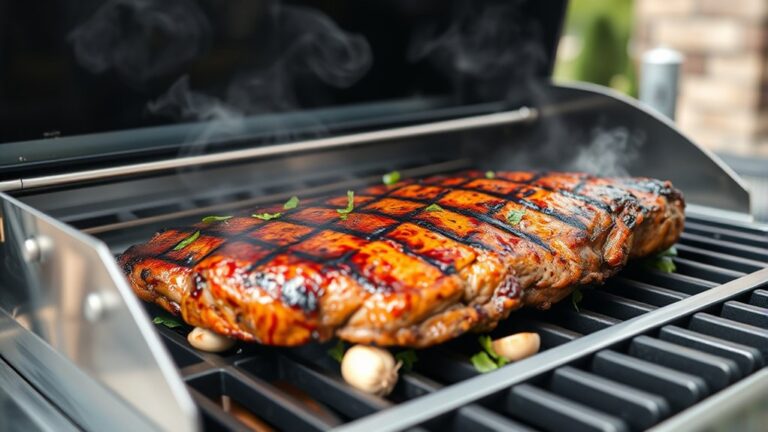
For effective searing techniques, place the steak directly over the high heat zone. Don’t move it too soon—let it develop a crust. Sear for about 2-3 minutes per side. Use tongs to flip the steak and avoid piercing it, which can let juices escape. Keep an eye out for flare-ups and adjust the heat if needed.
Following these steps will help you master the art of searing. You’ll get that irresistible caramelized exterior while keeping the inside tender and juicy.
How to Tell When Your Flank Steak Is Done?
So, figuring out when your flank steak is done can be a bit of a balancing act. You’ll want to keep an eye on things like the color and how firm the meat feels—that can give you some good clues. But honestly, the most reliable method is using a meat thermometer. Just stick it into the thickest part of the steak, and it’ll give you an accurate reading of the internal temperature. That way, you can make sure your flank steak hits exactly the doneness you’re after, without risking overcooking it.
Visual Cues for Doneness
Knowing how to recognize when your flank steak is done by its appearance is key for perfect grilling. Visual cues help you gauge doneness without needing a thermometer, so you can keep the steak’s flavor intact.
Look for a deep, rich brown crust—that’s a good sign of proper searing. Clear juices also indicate that the meat is cooked through.
Check the surface texture for slight charring and grill marks, which show good caramelization. Gently pressing the steak should give a little—it’s firm but not stiff.
The thickness of the steak is another tip; it should be a bit less pink in the center for medium doneness. Mastering these visual cues will help you grill a perfect flank steak every time.
Use of a Meat Thermometer
Using a meat thermometer is the most accurate way to tell when your flank steak has reached your preferred level of doneness. It takes the guesswork out of cooking and helps you get perfect results every time.
Just insert the thermometer into the thickest part of the steak, avoiding bone or fat. For medium-rare, aim for 130–135°F. For medium, go for 135–145°F. And for well-done, 155°F and above.
Using a thermometer not only keeps your steak safe but also boosts its flavor by preventing overcooking. Proper temperature control keeps the steak juicy and tender, which really makes a difference in taste.
Add this step to your grilling routine to get consistent, delicious results. It’s a small investment that really levels up your flank steak game.
Resting and Slicing Flank Steak for Maximum Juiciness
After removing the flank steak from the grill, it’s important to let it rest for at least 10 minutes. Resting allows the juices to redistribute, making each bite moist and flavorful.
Allow the steak to rest for at least 10 minutes to ensure juicy, flavorful bites.
During this time, avoid cutting into the meat right away, as slicing too soon causes the juices to escape. Use a sharp knife and cut against the grain for tender, easy-to-chew slices.
If you marinated your steak, resting helps the flavors settle in, boosting juiciness and taste.
To get the most juice out of your steak, rest it on a cutting board loosely tented with foil.
Then, slice against the grain for maximum tenderness.
Let the steak rest undisturbed for at least 10 minutes before slicing.
For extra flavor, try marinating your steak before grilling.
Following these steps guarantees a juicy, flavorful flank steak every time.
Common Mistakes to Avoid When Grilling Flank Steak
One common mistake when grilling flank steak is overcooking it, which can make the meat tough and dry. To avoid this, use proper grilling techniques that focus on quick, high heat. Aim for medium-rare or medium doneness to keep it tender.
Another mistake is neglecting meat selection. Picking a flank steak with good marbling and freshness makes a big difference in flavor and juiciness. Don’t forget to let the steak rest after grilling to keep the juices inside.
Avoid using uneven heat or overcrowding the grill, as this can cause uneven cooking and flare-ups. Preheat your gas grill well and keep the temperature steady for a perfect sear without overcooking.
Serving Tips and Flavor Pairings for Your Grilled Flank Steak
To get the most out of your grilled flank steak, serve it with flavors that complement its richness and pay attention to how you present it. Pairing wines like a bold Cabernet Sauvignon or a crisp Malbec really brings out the beefy flavor.
Enhance grilled flank steak with complementary flavors and elegant presentation for a memorable dining experience.
For garnishes, fresh herbs like cilantro, parsley, or sliced green onions add color and a fresh touch. Bright sauces such as tangy chimichurri, zesty salsa verde, or a lemon-olive oil drizzle will elevate the dish.
When plating, slice the steak against the grain for tenderness and arrange it neatly on a platter. Adding grilled vegetables or a light salad helps balance the meal nicely.
Don’t forget to serve your wine at the right temperature so its flavors can shine. These simple tips will help you create an inviting presentation and a memorable flavor experience.
Frequently Asked Questions
Can I Grill Flank Steak Indoors on a Stovetop Grill Pan?
Yes, you can grill flank steak indoors using a stovetop pan designed for grilling. It’s a great way to enjoy grilled flavor without heading outside.
Preheat the pan until it’s hot, then add a little oil. Cook the steak for about 4-6 minutes per side for medium-rare, turning once.
Indoor grilling with a stovetop pan offers a quick, convenient way to get flavorful flank steak. Just remember to ventilate well to avoid smoke buildup.
How Do I Prevent Flank Steak From Drying Out During Grilling?
Think of your flank steak as a sponge—you want it to soak up flavor without drying out. To do this, use marinades that include oil and acid, which help lock in moisture.
During grilling, don’t forget to rest your steak for 5-10 minutes. This step allows the juices to reabsorb, keeping the meat tender and flavorful.
Should I Use Direct or Indirect Heat for Grilling Flank Steak?
You should use direct heat for grilling flank steak because it helps get a good sear and makes the meat tender.
Before grilling, marinate the steak to break down muscle fibers and lock in moisture, which prevents it from drying out.
Keep the grill hot, place the steak directly over the flames, and cook for a few minutes on each side.
This method ensures your flank steak is flavorful, juicy, and perfectly cooked.
How Do I Store Leftover Grilled Flank Steak Safely?
To store leftover grilled flank steak safely, you should promptly refrigerate it within two hours of cooking to guarantee food safety. Wrap the steak tightly in aluminum foil or place it in an airtight container to prevent contamination.
Use proper storage techniques by keeping it in the coldest part of your fridge, and consume it within 3-4 days. When reheating, make sure it’s heated thoroughly for safe consumption.
What Are Some Creative Side Dishes to Serve With Grilled Flank Steak?
You can elevate your grilled flank steak by serving creative side dishes like roasted vegetables such as asparagus, bell peppers, or zucchini that complement the rich flavors.
Add a variety of sauces and dips like chimichurri, spicy salsa, or a tangy yogurt dip to enhance each bite.
These options not only bring vibrant flavors but also create a well-rounded, satisfying meal that will impress your guests.
Conclusion
Grilling flank steak to perfection is all about choosing the right cut, preheating your grill, and timing it just right. Properly rested steak can retain up to 70% more juices, so don’t skip that step.
With these tips, you’ll serve juicy, flavorful slices every time. So fire up that gas grill, master the technique, and impress your guests with a delicious, perfectly grilled flank steak that’s sure to be the star of any meal.