10 Essential Steps to Grill T-Bone Steak on a Gas Grill
Cooking a perfect T-bone steak on a gas grill can feel intimidating, especially if you’re new to grilling or aiming for restaurant-quality results. You’re not alone—many people struggle with achieving that ideal crust and juicy inside. But don’t worry, with a few simple steps, you’ll be grilling T-bone steaks like a pro in no time.
Start by choosing a well-marbled T-bone steak and letting it sit at room temperature for 30 minutes.
Preheat your gas grill to at least 450°F, then clean and oil the grates.
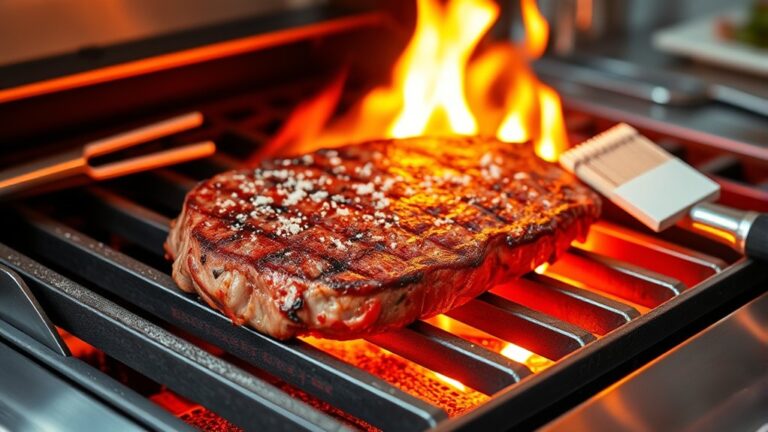
Season your steak generously, then sear it directly over high heat to develop a crust.
Use a meat thermometer to check doneness, rest the steak for 5-10 minutes, and slice against the grain for tenderness.
For more tips on perfecting your grill skills, keep going!
Key Takeaways
- Preheat your gas grill to high, around 450-500°F, and make sure to clean and oil the grates for that perfect sear.
- Pick a well-marbled T-bone that’s about 1 to 1.5 inches thick, and let it sit out at room temperature for about 30 minutes.
- Sear the steak directly over high heat for 2 to 4 minutes on each side to build a nice crust.
- Use a meat thermometer to check when it reaches your preferred doneness, then let it rest for 5 to 10 minutes before slicing.
- Slice against the grain, add your favorite garnish, and serve to enjoy a tender, flavorful steak.
Choose and Prepare Your T-Bone Steak for Grilling
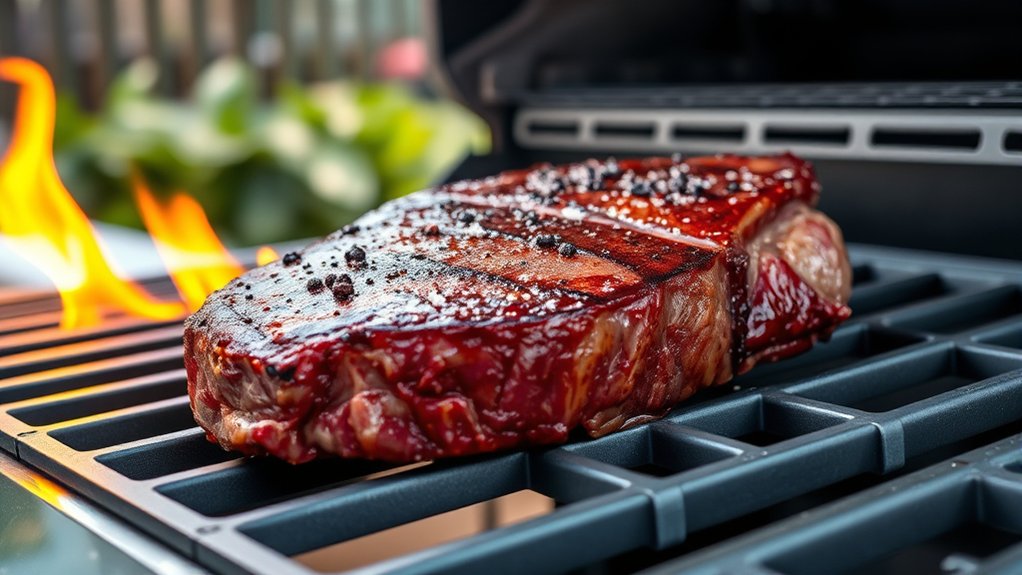
Before grilling, choosing the right T-bone steak is key for great flavor. Focus on marbling, which shows how fat is spread out. Good marbling makes the meat more tender and juicy.
Look for steaks with fine, evenly distributed marbling. This helps ensure consistent flavor and moisture when you cook. For thickness, aim for about 1 to 1.5 inches.
Thinner steaks can dry out fast, while thicker ones need longer to cook. Picking a steak with good marbling and the right thickness means a juicy, tender result.
Before grilling, let the steak sit at room temperature for about 30 minutes. This helps it cook evenly. Pat it dry with paper towels to remove excess moisture, which helps get a nice sear.
Getting these steps right sets the stage for a perfectly grilled T-bone that’s flavorful and tender.
Set Up and Preheat Your Gas Grill for Perfect Searing
First things first, give your grill grates a good clean and then lightly oil them. This helps prevent sticking and makes those beautiful grill marks look even better. Once that’s done, crank up the heat and preheat your grill to high.
Getting it nice and hot is key for that perfect sear. With everything set up like this, you’ll create the ideal surface and temperature to cook a juicy, flavorful T-bone steak.
Clean and Oil Grates
Have you ever wondered why your steaks don’t get that perfect sear? It often comes down to proper grill maintenance, especially cleaning the grates.
Before you start cooking, use quality cleaning tools like wire brushes or grill scrapers to remove leftover residue and rust. Clean grates guarantee even heat transfer and prevent sticking.
Once clean, lightly oil the grates to create a non-stick surface that helps achieve a beautiful sear. Use a high-heat oil like canola or grapeseed, and apply it with a paper towel or brush.
Oiling the grates also helps protect them from rust and prolongs their lifespan. Taking these steps ensures your grill is ready for superior searing, giving you those perfect, restaurant-quality grill marks.
Preheat For Even Heat
Achieving a perfect sear on your T-bone steak depends heavily on how well you preheat your gas grill. To get that ideal high heat, turn on your grill and set it to high, allowing it to heat for 10-15 minutes. This guarantees even heat distribution, which is key for a great sear.
Remember, the T-bone’s rich history dates back centuries, making it a classic choice for grilling. While preheating, consider your marinade options; marinating can improve flavor and tenderness.
For best results, keep the lid closed to trap heat, and use different zones for indirect cooking if needed. Don’t forget: let the grill reach at least 450°F, clean and oil the grates before heating, keep an eye on the temperature, and prepare your T-bone for searing.
Season and Bring Your Steak to Room Temperature
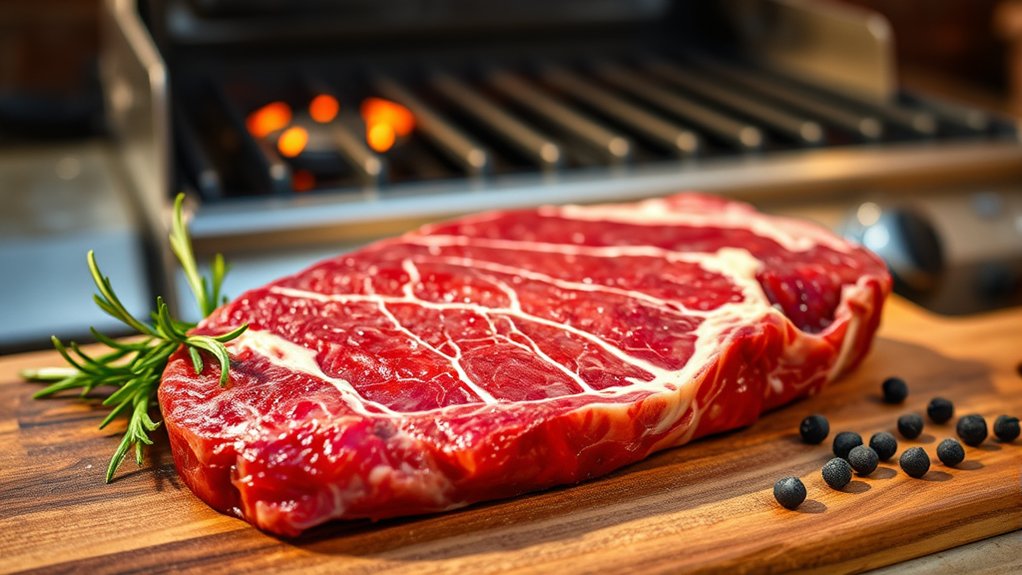
Before grilling, generously season your T-bone steak with salt and pepper or your favorite spices to boost its flavor. You can also try different seasoning blends, whether simple or complex, to enhance the meat’s taste.
For extra flavor and tenderness, consider marinating your steak. Once seasoned, let the steak sit at room temperature for about 30-60 minutes. This helps it cook evenly and prevents the outside from overcooking while the inside remains underdone.
Bringing the steak to room temperature ensures it cooks more uniformly on the grill. Don’t rush this step—cold steak can lead to uneven results. During this time, the seasonings penetrate the meat, creating a richer, more complex flavor.
This preparation is key to getting a juicy, flavorful, and evenly cooked T-bone. It sets the stage for a successful grilling session and a delicious final result.
Achieve the Right Grill Temperature for T-Bone Steaks
To get perfect grill marks and ensure your T-bone steak cooks evenly, set your gas grill to the right temperature. Proper heat control helps you develop a nice sear without overcooking the inside. Aim for about 450-500°F for a great sear, then lower to around 350°F for indirect cooking.
Use the grill’s built-in thermometer or an external probe to keep track of the heat. Preheat the grill for at least 15 minutes before you start cooking. Keep the lid closed to stabilize the temperature.
Adjust the burners as needed to control the heat levels. A digital thermometer is handy for verifying the actual grill temperature. Mastering heat control helps you avoid flare-ups and cook your steak evenly.
This way, your T-bone stays juicy and flavorful. Getting the right grill temperature is key to grilling success!
Sear the T-Bone to Build a Delicious Crust
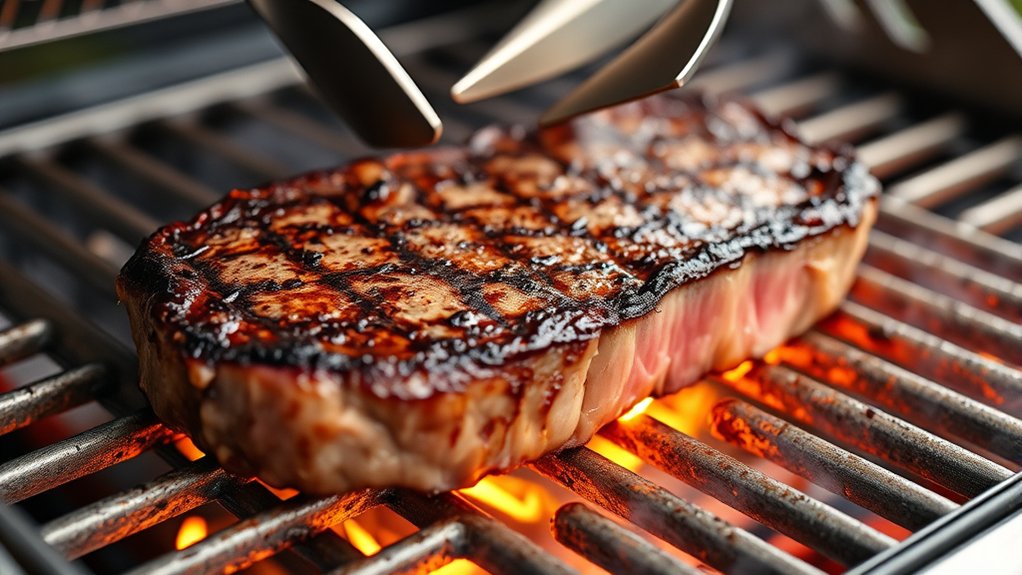
Once your grill is heated to the right temperature, it’s time to focus on creating that mouthwatering crust. Searing the T-bone is key for locking in flavor and adding texture.
To improve the crust, consider your marinade options. Simple salt and pepper work well, but marinades with oil, garlic, or herbs can add extra depth.
If you’re working with different T-bone variations, keep in mind that thicker cuts may need a slightly longer sear, while thinner ones require less time.
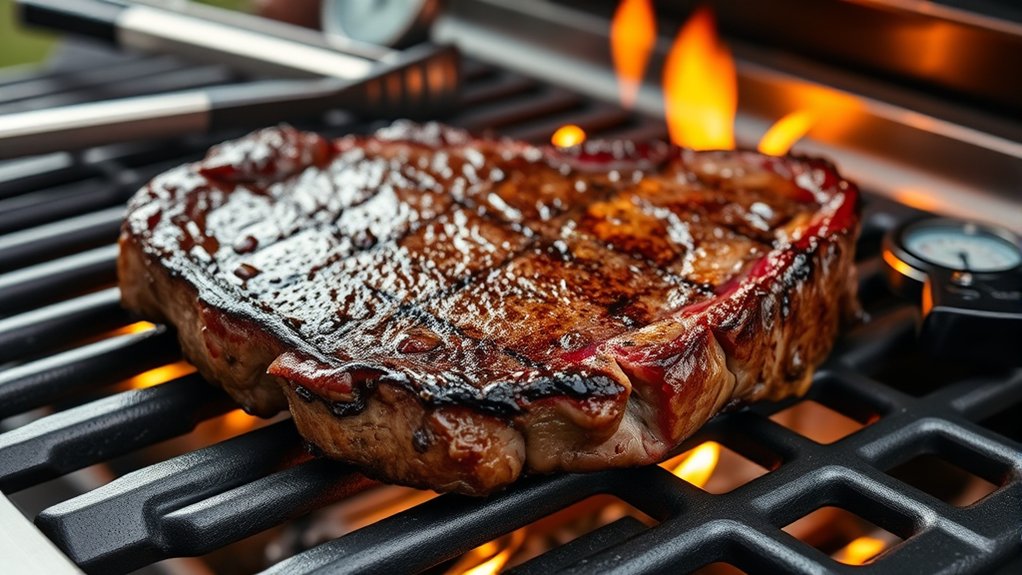
Place the steak directly over the heat and don’t move it right away. Let it form a caramelized crust before flipping.
Resist the urge to flip too often. Wait until you see a rich, dark sear forming.
This process not only amplifies flavor but also creates the appealing exterior that makes T-bone steaks so irresistible.
Focus on maintaining high heat for that perfect, crispy crust.
Cook Your T-Bone Steak to Your Desired Level of Doneness
Achieving your perfect level of doneness depends on monitoring the internal temperature of your T-bone steak as it cooks. Use a meat thermometer to check the temperature regularly. For rare, aim for 120°F; medium-rare, 130°F; medium, 140°F; medium-well, 150°F; and well-done, 160°F.
To enhance flavor, consider marinating beforehand—marinating can add moisture and taste, but avoid over-marinating to prevent overpowering the meat. When choosing your T-bone, go for high-quality cuts from trusted suppliers for the best results.
Rest Your Steak to Lock in Juices and Tenderness
After removing your steak from the grill, it’s essential to let it rest for several minutes. This step, known as steak resting, allows the juices to redistribute throughout the meat, ensuring juicy retention with every bite.
During cooking, the juices move toward the center. If you cut into the steak immediately, those flavorful juices escape, leaving your steak dry. Resting helps the muscle fibers relax and reabsorb moisture, which improves tenderness and flavor.
Covering the steak loosely with foil can help keep it warm without trapping excess moisture. About 5 to 10 minutes of resting is enough for a T-bone steak, depending on its thickness.
This short pause makes a noticeable difference in texture and juiciness, giving you a more satisfying, flavorful steak. Remember, patience at this stage results in a juicier, more tender T-bone that’s worth the wait.
Use a Meat Thermometer to Check for Perfect Doneness
Using a meat thermometer guarantees your T-bone steak reaches the perfect level of doneness without guesswork. It’s an essential tool that helps you pick the right temperature for maximum flavor and tenderness.
As you monitor the internal temperature, you’ll make better choices in meat selection, avoiding overcooking or undercooking. This precision boosts flavor, making every bite juicy and flavorful.
Keep these tips in mind:
- Insert the thermometer into the thickest part of the steak for accurate readings.
- Remove the steak from the grill a few degrees before reaching your desired temperature, as carryover cooking will finish the job.
- Aim for 125°F for rare, 135°F for medium-rare, 145°F for medium, and 160°F for well-done.
- Use a high-quality meat thermometer for consistent results.
Slice and Serve Your Juicy, Flawlessly Grilled T-Bone
Once your T-bone has rested for a few minutes after grilling, it’s time to slice and serve. Resting allows the juices to redistribute, making each bite juicy and flavorful.
When slicing, think about how you want to present your steak—cut against the grain for tenderness and a nice look. You can serve the steak whole or in individual portions.
If you’ve used marinade options, a quick brush of extra marinade can boost flavor and add some shine. Use a sharp knife to make smooth, even cuts that reveal a perfectly cooked interior.
For a bit of extra flair, sprinkle fresh herbs or a dash of sea salt. Remember, clean, precise slices show off those gorgeous grill marks and juicy inside.
Whether you’re serving family or guests, your beautifully sliced T-bone will impress. It’s all about showcasing your grilling skills and attention to detail.
Troubleshoot Common Grilling Issues and Fix Them
Grilling can sometimes present challenges, but spotting common issues early can save you time and help you get perfect results.
Identifying grilling issues early ensures perfect results and saves time.
If your T-bone steak isn’t turning out as expected, troubleshooting is key. For example, if it isn’t searing properly, check your grill’s temperature—high heat is essential for a good crust.
If it’s sticking, make sure your grill grates are clean and well-oiled. When steaks turn out tough, it could be due to overcooking or using lower-quality meat—consider better sourcing or adjusting your cooking time.
If your marinade isn’t boosting flavor, try experimenting with different ingredients or marinating longer. Finally, uneven cooking can be fixed by using a meat thermometer to monitor the internal temperature.
Frequently Asked Questions
What Are the Best Wood or Charcoal Alternatives for Flavor?
You can boost flavor infusion by using wood chips like hickory, apple, or mesquite instead of charcoal or traditional wood.
Soak the chips in water for about 30 minutes before adding them to your grill. This helps produce aromatic smoke that adds depth to your T-bone steak.
Just be sure to avoid processed or treated wood, as they can create harmful fumes and ruin the flavor.
How Can I Prevent My T-Bone From Sticking to the Grill?
Think of your grill as a dance partner—you want smooth moves, not a sticky situation. To prevent your T-bone from sticking, oil the grill grates well and keep the grill hot.
Use marinade tips that include oil and acid to improve flavor without sticking. After grilling, let your steak rest to lock in juices and prevent tearing and sticking when you serve.
This guarantees a perfect, non-stick performance every time.
What Are Common Mistakes to Avoid When Grilling T-Bone Steaks?
When grilling T-bone steaks, avoid mistakes like using the wrong grill temperature, which can cause uneven cooking or sticking.
Don’t forget to let the steak sit at room temperature before grilling.
Experiment with marinade variations to boost flavor, but be cautious not to over-marinade, as it can affect the crust.
Also, avoid flipping the steak too often; give it time to develop a good sear for perfect results.
How Do Different Marination Techniques Affect Grilling?
Marination is like giving your steak a flavor vacation. The marinade’s acidity helps tenderize the meat, making it juicy and flavorful, while spice infusion adds layers of taste.
Different techniques, like marinating for a short time or overnight, affect how deeply flavors penetrate.
You’ll enjoy a more tender, flavorful T-bone when you choose the right marinade method. This enhances your grilling experience with every bite.
Can I Grill T-Bone Steaks Indoors or on a Stovetop Grill Pan?
Yes, you can grill T-bone steaks indoors using a stovetop pan or an indoor grill. For stovetop grilling, pick a heavy skillet like cast iron, preheat it until it’s really hot, and sear the steak for a few minutes on each side to get that nice crust.
Indoor grilling with a dedicated grill pan works great too. It mimics outdoor grilling and lets you enjoy flavorful steaks right in your kitchen. Just make sure your kitchen is well-ventilated.
Conclusion
Now that you know these essential steps, you’re ready to master the art of grilling a perfect T-bone steak. With patience and attention to detail, you’ll create a meal that’s flavorful, tender, and unforgettable.
Welcome the process, enjoy each moment, and savor the satisfaction of a beautifully grilled steak. Because when you grill with care, every bite becomes a celebration of your skill, passion, and love for great food.
Grilling a T-bone steak on a gas grill is truly an art. Follow these steps, stay attentive, and you’ll impress everyone at your next cookout.