Mastering the Gas Grill for the Perfect Steak
Trying to achieve that perfect steak on your gas grill can be frustrating, especially when it doesn’t turn out as juicy and flavorful as you want. You’re not alone—many people struggle with getting that ideal sear and proper doneness.
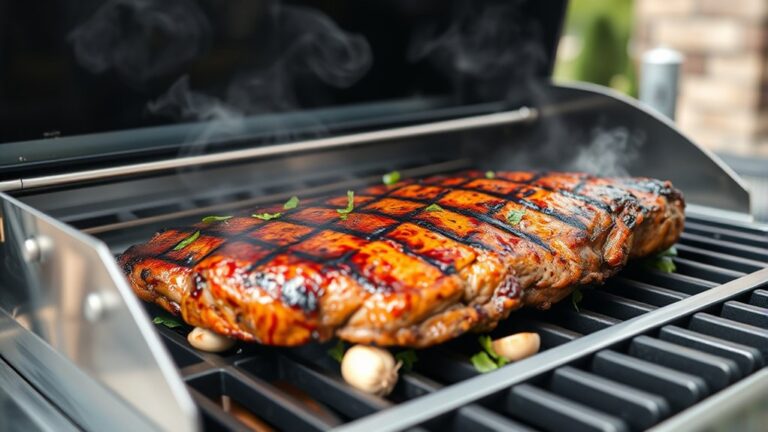
To master your gas grill for the perfect steak, start by cleaning and preheating it to 450-500°F for a good sear. Choose a quality cut like ribeye or T-bone, season generously, and consider marinating.
Create heat zones to control cooking and cook undisturbed for 2-3 minutes per side. Rest the steak before slicing, and finish with your favorite sauces or garnishes.
Keep these tips in mind, and you’ll soon impress everyone with every grilled steak you make.
Key Takeaways
- Make sure to clean and preheat the grill thoroughly. This helps keep the heat even and prevents flare-ups that can char your steak.
- Choose high-quality cuts of steak, season generously, and consider marinating for extra flavor. It makes a big difference!
- Set up heat zones on the grill so you can sear the steak and then let it rest. Use a thermometer to check for perfect doneness.
- Let the steak rest after grilling. This allows the juices to redistribute, making it more tender and flavorful.
- Finish up with tasty sauces, garnishes, and good presentation to really impress and elevate your meal.
How to Prepare Your Gas Grill for Perfect Steaks
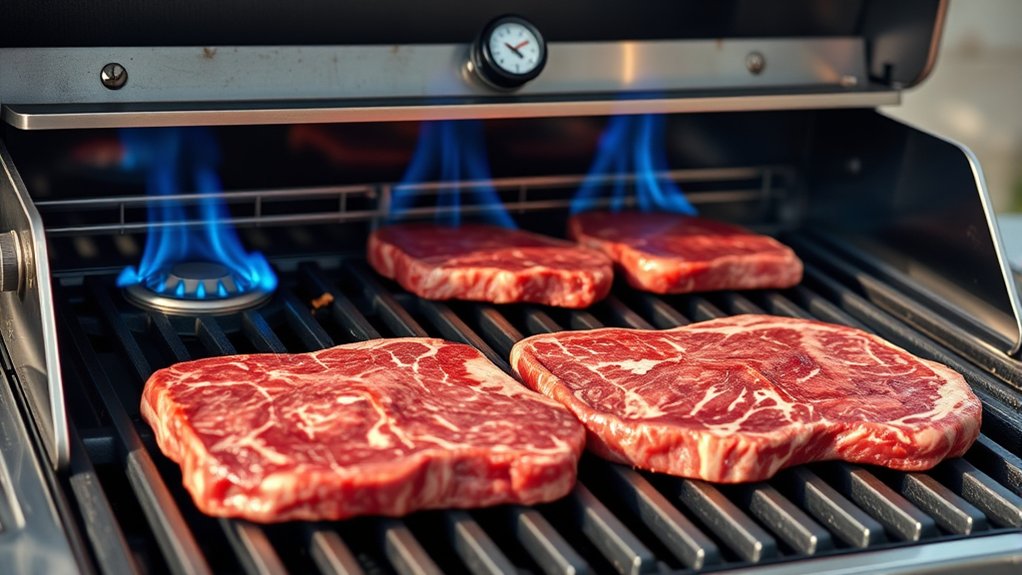
Before you start grilling, it’s really important to properly prepare your gas grill to get those steaks just right. Start with a good cleaning to remove grease, food debris, and rust. This helps with even heat and prevents flare-ups.
Properly cleaning your gas grill ensures even heat, prevents flare-ups, and guarantees perfect steaks every time.
A clean grill also boosts flavor and helps your equipment last longer. Next, pick high-quality propane or natural gas, depending on your grill. Consistent fuel keeps the heat steady, which is key for a perfect sear.
Check the gas lines for leaks and make sure the burners work well. Preheat your grill for at least 10-15 minutes with the lid closed. This gets it to the right temperature for grilling.
Proper prep, like cleaning and choosing the right fuel, sets the stage for great steaks. Paying attention to these details helps you achieve the perfect sear, juiciness, and flavor every time.
Choosing the Best Cut of Steak for Grilling
Have you ever wondered which steak cut gives you the best flavor and tenderness on the grill? The secret is in choosing cuts with good marbling and knowing the right cutting techniques. Here are some top options:
- Ribeye – Known for its rich marbling, it melts in your mouth and has bold flavor.
- New York Strip – Offers a nice balance of marbling and tenderness, making it perfect for grilling.
- Filet Mignon – Less marbling but incredibly tender. Great if you prefer a leaner cut.
- T-bone – Combines a strip and tenderloin, giving you two textures in one steak.
Picking the right cut starts with marbling analysis—more intramuscular fat means more flavor and juiciness. Proper cutting techniques, like slicing against the grain, help improve tenderness. Choose wisely, and your steak will be the star of your grill session.
Seasoning and Marinating Your Steak for Maximum Flavor
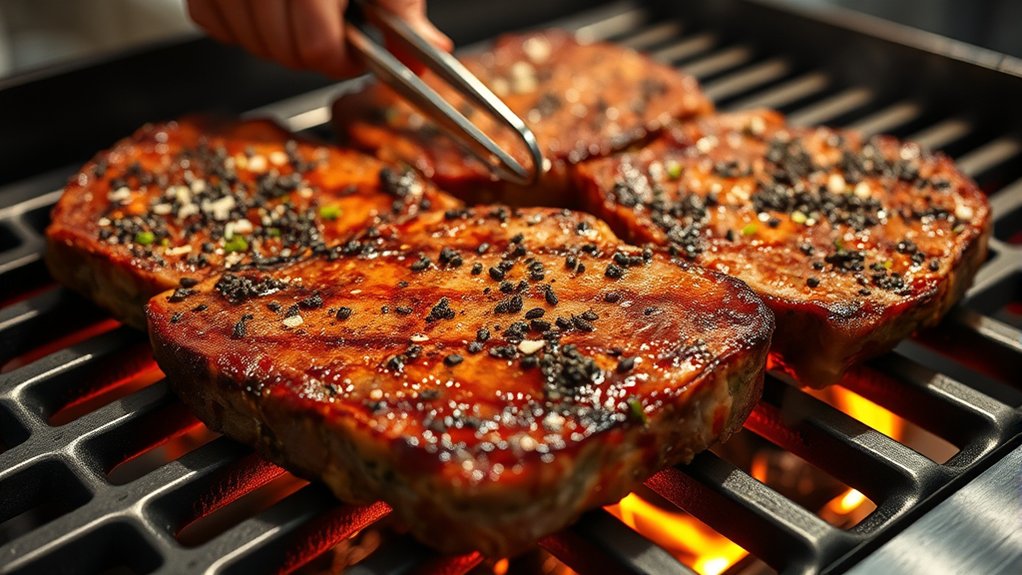
To maximize the flavor of your steak, proper seasoning and marinating are essential steps that can transform a good cut into an unforgettable meal. Seasoning involves coating your steak with salt, pepper, and spices to enhance natural flavors and promote a good crust. Don’t be shy with salt—it’s key to flavor infusion.
Marinating, on the other hand, uses marinade techniques like acid-based solutions (vinegar or citrus) combined with herbs and oils to tenderize and add layers of taste. For best results, marinate your steak for at least 30 minutes, up to several hours for deeper flavor.
A good marinade not only infuses the meat but also helps keep it moist. Remember, the right seasoning and marinade techniques can turn a simple steak into a flavorful masterpiece. Keep your marinating times in mind, and don’t forget to pat your steak dry before grilling to achieve a perfect sear.
Controlling Grill Heat and Setting Up Heat Zones
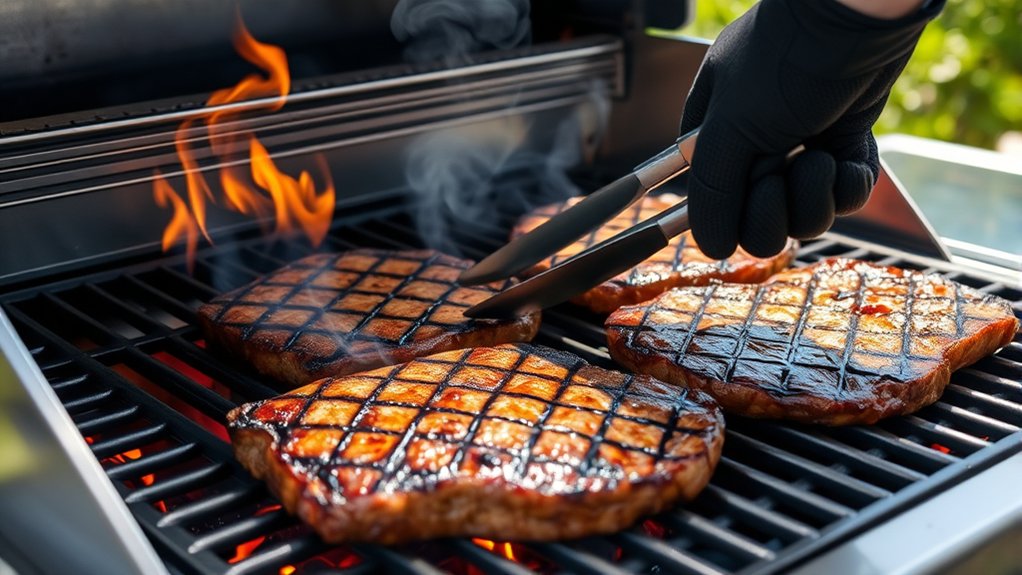
To cook your food just right, it’s important to get a handle on both direct and indirect heat. Setting up different heat zones on your grill makes a big difference because it lets you control exactly where and how your food cooks. That way, you can sear steaks over high heat and then move them to a cooler zone to finish cooking without burning.
And don’t forget to keep an eye on that temperature. Regularly checking and adjusting the heat helps you avoid overcooking or burning your food. With a little practice, managing your heat zones will become second nature, and you’ll be serving up perfectly cooked meals every time.
Managing Direct and Indirect Heat
Wondering how to get the perfect cook on your gas grill? Managing direct and indirect heat is the key. Here’s how to set up your grill for the best results:
- Create heat zones by turning one side of the burners on high for direct heat, and leaving the other side off for indirect heat.
- Use marinade techniques beforehand to boost flavor and tenderness, especially when grilling directly.
- Keep your grill clean to ensure even heat distribution and prevent flare-ups that can ruin your steak.
- Adjust heat levels during cooking to control flare-ups and avoid burning, giving you that perfect sear and desired doneness.
Mastering these steps will help you cook steak that’s flavorful, juicy, and perfectly done every time.
Using Zone Controls Effectively
Setting up your grill with precise zone controls helps you manage heat better and cook your food just right. By creating distinct heat zones—hot for searing and cooler for resting—you can enhance flavor pairing and avoid flare-ups.
Proper grill upkeep keeps these zones consistent, preventing uneven cooking. To make the most of it, assign one side for high heat and the other for low or indirect heat. This gives you more flexibility during cooking.
Use this setup as a guide for your heat zones:
| Heat Zone | Purpose |
|---|---|
| High Heat | Searing and flavor development |
| Medium Heat | Cooking thicker cuts |
| Low Heat | Resting and gentle warming |
| Indirect Heat | Slow cooking and flavor infusion |
Managing these zones effectively results in better steaks and makes grill maintenance easier.
Monitoring Temperature Consistently
Ever wonder how to keep your grill temperature just right throughout the cooking process? Consistent monitoring is key. First, use a reliable meat thermometer or built-in grill thermometer to track heat levels.
Second, set up heat zones strategically: direct heat for searing and indirect for gentle cooking, ensuring even flavor infusion.
Third, adjust your grill’s vents and burners to maintain steady temperatures, which helps with proper grill maintenance.
Fourth, keep the lid closed as much as possible to prevent temperature fluctuations. Regularly checking and tweaking heat prevents overcooking and preserves flavor.
Mastering this control not only amplifies flavor infusion but also makes grill maintenance easier, leading to perfectly cooked steaks every time.
How to Achieve a Perfect Sear on Your Steak
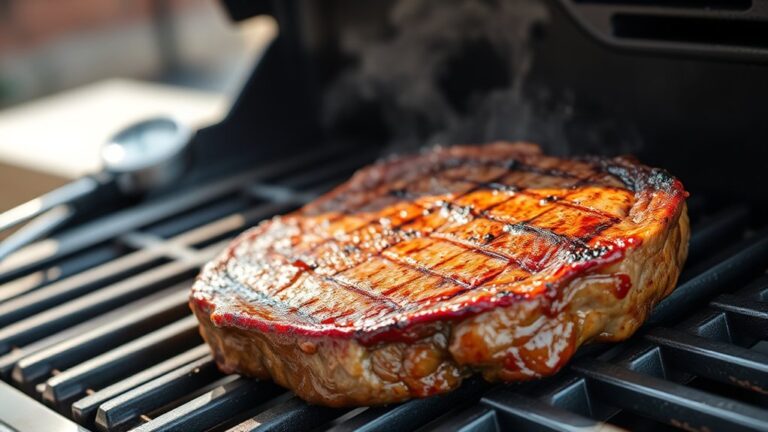
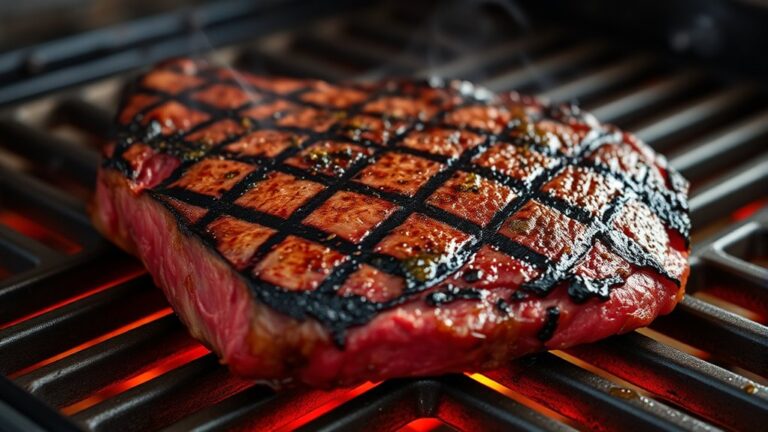
Achieving a perfect sear on your steak starts with ensuring the grill is properly preheated. You want a high, direct heat, aiming for 450°F to 500°F so the outside caramelizes quickly.
Before placing your steak on the grill, pat it dry to remove excess moisture, which can hinder searing. Pay attention to marbling patterns; well-marbled steaks tend to sear better and develop a rich crust thanks to the fat content.
Also, consider steak thickness. Thicker cuts need a bit more patience to develop a good crust without overcooking the inside. Place the steak on the hottest part of the grill, pressing down slightly to make full contact.
Resist the urge to move it too often. Let it sit undisturbed for 2-3 minutes per side to form a beautiful, flavorful crust. With these steps, you’ll achieve a perfectly seared steak every time.
When Is Your Steak Done? Using Temperature and Timing
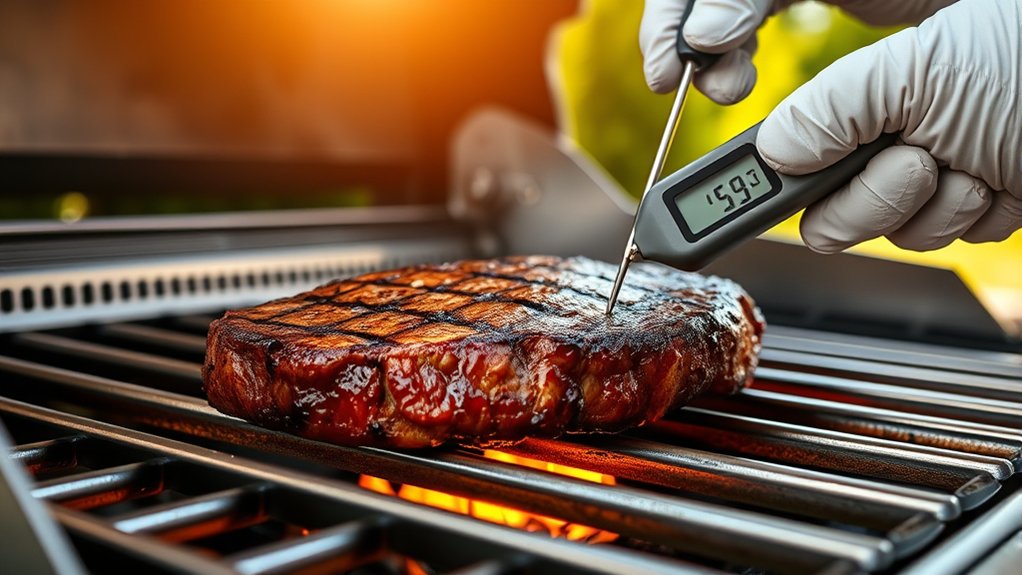
Knowing the right internal temperature is super important if you want that perfect steak. So, it’s a good idea to keep a meat thermometer nearby. That way, you can be sure you’re hitting exactly the right temperature without any guesswork.
As for timing, it really depends on how you like your steak cooked. But honestly, watching the temperature is the best way to be precise. Once you get the hang of it, you’ll be able to cook steaks to your preferred doneness every single time—no more overcooking or undercooking!
Ideal Internal Temperatures
Understanding the ideal internal temperature is key to perfectly cooked steak, as it directly determines whether your meat is rare, medium, or well-done. To improve flavor and keep your grill safe, use a reliable meat thermometer.
Keep these target temperatures in mind:
- Rare: 120-125°F – tender with a cool center
- Medium-rare: 130-135°F – juicy with a warm center
- Medium: 140-145°F – firm with a pink center
- Well-done: 160°F+ – fully cooked and less juicy
Monitoring temperatures helps prevent overcooking or undercooking your steak, preserving flavor and ensuring food safety. Remember, taking the steak off the grill a few degrees early allows for carryover cooking.
Achieving the right internal temp guarantees a perfect, safe steak every time.
Timing for Doneness
Timing plays a crucial role in hitting the perfect level of doneness, especially when combined with temperature monitoring. To get it just right, pay close attention to your grill sessions and how long your steak rests afterward.
Marinating techniques can influence how quickly your steak reaches its ideal internal temperature, so consider marinade acidity and thickness. Keeping track of grilling time helps prevent overcooking, ensuring your steak stays juicy and tender.
Proper timing also impacts steak presentation, as a well-rested steak maintains its juices and appealing appearance. Use a timer alongside a meat thermometer to gauge doneness accurately.
Combining these methods guarantees a perfectly cooked steak that’s beautifully presented and bursting with flavor.
Resting Your Steak for Juiciness and Flavor
After you take your steak off the grill, letting it rest for a few minutes is key to locking in the juices and boosting flavor. Resting helps the meat’s juices spread out evenly, giving you a tender, tasty bite.
While it rests, you can focus on picking the perfect wine and pairing. Here are four simple tips to get the most out of your resting time:
- Loosely cover the steak with foil to keep it warm without steaming it.
- Rest for about 5 minutes for every inch of thickness.
- Use this time to choose a wine that matches—bold reds for richer cuts or light whites for leaner steaks.
- Think about the flavor profile and intensity to pick a wine that really elevates your meal.
Common Grilling Problems and How to Fix Them
Even with careful attention to resting your steak, grilling can still present challenges that impact your results. Common problems include uneven cooking, flare-ups, and sticking.
To fix uneven cooking, make sure your grill is well-maintained—clean the grates regularly and preheat thoroughly. This helps distribute heat evenly and prevents sticking.
Flare-ups often happen from excess fat. Trim your steak sourcing and avoid over-oiling the grates to keep flames in check.
If your steak sticks, ensure the grill is clean and preheated, and lightly oil the grates before cooking.
Overcooking or undercooking can also be issues. Use a reliable meat thermometer to keep track of the internal temperature.
Remember, consistent grill upkeep and choosing quality cuts are key to avoiding many of these problems.
Troubleshooting these common issues will improve your grilling skills and help you achieve a perfectly cooked steak every time.
Finishing Touches: Sauces, Butter, and Garnishes
Finishing touches like sauces, butter, and garnishes really elevate a perfectly cooked steak and bring out its full flavor. These little extras make the meal more enjoyable and add a personal touch.
Consider these options:
Sauce pairings like béarnaise, peppercorn, or chimichurri go well with the steak’s richness. They add flavor without overpowering.
Butter is great melted on top. Compound butters with herbs, garlic, or blue cheese melt beautifully and add depth.
Garnishes such as fresh herbs, crispy fried onions, or a squeeze of lemon brighten up the plate.
Serving tips: Drizzle sauces just before serving to keep their textures intact. Use garnishes to add color and contrast, making the dish more appealing.
Picking the right sauce can boost your steak’s flavor, and garnishes add visual appeal. Keep it simple but intentional—these thoughtful touches make all the difference.
Tips for Serving and Enjoying Your Steak
Once you’ve finished preparing your steak with the perfect finishing touches, the way you serve and enjoy it can really make a difference. Start with creative plating—arrange your steak attractively, maybe with colorful sides or herbs to boost the visual appeal.
Slice the steak against the grain for tenderness and serve it right away to keep it juicy. To heighten the experience, consider wine pairings; a bold red like Cabernet Sauvignon goes well with a well-seared steak, while a Malbec pairs nicely with grilled flavors.
Take your time savoring each bite, appreciating the aroma, texture, and seasoning. Use your eyes and nose to anticipate the flavors, then enjoy the first taste slowly. Remember, presentation and drink choices aren’t just extras—they’re part of the overall enjoyment.
Frequently Asked Questions
How Do I Clean and Maintain My Gas Grill Regularly?
To keep your gas grill in top shape, regularly clean it with a grill brush to remove grease and residue.
Check for gas leaks before each use by applying a soap and water solution to connections. Bubbles mean there’s a leak that needs fixing.
Also, clean the burners and drip trays to prevent flare-ups. Proper maintenance guarantees safe, efficient grilling and helps your grill last longer.
What Safety Precautions Should I Follow While Grilling?
When grilling, always keep an eye on the grill temperature to prevent flare-ups and ensure even cooking. Wearing heat-resistant gloves and keeping a fire extinguisher nearby is a smart safety move.
Avoid loose clothing and always use tools with long handles to stay safe from hot splatters. Properly preheat the grill, and watch the steak’s tenderness so you don’t overcook it.
These precautions help you stay safe and get perfectly tender steaks every time.
Can I Grill Different Types of Steaks Simultaneously?
Yes, you can grill different types of steaks at the same time. Just keep in mind their thickness and the cooking temperature.
Thicker steaks need lower, indirect heat so they cook through without burning the outside. Thinner cuts, on the other hand, do well with higher, direct heat for a quick sear.
How Do I Prevent Flare-Ups During Grilling?
To prevent flare-ups, it helps to understand what causes them, like excess fat dripping onto the flames.
Use flame control techniques such as trimming off extra fat from your steaks and keeping the lid closed to control oxygen. Adjust the burners to keep the heat steady.
Keep a spray bottle of water nearby so you can quickly tame any unexpected flare-ups. Regularly cleaning your grill also helps reduce grease buildup that can catch fire.
What Are Some Creative Side Dishes to Serve With Steak?
Think outside the box with your steak sides. A vibrant vegetable medley, grilled with a touch of herbs, adds color and crunch—like a garden in your plate.
Pair it with a classic potato salad to bring creamy comfort. These creative dishes balance the rich flavors of your steak, making each bite a delightful surprise.
Your guests will love the variety, and you’ll enjoy the culinary adventure.
Conclusion
Mastering your gas grill transforms simple ingredients into gourmet steaks. With over 80% of Americans grilling steaks at least once a year, knowing the tricks guarantees you impress every time.
By selecting the right cut, mastering heat zones, and resting your meat, you’ll raise your grilling game. So fire up that grill, follow these tips, and enjoy the delicious, juicy steak that’s sure to become a favorite in your backyard.
Getting your gas grill just right makes all the difference. With a little practice, you’ll be serving steaks that rival those from top steakhouses.
Remember, mastering your gas grill is key to perfect steaks every time. Happy grilling!