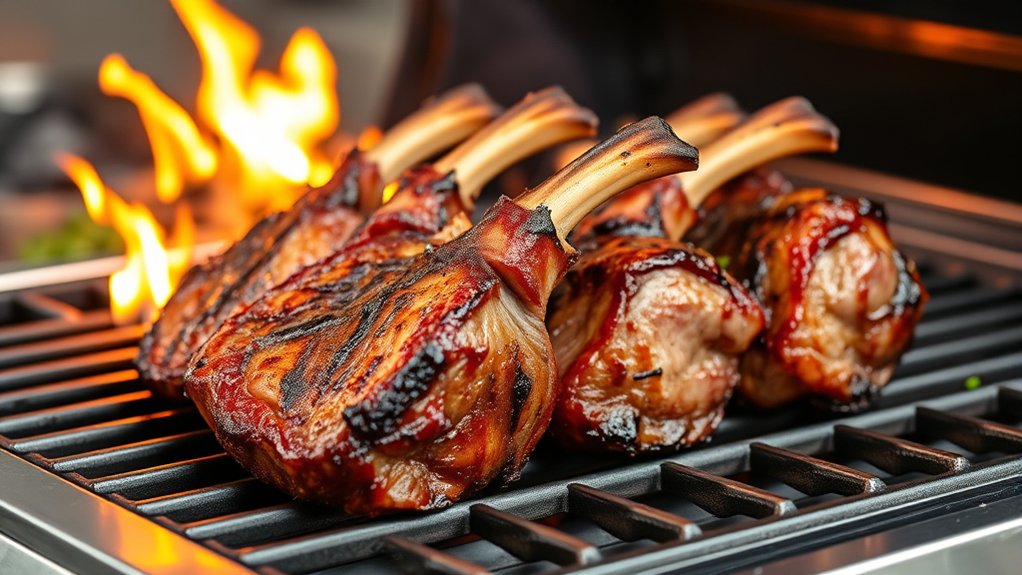
10 Steps to Perfectly Grill Rack of Lamb on a Gas Grill
Cooking a perfect rack of lamb on a gas grill can feel intimidating, especially if you’re aiming for that ideal sear and tender interior. You’re not alone—many people struggle with getting it just right. But with a few simple steps, you can master grilling rack of lamb and impress everyone at your next cookout.
To grill a perfect rack of lamb, start by trimming excess fat and marinating it with herbs and acidic ingredients for flavor and tenderness.
Preheat your gas grill to high, then clean and oil the grates.
Sear the lamb each side for 2-3 minutes, then finish cooking at a lower temperature until it reaches your desired doneness.
Let it rest before slicing against the grain.
If you want expert tips for each step, keep exploring how to master your grilling technique.
Key Takeaways
- Preheat your gas grill to 450–500°F. This creates a hot, clean surface for perfect searing.
- Marinate the lamb with herbs, garlic, and acidic ingredients for flavor and tenderness. Pat it dry before grilling.
- Sear each side for 2-3 minutes over high heat to get a nice charred crust. Then, cook indirectly until it reaches your desired doneness.
- Use a meat thermometer to check the internal temperature. Aim for 125°F for rare up to 160°F for well-done.
- Rest the lamb for 5-10 minutes after grilling. Cover loosely with foil to let the juices redistribute.
Prepare Your Rack of Lamb for Grilling
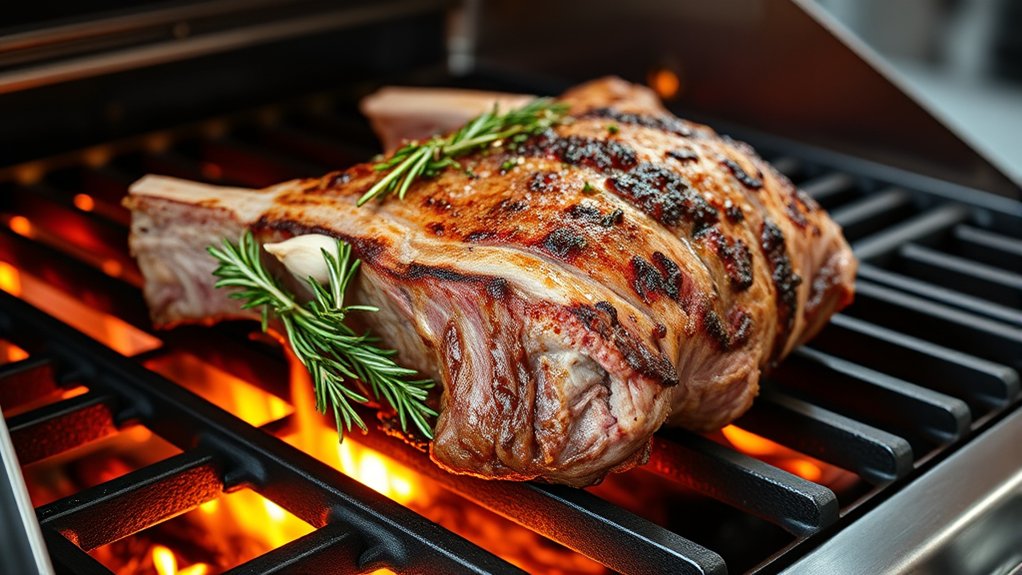
Before you start grilling, it’s important to prepare your rack of lamb properly. To guarantee maximum tenderness, begin by trimming excess fat and silverskin, which can hinder heat penetration and affect texture.
Trim excess fat and silverskin for tender, evenly cooked lamb.
Proper preparation helps ensure even cooking and a tender bite. Next, think about marinating to boost flavor and tenderize the meat. A good marinade often includes acidic ingredients like lemon juice or vinegar, which break down muscle fibers.
Marinate the rack for at least a couple of hours or overnight for deeper flavor and better tenderness. Always pat the lamb dry before grilling to promote a good sear and prevent steaming.
When prepared correctly, the lamb will cook evenly and absorb flavors better, resulting in a juicy, flavorful rack. Following these steps makes sure your lamb is tender, flavorful, and ready for the grill.
Choose the Best Marinades and Seasonings for Lamb
Choosing the right marinades and seasonings can really take your lamb to the next level. Think about the flavor profile you’re going for—do you want it herbaceous, smoky, or spicy? Once you know that, it’s easier to pick the perfect marinade.
A good marinade usually has a balance of acid, oil, and herbs or spices. The acid helps tenderize the meat, while the oil keeps it juicy, and the herbs or spices add that punch of flavor. Don’t be afraid to experiment with different combinations—sometimes the best flavors come from trying something new. So, have fun and find the perfect match that suits your grilling style!
Flavor Profiles to Consider
To improve the rich, meaty flavor of rack of lamb, choosing the right marinade or seasoning is key. Think about herbal combinations like rosemary, thyme, and mint to add freshness and depth. These herbs enhance lamb’s natural richness without overpowering it.
Spice blends such as cumin, coriander, and smoked paprika bring warm, smoky notes that boost the meat’s robustness. You can also explore Mediterranean or Middle Eastern-inspired profiles by mixing herbs and spices for a well-balanced flavor.
Marinade Composition Tips
Selecting the right marinade can really bring out the natural richness of lamb and add layers of flavor that match your seasoning choices.
Focus on ingredients like olive oil, garlic, herbs, and acids such as lemon juice or vinegar to help tenderize the meat and boost flavor.
Balancing flavors is key—try aromatic herbs like rosemary and thyme with bold spices like cumin or paprika for extra depth.
Be careful not to use too much salt or sugar, as they can burn on the grill.
Marinate the rack of lamb for at least a few hours, or overnight if you want a more intense flavor.
Get Your Gas Grill Ready for Perfect Lamb
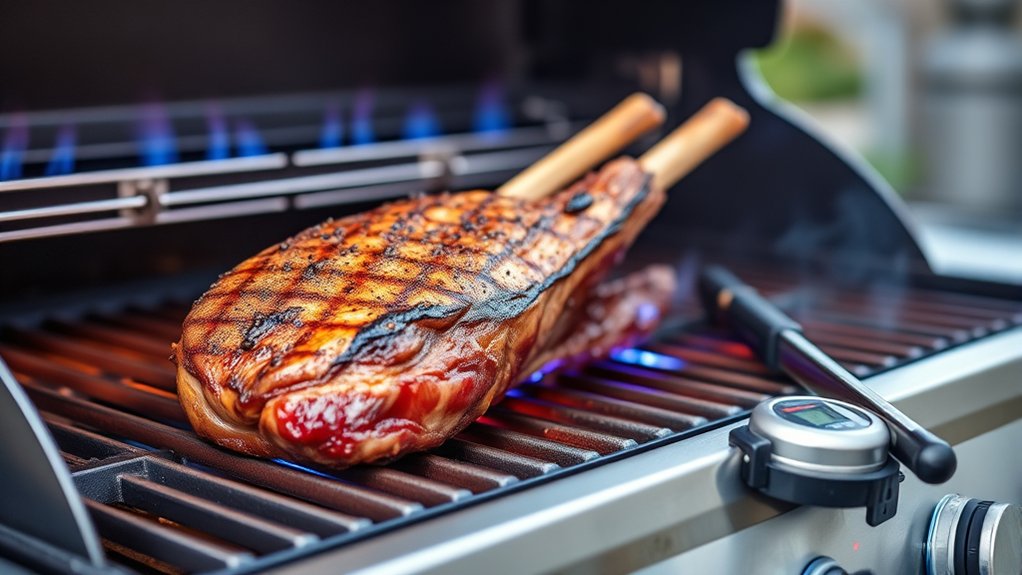
Before you toss that rack of lamb on the grill, make sure your gas grill is all clean and heated up to the right temperature. It’s a simple step, but it really makes a difference in how your lamb turns out.
And don’t forget to oil the grates! This helps prevent sticking and gives you those nice, clean sear marks. Doing these little prep steps sets the perfect stage for cooking up a juicy, flavorful rack of lamb.
Clean and Preheat Grill
A clean and well-prepared grill is key to perfectly cooked rack of lamb. Proper cleaning not only enhances flavor but also keeps your grill safe by preventing flare-ups and buildup.
Start by scrubbing the grates with a wire brush to get rid of any residue and grease. Then, turn on your gas and set the burners to high. Let the grill preheat for about 10-15 minutes.
This step helps burn off any leftover debris and ensures the heat is evenly distributed. Remember to check for gas leaks or blockages to keep everything safe.
Finally, preheat the grill to the desired temperature so your lamb cooks evenly.
Oil the Grates
To guarantee your lamb doesn’t stick and gets those beautiful grill marks, it’s crucial to oil the grates well before cooking. Proper oil application creates a non-stick surface and helps with even searing.
Before heating, dip a folded paper towel in high-heat oil like canola or grapeseed. Use tongs to rub it over the grill grate, making sure to cover all areas. This step prevents sticking and makes cleanup easier.
Ensure the entire grate is coated, especially on hot spots. Lightly press on the surface to check—if it’s slick and shiny, you’re good to go.
Cook Lamb to the Right Temperature and Timing
Achieving perfect doneness for your rack of lamb depends on monitoring its internal temperature and timing precisely. Knowing the right temperature guarantees you enjoy ideal lamb nutrition while respecting its rich lamb history. Overcooking can diminish tenderness, while undercooking affects safety and flavor. Use a reliable meat thermometer to track the internal temperature.
For rare, cook to 125°F (52°C). The lamb will be red and warm inside. For medium-rare, aim for 135°F (57°C). Expect a pink center with tender meat. For well-done, reach 160°F (71°C). The meat will be firm and fully cooked.
Keep in mind, lamb cooks quickly on a gas grill, so timing is critical. Rest the meat for 5-10 minutes after grilling to let juices settle. Proper temperature control ensures a delicious, perfectly cooked rack of lamb every time.
Achieve a Perfect Char and Seared Exterior
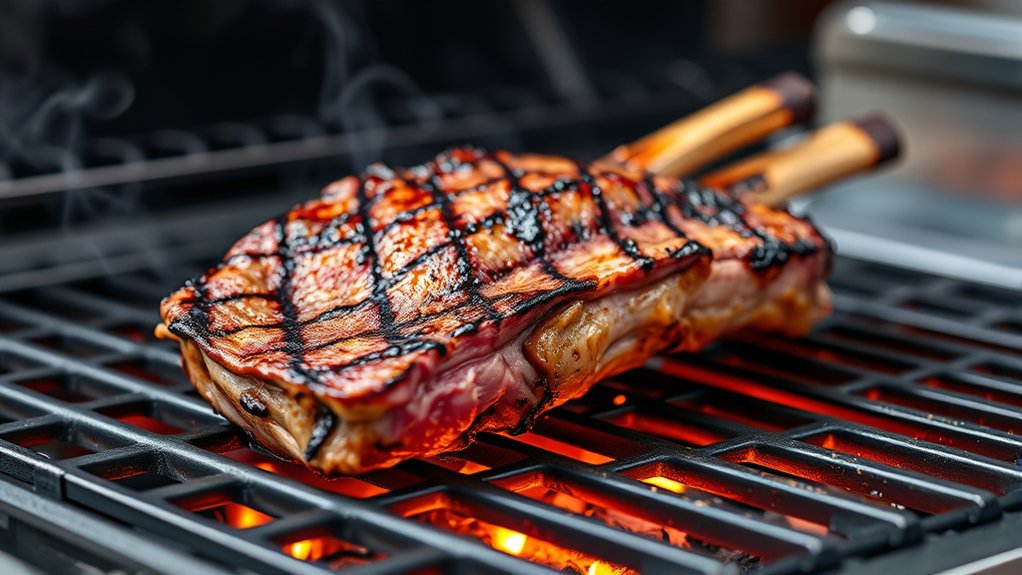
To get that perfect char and seared exterior, you want to start with a hot grill. Make sure to preheat your gas grill really well before you put the lamb on. This way, it’s nice and ready for that high-heat searing that gives you that beautiful crust.
Keep the heat turned up high, and keep a close eye on it. You want to caramelize the outside without overcooking the meat inside. It’s all about that balance — a quick, hot sear that locks in the juices and gives you that irresistible, crispy exterior.
Preheat for Searing
Before placing the rack of lamb on the grill, you need to preheat it thoroughly. A hot grill creates the perfect surface for searing techniques that lock in juices and develop a rich, flavorful crust. To do this, turn your burners to high and let the grill heat up for at least 15 minutes. This makes sure the grates are scorching hot, which is essential for that perfect char.
Here are the key steps:
- Clean and oil the grates to prevent sticking and help with smoke infusion.
- Preheat on high until the temperature reaches around 450–500°F.
- Use this initial high heat to sear each side of the lamb, creating a smoky crust.
A properly preheated grill is your best tool for searing techniques that give you a beautiful exterior.
Use High Heat Properly
Using high heat effectively is key to getting a beautiful char and a flavorful seared exterior on your rack of lamb. Mastering high heat techniques means controlling the grill temperature precisely so you don’t burn it but still get that perfect crust.
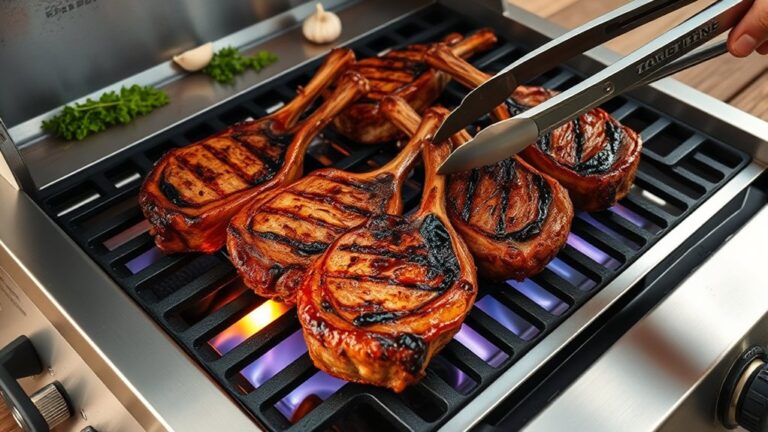
Keep your grill steady at around 450-500°F before placing the lamb. Sear each side for 2-3 minutes, pressing down slightly to make sure there’s even contact. Don’t flip too often—focus on building a deep, caramelized crust instead.
Once seared, reduce the heat to finish cooking the lamb indirectly. Proper temperature regulation helps prevent flare-ups and ensures an even sear. The trick is balancing high heat with attentive monitoring to lock in juices and develop that irresistible, flavorful exterior.
Use a Meat Thermometer to Ensure Juicy, Even Cooking
A meat thermometer is essential for perfectly cooked rack of lamb. It helps you keep an eye on the internal temperature and avoid overcooking or undercooking.
Your choice of meat influences the ideal temperature, so pick a tender, quality cut. Using the right grilling tools ensures accurate readings and makes handling easier.
Here’s how to make the most of it:
- Insert the thermometer into the thickest part of the meat, avoiding bones, for the most accurate reading.
- Keep an eye on the temperature as you grill, aiming for about 125°F for rare or 135°F for medium-rare.
- Remove the lamb from the grill once it hits your target temperature, then let it rest for maximum juiciness.
Rest and Slice Your Lamb for Maximum Flavor
After removing the lamb from the grill, it’s essential to let it rest for several minutes. Resting allows the juices to redistribute, which improves lamb tenderness and results in a juicier, more flavorful bite. Cover the lamb loosely with foil to keep it warm, but don’t wrap it tightly, as this can cause steaming rather than resting.
During this time, the meat’s flavors deepen, providing maximum flavor enhancement. Slicing too early can cause the juices to escape, leaving you with dry, less tender meat. Use a sharp knife to cut the rack into individual chops or slices, cutting against the grain for maximum tenderness.
Resting not only improves texture but also ensures each bite is rich and flavorful. Taking this brief pause guarantees your grilled rack of lamb is juicy, tender, and packed with flavor, making every bite a delicious experience.
Pair Your Lamb With Delicious Sides and Wines
Wondering how to raise your grilled rack of lamb? The right sides and wines can truly elevate your meal.
First, pick a wine that complements the rich flavors—reds like Syrah or Cabernet Sauvignon are great choices. These wines highlight the savory notes of the lamb.
For side dishes, aim for balance:
Roasted vegetables like carrots or asparagus add color and a touch of sweetness.
Creamy mashed potatoes or polenta offer comfort and contrast.
A fresh green salad with a tangy vinaigrette keeps things light and crisp.
Choosing the right sides and wines keeps your meal harmonious and memorable.
Make sure the flavors are balanced so nothing overpowers the other.
Whether you prefer bold reds or lighter whites, your wine should enhance the lamb’s richness.
The sides should complement the main dish and enhance the overall experience.
Your perfectly grilled rack of lamb deserves sides and wines that shine without overshadowing it.
Common Mistakes When Grilling Lamb and How to Avoid Them
Many common mistakes can ruin a perfectly good rack of lamb on the grill, but you can avoid them with a bit of awareness. One mistake is overcooking, which dulls the lamb flavor and makes the meat tough. Use a reliable meat thermometer and proper grilling tools to monitor the internal temperature, aiming for medium-rare to keep the lamb tender.
Another error is not preheating your grill. A hot grill ensures a good sear and helps prevent sticking. Neglecting to bring the lamb to room temperature before grilling can also lead to uneven cooking.
Also, avoid excessive seasoning or marinades that overpower the natural flavor of the lamb. Using dull or improper grilling tools can cause uneven cooking and damage the meat’s surface.
Lastly, skipping rest time after grilling keeps the juices from redistributing, which helps keep the lamb moist and flavorful. By paying attention to these pitfalls, you’ll improve your grilling skills and enjoy perfectly cooked lamb.
Troubleshooting: How to Fix Overcooked or Undercooked Lamb
Even with careful attention to grilling temperature and timing, mistakes can still happen, resulting in lamb that’s either overcooked or undercooked. If your rack of lamb isn’t perfect, don’t panic. Here’s how to fix it:
For overcooked lamb, remove it from the grill immediately. Cover loosely with foil and let it rest; this helps juices redistribute. You can also brush it with a little Lamb spice to add flavor and moisture.
For undercooked lamb, return it to the grill over medium heat. Sear the grill marks again, and cook for a few more minutes until it reaches your preferred doneness. Use a meat thermometer to check the internal temperature—130°F for medium-rare works well.
Adjust your technique by paying close attention to grill marks and the lamb’s color. Proper lamb spice application can help you identify when it’s nearing perfection.
Frequently Asked Questions
What Type of Gas Grill Is Best for Rack of Lamb?
You should choose a gas grill with precise temperature control and even heat distribution, which helps preserve the lamb’s rich flavor.
A grill with ample cooking space and quality grill accessories makes grilling easier and more consistent.
Look for one that allows you to adjust heat levels easily so you can sear the rack of lamb and then cook it to perfection without losing its tender, flavorful qualities.
How Do I Adjust Grill Heat for Different Lamb Thicknesses?
To adjust grill heat for different lamb thicknesses, use indirect heat, similar to charcoal grilling. For thicker cuts, set your gas grill to a lower temperature and cook with indirect heat, turning the lamb occasionally.
Thinner cuts need higher heat for a shorter time. Always keep an eye on the internal temperature with a meat thermometer to avoid overcooking or undercooking, no matter the thickness.
Can I Grill Rack of Lamb Directly on the Grates?
You can absolutely grill rack of lamb directly on the grates—think of it as a flavor explosion waiting to happen! Just make sure your lamb is well-seasoned with a tasty lamb seasoning blend and prepped for grilling.
Use quality grill accessories like tongs and grill mats to prevent sticking or flare-ups. Direct grilling gives you that beautiful char and smoky flavor, making every bite irresistibly juicy and flavorful.
How Long Should I Let the Lamb Rest Before Slicing?
You should let the lamb rest for about 10 minutes before slicing. This helps the juices redistribute, keeping the meat tender and flavorful.
During this time, you can use marinating techniques to boost the flavor and improve presentation. Tenting with foil is a good trick to retain heat while resting.
Resting guarantees a juicy, well-presented rack of lamb. It also makes your slices more succulent and visually appealing.
What Are Alternative Methods if I Don’T Have a Meat Thermometer?
Some believe you can’t accurately gauge doneness without a meat thermometer, but you can rely on visual cues and touch to guarantee safety and flavor.
For cooking safety, look for firm, slightly springy meat and a deep, caramelized crust.
To improve flavor, pay attention to the lamb’s color and texture.
These methods help you avoid overcooking or undercooking, ensuring your lamb is both safe and delicious without a thermometer.
Conclusion
So there you have it—your foolproof guide to grilling lamb like a pro. Just remember, even the best techniques can’t save a burnt, overcooked disaster or a dry, flavorless chop.
But hey, if you mess up, at least you’ll have a great story to tell and plenty of leftovers to pretend you’re a gourmet chef. Now go ahead, impress your friends—just don’t forget the wine and a good sense of humor!
And if you follow these steps for the perfect rack of lamb on a gas grill, you’ll be the star of any cookout. Happy grilling!