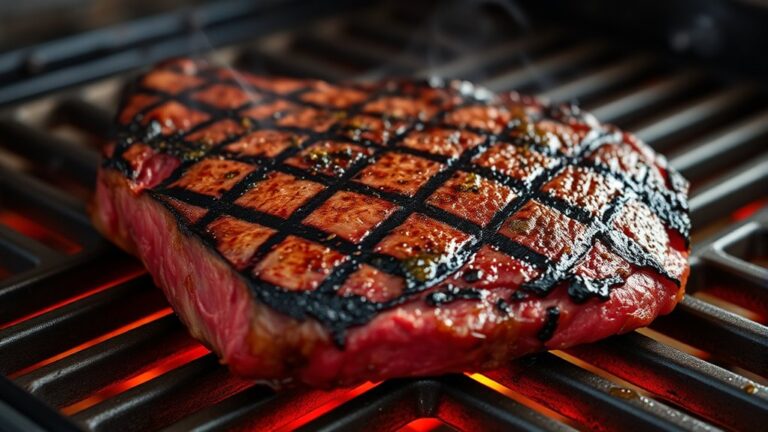
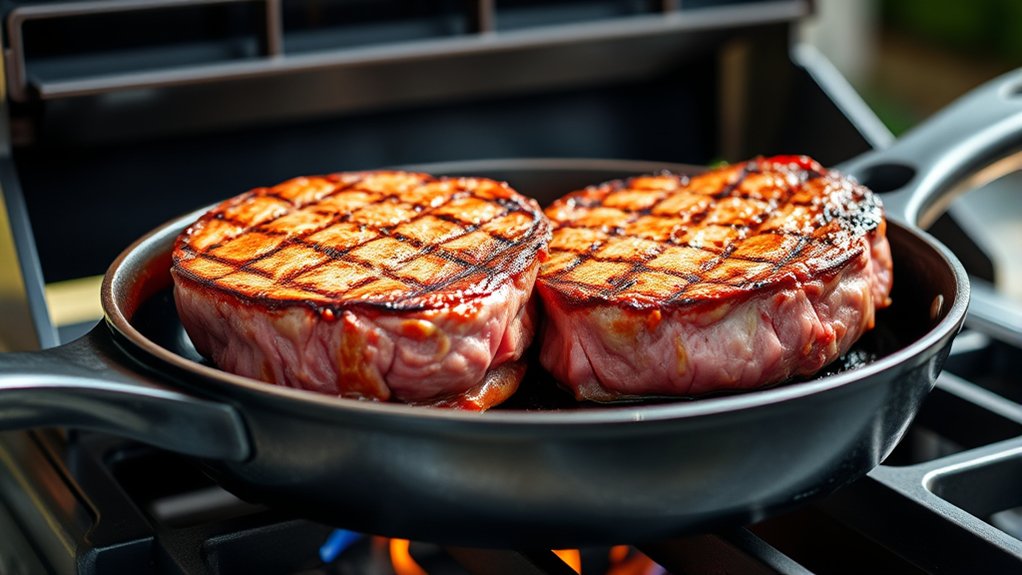
8 Simple Steps for Perfectly Grilled Filet Mignon on a Gas Grill
Many steak lovers find themselves frustrated trying to cook the perfect filet mignon on a gas grill. You’re not alone—getting that tender, juicy interior with a beautifully seared crust can be tricky.
To grill a perfect filet mignon on a gas grill, start by choosing a tender, well-marbled cut and marinate for flavor. Preheat your grill to high for searing. Pat the steak dry, season generously, and quickly sear each side for 2-3 minutes.
Then, lower the heat and cook to your desired doneness, using a thermometer to monitor the temperature. Rest the steak for juicy results, serve with appealing garnishes, and glow with confidence—more tips await to raise your grilling skills.
Key Takeaways
- Preheat your gas grill to high (450°F–500°F) for a hot sear and even cooking.
- Marinate or season the filet generously, then let it sit at room temperature for 20 minutes.
- Sear the steak for 2–3 minutes per side without moving it to develop a nice crust.
- Use a meat thermometer to check for your desired doneness, then remove the steak and let it rest for 5–10 minutes.
- Serve on warm plates with flavorful enhancements and garnishes for an impressive presentation.
How to Prepare and Season Your Filet Mignon for Grilling
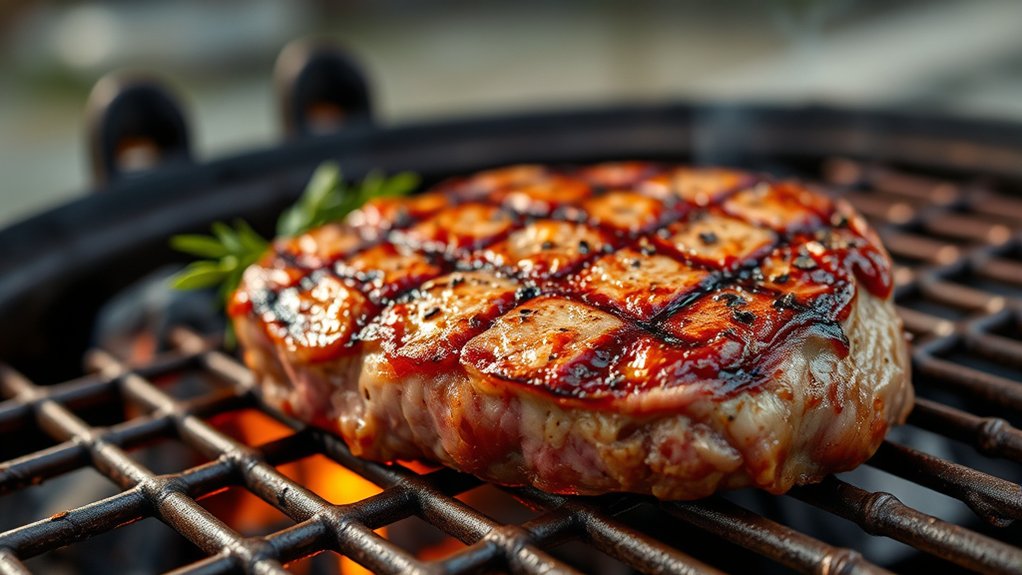
Have you ever wondered how to guarantee your filet mignon turns out tender and flavorful? The key is in how you prepare and season it. Start by choosing a marinade option that complements the beef, like a simple mix of olive oil, garlic, and herbs, or a more robust marinade with soy sauce and balsamic vinegar. Marinating for at least 30 minutes helps boost flavor and tenderize the meat.
Next, apply seasoning blends generously, using salt, pepper, and optional spices like paprika or thyme. Pat the steak dry before seasoning to ensure a good sear. Don’t forget, less is sometimes more—over-seasoning can overpower the beef’s natural richness.
Let the filet sit at room temperature for about 20 minutes before grilling. Proper preparation and seasoning set the foundation for a perfectly grilled filet mignon that’s juicy, flavorful, and tender.
Choosing the Best Gas Grill Settings for Filet Mignon
Wondering how to achieve that perfect sear and ideal doneness on your gas grill? It all starts with choosing the right grill settings.
Set your burners to high heat—around 450°F to 500°F—when you’re ready to sear the filet mignon. This high temperature helps create a flavorful crust quickly.
After searing, lower the heat to medium or move the meat to a cooler part of the grill to finish cooking to your desired doneness.
Use your grill accessories, like a meat thermometer, to monitor the internal temperature accurately.
Remember, meat selection matters—opt for tender, well-marbled filet mignon for the best results.
Consistent heat and proper temperature control are key to avoiding overcooking or undercooking.
Adjust your grill settings based on the thickness of the cut and your preferred level of doneness.
With the right settings, you’ll ensure a juicy, flavorful filet every time.
How to Sear Your Filet Mignon for a Perfect Crust
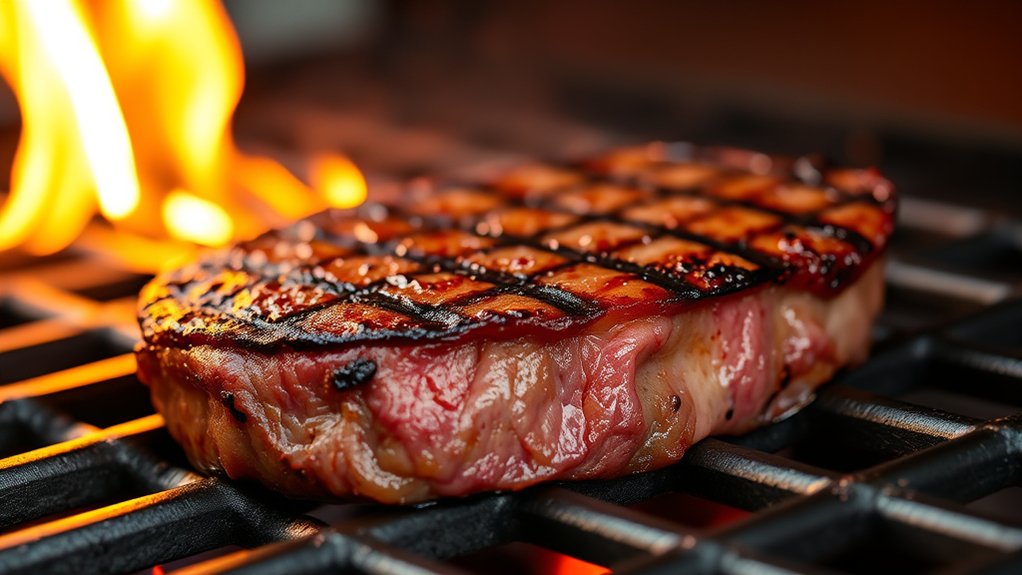
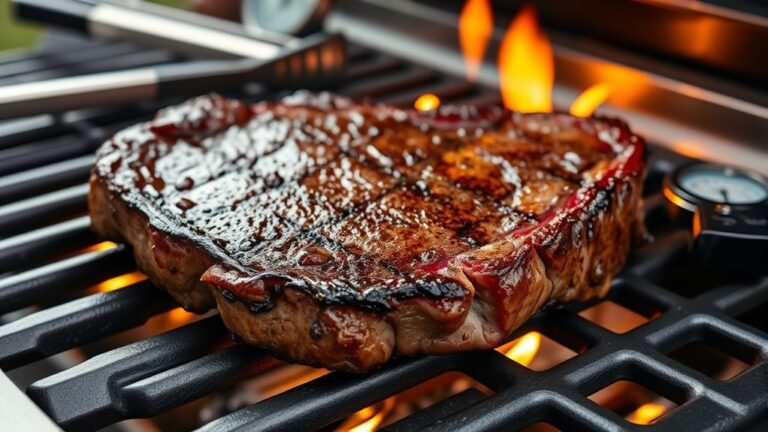
To get that irresistible, caramelized crust on your filet mignon, start by preheating your gas grill to a high temperature—around 450°F to 500°F—so the surface is scorching hot. This intense heat ensures a quick sear that locks in juices and boosts flavor.
Here are some tips to perfect your crust: Pat your filet dry with paper towels to remove excess moisture. This helps the crust stick better. For extra flavor, try marinades that complement the meat’s richness—just skip those with sugars that might burn.
Place the filet directly on the hot grill surface. Don’t move it for 2–3 minutes to develop a golden-brown crust. Once seared, focus on plating by arranging your filet with fresh herbs or colorful sides to show off that beautiful crust and elevate your meal.
How to Monitor and Control the Temperature While Grilling
To make sure your filet mignon turns out just right, it’s a good idea to use a meat thermometer to keep an eye on the internal temperature. That way, you won’t have to guess whether it’s cooked enough or not.
And don’t forget about controlling your grill’s heat. You can do this by adjusting the burners to keep the temperature steady. When the heat stays consistent, your steak will cook evenly and reach that perfect level of doneness without getting overcooked.
Using a Meat Thermometer
Ever wonder how to guarantee your filet mignon reaches the perfect doneness? Using a meat thermometer is essential. It helps you monitor internal temperature precisely, ensuring maximum tenderness and flavor.
To get the best results, insert the thermometer into the thickest part of the steak, avoiding fat and bone. Watch for the temperature to reach your preferred doneness: 120°F for rare, 130°F for medium-rare, 140°F for medium.
Pay attention to marbling characteristics. Well-marbled steaks retain juice better and respond well to proper cooking. Consider meat aging, which improves tenderness; a properly aged filet will cook more evenly when monitored closely.
This precise approach guarantees a perfectly cooked filet with ideal marbling and tenderness every time.
Managing Grill Heat Levels
Controlling the heat on your gas grill is key to getting that perfect sear and even cooking. Start by preheating your grill and setting the burners to the temperature you want.
Use the built-in thermometer to keep an eye on the heat, and adjust the knobs as needed to stay consistent. Always keep safety in mind—avoid flare-ups and have a spray bottle handy to control them.
Regularly clean grease drips and check for leaks to keep your grill heating evenly and to make it last longer. Keep the lid closed as much as possible to hold in heat and prevent temperature swings.
How to Check Doneness and Achieve Your Desired Level
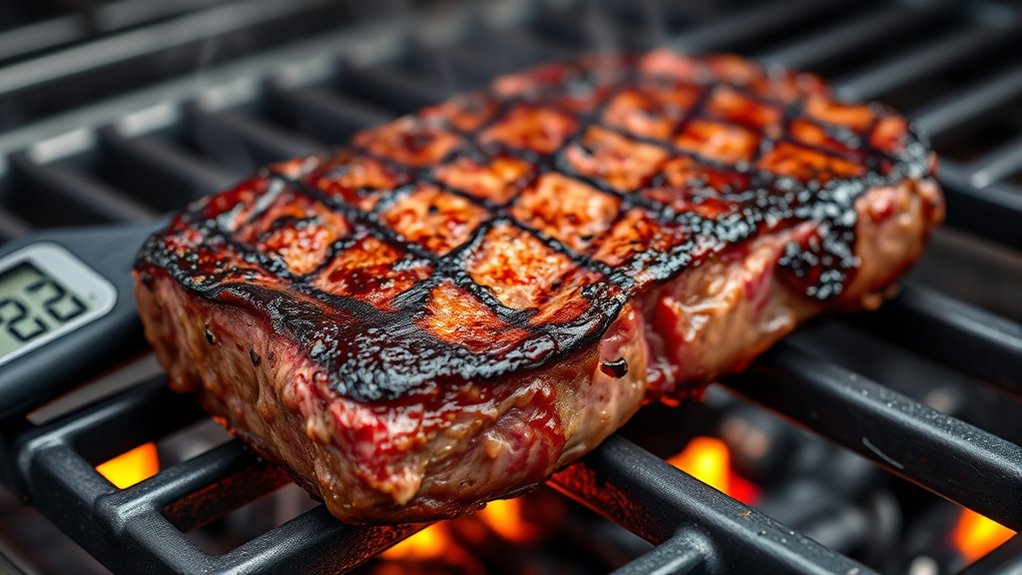
Want to make sure your filet mignon is cooked just the way you like it? A meat thermometer is your best friend here — it gives you those precise readings so you can tell exactly when it’s done to your liking. But don’t forget, you can also check visually! Look for changes in color and how firm the steak feels; these are good clues to determine doneness.
And here’s a little tip: after you take the steak off the grill, let it rest for a few minutes. This helps the juices settle, making your steak juicier and more flavorful. So, use both your eyes and a thermometer to get it perfect, then give it that resting time — you’ll end up with a delicious, perfectly cooked filet mignon every time.
Using a Meat Thermometer
Using a meat thermometer is the most accurate way to make sure your filet mignon reaches the perfect doneness. To get consistent results, keep these key points in mind:
- Insert the thermometer into the thickest part of the steak, avoiding fat and bone for the most accurate reading.
- Check the temperature at different stages, especially if your steak varies in marbling, which affects how it cooks.
- Remember, thinner steaks cook faster, so keep a close eye on their temperature to avoid overcooking.
- For the best results, take the steak off the grill about 5°F below your target temperature, since carryover heat will finish cooking it.
Using a thermometer helps you master your preferred doneness, no matter the steak’s thickness or marbling quality.
Visual Doneness Indicators
While a meat thermometer gives you precise results, learning to spot visual cues can help you judge doneness quickly and reliably. Look for marbling patterns—finer, evenly distributed streaks mean a tender, flavorful interior.
As the steak reaches your preferred doneness, the surface color changes. Rare will be deep red, medium shows a warm pink center, and well-done turns uniformly brown with less visible marbling.
The texture also shifts. Rare and medium steaks are softer, while well-done fillet mignon feels firmer. Keep an eye on the fat’s appearance too—melting fat signals a juicy, flavorful piece.
Mastering these visual indicators allows you to monitor your steak without constant tools, helping you get the perfect doneness based on what you like best.
Resting for Juiciness
After removing your filet mignon from the grill, letting it rest is key to keeping its juices and reaching the perfect doneness. Resting helps the meat reabsorb its juices, giving you a tender, flavorful bite.
To check if it’s done, use a meat thermometer for accuracy or do the touch test. For extra flavor, try marinating beforehand to boost tenderness and taste.
While resting, loosely tent the steak with foil to keep it warm. This step also helps the flavors from seasoning and marinade meld nicely.
Follow these simple steps:
- Use a thermometer to verify your desired doneness
- Tent loosely with foil to retain heat
- Rest for 5-10 minutes
- Serve with your favorite sides and sauces
Resting Your Steak for Juiciness and Tenderness
Resting your steak is a crucial step that allows the juices to redistribute throughout the meat, making it juicier and more tender. During cooking, juices move toward the center, leaving the outer layers drier if you don’t rest it.
When you let the steak rest, those juices settle back into the meat, boosting tenderness. Pay attention to marbling patterns—intramuscular fat that melts during cooking—since well-marbled steaks hold moisture better after resting.
Also, consider steak aging. Aged steaks develop complex flavors and become more tender, and proper resting helps unlock their full potential. The resting time depends on the steak’s thickness—about 5 to 10 minutes usually works well.
Cover the steak loosely with foil to keep it warm without trapping moisture. Giving your steak this moment to rest maximizes juiciness, ensures even tenderness, and lets you enjoy the full flavor of your perfectly grilled filet mignon.
Tips for Serving and Enhancing Your Grilled Filet Mignon
To truly elevate your grilled filet mignon, focus on thoughtful serving techniques and flavor enhancements that highlight its natural richness. First, consider your plating—use a warm plate to keep the steak hot and arrange it with a fresh herb garnish for visual appeal.
Next, choose a wine pairing like a bold Cabernet Sauvignon or Pinot Noir to bring out the meat’s flavors. Adding a simple side, such as roasted vegetables or a light salad, helps balance the richness without overpowering.
Finish with a drizzle of high-quality finishing oil or a pat of herb butter that melts over the steak, boosting its taste. These tips ensure your presentation looks just as good as it tastes, making every bite memorable.
Final Tips to Impress With Your Perfect Filet Mignon
To truly impress with your filet mignon, focus on the finishing touches that elevate the dish from good to spectacular. Proper steak pairing can really enhance the flavor, so consider serving it with robust reds like Cabernet or Pinot Noir.
For a more elegant presentation, choose garnishes that complement the meat’s sophistication. Fresh herbs, roasted garlic, or a drizzle of balsamic glaze are great options to add visual appeal and flavor.
| Tips for Final Touches | Ideas to Raise Your Dish |
|---|---|
| Steak Pairing | Full-bodied red wines, rich port |
| Garnish Ideas | Fresh rosemary, thyme, or parsley sprigs |
| Temperature Check | Use a meat thermometer to ensure perfect doneness |
| Resting Period | Let the steak rest for 5 minutes to keep juices in |
| Presentation | Serve on warm plates with a simple sauce |
These finishing touches will wow your guests and truly showcase your cooking skills.
Frequently Asked Questions
Can I Use a Marinade on Filet Mignon Before Grilling?
Yes, you can use a marinade on filet mignon before grilling. Just make sure to keep the meat refrigerated and avoid reusing marinade that has touched raw meat.
A marinade can boost flavor and make your filet more delicious. Marinating for a couple of hours helps tenderize the meat and adds depth to the taste.
Just remember to pat the steak dry before grilling. This helps get a nice sear and prevents flare-ups.
What Type of Wood Chips or Smoke Flavor Works Best With Filet Mignon?
You should choose delicate wood chip varieties like cherry or apple for a subtle smoke flavor that complements the tender, rich filet mignon.
The gentle smoke infusion techniques, such as soaking chips before use, help ensure a balanced aroma without overpowering the meat’s natural taste.
While robust woods like hickory or mesquite can overwhelm, these lighter options enhance the meat’s finesse, creating an elegant, smoky finish that lifts your grilling experience.
How Do I Prevent My Steak From Curling While Grilling?
To prevent your steak from curling, start by scoring the edges of the filet mignon with a sharp knife. This helps release tension and keeps the meat flat.
Apply your favorite steak seasoning evenly and use quality grilling tools to maintain control. Before grilling, let the steak sit at room temperature.
This step ensures even cooking and minimizes curling. Keep an eye on the heat, and flip the steak carefully for perfect results.
Is It Necessary to Trim Excess Fat Before Grilling Filet Mignon?
You don’t need to trim excess fat from your filet mignon before grilling because the fat adds flavor and helps keep the meat tender.
Keep your grill at the right temperature, around 400°F, to ensure even cooking and maintain tenderness.
Leaving some fat on the steak helps it stay juicy and flavorful, making your grilling experience better without lowering the quality of your filet mignon.
What Side Dishes Complement a Grilled Filet Mignon Best?
Did you know that a well-chosen side can elevate your steak experience by 50%? For grilled filet mignon, vegetable sides like roasted asparagus or garlic green beans complement its tenderness perfectly.
Pair it with a glass of rich red wine, such as Cabernet Sauvignon, to boost flavors. These options balance the richness of the meat while offering delightful variety, making your meal truly unforgettable.
Conclusion
Now that you know the steps, your filet mignon will be the star of any meal. With a little attention and patience, you can turn your grill into a steakhouse kitchen. Remember, mastering this process isn’t just about cooking; it’s about creating moments to savor.
So, fire up that grill and let your confidence and that perfect steak shine brighter than ever. After all, isn’t it worth every delicious bite of a perfectly grilled filet mignon?