Mastering the Clock: How Long to Smoke Turkey on a Pellet Grill
As an Amazon Associate, I earn from qualifying purchases. This post contains affiliate links. Which means I may earn a small commission when make a purchase through my links, at no additional cost to you.
Many people struggle with perfectly smoking a turkey on a pellet grill, feeling unsure about timing and temperature. You’re not alone—getting that juicy, flavorful result can be tricky. But with a little guidance, you’ll soon be mastering the art of smoking turkey every time.
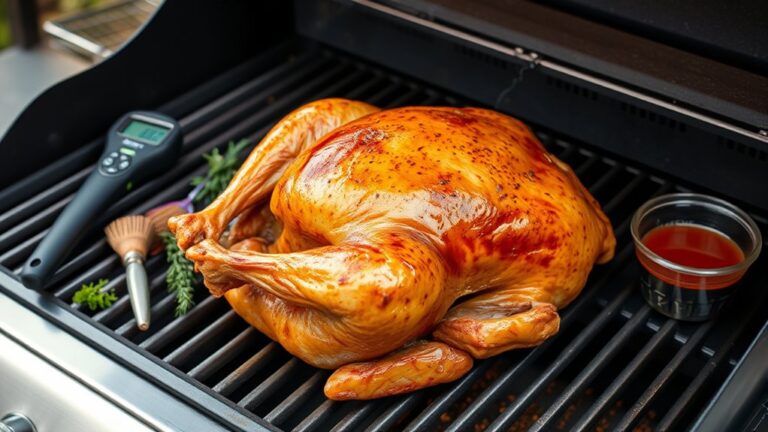
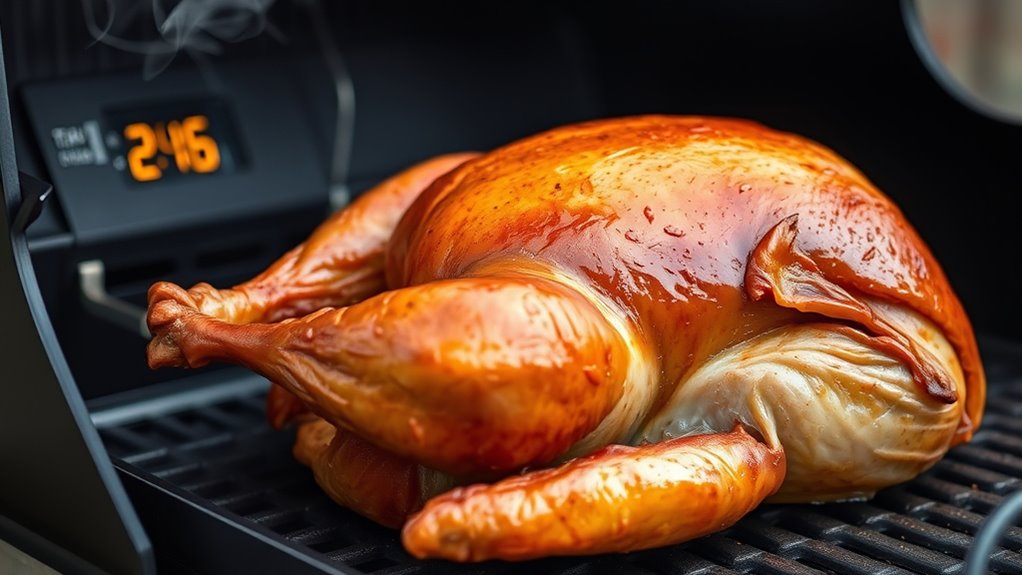
To master the clock for smoking a turkey on a pellet grill, plan for about 30-40 minutes per pound at 225°F. Larger turkeys may take longer, while smaller cuts cook faster.
Focus on reaching an internal temperature of 165°F in the breast rather than just relying on time.
Proper preparation, steady heat, and resting are key. Keep these tips in mind, and you’ll find out how to perfectly smoke your turkey every time.
Key Takeaways
- Smoke a whole turkey at 225°F for about 30-40 minutes per pound. Adjust the time based on the size and cut of the turkey.
- Keep an eye on the internal temperature, aiming for 165°F in the breast. Don’t rely on cooking time alone.
- Bigger birds or bone-in pieces need more time to cook evenly and thoroughly.
- If the smoking stalls, or you want to speed things up without drying out the meat, wrap the turkey in foil.
- After smoking, let the turkey rest for 15-20 minutes. This helps keep it juicy and full of flavor.
How to Determine the Perfect Smoking Time for Your Turkey
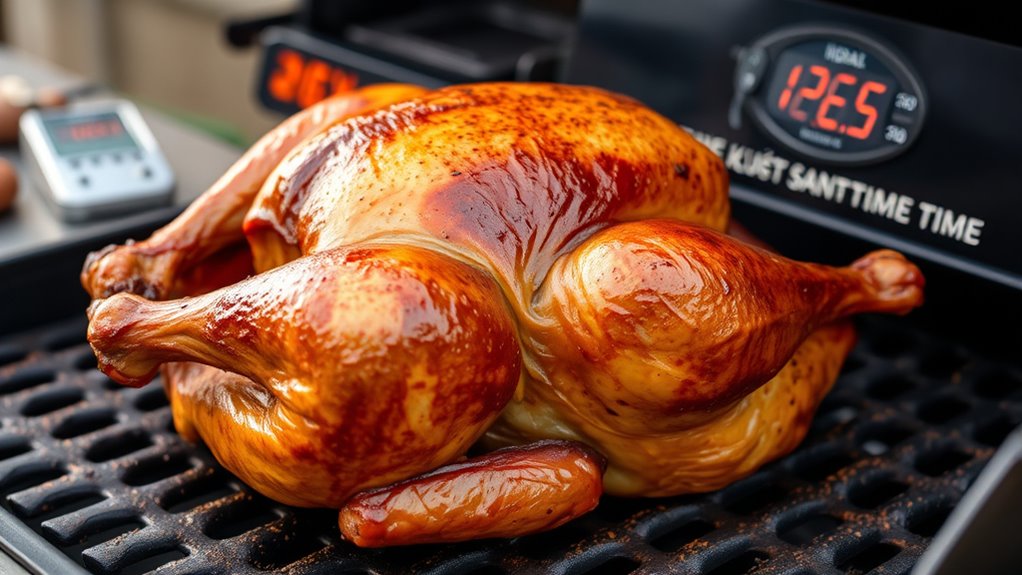
To achieve perfectly smoked turkey, you need to carefully determine the right smoking time based on the size of your bird. Start by understanding that longer smoking times allow for better flavor infusion, especially if you use marinade techniques beforehand.
Proper smoking time depends on turkey size and marinade for best flavor and tenderness.
Marinating your turkey not only improves flavor but also helps keep the meat moist during the process. For a standard 12 to 14-pound turkey, plan for about 30 to 40 minutes per pound at 225°F.
Use a reliable meat thermometer to check for doneness—aim for an internal temperature of 165°F. Remember, the more consistent your temperature and marinade, the more accurate your smoking time will be.
Adjustments might be necessary based on your specific pellet grill and the turkey’s initial temperature. By paying attention to these factors, you guarantee your turkey is perfectly smoked, tender, and bursting with flavor infusion.
Key Factors That Affect Your Turkey’s Smoking Duration
Your turkey’s size and weight really play a big role in how long it needs to smoke. Basically, the bigger the bird, the more time it’s going to take. It’s kind of like cooking a big roast versus a small one—you need to give it enough time to cook through properly.
Another thing to keep in mind is maintaining a steady temperature. If your smoker’s temperature keeps fluctuating, it can throw off the cooking time—either making it take longer or finishing too early. So, staying consistent with the heat is super important to get that perfect smoked turkey without overdoing it or undercooking.
Turkey Size and Weight
The size and weight of the turkey are the most important factors that influence smoking time. A larger bird takes longer to cook through, which affects both flavor infusion and the development of the smoke ring.
If your turkey weighs over 12 pounds, plan for extra hours to ensure it’s thoroughly cooked. Smaller turkeys may cook faster but can dry out if you’re not careful.
The weight also impacts how evenly smoke penetrates the meat, influencing flavor. Larger turkeys can develop a more noticeable smoke ring, but only if smoked consistently.
Keep in mind that heavier turkeys need longer rest times to keep moisture in and let flavors settle. Adjust your smoking schedule accordingly for the perfect balance of tenderness, flavor, and appearance.
Temperature Consistency
Ever wondered how keeping a steady temperature can make or break your smoked turkey? Maintaining consistent heat ensures even cooking and the perfect flavor infusion. Fluctuations can dry out your meat or leave it underdone, affecting both texture and taste.
To keep things steady, choose quality pellets suited to your flavor goals—apple, hickory, or mesquite—and check your grill regularly. Here’s a quick visual to help you understand the effects:
| Temperature Effect | Result |
|---|---|
| Too high, rapid rise | Dry, overcooked turkey |
| Too low, sluggish | Undercooked and unsafe |
| Inconsistent heat | Uneven cooking and flavor loss |
| Proper steady heat | Juicy, tender turkey |
| Ideal pellet choice | Rich flavor infusion |
Sticking to a stable temperature guarantees a juicy, perfectly cooked turkey every time.
Preparing Your Turkey for Smoking on a Pellet Grill
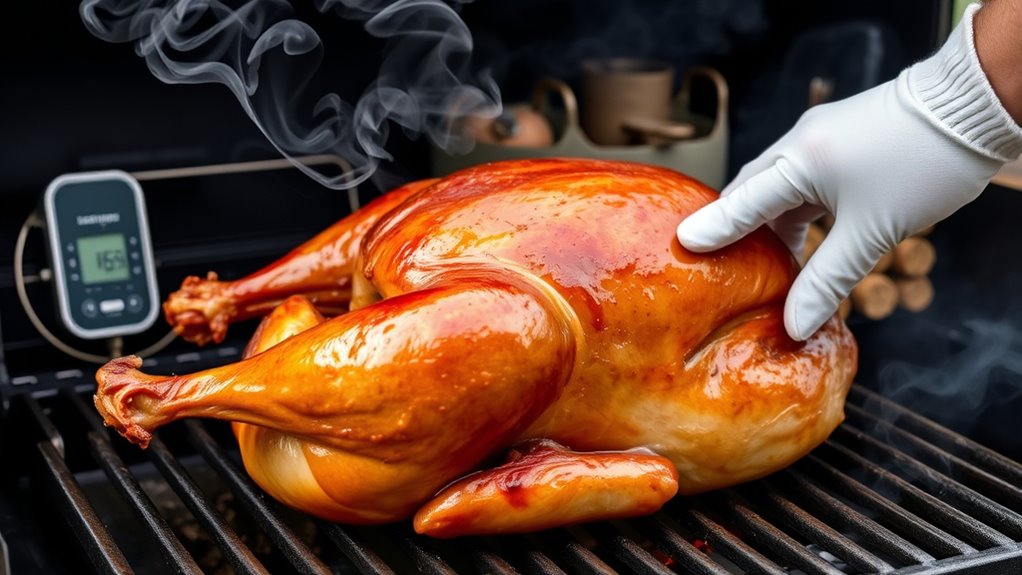
Before you start smoking, it’s crucial to prepare the turkey properly to make sure it cooks evenly and absorbs maximum flavor. Begin by patting the turkey dry, which helps achieve a crisp skin and promotes better flavor infusion.
Start by drying the turkey to ensure even cooking and flavorful, crispy skin.
Use marinade techniques to improve moisture and taste; a simple brine or a marinade with herbs, spices, and acid can greatly enhance juiciness and flavor. If you’re short on time, consider injecting the turkey with a marinade to boost flavor deep inside.
Remove the giblets and excess fat, then season the bird generously with salt and your preferred spices. Allow the turkey to rest after seasoning, giving the flavors time to penetrate the meat.
Proper preparation ensures your smoked turkey will be tender, flavorful, and evenly cooked, making every bite satisfying. Taking these steps now sets the stage for a delicious, perfectly smoked turkey later.
How to Smoke a Turkey Step by Step on Your Pellet Grill
Once you’re ready to start smoking, preheat your pellet grill to around 225°F to 250°F. This steady heat helps cook the turkey evenly and infuses it with flavor.
Follow these steps for success:
- Select the right pellets: Go for flavors like hickory or apple to boost the turkey’s taste and add that smoky flavor.
- Prepare the turkey: Pat it dry, season it well, and place it on the grill breast side up.
- Maintain temperature and monitor: Keep the grill steady and use a meat thermometer to check that the thickest part of the breast reaches 165°F.
Choosing the right pellets and controlling the temperature are key to getting a juicy, flavorful smoked turkey. This process will give you tender meat with that perfect smoky aroma.
Common Mistakes That Can Change Your Smoking Time
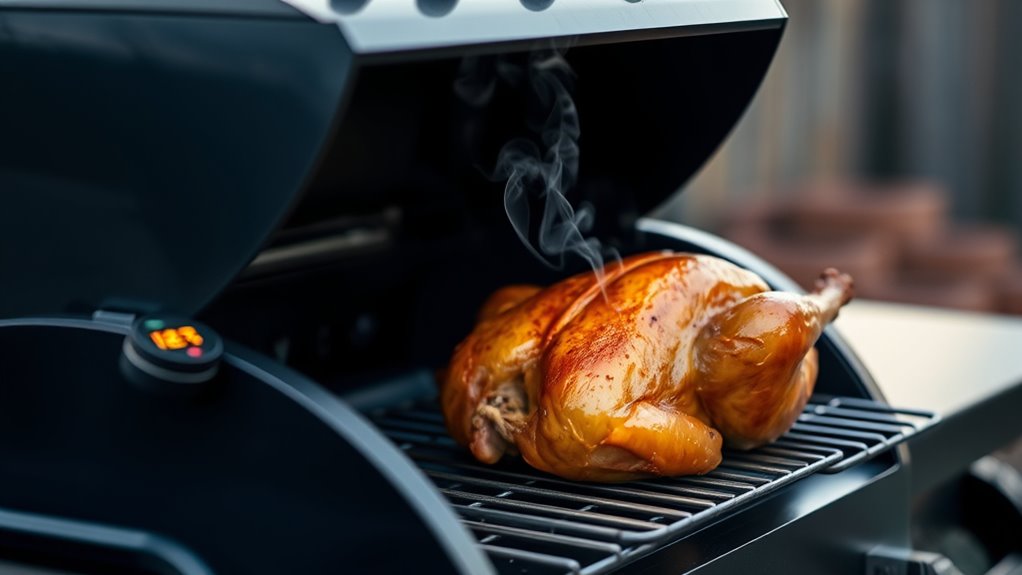
Ignoring temperature fluctuations can really mess up your smoking schedule and lead to uneven cooking. It’s easy to overlook, but those little changes in temperature can make a big difference. Also, if your meat isn’t all the same size, it becomes tricky to guess how long it’ll take to cook properly. So, paying attention to these common mistakes can help you keep your smoking times on track and get that perfect results every time.
Ignoring Temperature Fluctuations
Have you ever noticed how sudden temperature drops or rises can throw off your smoking schedule? Ignoring temperature fluctuations can lead to uneven cooking, which affects both flavor infusion and smoke flavor. When your pellet grill’s temperature isn’t steady, your turkey might cook too quickly or too slowly, risking dry meat or undercooking.
Here’s how temperature swings impact your smoking process:
- Inconsistent heat changes smoke absorption, reducing smoke flavor.
- Fluctuations can cause the internal temperature to spike or drop unexpectedly.
- Temperature swings can weaken flavor infusion, leaving your turkey bland.
Keeping an eye on and maintaining a steady temperature helps your turkey absorb the best smoke flavor, cook evenly, and stay juicy—so your timing stays on track.
Using Inconsistent Meat Sizes
Using meat of inconsistent sizes is a common mistake that can throw off your smoking schedule. When your turkey pieces vary a lot, the smaller cuts might overcook while the larger ones stay underdone, making timing tricky.
Choosing pieces that are similar in size is key for more even cooking. This helps your turkey reach the perfect internal temperature at the same time. Plus, smaller pieces soak up smoke faster, so you might need to adjust your smoking time.
Uniform meat sizes make it easier to plan your smoke duration and avoid surprises. By paying attention to meat selection and keeping sizes consistent, you’ll get a more evenly smoked turkey with great flavor and texture.
Using a Meat Thermometer to Check Your Turkey’s Temperature
To guarantee your turkey is perfectly cooked and safe to eat, checking its internal temperature with a meat thermometer is essential. This helps you avoid undercooking or overcooking, which can impact flavor and moisture.
Insert the thermometer into the thickest part of the breast, making sure to avoid the bone for an accurate reading. Using a reliable digital thermometer makes this process quick and precise.
Insert the thermometer into the thickest part of the breast, avoiding the bone for an accurate, quick reading.
Here are some key tips:
- Check early and often—start testing around the expected finish time.
- Avoid false readings by ensuring the thermometer is properly calibrated.
- Use the temperature as a guide for flavor infusion—proper internal temp helps marinade techniques develop fully, boosting juiciness and taste.
What Internal Temperature Means Your Turkey Is Perfectly Cooked
Once you’ve checked your turkey’s temperature with a meat thermometer, understanding what the readings mean is key to guaranteeing it’s perfectly cooked. For the best flavor, aim for an internal temperature of 165°F (74°C). This ensures the turkey is safe to eat and stays juicy.
A properly cooked turkey will develop a beautiful smoke ring—a pinkish border just beneath the skin—that shows good smoke penetration and flavor infusion. If the thermometer reads below 165°F, your turkey needs more time on the pellet grill.
Overcooking can dry it out, so keep a close eye on the temperature. By hitting that precise mark, you’ll get tender, flavorful meat with just the right balance of smoky richness and doneness inside. Remember, the temperature is your best guide to knowing when your smoked turkey is ready to serve at its peak.
Resting and Serving Your Smoked Turkey for Maximum Juiciness
After you’ve smoked your turkey, it’s a good idea to let it rest for at least 15 to 20 minutes. This little wait helps the juices settle, so every bite stays nice and juicy. If you cut into it right away, all those tasty juices can escape, leaving your meat drier than you’d like.
When you’re ready to carve, make sure to use proper techniques—like slicing against the grain. It makes the meat more tender and easier to chew. Also, try to arrange the slices nicely on your platter to keep that moisture and flavor locked in. Trust me, a little patience and some careful carving make all the difference in serving up a delicious, juicy smoked turkey!
Resting Time Importance
Have you ever cut into a smoked turkey only to find dry, flavorless meat? Resting your turkey is key to getting the most flavor and smoke penetration. It helps juices redistribute, keeping the meat moist and tender.
If you skip this step, those juices will escape when you slice, making the meat dry. To keep it juicy and flavorful, keep these tips in mind:
- Wait at least 15-20 minutes after removing the turkey from the grill before carving.
- Cover it loosely with foil to hold in heat and moisture.
- Resting not only improves texture but also boosts the smoky flavor, so every bite stays juicy.
Proper Carving Techniques
Ever wonder how to carve your smoked turkey for maximum juiciness and flavor? The key is to use proper carving techniques. Start by letting your turkey rest, so the juices stay locked in.
When carving, use a sharp knife and cut along the grain to keep slices tender. For flavor pairing, consider serving with sides like cranberry sauce or herb-infused gravy.
For presentation, arrange slices neatly on a platter, fanning them out for an appealing look. You can also garnish with fresh herbs or citrus slices to make it visually appealing.
Smooth, even slices not only look better but also help each bite stay moist. Proper carving really makes a difference in how your smoked turkey looks and tastes, elevating your whole meal.
Serving Tips for Juiciness
To keep your smoked turkey juicy and flavorful, it’s important to focus on proper resting and serving techniques. Resting helps the juices redistribute, making each bite moist and tasty. When you’re ready to serve, carve the turkey confidently, and consider slicing against the grain for tender pieces.
Here are some simple tips to ensure juiciness:
- Let the turkey rest for at least 15-20 minutes before carving.
- Cover it loosely with foil during resting to keep the heat and moisture in.
- Slice thinly and arrange nicely on a platter to make it look appealing and enhance the flavor.
Following these steps helps lock in the turkey’s natural juices, so every bite is savory and satisfying.
Variations in Smoking Time Based on Turkey Size and Cut
The size and cut of your turkey really affect how long it needs to smoke. Larger turkeys or whole birds usually take about 30 minutes per pound to reach the right internal temperature.
Smaller cuts like turkey breasts cook faster, often in half the time. To get the best flavor, pick your wood chips wisely—fruit woods like apple or cherry add subtle sweetness, while hickory gives a stronger smoke flavor.
Choose fruit woods for subtle sweetness or hickory for a bolder smoke flavor when smoking turkey breasts.
The cut also matters; bone-in pieces tend to stay moist longer and might need a bit more time. Focus more on checking the internal temperature than just the clock to make sure your turkey is safe and juicy.
Adjust your smoking time based on the turkey’s size and cut. Choose your wood chips carefully to enhance flavor without overpowering the meat. This way, you’ll end up with a perfectly smoked turkey every time.
Troubleshooting: What to Do If Your Turkey Won’t Cook on Schedule
Sometimes, despite following the recommended cooking times based on your turkey’s size and cut, it just doesn’t seem to be cooking as planned. If your turkey isn’t reaching the proper internal temperature or the smoke ring isn’t developing, try these steps.
First, check your grill’s temperature to make sure it’s steady and at the level you want for maximum flavor infusion. Fluctuations can delay cooking and affect the smoke ring formation.
Next, try increasing smoke exposure by adding more wood pellets or extending the smoking time. This can boost flavor infusion and improve the appearance of the smoke ring.
Finally, if your turkey stalls, wrapping it in foil can help maintain heat, speed up the cooking process, and preserve moisture. This won’t hurt the smoke ring or smoky flavor.
These adjustments will help keep your turkey on schedule and ensure it’s flavorful, moist, and perfectly smoked.
Frequently Asked Questions
Can I Smoke Different Types of Poultry Together?
Yes, you can smoke different types of poultry together, but think about how their flavors work together. Mixing turkey with chicken or duck can be great if their tastes complement each other, creating a balanced flavor.
Just keep in mind that different poultry may need different cooking times, so watch your temperatures carefully. Make sure all the poultry hits a safe internal temperature before serving.
Also, avoid overcrowding the grill. Giving enough space helps with proper smoke circulation and ensures everything cooks evenly.
How Does Humidity Affect Smoking Times?
Humidity plays a vital role in smoking times because it affects moisture retention and smoke penetration. Higher humidity levels help keep the meat moist, which can slightly delay the cooking process. So, you might need to extend your smoking time a bit.
On the other hand, low humidity causes moisture loss, which speeds up cooking. Adjust your smoking duration accordingly to keep your poultry tender and flavorful, balancing smoke absorption with moisture retention.
Is It Safe to Smoke a Frozen Turkey?
It’s not safe to smoke a frozen turkey directly. You need to thaw it first because smoking without thawing can cause uneven cooking and bacteria growth.
Use safe methods like refrigeration, cold water, or microwave thawing. Thawing helps the heat penetrate evenly, reduces cooking time, and makes sure your turkey is safe and tasty.
Never smoke a frozen turkey straight out of the freezer to avoid foodborne illnesses.
Can I Use Wood Chunks Instead of Pellets?
Yes, you can use wood chunks instead of pellets, but keep in mind they burn differently. Wood chunks give off a more intense smoke but need to be soaked beforehand and may require longer cooking times.
When comparing pellet grills to traditional smokers, pellets are convenient and provide consistent heat. Wood chunks, on the other hand, give you more control over the smoke flavor.
Just make sure your grill can handle chunks, and keep an eye on your cook to prevent flare-ups.
How Do I Store Leftover Smoked Turkey Safely?
To store leftover smoked turkey safely, make sure to refrigerate it within two hours of cooking. Wrap it tightly with foil or place it in an airtight container to keep the flavor in and bacteria out.
Try to use it within 3 to 4 days, or freeze it if you want to store it longer. Proper storage helps keep your smoked turkey fresh, tasty, and safe for future meals.
Conclusion
Think of smoking your turkey like tending a delicate garden; patience and attentiveness yield the ripest, juiciest harvest. By understanding your grill, adjusting for size, and monitoring internal temps, you’re nurturing a masterpiece.
With each step, you’re not just cooking—you’re cultivating flavor and tradition. When you finally carve into that perfectly smoked turkey, it’s like reaping the bounty of your effort.
Savor the reward of your mastery in smoking turkey on a pellet grill, knowing you’ve taken the time to get it just right.