10 Simple Steps to Cook Turkey on a Pellet Grill
As an Amazon Associate, I earn from qualifying purchases. This post contains affiliate links. Which means I may earn a small commission when make a purchase through my links, at no additional cost to you.
Many people struggle with cooking a perfect turkey on a pellet grill. It can feel overwhelming to get that juicy, flavorful result everyone loves, especially if you’re new to grilling or smoking. But don’t worry—you’re not alone, and with a few simple steps, you can master it easily.
To cook a turkey on a pellet grill, start by cleaning and preheating your grill to 225-250°F. Then choose a 12-16 pound turkey and consider brining for extra flavor.
Season your bird, prepare the grill’s temperature, and place the turkey skin side up, maintaining steady heat.
Smoke and roast until internal temperatures reach 165°F in the breast. Let it rest before carving for juicy results.
Keep your grill trouble-free and enhance flavor with wood pellets, and you’ll soon impress everyone with your perfect smoked turkey.
Key Takeaways
- Preheat your pellet grill to 225°F to 250°F using good quality pellets. Make sure the grill is clean and working properly before you start.
- Prepare your turkey and add your favorite seasoning. If you want it extra juicy, consider brining it beforehand for added moisture and flavor.
- Place the turkey on the grill with the skin side up. Keep the temperature steady throughout the cooking process.
- Cook until the internal temperature hits 165°F in the breast and 175°F in the thighs. Remember to baste it periodically to keep it moist.
- Let the turkey rest for at least 20 minutes before carving. This helps keep the juices in and makes it look better when served.
Gather Supplies and Set Up Your Pellet Grill
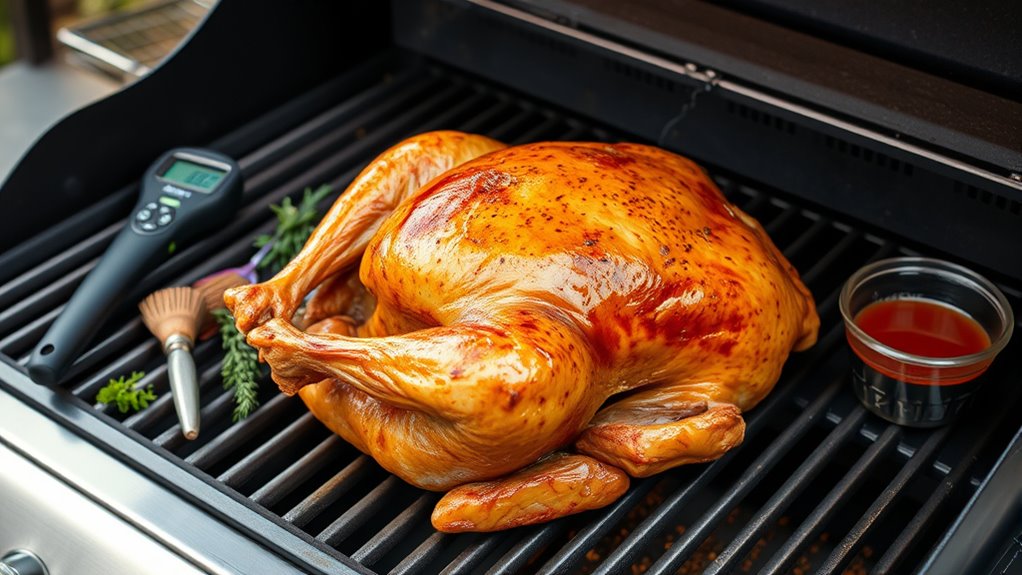
Before you start cooking your turkey, gather all the supplies you need and set up your pellet grill properly. Having your tools ready, like a meat thermometer, basting brush, and heat-resistant gloves, helps make everything go smoothly.
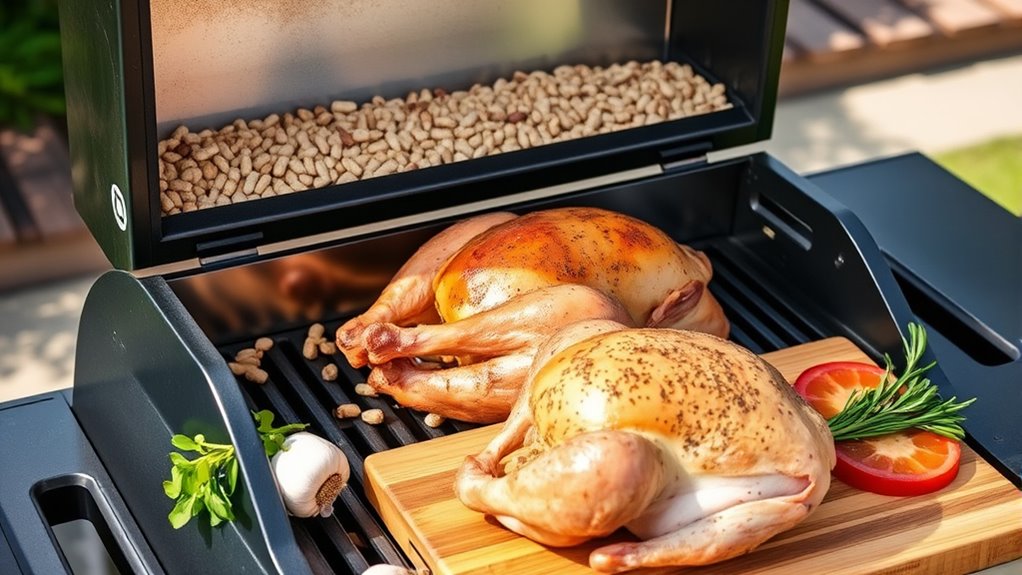
Check that your pellet grill is clean and working well. Proper maintenance reduces the chance of malfunctions and keeps your cooking safe. Fill the hopper with quality pellets suited for poultry and preheat your grill to the desired temperature.
Place your grill on a flat, stable surface away from anything flammable. Double-check all connections, vents, and the power source to avoid safety hazards. Having everything organized beforehand makes cooking easier and ensures consistent results.
Prioritize safety and equipment checks from the start. This way, your turkey will cook evenly and safely on your pellet grill.
Choose the Right Turkey Size and Prep It for Smoking
Choosing the right turkey size is key to making sure it cooks evenly and fits comfortably on your pellet grill. Aim for a turkey that weighs between 12 to 16 pounds for the best results. Larger birds might need more time and could be harder to handle on your grill.
Before cooking, think about brining the turkey to boost flavor and keep it moist. A wet brine can help the meat stay juicy, especially during longer smoking sessions. You can also use a meat injection to add flavor directly into the turkey, making every bite moist and tasty.
Prep the bird by removing any excess fat and giblets, then pat it dry. If you’re using a brine, soak the turkey for 12-24 hours, then rinse and dry it thoroughly. With the right size and proper prep, your turkey will be ready to smoke and turn out delicious and evenly cooked.
Configure Your Pellet Grill for Perfect Cooking Temperature
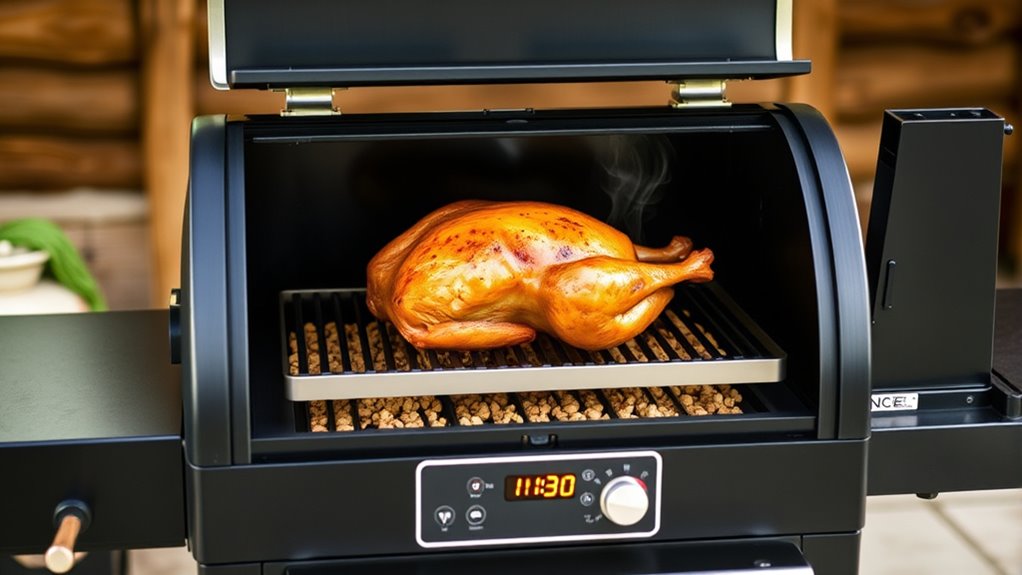
To guarantee your turkey cooks evenly and stays juicy, it’s important to set your pellet grill’s temperature correctly. Start by preheating your grill to around 225°F to 250°F, so you get steady, low heat for slow cooking.
Regular grill maintenance is key to keeping the temperature consistent and avoiding fluctuations that could dry out your bird. Use the digital controller to set your desired temperature precisely and avoid guesswork.
Keep the lid closed as much as possible. This helps improve fuel efficiency, making your pellets last longer and keeping the heat stable. Before you start, check that you have enough pellets for the entire cook.
Also, clean the grill grates and remove any ash or residue to improve airflow. Proper temperature setup not only results in juicy, tender turkey but also saves you money and effort by maximizing fuel efficiency.
Season and Brine Your Turkey for Maximum Flavor
Want to make your turkey really flavorful? The key is to pick seasonings that not only taste great but also complement the meat and your personal preferences. A good rule of thumb is to get creative—think herbs, spices, and even some citrus or garlic to really boost the flavor.
And don’t forget about brining! It’s a game-changer for keeping your turkey moist and adding an extra layer of flavor. Just soaking it in a salty, flavorful solution before cooking makes a big difference. So, take the time to season wisely and master your brining technique—you’ll end up with a turkey that’s juicy, delicious, and sure to impress.
Choosing the Right Seasoning
Ever wonder how to make your turkey burst with flavor? Choosing the right seasoning is key. Start with spice blends that suit your taste—herbs, garlic, paprika, or citrus zest work well.
You can also try marinating to infuse moisture and flavor deeply. Here’s a quick guide:
| Spice Blends | Marinade Options |
|---|---|
| Herbes de Provence | Lemon herb marinade |
| Smoked paprika & cumin | Honey mustard marinade |
| Garlic and rosemary | Yogurt-based marinade |
| Lemon pepper | Soy-ginger marinade |
Pick your favorites or combine them for a custom flavor profile. Proper seasoning boosts the smoky aroma and makes your turkey truly unforgettable.
Effective Brining Techniques
Seasoning your turkey during the brining process boosts its flavor and makes sure every bite is juicy and well-seasoned.
For extra taste, add herbs like rosemary, thyme, or sage into your brine. These herbs slowly release their oils, giving a fragrant, flavorful base.
Spice blends such as garlic, peppercorns, or paprika also add depth and a subtle kick.
Make sure your brine has the right balance of salt and sugar to help the turkey stay moist and enhance the seasoning.
Submerge the turkey fully in the brine and keep it refrigerated for 12 to 24 hours.
This allows the flavors to penetrate deeply, resulting in a more flavorful, tender bird that’s perfectly seasoned before grilling.
Smoke and Roast Your Turkey: Step-by-Step Guide
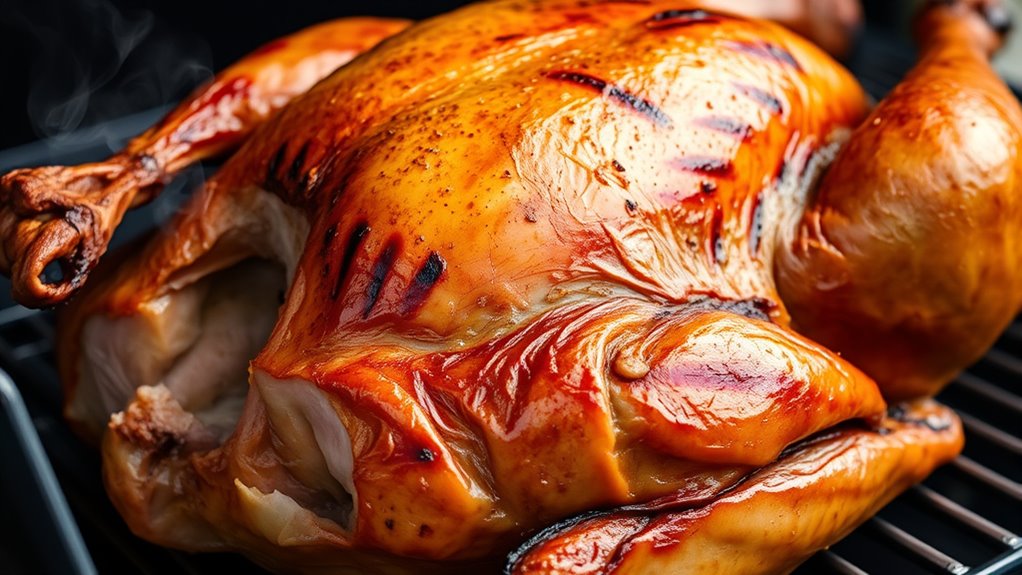
Before you start smoking and roasting your turkey, make sure your pellet grill is preheated to the desired temperature, usually around 225°F to 250°F. Place the turkey on the grill, skin side up, and let it smoke slowly.
Keep a steady temperature to ensure even cooking and develop that smoky flavor. As the turkey roasts, baste it occasionally to keep the meat moist and enhance the flavor.
Here’s a quick guide to help you enjoy the process:
| Step | Action | Tip |
|---|---|---|
| 1. Smoke | Keep the grill steady at 225°F–250°F | Use a meat probe if you have one |
| 2. Roast | Cook until juices run clear, about 3–4 hours | Rest the turkey before carving |
| 3. Presentation | Carve at the table, showing off a juicy turkey | Focus on carving skill |
A well-smoked, roasted turkey makes a beautiful presentation, perfect for any celebration.
Check Your Turkey’s Doneness With a Meat Thermometer
Want to make sure your turkey is just right? The best way is to use a meat thermometer. Stick it in the thickest part of the breast and the innermost part of the thigh. You’re aiming for an internal temp of around 165°F. It’s a good idea to check a few spots to be totally sure it’s cooked through. That way, you’ll avoid ending up with a turkey that’s underdone or overdone.
Proper Thermometer Placement
Ensuring your turkey is cooked to the right temperature is essential for both safety and juiciness. When using digital thermometers, proper placement is key to getting accurate readings.
Insert the probe into the thickest part of the turkey breast, avoiding bone, fat, or gristle, which can give false readings. For the thigh, insert the thermometer into the inner thigh, close to the bone but not touching it.
Follow placement tips to guarantee the probe stays stable and doesn’t shift during cooking. Keep the digital thermometer’s wire away from direct heat or flames to prevent damage.
Ideal Temperature Guidelines
Knowing the right internal temperatures for your turkey guarantees it’s both safe to eat and deliciously juicy. To confirm cooking safety, aim for an internal temperature of 165°F (74°C) in the thickest part of the breast and 175°F (80°C) in the thighs.
Use a reliable meat thermometer to check these spots without guesswork. Proper equipment maintenance like regularly calibrating your thermometer ensures accurate readings.
Avoid opening the pellet grill too often, which can cause temperature fluctuations and uneven cooking. Monitoring the temperature consistently helps prevent undercooking or overcooking.
Checking Multiple Spots
Checking multiple spots on your turkey with a meat thermometer is key to making sure it’s cooked thoroughly and safely. Just insert the thermometer into the thickest parts of the breast, thigh, and drumsticks.
This helps ensure even doneness and prevents any undercooked or overcooked areas. Once the thermometer hits 165°F, your turkey is good to go.
Remember, different flavor combos like herb butter, citrus, or spice rubs can tweak cooking times a bit. That’s why checking the internal temperature is so important.
For a great presentation, let the turkey rest before carving. This keeps the juices in and makes slicing easier.
Checking multiple spots guarantees a perfectly cooked bird, boosting flavor and safety. It’s the best way to enjoy a juicy, delicious turkey with an appealing look.
Let Your Turkey Rest Before Carving for Juicy Results
After you’ve finished carving your turkey, resist the urge to serve it immediately. Let it rest for at least 20 minutes to allow the juices to redistribute, keeping each bite moist and flavorful. During this time, cover the turkey loosely with foil to keep it warm.
Proper carving techniques are key—use a sharp knife and cut against the grain for tender slices. This not only improves the texture but also makes your presentation look more appealing and professional.
Resting the turkey prevents the juices from running out when you carve, resulting in a juicier, more succulent bird. It also makes slicing easier and cleaner, giving your platter a polished look.
Troubleshoot Common Pellet Grill Cooking Issues
If your pellet grill isn’t keeping a steady temperature, the first thing to check is the thermostat. Sometimes dust or debris can block the sensors, so give them a good cleaning. That usually helps the grill maintain the right heat.
Another common issue is pellet feed problems, which can lead to uneven cooking. Make sure your hopper is full and that the auger isn’t jammed. Clearing any obstructions will help ensure the pellets feed smoothly.
Inconsistent Temperature Control
Inconsistent temperature control is a common challenge when using a pellet grill, but it’s often due to simple issues that can be quickly fixed. Temperature fluctuations can happen if your grill isn’t properly calibrated or if the pellet feed isn’t consistent.
To fix this, check your control calibration and make sure your grill’s thermostat is accurate. Also, consider these common causes:
- Dirty or clogged temperature sensors
- Incorrect pellet feed settings
- Drafts or airflow issues
- Using the wrong type of pellets
- Inconsistent pellet quality
Pellet Feed Problems
Pellet feed problems are a common cause of uneven cooking and temperature fluctuations on your pellet grill. If your grill isn’t maintaining consistent heat, feeding issues might be the culprit.
Check the pellet feed to make sure the hopper has enough fuel and that the pellets are dry and free-flowing. Sometimes, pellets can get jammed or bridge inside the auger, blocking proper feeding.
Clearing any jams and ensuring the auger moves freely can solve these issues. Also, inspect the feed screw and motor for any damage or obstructions.
Regularly cleaning the pellet hopper and keeping pellets dry helps prevent feeding problems. Addressing pellet feed issues promptly keeps your grill at a steady temperature, ensuring your turkey cooks evenly and perfectly.
Enhance Your Turkey’s Flavor With Wood Pellets and Smoke Techniques
To truly elevate your turkey’s flavor, choosing the right wood pellets and mastering smoke techniques are essential. The wood flavor you select influences the meat’s richness and aroma, so opt for varieties like apple, cherry, or pecan for a mild, sweet smoke.
Use proper smoke techniques by maintaining a consistent temperature and smoke output throughout the cook to infuse the turkey evenly. Keep the smoke light early on, then increase it as needed to avoid overpowering the meat’s natural flavor.
Here are some tips to improve your smoke techniques:
- Mix different wood pellets for a unique flavor profile
- Keep the lid closed to retain smoke and heat
- Use a water pan to maintain moisture and improve smoke absorption
- Adjust the pellet feed rate for steady smoke production
- Monitor the internal temperature to prevent over-smoking or under-flavoring
These steps guarantee your turkey develops a delicious, smoky depth without overwhelming its natural taste.
Serve and Enjoy Your Delicious Smoked Pellet Grill Turkey
Once your turkey has finished smoking and reached the perfect internal temperature, it’s time to carve and serve. Let it rest for at least 15 minutes before carving—this helps the juices settle and reduces the risk of burns.
When serving, focus on presentation: carve neatly, arrange slices on a platter, and garnish with fresh herbs for a nice visual. Use a sharp knife for clean cuts and serve on warm plates to keep the meat tender.
Always double-check that the turkey is cooked thoroughly, especially in thicker parts, to prevent foodborne illness. To make your presentation inviting, add colorful sides and sauces that complement the smoky flavor.
Frequently Asked Questions
Can I Use a Frozen Turkey on a Pellet Grill?
You can cook a frozen turkey on a pellet grill, but it’s not the best way to do it. Thawing it first helps ensure even cooking and safety.
If you decide to cook it frozen, expect longer cook times and uneven heating. Keep the pellet grill steady at around 325°F.
Use a meat thermometer to make sure the turkey hits 165°F inside. Patience is key for a safe and tasty result.
How Long Should I Let the Turkey Sit Before Carving?
Imagine the turkey as a diva demanding a pampering session; you should let it rest for at least 20-30 minutes before carving. This resting time lets the juices redistribute, so the meat stays moist.
Use proper carving techniques afterward—slice against the grain for tender bites. Skipping this step risks ending up with dry, tough meat.
Be patient and give your turkey the royal treatment. That way, you’ll end up with perfect, juicy slices everyone will love.
What Types of Wood Pellets Are Best for Turkey?
You should choose fruit woods like apple or cherry pellets for turkey because they provide a mild, sweet flavor that enhances the meat without overpowering it.
These pellets give excellent smoke infusion, giving your turkey a tender, flavorful finish. Hardwood blends like hickory or oak work well too, offering a richer smoky taste.
Always go for high-quality pellets to ensure consistent smoke and maximum flavor during cooking.
Is It Necessary to Baste the Turkey During Smoking?
Basting your turkey is like giving it a revitalizing drink—it’s not always necessary but can help keep it moist. You don’t need to baste constantly; a few times during smoking usually does the trick.
How often you baste depends on how dry the turkey gets and your preference for a juicy, flavorful result. Keep an eye on it, and you’ll find the right balance to prevent dryness while keeping that smoky flavor.
Can I Cook a Stuffed Turkey on a Pellet Grill?
Yes, you can cook a stuffed turkey on a pellet grill, but it’s important to ensure the stuffing reaches 165°F to stay safe from bacteria.
You can add flavor by placing herbs or citrus inside the cavity for extra taste. Keep the turkey moist by basting it regularly and closely monitor the temperatures.
Cooking a stuffed turkey might take a bit longer, so be patient. The end result is a flavorful, juicy meal that’s well worth the effort.
Conclusion
Did you know that smoking a turkey on a pellet grill not only delivers unbeatable flavor but also taps into the ancient art of slow cooking?
By following these simple steps, you’re harnessing a technique that’s been revered for centuries, slow smoking, to create a juicy, flavorful feast.
So, next time you fire up your pellet grill, remember: you’re not just cooking a turkey, you’re revealing a timeless tradition of delicious, smoky goodness.
Cooking turkey on a pellet grill with these easy steps makes all the difference in flavor and tenderness.