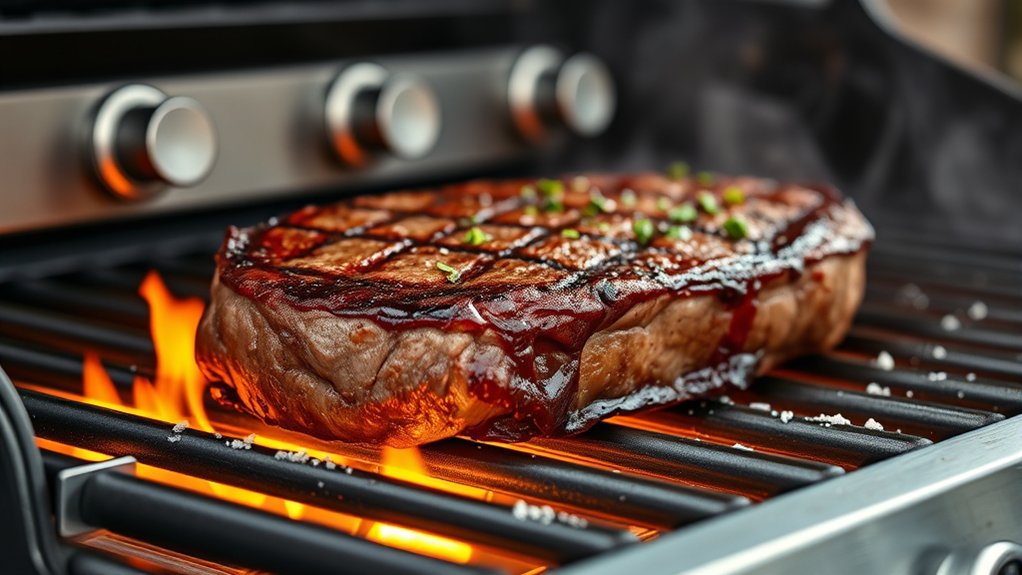
10 Tips for Perfectly Grilling Ribeye on a Gas Grill
Cooking the perfect ribeye on a gas grill is something many barbecue lovers aspire to, but it can feel tricky to get that ideal sear and juicy interior every time. You’re not alone—many people struggle with mastering grill temperature and timing to achieve that restaurant-quality steak at home.
To grill a perfect ribeye on a gas grill, start by preheating your grill to 450-500°F and cleaning the grates for even heat and better searing. Choose a well-marbled, 1-1.5 inch thick steak, season generously, and pat it dry.
Sear the steak with the lid open, flipping once for a crust. Rest it for 5-10 minutes before slicing against the grain.
Keep flare-ups in check and avoid overcrowding to ensure even cooking.
With these tips, you’ll impress every time. More expert advice awaits to help you master the process.
Key Takeaways
- Preheat the grill to 450-500°F and clean the grates for even, high-temperature searing.
- Pat the ribeye dry and lightly oil the grates to prevent sticking and help develop a good crust.
- Season generously with salt, pepper, and optional spices, then let the steak rest for 5-10 minutes before cooking.
- Use a meat thermometer to monitor the internal temperature and flip the steak only once for the best doneness.
- Rest the steak after grilling to let the juices redistribute and slice against the grain for tenderness.
Prepare Your Gas Grill for Perfect Ribeye
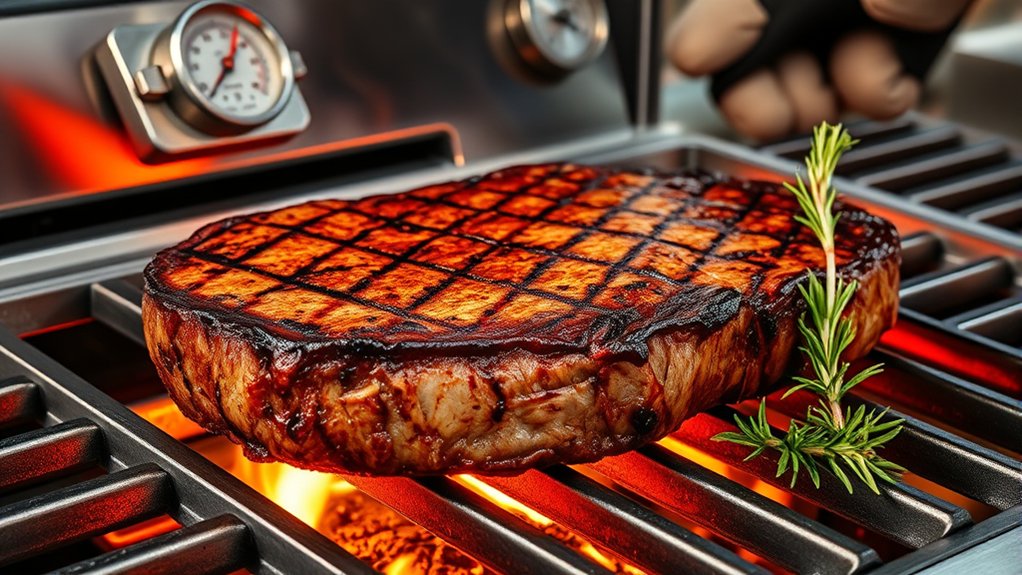
Before you start grilling, make sure your gas grill is properly prepared. Start by cleaning the grates with a wire brush to remove any residue from previous cooks. This helps ensure even heat transfer and prevents sticking.
Clean your grill grates with a wire brush for even heat and less sticking.
Check your grill accessories, like temperature gauges and vents, to make sure they’re working correctly. Accurate readings make controlling the cooking process much easier.
Preheat your grill on high for 10-15 minutes, then adjust to the temperature you want for your ribeye. Use your grill’s lid to create an oven-like environment, which is key for perfect cooking.
Keep a spray bottle nearby to control flare-ups without losing heat. Also, consider using a meat thermometer to monitor the internal temperature precisely.
Proper preparation not only keeps your cooking surface clean but also helps you maintain consistent heat. This ensures your ribeye cooks evenly and stays juicy.
Choose the Best Ribeye Cut for Grilling
When you’re picking out a ribeye for grilling, it’s all about looking for good marbling—those little streaks of fat throughout the meat. They help keep the steak juicy and flavorful as it cooks. Also, aim for a thickness of about 1 to 1.5 inches; it’s just the right size to handle on your grill without fussing too much.
Now, when it comes to bone-in versus boneless, it really depends on what you prefer. Bone-in ribs tend to pack more flavor—there’s something about the bone that adds richness. But if you’re looking for a quicker cook and easier handling, boneless might be the way to go. Either way, choosing the right cut will help your steak stay juicy and cook evenly, making for a delicious grilling experience.
Marbling and Thickness
Choosing the right ribeye cut is essential for grilling perfection, and two key factors to evaluate are marbling and thickness. Marbling effects play a significant role in flavor and juiciness, as the fat melts during grilling, enriching each bite.
Look for a ribeye with well-distributed marbling, which indicates a tender and flavorful steak. Thickness is equally important; a thicker cut allows for better control over cooking, giving you a perfect sear while preventing overcooking.
Thinner steaks can cook too quickly, risking dryness, while thicker cuts offer a forgiving margin for achieving the desired doneness. By selecting a ribeye with ideal marbling and the right thickness, you set yourself up for a juicy, flavorful grilling experience.
Bone-In vs. Boneless
Deciding between bone-in and boneless ribeye depends on your grilling preferences and the flavor you want. Both have their own benefits, so consider what matters most to you.
Flavor retention: Bone-in ribeye usually has a richer flavor because of the marrow and connective tissue.
Cooking time: Boneless steaks heat up faster and tend to cook more evenly.
Ease of handling: Boneless cuts are easier to flip and carve, making grilling less of a hassle.
Presentation: Bone-in steaks often look more impressive on the plate, adding a touch of rustic charm.
If you want maximum flavor and don’t mind a slightly longer cook, go for the bone-in. For quick, even grilling and easy serving, boneless is your best bet.
Season and Marinate to Boost Flavor
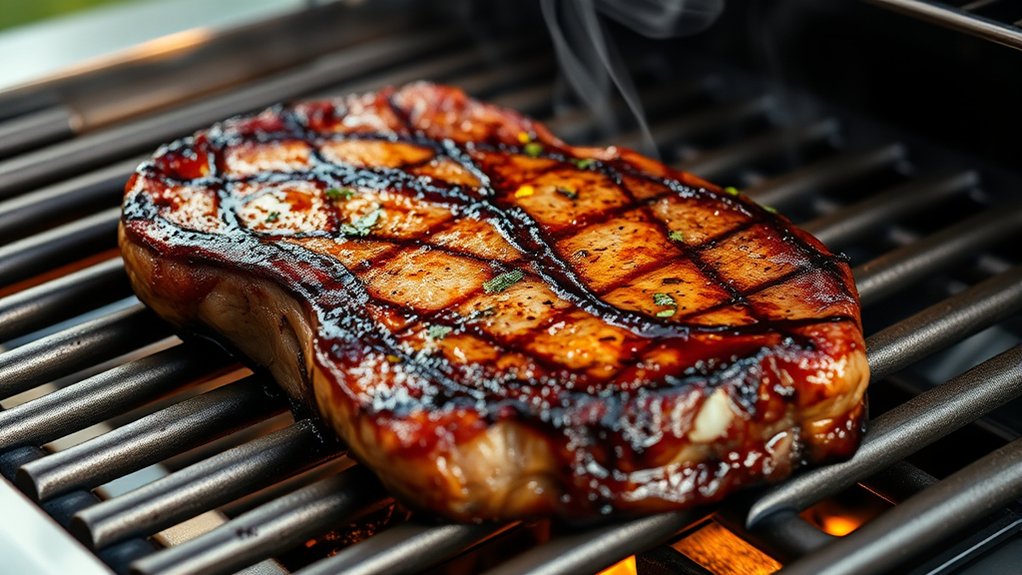
Want to make your ribeye even more delicious? Try seasoning it with some good-quality spices that really highlight its natural flavor. A little marinade for a few hours can do wonders—adding depth and tenderness that make every bite way more enjoyable.
And don’t forget—after you’ve grilled it to perfection, let the steak rest for a bit. That way, the juices stay locked in, giving you a juicy, mouthwatering steak every time.
Use Quality Seasonings
Enhancing the flavor of your ribeye starts with using high-quality seasonings. Good seasoning varieties bring out the meat’s natural richness and add a delicious layer of flavor improvement.
To get the most out of your steak, consider these tips: Use freshly ground salt and pepper for a classic, bold taste. Incorporate garlic powder or minced garlic for added depth.
Try smoked paprika or chili powder for subtle smoky or spicy notes. Experiment with herbs like thyme or rosemary for aromatic complexity.
High-quality seasonings make a difference, so choose fresh, premium ingredients. By selecting the right seasoning varieties, you’ll ensure each bite is flavorful and well-balanced, elevating your grilling game.
Marinate for Depth
Marinating your ribeye adds layers of flavor and tenderness that seasoning alone can’t achieve. Using effective marinade techniques, you can infuse your steak with extra depth and complexity.
A good marinade combines acids, oils, and seasonings to penetrate the meat, enhancing its natural flavor. For the best results, marinate your ribeye for at least 30 minutes but no longer than 4 hours to avoid overpowering the meat’s natural taste.
You can experiment with ingredients like soy sauce, garlic, herbs, or citrus to customize your marinade. The goal is to boost the steak’s flavor without masking it.
Proper marinating ensures each bite delivers a richer, more nuanced taste, elevating your grilling game.
Rest for Juiciness
After marinating your ribeye to build deep, complex flavors, giving the steak time to rest is key to locking in juiciness. Resting allows the meat’s juices to redistribute, which helps keep it moist and flavorful.
To boost flavor and juiciness, follow these simple steps:
- Remove the steak from the grill once it reaches your desired doneness.
- Tent it loosely with foil to keep it warm without steaming.
- Let it rest for 5-10 minutes, enough for the juices to settle.
- Slice against the grain to preserve moisture and maximize flavor.
This small step makes a big difference, leaving you with a tender, flavorful ribeye every time. Resting is your secret weapon for a perfect grilling finish.
Set the Right Grill Temperature for Juicy Steaks
To get perfectly juicy steaks, setting the right grill temperature is key. A good temperature ensures your ribeye cooks evenly, locking in moisture and flavor.
For juicy steaks, start with a high heat of about 450-500°F for searing. Then, lower it to 350°F to finish cooking. This keeps the steak juicy while forming a tasty crust.
Use a thermometer to keep an eye on your grill temperature. Adjust the burners as needed to maintain consistent heat throughout grilling.
| Grill Temperature | Cooking Result |
|---|---|
| 450-500°F (High) | Searing, crust formation |
| 350°F (Medium) | Even cooking, juicy interior |
| Below 350°F | Slow, gentle cook (not ideal for steaks) |
Keeping the right temperature is essential. It’s hot enough to sear but controlled enough to cook through without drying out.
Achieve a Perfect Sear on Your Ribeye
Want that perfect sear on your ribeye? First things first, make sure your grill is nice and hot before you start. Preheat it well and crank it up to high heat—that’s the secret to getting that beautiful crust.
Before placing the steak on the grill, pat it dry with paper towels. Removing any extra moisture helps you get that nice, caramelized exterior. Follow these simple steps, and you’ll lock in flavor while creating that irresistible sear every single time.
Preheat Grill Properly
Preheating your grill properly is essential for achieving a perfect sear on your ribeye. A hot grill creates that irresistible outdoor vibe and ensures your steak gets a beautiful crust. To do it right:
- Turn all burners to high and close the lid, letting the grill heat for 15 minutes.
- Use a grill thermometer to check that the temperature reaches at least 450°F.
- Clean the grates with grilling accessories for even heat transfer.
- Lightly oil the grates to prevent sticking and improve searing.
Preheating guarantees your steak cooks evenly and develops deep flavor. Rushing this step can lead to uneven cooking or sticking, ruining your grilling experience. Proper preheating is the foundation for a perfectly grilled ribeye.
Use High Heat
Achieving a perfect sear on your ribeye requires cranking up the heat once the grill is preheated. Turn your gas grill to high heat, aiming for around 450-500°F. Using quality grill accessories, like a cast iron skillet or grill grates that retain high temperatures, helps lock in that flavorful crust.
If you’re looking for charcoal alternatives, high-temperature gas grilling provides that intense heat without the mess. Keep the lid open during searing to prevent heat loss and ensure even browning.
Pat Dry Steak
After setting your grill to high heat, the next step is making sure your steak is dry enough to sear properly. Moisture on the surface can stop you from getting that perfect crust.
To reduce steak moisture, try these drying techniques:
- Pat with paper towels—gently press to soak up excess water.
- Air-dry in the fridge—leave the steak uncovered for 30-60 minutes.
- Use a clean cloth—blot the surface to remove any remaining dampness.
- Avoid rinsing—never rinse your steak, as it just adds surface water.
These steps help you get your steak’s surface dry, which means better heat contact, browning, and that crispy, flavorful sear you’re after. Properly drying your steak is key to achieving that mouthwatering crust every time.
Check Steak Doneness With a Meat Thermometer
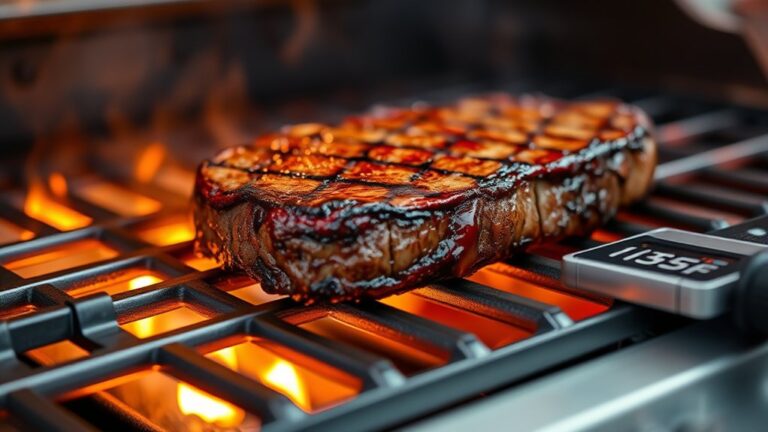
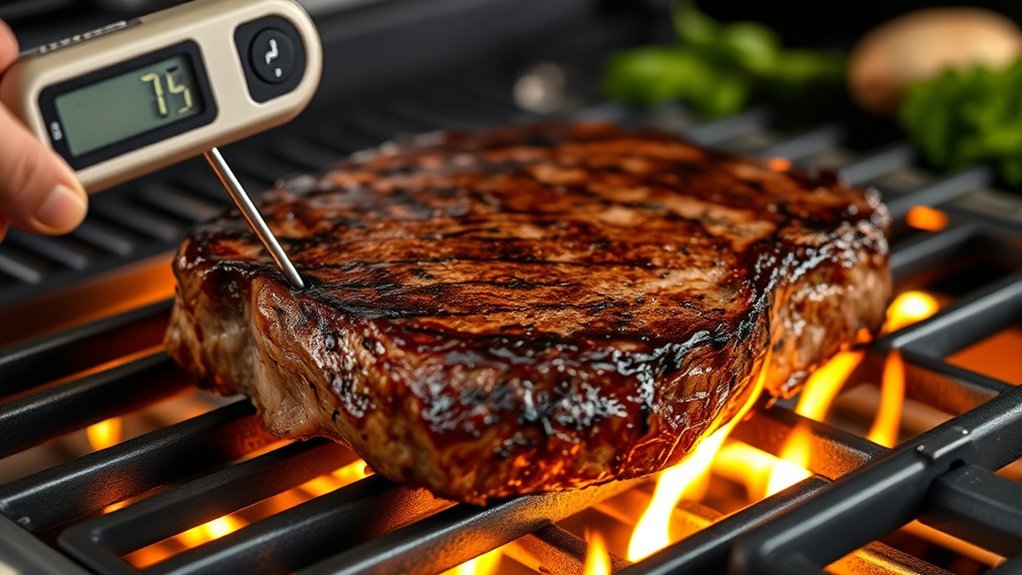
Using a meat thermometer is the most reliable way to check your steak’s doneness and make sure it’s cooked to your liking. Just insert the thermometer into the thickest part of the ribeye, avoiding bone or fat.
Using a meat thermometer ensures perfectly cooked, juicy steaks every time.
This gives an accurate reading of the meat’s temperature, which is key for testing doneness. For rare, aim for about 125°F. Medium-rare should be around 135°F, medium at 145°F, and well-done at 160°F or higher.
Remember, the steak’s temperature will rise a bit during resting, so take it off the grill a few degrees early to hit your target. Using a thermometer helps prevent overcooking or undercooking, keeping your steak juicy and tender.
Checking doneness with a thermometer gives you confidence that your steak is cooked just right, making your grilling experience precise and satisfying.
Rest Your Ribeye to Lock in Juices
Once your ribeye comes off the grill, it’s important to let it rest for a few minutes. Resting helps the juices redistribute, making your steak more flavorful and juicy. During this time, the steak reabsorbs its natural juices, so each bite stays moist and delicious.
To get the best results, cover the steak loosely with foil. This keeps it warm without trapping too much moisture. For a 1-inch steak, about 5 minutes of resting is enough; for thicker cuts, give it a bit more time.
Avoid slicing the steak immediately because cutting too soon lets the juices escape. Use this resting time to prepare your side dishes or drinks, making everything come together smoothly.
Flip and Handle Your Steak Without Losing Juices
When it’s time to flip your steak, handle it carefully to keep those precious juices inside. Using the right flip technique is key for maximum juice retention.
Handle your steak gently when flipping to lock in juices and ensure maximum flavor.
Avoid pressing down on the meat or flipping it multiple times, as this can force out juices and dry out the steak. Instead, use tongs to gently lift and flip the ribeye once it gets a good sear.
Wait until the first side forms a deep crust before flipping; this helps seal in moisture. When you flip, do it smoothly and confidently to prevent unnecessary punctures that can release juices.
If you’re worried about sticking, give the steak a little extra time on the first side. Remember, a clean flip minimizes damage to the meat’s surface and keeps it tender.
Mastering this flip technique makes sure your ribeye stays juicy, flavorful, and perfectly cooked from edge to edge.
Avoid Common Mistakes When Grilling Ribeye
Even experienced grillers can make mistakes that ruin the perfect ribeye. To avoid issues, focus on safety and proper technique.
- Neglecting Cooking Safety: Always keep a fire extinguisher nearby and make sure your grill is stable. Never leave it unattended, especially with high heat.
- Using Inadequate Grilling Tools: Invest in quality tongs, a meat thermometer, and a grill brush. These tools make handling your steak safer and checking doneness easier.
- Overcrowding the Grill: Give your ribeye space so it cooks evenly and avoids flare-ups. Overcrowding can cause uneven heat and safety risks.
- Ignoring Preheating: Skipping preheating leads to poor searing and uneven cooking. Make sure to preheat your grill thoroughly for that perfect crust.
Serve Your Ribeye With the Perfect Finish
A perfect ribeye deserves a finishing touch that heightens its flavor and presentation. Start by letting the steak rest for a few minutes after grilling; this helps the juices redistribute and boosts flavor.
For serving, slice the ribeye against the grain to ensure tenderness and arrange it attractively on a warmed plate. A simple garnish like fresh herbs or a pat of herb butter can add visual appeal and flavor.
Consider drizzling a flavorful sauce or squeezing some fresh lemon to brighten the taste. Keep the presentation clean and minimal, highlighting the rich, juicy meat.
Using a sharp knife and making precise cuts not only improves appearance but also makes each bite more enjoyable. Your goal is to make your ribeye look as good as it tastes, creating an inviting, mouthwatering finish that will impress everyone at the table.
Frequently Asked Questions
How Long Should I Let My Ribeye Rest Before Slicing?
You should let your ribeye rest for about 5 to 10 minutes before slicing. Resting helps the juices redistribute, so your steak stays juicy and flavorful.
During this time, loosely tent the meat with foil to keep it warm. When you’re ready to cut, use a sharp knife and slice against the grain.
This way, your ribeye stays moist and tender, giving you the best eating experience possible.
Can I Grill Ribeye Directly From the Refrigerator?
Yes, you can grill ribeye straight from the fridge, but it’s best to let it sit at room temperature for about 30 minutes first. This helps it cook more evenly.
When grilling, feel free to use your favorite marinating techniques for extra flavor. Aim for a high heat, around 450-500°F, to sear the steak properly.
This high heat locks in the juices and creates that perfect crust you’re after. Just remember to adjust the heat as needed to get your desired level of doneness.
What’s the Best Way to Prevent Flare-Ups on a Gas Grill?
To prevent flare-ups on your gas grill, keep the lid closed when possible. Trimming excess fat from your ribeye helps reduce drips and minimizes flare-ups.
Using a charcoal alternative like lava rocks or a ceramic briquette tray can help distribute heat evenly and prevent hot spots that cause flare-ups. Marinades also create a barrier that reduces drippings and flare-ups.
Always keep a spray bottle of water nearby to quickly tame any unexpected flames that might flare up unexpectedly.
How Do I Store Leftover Grilled Ribeye Safely?
To store leftover grilled ribeye safely, wrap it tightly in aluminum foil or put it in an airtight container. You might also consider adding a marinade like garlic or herbs to boost the flavor later.
Keep the meat in the fridge at 40°F (4°C) or below and aim to eat it within 3-4 days. If you want to keep it longer, freeze it instead.
When reheating, make sure to bring it up to an internal temperature of 165°F (74°C) before eating to stay safe.
Should I Trim Excess Fat Before Grilling My Ribeye?
Yes, you should trim excess fat before grilling your ribeye. Use fat trimming techniques to remove large, thick fat layers, which can cause flare-ups and uneven cooking. Keep some fat for flavor, but trim the tough, connective tissue.
For the best results, season your steak with ribeye seasoning tips that enhance flavor without adding more fat. Proper trimming guarantees a juicy, flavorful, and evenly cooked ribeye.
Conclusion
Now that you’ve got the definitive guide, your ribeye will turn into a mouthwatering masterpiece—so good, it’ll make even seasoned chefs jealous! Just remember to follow these tips, stay attentive, and keep that grill at the perfect temp.
With a little practice, you’ll wield your tongs like a true grilling ninja, producing steaks so juicy and flavorful they’ll be the talk of every barbecue. Get ready to impress and indulge in steak perfection with your perfectly grilled ribeye.