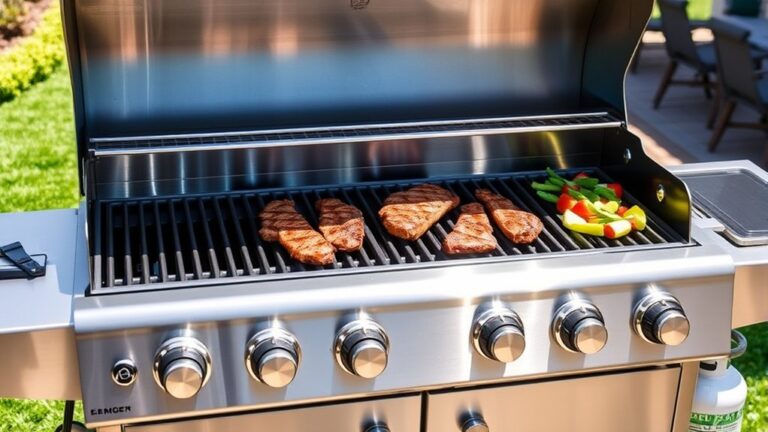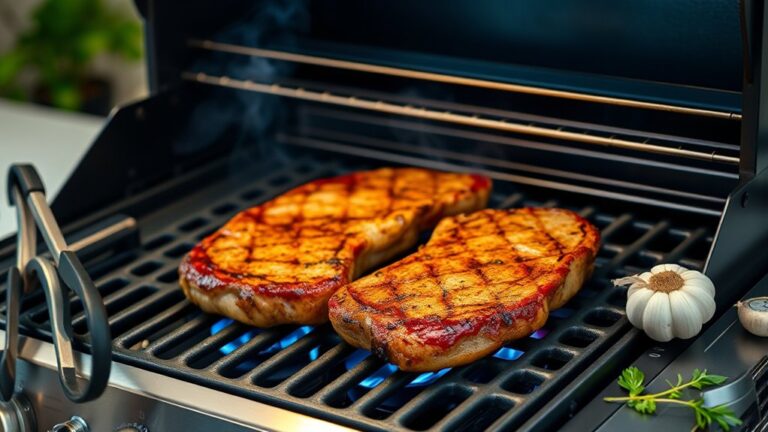
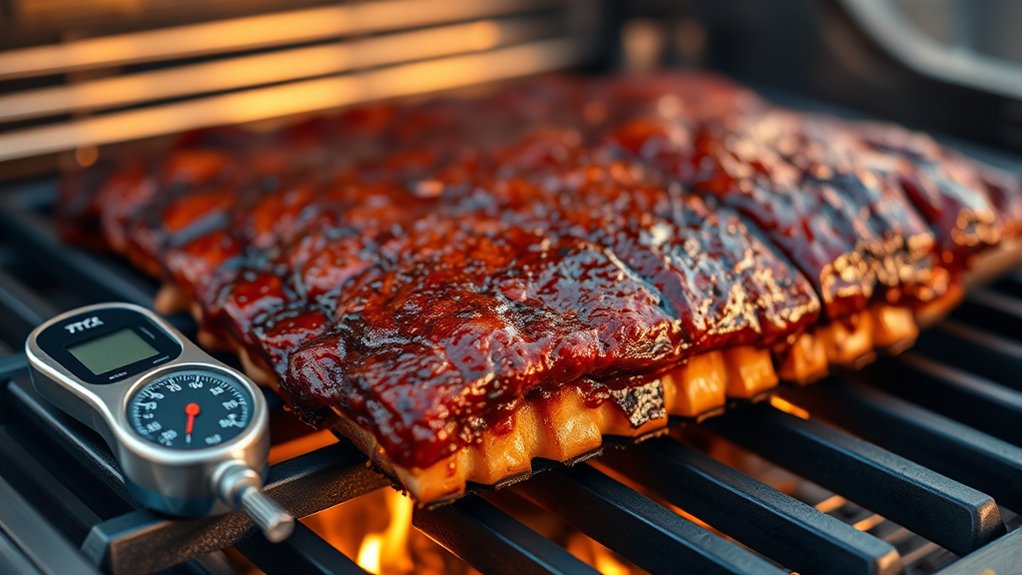
How Long to Grill Beef Ribs on a Gas Grill
Many barbecue lovers struggle to get beef ribs just right, especially on a gas grill. You’re not alone—perfectly tender, juicy ribs can feel like a tricky goal. But don’t worry, with a little guidance, you’ll be serving up mouthwatering ribs in no time.
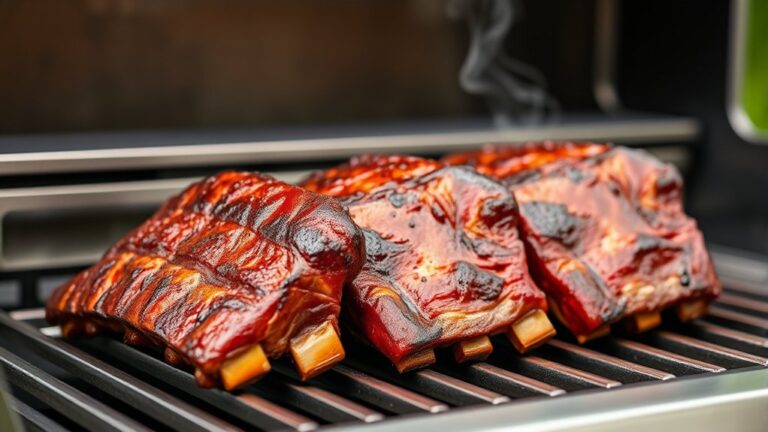
For grilling beef ribs on a gas grill, plan for about 2 to 6 hours, depending on the size and cut of your ribs. Use indirect heat and keep the grill temperature around 225°F to 250°F.
Check for doneness by monitoring internal temperature, aiming for 190°F to 203°F, and guarantee the meat is tender and juicy.
Want to master perfect ribs? Keep going to uncover detailed tips and tricks for flawless results.
Key Takeaways
- Grill beef ribs at 225°F to 250°F for 2 to 6 hours, depending on how tender you want them.
- Use indirect heat to cook evenly and avoid flare-ups.
- Cook until the internal temperature hits 190°F to 203°F for the best tenderness.
- Thinner or boneless ribs might take 2-3 hours, while thicker, bone-in ribs could take longer.
- Let the ribs rest for 10-15 minutes before slicing to lock in the juices and flavor.
How Long Should You Grill Beef Ribs on a Gas Grill?
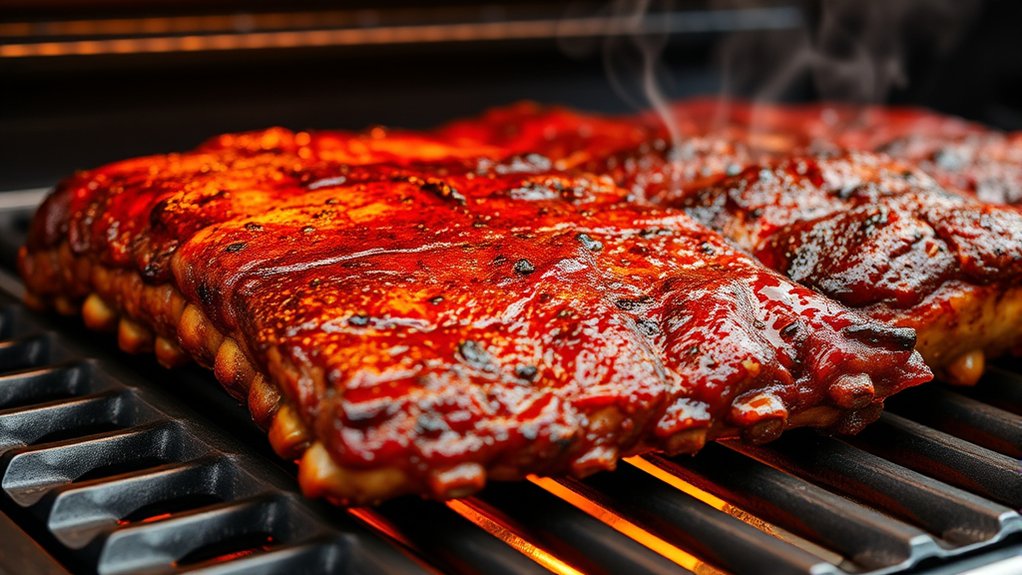
Wondering how long to grill beef ribs on a gas grill? The cooking time depends on the cut and how tender you want them to be.
Typically, you’ll want to grill beef ribs for about 4 to 6 hours if you’re aiming for fall-off-the-bone tenderness, especially when cooking low and slow. For shorter cooking times, around 2 to 3 hours, you’ll get meat that’s still juicy but a bit firmer.
Grill beef ribs for 2-6 hours for tender, juicy results—longer for fall-off-the-bone perfection.
Marinade variations can influence cooking time by adding moisture and flavor, so marinate your ribs for at least a few hours beforehand. Using a thermometer helps you hit the right internal temperature—around 190°F to 203°F for tender ribs.
Keep your grill temperature steady, around 225°F to 250°F, to ensure even cooking. Remember, patience is key. Covering the grill and maintaining consistent heat helps you achieve perfectly cooked ribs with the right balance of tenderness and flavor.
What Are the Different Types of Beef Ribs and How Do You Cook Them?
There are actually a few different types of beef ribs you might come across, and each one has its own quirks when it comes to cooking. For example, prime cuts and flanken are from different parts of the cow, and they have pretty distinct textures. Prime ribs tend to be larger and more marbled, making them great for roasting or grilling, while flanken cuts are thin and work well for quick cooking methods like grilling or broiling.
Then there are short ribs, which are usually best when slow-cooked or braised. They become super tender and flavorful after hours of low-and-slow cooking. When it comes to bone-in versus boneless, bone-in ribs tend to pack more flavor because of the marrow and connective tissue, but boneless ribs cook a lot faster and can be more convenient if you’re short on time.
Prime vs. Flanken Cuts
Beef ribs come in various cuts, each suited to different cooking methods and flavor profiles. Prime ribs are known for their high marbling quality, which makes the meat tender and juicy when grilled.
These large, bone-in cuts are perfect for slow roasting or smoking, but you can also give them a good sear on the grill. Flanken cuts, on the other hand, are thin slices cut across the bones, usually from the short ribs.
They cook quickly and are great for grilling or broiling. Because they’re thin, Flanken ribs need less seasoning to boost their flavor. Prime ribs benefit from bold seasonings to match their richness, while Flanken cuts shine with simple marinades or minimal seasoning, highlighting their beefy taste.
Short Ribs Preparation
Short ribs come in several cuts, each suited to different cooking methods and flavor profiles. When preparing short ribs, consider marinating techniques like soaking in a mixture of soy sauce, garlic, and herbs to tenderize and add flavor.
Seasoning options vary from simple salt and pepper to bold spice rubs with paprika, cumin, and chili powder. For a rich, smoky taste, you might opt for a dry rub before grilling.
Since short ribs are relatively thick, slow cooking or braising works best. But they can also be grilled if prepared properly. Marinating helps break down connective tissue, making the meat more tender.
Whichever method you choose, ensure your seasonings complement the beef’s natural richness for a flavorful, juicy result.
Bone-In vs. Boneless
Understanding the differences between bone-in and boneless beef ribs is key when choosing the right cut for your cooking method.
Bone-in ribs usually have more marbling, which helps keep the meat moist and flavorful during grilling. They also tend to need longer cooking times to break down connective tissues, resulting in tender, fall-off-the-bone meat.
Boneless ribs cook faster since they lack the bone, making them perfect for quick meals. However, they might not develop the same depth of flavor as bone-in cuts.
Keep in mind that when grilling, bone-in ribs may need an extra 10-20 minutes depending on their thickness. Boneless ribs generally cook more evenly and quickly.
Choose based on your preferred texture, flavor, and how much time you want to spend grilling.
How to Prepare Your Beef Ribs for Grilling
Before you start grilling, preparing your beef ribs properly is essential. Begin by rinsing the ribs and patting them dry with clean paper towels. Use sharp cooking utensils to trim excess fat or silver skin, which can hinder flavor and tenderness.
Next, consider marinade techniques to infuse flavor and tenderize the meat. Apply your marinade evenly, ensuring all surfaces are coated. Let the ribs sit in the marinade for at least a few hours, preferably overnight, for maximum flavor.
If you prefer a dry rub, generously season all sides with your favorite spices and press them into the meat. Proper preparation also involves removing any membrane from the back of the ribs, which helps seasonings penetrate better and makes grilling easier.
What Is the Best Temperature to Grill Beef Ribs?
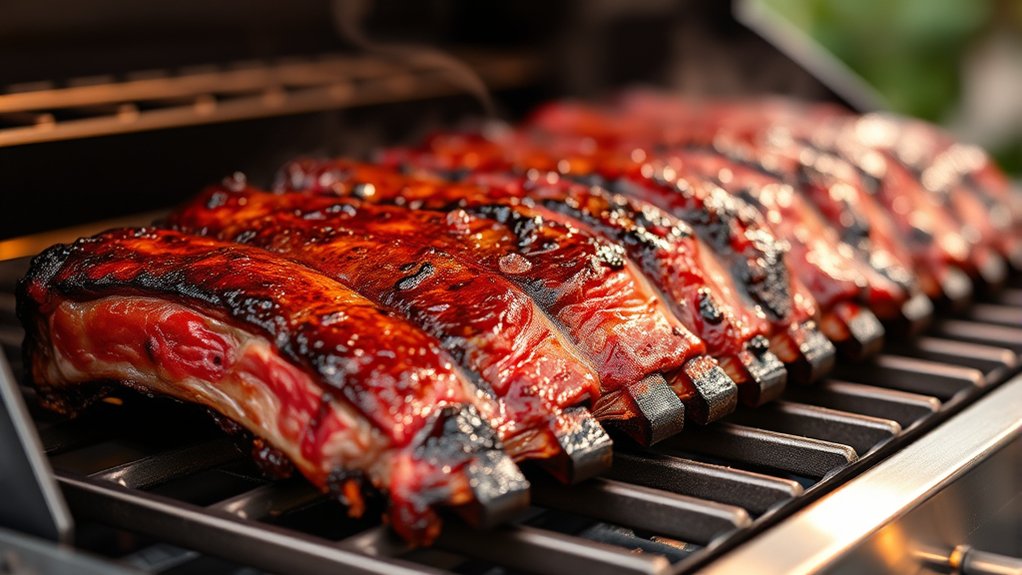
Grilling beef ribs requires keeping a steady temperature to get tender, flavorful meat. The best temperature for grilling ribs is around 225°F to 250°F, which allows for slow cooking to break down connective tissues.
This low-and-slow method results in juicy, tender ribs. Before grilling, think about your marinade options; a flavorful marinade can boost the taste and add moisture. Just avoid high acidity, which might break down the meat too quickly.
Apply rib seasoning generously, making sure it complements the marinade and creates a tasty crust. Keep the grill’s temperature steady by adjusting the gas burners as needed.
Using a meat thermometer is helpful to monitor internal temperature. The ribs should reach about 190°F to 203°F for maximum tenderness.
Sticking to this temperature range ensures even cooking, keeps the ribs moist, and helps develop a delicious bark.
Should You Use Direct or Indirect Heat for Ribs?
When grilling beef ribs, using indirect heat is usually the way to go. It helps the meat cook slowly and evenly, so it doesn’t burn or dry out.
This method makes it easier to get tender, juicy ribs with that smoky flavor everyone loves. Plus, you can focus on developing a flavorful crust while keeping the inside moist.
Marinating your ribs beforehand is a great idea. Balsamic, soy, or spicy rubs can add extra flavor and make your ribs even tastier.
Once they’re cooked, pair them with sauces like tangy BBQ, sweet honey glaze, or smoky chipotle. These complement the rich meat perfectly.
Using indirect heat also gives you more control. You can baste or add sauce during cooking without worrying about flare-ups or burning.
How Long to Grill Beef Ribs Based on Size and Thickness
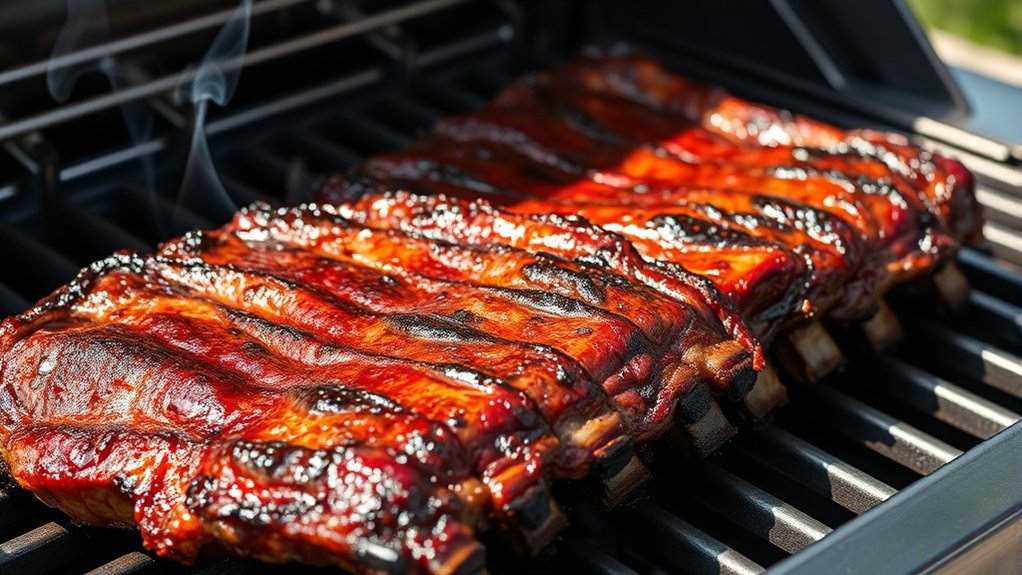
The thickness of your beef ribs really influences how long they need to be on the grill. Thicker cuts definitely take a bit more time to become tender and juicy.
And it’s not just about thickness—size matters too. Larger chunks of ribs need a little extra grilling time to cook through evenly. Oh, and don’t forget to think about whether the ribs are bone-in or boneless. Bones can act like a heat shield, so bone-in ribs usually take a bit longer to reach that perfect, melt-in-your-mouth doneness.
Rib Thickness Matters
Thicker beef ribs take more time on the grill to cook through properly. Paying attention to their size is key to getting tender, flavorful results.
The marbling patterns in the meat also matter. More marbling usually means juicier, more forgiving ribs.
Since thicker cuts can hide uneven cooking, give them extra time at a steady temperature.
Seasoning plays a role too. Well-seasoned rubs can help flavor penetrate thicker meat, but don’t rely on seasoning alone. Adjust your grilling time accordingly.
Keep a close eye on the internal temperature. Aim for 195-203°F and use a meat thermometer to ensure perfect doneness, no matter the thickness.
Size Influences Cooking Time
Size and thickness directly impact how long you need to grill beef ribs, so adjusting your cooking time accordingly is crucial for perfect results. Larger or thicker ribs require more time on the grill, while smaller cuts cook faster.
To improve flavor, experiment with marinade variations and seasoning techniques tailored to the size of your ribs. Thicker cuts absorb marinades differently, so marinate longer to develop depth and season generously to penetrate the meat.
As a rule, plan for about 20-30 minutes per side for thick, sizable ribs, adjusting based on their dimensions. Keep a close eye on internal temperature and always use a meat thermometer to ensure doneness.
Properly sizing your ribs ensures even cooking, juicy meat, and maximum flavor.
Adjust for Bone Presence
When grilling beef ribs, it’s important to consider whether they have bones because bones affect cooking times. Bones conduct heat differently, making meat near them cook faster.
If your ribs have prominent bones, expect those areas to cook slightly quicker. For boneless cuts, you’ll want to increase the grilling time to ensure everything cooks evenly.
Think about marinade choices too. Bold marinades work well with bone-in ribs, while lighter ones suit boneless cuts better.
When it comes to sauces, hearty, smoky options pair nicely with bone-in ribs. For boneless, tangy or fruity sauces are a good match.
Adjust your grilling time as needed, turn the ribs, and check for doneness. This way, you’ll get perfectly cooked beef ribs with the flavor you want.
How to Tell When Your Beef Ribs Are Perfectly Done
To guarantee your beef ribs are perfectly done, you need to pay close attention to their internal temperature and appearance. Use a meat thermometer to check for an internal temp of around 200°F, which indicates tenderness.
The meat should feel tender but still slightly firm when pressed. Look for visual cues such as a nice caramelized crust and juices that run clear.
Marinade techniques can help improve flavor and moisture, but they don’t determine doneness. Once cooked, pair your ribs with a complementary sauce like smoky barbecue or tangy vinegar-based options to elevate their flavor.
Remember, don’t rely solely on visuals; the thermometer is your best tool for perfection. When ribs hit the right temperature and have a rich, glossy appearance, they’re ready to enjoy.
This careful attention ensures your ribs are tender, juicy, and perfectly cooked every time.
Tips for Resting and Serving Juicy, Tender Ribs
Once your beef ribs reach the right internal temperature and develop that glossy, caramelized exterior, the next step is to let them rest. Resting allows the juices to redistribute, making each bite tender and moist.
Let your beef ribs rest to redistribute juices, ensuring tender, moist, and flavorful bites.
Wrap the ribs loosely in foil and let them sit for about 10-15 minutes. During this time, use marinade techniques beforehand to boost flavor and moisture. A good marinade adds depth and helps keep the meat juicy.
When serving, consider slicing the ribs against the grain for tenderness. Arrange them attractively on a platter for presentation. You can also add fresh herbs or a drizzle of barbecue sauce for visual appeal.
Resting isn’t just about flavor—it’s about creating a juicy, tender experience. Properly rested ribs will be easier to cut and more enjoyable to eat. Follow these tips, and you’ll serve ribs that look as good as they taste.
Common Mistakes That Can Ruin Your Ribs
One common mistake is overcooking the ribs, which can turn them into tough, dry bites that no one wants to eat. It’s really important to keep an eye on the cooking time so your ribs stay juicy and tender.
Another thing to watch out for is temperature control. If you don’t manage the heat properly, you might end up with uneven cooking, and that can really affect the tenderness of your ribs.
And don’t forget about the wood chips! Picking the wrong type can either overpower the meat or produce smoke that doesn’t taste great, which can totally mess up the flavor of your ribs.
Overcooking Ribs
Ever wondered why your ribs turn out dry and tough despite all your efforts? Overcooking is a common mistake that can ruin their tenderness and flavor. When you cook them too long, the meat loses moisture and becomes stringy.
To prevent this, keep an eye on the internal temperature and avoid prolonged grilling. Be mindful of marinade variations—some contain sugars that can burn if left too long.
Pairing your ribs with the right side dishes, like coleslaw or roasted vegetables, can balance the texture and flavor. But overcooking can still ruin the experience.
Neglecting Temperature Control
Neglecting temperature control is a common mistake that can quickly ruin your ribs. It can lead to uneven cooking or burnt edges, which nobody wants.
Fluctuations in temperature during grilling make it hard to keep a steady heat. This can cause parts of your ribs to be overcooked or undercooked.
To avoid this, make sure your grill is properly calibrated before you start. Regularly check the temperature with an accurate thermometer and adjust the burners as needed.
Keeping a steady heat is key because small temperature changes can really impact the tenderness and flavor of your ribs. Ignoring this can result in uneven doneness and burnt spots.
Using Wrong Wood Chips
Choosing the right wood chips can make or break the flavor of your ribs. Using the wrong wood for smoking can lead to bitter, overpowering, or off-flavor profiles that ruin your meat. When you’re cooking with wood, it’s essential to pick the proper pairing to complement beef ribs.
Avoid fruity or delicate woods like cherry or apple, which might not stand up to the richness of beef. Steer clear of softwoods like pine, as they can produce harmful chemicals and harsh smoke.
Stick to hardwoods such as hickory, oak, or mesquite for a bold, smoky flavor that enhances your ribs. Choosing the right wood chips ensures a balanced, delicious flavor and helps you avoid common smoking mistakes.
Tips for Achieving Fall-Off-The-Bone Ribs Every Time
Achieving fall-off-the-bone ribs requires a combination of proper techniques and attention to detail. Start by choosing the right flavor pairing—marinate or season your ribs with spices and sauces that complement each other to boost tenderness and flavor.
Use quality grilling accessories like a meat thermometer and foil to keep heat steady and moisture locked in. Wrapping the ribs in foil during the final stage traps steam, softening the meat and preventing it from drying out.
Keep the temperature low and steady around 225°F to 250°F for several hours. This slow cooking helps break down collagen, making the ribs tender. Don’t rush the process—patience is key.
Baste or spray the ribs regularly with a flavorful liquid to keep them moist. When the ribs are done right, the meat will fall off the bone easily. These tips, along with proper flavor pairing and good accessories, will help you get perfect, fall-off-the-bone ribs every time.
Frequently Asked Questions
Can I Grill Beef Ribs Using a Smoker Box on a Gas Grill?
Yes, you can grill beef ribs using a smoker box on a gas grill. Just set your grill to a low temperature around 225-250°F, which is perfect for smoking.
Keep in mind, the thickness of the ribs affects the cooking time. Thicker ribs will need a bit more time to get tender.
Place the smoker box over the heat source and keep an eye on the temperature. This helps ensure slow, even smoking, which results in tender, flavorful beef ribs.
How Do Marinades Affect Grilling Time for Beef Ribs?
Marinades can subtly affect grilling time for beef ribs by tenderizing the meat and adding flavor. If your marinade has acids like vinegar or citrus, it might soften the ribs and shorten the cooking time.
On the other hand, if it’s oil-based or thick, it probably won’t change how long they need to cook. Just be sure to watch the ribs’ internal temperature and appearance to make sure they’re perfectly cooked—no matter what marinade you use.
What Wood Chip Flavors Are Best for Beef Ribs on a Gas Grill?
Think of wood pairing as a seasoning for your smoke—each flavor sets a mood or moment. For beef ribs on a gas grill, hickory gives a rich, smoky depth that really enhances the meat’s natural flavor, like a warm hug.
Mesquite adds a bold, intense smokiness, making it perfect for a more robust taste. Applewood offers a sweet, fruity aroma that subtly lifts the beef’s richness.
Choose your wood based on the flavor profile you’re after.
How Do I Prevent Flare-Ups When Grilling Beef Ribs?
To prevent flare-ups while grilling beef ribs, keep your cooking temperature moderate, around 275-300°F. Trimming excess fat helps reduce drippings that cause flare-ups, so give your ribs a good trim before grilling.
Avoid pouring marinade directly over the ribs during grilling because the sugars and oils can cause flare-ups. Use a two-zone setup to control the heat, placing the ribs away from direct flames if flare-ups happen.
This method helps you maintain consistent heat, so your ribs don’t char too quickly and stay tender and juicy.
Should I Cover Beef Ribs With Foil During Grilling?
You should cover beef ribs with foil during grilling if you want tender, juicy meat, but it’s not always necessary. Think of foil as a cozy blanket that traps moisture and heat.
If you prefer grilling without foil, use a foil alternative like a lid or a smoker box to control flare-ups and retain flavor. Covering helps keep ribs moist, but grilling without foil can give you a nice smoky crust.
Conclusion
Grilling beef ribs is like orchestrating a symphony—timing, heat, and patience all come together to create a delicious masterpiece. Keep an eye on your temperature and use the right heat zones for the best results.
Don’t forget to rest your ribs before slicing. This step helps lock in the juices, making every bite tender and flavorful. With these tips, your gas grill becomes a true culinary canvas.
By following the proper grilling times and maintaining good heat, you’ll turn out ribs that are juicy and perfectly cooked. Remember, patience is key to achieving that smoky, tender perfection. Happy grilling, and enjoy every smoky moment with your beef ribs!