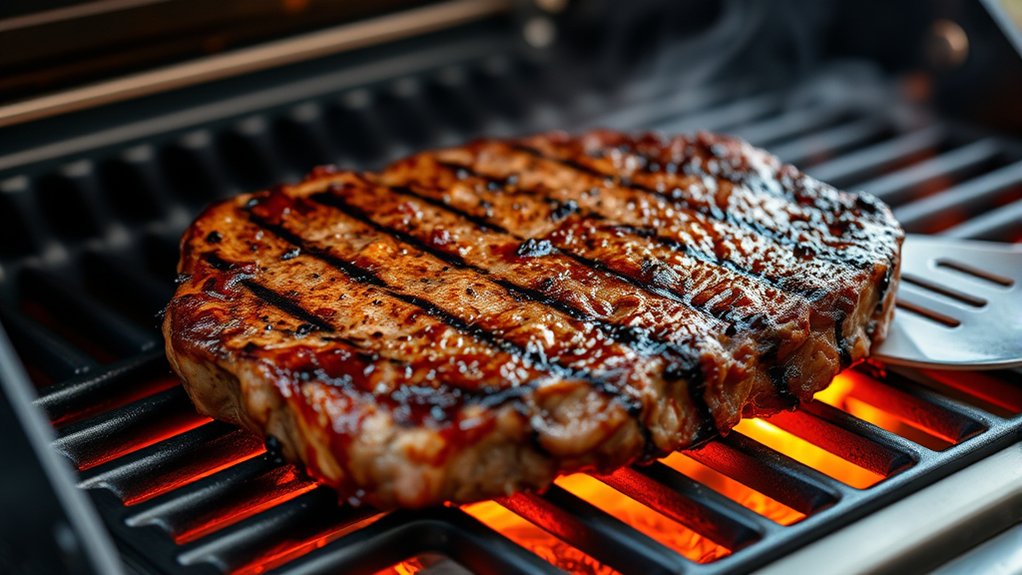
Grilling NY Strip Steak on a Gas Grill – Step-by-Step Guide
Cooking the perfect NY strip steak on a gas grill can feel intimidating, especially if you’re new to grilling or aiming for restaurant-quality results. You’re not alone—many people struggle with getting that ideal sear and doneness every time. But don’t worry, with a little guidance, you’ll be confidently grilling juicy, flavorful steaks in no time.
To grill a perfect NY strip on a gas grill, start by letting the steak come to room temperature and season it generously with salt, pepper, and herbs.
Preheat your grill to 450-500°F, pat the steak dry, and sear it over high heat for 3-4 minutes per side until a deep crust forms. Flip only once, then cook to your desired doneness with a thermometer.
Rest the steak for 5-10 minutes before slicing. If you want to master the process, keep exploring these tips.
Key Takeaways
- Preheat your gas grill to 450-500°F and give the grates a good clean to get that perfect sear.
- Season the steak generously with salt, pepper, and any optional spices after you oil it.
- Sear the steak over direct heat for 3-4 minutes on each side until a deep crust forms.
- Use a meat thermometer to check the internal temperature and get it to your preferred level of doneness.
- Let the steak rest for 5-10 minutes before slicing. This helps keep the juices in and makes it more tender.
Why Grilling NY Strip Steak Perfectly Matters
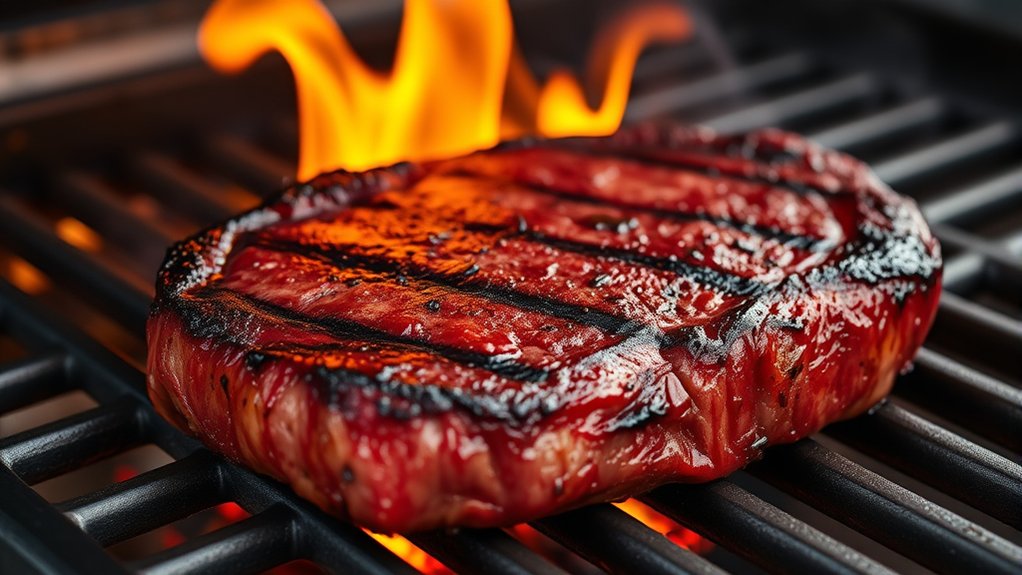
Grilling a NY strip steak to perfection is essential because it guarantees you enjoy its full flavor and tender texture. When you master this, you release the steak’s rich, beefy taste and juicy consistency.
Marinade variations can improve flavor, but over-marinating might compromise the meat’s natural qualities. Proper grilling ensures the meat’s juices stay sealed in, giving you that ideal balance of char and tenderness.
Marinate wisely—overdoing it can dull the steak’s natural flavor while proper grilling locks in juices and perfects the crust.
Similarly, are steak slicing techniques; slicing against the grain reveals tender bites, making each mouthful more enjoyable. If you don’t grill it right, you risk a tough or overcooked steak that disappoints.
Perfect grilling also helps develop a flavorful crust, adding depth to each bite. When you pay attention to these details, you turn a good steak into a memorable meal.
Ultimately, well-executed grilling amplifies your entire dining experience, showing your skill and appreciation for quality meat.
How to Prepare Your NY Strip Steak for Grilling
Before you place your NY strip steak on the grill, proper preparation helps guarantee you get the best results. Start by inspecting the steak for any uneven edges or excess fat, trimming if necessary. Make sure your knife is sharp—dull blades can tear the meat, affecting texture and presentation. A sharp knife makes trimming and carving easier and safer.
Next, consider marinade options; a simple marinade with olive oil, garlic, and herbs can improve flavor and tenderize the meat. If you’re short on time, a quick brush of oil and a sprinkle of salt will do, but marinating for at least 30 minutes can boost taste.
How to Season Your NY Strip for Maximum Flavor
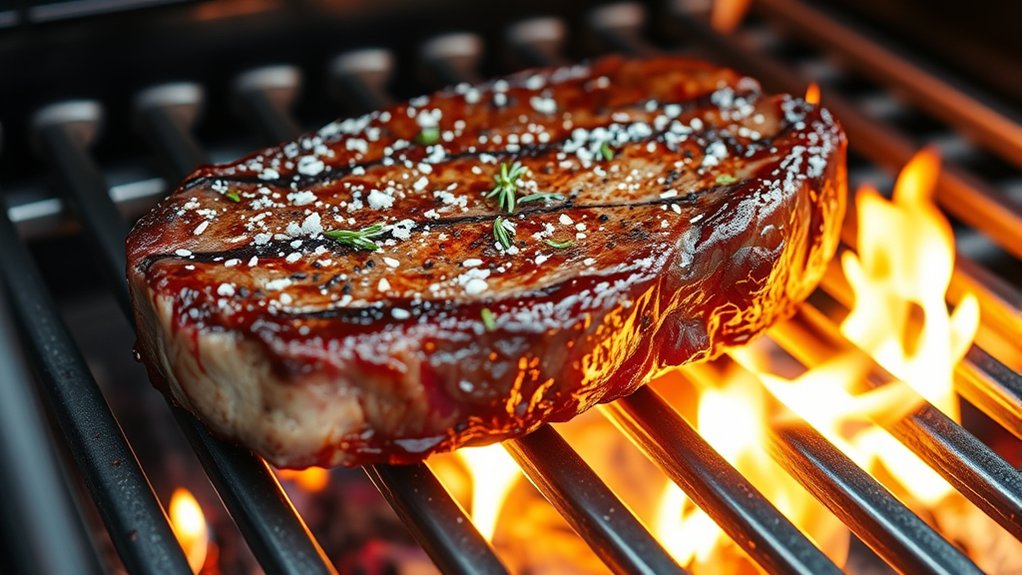
To maximize the flavor of your NY strip steak, proper seasoning is essential. Start with techniques that *boost* the meat without overpowering it. A simple approach is to generously apply salt and freshly ground black pepper, which bring out the steak’s natural flavors.
For added *flavor improvements*, consider using garlic powder, onion powder, or smoked paprika for a smoky depth. You can also brush the steak with a little olive oil before seasoning—this helps the spices stick and promotes a good sear.
Let the steak sit at room temperature for about 30 minutes after seasoning. This allows the flavors to penetrate and ensures even cooking. Keep it simple but intentional.
Avoid over-seasoning, which can mask the meat’s quality. Remember, the goal is to *complement* the steak’s natural richness with balanced seasoning techniques that *heighten* every bite.
How to Keep Your Grill at the Right Temperature
Want those perfect grill marks and evenly cooked food? The trick is keeping your grill at just the right temperature. It’s all about paying attention to the heat—so make sure you’re monitoring it regularly.
You can adjust the vents to control the airflow, which in turn helps you regulate the temperature. And don’t forget to use a good thermometer to check the internal temperature of your grill and your food. Staying attentive and making small tweaks as needed will help you cook your steak exactly how you like it—juicy, tender, and perfectly grilled.
Monitoring Grill Temperature
Ever wonder how to keep your grill at the perfect temperature for a juicy NY strip steak? Monitoring grill temperature is key. Use a reliable meat or grill thermometer to check the heat regularly.
Consistent temperature guarantees even cooking and helps prevent overcooking. Keep an eye on your grill accessories, like temperature probes, to make adjustments easily. Remember, steak marinades can change cooking time but don’t affect temperature control.
Here’s a quick guide to help you stay on track:
| Temperature Range | Steak Doneness | Recommended Use |
|---|---|---|
| 120-130°F | Rare | High heat, quick sear |
| 130-140°F | Medium-rare | Maintain steady, moderate heat |
| 140-150°F | Medium | Slightly lower heat |
| 150°F and above | Well-done | Lower heat, longer cook |
Adjusting Vent Settings
Adjusting the vent settings on your grill is a simple way to control airflow and keep the temperature just right.
Proper vent adjustment lets you fine-tune airflow, which directly affects the heat. When you want more heat, open the vents wider to let in more oxygen and fuel the fire.
For lower temperatures, partially close the vents to restrict airflow. Keep an eye on your grill’s temperature and make gradual adjustments to avoid over-correcting.
Remember, small changes in vent settings can make a big difference in heat regulation. Regular adjustments help you maintain consistent heat during cooking.
This consistency is key to grilling your NY strip steak perfectly. Controlling airflow is the secret to hitting and holding the ideal grilling temperature.
Using a Thermometer
Using a thermometer is essential for keeping the right temperature on your grill, so your steak cooks evenly and reaches the doneness you want. A reliable grill thermometer helps you monitor the heat accurately, preventing overcooking or undercooking.
This makes it easier to choose the best marinade options, since some flavors develop better at specific temperatures. Investing in quality grill accessories, like probe thermometers, keeps your hands free and lets you focus on the steak.
Adjust your grill’s heat as needed during cooking to stay within the target temperature zone. Consistent heat control is key to getting tender, juicy NY strip steaks.
Using a thermometer takes the guesswork out of grilling, so every steak comes out perfectly cooked every time.
Choosing the Best Gas Grill Settings for Steak
Choosing the right gas grill settings is key to cooking a perfect NY strip steak. You want high heat to sear the outside quickly, locking in juices and creating a flavorful crust. Set your grill to around 450-500°F for direct heat.
Before you start, make sure your equipment is well-maintained. Clean the grates and check for gas leaks to keep things safe. Proper maintenance prevents flare-ups and uneven cooking, making your grill safer and more efficient.
Keep the lid closed during searing to maintain a consistent temperature and avoid flare-ups. Adjust the heat if needed, but try not to open the lid too often, as that can cause temperature swings.
How to Achieve a Perfect Sear on Your Steak
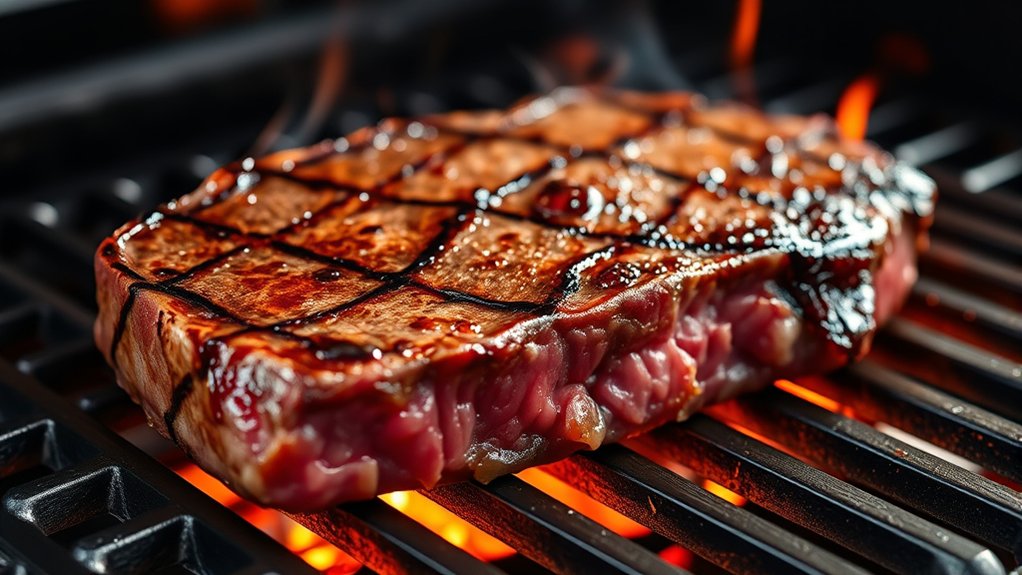
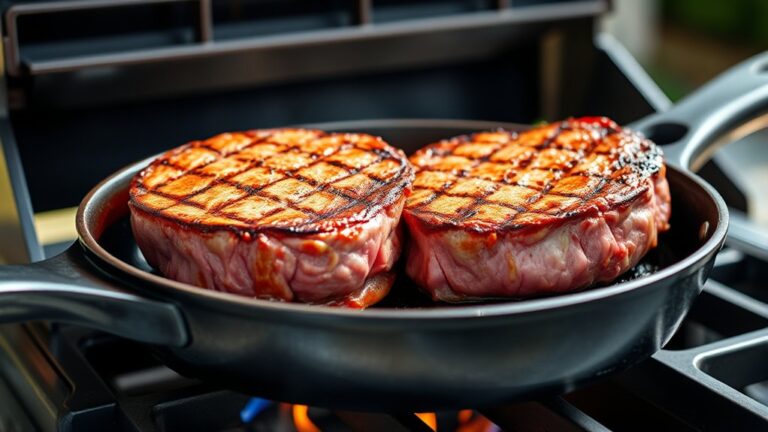
To achieve a perfect sear on your steak, start with a hot grill set to around 450-500°F. This high heat promotes the Maillard reaction, giving your steak that irresistible crust.
Start with a hot grill at 450-500°F to develop a perfect, crusty sear on your steak.
Before grilling, consider marinade options—simple salt and pepper work well, but a soy-based or garlic marinade can add flavor without hindering searing. Proper steak sourcing is essential; look for well-marbled NY strip for ideal crust and juiciness.
Pat your steak dry with paper towels to remove excess moisture, which can prevent a good sear. Place the steak directly over the hottest part of your grill, and don’t move it too soon.
Resist the urge to press down on the meat, as this releases juices. Achieving a perfect sear is about balance—hot enough to caramelize the surface while preserving the interior’s tenderness.
When and How to Flip Your Steak for Juicy Results
Knowing when to flip your steak is really the secret to getting that juicy, perfectly cooked result. It’s all about paying attention to the timing of your sear and what the steak looks like. When you see a nice crust forming and the edges start to look cooked, it’s usually a good sign it’s time to flip.
Don’t rush it! Proper technique is key to making sure your steak cooks evenly. Flip it too often, and you risk drying it out — nobody wants a tough, overcooked steak. Just wait for that beautiful caramelized crust to develop on one side before turning it over. That way, you’ll get a juicy, flavorful steak every time.
Timing of Flips
Timing your flips is key to getting a juicy, evenly cooked steak. Flip when the surface has a deep, caramelized crust, usually after 3-4 minutes per side, depending on thickness.
Rushing or waiting too long can affect tenderness and marinating. Look for visual cues like juices pooling or grill marks forming to know when to flip. Remember, flipping too often can prevent proper searing, so aim for just one flip per side.
| Moment to Flip | Visual Clue | Result |
|---|---|---|
| Early | No grill marks | Underdeveloped crust |
| Perfect | Deep crust | Juicy, tender steak |
| Late | Charred surface | Overcooked, tough meat |
| Ideal Timing | Even grill marks | Optimal tenderness |
Proper Flipping Technique
Mastering the proper flipping technique is key to getting a juicy, evenly cooked NY strip steak. Wait until the first side develops a deep sear before flipping. This creates a good crust and helps prevent sticking.
Use tongs to flip the steak smoothly. Avoid piercing the meat, as this helps retain juices and keeps the steak tender. While marinating can boost flavor, it doesn’t replace the importance of flipping at the right time for even heat.
A clean grill is essential because residue or rust can cause sticking and uneven cooking. Regular cleaning makes flipping easier and ensures your steak cooks uniformly.
Achieving Even Cooking
To achieve even cooking and keep your NY strip steak juicy, focus on the timing and technique of flipping. Wait until the steak develops a good sear and releases easily from the grill before flipping, usually after 3-4 minutes per side.
If you’ve marinated your steak, make sure the marinade isn’t too sugary, as that can cause uneven caramelization. Use a clean grill to prevent sticking and burning, which helps with consistent heat transfer.
Flip the steak only once to promote even cooking and avoid piercing the meat, which releases juices. Remember, flipping too often disrupts the cooking process and prevents proper heat penetration.
With proper grill cleaning and mindful flipping, you’ll get a juicy, evenly cooked NY strip every time.
How to Use a Meat Thermometer for Perfect Doneness
Using a meat thermometer is the most reliable way to get that perfect doneness when grilling NY strip steak. To get accurate readings, stick the thermometer into the thickest part of the steak, making sure it doesn’t touch bone or fat.
Marbling quality affects how quickly the steak cooks. Higher marbling can lead to more carryover cooking, so you might want to adjust your target temperature a bit.
The thickness of your steak also matters. Thicker cuts need more precise timing, which makes a thermometer essential. For medium-rare, aim for 130°F to 135°F; for medium, 140°F to 145°F; and for well-done, 160°F and above.
Take the steak off the grill a few degrees before reaching your target because carryover heat will finish cooking it. Using a thermometer consistently helps you hit the perfect doneness every time, no matter the marbling or thickness, resulting in a juicy, flavorful steak.
Rest Your Steak: How Long and Why It Matters
Once you’ve taken the steak off the grill and reached your preferred internal temperature, letting it rest helps the juices spread throughout the meat. Resting is key to keeping those juices from spilling out when you cut into it.
Aim for about 5 to 10 minutes, depending on how thick your steak is. During this time, the internal temperature might go up a bit, which can boost the flavor. Resting also helps break down muscle fibers, making each bite more tender.
If you cut into the steak too soon, you’ll lose some of those tasty juices, leaving you with a drier, less flavorful piece. Covering the steak loosely with foil during resting can help keep it warm without trapping too much moisture.
Taking this extra step makes a big difference in how juicy and flavorful your steak turns out. Patience here pays off in a more enjoyable eating experience.
Serving Tips to Elevate Your Grilled NY Strip
Elevating your grilled NY strip isn’t just about the meat itself; thoughtful presentation and good accompaniments can really boost the experience.
Consider wine pairings like bold cabernet sauvignon or a smooth Malbec, which perfectly complement the steak’s richness.
For side dishes, roasted vegetables, garlic mashed potatoes, or a fresh arugula salad add variety and balance to your plate.
| Side Dish | Wine Pairing | Presentation Tip |
|---|---|---|
| Roasted vegetables | Cabernet Sauvignon | Serve on a rustic platter |
| Garlic mashed potatoes | Malbec | Garnish with chopped herbs |
| Arugula salad | Pinot Noir | Drizzle with balsamic glaze |
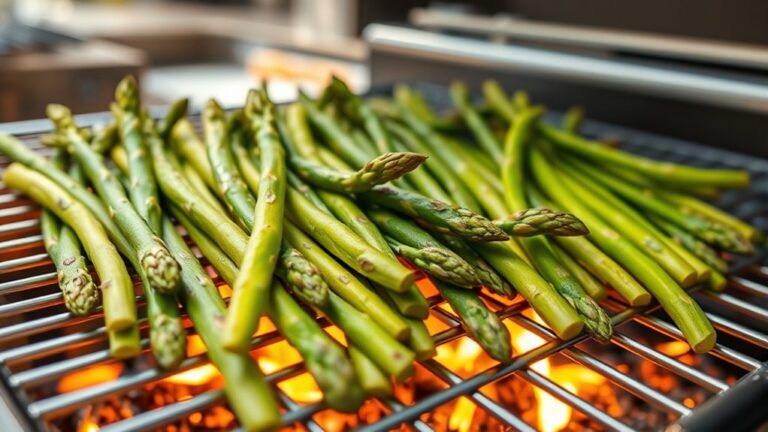
| Grilled asparagus | Zinfandel | Arrange in a fan shape |
| Crispy sweet potatoes | Shiraz | Add a sprinkle of sea salt |
These tips help create a memorable, well-rounded meal that’s sure to impress every time.
Frequently Asked Questions
What Are Common Mistakes to Avoid When Grilling NY Strip Steak?
You should avoid seasoning mistakes like over-salting or under-seasoning, which can ruin the flavor. Also, keep an eye on temperature control; don’t let the grill get too hot or too cool, as it affects cooking accuracy.
Avoid flipping the steak too often, and don’t cut into it right away. These mistakes can lead to uneven cooking and less juicy, tender results.
Can I Marinate My NY Strip Steak Before Grilling?
Yes, you can marinate your NY strip steak before grilling. Think of it as giving your steak a bath in a flavorful pool. Marinade options like soy, garlic, or balsamic not only tenderize but also boost flavor.
A good marinade enhances the meat’s natural taste, making every bite more delicious. Just remember to marinate for at least 30 minutes or up to overnight for maximum flavor.
How Do Different Wood Chips Affect the Flavor?
Different wood chips bring unique smoke flavors, which can really change the taste and aroma of your steak. Hickory gives off a smoky, bacon-like flavor, making it perfect for richer meats.
Applewood provides a sweet, fruity aroma that adds a subtle sweetness. Cherry wood offers a mild, fruity flavor, while mesquite gives a bold, earthy taste.
Choose your wood chips based on the flavor you want to infuse into your NY strip steak, enhancing it with distinct smoky notes.
Is It Better to Grill With the Lid Open or Closed?
You should keep the lid closed when grilling your NY strip steak; it’s the secret weapon of savvy pitmasters.
With proper fire management and grilling techniques, closing the lid traps heat and smoke, ensuring even cooking and those irresistible grill marks.
Opening it prematurely is like letting the fire escape—utter chaos.
Trust the closed-lid approach for juicy, flavorful results, and leave the open-lid antics to amateur hour.
How Long Should I Let the Steak Rest Before Slicing?
You should let your steak rest for about 5 to 10 minutes before slicing. Resting time allows the juices to redistribute, making the steak more tender and flavorful.
During this period, avoid slicing right away. Instead, use slicing techniques that cut against the grain for a cleaner, more tender result.
This simple step makes a big difference in how enjoyable your perfectly grilled NY strip steak will be.
Conclusion
Grilling a NY strip steak to perfection is all about timing, temperature, and seasoning. Did you know that 85% of seasoned grillers report more flavorful results?
By following these steps, you’ll master the art of juicy, tender steak every time. Remember to rest your meat for maximum juiciness and use a thermometer for precision.
With practice, you’ll impress family and friends with restaurant-quality steaks right from your grill. Mastering the art of grilling a NY strip steak makes all the difference in your backyard cookouts.