How Does a Pellet Grill Work?
As an Amazon Associate, I earn from qualifying purchases. This post contains affiliate links. Which means I may earn a small commission when make a purchase through my links, at no additional cost to you.
Many grilling enthusiasts know the struggle of achieving that perfect smoky flavor while keeping the process simple and hassle-free. If you’ve ever felt overwhelmed by complicated setups or inconsistent results, you’re not alone.
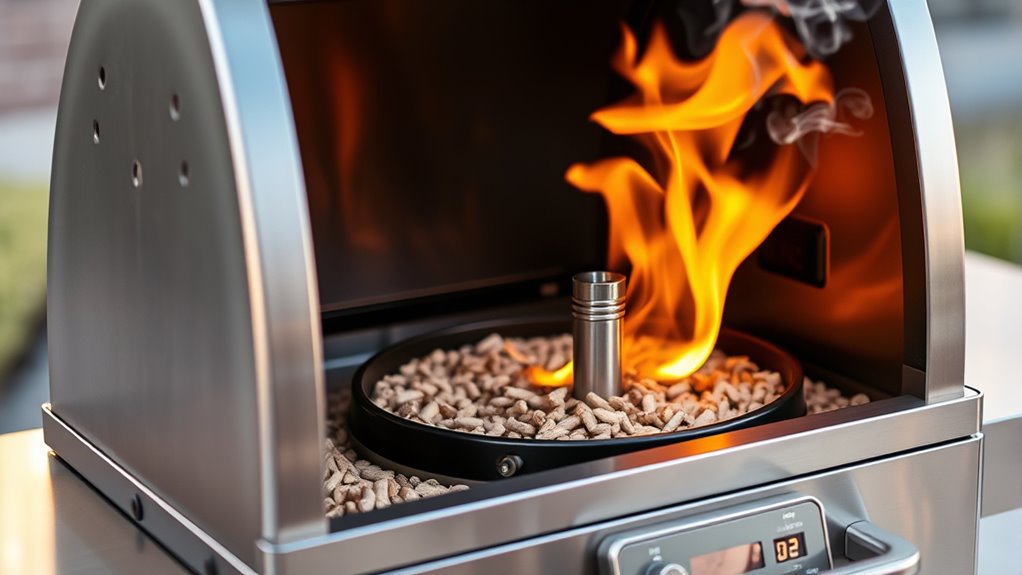
A pellet grill works by using wood pellets as fuel, which are automatically fed into a firepot by an auger controlled by a thermostat. An igniter sparks the pellets to create heat and smoke, while fans circulate air to maintain an even temperature.
Sensors monitor the heat, adjusting pellet flow for consistent cooking. This system combines precise control with smoky flavor, and if you want to find out how it all comes together, keep exploring!
Key Takeaways
Pellets made from compressed wood are stored in a hopper and fed into a firepot by an auger. An electronic control system manages the pellet feed, ignites them, and keeps the temperature steady.
A fan circulates air evenly, making sure the heat stays consistent across the cooking chamber. Sensors keep an eye on the internal temperature and adjust the pellet feed and airflow as needed.
When the wood pellets burn, they produce heat and smoke. This not only cooks the food but also gives it that signature smoky flavor we love.
What Are Wood Pellets and How Are They Made?
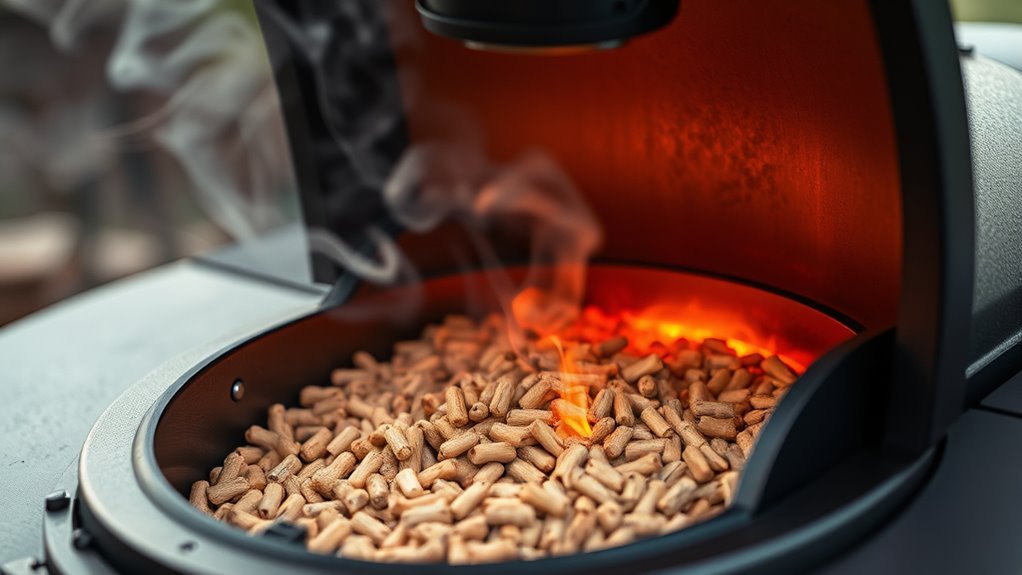
Wood pellets are small, dense cylinders made from compressed sawdust and wood shavings. During manufacturing, raw wood is ground into fine particles and dried to reduce moisture.
These particles are pressed through high-pressure rollers, shaping them into uniform pellets. This compression tightly binds the wood fibers, creating a durable, consistent product.
Pellet manufacturing focuses on quality control to ensure the pellets have the right size, moisture content, and density for efficient burning. The result is a clean-burning fuel with low ash production, making it perfect for pellet grills.
The entire process emphasizes sustainability by using wood waste that might otherwise go unused. The quality of wood processing directly affects the pellets’ performance, from heat output to ease of use.
This careful manufacturing process ensures you get a reliable, eco-friendly fuel for your grilling needs.
How Do Pellet Grills Generate Heat?
Pellet grills generate heat through a combination of a powerful auger and an electronic control system that precisely manages fuel and airflow. The grill has a dedicated pellet storage hopper that holds a supply of wood pellets.
Pellet grills use an auger and electronic controls for precise, consistent heat and smoke.
When you set your desired temperature, the control system activates the auger to feed pellets steadily into the firepot. As pellets fall into the firepot, an igniter ignites them, creating a consistent flame that produces heat.
The grill’s fan then circulates air around the fire, helping to maintain an even temperature throughout the cooking chamber. The electronic controls continuously monitor the internal temperature and adjust pellet feed and airflow to keep it steady.
This integrated system allows for precise temperature regulation, making it easy to cook everything from low-and-slow barbecue to quick sears. The design, combined with the smart pellet storage and feed mechanism, ensures efficient, consistent heat generation.
How the Auger Delivers Pellets to the Firepot
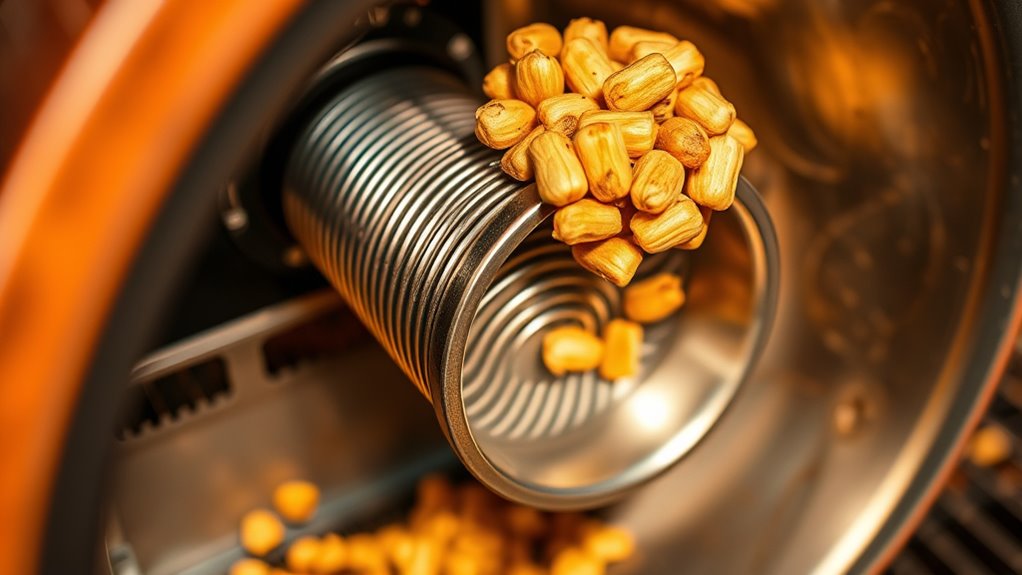
Once the control system detects that more fuel is needed to keep your set temperature, the auger kicks into gear. Inside the pellet storage hopper, pellets sit ready, waiting to be fed into the firepot.
The auger is a screw-like mechanism that moves these pellets steadily forward through its channels. As it turns, it pushes the pellets along, ensuring a consistent flow.
This movement delivers the right amount of fuel directly into the firepot, where combustion starts. The speed of the auger’s rotation controls how many pellets are fed, helping you keep a steady temperature.
The design of the auger minimizes jams and allows smooth delivery, even if pellet sizes vary slightly. This system creates a reliable, automated process that keeps your grill burning efficiently without any manual effort.
How Does Ignition and Combustion Work in a Pellet Grill?
When you turn on your pellet grill, the ignition system quickly sparks the start of combustion in the firepot. A small igniter heats up rapidly, igniting the pellets delivered by the auger.
Once they catch fire, the pellets burn steadily, creating consistent heat essential for cooking. Pellet quality is key here—high-quality pellets ignite more reliably and burn more evenly, helping you get better results.
As the pellets combust, a controlled airflow supplies oxygen to keep the fire going. The grill’s fan helps regulate this airflow, maintaining steady combustion and even heat distribution.
Proper ignition and combustion are crucial for your grill to reach and hold the desired temperature efficiently. This process is vital for precise cooking techniques like smoking, grilling, or roasting.
When combustion is stable, you can focus on your recipe, knowing the grill will deliver consistent heat and great results every time.
How the Firepot Distributes Heat Throughout the Grill
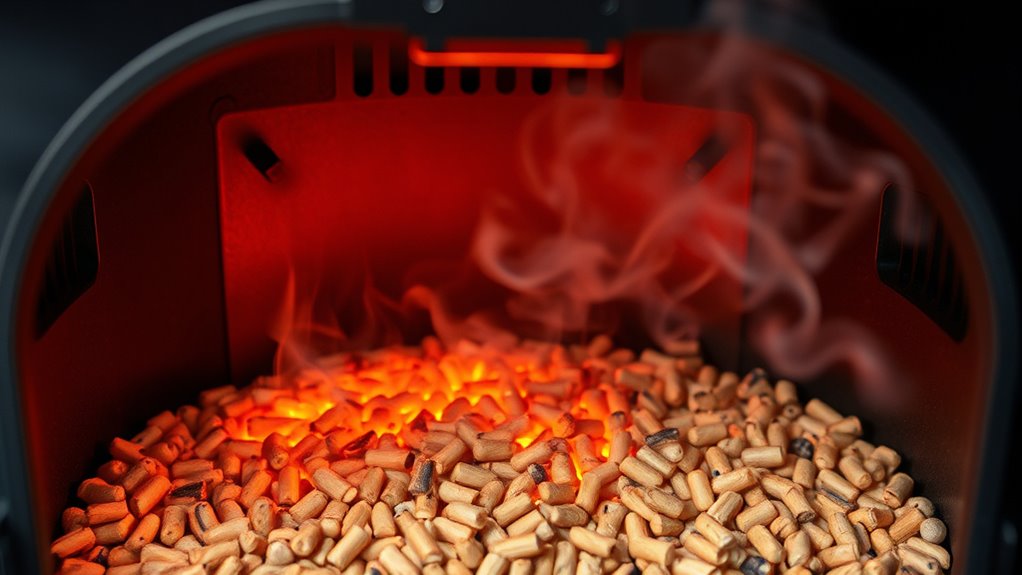
The firepot plays a central role in distributing heat evenly across your grill by carefully controlling the combustion process. Firepot distribution ensures that the heat from burning pellets spreads uniformly, preventing hot spots and cold zones.
The design of the firepot promotes consistent airflow, which helps in steady heat regulation. As the pellets burn, heat rises and radiates outward, while ash and gases are managed to stay stable.
Many pellet grills use fans or augers to feed pellets into the firepot at a controlled rate, helping sustain the desired temperature. This precise heat regulation allows you to cook foods evenly without constant adjustments.
Proper firepot design and operation are key to achieving reliable, uniform heat across the grilling surface. When it works well, your pellet grill delivers consistent results, making it easier to perfect your dishes every time.
How Pellet Grills Maintain a Consistent Temperature
Pellet grills keep a steady temperature using smart controls and precise fuel management. The control board checks temperature sensors and adjusts the auger to feed pellets from the hopper.
Pellet grills maintain consistent heat through smart controls and precise fuel regulation.
When the temperature drops, the auger releases more pellets. If it gets too hot, it slows down. These quick adjustments help maintain a consistent cooking environment.
To support this system, it’s helpful to have reliable accessories like a good temperature probe or smoker box. These tools help you monitor heat levels accurately.
Storing pellets properly is also key. Keeping them dry and protected from moisture ensures they ignite well and burn evenly. This keeps your grill at a steady temperature.
With everything set up, you just choose your desired temperature. The grill’s automation then takes over, cooking your food evenly without constant checking.
Controlling Your Grill: How the Thermostat and Sensors Work
Your pellet grill has a thermostat regulation system that helps keep the temperature steady. It does this by adjusting how many pellets are fed into the firebox, so your food cooks evenly.
There are sensors inside the grill that are always keeping an eye on the temperature. They send signals to the control board, which then makes the right adjustments. When you understand how these parts work together, it’s easier to control your grill and get those perfect results every time.
Thermostat Regulation Mechanism
When you set a desired temperature on a pellet grill, the thermostat is key to keeping things steady. It constantly checks the internal temperature and adjusts the pellet feed rate accordingly.
As the temperature goes up or down, the thermostat signals the auger to add more pellets or pause. This keeps the heat consistent and helps prevent overheating, which is important for fire safety.
Proper pellet storage reduces moisture and fire hazards, making your grilling safer. The thermostat’s accuracy ensures your food cooks evenly without you needing to make constant adjustments.
It also helps save pellets by only feeding what’s really needed. Understanding how this works keeps you in control, making your grilling safer, more efficient, and perfectly cooked every time.
- Precise temperature control ensures even cooking
- Safeguards against overheating and fire risks
- Regulates pellet feed for efficiency
- Maintains consistent heat with minimal effort
- Supports safe pellet storage practices
Sensor Functionality and Role
Sensors are crucial for keeping your grill at the right temperature by constantly monitoring the inside. They pick up any temperature changes and send that info to the control system for quick adjustments.
Making sure your sensors are properly calibrated is key to getting accurate readings. Regular calibration helps prevent over- or under-cooking because the data stays reliable over time.
Data logging is a great tool—it tracks temperature trends so you can spot patterns or issues with your grill’s performance. This info can help you troubleshoot or fine-tune your cooking process.
When sensors work properly, they help keep the grill at your target temperature, making your cooking more consistent. Overall, good sensors and regular calibration are essential for reliable operation and high-quality results every time.
How Pellet Grills Smoke and Add Flavor to Your Food
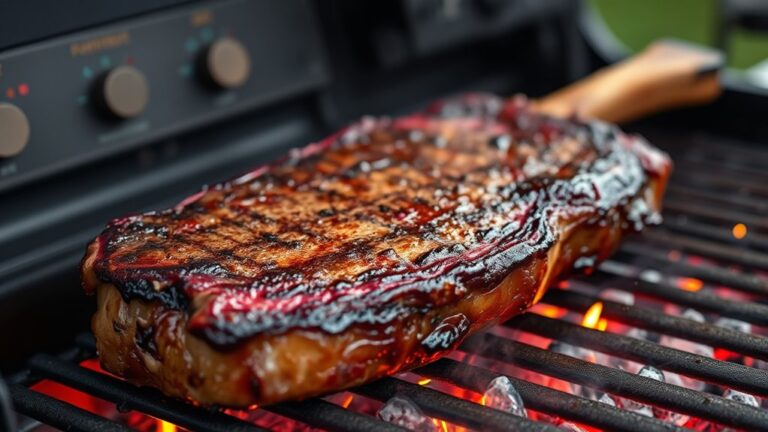
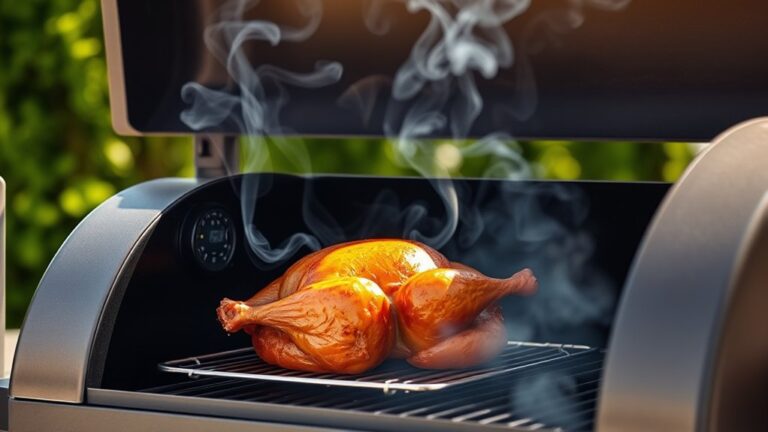
When you’re using wood pellets as fuel, they actually produce smoke that’s full of flavor. It’s like the pellets give your food a little extra kick of smoky goodness. As the smoke moves around your food, it helps create that famous smoke ring — you know, that pinkish layer you see on perfectly smoked meats. That’s a good sign you’re doing it right!
And honestly, that’s what makes pellet-grilled dishes so special. The smoke and the heat work together to give your food a deep, authentic flavor that’s hard to beat. It’s like the grill does all the work to make sure every bite is packed with that rich, smoky taste everyone loves.
Wood Pellets as Fuel
Wood pellets serve as the primary fuel source for pellet grills, and they’re responsible for creating the distinctive smoky flavor that *improves* your food. When you load your grill, the type of pellets you choose influences your cooking techniques and the flavor profiles you achieve.
Different wood varieties like hickory or apple add unique tastes and aromas to your dishes. As the pellets burn, they produce consistent heat and smoke, infusing your food with rich flavors.
This process allows you to master various cooking techniques, from slow smoking to roasting. You can boost flavor with specific wood types and control smoke intensity for different dishes.
Achieve consistent heat and moisture, experiment with flavor combinations, and perfect your outdoor cooking skills.
Smoke Ring Formation
Understanding how a smoke ring forms is key to mastering flavor development on a pellet grill. The smoke ring results from smoke ring chemistry, where nitrogen compounds in the smoke react with myoglobin in the meat, creating a pinkish layer.
Pellet manufacturing influences this process because the type of pellets affects smoke production and flavor. To better understand this, consider this table:
| Pellet Type | Smoke Production | Impact on Smoke Ring |
|---|---|---|
| Hardwood Pellets | High | Promotes distinct ring |
| Fruitwood Pellets | Moderate | Adds subtle color |
| Blend Pellets | Varies | Depends on components |
This interaction improves your food’s appearance and taste, showing why selecting the right pellets is important for ideal smoke ring formation.
How to Clean and Maintain Your Pellet Grill for Best Performance
To keep your pellet grill performing at its best, regular cleaning and maintenance are key. Proper upkeep makes sure your grill delivers flavorful results and helps you safely explore pellet grill recipes. Plus, it extends the life of your equipment.
Regular cleaning and maintenance keep your pellet grill safe, flavorful, and long-lasting.
Here are some simple tips to maintain your pellet grill:
- Clean the grease trap regularly to prevent flare-ups.
- Empty and clean the firepot after each use to keep it in good shape.
- Wipe down the interior and exterior surfaces to prevent buildup.
- Check for damaged or worn parts and replace them promptly.
- Always unplug your grill before cleaning for safety.
Sticking to a regular maintenance routine helps you get perfect results every time. It also reduces fire risks and keeps your grill safe to use. Keeping your grill clean and well-maintained means you’ll enjoy delicious smoky dishes and make your equipment last longer. Proper care ensures every grilling session is successful and enjoyable.
What Are the Benefits and Limitations of Pellet Grills?
Pellet grills are pretty great because they give you consistent temperature control and are really easy to use. That makes outdoor cooking a lot more convenient, especially if you want to set it and forget it. Plus, they’re great for beginners or anyone who wants reliable results without much fuss.
On the flip side, some folks feel that pellet grills don’t offer as many flavor options as traditional wood or charcoal grills. The flavors can be a bit more subdued, which might be a downside if you’re chasing that smoky, charred taste. So, understanding these pros and cons can help you figure out if a pellet grill is the right fit for your cooking style.
Consistent Temperature Control
Ever wonder how pellet grills keep such a steady temperature? It’s thanks to their precise digital controls and automatic feed systems that help maintain consistent heat.
This consistency makes a big difference in flavor. Your food cooks evenly and absorbs smoky flavors thoroughly, giving you great results every time.
Pellet storage is designed to hold enough fuel for long cooks, so you don’t have to worry about running out. It helps reduce interruptions and keeps your cooking on track.
Built-in sensors constantly monitor the temperature and adjust the auger to add pellets as needed. You can set your desired temperature and trust it will stay there.
Of course, extreme weather or poor insulation can make it harder to control the heat, but most pellet grills do a fantastic job of staying stable. That makes it easier to produce perfectly cooked dishes every time.
Easy to Use
One of the main advantages of pellet grills is how easy they are to operate, making outdoor cooking accessible even for beginners. With simple controls, you can set your desired temperature and let the grill do the work, so you can focus on your cooking techniques.
Pellet grills automatically feed pellets into the firepot, maintaining a steady temperature. This means you don’t need constant supervision, which is a big plus.
Plus, pellet varieties give you flexibility in flavor, from hickory to apple, without complex seasoning steps. This ease of use saves time and reduces frustration, especially when trying new recipes.
However, the convenience may limit some control over the nuances of flavor, and you’ll rely on pre-packaged pellets. Overall, pellet grills simplify outdoor cooking while offering a variety of flavors.
Limited Flavor Options
Have you ever wondered if the flavor variety in pellet grills is enough to satisfy all your taste preferences? While pellet grills are super convenient, they do have some flavor limitations because they rely on wood pellets.
The ingredient choices are pretty limited, which means you might not get as many smoky flavor options compared to traditional grilling methods.
You’re also somewhat restricted in seasoning options and complex flavor profiles. Plus, there’s less room for customizing smoke intensity.
Since the flavor depends on pre-made pellets, it can be tricky to replicate certain regional tastes or create unique blends.
These factors might make you feel like you’re missing out on a wider range of flavors that other grilling techniques can offer.
But many users still find that the consistent, clean smoke flavor produces tasty results, even if it’s not as diverse as other methods.
Frequently Asked Questions
Can I Use Different Types of Wood Pellets for Various Flavors?
Yes, you can use different types of wood pellets to add various flavors to your cooking. Just make sure they’re compatible with your pellet grill’s standards.
Wood flavoring varies, so try out hickory, apple, or mesquite to enhance your dishes. Always check that the pellets are suitable for your grill to avoid damage and get the best flavor.
Mixing different pellets can create unique, personalized tastes. Experimenting is part of the fun, so don’t be afraid to try new combinations!
How Long Does a Typical Pellet Load Last During Cooking?
On average, a typical pellet load lasts about 12 to 20 hours during cooking, depending on factors like temperature and pellet type.
It’s important to keep your pellets stored in a dry place to improve burn efficiency.
For longer cooks, it’s a good idea to have extra pellets ready just in case.
Monitoring your grill’s hopper and adjusting the temperature can help keep things running smoothly and prevent running out of fuel mid-cook.
Are Pellet Grills Suitable for Outdoor or Indoor Use?
Pellet grills are designed mainly for outdoor use because safety and ventilation are so important.
They produce smoke and heat, so without good airflow, dangerous carbon monoxide can build up indoors.
If you want to use a pellet grill inside, make sure it’s in a well-ventilated space and follow safety rules closely.
Otherwise, it’s best to stick with outdoor grilling, where proper ventilation is naturally available.
What Safety Precautions Should I Follow When Operating a Pellet Grill?
When operating your pellet grill, prioritize safety and fire prevention. Always set it on a stable, non-flammable surface, and keep it away from structures and overhanging branches.
Never leave it unattended while in use, and make sure you have proper ventilation. Regularly clean the grill to prevent grease buildup, and check for gas leaks if applicable.
Following these precautions will help keep your grilling experience safe and enjoyable.
How Energy-Efficient Are Pellet Grills Compared to Traditional Grills?
Pellet grills are generally more energy-efficient than traditional grills, especially because you can set a precise cooking temperature, reducing wasted fuel.
You might think they use more energy due to pellet storage and continuous operation, but their controlled burn conserves fuel better.
By maintaining consistent heat, pellet grills minimize energy loss, making them an eco-friendly choice for outdoor cooking.
This efficiency helps you save money and reduces your environmental impact.
Conclusion
Now that you understand how a pellet grill works, you’re ready to fire it up and become a backyard chef extraordinaire. Its smart design makes controlling heat and flavor easy, so outdoor cooking becomes a real joy.
Remember, patience is key. Like a slow-cooked roast, good things come to those who wait. Take your time and enjoy the process.
Get ready to impress your family and friends. With a pellet grill, every meal can turn into a mouthwatering masterpiece.