7 Simple Steps to Smoke Ham on a Pellet Grill
Many people love the idea of smoking ham on a pellet grill but often feel overwhelmed by the process or unsure where to start. You’re not alone — mastering the perfect smoked ham can seem tricky at first.
But with a few simple steps, you’ll be enjoying juicy, flavorful ham in no time.
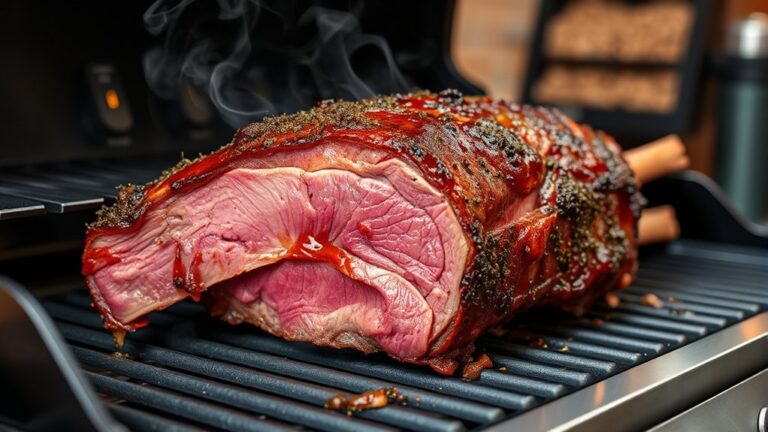
To smoke ham on a pellet grill, start by cleaning and preheating your grill to 225°F–250°F with quality wood pellets like hickory or apple.
Choose a well-marbled ham, season or brine it, and then place it on the grill.
Maintain a steady temperature and smoke, checking the internal temperature until it reaches 140°F–145°F.
Rest the ham, then slice and serve.
For detailed steps and tips, keep going to master the perfect smoked ham.
Key Takeaways
- Preheat your pellet grill to 225°F–250°F and make sure it’s clean and well-maintained.
- Choose a high-quality, seasoned or brined ham, and score it if you like.
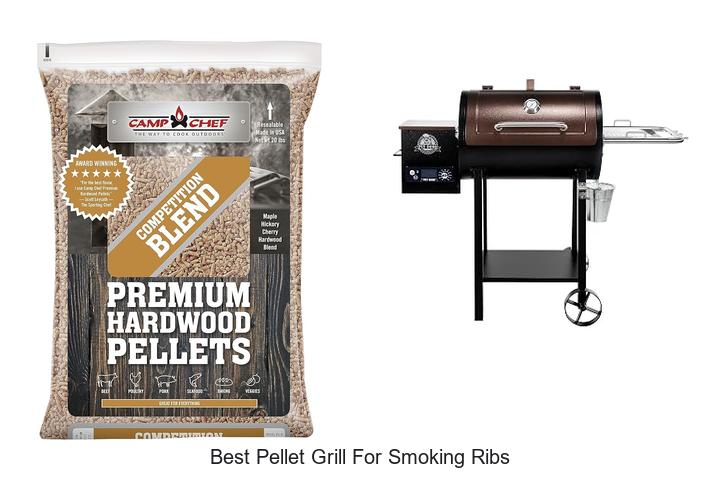
- Fill the hopper with hardwood pellets like hickory or apple to get that rich smoke flavor.
- Smoke the ham until it reaches an internal temp of 140°F–145°F, keeping the temperature and smoke steady.
- Let the ham rest for 15-20 minutes before slicing and serving to keep it moist and flavorful.
Prepare Your Pellet Grill for Smoking Ham
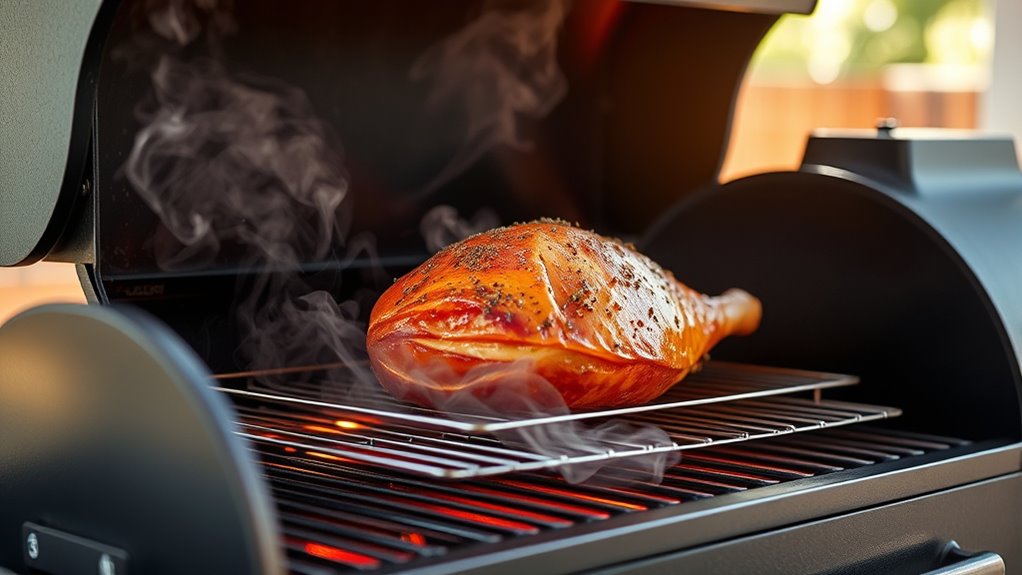
Before you start smoking your ham, you need to properly prepare your pellet grill. First, make sure your grill is clean and well-maintained; this is essential for good smoke flavor and consistent temperature.
Ensure your pellet grill is clean and well-maintained for optimal flavor and consistent smoking results.
Check the auger and fire pot for any blockages or residue that might hinder performance. Next, choose your smoker fuel—high-quality wood pellets like hickory or apple will give your ham a rich flavor.
Fill the hopper with your chosen pellets, making sure it’s not overfilled. Preheat the grill to your desired smoking temperature, usually around 225°F to 250°F.
During this process, keep an eye on the temperature and pellet feed to ensure steady operation. Regular maintenance helps prevent issues while smoking and ensures your ham cooks evenly.
Once everything is set, you’re ready to move on to seasoning and smoking your ham, knowing your grill is prepared for maximum flavor and performance.
Choose the Best Ham and Season It for Smoking
Choosing the right ham is the first step to achieving a flavorful smoked dish. Your ham selection should focus on a quality cut, like a whole or half ham with some marbling, which adds moisture and flavor during smoking. Look for a ham labeled “bone-in” for a richer taste, but keep in mind it may take longer to cook.
Once you’ve picked the perfect ham, it’s time to season it. A simple dry rub of salt, pepper, and brown sugar works well, or you can add garlic powder, paprika, and other spices for more flavor. Some people prefer to brine the ham beforehand for extra moisture and seasoning.
Set the Right Temperature and Smoke Level
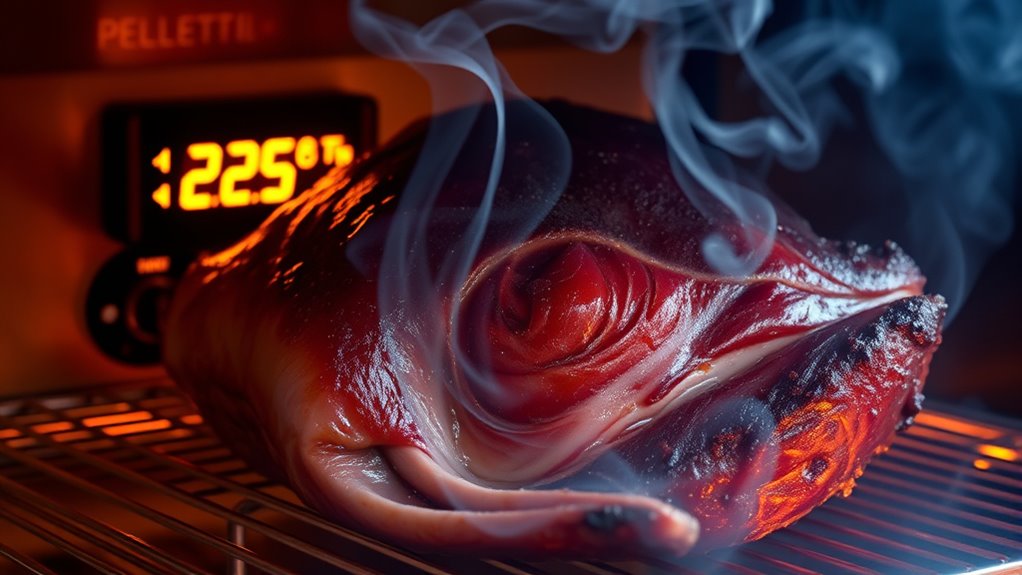
Getting the temperature and smoke level just right is key to achieving tender, flavorful smoked ham. Proper temperature control guarantees the ham cooks evenly without drying out, so aim for a steady 225°F to 250°F. Maintain this range throughout using your pellet grill’s controls.
Adjust the smoke intensity by choosing a mild or medium smoke setting. Too much smoke can overpower the ham’s natural flavor, while too little won’t give enough smoky richness. Start with a low smoke setting for the first few hours, then increase if you like, based on your taste.
Keep an eye on the internal temperature with a reliable thermometer. Aim for around 140°F to 145°F for maximum juiciness and safety. Consistent temperature control and balanced smoke will help you develop a beautiful smoked ham with a delicious crust and tender interior.
How to Smoke Ham on a Pellet Grill?
To smoke ham on a pellet grill, first, you’ll want to prepare the ham with your favorite seasonings or glaze. Think about giving it a nice rub or adding a sweet glaze for extra flavor—that’s totally up to your taste buds!
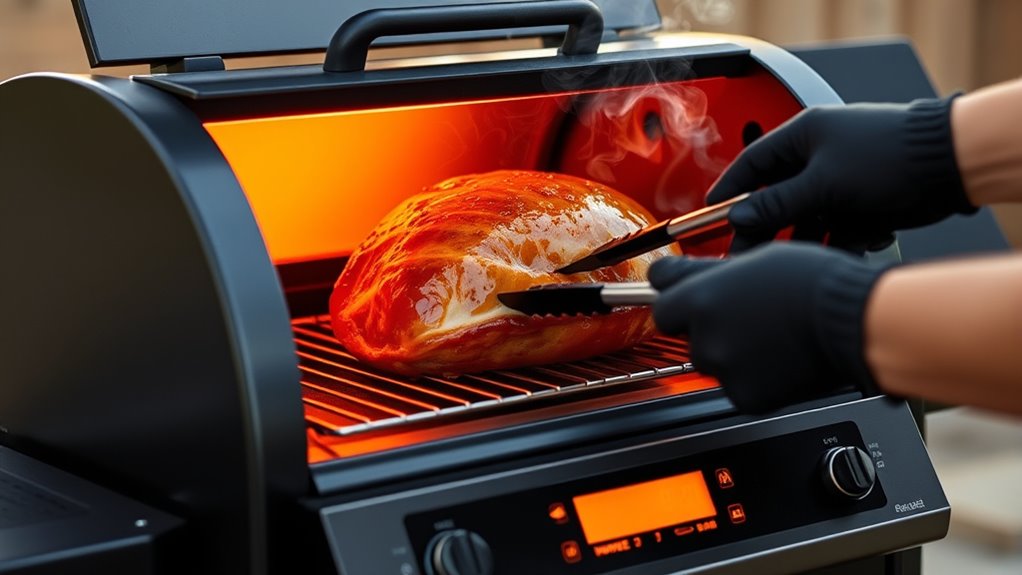
Next, set up your pellet grill to the right temperature, usually around 225°F to 250°F. Make sure the smoke level is steady, so that delicious smoky aroma can really soak into the ham. While it’s cooking, keep an eye on things to ensure the ham smokes evenly and hits the right internal temperature, which is typically around 140°F for a fully cooked ham. That way, you’ll end up with a juicy, flavorful smoked ham everyone will love!
Preparing the Ham
Before you start smoking, it’s important to prepare the ham properly. If it hasn’t been cured yet, do that first because it boosts flavor and helps preserve the meat.
Rinse the ham briefly to remove any excess salt, then pat it dry. To add more flavor, consider applying a rub or marinade that suits your taste—think spices, herbs, or a sweet glaze.
If you want a smoky aroma, score the surface slightly to help the flavors penetrate deeper. Make sure the ham is at room temperature before placing it on the grill.
Proper prep sets the stage for a tender, flavorful smoked ham infused with smoky goodness. Following these steps will help you achieve a delicious, perfectly smoked ham.
Setting Up the Grill
Setting up your pellet grill correctly guarantees your smoked ham turns out flavorful and tender. Start with proper grill maintenance. Clean out old ash, check for blockages, and make sure all components are working smoothly.
Choosing the right pellet is essential. Opt for hardwood pellets like hickory or fruitwoods for a rich flavor. Set the grill to the desired temperature, usually around 225°F for smoking ham.
Make sure the grill grates are clean and positioned properly to promote even heat distribution. Preheat the grill to stabilize the temperature before placing your ham inside.
Regular maintenance and quality pellets help maintain consistent heat and smoke. This results in a perfectly smoked ham. Taking these steps guarantees your grill is ready and sets the stage for a delicious smoked ham.
Monitoring the Smoking Process
Monitoring the smoking process closely guarantees your ham cooks evenly and absorbs the right amount of smoky flavor. Keep an eye on the temperature and smoke duration to assure ideal flavor infusion.
Use a reliable meat thermometer to track the internal temperature and adjust the grill’s heat accordingly. For a visual guide, consider this table:
| Stage | Temperature | Smoke Duration |
|---|---|---|
| Initial Stage | 225°F | 1-2 hours (light smoke) |
| Mid-Smoking | 225-250°F | 2-3 hours (steady smoke) |
| Finishing | 250°F | Last 30-60 minutes |
Proper monitoring guarantees your ham reaches the perfect smoky flavor without over-smoking, ensuring a juicy, flavorful result.
Check for Doneness and Achieve Juicy Results
Want to make sure your ham is cooked just right and stays juicy? Grab a meat thermometer and check the internal temperature. Once it hits the recommended level, take it off the grill and let it rest for a few minutes. This little pause allows the juices to settle back in, so you end up with tender, flavorful slices every time.
Use a Meat Thermometer
Using a meat thermometer is essential to guarantee your smoked ham reaches the perfect level of doneness without overcooking. It helps you monitor internal temperature precisely, so your results are juicy and flavorful.
When smoking ham, you want to avoid drying it out, so accurate temperature readings are key for ideal flavor infusion. As the smoke woods work their magic, the thermometer guides you in timing the finish perfectly.
Insert the probe into the thickest part of the ham, avoiding bone, to get an accurate reading. This way, you can confidently pull the ham at the right moment, preserving moisture and enhancing the smoky flavor.
Using a quality meat thermometer minimizes guesswork, making your smoking process more consistent and enjoyable.
Check Internal Temperature
How can you tell when your smoked ham is perfectly cooked and still juicy? The key is checking the internal temperature with a reliable meat thermometer.
Cooking safety is crucial, so aim for the USDA recommended 145°F for ham. Proper temperature ensures the meat is safe to eat without drying out.
Use high-quality meat selection to start with, as fresh, well-chosen ham cooks more evenly and stays moist. Keep an eye on these tips:
- Insert the thermometer into the thickest part of the ham.
- Avoid touching bone, which can give false readings.
- Check the temperature regularly to prevent overcooking.
- Remove the ham promptly once it hits the target temperature.
This approach guarantees tender, juicy results and safe, delicious meat.
Rest Before Serving
Once you’ve checked that your smoked ham has reached the proper internal temperature, it’s time to let it rest. Resting is key to making sure the flavor develops and the ham stays juicy.
During this time, the juices have a chance to redistribute, which stops them from spilling out when you slice. For the best results, cover the ham loosely with foil and let it rest for 10-15 minutes.
This step helps keep the ham moist and tender. Use a thermometer to make sure the internal temperature stays steady. Proper resting makes sure each slice is flavorful and moist.
Here’s a quick overview:
| Resting Technique | Duration | Purpose |
|---|---|---|
| Loosely covered | 10-15 min | Juices redistribute, flavor develops |
| Resting in foil | 10-15 min | Keeps ham warm and retains moisture |
| No cover | 5 min | Slight cooling, easier to slice |
Rest and Slice Your Smoked Ham for Maximum Flavor
After your smoked ham has finished cooking, it’s important to let it rest for at least 15 to 20 minutes. This helps the juices redistribute, giving you maximum flavor and moisture.
Rest your smoked ham for 15-20 minutes to lock in juices and enhance flavor.
During this time, the meat firms up, making it easier and cleaner to slice. When you’re ready to carve, use proper slicing techniques to bring out the ham’s natural tenderness and flavor.
Use a sharp carving knife for clean cuts. Slice against the grain for the best tenderness. Aim for even thickness to make the presentation look nice.
Rest the ham uncovered to prevent excess moisture loss and keep it juicy.
Serve and Store Leftover Smoked Ham
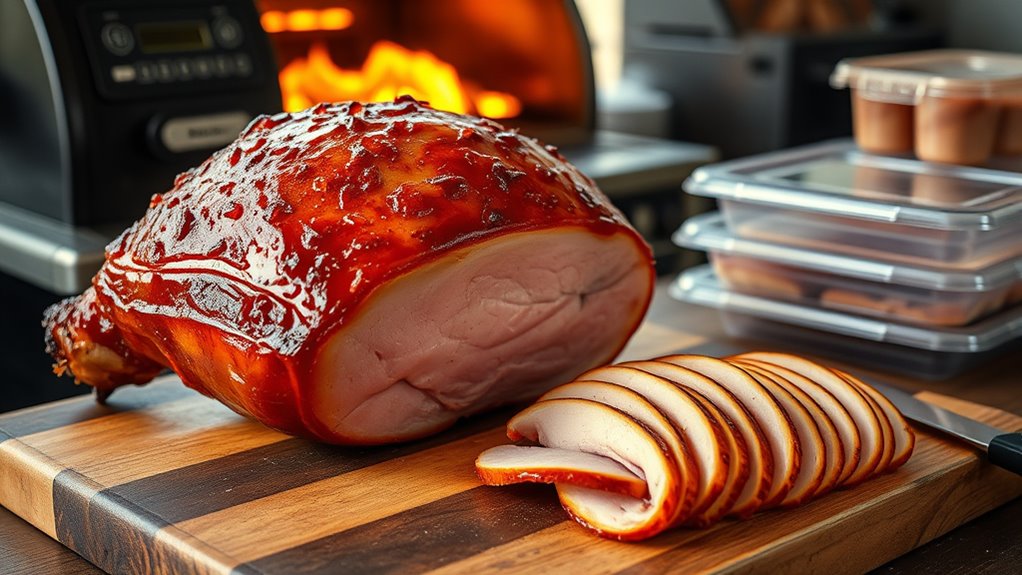
Leftover smoked ham can be enjoyed in many ways, but proper storage is key to keeping it fresh and safe. Store the ham in an airtight container or tightly wrapped in plastic wrap or foil.
Refrigerate within two hours of cooking, and try to eat leftovers within 3-4 days. For longer storage, freeze the ham in freezer-safe bags or containers and label with the date.
When serving, get creative with ham sandwiches, salads, or breakfast scrambles. You can also dice or shred the ham for casseroles or soups.
Safety tips are important—always reheat leftovers to an internal temperature of 165°F to kill bacteria. Avoid leaving ham out at room temperature for too long.
With proper storage and reheating, your smoked ham will stay flavorful and safe to enjoy for days after your cookout.
Frequently Asked Questions
Can I Use Any Type of Ham for Smoking?
Yes, you can use most types of ham for smoking, but for the best results, go with a pre-cooked or cured ham.
Proper ham preparation is key to keeping it flavorful and moist. Make sure your pellet grill is well-maintained, especially the burners and pellets, to keep the heat steady.
This helps you get an even smoke and prevents the ham from burning or drying out. Always keep an eye on the internal temperature, and enjoy your delicious smoked ham!
How Long Does It Take to Smoke a Ham on a Pellet Grill?
You’ll typically spend about 1.5 to 2.5 hours smoking a ham on a pellet grill.
Set your grill to around 225°F and aim for an internal temperature of 140°F.
Keep an eye on the thermometer, and once you hit that temperature, your ham is ready.
Patience is key, so don’t rush the process if you want the best smoky flavor.
What Wood Pellets Are Best for Smoking Ham?
For smoking ham, cherry and apple wood pellets are your best choice because they add a sweet, mild flavor that complements the ham’s richness.
Hickory pellets also work well if you prefer a stronger, smoky taste.
When selecting a pellet variety, think about the wood flavor that will enhance the meat’s natural sweetness.
Always go for high-quality pellets to ensure consistent smoke and great flavor throughout your cooking.
Do I Need to Brine the Ham Before Smoking?
You don’t have to brine the ham before smoking, but it’s highly recommended for better flavor and moisture.
Using brining techniques, like soaking the ham in a saltwater solution with sugar and spices, helps keep it juicy and adds extra flavor.
If you skip brining, consider applying a glaze or marinade during smoking to boost the taste.
Brining ensures your ham stays tender and delicious throughout the smoking process.
Can I Add Glaze During the Smoking Process?
Yes, you can add glaze during the smoking process to boost flavor and create a beautiful finish.
For the best results, apply the glaze during the last 30 to 45 minutes of smoking. This allows the glaze to set and enhances the flavor without burning.
This method keeps your ham moist, flavorful, and beautifully glazed. It turns an ordinary smoked ham into an irresistible centerpiece bursting with flavor.
Conclusion
Smoking ham on a pellet grill is a simple way to create delicious, flavorful meat. Did you know that properly smoked ham can retain moisture and tenderness up to 30% better than traditional methods?
By following these easy steps, you’ll improve your grilling skills and impress your guests with juicy, perfectly smoked ham every time. So fire up your pellet grill and enjoy the rich, smoky flavor that makes homemade ham truly special!
Using a pellet grill for smoking ham is an easy way to get fantastic results with less fuss. Once you master these steps, you’ll be turning out amazing smoked ham that everyone will love.