5 Simple Steps to Cook Pork Loin on a Gas Grill
Many home cooks struggle to get their pork loin just right on the grill. Achieving that perfect balance of juicy, tender meat with a flavorful crust can feel tricky, especially if you’re new to grilling. You’re not alone—grilling pork loin involves a few key steps to ensure it turns out delicious every time.
Start by choosing a pork loin about 1.5 to 2 inches thick, trimming excess fat, and using a meat thermometer to check doneness. Season or marinate the meat for added flavor.
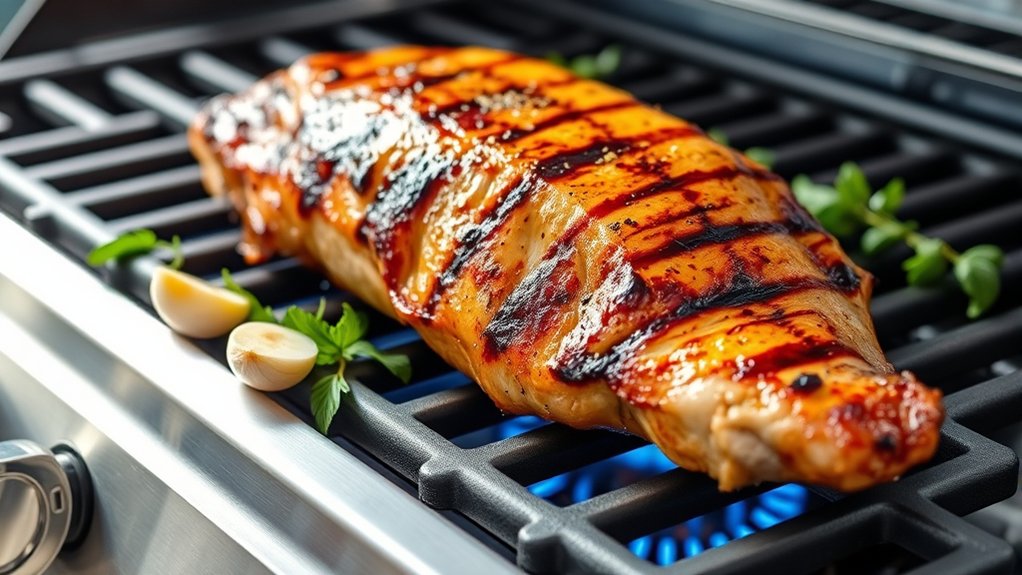
Preheat your gas grill to 375-400°F, setting up a two-zone fire with direct and indirect heat. Sear the pork over direct heat, then finish on indirect heat until it hits 145°F.
Rest the meat for a few minutes before slicing. Continue below for expert tips to perfect your grilling!
Key Takeaways
- Preheat your gas grill to 375-400°F and set up a two-zone fire for direct and indirect cooking.
- Season or marinate the pork loin for flavor and tenderness, and let it marinate for at least 30 minutes.
- Sear the pork over direct heat for a few minutes until it’s browned, then move it to indirect heat to finish cooking.
- Use a meat thermometer to check that the internal temperature hits 145°F for safe and juicy pork.
- Rest the pork for 5-10 minutes, tented with foil, before slicing against the grain to serve.
Choosing and Preparing Your Pork Loin for Grilling
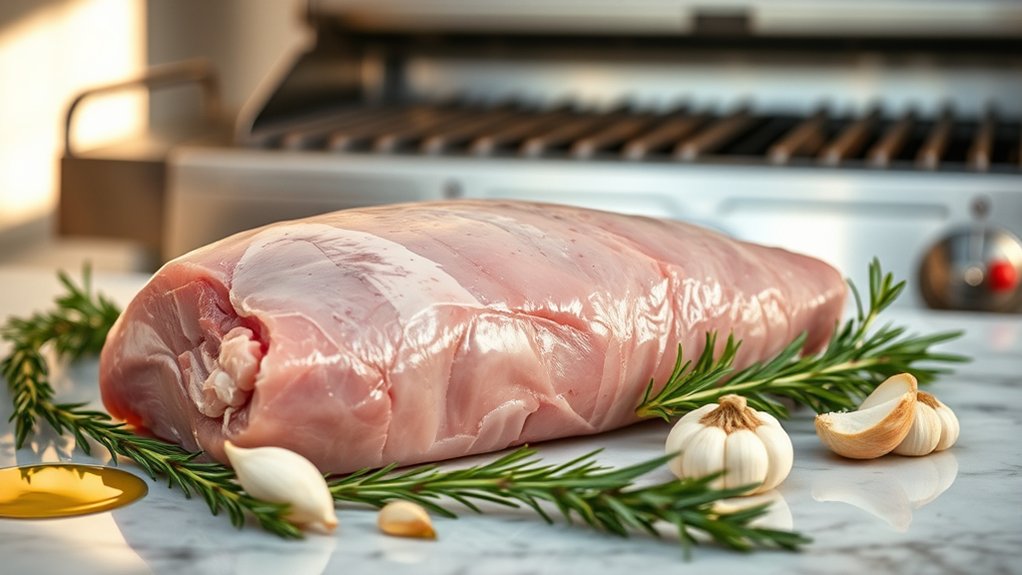
Before grilling, you want to pick a good quality pork loin and get it ready. Check that it’s about 1.5 to 2 inches thick—that way, it’ll cook evenly. Thinner cuts can dry out fast, and thicker ones might not cook all the way through.
When preparing, trim off any excess fat and silverskin to help it heat evenly. Use a meat thermometer to check for doneness—stick it into the thickest part, avoiding bones or fat. The ideal internal temp for pork is 145°F, then let it rest for at least three minutes.
It’s also helpful to bring the meat to room temperature before grilling. This makes sure it cooks more evenly. Handling your pork carefully and paying attention to thickness and temperature will give you tender, juicy results every time.
How to Season and Marinate Your Pork for Maximum Flavor
To infuse your pork loin with maximum flavor, start by choosing a seasoning or marinade that complements its natural taste. Flavor combos like garlic, rosemary, and lemon give a fresh, vibrant profile, while smoky paprika and cumin add warmth.
Marinating times vary: a quick 30-minute soak can boost flavor without overpowering, but for a deeper infusion, marinate for 2-4 hours or overnight. Keep your marinade balanced—combine acid, like vinegar or citrus, with herbs and spices to tenderize and add layers of flavor.
Be sure to coat the pork thoroughly, turning occasionally to ensure even coverage. If you’re using a dry rub, apply it generously and let it sit for at least an hour before grilling.
Setting Up Your Gas Grill for Even, Juicy Pork
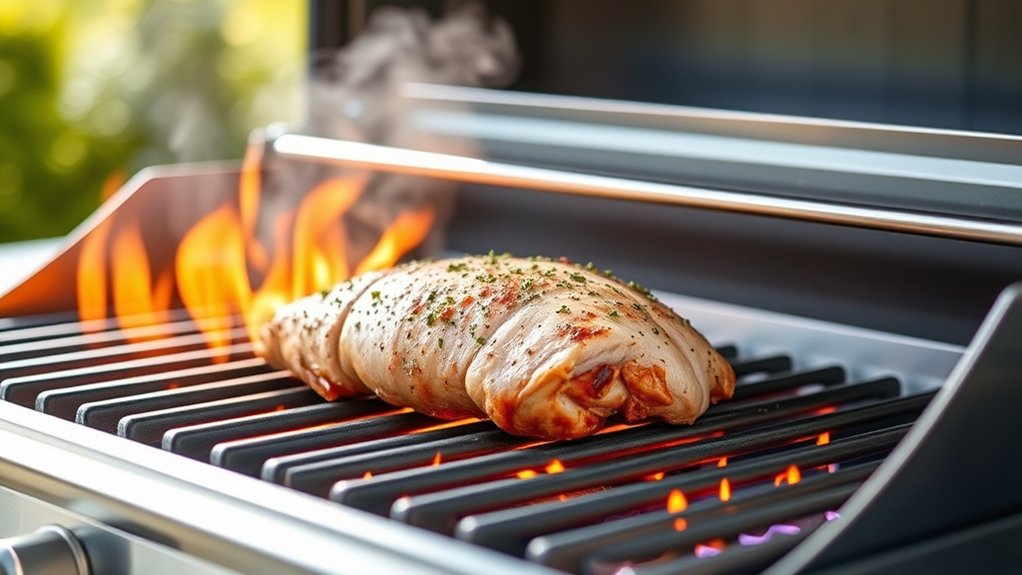
Have you ever wondered how to keep your pork tender and juicy on the grill? The secret is setting up your gas grill just right.
Start by preheating your grill to a medium-high heat, around 375-400°F. This helps ensure even cooking and gives your pork a nice sear.
Preheat your grill to 375-400°F for even cooking and a perfect sear on your pork.
Next, create a two-zone setup: turn on one side of the burners for direct heat, and leave the other side off for indirect heat. This way, you can control the cooking process and avoid overcooking the pork.
For extra flavor and moisture, try smoke infusion. Add wood chips or chunks to your grill to give a subtle smoky aroma that makes the pork even juicier.
Keep the lid closed as much as possible. This maintains a steady grill temperature and traps smoke, enhancing the flavor.
Grilling Pork Loin to Perfection: Tips and Techniques
Mastering the art of grilling pork loin involves paying attention to temperature and timing. Different types, like boneless or bone-in, may need slight adjustments, but the main thing is keeping the grill temperature steady.
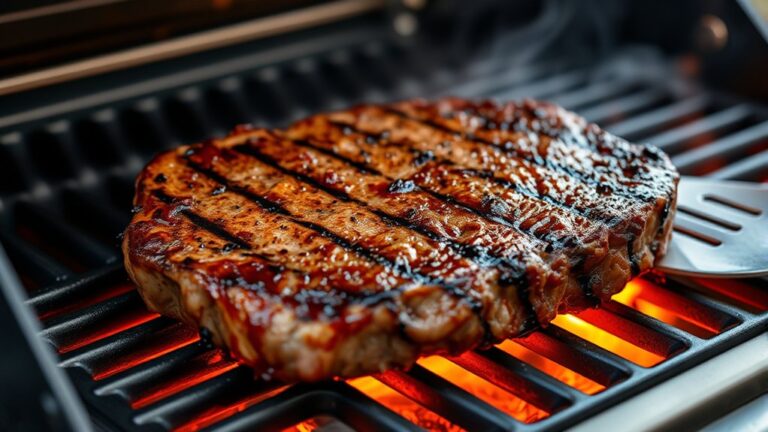
Aim for a medium-high heat, around 375°F to 400°F, to cook evenly without burning the outside. Use a meat thermometer to check the internal temperature — 145°F is perfect for juicy, safe pork.
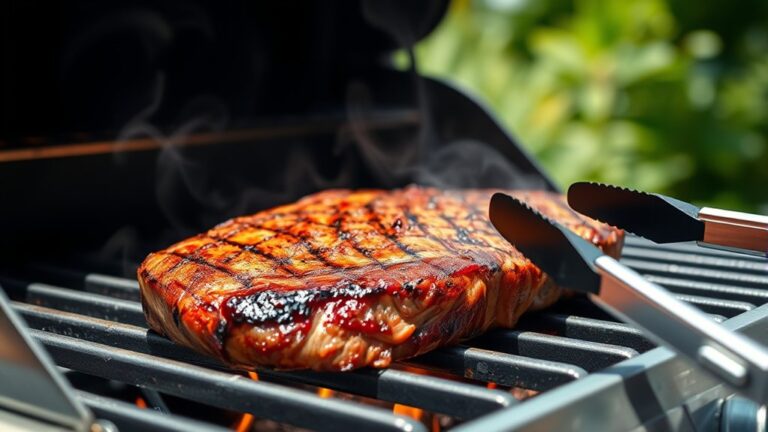
Keep the lid closed as much as possible to hold in heat and help develop a good sear. Turn the pork occasionally to promote even browning and avoid hot spots.
If your grill has multiple zones, sear over direct heat then move to indirect heat for gentle cooking. Be patient and don’t rush — this way, your meat stays tender and flavorful.
With proper temperature control and attention, you’ll cook pork loin to perfection every time.
Letting Your Pork Rest and Serving It Up Deliciously
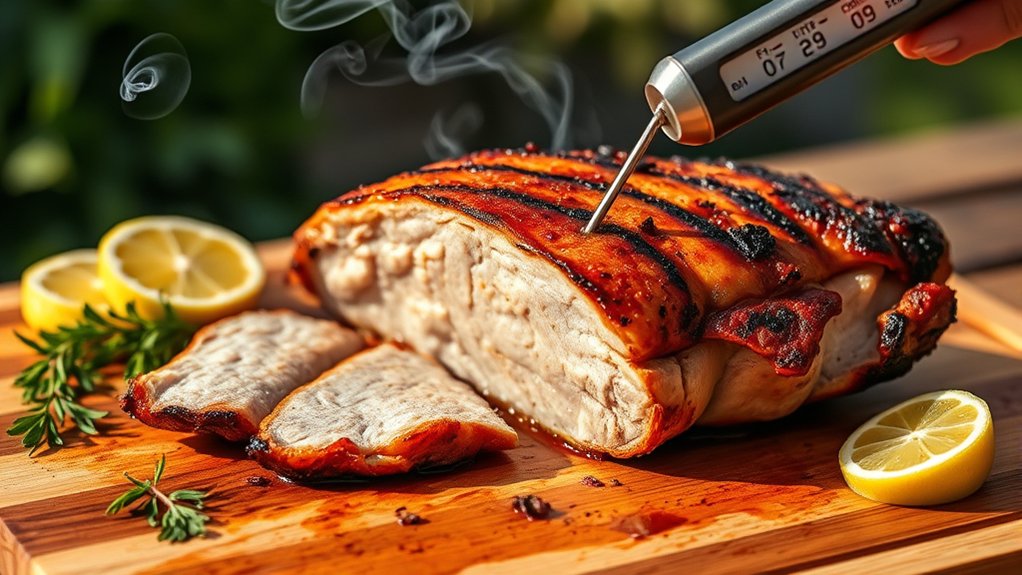
After removing the pork from the grill, it’s important to let it rest for at least 5 to 10 minutes. This helps the juices redistribute, so your pork stays moist and flavorful.
Use resting techniques like tenting the meat loosely with foil to keep it warm without trapping too much steam. During this time, think about your marinade choices—fruity, savory, or spicy—they all benefit from a short rest to meld flavors.
Resting also prevents the juices from spilling out when you cut into the meat, giving you a juicier, more tender pork loin. When serving, slice against the grain for the best tenderness.
Frequently Asked Questions
What Is the Ideal Internal Temperature for Fully Cooked Pork Loin?
You should aim for an internal temperature of 145°F when cooking pork loin to guarantee meat safety. This temperature ensures the pork is fully cooked, tender, and safe to eat, while still staying juicy.
Use a reliable meat thermometer to check the temperature at the thickest part of the loin. Once it reaches 145°F, take it off the grill and let it rest for a few minutes before serving.
How Do I Prevent My Pork Loin From Drying Out?
To prevent your pork loin from drying out, try using marinade techniques that add both moisture and flavor before cooking.
Basting your meat regularly with a marinade or flavorful sauce during grilling helps keep it juicy.
If it starts to look dry, cover the pork loosely with foil to trap moisture.
Once it reaches the right internal temperature, take it off the grill.
These simple steps will help keep your pork tender, moist, and delicious.
Can I Grill Pork Loin Directly From the Refrigerator?
Yes, you can grill pork loin straight from the fridge, but it’s a good idea to let it sit out for about 15-20 minutes first. This helps it cook more evenly.
When grilling, make sure to preheat your grill and keep the heat steady. Apply your favorite seasoning generously, then sear the meat over direct heat to lock in flavor.
After that, move it to indirect heat to finish cooking. This keeps the pork juicy and flavorful.
What Types of Wood Chips Complement Pork Loin Flavor?
You should choose apple, cherry, or hickory wood chips for smoking pork loin, as these woods enhance the meat’s natural flavors and add a sweet, smoky aroma.
Apple and cherry wood chips give a mild, fruity smoke flavor that pairs well with the tenderness of pork, making it taste even better.
Hickory provides a richer, stronger smoke flavor, adding depth to your pork loin.
These options create a balanced, flavorful smoke profile that will elevate your grilled pork loin into a delicious experience.
How Do I Store Leftovers Safely After Grilling?
For leftover storage, place your grilled pork loin in airtight containers or wrap it tightly with aluminum foil or plastic wrap.
Make sure to store it promptly in the refrigerator within two hours of cooking to keep it safe.
Try to enjoy the leftovers within 3 to 4 days. When reheating, heat to an internal temperature of 165°F to ensure safety and good quality.
Proper storage helps prevent bacteria growth and keeps your meal safe to enjoy later.
Conclusion
Think of grilling pork loin on a gas grill like tending to a delicate garden; with patience and care, you nurture each step—seasoning, setting, grilling, resting—and soon, you’ll harvest a juicy, flavorful masterpiece.
When you follow these simple steps for cooking pork loin, you’re cultivating more than just meat—you’re growing a memorable meal. Keep your tools steady, your timing true, and enjoy the delicious bounty of your culinary garden.
Remember, mastering pork loin on a gas grill is all about patience and attention to detail. Happy grilling!