5 Simple Steps for Perfect Gas Grill Steak
Many grilling enthusiasts want that perfect, restaurant-quality steak right in their own backyard but often struggle to get it just right. You’re not alone—achieving a juicy, flavorful gas grill steak can feel tricky with so many variables at play.
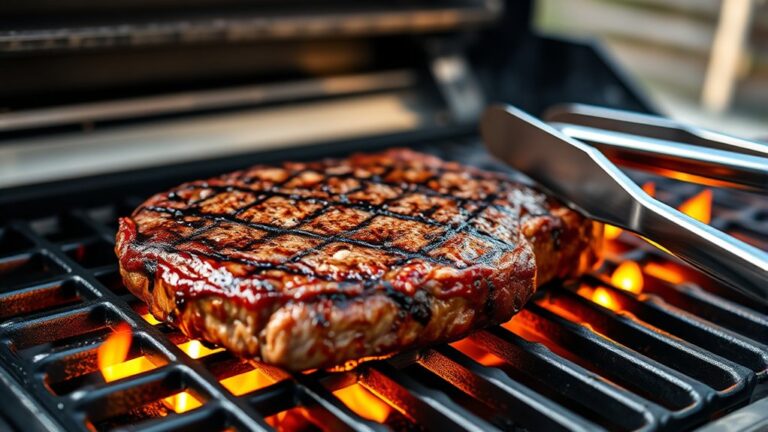
To perfect your gas grill steak, start by selecting the right thickness and marinate for at least 30 minutes. Preheat your grill to high and create a searing zone for those perfect grill marks.
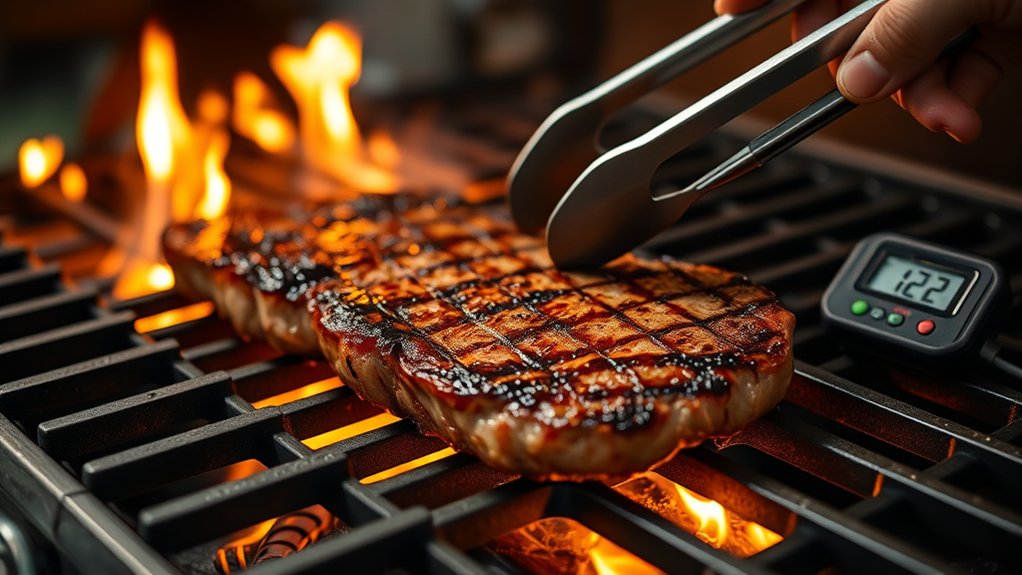
Use a thermometer to cook to your desired doneness, then let your steak rest for 5-10 minutes to lock in juices. Watch out for flare-ups and adjust heat accordingly.
If you follow these steps, you’re on your way to delicious results—learn more to master every detail.
Key Takeaways
- Preheat your gas grill to high heat and create a searing zone for a flavorful crust.
- Properly marinate and season the steak, then bring it to room temperature before grilling.
- Use a meat thermometer to monitor internal temperature for your desired doneness.
- Sear the steak on high heat, then reduce to medium or indirect heat to finish cooking.
- Rest the steak for 5-10 minutes to allow juices to redistribute before slicing and serving.
Prepare Your Steak for Gas Grill Success
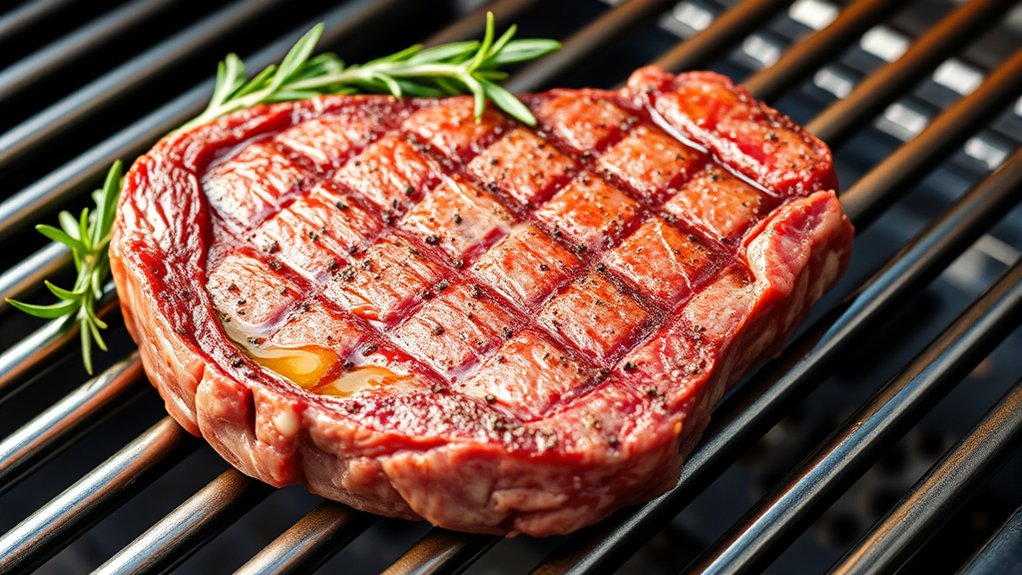
Before grilling, it’s vital to prepare your steak properly to guarantee the best flavor and texture. Start by considering the steak’s thickness—thicker cuts need more time and careful handling, while thinner steaks cook quickly.
Marinade techniques can also improve tenderness and add flavor. If you choose to marinate, do so for at least 30 minutes but no more than two hours to avoid overpowering the meat.
Use a simple marinade with oil, acid like lemon juice or vinegar, and seasonings to penetrate the meat evenly. For a more natural flavor, season your steak with salt and pepper just before grilling.
Proper preparation ensures your steak cooks evenly and stays juicy. Remember, handling the steak correctly before grilling sets the foundation for perfect results.
Whether you’re marinating or seasoning, paying attention to steak thickness and proper prep will make all the difference in your grilling success.
Control Gas Grill Heat for a Juicy Sear
Controlling the heat on your gas grill is key to getting that perfect, juicy sear on your steak. Start by preheating your grill to high for a few minutes, then adjust the burners to create a hot zone for searing.
Use your grill accessories, like a thermometer, to keep an eye on the temperature. A hot grill helps lock in marinade flavors while creating those irresistible grill marks.
If your steak starts to cook too fast, lower the heat to prevent burning and keep that juicy interior. Remember, direct high heat is great for a quick sear, but lower heat is better for finishing without drying out the meat.
Managing your grill’s temperature helps develop a flavorful crust without sacrificing tenderness. With the right heat control, your steak will have that perfect sear, enhanced by your marinade secrets and accurate temperature monitoring.
Achieve Your Desired Doneness on a Gas Grill
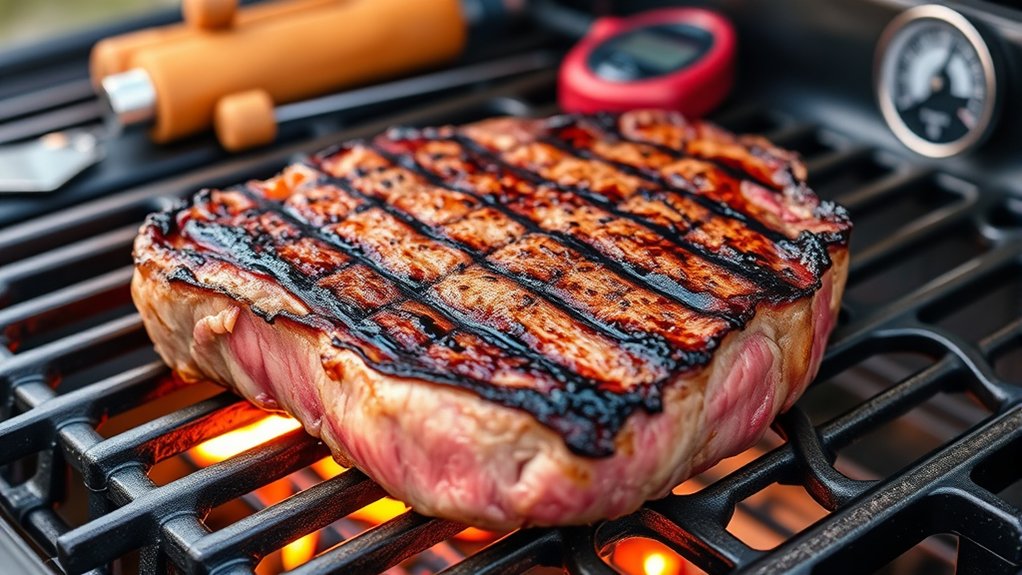
Achieving your desired steak doneness on a gas grill requires precise timing and temperature control. Use a reliable meat thermometer and keep a close eye on the internal temperature.
Depending on whether you like your steak rare, medium, or well-done, adjust the grilling time accordingly. Incorporate marinade techniques to boost flavor and tenderness, but don’t overdo it, as that can affect the searing process.
Seasoning options are key too. Simple salt and pepper work great, or you can experiment with herbs and spices for extra flavor.
Remember these key points:
- Use a thermometer to accurately gauge internal temperature.
- Adjust cooking time based on steak thickness and your preferred doneness.
- Balance marinade and seasoning to enhance, not overpower, the natural flavor.
Mastering these steps will help you get your steak just right every time and take your grilling game to the next level.
Rest and Serve Your Steak for Maximum Flavor
Once you’ve taken your steak off the grill at just the right temperature, letting it rest is the next step to guarantee maximum flavor and juiciness. Resting allows the juices to redistribute throughout the meat, giving you a tender, flavorful bite.
To improve this process, think about your marinating techniques and steak seasoning beforehand. A well-seasoned steak or marinade adds more depth to the flavor.
Wrap the steak loosely in foil and let it rest for about 5 to 10 minutes. This pause helps the juices settle, so they don’t spill out when you start cutting.
During this time, the residual heat keeps the steak warm and continues to work on the meat. Once rested, slice against the grain for maximum tenderness.
Serve immediately to enjoy the full impact of your perfectly seasoned, juicy steak. Resting is simple but essential for that restaurant-quality flavor at home.
Troubleshoot Common Gas Grill Steak Challenges
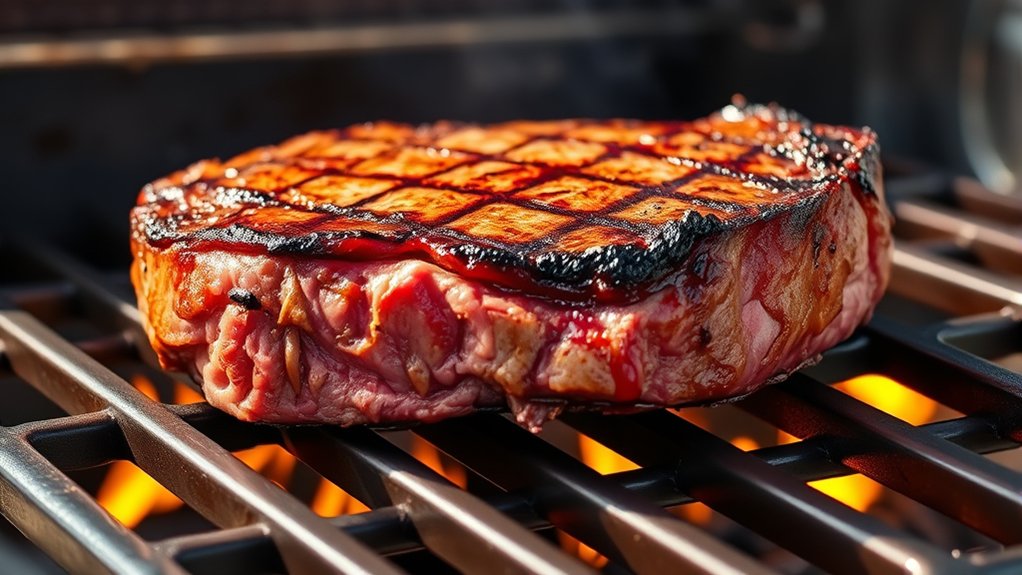
Even experienced grillers face common issues like uneven cooking, flare-ups, or steaks that turn out tougher than expected. To troubleshoot, start by adjusting your grill’s heat to prevent flare-ups caused by marinades with sugar or oil.
Keep an eye on steak thickness; thicker cuts need more direct heat and longer cooking times. Thinner steaks can overcook quickly, so watch them closely.
Control flare-ups by trimming excess fat and keeping a two-zone fire setup. Check steak thickness regularly and adapt your grilling time accordingly.
Experiment with marinade variations to balance flavor and avoid burning, especially with sugary ingredients.
Frequently Asked Questions
What Is the Best Type of Steak for Grilling?
The best steak for grilling is a cut with good marbling, like ribeye or sirloin. The fat melts during cooking, which boosts flavor and juiciness.
When choosing cuts, look for steaks with evenly distributed marbling. That’s key for tenderness and taste.
Avoid leaner cuts like filet mignon if you want maximum flavor. But if you prefer a leaner option, just be careful not to overcook it so it stays tender and moist.
How Do I Prevent My Steak From Sticking?
Your steak won’t stick if you make sure the grill is hot enough—think blazing inferno—before placing it down. Keep the grill temperature high and lightly oil the grates to create a non-stick surface.
Also, generously season your steak. It helps develop a natural barrier that keeps it from sticking. When you’re ready to flip, wait until the meat releases easily.
Proper heat, seasoned steak, and patience are key. They prevent sticking and help you get that perfect sear.
Can I Add Flavor With Marinades Before Grilling?
Yes, you can definitely add flavor with marinades before grilling. Marinade variations like soy-based, citrus, or herb-infused options boost your steak’s flavor and help tenderize it.
To get the most out of your marinade, aim to marinate your steak for at least 30 minutes. Just be careful not to over-marinade, as that can change the texture of the meat.
Before grilling, make sure to pat your steak dry. This helps prevent sticking and ensures you get a nice, perfect sear.
How Do I Store Leftover Grilled Steak Safely?
To store leftover grilled steak safely, make sure to refrigerate it within two hours of cooking. This helps prevent bacteria from growing on the meat.
Wrap the steak tightly in plastic wrap or foil, or place it in an airtight container. This keeps it fresh and prevents other foods from absorbing its smell.
Use food safety guidelines by eating the leftovers within 3 to 4 days. After that, the quality and safety can’t be guaranteed.
If you want to store it longer, freeze the steak. Just be sure to label it with the date so you know how long it’s been in the freezer.
Follow these simple tips to keep your leftovers fresh and safe to enjoy later.
What Accessories Can Improve My Gas Grilling Experience?
To improve your gas grilling experience, consider adding a grill thermometer to monitor temperature precisely. This helps you get perfect steaks every time.
Flame tamers distribute heat evenly and prevent flare-ups, making grilling safer and more consistent. You might also enjoy tools like a grill brush for easy cleaning or tongs for better control.
These accessories boost your control and safety, helping you achieve delicious, perfectly cooked steaks with ease.
Conclusion
So, after all that effort, you’ve mastered the perfect gas grill steak—only to find that sometimes even the best chefs can’t guarantee a flawless sear or a tender bite.
Ironically, it’s the simple steps that make all the difference, yet perfection still eludes us at times.
But don’t let a few setbacks steak your pride. Keep grilling, keep learning. After all, what’s a little char or underdone bite in the pursuit of grilling greatness?