How to Grill Steak on a Gas Grill at the Perfect Temperature
Cooking the perfect steak on a gas grill is a goal many grilling enthusiasts strive for, but it can feel tricky to get right. You’re not alone—most people struggle with achieving that ideal sear and even doneness without burning the meat or ending up with a flavorless result.
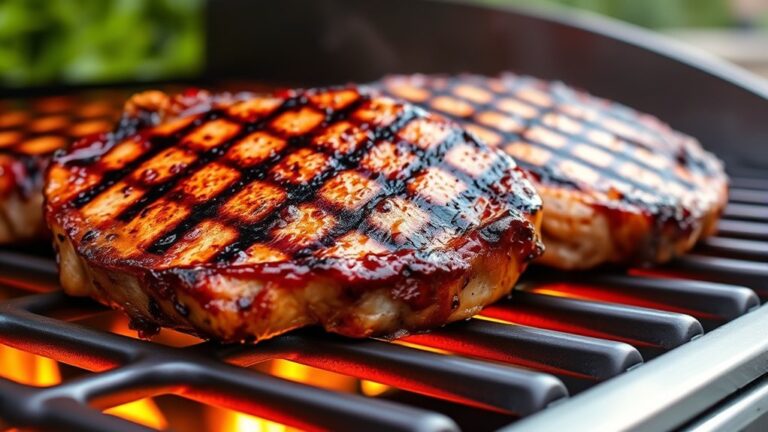
To grill steak at the perfect temperature on a gas grill, start by choosing a grill with adjustable heat zones and preheat it to high (450-500°F) for searing. Use direct heat to develop a crust and indirect heat for even cooking.
Monitor the internal temperature with a thermometer, flipping the steak to prevent burning. Control flare-ups by adjusting flames and managing marinade buildup.
Rest the steak after grilling to lock in juices and finish with ideal flavor—discover how to perfect your technique beyond this.
Key Takeaways
- Preheat the grill and create hot and cooler zones for better temperature control.
- Sear the steak over high heat at 450-500°F for 1-2 minutes per side.
- Use a meat thermometer to check the internal temperature for your desired doneness.
- Adjust the flame height and rotate the steak to prevent flare-ups and cook evenly.
- Rest the steak after grilling so the juices can redistribute, giving you perfect results.
Why Temperature Control Is Key to Perfect Steak
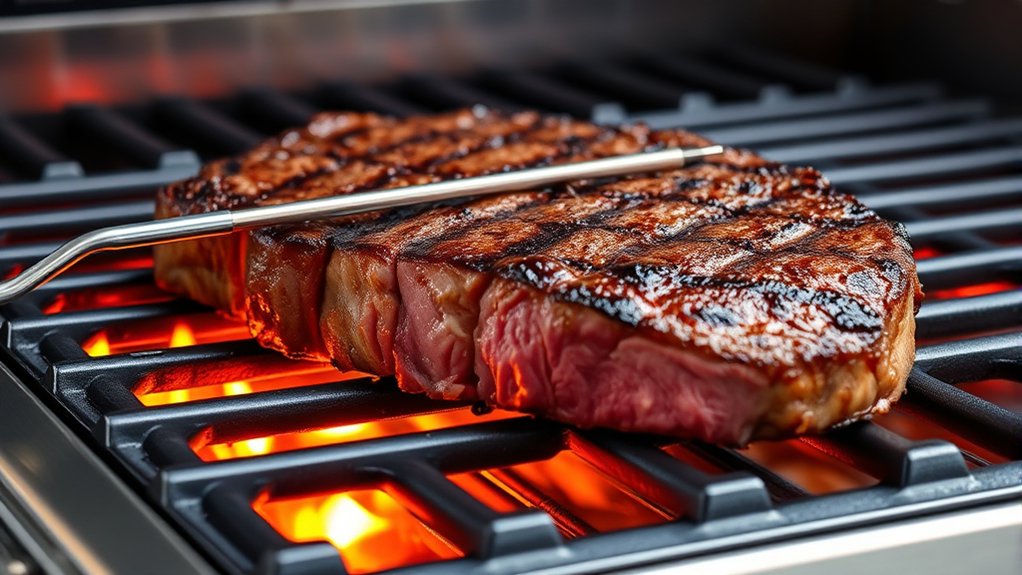
Controlling the temperature is essential because it directly affects how your steak cooks and its final quality. When you keep the right heat, you can better use marinade techniques to infuse flavors without overcooking the meat.
Proper temperature also helps you use seasoning varieties effectively, making sure spices develop fully without burning or turning bitter. If the grill is too hot, the outside might char before the inside reaches your desired doneness.
Too cool, and your steak could end up bland or unevenly cooked. Consistent heat lets you sear the steak for a flavorful crust and then cook it to your preferred level—rare, medium, or well-done.
Mastering temperature control maximizes your marinade’s impact and seasoning choices, resulting in a perfectly cooked, flavorful steak every time. It’s the key to grilling success and getting that juicy, tender final product.
How to Choose the Best Gas Grill for Steak
Choosing the right gas grill is key to getting perfectly cooked steak every time. Look for a grill with adjustable heat zones so you can control the temperature for searing and gentle cooking.
Choosing the right gas grill ensures perfectly cooked steak every time with adjustable heat zones for precise control.
A grill with plenty of cooking space means you can cook multiple steaks evenly without overcrowding. It’s also smart to pick one that retains heat well and offers consistent temperature control for precise grilling.
Think about features that make grill maintenance easy, like removable grates and accessible burners. This makes cleaning simpler and keeps your grill in top shape.
A sturdy build helps prevent warping and ensures your grill lasts for years. When choosing, consider how easy it is to clean, especially if you like marinating—this prevents flavors from transferring between cooks.
The right grill not only makes cooking safer and more efficient but also helps you master temperature control. This way, you can focus on perfecting your steak and enjoying great results every time.
Preparing Your Steak for Optimal Searing and Juiciness
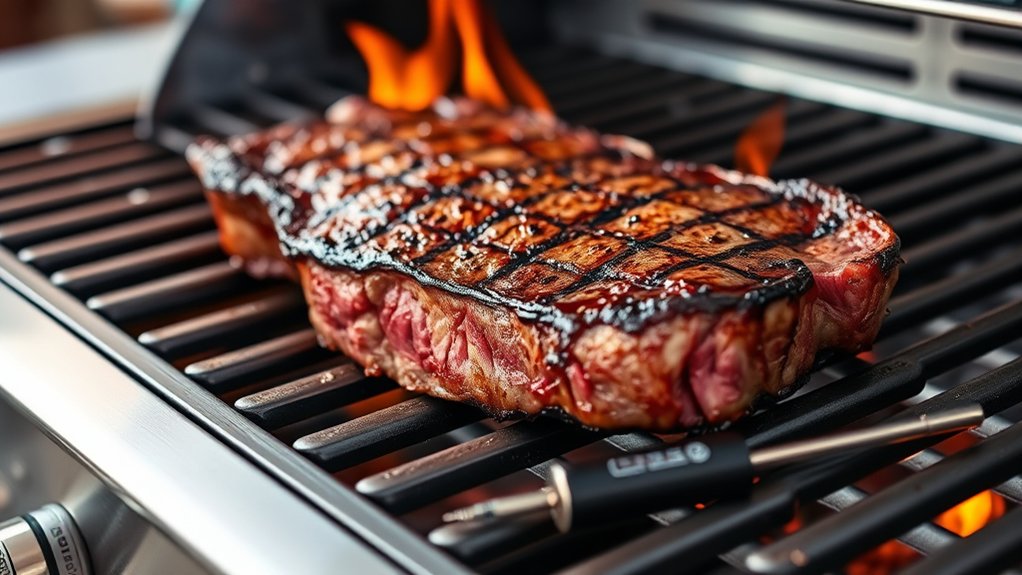
Want to get that perfect sear and keep your steak juicy? First off, choose a good cut like ribeye or sirloin — they’re great for flavor and tenderness. Before grilling, let the steak sit out until it reaches room temperature; this helps it cook evenly. And don’t forget to pat it dry with a paper towel to remove any excess moisture. These simple little steps make a big difference and really set the stage for a fantastic grill.
Selecting the Right Cut
Have you ever wondered why some steaks turn out perfectly seared with juicy interiors, while others fall flat? The secret is in choosing the right cut. Go for options like ribeye, New York strip, or filet mignon, which have good marbling and thickness for grilling.
These cuts handle high heat well and develop a flavorful crust. Before grilling, consider using marinades that boost both flavor and tenderness. Just avoid overly acidic marinades that can break down the meat.
Also, make sure your grill tools, like a quality spatula and tongs, are ready for precise handling. Picking the right cut sets the stage for a juicy, evenly cooked steak and makes your grilling experience more fun and successful.
Bringing Steak to Room Temperature
Before hitting the grill, taking a few minutes to bring your steak to room temperature can make a noticeable difference. When your steak is closer to room temperature, it cooks more evenly, leading to better searing and juiciness.
To improve flavor, consider using marinating techniques beforehand. This can help tenderize the meat and infuse it with additional flavor. While waiting, you can also explore different seasoning varieties—salt, pepper, herbs, or spice blends—to add depth to your steak.
Just keep in mind that seasoning is best applied just before grilling to prevent drawing out moisture. Allowing your steak to reach room temperature ensures it cooks uniformly, resulting in a perfectly seared, juicy steak every time.
Patting Dry for Better Sear
Since moisture on the surface of your steak can hinder proper searing, it’s essential to pat it dry thoroughly with paper towels before grilling. Excess water creates steam, which prevents that desirable caramelized crust from forming.
This step helps lock in marinade flavors and ensures a better sear. Using quality grill accessories, like a wire brush, can also help clean the grates for even contact.
To maximize flavor and achieve a perfect sear, consider these tips:
| Step | Tip |
|---|---|
| Pat dry | Use paper towels for thorough dryness |
| Preheat grill | Achieve high heat for a great sear |
| Avoid excess marinade | Too much liquid hampers browning |
| Use proper tools | Grill accessories improve results |
Drying your steak ensures superior searing and juicy results every time.
How to Achieve the Right Grill Temperature: Direct vs. Indirect Heat
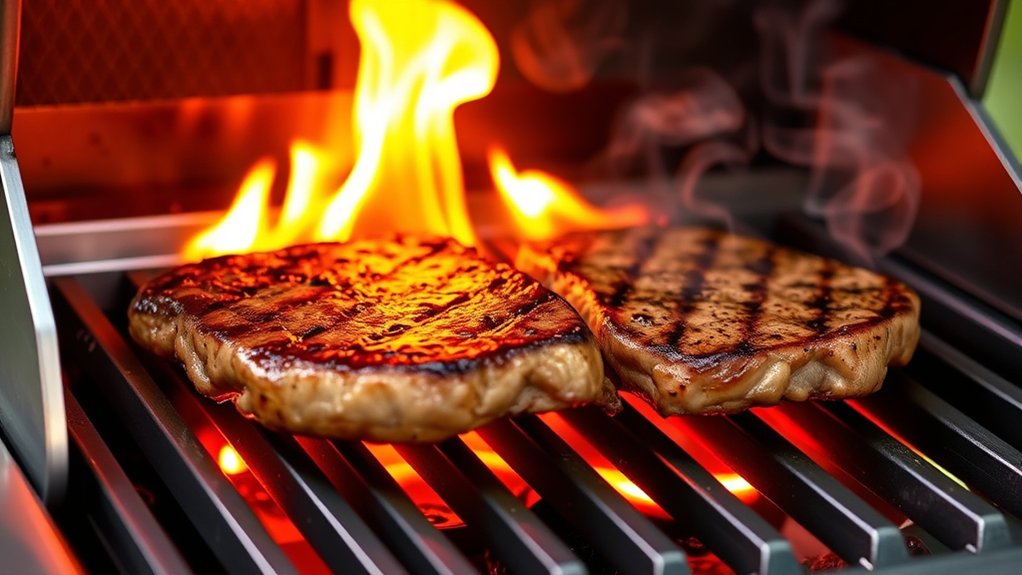
Understanding the difference between direct and indirect heat is key to hitting the perfect grill temperature.
Direct heat means placing your steak right over the flames, which is great for searing and building a flavorful crust.
Indirect heat involves cooking the steak away from the flames, helping you cook more evenly and prevent burning.
To set up these zones, preheat your grill, then turn off one side to create a cooler, indirect area.
This setup helps you control both cooking time and temperature, especially with thicker cuts.
When marinating your steak, choose techniques that match your heat zones—quick marinades for fast sears or longer ones for gentle cooking.
Seasoning choices also matter; bold flavors hold up well to high heat, while delicate seasonings do better with indirect, gentle cooking.
Mastering the use of direct and indirect heat lets you fine-tune your grilling for juicy, perfectly cooked steaks.
Using a Thermometer to Monitor Steak Temperature
Using a thermometer to monitor your steak’s temperature is the most reliable way to get perfect doneness. It helps you avoid guesswork and makes sure your steak is cooked just the way you like it.
When checking the temperature, insert the probe into the thickest part of the meat, avoiding bone or fat for an accurate reading. This is especially important if your steak has been marinated, as some marinades can hide visual clues of doneness.
Using a good grill or instant-read thermometer as a grill accessory makes this process quick and precise. Keep the thermometer handy during grilling and check the internal temperature regularly.
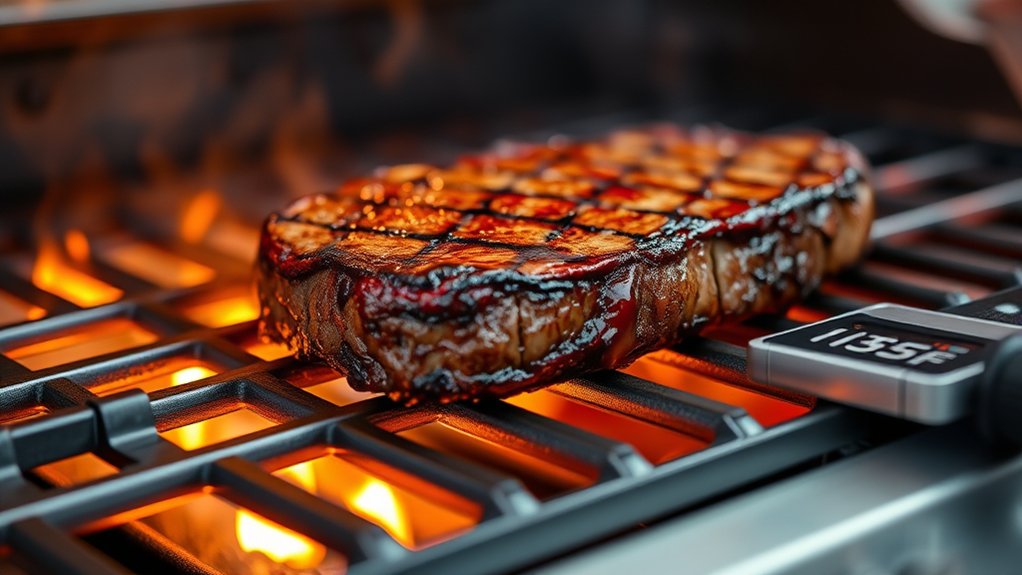
For medium-rare, aim for 130-135°F; for medium, 140-145°F. Monitoring the temperature not only guarantees your steak’s perfect doneness but also helps preserve the flavors of your marinade, preventing overcooking.
With a reliable thermometer, you’ll have better control, more confidence, and consistently delicious results.
When and How to Sear Your Steak for a Perfect Crust
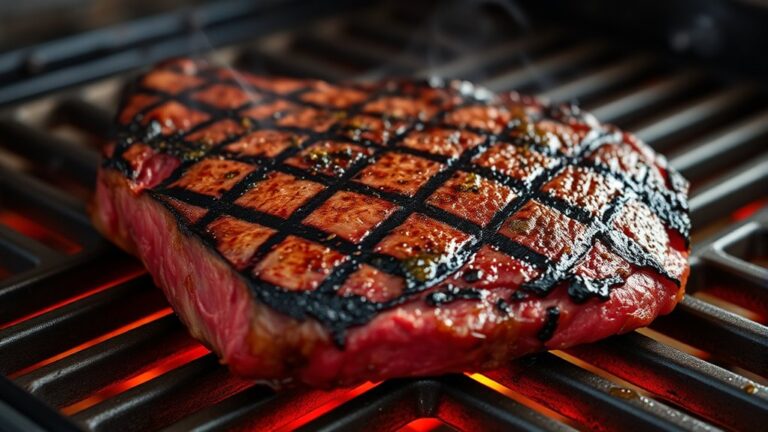
After you’ve monitored your steak’s internal temperature and achieved your desired doneness, it’s time to focus on creating that irresistible, flavorful crust. Searing is best done when your grill is very hot, around 450-500°F.
To improve the crust, consider marinate options with oils, acids, and spices. They add flavor and help promote browning. Pat your steak dry to remove excess moisture for a better sear.
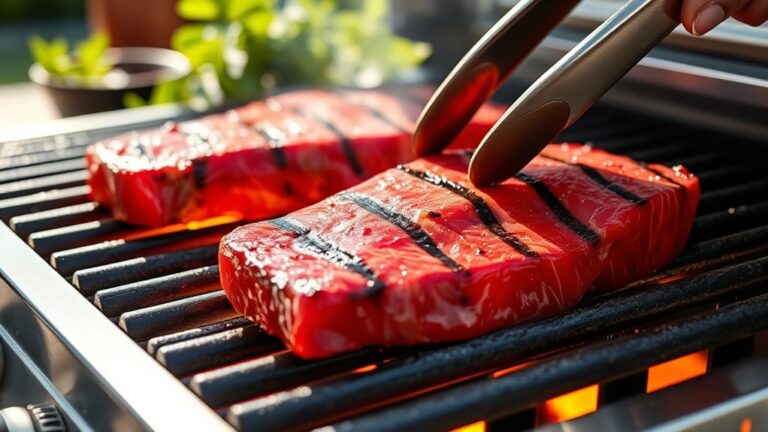
Place the steak directly over high heat, and don’t move it right away. Let it develop a crust for 1-2 minutes per side. Use tongs to flip smoothly without piercing the meat, which keeps the juices intact.
For extra flavor, brush the steak with butter or oil during searing. When the crust is deep golden brown and releases easily from the grill, remove the steak and let it rest.
This quick, high-heat sear locks in juices and creates that perfect crust you’re after.
Managing Heat Zones for Even Cooking and Your Preferred Doneness
To cook your steak just right and get it to your preferred level of doneness, it’s important to manage heat zones properly. Basically, you want to create hot spots and cooler spots on your grill. You can do this by adjusting the flames or moving the coals or burners around.
While your steak is cooking, keep an eye on it. Rotate it as needed and make small tweaks to the heat. This way, you’ll ensure it cooks evenly on all sides and reaches that perfect level of doneness you’re aiming for.
Creating Hot and Cool Zones
Creating hot and cool zones on your gas grill helps you control cooking temperatures more accurately. This way, your steak cooks evenly and reaches the doneness you want.
By placing the burners strategically, you can create spots of intense heat alongside cooler areas for resting or indirect cooking. This setup is great for trying out different flavors or marinades that need varied heat levels.
Use high heat on one side for searing, and keep the other side at a lower temperature for gentle cooking or finishing. This prevents overcooking and lets your marinade’s flavors develop without burning.
Mastering these zones gives you better control, so every steak turns out perfectly cooked every time.
Adjusting Flame Intensity
Adjusting the flame intensity on your gas grill is key to managing heat zones and cooking your steak evenly to your desired doneness. You do this by controlling the flame height, turning knobs to increase or decrease heat.
Proper heat regulation lets you create distinct hot and cool zones, giving you better control over the whole cooking process. When you want a sear, turn the flames up to get maximum heat. For slow cooking or finishing, lower the flame to keep a gentle heat.
Consistent flame adjustments help prevent flare-ups and hot spots, making sure your steak cooks uniformly. Keep an eye on the flame height regularly to maintain a steady temperature. Remember, small changes can have a big impact on your grilling results.
Monitoring and Rotating Steak
Monitoring and rotating your steak while grilling helps ensure even cooking and gets you closer to your preferred doneness.
Keep an eye on heat zones with tools like a two-zone setup or a heat map, which make managing different temperature areas easier.
Rotate the steak regularly, especially if one side is cooking faster, to get consistent results.
If you’re using marinade variations, be aware that some can cause flare-ups or uneven searing, so adjusting the steak’s position becomes even more important.
Use tongs to turn the steak and avoid piercing it, which helps preserve the juices.
Staying attentive during grilling allows you to control flare-ups and prevent burning, helping you achieve that perfectly cooked steak with your desired level of doneness.
Adjusting Grill Heat During Cooking to Prevent Flare-Ups
Flare-ups can happen suddenly and threaten to ruin your perfectly cooked steak, so it’s important to stay attentive and responsive. When flare-ups occur, quickly adjusting the grill heat helps prevent charring or burning your meat.
If flames flare up, turn down the burners or move the steak to a cooler part of the grill. Keeping the lid closed can also help control temperature and reduce oxygen that fuels flare-ups.
Remember, excess marinade flavor, especially sugary or oily marinades, can contribute to flare-ups. Apply marinades carefully and avoid excessive buildup on the grill grates.
Proper grill maintenance, like cleaning grease and food drippings regularly, minimizes flare-up risks. Adjusting heat during cooking isn’t just about preventing flames; it also ensures even cooking and preserves your steak’s flavor.
Stay vigilant, and don’t be afraid to manipulate the heat as needed to maintain a steady, safe temperature throughout grilling.
Why Resting Your Steak Is Important for Temperature and Juiciness
After you take your steak off the grill, resting it gives the juices a chance to redistribute throughout the meat. This makes each bite tender and full of flavor. Resting is especially important when your steak has good marbling since the fat melts during cooking, adding richness.
If you cut into it right away, those tasty juices will escape, leaving the meat dry and less juicy. Resting also helps the steak reach its final temperature, which can be a bit higher than when it’s removed from the grill, giving you better control over how cooked it is.
Letting the steak rest allows the seasoning to settle in, boosting the flavor. Plus, a rested steak is more tender because the muscle fibers relax, making every bite more enjoyable. So, after grilling, give your steak a few minutes to rest—it’s a simple step that makes a big difference in temperature and juiciness.
Troubleshooting Common Temperature Issues When Grilling Steak
When your grill isn’t staying at a steady temperature, it can really throw off your steak game. You might end up with a piece that’s overdone on the outside and undercooked inside, which is no fun. Sometimes, all you need to do is tweak the heat settings or look out for hotspots that are making parts of your grill hotter than others.
It’s also a good idea to keep an eye on your grill’s thermometer. That way, you can make small, precise adjustments to get that perfect sear and juicy inside. With a little patience and attention, you’ll be grilling steaks like a pro every time!
Inconsistent Grill Temperatures
Inconsistent grill temperatures can be frustrating, but they’re often caused by simple issues you can fix. Fluctuating heat might be due to uneven propane flow, dirty burners, or improper lid management. To troubleshoot, check for:
- Blocked or dirty burners that restrict airflow
- Variations in marinade flavor absorption, affecting heat response
- Inconsistent lid placement, causing temperature swings
- Using dull knives, leading to uneven meat cuts that cook differently
Pay attention to your knife techniques, ensuring even slices to promote uniform cooking. Also, regularly clean burners to maintain consistent heat output. Remember, small adjustments can make a big difference in maintaining steady grill temperatures, helping you achieve perfectly grilled steak every time.
Adjusting Heat Levels
To keep your steaks cooking evenly, adjusting the heat levels on your gas grill is key. If your grill runs hot or cool, you can regulate the temperature by turning the burners up or down.
Use the grill’s built-in thermometer and monitor marinade timing to prevent overcooking. Make sure your grill is clean because residue can cause hot spots or uneven heat.
When adjusting, start with a high heat for searing, then lower it for indirect cooking. Use the table below to guide you:
| Situation | Adjustment |
|---|---|
| Too hot, steak burning outside | Reduce heat or move steaks to a cooler area |
| Too cool, steak undercooking | Increase heat or move closer to flames |
| Inconsistent heat spots | Clean grill grates thoroughly |
| Marinade excess or delayed | Adjust cooking time accordingly |
Proper heat adjustment amplifies flavor and texture every time.
Frequently Asked Questions
What Is the Ideal Internal Temperature for Different Steak Doneness Levels?
You should aim for specific internal temperatures to get your steak just right. For rare, target 120-130°F; medium-rare, 130-135°F; medium, 135-145°F; medium-well, 145-155°F; and well-done, 155°F and above.
Use a meat thermometer to check the temperature, and consider marinade flavors that enhance each doneness level. Grilling accessories like tongs and a probe thermometer help you keep the perfect temperature.
This way, you’ll ensure your steak stays juicy and flavorful every time.
How Long Should I Let My Steak Rest After Grilling?
You should let your steak rest for about 5 to 10 minutes after grilling. During this time, the juices redistribute, making your steak more flavorful and tender.
While resting, you can practice marinate techniques by lightly brushing the steak with juices or marinade to boost the flavor.
When slicing, always cut against the grain to ensure tenderness. Resting helps you achieve juicy, easily sliced steaks every time.
Can I Use a Home Oven Thermometer Instead of a Grill Thermometer?
Coincidentally, you can use a home oven thermometer as a grill thermometer alternative, though oven thermometers aren’t always as accurate for high heat. They’re designed for consistent oven temperatures, so they might not reflect your grill’s real-time temperature precisely.
If you go this route, double-check the oven thermometer’s accuracy before grilling, and consider using a dedicated grill thermometer for the best results.
What’s the Best Way to Prevent Flare-Ups During Grilling?
To prevent flare-ups during grilling, keep the grill clean and remove grease buildup regularly.
Use direct heat wisely and try to avoid overly fatty cuts of meat. Keep the lid closed whenever possible to control oxygen and reduce fire risks.
Always have a spray bottle of water nearby for quick fire extinguishing.
Practicing good grill safety and fire prevention makes your grilling experience safer and more enjoyable.
How Does Steak Thickness Affect Grilling Time and Temperature?
Thicker steaks require longer grilling times and often benefit from a slightly lower temperature to ensure even cooking. Marbling in thicker cuts helps keep the meat tender, but you should adjust your heat accordingly.
Different steak cuts, like ribeye or sirloin, also affect grilling times. Thicker cuts need more time, while thinner ones cook faster.
Always use a meat thermometer to get your steak cooked to your desired doneness.
Conclusion
So, next time you fire up your grill, remember that controlling the temperature isn’t just about avoiding burnt steak. It’s about mastering the art of precision.
Ironically, the secret to a perfect steak lies in patience and patience alone. If you ignore the heat, you might end up with a charred disaster instead of the juicy masterpiece you envisioned.
But hey, at least you’ll have a great story about that one time you “almost” grilled perfection. Mastering how to grill steak on a gas grill at the perfect temperature makes all the difference.