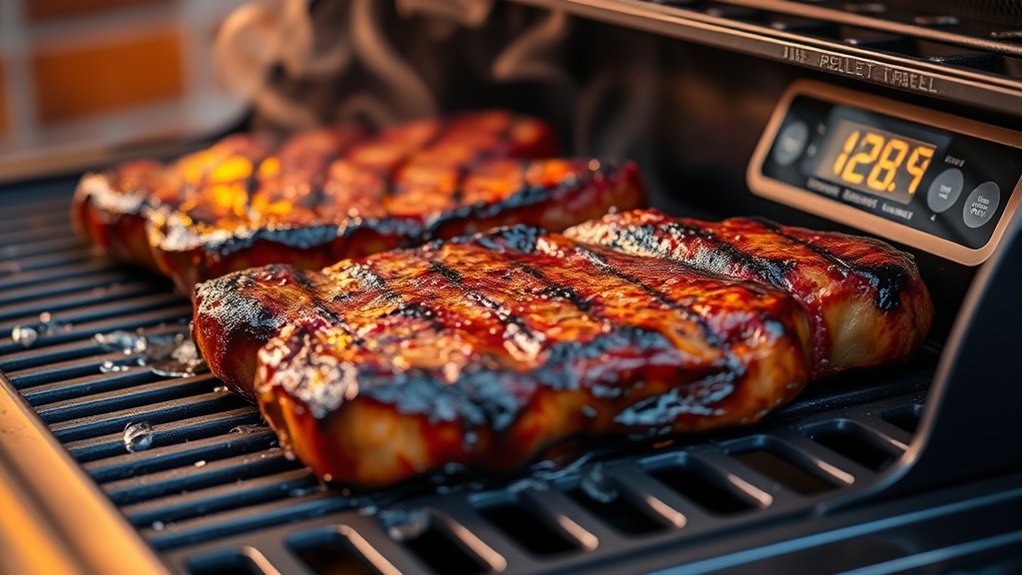
How to Grill Perfect Steaks on a Pellet Grill at Ideal Temps
Many steak lovers know the struggle of getting that perfect, juicy, and flavorful steak right at home. It can be frustrating trying to master the art of grilling, especially on a pellet grill where temperature control is key. You’re not alone—many people struggle with achieving that perfect sear and even doneness.
To grill perfect steaks on a pellet grill at ideal temps, start by preheating the grill to around 450°F. Choose a good cut with marbling, season or marinate as desired, and pat it dry.
Sear the steak over the hottest part for 1-2 minutes per side, then move it to a cooler spot to finish cooking to your preferred doneness. Use a meat thermometer to monitor the internal temperature.
For expert tips on searing, resting, and perfecting your steak, keep exploring.
Key Takeaways
- Preheat your pellet grill to 450-500°F for the best searing and even cooking.
- Pick well-marbled steaks like ribeye or sirloin for juicy, flavorful results.
- Keep a meat thermometer handy to check the internal temperature and reach your preferred level of doneness.
- Sear the steaks over direct high heat, then move them to cooler spots to finish cooking evenly.
- Let the steaks rest under foil for 5-10 minutes before slicing to lock in juices and boost flavor.
How Pellet Grills Work and Why They’re Great for Steaks
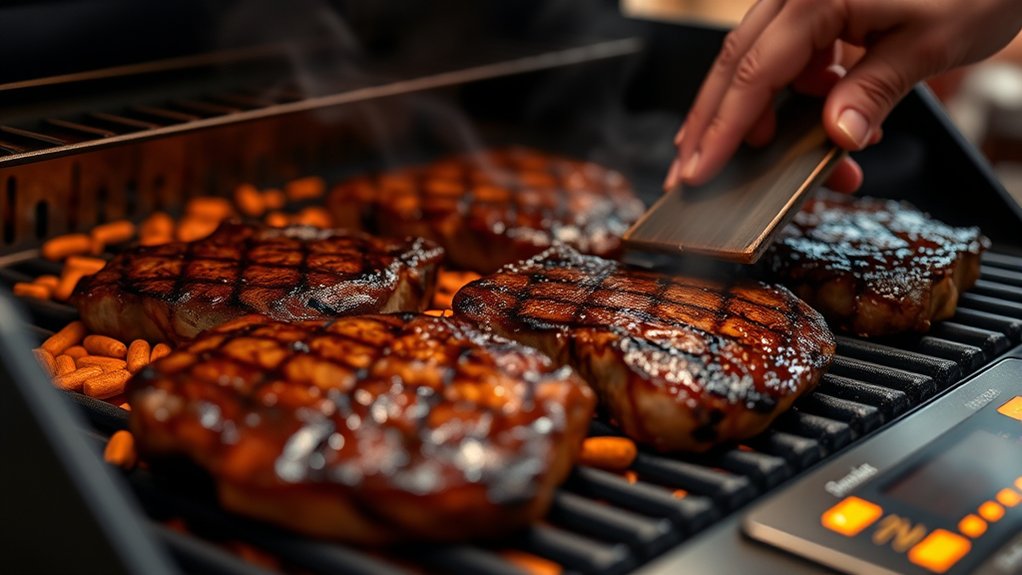
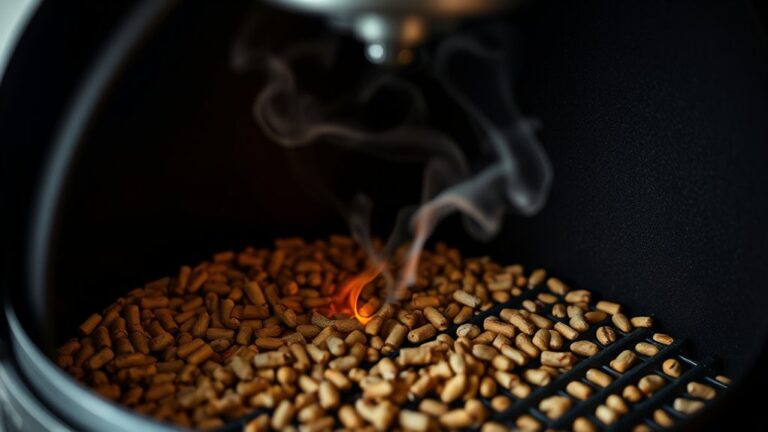
Pellet grills work by using small, electrically powered augers that feed wood pellets into a fire pot. The pellets ignite to produce heat and smoke, giving you that great smoky flavor.
Pellet grills use electric augers to feed wood pellets, creating heat and smoke for rich, smoky flavor.
This design lets you control the temperature precisely, making it easier to cook perfect steaks. Because the heat stays steady, you don’t have to worry about flare-ups or uneven cooking.
The digital controls help you set and maintain your desired temperature, giving you peace of mind and better results. When grilling steaks, having a good thermometer and proper tongs can improve safety and efficiency.
Pellet grills also add rich smoky flavors, taking your steaks beyond what standard grilling can do. Their easy-to-use setup means you can spend more time enjoying your meal and less time managing the grill.
Choosing the Best Steak Cuts for Your Pellet Grill
When you’re picking out steak cuts for your pellet grill, some of the most popular choices are ribeye, sirloin, and filet mignon. Each of these cuts has its own unique flavor and tenderness, so it really depends on what you’re looking for.
Think about things like how much marbling you prefer, your budget, and how long you’re willing to cook. These factors can help you narrow down your options and find the perfect steak for your grill session.
Also, don’t forget to pay attention to the thickness of the cut. Thicker steaks are great if you want to do a slow, even cook, while thinner cuts are perfect for a quick sear. It’s all about what kind of result you’re aiming for!
Popular Steak Cuts
Choosing the right steak cuts is essential for getting great results on your pellet grill. Some popular options include ribeye, sirloin, filet mignon, and T-bone, each offering unique textures and flavors.
Ribeye is known for its marbling, which gives it rich flavor and juicy tenderness. It’s perfect for grilling at high heat. Sirloin offers a leaner option with a firmer texture, great if you want a more balanced flavor.
Filet mignon is prized for its tender, melt-in-your-mouth quality, though it has a milder flavor. T-bone combines the best of both worlds, featuring a flavorful strip on one side and a tenderloin on the other.
Choosing the right cut really depends on your preferences for texture and flavor. This way, you can ensure a satisfying grilling experience every time.
Factors Influencing Choice
Your personal taste and grilling goals play a big role in choosing the best steak cuts for your pellet grill. If you love tender, juicy steaks, go for cuts like ribeye or filet mignon. For a leaner option, sirloin works great.
Think about how you’ll cook and serve the steak, since some cuts respond better to high heat. Using the right cuts helps prevent flare-ups and uneven cooking, making your grilling safer.
Don’t forget about pellet maintenance. Regularly clean and refill your hopper to keep temperatures steady. This ensures your steaks cook evenly every time.
Knowing which cuts suit your preferences and grill capabilities will help you make smarter choices. That way, you’ll get delicious results each time you fire up your grill.
Cut Thickness Considerations
Have you thought about how the thickness of your steak affects grilling on a pellet grill? The cut’s thickness really influences the final result.
Thicker steaks, around 1.5 to 2 inches, need lower heat and longer cooking times. This helps with even heat distribution and better marbling analysis.
On the other hand, thinner cuts, about 1 inch or less, cook faster and are more forgiving. But watch out—they can dry out if overcooked.
Keep in mind that marbling, or intramuscular fat, impacts flavor and tenderness. Choose cuts with good marbling analysis for juicy, flavorful steaks.
Adjust your grill temperature and timing based on the cut thickness. This way, you’ll get a perfect sear outside while keeping the inside at the right doneness.
Proper cut thickness helps you get consistent results and maximizes flavor.
How to Set Up Your Pellet Grill for Perfect Steaks
To get those steaks just right, start by choosing high-quality pellets—they’ll give you a clean, delicious flavor. Next, preheat your grill to around 450°F; this helps ensure your steaks cook evenly. Oh, and don’t forget to tweak the vent settings to control the airflow—that way, you can keep the heat steady throughout the cooking process.
Select Quality Pellets
Ever wondered why some steaks turn out more flavorful and juicy than others? It all starts with selecting quality pellets. Pellet quality directly impacts flavor, smoke production, and grill performance.
High-quality pellets burn cleaner and produce consistent heat, which is essential for grilling perfect steaks. Also, consider steak thickness when choosing your pellets—thicker cuts need longer, steady heat.
You want pellets that burn evenly and produce reliable smoke over time. Cheaper or low-grade pellets can cause uneven temperatures and produce unwanted ash or off-flavors.
Invest in good pellets made from pure hardwood, like oak or hickory, to enhance the natural beef flavor. By choosing the right pellets, you set a solid foundation for perfectly grilled steaks every time.
Preheat to Proper Temp
Before placing your steaks on the grill, it’s essential to preheat your pellet grill to the right temperature. Proper preheating ensures safety and helps you get even cooking. Aim for around 450°F for a perfect sear.
Use the following table to verify your setup:
| Step | Action | Tip |
|---|---|---|
| Turn on the grill | Power up and set to your desired temp | Use the control panel |
| Preheat time | 10-15 minutes | Wait until full heat is reached |
| Check temperature | Use a grill thermometer | Confirm accuracy |
| Clean grill grates | Brush off any residue | Prevent sticking |
| Maintain temp | Keep an eye on it during cooking | Adjust as needed |
Preheating promotes even heat, enhances flavor, and keeps things safe. Regularly cleaning your grill also helps extend its lifespan.
Adjust Vent Settings
Have you adjusted your vent settings to optimize airflow and temperature control? Proper vent adjustments are key for managing smoke and maintaining consistent heat during grilling.
Opening the vents slightly increases airflow, which can raise the temperature and produce a cleaner burn. Conversely, closing them a bit helps retain smoke and improves flavor without overshooting your target temp.
For perfect steaks, aim for a balanced setting that allows enough oxygen for a steady burn while controlling smoke output. Regularly monitor your grill’s temperature and tweak the vents accordingly.
Small adjustments make a big difference in achieving even heat and the ideal smoky environment. Mastering vent control gives you better command over your pellet grill, ensuring your steaks are cooked to perfection.
How to Preheat and Maintain Temperatures for Steak Cooking
To achieve perfect grilled steaks on a pellet grill, start by preheating it properly. Set your grill to the desired temperature, usually around 450°F, for that great sear.
Make sure your pellet supply is sufficient, and keep the lid closed during preheating to maintain consistent heat. This step is crucial for safety and even cooking.
Regular pellet maintenance is important to keep your grill working efficiently and avoid temperature swings. Use the built-in thermometer to keep an eye on the heat levels.
Adjust the pellet feed or vent settings as needed to maintain your target temperature. Once preheated, wait a few minutes for the heat to stabilize before adding your steaks.
Keeping the temperature steady is key to even cooking and achieving that perfect sear. Proper preheating and temperature control make grilling steaks safer and more successful.
Where to Sear and Cook on Your Pellet Grill
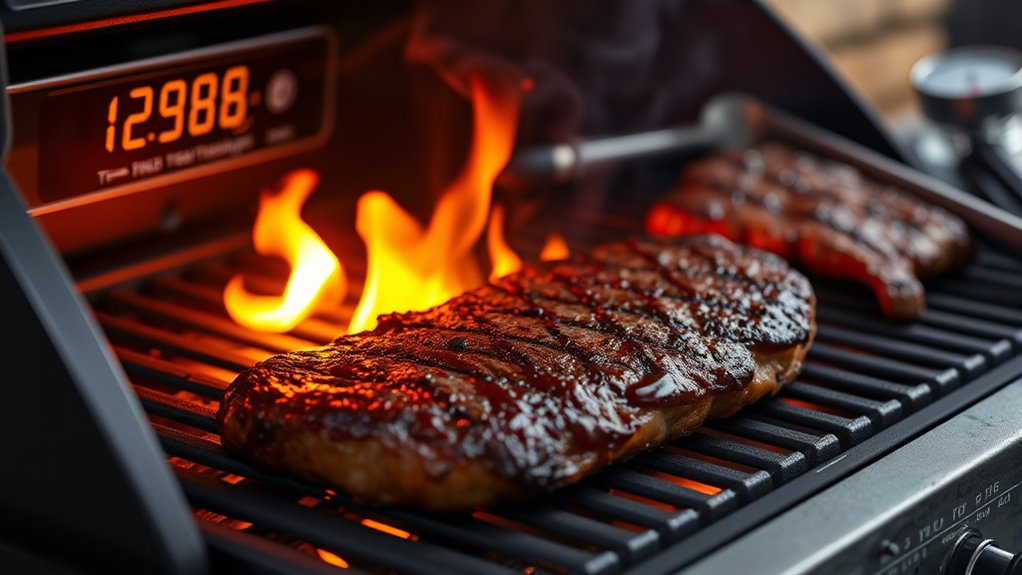
When using a pellet grill, placing your steaks directly over the heat source is key for a perfect sear. Cooking them away from the direct flame helps ensure even, gentle doneness.
For searing, put your steaks on the hottest part of the grill, where the direct heat creates a flavorful crust. After searing, move the steaks to a cooler spot to finish cooking to your preferred doneness.
Marinades can really boost flavor, so think about marinating your steaks beforehand to add depth. Seasoning is also important—apply plenty of salt, pepper, or spice rubs just before grilling to develop a tasty crust.
Use high heat for searing and lower temperatures for slow cooking. This way, your steak gets a beautiful crust without overcooking the inside.
This strategic placement on your grill guarantees a juicy, flavorful steak with a perfect sear and even cooking all around.
How to Use a Meat Thermometer for Perfect Steak Doneness
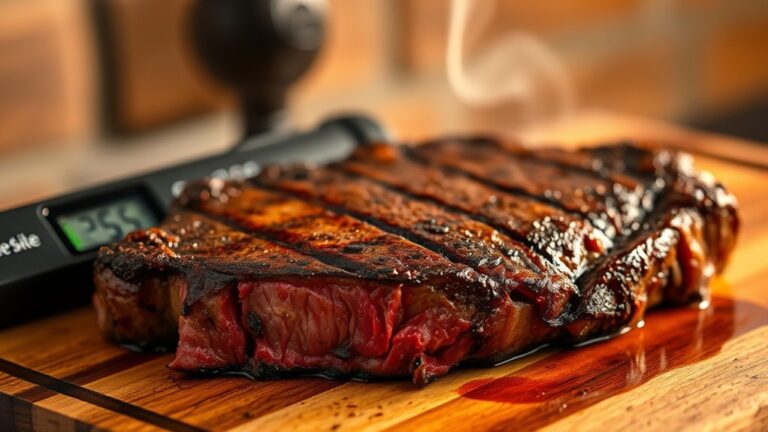
Using a meat thermometer is the best way to guarantee your steak reaches the perfect level of doneness. Insert the thermometer into the thickest part of the steak, avoiding bone and fat.
Using a meat thermometer ensures your steak reaches the perfect level of doneness every time.
For precise results, understand how marbling techniques influence doneness. More marbling can affect how the steak heats and cooks evenly.
If your meat has been aged, it may cook slightly differently due to moisture loss and improved tenderness. That’s why using a thermometer becomes even more essential.
Aim for specific internal temperatures: 120°F for rare, 130°F for medium-rare, 140°F for medium, 150°F for medium-well, and 160°F for well-done.
Keep in mind that the steak continues to cook slightly after removing it from the grill. Using a reliable thermometer helps you monitor these temps accurately.
This way, you can ensure your steak is cooked perfectly, whether you’re focusing on marbling or meat aging to get the best flavor and tenderness.
Tips for Marinating and Seasoning Steaks for Flavor and Juiciness
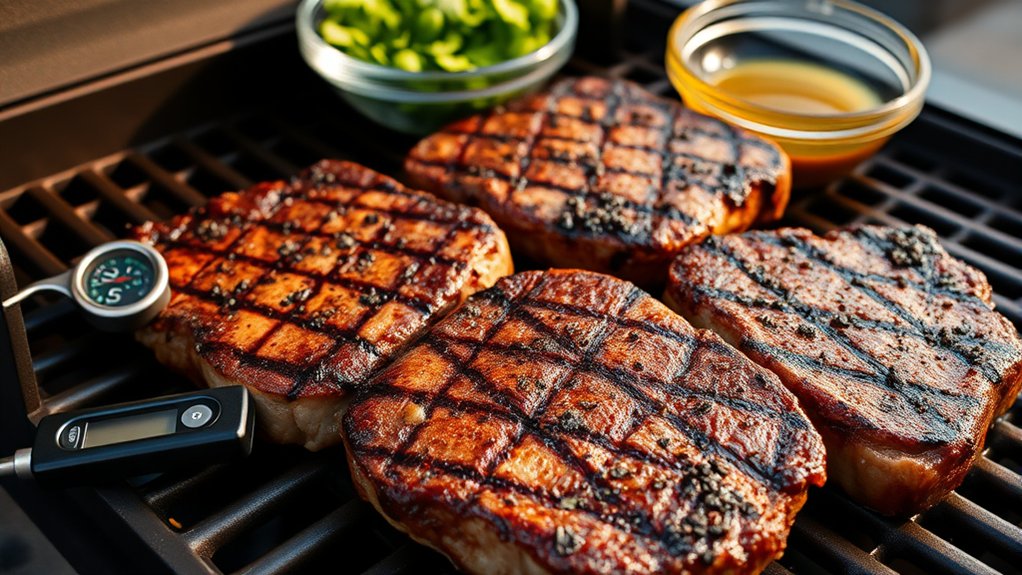
If you want your steaks to be packed with flavor and stay nice and juicy, try marinating them with a blend of acids, oils, and herbs. It’s a simple way to add layers of taste and keep the meat tender. Just toss your steaks in the marinade a few hours before cooking, and you’ll notice the difference.
When it comes to seasoning, don’t forget to evenly sprinkle salt and spices all over the meat. This helps flavor penetrate and creates a nice crust when you sear it. Taking a little extra time to season properly really makes your steak stand out and turns a good cut into a meal to remember.
Enhancing Flavor With Marinades
Marinating steaks is a simple yet effective way to boost their flavor and juiciness before grilling on your pellet grill. Proper marinade techniques help infuse bold flavors and tenderize the meat.
Keep the marinade duration around 30 minutes to 4 hours for the best results. Use acidic ingredients like vinegar or citrus to help tenderize, and add herbs, spices, or aromatics for extra depth.
Remember to balance salt, acid, and flavorings for an ideal marinade. Use a resealable bag or shallow dish for even coating, and turn steaks occasionally to ensure consistent coverage.
Avoid over-marinating, as it can make the meat mushy. Pat steaks dry before grilling to improve searing and get that perfect crust.
Perfecting Seasoning Techniques
Perfecting your seasoning techniques starts with understanding how to balance flavors to enhance the natural taste of the steak while keeping it juicy. Salt balancing is key—use enough salt to boost flavor without overpowering the meat, and let it sit briefly to tenderize.
Herb blending adds depth; combine herbs like rosemary, thyme, and garlic for a fragrant, savory crust. Apply seasonings evenly to ensure every bite is flavorful.
Be careful not to over-season, which can mask the steak’s natural qualities. Marinate steaks with a simple mix of oil, salt, herbs, and spices to boost juiciness and flavor.
How to Achieve a Perfect Sear on Your Steak
Ever wondered how to get that mouthwatering, restaurant-quality crust on your steak? Achieving a perfect sear enhances both flavor and appearance, highlighting marbling patterns that make the steak tender.
Start with a hot pellet grill—aim for around 450-500°F. Pat your steak dry to remove excess moisture, which can prevent a good sear.
Start with a hot pellet grill at 450-500°F and dry your steak for a perfect sear.
Use high heat to quickly develop a caramelized crust. Avoid moving the steak too often; let it sit for 1-2 minutes per side.
Press gently to ensure even contact with the grill grates. Finish by flipping twice for a consistent sear.
These steps help lock in juices while creating that irresistible crust. A good sear not only adds flavor but also boosts tenderness, making every bite melt in your mouth.
Mastering this technique turns a good steak into an unforgettable meal.
Resting and Serving Your Steaks for Maximum Flavor
Once you’ve achieved a beautiful sear on your steak, the next step is to let it rest. Resting allows the juices to redistribute, making every bite flavorful and tender. Cover the steak loosely with foil for 5 to 10 minutes, depending on its thickness.
As it rests, focus on presentation. Slicing against the grain reveals a clean, appealing look, while a simple, elegant plating technique highlights its natural beauty. Use a warm plate to keep the steak at the perfect temperature.
When plating, consider adding a touch of garnish, like fresh herbs or a drizzle of sauce, to boost visual appeal. Proper resting and thoughtful presentation not only improve flavor but also give your steak a restaurant-quality look.
Serve your masterpiece with confidence, knowing that your careful resting and plating techniques will impress everyone at the table.
Troubleshooting Common Pellet Grill Steak Problems
Despite your best efforts, you might run into some common pellet grill steak problems like uneven cooking, dryness, or not getting that perfect sear. To fix these, focus on keeping your grill well-maintained and practicing safe cooking habits.
First, make sure your pellet grill is clean and in good shape to prevent hot spots that lead to uneven cooking. For dryness, avoid overcooking and use a meat thermometer to keep track of the internal temperature.
Getting a good sear means reaching high heat at the start. Double-check that your grill hits the right temperature before you begin cooking. This will help you achieve that perfect crust.
Ensure your grill reaches high heat before cooking for a perfect sear and crust.
Here are some troubleshooting tips:
- Check and replace old or low-quality pellets to maintain consistent heat.
- Adjust your grill’s temperature settings to promote even heat distribution.
- Use a thermometer to prevent overcooking and dryness.
- Regularly clean your grill to keep it operating safely and efficiently.
Frequently Asked Questions
Can I Grill Frozen Steaks on a Pellet Grill?
Yes, you can grill frozen steaks on a pellet grill, but keep safety in mind. Frozen steak safety is key, so make sure you cook them thoroughly to an internal temperature of at least 145°F.
Before grilling, apply your favorite pellet grill seasoning directly on the frozen surface. This method saves time, but you might need to adjust your cooking time to ensure even doneness and proper safety.
How Do Altitude and Weather Affect Grilling Temperatures?
Altitude effects can lower your grill’s temperature, making it harder to reach ideal searing heat. Weather considerations like wind and rain can also impact temperature stability, causing uneven cooking.
You should adjust your grill’s settings accordingly, such as increasing heat or preheating longer. Keep an eye on the thermometer and consider using a windbreak or cover to maintain consistent temps.
This helps ensure your steaks turn out perfectly every time.
What Are Safe Internal Temperature Guidelines for Different Steak Doneness?
You should aim for specific internal temperatures based on steak doneness: 125°F for rare, 135°F for medium-rare, 145°F for medium, 155°F for medium-well, and 160°F for well done.
Keep in mind that marbling improves flavor and tenderness, especially in thicker steaks. Use a reliable meat thermometer to get accurate readings.
Thicker cuts may need a longer cook time, so monitor the internal temp closely to avoid overcooking.
How Long Should I Rest My Steaks After Grilling?
You should rest your steaks for at least 5 minutes after grilling. That’s when the magic of steak carryover happens, turning your perfectly cooked meat into a juicy masterpiece!
Use the resting technique by tenting it loosely with foil. This allows the juices to redistribute evenly. Don’t rush this step; patience lets those flavorful juices settle.
This ensures every bite is tender, succulent, and bursting with flavor. Taking a few minutes to rest your steak makes all the difference in the final taste and texture.
Can I Use Wood Pellets for Enhanced Flavor When Grilling Steaks?
Yes, you can definitely use wood pellets to add more flavor when grilling steaks.
Pick pellet varieties like hickory, mesquite, or apple to bring different tastes to your grill.
To get the most flavor, try wrapping your steaks in foil with some pellets or adding pellets during the last few minutes of grilling.
This will boost the smoky aroma and enhance the natural richness of your steaks.
Conclusion
Mastering your pellet grill turns grilling into an art, blending precision with passion. Whether you’re searing a thick cut or gently cooking a tender filet, the right temperature makes all the difference. Think of your grill like a dance partner—sometimes fiery and intense, other times slow and steady. When you balance heat with patience, you’ll serve up steaks that are both perfectly cooked and packed with flavor.
Getting the temperature just right is key to grilling perfect steaks on a pellet grill. It’s all about timing and control, so you can achieve that ideal sear or a beautiful medium-rare finish. With the right temperature, every steak you cook will be a tasty masterpiece. Mastering your pellet grill at the right temps makes all the difference for perfect steaks every time.