Perfect Pork Ribs: How Long to Cook on Pellet Grill
Cooking perfect pork ribs on a pellet grill is something many barbecue enthusiasts strive for but often find tricky. If you’ve ever been disappointed with ribs that are either undercooked or overdone, you’re not alone. Achieving that tender, fall-off-the-bone texture can feel like a challenge.
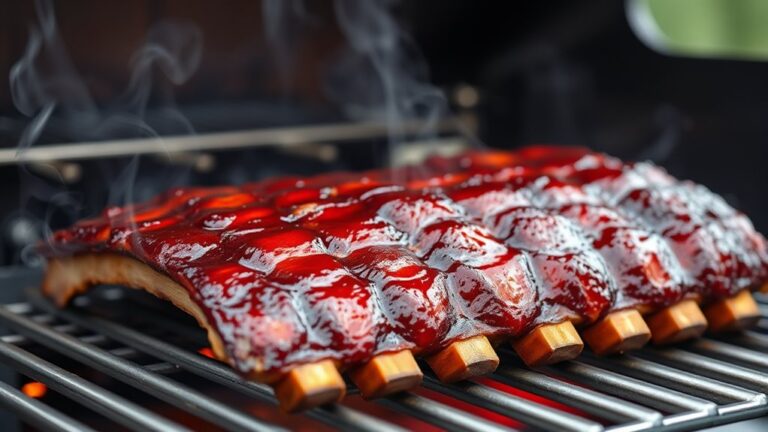
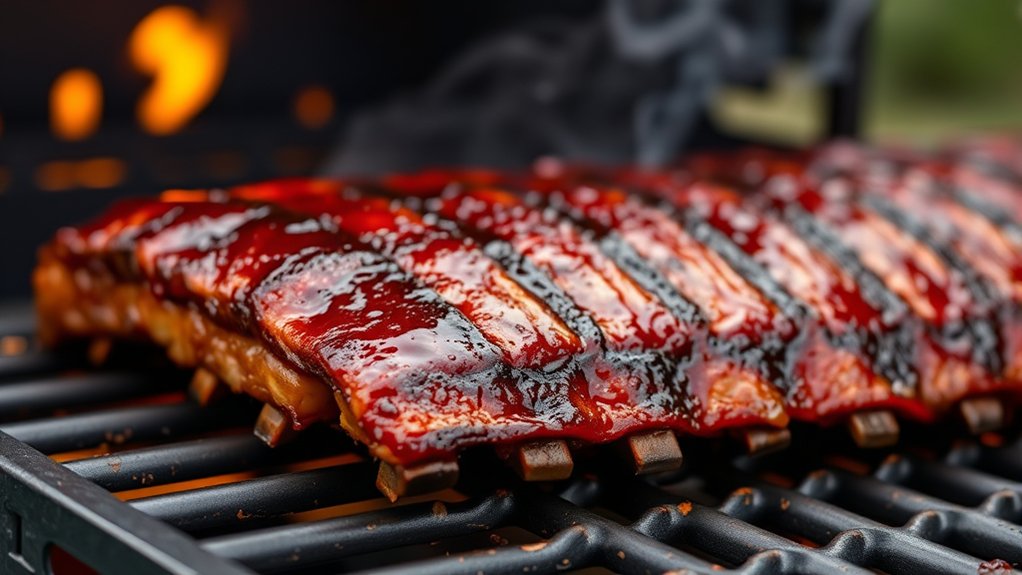
Cooking perfect pork ribs on a pellet grill takes about 4 to 6 hours at 225°F to 250°F. You’ll want the meat to pull back from the bone, bend easily, and slide off with little resistance.
Wrapping ribs in foil during the process can help trap moisture and speed things up.
For the best results, patience and proper seasoning are key. If you keep going, you’ll uncover how to master every step for ideal ribs.
Key Takeaways
- Cook pork ribs on a pellet grill at 225°F for 4 to 6 hours for tender, fall-off-the-bone results.
- Use a meat pullback from the bone and the bend test to check if they’re done.
- Wrap the ribs in foil after a few hours to keep them moist and speed up the cooking process.
- Keep the temperature steady between 225°F and 250°F the whole time.
- Let the ribs rest loosely in foil for 10-15 minutes before serving to lock in the juices.
How Long Do Pork Ribs Take to Cook on a Pellet Grill?
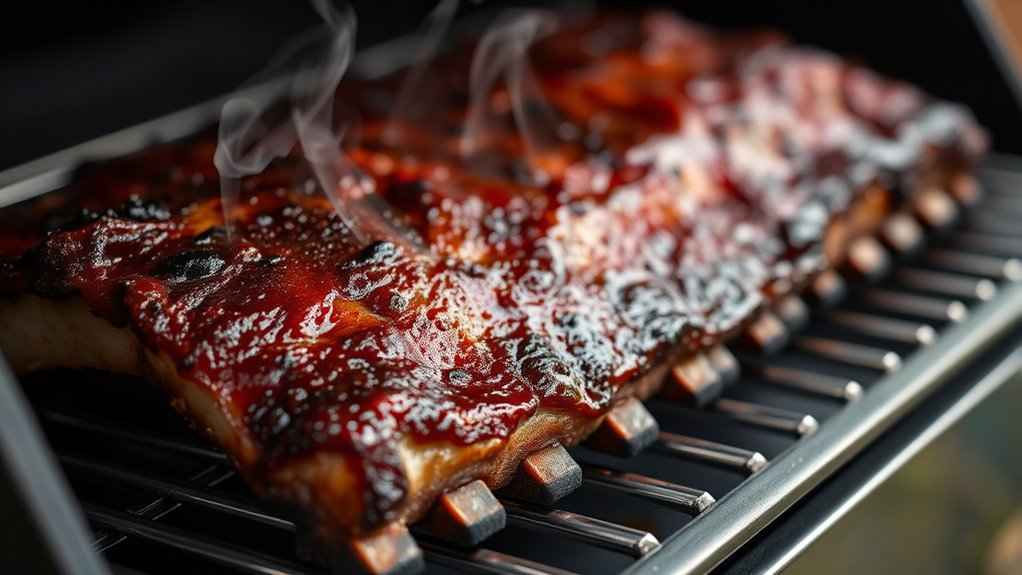
Cooking pork ribs on a pellet grill usually takes about 4 to 6 hours, depending on the temperature and the type of ribs. During this time, focus on techniques that help you get tender, juicy results.
Keeping the grill at around 225°F allows the ribs to cook slowly, breaking down connective tissues for maximum tenderness. Use indirect heat and avoid flipping the ribs too often to ensure even cooking.
To boost flavor, try applying a rub or marinade before cooking. It will penetrate the meat over time and add extra deliciousness.
Many pitmasters check doneness with the “bend test.” When the ribs bend easily without cracking, they’re ready to enjoy.
Patience is key. A low and slow approach helps flavors develop fully while keeping the meat moist and flavorful.
With the right technique, your ribs will turn out perfectly tender and packed with smoky goodness.
What Are the Different Types of Pork Ribs and How Do They Affect Cooking?
Pork ribs come in several popular cuts, each offering unique textures and flavors that influence how you should cook them. The main types are baby back ribs, spare ribs, and St. Louis-style ribs. Baby back ribs are tender and lean, with a quick cooking time, making them perfect for flavor infusion and delicate handling.
Spare ribs are larger, meatier, and contain more fat, which boosts their rich flavor but requires longer cooking to break down connective tissues. St. Louis-style ribs are spare ribs trimmed into a rectangular shape, offering even cooking and better bone selection for consistent results.
Bone selection plays a key role. Fresh, meaty bones improve flavor infusion during cooking. Understanding these differences helps you tailor your pellet grill approach, ensuring each cut remains moist, tender, and flavorful.
Adjust your cooking time and temperature based on the rib type to achieve ideal results.
How Do You Prepare Ribs for Perfect Pellet Grill Cooking?
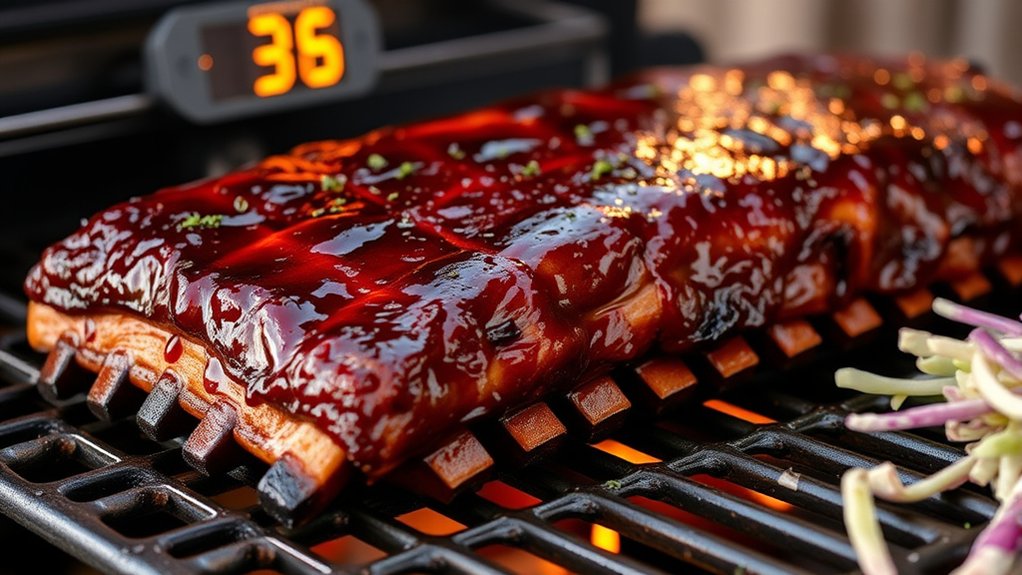
Preparing ribs properly before placing them on your pellet grill sets the stage for tender, flavorful results. Start by removing the membrane from the back of the ribs; this improves cooking and allows seasonings to penetrate better.
Next, apply your preferred cooking techniques—whether a dry rub, marinade, or a combination—to boost flavor. Use a generous layer of spices or a flavorful rub to elevate taste and create a tasty bark.
For extra flavor, let the ribs rest with the seasoning for at least an hour or overnight in the fridge. This helps the flavors meld and improves moisture retention during cooking.
When ready, evenly coat the ribs and ensure they are at room temperature before grilling. Proper preparation guarantees even cooking and maximizes tenderness.
What Temperature Range Produces Tender, Juicy Ribs?
Maintaining the right temperature during smoking or grilling is key to getting tender, juicy ribs. Keep your pellet grill between 225°F and 250°F. This range lets the collagen break down slowly, making the ribs tender.
Staying within this temperature zone helps the ribs cook evenly and keeps them moist. Proper trimming before cooking also helps—remove excess fat and silver skin that might block heat and affect texture.
When it comes to sauce, wait until the ribs are nearly done before applying it. High heat can cause the sauce to burn, so timing is everything.
Keeping your grill in this temperature window gives you the best shot at building a flavorful crust while keeping the meat juicy and tender. Patience and precise temperature control are what make perfect, fall-off-the-bone ribs.
How Can You Tell When Your Ribs Are Fully Cooked and Ready?
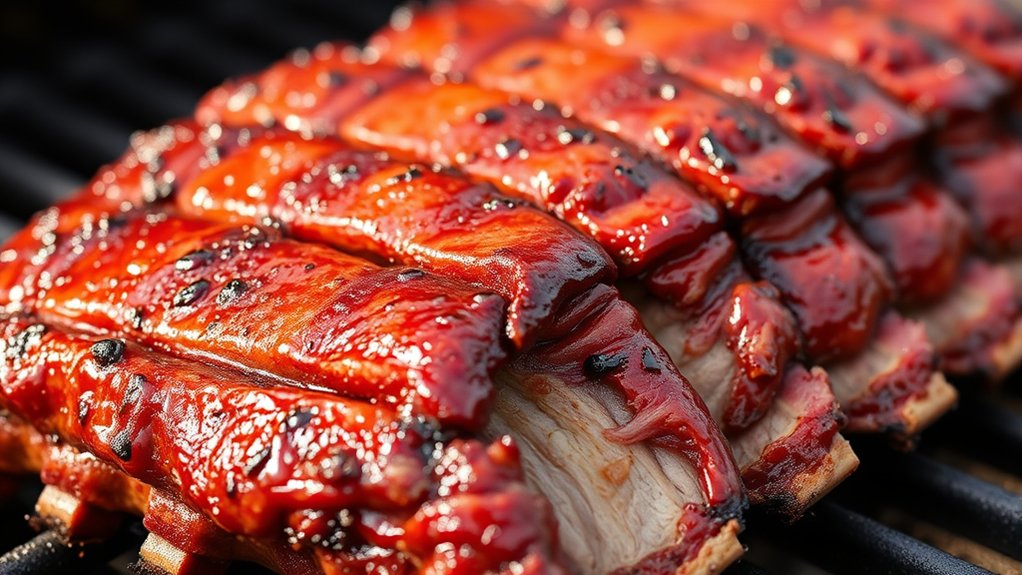
You’ll know your ribs are done when they’re tender and almost fall off the bone, but not so soft that they collapse. The meat should have a slight pull-back from the bone, showing a clean edge.
A good indicator is to gently lift a rack with tongs—if it bends easily without tearing, it’s ready. When it’s time for sauce, wait until the ribs reach this stage; adding sauce too early can interfere with the bark formation.
Trim any excess fat or loose pieces beforehand for more even cooking and easier serving. Once cooked, you can test doneness by inserting a probe or skewer into the meat—if it slides in easily with little resistance, the ribs are ready.
How Does Cooking Time Create Fall-Off-The-Bone Ribs?
Cooking time plays a crucial role in breaking down the connective tissues and collagen within the ribs, which is what ultimately leads to that tender, fall-off-the-bone texture. As you cook, heat transforms collagen into gelatin, making the ribs moist and soft. To maximize tenderness, consider your marinade options and spice rubs, which add flavor and moisture during cooking. Proper timing guarantees these flavors penetrate deeply while breaking down tough fibers.
Cooking time transforms collagen into gelatin, ensuring tender, fall-off-the-bone ribs full of flavor and moisture.
Here are key factors that influence the process:
- Maintaining consistent heat on your pellet grill encourages even collagen breakdown.
- Longer cooking times allow more gelatin to develop, softening the meat.
- Using marinade options with acids like vinegar or citrus helps tenderize and improve juiciness.
- Applying spice rubs at the right time forms a flavorful crust without hindering moisture absorption.
Together, these elements, combined with proper cooking duration, create ribs that are irresistibly tender and fall-off-the-bone delicious.
Should You Wrap Ribs During Cooking? Here’s When and Why
Wrapping ribs during cooking can really make a difference in how tender and moist they turn out. It’s a popular trick among pitmasters for a reason. If you want ribs that are juicy and fall-off-the-bone tender, wrapping them in foil, often called the Texas crutch, helps trap heat and steam.
This speeds up the cooking process and is especially handy if you plan to add sauce. Wrapping keeps the sauce from burning or becoming too sticky during the final cook. It also protects the ribs if you need to pause or store them for a bit.
When you wrap, do it tightly to lock in moisture. You might want to add a splash of liquid like apple juice or broth for extra tenderness. Once the ribs are cooked, avoid wrapping them again for storage because it can trap heat and moisture, which could lead to spoilage.
Wrapping is all about controlling moisture and heat to keep your ribs tender and flavorful from start to finish.
How to Rest and Finish Ribs for Maximum Flavor
Once your ribs finish cooking, resting them is key to locking in juices and boosting flavor. It lets the smoke infusion settle and deepens the marinade, making your ribs tender and tasty. Wrap the ribs loosely in foil and let them rest for 10-15 minutes. This helps juices distribute evenly.
During the last few minutes, apply a glaze or sauce for extra flavor and shine. Rest the ribs uncovered for a few minutes to let the surface reabsorb some smoky goodness. Marinade techniques used beforehand really help flavor each bite.
To enhance the smoke infusion, wrap the ribs in foil while resting. This traps smoky aromas and moisture, keeping the ribs juicy and flavorful. This finishing step ensures your ribs stay moist, packed with flavor, and perfectly infused with smoke and marinade.
Common Mistakes That Can Ruin Your Ribs’ Perfect Cook Time
Even a small mistake in timing can ruin your ribs’ perfect cook. One common error is rushing the process, which can lead to undercooked or dry ribs. Avoid using marinade techniques that are too acidic or overly salty, as they can break down the meat or overpower the flavor.
Rushing the process risks undercooked, dry ribs; balance timing, marinade, and seasoning for perfect results.
Instead, opt for a balanced marinade that *improves* tenderness without compromising texture. *Likewise*, neglecting proper rib seasoning can throw off your cook time; too much seasoning might cause an uneven bark or burnt spots, while too little can result in bland ribs.
Be mindful of applying seasoning evenly and allowing enough time for it to penetrate the meat. Over-seasoning or under-seasoning can also affect how the ribs cook and their final flavor profile. Pay attention to your timing, seasoning, and marinade choices to *guarantee* each step complements the next.
This will help you achieve perfectly cooked, flavorful ribs every time.
Troubleshooting: What to Do If Your Ribs Are Undercooked or Overcooked
If you find your ribs are undercooked or overcooked, don’t panic. There are quick fixes to bring them back on track.
For undercooked ribs, finish cooking by returning them to the grill until the meat is tender and the bone begins to separate easily.
Overcooked ribs need delicate adjustments to salvage flavor and texture. To troubleshoot:
Check the sauce consistency. Adding a bit of warm liquid can help moisten overcooked ribs and improve flavor.
For undercooked ribs, increase cooking time until the meat pulls away from the bone easily. That’s a sign they’re done.
If ribs are overcooked, try wrapping them in foil with a splash of apple juice or broth to rehydrate.
Always verify doneness by gently testing the meat’s tenderness. It should pull away from the bone effortlessly.
Quick adjustments can save your ribs without sacrificing their smoky goodness.
Frequently Asked Questions
What Wood Pellet Flavors Are Best for Pork Ribs?
You should choose wood pellet flavors like hickory, apple, or cherry for pork ribs. These options offer great flavor pairing and a balanced smoke intensity that boosts the meat’s natural sweetness without overpowering it.
Hickory gives a robust, smoky flavor, while apple and cherry add a sweeter, fruitier aroma. Mixing flavors can also create a unique taste profile, ensuring your ribs are flavorful and perfectly smoked.
How Does Humidity Affect Cooking Times on a Pellet Grill?
Don’t let humidity ruin your perfect ribs—embrace it! Humidity control influences cooking times by helping retain moisture, which keeps your ribs tender and juicy.
Higher humidity can slow down the cooking process, meaning you’ll need a bit more time. On the other hand, lower humidity speeds things up, so keep an eye on your grill.
By monitoring humidity levels and adjusting your pellet grill accordingly, you can ensure consistent results and mouthwatering ribs every time.
Stay attentive to this key factor, and your ribs will turn out flawless.
Can I Reuse Pellet Grill Drippings for Sauce?
Yes, you can reuse pellet grill drippings for sauce, but make sure to follow grilling safety tips.
Strain the drippings to remove any charred bits, and be careful of potential bacteria. Regularly cleaning your drip pan is important to prevent flare-ups and keep your grill in good shape.
Reusing drippings adds flavor, but always ensure proper hygiene. Boiling the collected liquid before adding it to your sauce is a good safety step.
What Are the Best Spices and Rubs for Pork Ribs?
You should use a flavorful spice rub with paprika, brown sugar, garlic powder, onion powder, salt, and pepper for pork ribs.
For extra tenderness, consider a marinade like apple cider vinegar or a honey mustard mix. Cook your ribs at about 225°F to 250°F for tender results.
These spices and marinade options boost flavor, and maintaining the right cooking temperature keeps your ribs juicy and delicious.
How Do Outdoor Weather Conditions Impact Pellet Grill Cooking?
Did you know that outdoor weather can cause temperature fluctuations of up to 20°F? When you’re grilling, these changes directly affect your pellet grill’s performance, possibly making your cooking take longer or impacting the smoke flavor.
Wind, rain, and cold weather can make it tough to keep a steady heat. To handle this, try using a grill cover, insulate your grill, or tweak your temperature settings so your pork ribs come out perfectly, no matter the weather.
Conclusion
So, now you’re basically a pork rib whisperer—just don’t forget that patience is your secret ingredient. Perfect ribs aren’t about rushing; they’re about letting your pellet grill work its magic while you resist the urge to peek too often.
Stick to the plan, avoid the temptation to overthink, and soon enough, you’ll be the hero of every cookout. After all, who needs a fancy chef when you’ve got the art of “slow and low” mastered?
And remember, cooking pork ribs on a pellet grill is all about that gentle, steady heat. With patience, you’ll achieve tender, flavorful ribs every time.