How Long to Cook Turkey on a Pellet Grill
Many people struggle with getting that perfectly cooked turkey, especially when using a pellet grill. You want juicy meat with crispy skin, but it’s easy to overcook or undercook. Don’t worry—you’re not alone in this challenge.
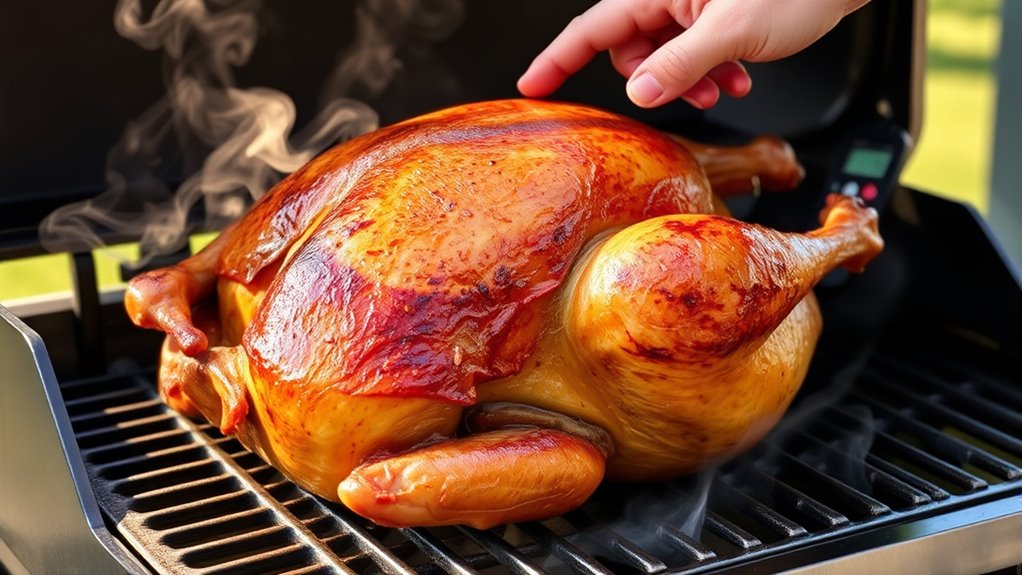
Cooking a turkey on a pellet grill takes about 15-20 minutes per pound at a steady temperature. For juicy results, aim for 225°F, while higher temperatures around 350°F help crisp the skin.
Keep a digital thermometer handy and check that the thickest part of the breast reaches 165°F.
Adjust cooking times based on your turkey’s size and grill conditions. Want detailed tips to perfect your turkey? Keep going to get all the essentials.
Key Takeaways
- Cook turkey for about 15-20 minutes per pound at 225°F on a pellet grill.
- Keep in mind, cooking times can vary based on the turkey’s size, how seasoned it is, and how steady your grill temperature stays.
- Use a meat thermometer to check that the internal temperature hits 165°F in the breast and 175°F in the thigh.
- In the last 15-20 minutes, turn up the grill temperature to help crisp the skin. Just avoid covering the turkey during this time.
- Let the turkey rest for about 20 minutes after cooking. This helps keep the juices in and makes it more tender.
How Long Should You Cook a Turkey on a Pellet Grill?
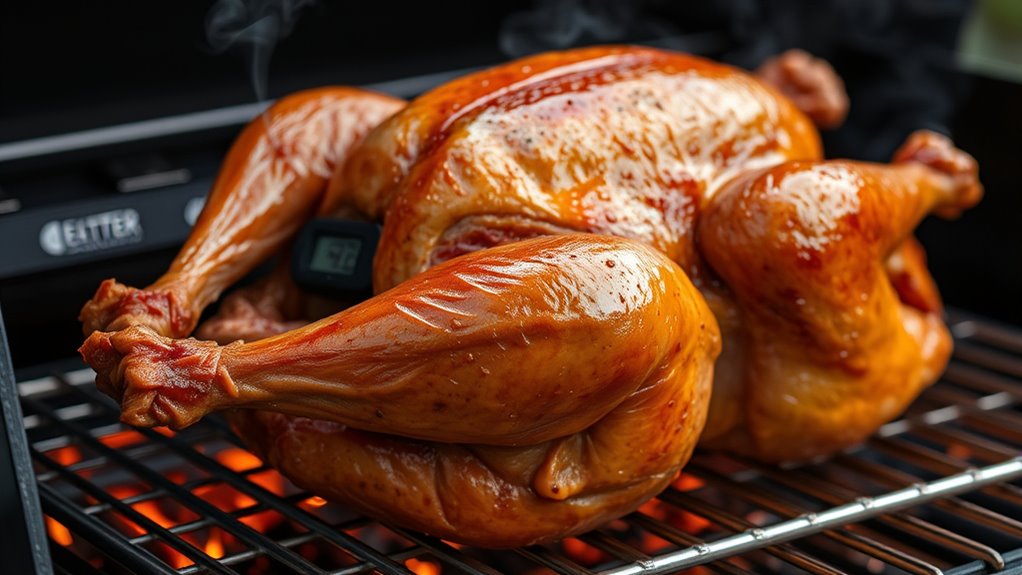
When cooking a turkey on a pellet grill, plan for about 15 to 20 minutes of cooking time per pound. The exact time depends on the temperature and the size of your turkey.
Your choice of cooking techniques affects both the timing and the flavor. For example, smoking at a lower temperature adds a smoky flavor, while higher heat can give you crisp skin faster.
Choosing your cooking method influences both flavor and cooking time, from smoky low temps to crisp skin with higher heat.
To ensure even cooking, use a meat thermometer and check the internal temperature closely. Resting the turkey after cooking helps keep the juices in and boosts the flavor.
Remember that larger turkeys might need more time, but always rely on the internal temperature rather than time alone to tell when it’s done. This way, your turkey stays juicy and flavorful no matter its size or how you cook it.
Getting the timing right and using good techniques will help you end up with a delicious, perfectly cooked turkey.
What Factors Affect Your Turkey’s Cooking Time?
Your turkey’s size and weight really play a big role in how long it takes to cook. Basically, the bigger the bird, the longer it’ll need in the oven. So, if you’re working with a massive turkey, just be prepared for a little extra cooking time.
Another thing to keep in mind is your grill or oven temperature. If the heat isn’t steady and keeps fluctuating, it can mess with your cooking time. So, making sure the temperature stays consistent is key to getting that perfect, evenly cooked turkey.
Just remember these factors, and you’ll be well on your way to a delicious, perfectly cooked turkey!
Turkey Size and Weight
The size and weight of the turkey are the main factors that affect how long it takes to cook on a pellet grill. Bigger turkeys need more time, so plan accordingly to ensure even cooking and food safety.
Keep in mind, safety is key to avoid undercooked meat, especially with larger birds. The weight also influences flavor because longer cooking can deepen the taste.
Here are some points to consider: a 12-16 lb turkey usually takes about 4-6 hours to cook. Thicker parts might need extra time to cook through properly.
Smaller turkeys cook faster, which means less overall grilling time. Always use a meat thermometer to check for the right internal temperature.
Adjust your grilling time based on the size of your turkey and keep an eye on the internal temperature to make sure it’s safe and delicious.
Grill Temperature Consistency
Grill temperature consistency is key to cooking your turkey evenly and quickly on a pellet grill. Fluctuations can cause uneven cooking, making your meat dry or underdone.
To keep the heat steady, regular grill maintenance is a must. Clean the grates often and check the pellet feed system to avoid disruptions. Staying on top of these helps maintain a stable temperature.
Consistent heat also helps your turkey soak up smoky flavors evenly. Keep the grill lid closed as much as possible to prevent hot spots and temperature swings.
Using a good thermometer allows you to track temperature changes and make quick adjustments. When your grill stays steady, you’ll end up with a juicy, flavorful turkey without guesswork. It makes the whole process more predictable and your results more delicious.
How to Calculate Cooking Time Based on Turkey Weight
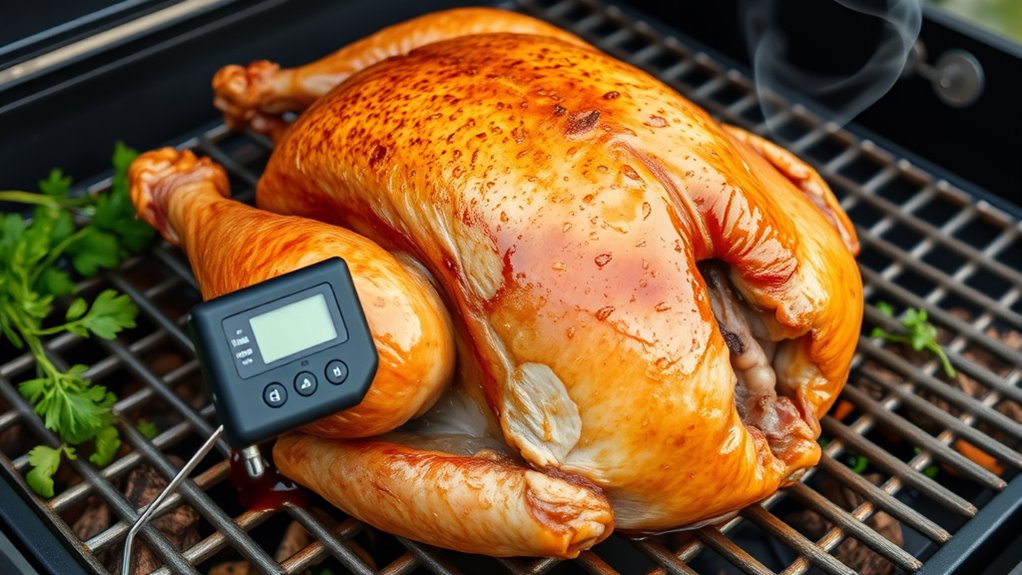
Want to know how long to cook your turkey? It’s pretty straightforward — you just need to consider the weight-to-time ratio. Think of it as your starting point, based on how big your turkey is.
But don’t forget, if your turkey’s bigger or smaller than the usual weights, you’ll want to tweak the cooking time a bit. And whatever you do, keep a close eye on the internal temperature. That’s the best way to make sure your turkey is cooked safely and comes out just right.
Weight-to-Time Ratios
Calculating how long to cook your turkey on a pellet grill starts with understanding weight-to-time ratios. As a rule of thumb, plan for about 15-20 minutes per pound at 225°F.
Keep in mind, things like seasoning and pellet grill maintenance can affect cooking time, so it’s important to keep an eye on the internal temperature. Use a reliable meat thermometer for accuracy.
Adjust your cooking time if your turkey is larger or smaller. Also, make sure to keep the grill temperature steady throughout the process.
Rest your turkey before carving to keep it juicy. Knowing these ratios helps prevent overcooking or undercooking your bird.
With proper prep and attention, you’ll achieve a perfectly cooked turkey on your pellet grill every time.
Adjusting for Size
Adjusting your cooking time based on the size of the turkey ensures it reaches the right temperature without overcooking. For larger birds, add about 15-20 minutes per pound, while smaller turkeys need less time.
Keep in mind that seasoning variations can vary too. Smaller birds might benefit from more concentrated flavors, while larger ones can handle layered seasonings. When calculating cooking time, think about presentation—roast a whole turkey for a dramatic look, or carve smaller portions for easier serving.
Remember, weight isn’t the only factor. Bone-in turkeys cook a bit differently than boneless ones. Always allow some resting time so the juices can redistribute.
Monitoring Internal Temp
Wondering how to guarantee your turkey is perfectly cooked on a pellet grill? Monitoring internal temp is key. To ensure proper doneness and prevent overcooking, keep a reliable meat thermometer handy.
Track the temperature in the thickest part of the breast and thigh. Here are some tips:
- Aim for 165°F in the breast and 175°F in the thigh for safe, juicy meat.
- Use a probe thermometer for continuous readings.
- Adjust cooking time based on weight, but always prioritize internal temp.
- Rest the turkey for at least 20 minutes to let the juices settle and improve presentation.
What Temperature Should You Set Your Pellet Grill for Juicy Turkey?
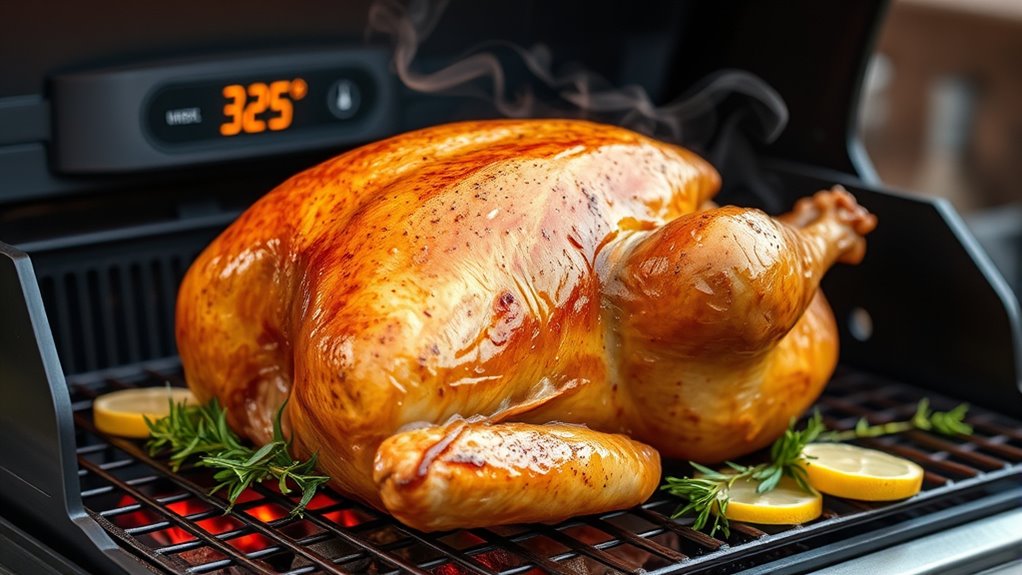
To keep your turkey juicy and flavorful, set your pellet grill to a temperature between 325°F and 350°F. This range helps cook the turkey evenly while keeping it moist. Cooking at this temperature also prevents drying out or burning the meat.
Sticking to this range ensures your turkey stays tender and safe to eat. It also allows the seasoning to penetrate well without overcooking the outside. This way, you get a delicious, balanced result every time.
Here’s a quick guide:
| Temperature Range | Purpose | Notes |
|---|---|---|
| 325°F – 350°F | Juicy, tender turkey | Best for moisture retention |
| 350°F – 375°F | Crispy skin, faster cooking | Use cautiously to avoid drying out |
| Below 325°F | Slow, low-temperature cooking | Longer cook time, risk of uneven doneness |
Sticking to this range helps you balance safety, flavor, and moisture, making your turkey both tasty and safe to enjoy.
How Do You Achieve Crispy Skin on Your Pellet-Grilled Turkey?
Getting that perfectly crispy skin on your pellet-grilled turkey requires a few strategic steps. First, pat the turkey dry thoroughly because moisture prevents crispiness. Next, apply a light coating of oil or butter to help with browning.
To add flavor and improve texture, consider seasoning the skin with spices or herbs. During the last 15-20 minutes of cooking, increase the grill temperature to promote crispiness.
Use indirect heat to prevent burning while crisping the skin. Avoid covering the turkey during the final stage so the skin can dry out slightly.
Finally, let the turkey rest after cooking. This helps the skin set and stay crispy.
How to Use a Meat Thermometer to Check for Doneness
To make sure your turkey is cooked just right, it’s really important to know how to use a meat thermometer properly. Just stick the thermometer into the thickest part of the breast or thigh—make sure you’re not touching any bones, because that can give you a false reading.
Once you’ve done that, keep an eye on the temperature. You’re aiming for an internal temperature of 165°F. And as a quick trick, check that the juices run clear—that’s a good sign your turkey is done and safe to eat.
Proper Thermometer Placement
Proper thermometer placement is essential for accurately checking your turkey’s doneness. To get a true reading, insert the thermometer into the thickest part of the breast, avoiding bones. Bones can give false readings, so be sure to steer clear.
For added accuracy, check the temperature of the thigh, especially if you’re preparing a larger bird. Remember, a properly placed thermometer helps you avoid undercooking or overcooking, ensuring juicy results.
As you prepare your turkey, consider how marinade recipes might affect cooking times. This makes precise temperature checks even more important to get perfect results.
When carving your turkey, knowing the correct internal temperature helps you serve perfectly cooked slices. Always use a reliable digital thermometer and double-check readings in different spots for consistency.
Proper placement guarantees safe, delicious results every time.
Ideal Temperature Targets
Knowing the ideal temperature targets guarantees your turkey is both safe to eat and perfectly juicy. Use a meat thermometer to check the internal temperature in the thickest part of the breast and thigh.
For safe consumption, the breast should reach 165°F, while the thigh should be around 175°F. These targets help keep your turkey moist and tender, making carving easier and more enjoyable.
During holiday decorating, take time to monitor your bird’s progress to avoid overcooking. Relying on precise temperature readings helps prevent dry meat and ensures your feast is delicious.
Checking for Juiciness
Using a meat thermometer to check for doneness is the most reliable way to guarantee your turkey stays juicy and tender. Insert the thermometer into the thickest part of the breast or thigh, avoiding bone. Look for a temperature of 165°F, which means it’s cooked properly and has the right flavor.
As the turkey cooks, you’ll notice smoke rings forming—a sign of good smoke penetration and flavor. Keep an eye on the thermometer to prevent overcooking, which can dry out the meat. Juiciness isn’t just about temperature; it’s about timing and technique.
Use the thermometer to monitor progress and make sure your turkey’s internal temp is perfect. Proper checking helps keep the moisture in, resulting in a flavorful, tender bird with the ideal smoke ring.
Common Mistakes That Can Extend or Shorten Cooking Time
One of the most common mistakes that can throw off your turkey’s cooking time is opening the pellet grill too often. Every time you lift the lid, heat escapes, which can make the cooking take longer or cause uneven doneness. This messes with your holiday plans and presentation.
Neglecting proper temperature monitoring can also be a problem. It might lead to overcooking or undercooking, which affects flavor and moisture. Keeping an eye on the temperature helps you avoid these issues.
To prevent these mistakes, limit how often you open the grill. Use a reliable meat thermometer instead. Here’s a quick reference:
| Mistake | Effect |
|---|---|
| Opening the lid frequently | Extends cooking time, risks uneven doneness |
| Ignoring temperature accuracy | Can shorten or lengthen cooking unpredictably |
| Not using a thermometer | Increases chances of over or undercooking |
| Relying only on time estimates | Can ruin flavor and texture expectations |
Following these tips will help ensure your turkey stays juicy, flavorful, and perfectly cooked for your holiday gathering.
Sample Cooking Timelines for Different Turkey Sizes
Understanding how long to cook your turkey on a pellet grill depends on its size, as larger birds naturally take more time to reach the proper internal temperature. To help you plan, here are sample cooking timelines based on turkey weight:
- 8-10 pounds: 3 to 3.5 hours at 225°F. This is great for slow, flavorful smoking.
- 12-14 pounds: 4 to 4.5 hours. Perfect for a juicy, evenly cooked bird.
- 16-18 pounds: 5 to 6 hours. Make sure to monitor the temperature carefully.
- 20+ pounds: 6.5 to 7.5 hours. Ideal for larger gatherings and thorough cooking.
Remember, the key to successful cooking and flavor is maintaining a consistent temperature and using a reliable meat thermometer.
Adjust cooking times based on your grill and turkey, and always verify the internal temperature before serving. Proper planning ensures a delicious, perfectly cooked turkey every time.
How to Adjust Cooking Time When Using Stuffing or Butter Rubs
When you add stuffing or butter rubs to your turkey, you’ll want to adjust your cooking time slightly because these additions can affect heat penetration and overall cooking speed. Stuffing can insulate the bird, making it take longer to reach the safe internal temperature. This is essential for stuffing safety.
To guarantee safety, stuff the turkey just before cooking or cook the stuffing separately. Butter rubs, especially those containing fats or sugars, can speed up browning and heat transfer. So, monitor your turkey closely.
If you use butter rubs, consider reducing the cooking time slightly or checking the internal temperature earlier to prevent overcooking. Always rely on a reliable meat thermometer to gauge when your turkey reaches the recommended 165°F (74°C).
Adjustments like these help maintain juicy, flavorful meat while ensuring safety and proper doneness when using stuffing or butter rubs on your pellet grill.
Troubleshooting: What If Your Turkey Isn’t Cooked Yet?
Even if you’ve followed all the guidelines for cooking your turkey on a pellet grill, it’s possible that it still isn’t fully cooked. Don’t panic—there are ways to troubleshoot. First, check the internal temperature with a reliable meat thermometer; the thickest part should reach 165°F. If it’s below that, your turkey needs more time.
To speed things up, you can cover the turkey loosely with foil to keep the heat in. Increase the grill’s temperature just a bit and make sure the vents are open for good airflow. Let the turkey rest for 15-20 minutes before carving.
While you wait, it’s a good time to set up your festive decorations and get everything ready. Remember, patience is key for a juicy, perfectly cooked turkey. Rushing can make the meat dry, so trust your thermometer and keep an eye on the temperature.
Frequently Asked Questions
Can You Cook a Frozen Turkey on a Pellet Grill?
Yes, you can cook a frozen turkey on a pellet grill, but it takes longer than a thawed one. You’ll need to increase the cooking time and keep the temperature steady at around 325°F.
It’s really important to use a meat thermometer to make sure the internal temperature hits 165°F for safety. Cooking from frozen can sometimes cause uneven cooking, so keep a close eye on it throughout the process.
How Often Should You Baste Your Turkey During Grilling?
You should baste your turkey every 45 minutes to keep it moist and flavorful. During grilling, consider brining the turkey beforehand to boost juiciness, and use herbs, garlic, and citrus for extra flavor.
Basting helps spread the juices and seasoning evenly. Keep a close eye on the grill temperature to avoid overcooking. Enjoy your perfectly tender, flavorful turkey!
Is It Safe to Cook Turkey at a Lower Temperature?
Cooking turkey at a lower temperature isn’t just safe—it can actually improve flavor and keep it juicy. As long as you keep an eye on the temperature and reach an internal temperature of 165°F, you’re good to go.
Lower temperatures might take longer, but they help make the turkey tender and moist. Just be sure to monitor the temperature carefully so you don’t risk undercooking.
What Wood Pellets Are Best for Turkey Flavor?
You should choose wood pellets that complement turkey’s mild flavor, like fruit woods such as apple or cherry, to add subtle sweetness. Hickory and maple are also great options for richer, smoky notes.
When selecting pellet types, opt for quality, 100% hardwood pellets to guarantee clean, consistent smoke. These wood flavors improve your turkey without overpowering it, giving it a delicious, smoky aroma and flavor profile that everyone will enjoy.
How Do You Keep Turkey Moist Without Overcooking?
Did you know that properly brined turkeys stay moist up to 50% longer? To keep your turkey moist without overcooking, try brining to infuse flavor and moisture deeply.
Aim for a reliable temperature—around 165°F—and keep a close eye on it. Baste sparingly, and consider wrapping the turkey in foil during cooking.
This helps retain juices while letting the flavor from your chosen wood pellets shine through.
Conclusion
Think of grilling your turkey on a pellet grill like tuning a musical instrument—you’ll find the perfect harmony with patience and attention.
When you follow these guidelines, your bird will come out beautifully cooked, juicy, and flavorful. Just like a chef refining their recipe, adjusting your timing and temperature guarantees perfection.
So trust the process, stay attentive, and soon you’ll be serving a masterpiece that’s as satisfying as hitting the right note in a symphony. And remember, cooking your turkey on a pellet grill is all about patience and precision to get that perfect, juicy result.