7 Simple Steps to Clean Your Pellet Grill
Many pellet grill owners know the struggle of keeping their grills clean and functioning smoothly. It’s a common challenge that can feel overwhelming, especially when you’re eager to enjoy great-tasting food without the hassle. But don’t worry—you’re not alone in this.
To clean your pellet grill, start by turning it off, unplugging, and letting it cool completely. Remove leftover food, grease, and debris from the grates and interior.
Clear out ash from the tray and sweep the inside.
Check and clean the hopper and auger for blockages or moisture.
Wipe down the exterior and control panel with a damp cloth.
Regular maintenance keeps your grill performing well — learn more to keep it running smoothly.
Key Takeaways
- Turn off and unplug your grill, then let it cool completely before you start cleaning.
- Remove and dispose of any ash, debris, and old pellets from the hopper and interior surfaces.
- Scrub the grates and interior surfaces with a grill brush. Use mild soap if needed to get rid of stubborn grime.
- Check the pellet feed, auger, and vents for any blockages or damage, and clean them out if necessary.
- Wipe down the exterior and control panel to keep everything looking neat. Then, test the ignition and airflow to make sure everything works properly.
Getting Your Pellet Grill Ready for a Good Clean
Before you start cleaning your pellet grill, it’s important to prepare it properly. Turn off the grill and unplug it. Let it cool completely to avoid burns or damage.
Always turn off and unplug your pellet grill before cleaning to prevent burns and damage.
Next, remove any leftover food or grease from the cooking surface to keep things tidy during cleaning. Check your grill’s manual for specific instructions—some models might need you to remove the grates or drip tray first.
Taking out these parts makes cleaning easier and more effective. If you plan to cook soon, cleaning now helps keep your flavors true and the grill in good shape.
Also, check the hopper and pellet feed for obstructions or old pellets that could impact your next cook.
Doing these steps gets your pellet grill ready for a thorough cleaning. It’ll stay in top shape and perform well for all your recipes. Proper prep saves time and helps maintain your grill’s performance.
Removing Ash and Debris for a Fresh Start
Once you’ve removed the food and grease from the cooking surface, it’s time to clear out the ash and debris that have built up inside your grill. Regularly taking out the ash keeps airflow flowing smoothly and prevents buildup that could mess with your pellet storage.
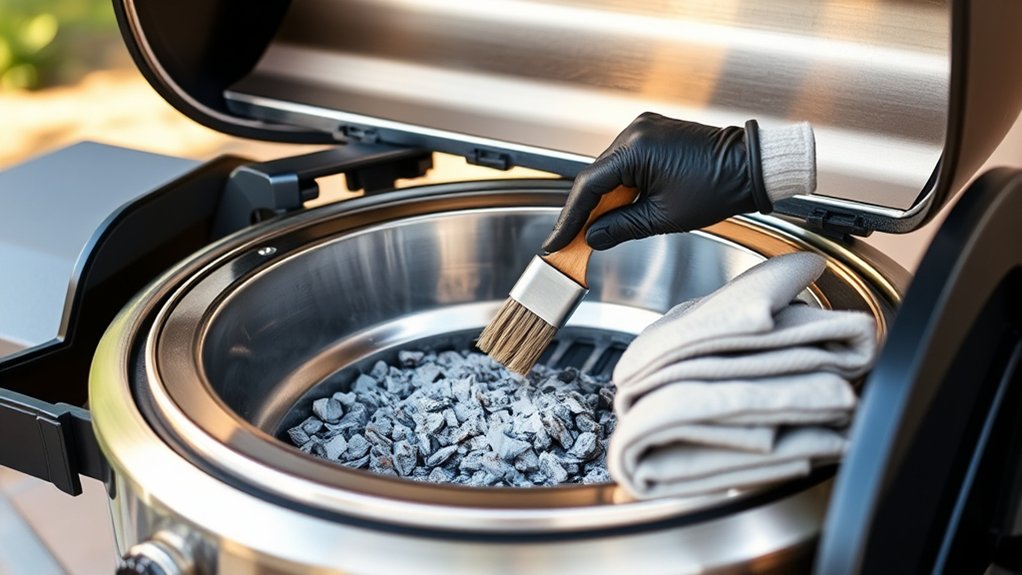
Make sure your grill is cool before you start. Use a dedicated ash shovel or scoop to carefully remove the ash from the firepot and ash collection tray. Proper disposal is key—never toss ash near flammable materials.
Here are some tips to make the process easier: wear gloves to protect your hands, use a metal container for ash disposal, and check the ash collection tray regularly. Also, sweep out debris from the interior for better airflow and confirm the ash is fully cooled before emptying.
Keeping ash and debris in check helps keep your pellet storage clean and your grill performing its best for every cookout.
How to Clean the Grates and Interior Surfaces
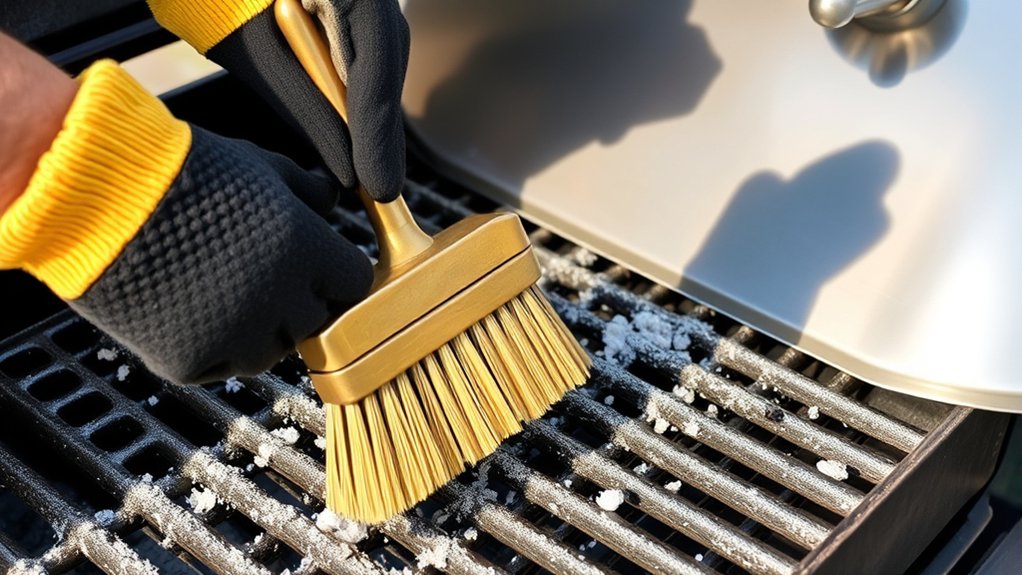
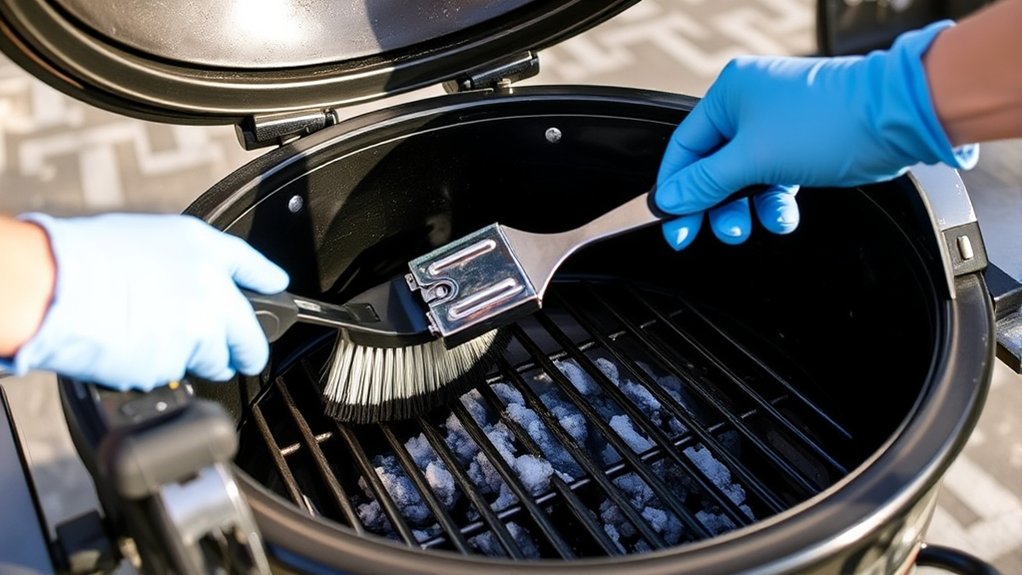
To effectively clean the grates and interior surfaces of your pellet grill, start by removing the grates and any loose debris. Use a grill brush to scrub the grates thoroughly, paying attention to baked-on residue.
Adjust the cooking temperature to a high setting to help loosen grease and grime inside the grill. Once hot, turn off the grill and let it cool slightly before wiping down with a damp cloth.
When cleaning, think about the quality of your wood pellets. Lower-quality pellets produce more ash and residue, which can cling to surfaces. Regular cleaning prevents buildup that could affect heat distribution and cooking.
For stubborn spots, use a mixture of warm water and mild dish soap. Rinse with a damp cloth and dry thoroughly. This routine keeps your grill clean, efficient, and ready for your next cookout.
Checking and Cleaning the Hopper and Auger
First, take a look inside the hopper and see if there’s any debris or old pellets sitting around. If you spot any, just remove them to keep things clean. Next, check out the auger for any blockages or buildup that might be stopping the pellets from flowing smoothly. Once everything looks good, refill the hopper with fresh pellets to make sure your cooking stays consistent and trouble-free.
Inspect Hopper for Debris
Before you start cleaning your pellet grill, check the hopper for any debris that could block the auger or affect fuel flow. Regular hopper maintenance helps ensure your pellets are stored properly and your grill runs smoothly.
Remove any leftover pellets, dust, or debris that may have built up. Take a close look at the sides and bottom of the hopper for obstructions or hardened pellet pieces.
Clear out any buildup that might stop the pellets from feeding properly. Also, look for signs of mold or moisture, which can spoil your fuel supply.
Keeping the hopper clean and in good shape will help your grill run reliably and last longer. Make sure to inspect for blockages and ensure the pellets flow smoothly.
Clear Blockages in Auger
Have you noticed your pellet feed slowing down or stopping altogether? This often means there’s a blockage in the auger.
To fix this, start by unplugging your grill and removing the hopper lid. Check for pellet clumps or debris in the storage area that might be blocking the auger.
Clear out any obstructions with a brush or scraper, making sure the auger can turn smoothly. Sometimes, old or moist pellets stick and cause jams, so it’s a good idea to empty and inspect your stored pellets regularly.
You can also clean the auger tube with a brush or compressed air if needed. Regular maintenance helps prevent future blockages and keeps your pellet grill running smoothly.
Properly maintained pellet storage reduces jams and ensures consistent feeding.
Refill With Fresh Pellets
Filling your hopper with fresh pellets guarantees your grill maintains consistent heat and proper feeding. Before refilling, check the pellet storage for any moisture or clumps, and clean out old or leftover pellets from the hopper and auger. This helps prevent jams and keeps everything running smoothly.
When selecting new pellets, think about your flavor preferences to get the most out of your grilling experience. Proper cleaning of the hopper and auger also prevents buildup that could block pellet flow.
Make sure the hopper is free of debris and old pellets, and choose high-quality, flavor-specific pellets. Check for moisture or clumping in the pellet storage, and remove any obstructions in the auger.
Refill with a measured amount of pellets to ensure even feeding and consistent results.
Wiping Down the Exterior and Control Panel
Wiping down the exterior and control panel of your pellet grill is a simple step that helps keep it looking good and working properly. Regular cleaning prevents dirt, grease, and dust from building up, which can affect how it performs and how it looks.
Use a damp cloth or sponge with mild soap to wipe the outside surfaces. Avoid harsh cleaners that could damage the finish. For the control panel, gently clean with a soft cloth to remove fingerprints and grime, making sure buttons and displays stay clear and responsive.
Be careful not to get too much moisture inside any electronic parts. If needed, use a slightly damp cloth instead of spraying directly onto the grill. This easy maintenance helps keep your grill looking great and working smoothly.
Regular exterior cleaning and control panel care also help extend your pellet grill’s lifespan. It’ll be ready for your next cookout whenever you are.
Final Checks to Keep Your Grill Running Smoothly
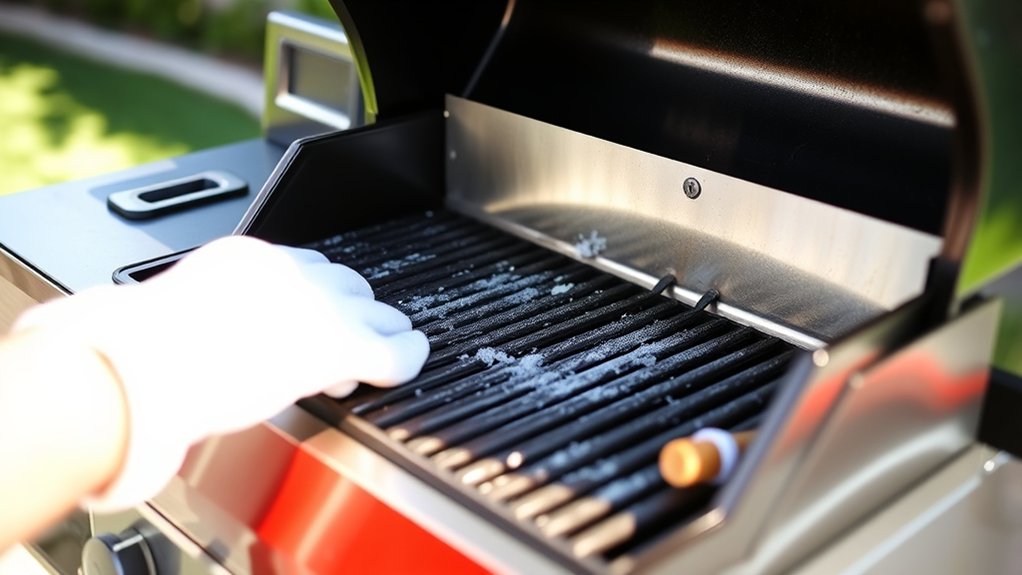
Before you fire up your grill again, take a moment to inspect the gas lines for any leaks or damage. It’s a good idea to check for blockages too, since they can mess with the airflow or temperature control. Oh, and don’t forget to test the ignition system to make sure it sparks properly. Doing these quick checks helps keep your grill safe and running smoothly, so you can enjoy every cookout without any worries.
Inspect Gas Lines
Have you checked your gas lines recently? Regular gas line inspection is *essential* for propane safety and keeping your pellet grill working smoothly.
Before firing up, *make sure* there are no leaks or cracks in the hoses. Look for signs of wear, corrosion, or loose fittings. Always turn off the propane supply before inspecting.
Use a soap and water solution to check for leaks—bubbles mean there’s a problem. Secure all connections tightly, and replace any damaged hoses right away.
Doing these quick checks helps prevent leaks and *guarantees* safe operation. Remember, neglecting gas line safety can lead to dangerous situations or grill failure.
Staying vigilant with gas line inspections keeps your grill safe and in top shape. This way, you can enjoy your cookouts without any worries.
Check for Blockages
To keep your pellet grill running smoothly, it’s important to check for blockages in the vents, burners, and fuel lines. Obstructions can cause uneven heating and poor grilling results.
Inspect all vents and fuel lines carefully for debris or buildup that might restrict airflow. Clearing these blockages helps your grill operate efficiently and safely.
| Blockage Type | Warning Signs | Prevention Tips |
|---|---|---|
| Airflow obstructions | Irregular heat, smoke leaks | Regular cleaning, proper storage |
| Vent blockages | Poor smoke release, uneven cooking | Clear vents often |
| Fuel line clogs | No flame, inconsistent heat | Use quality fuel, inspect regularly |
Stay vigilant. Proper maintenance keeps your grill performing at its best.
Test Ignition System
Wondering if your ignition system is working properly? It’s important to test it before firing up your pellet grill. This final check ensures safe operation and can help prevent unexpected issues.
First, turn on the grill and set it to ignite mode. Listen for the clicking sound that indicates the igniter’s activation. Watch for consistent sparking from the igniter.
Make sure there are no obstructions blocking the ignition port. Confirm all safety precautions are in place, like unplugging the grill if you’re inspecting components.
Check for any visible damage or corrosion. Ensure the igniter wire connections are secure. You can also test the ignition system without actually starting the fire.
Follow the manufacturer’s safety instructions throughout the process. If you find any faulty parts, replace them immediately.
Performing these steps helps ensure your ignition system works efficiently and safely, making your grilling experience smooth and worry-free.
How Often Should You Clean Your Pellet Grill?
Cleaning your pellet grill regularly is key to keeping it running smoothly and making tasty food. Aim to clean it after every few uses or at least once a month if you’re cooking often. Regular cleaning stops residue from building up, which can mess with heat and flavor.
If you store your pellets, keep them in a dry, sealed container to avoid moisture that could clog your system. Don’t forget to check and clean accessories like grates and drip trays to prevent grease buildup.
For a deep clean, every 3-4 months, take out the ash and inspect internal parts. Doing this helps your grill last longer and ensures you get consistently delicious results.
Staying on top of cleaning routines keeps your grill performing at its best, no matter how often you cook. Proper maintenance is the secret to great grilling every time.
Frequently Asked Questions
What Tools Are Best for Cleaning a Pellet Grill?
You should use a sturdy grill brush to scrub the grates and remove built-up grease, ensuring a thorough clean. A cleaning sponge works well for wiping down the interior surfaces and exterior, helping to eliminate residue.
Keep a dedicated brush and sponge handy, and regularly switch them out to prevent cross-contamination. These tools make cleaning easier, faster, and more effective, keeping your pellet grill in top shape for every cookout.
Can I Use Cleaning Chemicals on My Pellet Grill?
You can’t use cleaning chemicals on your pellet grill because they might leave harmful residues or damage the surfaces.
Many people find chemical alternatives like vinegar or baking soda effective and safer for cleaning.
Just make sure to follow safety precautions: wear gloves, avoid inhaling fumes, and rinse thoroughly with water afterward.
This way, you keep your grill clean without risking damage or health hazards.
How Do I Prevent Rust on My Grill?
To prevent rust on your grill, make sure you clean and dry it well after each use. Regular maintenance is key to keeping rust at bay.
You can also apply a thin layer of high-temperature grill paint or oil to protect the metal surfaces from moisture. This extra step helps keep rust from forming.
When you’re not using the grill, cover it up, especially during bad weather. Storing it in a dry place is also a good idea.
Consistent rust prevention and maintenance will help your grill last longer and stay in great shape.
What Signs Indicate My Grill Needs Urgent Cleaning?
If your grill shows excessive smoke, stubborn grease buildup, or an off-putting smoke flavor, it’s time for an urgent clean. You’ll notice uneven cooking or strange grill seasoning tastes, which indicate residue buildup.
Regular cleaning guarantees your pellet grill maintains its ideal smoke flavor and prevents rust. Clean it promptly to keep your grill in top shape and preserve that authentic smoky flavor you love.
Doing so also helps extend your grill’s lifespan and ensures it’s always ready for your next cookout.
Is It Necessary to Lubricate Parts During Cleaning?
Lubricating parts during cleaning isn’t always necessary, but knowing about grill maintenance and lubrication can help your pellet grill last longer.
You should lubricate moving parts like hinges and the auger if they feel stiff or squeaky. Regular lubrication prevents rust and keeps everything running smoothly.
Use food-grade lubricants when needed, and always follow the manufacturer’s recommendations. This way, you can keep your grill in top shape and avoid unnecessary wear.
Conclusion
Regularly cleaning your pellet grill is like giving it a refreshing gust, keeping it in top shape and ready for your next cookout.
By following these simple steps, you’re taking good care of your grill’s health and flavor potential. Think of it as tending to a garden—you’ll enjoy delicious results and a more enjoyable outdoor cooking experience.
Stay consistent with your cleaning routine, and your pellet grill will be your trusty partner on countless flavorful adventures. Happy grilling!