Perfectly Cooked Burgers: How Long to Cook on a Pellet Grill
Cooking the perfect burger on a pellet grill can feel like a challenge, especially if you’re aiming for that ideal balance of juiciness and sear. You’re not alone—many people struggle to get that restaurant-quality result at home.
To cook perfect burgers on a pellet grill, set the temperature between 375°F and 400°F for even searing and juiciness.
Cook burgers for about 4-5 minutes per side for medium, adjusting time for your preferred doneness.
Use a reliable thermometer to check internal temps—125°F for rare, 145°F for medium, and 160°F for well-done.
Keep an eye on timing and temp for great results, and you’ll uncover more tips to enhance your burger game.
Key Takeaways
- Cook burgers at 400°F for 4-5 minutes per side for medium doneness. Adjust the time based on your preferred internal temperature.
- Use a reliable meat thermometer to keep track. For rare, aim for 130-135°F, and for medium, 140-145°F.
- Keep the grill temperature steady between 375°F and 400°F to get a good sear and even cooking.
- Let the burgers rest for 1-2 minutes after grilling. This helps lock in juices and boosts flavor.
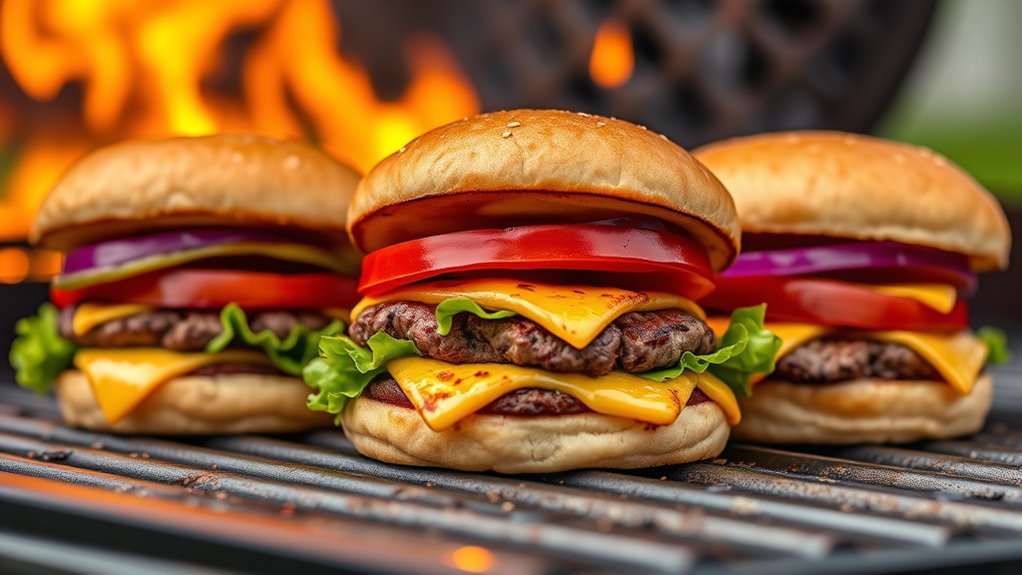
- Add cheese during the last minute, closing the lid to melt it perfectly without overcooking.
How to Choose the Right Patty Thickness for Pellet Grill Cooking
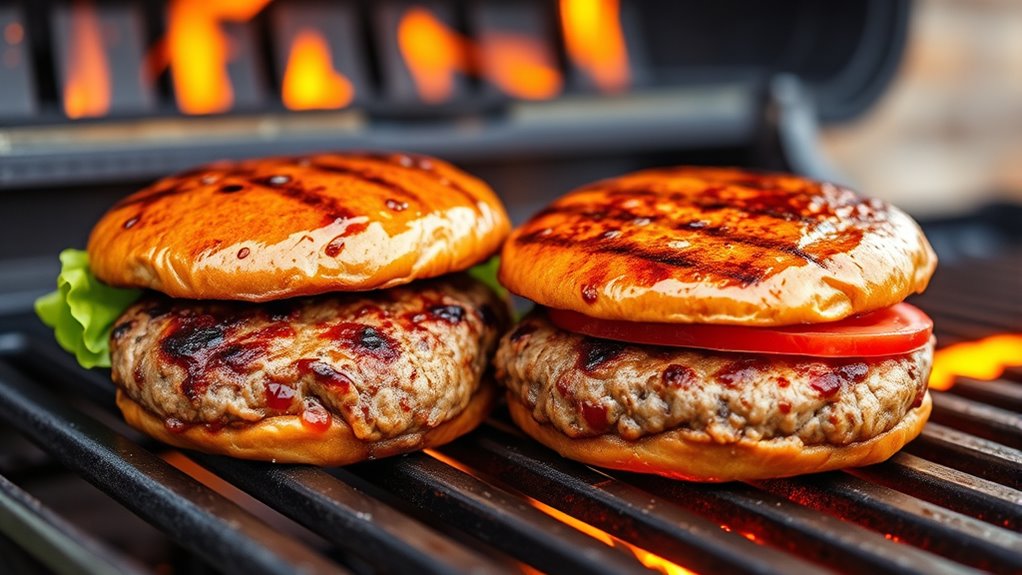
Choosing the right patty thickness is key for perfect pellet grill burgers since it affects cook time and juiciness. A thicker patty gives you more room for juicy, flavorful bites but takes longer to cook through, so you’ll want to adjust your grilling time.
Thinner patties cook faster and are great if you’re in a hurry, but they can dry out if overcooked. When deciding on thickness, think about your toppings and bun choice.
If you’re adding hearty toppings like bacon or cheese, a thicker patty helps keep everything moist. For lighter toppings or softer buns, a slightly thinner patty might be better to avoid overwhelming the bun or toppings.
Keep your patty uniform in thickness to promote even cooking. Ultimately, your choice depends on how you balance juiciness, cook time, and how the toppings and bun work together for the perfect burger.
Setting the Perfect Grill Temperature for Juicy Burgers
Getting the temperature right is key to grilling juicy burgers. It directly affects how evenly they cook and how much moisture they keep.
Set your pellet grill to around 375°F to 400°F for a great balance between searing the outside and cooking the inside without drying out the meat.
This temperature ensures your burgers get a nice crust while staying juicy. When prepping, focus on simple seasonings like salt and pepper to boost flavor without overpowering.
Be mindful of your burgers and buns; cooking the patties at the right temperature stops them from overcooking and prevents the buns from burning.
If you want a slightly charred exterior, aim for the higher end of this range but watch the internal temperature to avoid drying out the meat.
Maintaining the right grill temperature consistently helps you get perfectly cooked, flavorful burgers that stay tender and moist from the first bite to the last.
How Long to Cook Burgers on a Pellet Grill for Different Doneness
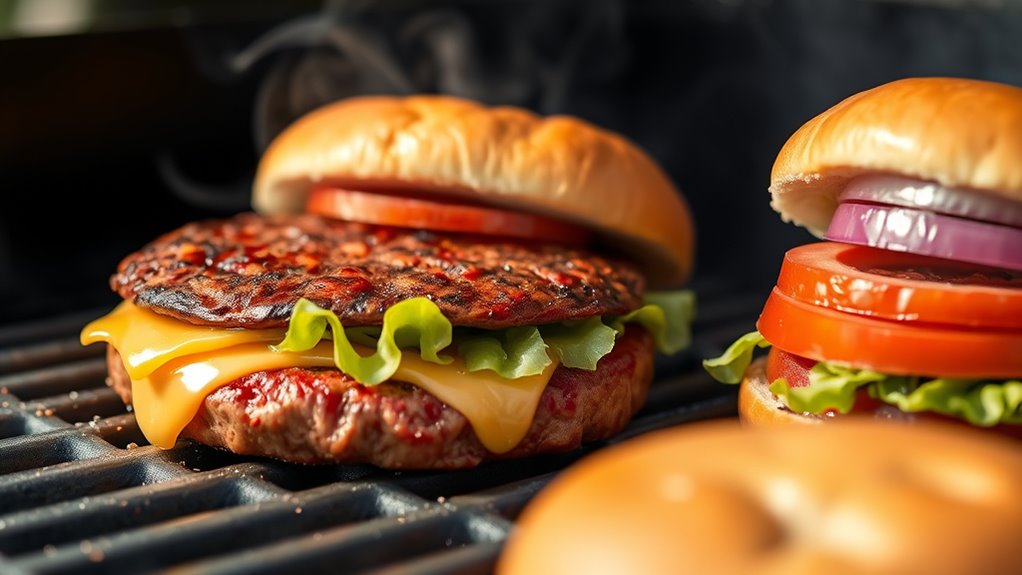
Knowing how long to cook burgers on a pellet grill is key to getting them just the way you like. It’s all about paying attention to the right temperatures and timing, whether you’re after rare, medium, or well-done. When you get the hang of it, you’ll be able to serve up juicy, safe, and delicious burgers every single time.
Cooking Time by Doneness
Cooking times on a pellet grill vary depending on how done you want your burgers to be, so it’s important to know how long to cook them for the perfect result.
For rare burgers, aim for about 4 minutes per side, reaching an internal temperature of 125°F. Medium-rare takes roughly 5 minutes per side, hitting 135°F.
For medium, cook for about 6 minutes per side, targeting 145°F. Well-done burgers need around 8 minutes per side, reaching 160°F.
Remember, toppings like cheese or crispy bacon can add a few extra minutes, so plan accordingly. Also, think about your bun—denser buns may need a little longer to warm through.
Adjust cooking times based on your grill’s heat and the thickness of the patties for the best doneness.
Temperature Guidelines for Burgers
To achieve the perfect burger on a pellet grill, it’s important to know the right cooking times for each level of doneness. Start by aiming for internal temperatures: 125°F for rare, 135°F for medium-rare, 145°F for medium, 155°F for medium-well, and 160°F for well-done.
Use a reliable meat thermometer to keep track of these temps accurately. Remember, the burger buns should be lightly toasted, either on the grill or in a toaster, to complement your cooked patties.
Grilling accessories like a good spatula and grill mats can help handle the burgers easily and prevent flare-ups. Adjust your grill’s temperature to around 375°F to 400°F to ensure even cooking and juicy results.
What Are the Ideal Internal Temperatures for Burger Doneness?
Knowing the ideal internal temperatures for burger doneness guarantees your burgers are both safe to eat and perfectly cooked to your preference. For a juicy, medium-rare burger, aim for 130-135°F. For medium, 140-145°F. For medium-well, 150-155°F. And for well-done, 160°F or higher.
Keep in mind, resting the burger for a few minutes helps distribute juices and stabilize the temperature. When selecting burger toppings, think about how they complement each level of doneness—like melted cheese on a medium burger or crisp bacon on a well-done patty.
Your bun choice also matters. Softer buns work well with medium-rare, while sturdier options can support more toppings on well-done burgers. Using a reliable thermometer guarantees you hit these target temperatures precisely, ensuring both food safety and the perfect eating experience.
Adjust cooking times accordingly to reach these temperatures without overcooking, and enjoy your ideal burger every time.
How to Monitor Your Burger’s Temp for Perfect Results
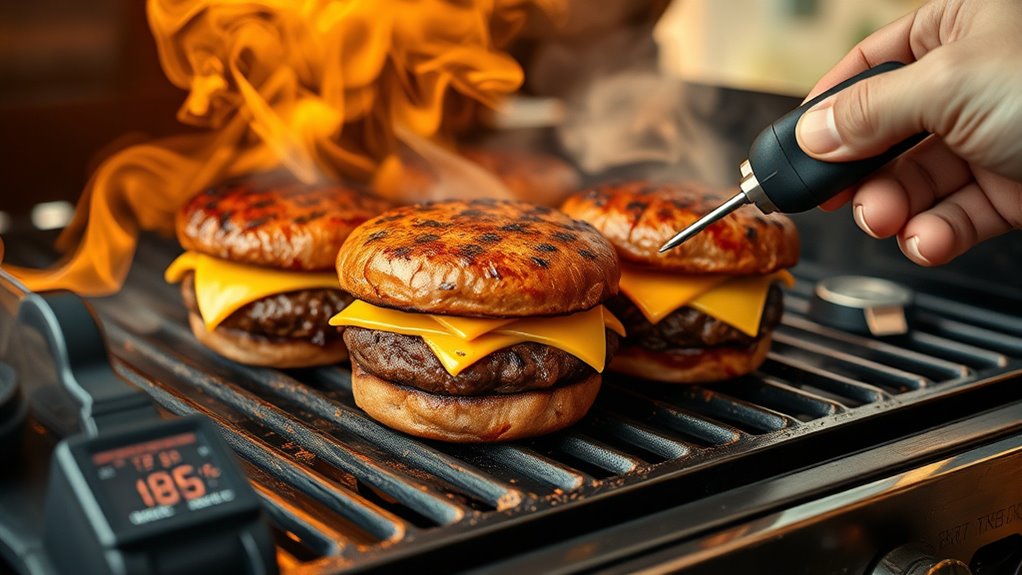
To make sure your burgers turn out just right, you’ll want to keep an eye on the temperature with a good, reliable thermometer. It’s pretty easy—just check the internal temp regularly so you don’t accidentally overcook or undercook them.
This little step makes a big difference, I promise. It helps you get that perfect level of doneness every single time, so your burgers are juicy and cooked to your liking.
Use a Reliable Thermometer
A reliable meat thermometer is essential for perfectly cooked burgers every time. It helps you hit that ideal internal temperature, so you won’t risk undercooking or overcooking.
Using a thermometer lets you focus on flavor pairing and bun selection, making each bite satisfying. For example, a juicy cheeseburger pairs great with a toasted brioche bun, while leaner patties might work better with whole wheat.
Keep the thermometer’s probe clean and insert it into the thickest part of the burger for accurate readings. Remember, the goal is to reach about 160°F for a classic burger.
This precision keeps your burger flavorful, moist, and perfectly cooked, taking your pellet grill game to the next level.
Check Temperature Regularly
Monitoring your burger’s temperature regularly guarantees you catch it at the perfect level of doneness. Use a reliable thermometer and check the internal temp often, especially as you near your target.
This helps prevent overcooking or undercooking, ensuring juicy results. Remember, burger toppings like cheese or grilled onions can influence cooking time, so adjust accordingly.
Marinade options, such as soy or balsamic, also impact moisture and heat absorption, making temperature checks even more important.
| Tip | Why it Matters |
|---|---|
| Check early and often | Prevents overcooking and keeps burgers juicy |
| Use an instant-read thermometer | Provides quick, accurate readings |
| Adjust for toppings | Toppings can add moisture, affecting temp |
| Consider marinade effects | Some marinades require different cooking times |
| Rest before serving | Maintains moisture and flavor |
Tips for Flipping and Handling Burgers on Your Pellet Grill
Handling burgers on your pellet grill takes a steady hand and a bit of attention to timing. When flipping, grab a wide spatula to avoid breaking the patty, and wait until you see juices pooling on top. That’s your cue it’s ready to turn.
Use a wide spatula and wait for juices to pool before flipping for perfect burger handling.
Proper handling helps keep the burger’s shape and juices intact, so every bite stays juicy. Don’t forget to season your burgers before grilling for extra flavor, and pick buns like brioche or potato rolls that complement the smoky taste.
To level up your burger game, remember these tips: flip only once halfway through cooking to keep it moist, use a gentle touch so you don’t break the patty, and let it rest for a minute after removing from the grill to lock in juices.
Getting these techniques right makes handling burgers much easier, and you’ll end up with perfectly cooked, flavorful burgers every time.
Common Mistakes That Can Ruin Your Burger
Even small mistakes can turn a perfect burger into a disappointment. One common error is overloading your burger with too many toppings, which can overwhelm the patty and make it messy to eat. Stick to a few well-chosen toppings that complement the meat’s flavor.
Another mistake is choosing the wrong bun. A bun that’s too soft or too dense can ruin the overall experience. Opt for a sturdy bun that can hold your toppings without falling apart.
Neglecting to season your burger properly or rushing the cooking process can lead to bland or undercooked results. Avoid pressing down on the patty while cooking, as this squeezes out juices and dries out the burger.
Lastly, ignoring the bun’s texture and freshness can undermine your efforts. Even a well-cooked burger can be less enjoyable if the bun isn’t right. Paying attention to these details helps ensure your burger turns out delicious every time.
Resting and Serving Your Burger for Maximum Flavor
Once your burger is perfectly cooked, letting it rest for a few minutes is key to boosting flavor and juiciness. Resting helps the juices spread evenly, so they don’t spill out when you take a bite.
While it rests, think about your bun choice—go for a sturdy one that can handle the juices and toppings without falling apart. For extra flavor, try marinades like smoky chipotle or tangy balsamic to enhance your burger.
Resting also makes each bite more enjoyable by keeping the burger juicy and flavorful. When serving, arrange everything neatly and add fresh toppings or condiments last to keep them vibrant.
Troubleshooting: What to Do When Your Burgers Aren’t Cooking Right
If your burgers aren’t cooking quite right, the first thing to do is check your grill’s temperature. Sometimes, the thermometer can be off, so making sure it’s accurate will help you cook better.
Once that’s sorted, think about how thick your burgers are. Adjust the cooking time accordingly so they don’t end up undercooked or burnt. And while you’re at it, try to make sure your patties are the right thickness — this helps them cook evenly all the way through.
Check Grill Temperature Accuracy
Have you ever wondered if your grill is reaching the right temperature? If your burgers aren’t cooking evenly, it’s time to check your grill’s temperature accuracy. Proper grill maintenance is key for consistent results and better flavor.
Use a reliable digital or analog meat thermometer to verify your grill’s temperature. Calibrate your grill’s built-in thermometer regularly to ensure accurate readings. Keep vents clean and make sure the lid seals properly to prevent temperature fluctuations.
Inaccurate readings can cause your burgers to be undercooked or overcooked, which affects quality. Making sure your grill hits the right temperature helps you cook burgers perfectly every time, maximizing flavor and juiciness. Regularly checking temperature accuracy is a simple step that keeps your grill performing at its best.
Adjust Cooking Time Properly
When your burgers aren’t cooking evenly or reaching the desired doneness, adjusting your cooking time is key. If they’re overcooked or undercooked, try extending or reducing your grill time as needed.
Remember, toppings like cheese or grilled onions can slow heat transfer, so add those later if needed. Also, thicker buns can insulate the burger, so you might need to adjust your timing accordingly.
Keep an eye on the internal temperature with a probe thermometer to get accurate readings. If your burgers cook too fast or too slow, tweak the grill’s heat or your cooking time.
Making these small adjustments helps you get perfectly cooked burgers every time, no matter what toppings or buns you choose.
Ensure Proper Meat Thickness
Ensuring your burger meat has the right thickness is key for even cooking and the perfect doneness. If your patties are too thick or uneven, they won’t cook properly, which can leave you with raw centers or burnt exteriors.
To avoid this, focus on keeping your patties uniform in size and thickness. Consistent thickness allows heat to penetrate evenly, giving you great burgers every time.
Use a ruler or a burger mold to measure your patties so they stay consistent. Aim for about ¾ inch thickness for ideal grilling results.
If you notice uneven edges, flatten or reshape them to keep the meat thickness even throughout. This simple step helps ensure your burgers cook evenly and turn out just right.
Quick Guide: Pellet Grill Cooking Times for Juicy, Safe Burgers
To get juicy, safe burgers on a pellet grill, timing is key. Cook for about 4-5 minutes per side at 400°F for a medium doneness.
Cook burgers 4-5 minutes per side at 400°F for juicy, perfectly safe results.
Adjust the time if you want rare or well-done, but always check the internal temperature with a meat thermometer. This keeps your burger safe and perfect.
Bun choice matters too—sturdy buns like brioche hold toppings better, while softer ones like potato rolls might get soggy faster. Handle with care.
When melting cheese, add slices during the last minute of grilling and close the lid. This helps melt evenly without overcooking the patty.
For cheese techniques like adding a splash of water or briefly covering the grill, do it in the final moments. This prevents overexposure and keeps your burger just right.
Consistent timing and temperature control are essential for delicious, safe burgers every time.
Frequently Asked Questions
Can I Cook Frozen Burger Patties on a Pellet Grill?
Yes, you can cook frozen burger patties on a pellet grill. Just preheat your grill, place the frozen patties directly on the grates, and cook for about 20-25 minutes, flipping halfway.
Remember to add your favorite burger toppings during the last few minutes. After grilling, clean your grill to keep it in good shape.
Think about how toppings like cheese or lettuce will add flavor. Proper grill cleaning helps ensure your next session is just as delicious.
How Does Pellet Type Affect Burger Flavor and Cooking Time?
You’ll notice that pellet variety significantly impacts flavor and cooking time. For example, fruit woods like apple or cherry add a sweet, smoky aroma, while hickory provides a stronger, more robust flavor.
Different pellets also burn at different rates, which affects how long it takes to cook. Choosing the right pellet isn’t just about taste; it also helps you control cooking efficiency.
This way, you can achieve the perfect burger every time.
Is It Necessary to Preheat the Pellet Grill Before Cooking Burgers?
Yes, you should preheat your pellet grill before cooking burgers. Preheating makes sure the heat stays steady and helps keep a consistent cooking temperature.
It also helps with grill maintenance by preventing sticking and giving you even searing. Let the grill reach around 400°F so your burgers cook evenly and get a nice crust.
Skipping this step can cause uneven cooking and result in less flavorful burgers. So, always give your grill a few minutes to heat up before placing the patties on.
How Do Weather Conditions Impact Pellet Grill Burger Cooking?
Weather effects, especially wind impact, can influence how your pellet grill cooks burgers. Strong winds may cool down the grill or cause temperature fluctuations, making it harder to maintain consistent heat.
To guarantee perfect burgers, shield your grill from wind with a windbreak or move it to a more sheltered spot.
Keeping an eye on weather conditions helps you adapt quickly, so your burgers turn out just right every time.
Can I Add Wood Chips During Grilling for Extra Flavor?
Yes, you can add wood chips during grilling to boost the flavor. Use a smoker box or make a foil packet with holes to help infuse smoke.
This really helps give your burgers a richer, smoky aroma. Just remember to soak the chips beforehand for better smoke production.
Adding wood chips periodically keeps the smoke going and gives your burgers that authentic outdoor grill taste.
Conclusion
Think of your pellet grill as a trusted compass guiding your burger journey. When you choose the right thickness, set the perfect temperature, and monitor your internal temp, you’re steering toward flavorful, juicy perfection.
Avoid common pitfalls, rest your burger, and serve with confidence. With each perfectly cooked patty, you’re not just grilling—you’re crafting a delicious story of patience, precision, and passion.
By mastering these steps for your pellet grill, you turn simple ingredients into memorable moments around your table. Perfectly cooked burgers on a pellet grill are within your reach—just follow the right timing and techniques.