7 Simple Steps to Smoke Pork Shoulder on a Pellet Grill
As an Amazon Associate, I earn from qualifying purchases. This post contains affiliate links. Which means I may earn a small commission when make a purchase through my links, at no additional cost to you.
Many barbecue enthusiasts dream of perfectly smoked pork shoulder, but mastering the process can feel overwhelming. You’re not alone—smoking meat to perfection takes practice and know-how.
Luckily, with a pellet grill, you can simplify the journey to delicious, tender pork.
To smoke pork shoulder on a pellet grill, start by selecting a well-marbled cut and seasoning it generously; let it rest to meld flavors.
Preheat your grill to 225-250°F, fill the hopper with wood pellets like hickory or apple, and maintain a steady temperature.
Smoke the meat until it hits 195-205°F, then let it rest for at least 15-20 minutes before pulling.
Keep the lid closed to guarantee consistent smoke and heat—if you keep going, you’ll master every detail for perfect results.
Key Takeaways
- Preheat your pellet grill to 225°F–250°F and choose wood pellets like hickory or apple for extra flavor.
- Trim off any excess fat from the pork shoulder and apply a balanced spice rub. Let it sit for 30 minutes to overnight so the flavors soak in.
- Place the meat on the grill, with the fat side up, and keep the temperature steady. Add pellets as needed to maintain consistent heat and smoke.
- Smoke until the internal temperature hits 195°F–205°F. Keep the lid closed to lock in smoke and heat for even cooking.
- Once done, let the pork rest for 15–20 minutes. Then shred it and serve with your favorite sauces or sides.
Preparing Your Pellet Grill for Smoking Pork Shoulder
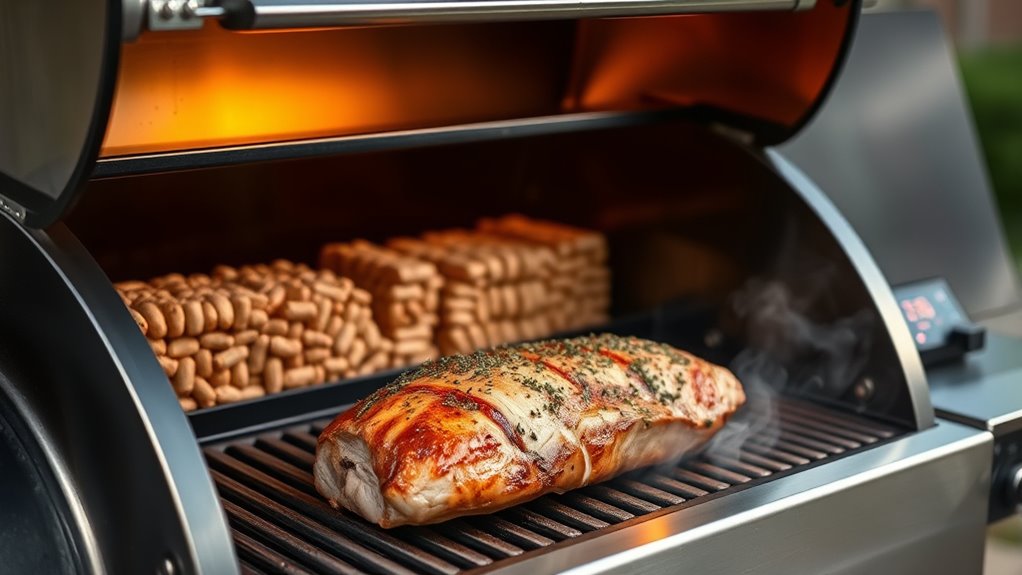
Before you start smoking your pork shoulder, it’s important to properly prepare your pellet grill. Begin by calibrating the grill to ensure consistent temperature control.
Proper calibration helps maintain steady heat, which is key for even cooking and getting that great smoke flavor. Check the temperature settings and verify with a reliable thermometer to avoid fluctuations.
Proper calibration ensures consistent heat and optimal smoke flavor for perfectly cooked pork shoulder.
Next, clean out any old ash or debris from the firepot and grates. This promotes good airflow, which means clean smoke and better flavor infusion.
Fill the hopper with high-quality wood pellets suited for pork, like hickory or apple, to enhance the smoke flavor. Preheat your grill to around 225°F to 250°F, so it’s ready for slow smoking.
Getting the grill up to temperature ensures your pork shoulder absorbs maximum flavor while staying tender and juicy throughout the cook.
Choosing and Seasoning the Perfect Pork Shoulder
When you’re choosing a pork shoulder, go for a fresh one with good marbling—that’s the fat running through the meat. It helps keep the pork juicy and packed with flavor. Once you’ve got your perfect piece, it’s time to season it. Use a balanced mix of spices that enhance the meat’s natural taste—think salt, pepper, garlic powder, maybe a bit of paprika or cumin, depending on your flavor preference.
Before cooking, make sure you prepare the cut properly. Trim any excess fat if needed, but leave enough to keep it moist during cooking. This prep helps the meat absorb smoke better and develop that irresistible crust. Now you’re all set for a delicious, smoky pork shoulder!
Selecting the Best Cut
Choosing the right pork shoulder is essential for a tender, flavorful smoked masterpiece. When selecting your cut, consider different varieties like Boston butt or picnic roast, which differ in fat content and texture.
Look for a piece with a bright color, firm feel, and good marbling. Proper cutting techniques help ensure even cooking and easier handling.
| Pork Shoulder Variety | Best Uses |
|---|---|
| Boston Butt | Ideal for pulled pork, tender results |
| Picnic Roast | Great for slicing, has more connective tissue |
| Whole Shoulder | Versatile, good for smoking or roasting |
| Trimmed Shoulder | Easier to season and cook evenly |
Choosing the right cut and understanding the varieties helps you achieve the best flavor and consistency for your smoked pork.
Optimal Seasoning Techniques
Selecting the right seasoning is key to bringing out the natural flavor of your pork shoulder and creating a tasty smoked dish. Focus on layering flavors by adding multiple spice combinations that build depth without overpowering the meat.
Start with a simple rub of salt and pepper to highlight the pork’s natural taste. Then, add complementary spices like smoked paprika, garlic powder, onion powder, and a touch of cayenne for some heat.
Balance is important. Avoid over-seasoning, which can mask the meat’s quality. Apply the rub evenly and press it into the surface so it sticks well. Let the seasoned pork rest for at least 30 minutes or overnight if you can.
Allowing the flavors to meld makes a big difference. This careful process ensures a well-rounded, flavorful smoked pork shoulder.
Preparing for Smoke
Once your pork shoulder is seasoned and rested, it’s time to get it ready for the smoke. Make sure your pellet grill is clean and preheated to the right temperature.
Choose the right wood pellets—hickory, apple, or cherry all add unique smoky notes. Place the pork shoulder on the grill, fat side up, so the juices can baste the meat naturally.
Keep the temperature steady and try to keep the lid closed as much as possible to hold in smoke and heat. Picking the right wood enhances the flavor and complements the pork.
This preparation helps your pork shoulder soak up the smoky aroma and flavors, setting you up for tender, delicious results.
Setting Up Your Pellet Grill for Optimal Smoke and Temperature
Getting your pellet grill set up correctly is key to getting consistent smoke and temperature. Start by calibrating your grill to ensure accurate temperature control; this helps prevent fluctuations that can mess with the smoke flavor.
Check the manufacturer’s instructions for pellet feed adjustments and use a reliable thermometer to verify internal temperatures. For the best smoke, choose high-quality wood pellets suited for pork and set your grill to a steady, low temperature—around 225°F (107°C).
Make sure the pellet hopper is filled, and the vents are clean and unobstructed. Good airflow is essential for proper smoke production and even cooking. If your grill has a smoke setting, turn it on to maximize smoke flavor.
Proper setup not only boosts the smoke flavor but also helps maintain stable temperatures. This makes your pork shoulder tender and full of flavor.
How to Smoke Pork Shoulder Step-by-Step
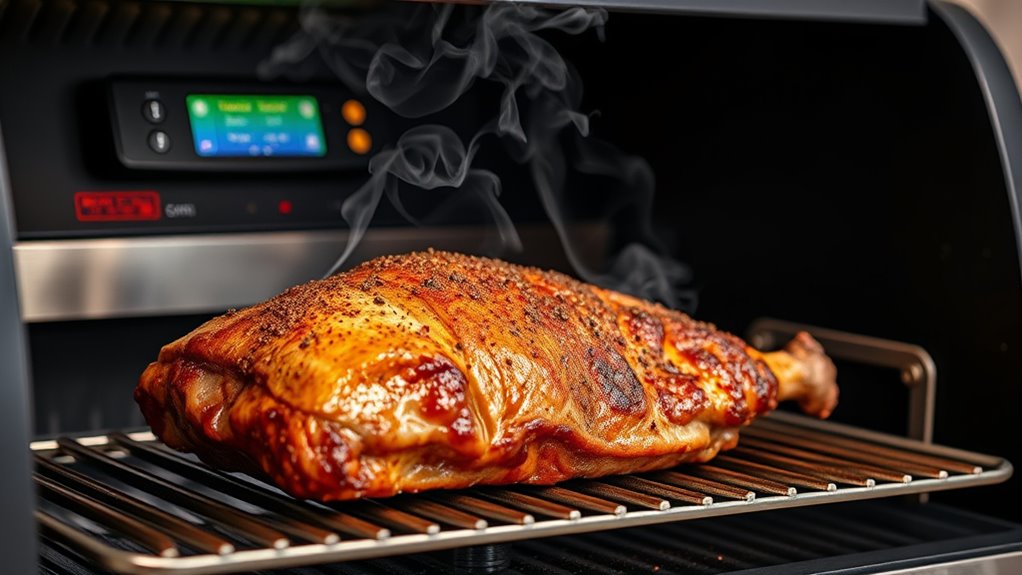
To smoke a pork shoulder to perfection, start by preparing your grill and meat properly. Begin by trimming excess fat and applying your favorite marinade variations—whether a simple dry rub or a marinade with citrus and spices—to improve flavor and moisture.
Next, choose alternative wood choices like apple, cherry, or pecan to add unique smoky notes. Preheat your pellet grill to around 225°F and place the pork shoulder directly on the grates, fat side up.
Maintain a consistent temperature throughout the process, adding pellets as needed. Smoke the meat until it reaches an internal temperature of about 195°F to 205°F, which usually takes several hours depending on size.
During smoking, avoid opening the lid too often to keep the temperature stable. Once done, let the pork rest for at least 30 minutes before pulling it apart.
This step-by-step approach ensures tender, flavorful results every time.
Maintain Temperature During Smoking for Best Results
Maintaining a consistent temperature throughout the smoking process is crucial for tender, flavorful pork shoulder. Stable heat ensures proper flavor infusion and promotes smoke ring formation, key indicators of quality. To keep your grill steady:
- Use a reliable digital thermometer to monitor internal temperature closely.
- Avoid frequently opening the lid, which causes temperature fluctuations.
- Adjust your pellet feed rate or use a PID controller for precise heat control.
- Keep your grill in a draft-free location to prevent temperature swings.
Consistent temperature allows the smoke to penetrate the meat evenly, enhancing flavor and creating that desirable smoke ring. It also prevents the meat from drying out or becoming tough. By managing your grill’s temperature carefully, you guarantee your pork shoulder develops rich flavor and ideal texture, giving you the best possible smoking results.
When Is Pork Shoulder Perfectly Done?
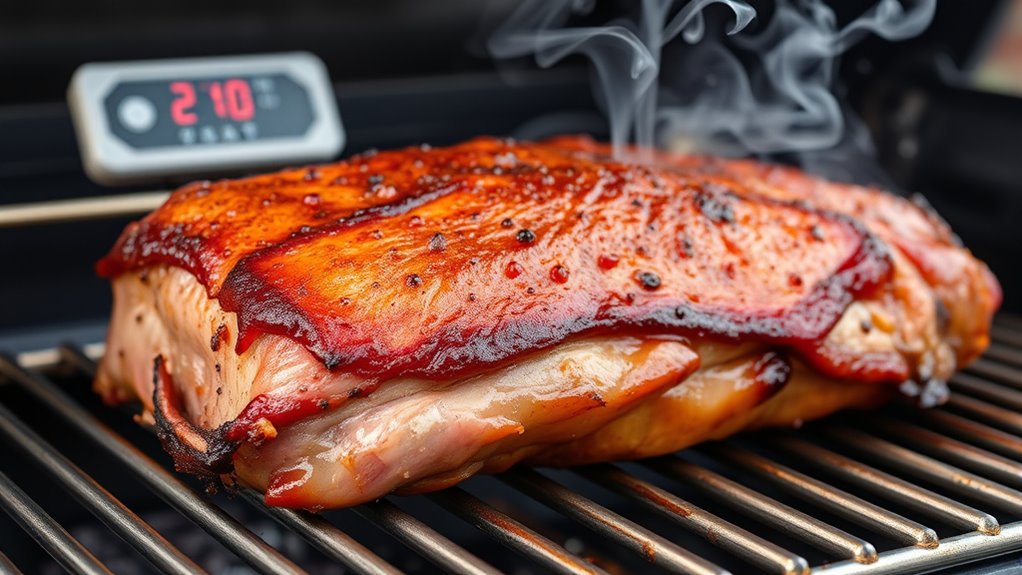
You’ll know your pork shoulder is ready when it hits an internal temperature of around 195-205°F. That’s when it’s nice and tender, so you can easily pull it apart with a fork.
But don’t just rely on the thermometer—keep an eye out for some visual clues too. It should look juicy and have that gorgeous, crispy bark on the outside. When both the temperature and the look line up, you’re all set and your pork shoulder is perfect and ready to enjoy!
Internal Temperature Targets
Wondering when pork shoulder is perfectly cooked? The ideal internal temperature for pulled pork is around 195°F to 205°F. This range guarantees maximum flavor infusion and tender, juicy meat. When checking, consider whether your pork is bone-in or boneless, as bone-in cuts may cook slightly differently and can add extra flavor. Use a reliable meat thermometer to monitor progress.
For best results, aim for 195°F to 205°F, depending on how tender you want it. Remember, bone-in pork may require a slightly lower target for flavor infusion. Boneless cuts tend to cook more evenly. Always let the meat rest before pulling or slicing for maximum juiciness.
These temperature targets ensure your pork shoulder hits the perfect spot, making it juicy, tender, and full of flavor.
Visual and Texture Signs
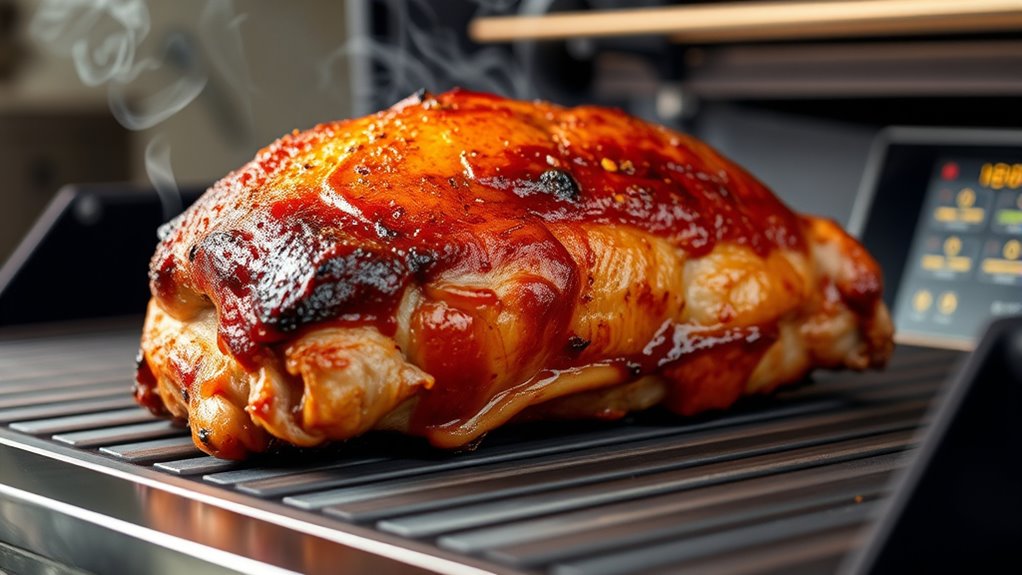
When pork shoulder is perfectly done, it will show some clear visual cues and a tender, easily shreddable texture. Look for a deep, caramelized crust called bark—that’s a sign of proper smoking.
The meat should be moist and juicy, with a pink smoke ring just beneath the surface. When checking texture, it should feel tender when you insert a probe or fork and pull apart easily with minimal resistance.
The fibers should separate effortlessly, revealing a juicy interior. Be careful not to overcook, which can dry out the meat, or undercook, which makes it tough.
Trust your visual cues and texture indicators to know when your pork shoulder has reached perfection. This will give you a flavorful, melt-in-your-mouth dish every time.
Resting, Pulling, and Serving Your Smoked Pork Shoulder
After your pork shoulder reaches the ideal internal temperature, it’s important to let it rest for at least 15 to 20 minutes. Resting helps the juices redistribute, making the meat moist and tender.
Once rested, you can start pulling the pork into shreds using two forks or your hands. This is a good moment to think about marinating techniques for future batches or trying out different flavors.
For serving, try offering the pulled pork on buns, in tacos, or over a salad. To make it look and taste even better, add your favorite BBQ sauce or a tangy vinegar-based dressing.
When serving, keep the meat warm by covering it loosely with foil. Remember, taking the time to rest the meat results in a juicier, more flavorful pork shoulder.
Whether you’re feeding a crowd or just your family, these steps will help you enjoy your smoked pork at its best.
Frequently Asked Questions
How Long Does It Typically Take to Smoke a Pork Shoulder?
You’ll typically spend about 8 to 10 hours smoking a pork shoulder at 225°F. During this time, the low and slow process helps break down connective tissues, making the meat tender.
Keep an eye on the internal temperature, aiming for around 195°F to 205°F. Once it hits that, your pork shoulder will be juicy, tender, and perfect for pulling.
What Types of Wood Pellets Are Best for Smoking Pork Shoulder?
For smoking pork shoulder, you should choose wood pellets that enhance the meat’s flavor. Hickory, apple, and cherry pellets are all great options, giving a rich, smoky taste that pairs perfectly with pork.
When selecting pellets, focus on quality to ensure a consistent burn and flavor. Good-quality pellets make a big difference in the final outcome.
The right pellet choice adds depth to your pork shoulder, making it tender and full of flavor. Don’t be afraid to experiment with different woods to find your perfect smoky profile.
Can I Add Marinade or Sauce During the Smoking Process?
Yes, you can add marinade options or apply sauce during smoking, but do so carefully. For marinades, try spritzing your pork shoulder with a vinegar-based solution to boost flavor and keep it moist.
When it comes to sauce, wait until the last hour of smoking before brushing it on. This helps prevent it from burning and ensures a tasty, glossy glaze.
How Do I Prevent the Pork Shoulder From Drying Out?
To prevent your pork shoulder from drying out, focus on developing a good bark and keeping the moisture in. Maintaining a steady temperature and avoiding overcooking are key.
Once the shoulder hits your desired bark, wrapping it in foil or butcher paper helps lock in moisture. This step keeps the meat juicy and tender.
You can also spritz the meat with apple juice or broth periodically during smoking. These simple tricks ensure your pork stays moist and flavorful.
What Are Common Mistakes to Avoid When Smoking Pork Shoulder?
To avoid common mistakes when smoking pork shoulder, keep the temperature steady around 225-250°F. This helps ensure consistent heat without drying out the meat.
Don’t open the lid too often, as it can stop the smoke from penetrating and cause temperature swings. It’s best to keep the lid closed as much as possible.
Also, avoid trimming too much fat. The fat helps keep the meat moist and flavorful during the long cooking process.
Finally, wait until the pork hits an internal temperature of about 195°F. That’s when it becomes tender and delicious.
Conclusion
Now that you know the steps, smoking pork shoulder on a pellet grill becomes a straightforward yet rewarding process. While it takes patience to keep the right temperature, the tender, smoky meat you’ll enjoy is absolutely worth the wait.
Think of it like a dance—precision meets patience. As the aroma drifts through your backyard, remember that the true magic isn’t just in the cooking but in the simple joy of creating something delicious with your own hands.
Mastering how to smoke pork shoulder on a pellet grill is all about enjoying the process. The end result—a flavorful, juicy masterpiece—is what makes it worthwhile.