7 Simple Steps to Light a Gas Grill With a Broken Igniter
If you love firing up your gas grill but struggle when the igniter stops working, you’re not alone. Many grill enthusiasts face the frustration of trying to light their grill without a reliable spark. Don’t worry—there are simple ways to get your grill going again.
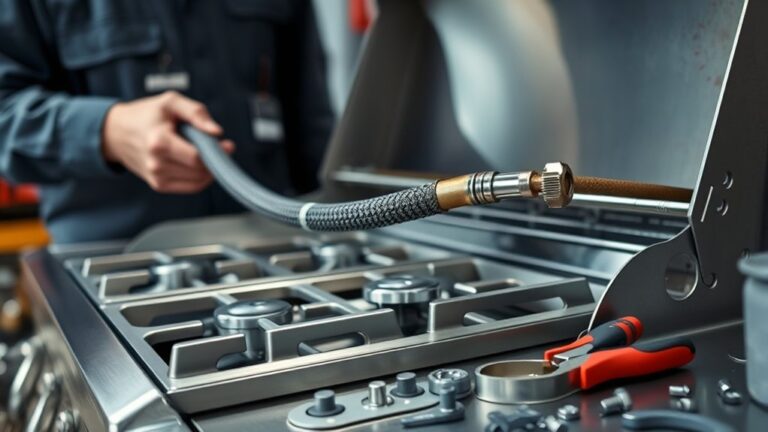
To light your gas grill with a broken igniter, first inspect and clean all burners and connections, ensuring no debris or grease buildup. Check for gas leaks by applying soapy water to hoses and fittings, then turn on the gas supply slightly. If bubbles form, fix the leaks first.
Use a long match or lighter to carefully ignite the burners. Keep the lid open and move the flame close to the burners. For more detailed safety tips and troubleshooting advice, keep exploring the next steps.
Key Takeaways
- Turn off the gas supply and check for leaks with soap and water before you do anything else.
- Manually ignite the burners using a long match or BBQ lighter, keeping your hand and face away from the flames for safety.
- Open the lid completely and slowly turn on the gas to prevent flare-ups and gas buildup.
- Carefully hold the flame near each burner’s entry point to light it, making sure to do it quickly and steadily.
- Once all the burners are lit safely, close the lid and adjust the heat to your liking.
Prepare Your Grill Safely Before Lighting
Before attempting to light your gas grill, it’s essential to guarantee safety first. Start by inspecting your grill accessories, making sure everything is in good condition and properly connected. Remove any debris or grease buildup, as these can cause flare-ups.
Familiarize yourself with the grill’s layout and review your preferred cooking techniques so you’re prepared once it’s lit. Make sure the gas supply is turned off before you start working on it. If your grill has a lid, open it fully to prevent gas buildup.
Position yourself in a safe area, away from any flammable objects. Clear the area of children and pets. Having all necessary tools, like a long lighter or matches, handy will make the process smoother.
Taking these safety measures helps prevent accidents and ensures a smoother grilling experience, even if your igniter isn’t working. Proper preparation is key to safe, effective grilling.
Check for Gas Leaks and Confirm Safe Conditions
Once you’ve prepared your grill and checked for safety hazards, it’s time to look for gas leaks. Gas safety is really important before you try to light your grill manually.
Leak detection is easy: mix soap and water, then apply the solution to the gas connections and hoses. Turn on the gas supply just a bit—don’t light it yet—and watch for bubbles.
Apply soapy water to connections, turn on gas slightly, and watch for bubbles to detect leaks safely.
If you see bubbles forming, that means there’s a leak. Turn off the gas right away. Don’t try to light the grill until you’ve fixed the leak. Make sure all connections are tight and secure.
If you suspect a leak but see no bubbles, still be cautious. Confirm that no gas is escaping before moving on. Proper leak detection keeps you safe and prevents accidents, making sure your grill is ready to use safely.
Light Your Gas Grill Manually With a Long Match or Lighter
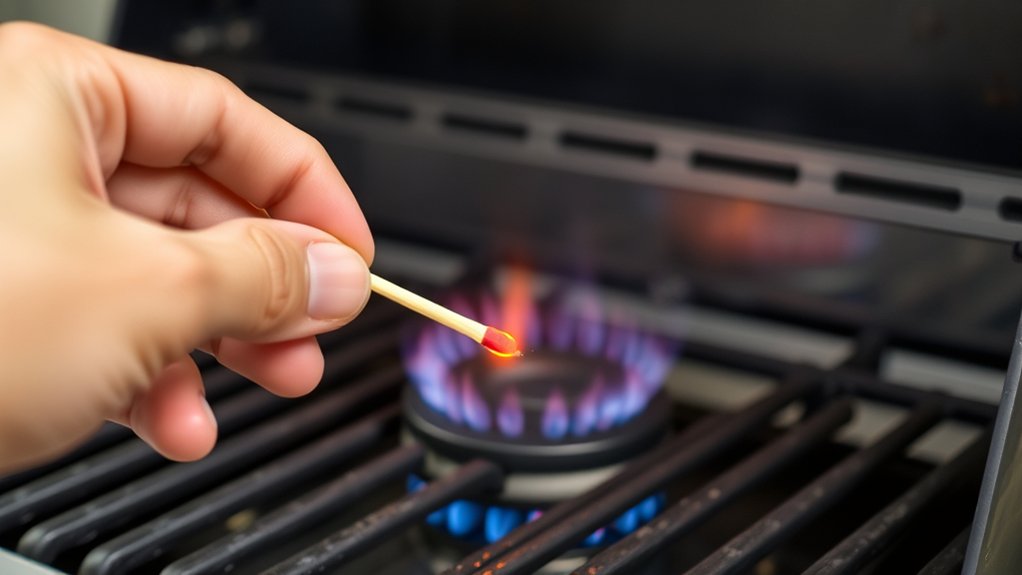
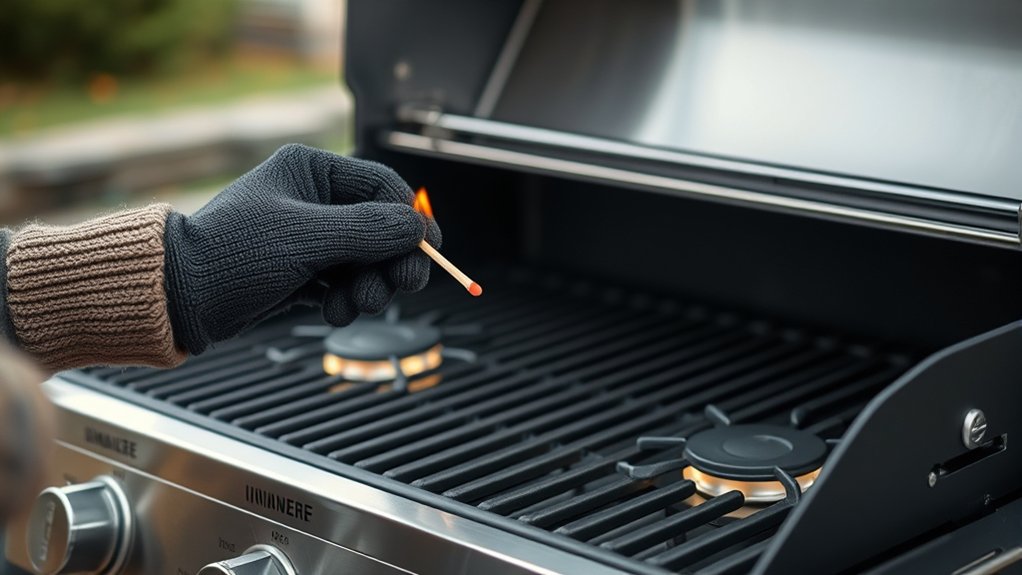
Before you light your grill manually, it’s really important to keep safety in mind so nothing goes wrong. Make sure you’re using a long match or a long lighter—this way, you can keep your hand well away from the flames and avoid getting burned.
Always double-check that you’re using the right tool for the job. This helps ensure that the ignition is safe and controlled, making your grilling experience both fun and worry-free.
Safety Precautions Needed
Lighting your gas grill manually with a long match or lighter can be safe if you take proper precautions. Always check for gas leaks before igniting, making sure connections are tight and there’s no smell of gas.
Keep your face and hands away from the burner when lighting to avoid flashbacks or flare-ups. Use your cooking accessories, like heat-resistant gloves, to protect yourself from burns.
Make sure the grill area is clear of flammable materials. Remember, maintaining good grill aesthetics isn’t just about looks—it’s about safety too.
Handling matches or lighters carefully helps prevent accidents. Ensure the area is well-ventilated, and never leave the lit grill unattended.
Stay alert and cautious so you can enjoy your grilling experience safely.
Proper Match or Lighter Use
Have you ever wondered the safest way to light your gas grill manually? First, choose a long match or a reliable long lighter to keep your hand away from the flames. When selecting a match, go for one with a sturdy, thick handle, and make sure your lighter is well-maintained, with a clean nozzle and enough fuel.
Before lighting, turn on the gas supply briefly to check for leaks or odors. When you’re ready, carefully hold the match or lighter near the grill’s burner, keeping your hand steady and away from any gas leak areas.
Light the match or igniter, then quickly bring it to the burner. Proper match selection and keeping your lighter in good shape are key to safely and effectively lighting your grill manually.
Step-by-Step Guide to Igniting Your Main Burners
Wondering how to safely ignite your main burners without a working igniter? First, make sure the gas supply is turned on.
Then, carefully follow these steps for a safe and effective ignition:
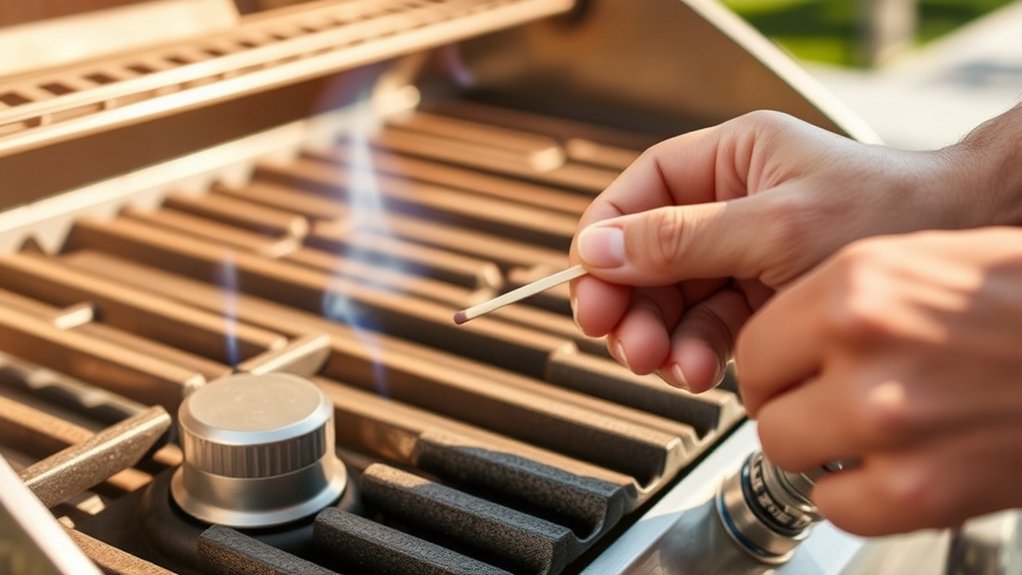
Use a long match or a BBQ lighter, holding the flame close to the burner’s entry point.
Open the grill lid slightly to prevent gas buildup, then ignite the match near the burner.
Keep your hand steady as you light each burner, making sure the flame ignites quickly.
If the flame doesn’t catch, turn off the gas, wait a few moments, and try again.
If your igniter isn’t working, consider replacing it or using alternative methods like matches or a piezo igniter.
Always prioritize safety and never force the process.
With patience and caution, you can get your main burners lit without relying on an electronic igniter.
Troubleshoot Common Issues When Lighting Without an Igniter
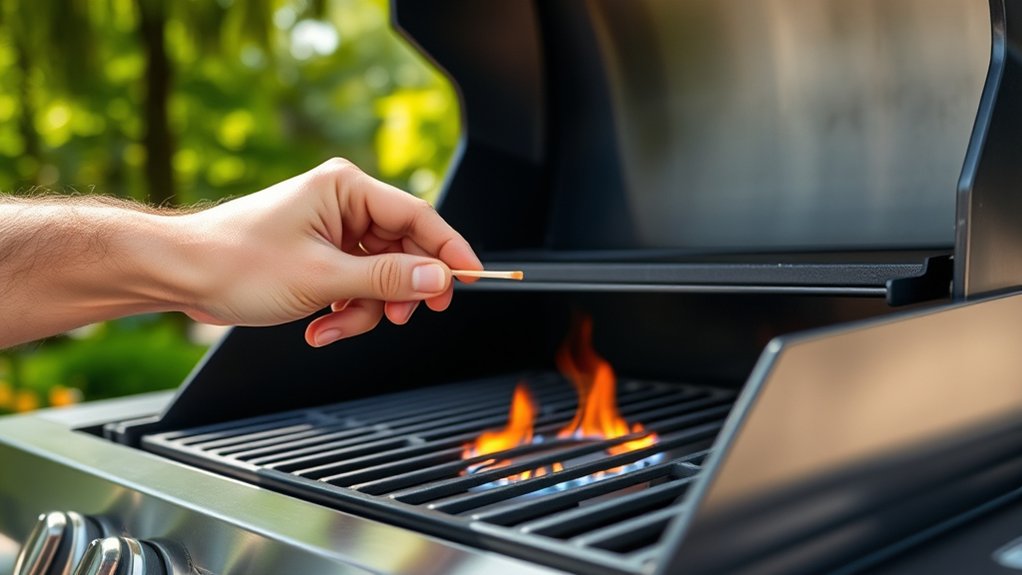
When trying to light your grill without an igniter, common issues can pop up and make things frustrating. You might notice sparks aren’t coming out, or the flame just won’t catch.
First, check if the battery or power source for an automatic ignition system is working. Sometimes, a simple igniter replacement is all you need to get it going again.
Check the battery or power source; a simple igniter replacement can often solve the issue.
Another problem could be a clogged or dirty burner, which stops the flame from igniting properly. Make sure all burners are clear of debris and that gas flow isn’t blocked.
If the sparks are weak or inconsistent, try adjusting the electrode or replacing the igniter altogether. Also, double-check that the gas supply is open and working correctly.
Troubleshooting these issues helps you figure out whether you need a new igniter, to clean the burners, or to check the gas connection. Doing this saves time and ensures your grill lights safely and reliably without automatic ignition.
How to Maintain Your Grill and Prevent Igniter Failures
Regularly maintaining your grill can significantly reduce the chances of igniter failures. Proper upkeep involves cleaning parts that can trap dirt and grease, which can block sparks.
By staying on top of igniter troubleshooting, you can prevent issues before they happen. Here are some key tips to keep your grill in good shape:
- Clean the igniter and surrounding area to remove dirt, grease, and moisture that can prevent sparks.
- Inspect wires and connections regularly for corrosion or damage, and replace any frayed or broken parts.
- Check the burners and vents for blockages to ensure proper gas flow and prevent ignition problems.
- Keep the grill covered when not in use to protect it from the elements. This reduces moisture buildup that can cause electrical failures.
Consistent maintenance not only extends the life of your igniter but also keeps your grill working reliably. It also makes troubleshooting easier when needed.
Safety Tips and Best Practices for Manual Lighting
Before you manually light your grill, make sure to put on protective gloves and safety glasses. It might seem like a small step, but it can really help prevent any injuries. Also, take a moment to check all those hoses and connections for gas leaks—it’s a simple step that can save you from potential accidents.
When you’re ready to light the grill, use proper techniques. For example, bringing a lit match or a long lighter close to the grill ensures you ignite it safely and effectively. Just take your time, stay cautious, and enjoy your grilling!
Wear Protective Gear
Always wear protective gear before trying to manually light your gas grill. Safety should always come first, especially when dealing with open flames and possible gas leaks. Wearing the right gear can help prevent accidents and injuries.
Make sure to wear thick, heat-resistant gloves to protect your hands from burns. Safety goggles are also a good idea to shield your eyes from sparks or splashes.
Wear long-sleeved clothing to prevent burns from any unexpected flare-ups. And don’t forget a flashlight or headlamp for clear visibility if you’re working in low light conditions.
Check for Gas Leaks
After putting on your protective gear, it’s important to check for gas leaks before you try to light your grill manually.
Start by inspecting all the connections and hoses for any signs of damage or wear.
Use your nose to detect any gas smell around the tank, hoses, and fittings—this is a strong indicator of a leak.
Leak detection is crucial; if you smell gas, turn off the tank immediately and don’t try to ignite the grill.
Make sure all valves are closed before you start inspecting.
You can also apply a soapy water solution to the connections—bubbles will form if there’s a leak.
Always take these precautions seriously to prevent accidents and ensure safe manual lighting.
Use Proper Lighting Techniques
How can you guarantee safety and effectiveness when manually lighting your gas grill? First, make sure your lighting area is clear of debris and flammable materials. Use a long-handled match or a grill lighter to keep your hands away from the flames.
Always turn on the gas slowly and avoid leaning directly over the grill. Keep the lid open during ignition to prevent gas buildup. Before igniting, confirm the burners are off and wait a few seconds after turning on the gas to let any leaks disperse.
Frequently Asked Questions
Can I Use Other Tools if I Don’T Have a Long Match or Lighter?
Yes, you can use other tools if you don’t have a long match or lighter. Options like a barbecue starter wand or a long-handled grill lighter are great alternatives. They’re designed for safety and make lighting your grill easier.
Always follow safety precautions. Keep your face and body away from the flames and make sure the grill is in a well-ventilated area. These tools help you light your grill safely and effectively without risking burns or accidents.
What Should I Do if I Smell Gas but Can’t See a Leak?
When you smell gas but can’t see a leak, think of it as a warning sign from your grill’s silent guardian. First, turn off the gas supply and open windows for ventilation.
Follow safety precautions by avoiding any flames or sparks. If you’re unsure, evacuate the area and call your gas provider or fire department.
Don’t take chances—your safety is more important than a quick cookout.
How Often Should I Check My Grill for Igniter Issues?
You should check your grill for igniter issues before every use, especially during the grilling season. Regular maintenance helps prevent unexpected problems and keeps everything running smoothly.
Always inspect the igniter for corrosion or damage and test it periodically. If you notice any issues, replace or repair the igniter promptly.
Staying vigilant ensures your grilling stays safe and your cooking goes off without a hitch.
Are There Alternative Methods to Light a Gas Grill Without Matches?
You can try alternative lighting methods like a long-handled lighter or a piece of burnt newspaper to ignite your grill safely.
Always follow safety precautions, such as keeping your face away from the grill and ensuring proper ventilation.
Verify the method’s safety before proceeding, and avoid using flammable liquids.
These approaches can help you light your gas grill effectively without matches, even if your igniter is broken.
Is It Safe to Leave the Grill Unattended After Manual Lighting?
No, it’s not safe to leave your grill unattended after manual lighting. For grill safety, always stay nearby and keep a close eye on the flames.
Unattended grilling increases the risk of flare-ups or fire hazards, especially if gas leaks or equipment issues happen. Always turn off the gas supply promptly after cooking.
Never leave a lit grill unattended. This helps ensure everyone’s safety and prevents accidents.
Conclusion
Lighting your gas grill without an igniter might seem tricky at first, but with these simple steps, you’ll be grilling in no time. Think of it like steering a ship through calm waters—you just need to follow the right course.
Always prioritize safety and stay vigilant, and your grill will be ready to cook up delicious meals. With a little patience, you’ll master manual lighting and enjoy your barbecue adventures worry-free.