10 Steps to Grill Steaks on a Gas Grill Perfectly
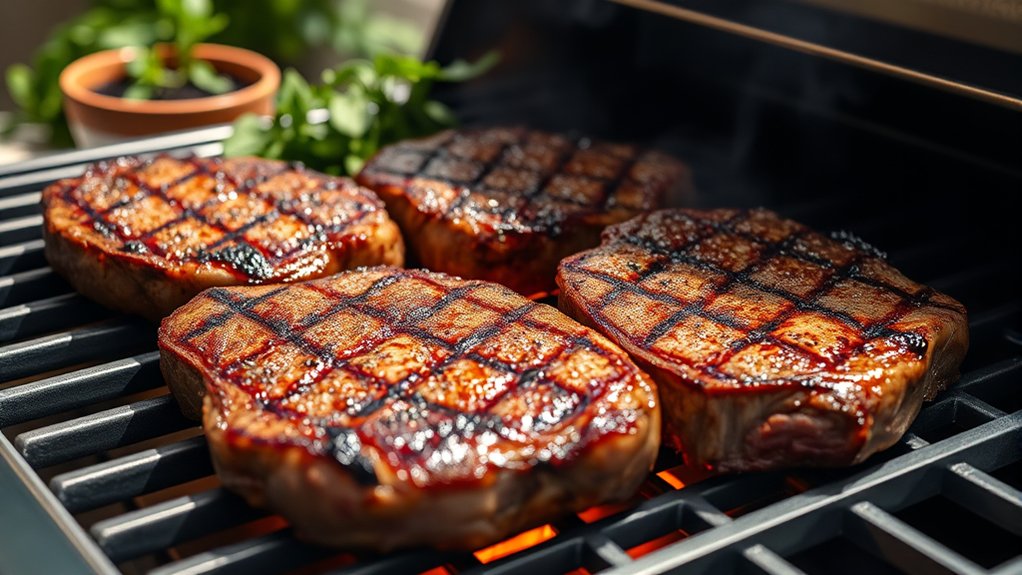
Many grilling enthusiasts struggle to get their steaks just right on a gas grill. You’re not alone—perfectly grilled steaks can be tricky to master, but with a few simple steps, you’ll be flipping juicy, flavorful steaks in no time.
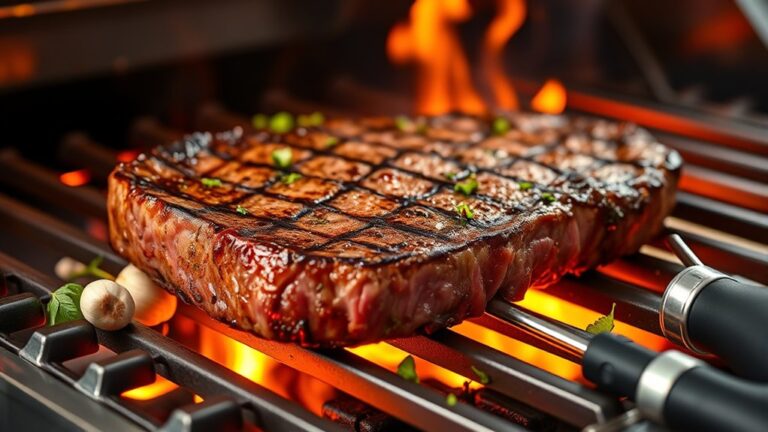
Start by preparing your gas grill: check for leaks, clean the burners, and keep the grates debris-free. Preheat it to 450-500°F and control the heat to avoid hot spots, keeping the lid closed.
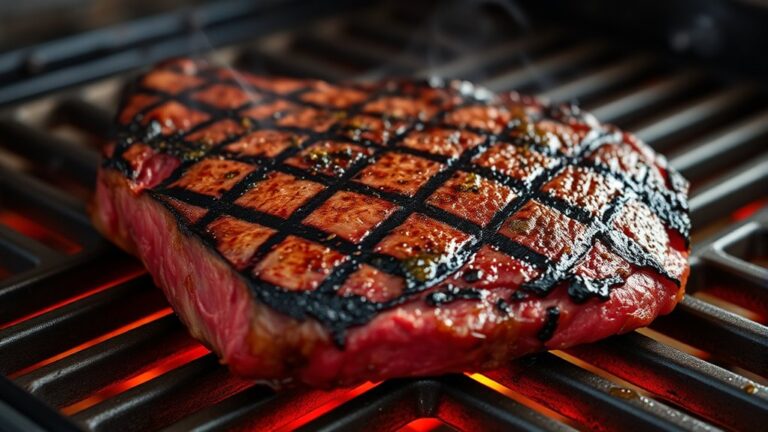
Season or marinate your steak, then pat it dry and lightly oil before placing it on the grill. Sear each side for a few minutes until a crust forms.
Use a thermometer for perfect doneness, and let the steak rest before slicing.
For detailed tips, continue to delve into how to boost your grilling game.
Key Takeaways
- Preheat the grill to 450°F to 500°F and clean the grates so you get an even sear.
- Season or marinate your steaks ahead of time. Opt for thick, well-marbled cuts for the best flavor and juiciness.
- Sear the steaks on high heat, flipping once, to create a nice crust and lock in the juices.
- Use a digital thermometer to check the internal temperature so you get your steak cooked just how you like it.
- Let the steaks rest loosely covered with foil for 5 to 10 minutes. This helps the juices redistribute before slicing.
How Gas Grills Cook Steaks: The Fundamentals
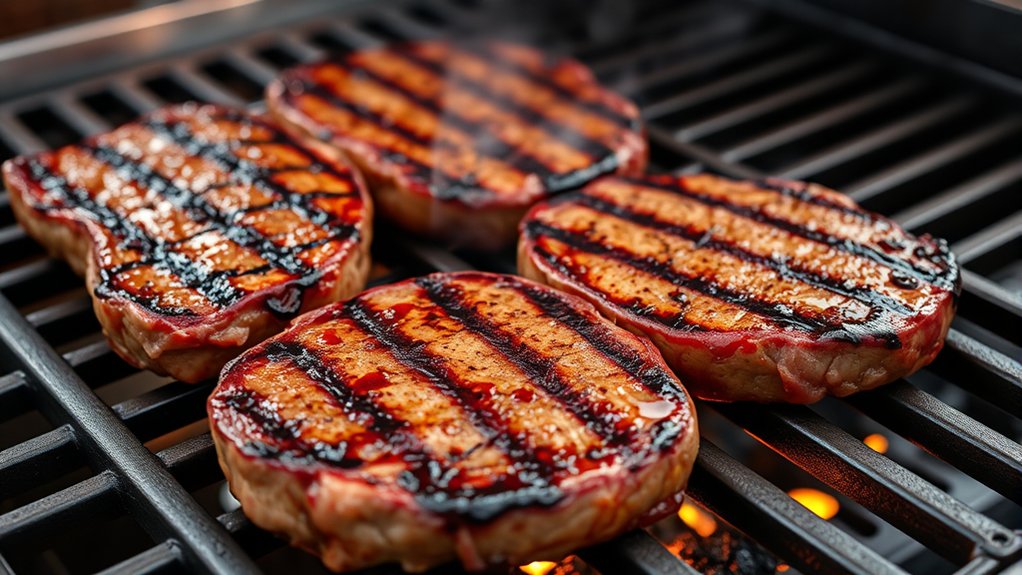
Gas grills cook steaks through direct heat from burning propane or natural gas, which creates high temperatures ideal for searing. To get perfect steaks every time, proper grill maintenance is a must.
Check for leaks, clean the burners, and keep the grates free of debris to maintain steady heat and prevent flare-ups. Always prioritize safety by keeping the lid open when lighting and staying alert during cooking.
High heat triggers the Maillard reaction, giving your steaks a delicious crust. Precise temperature control helps you manage the searing process and reach your desired doneness.
Choosing the Best Steak Cuts for Grilling
Choosing the right steak cuts makes all the difference in achieving perfectly grilled results. For tender, flavorful meat, go for cuts known for their tenderness, like ribeye, sirloin, and New York strip. These cuts usually have a good mix of marbling and muscle, which boosts flavor and juiciness.
When picking steaks, think about meat aging. Dry-aged or wet-aged options often taste better and are more tender. Dry aging enhances the flavor and breaks down connective tissues, making your grilled steak more enjoyable.
Thicker cuts are easier to handle on the grill because they allow for a perfect sear and even cooking. Stay away from very lean cuts like round or sirloin tip—they tend to be less tender and can dry out quickly.
Preparing Your Steak: Seasoning, Marinating, and Resting
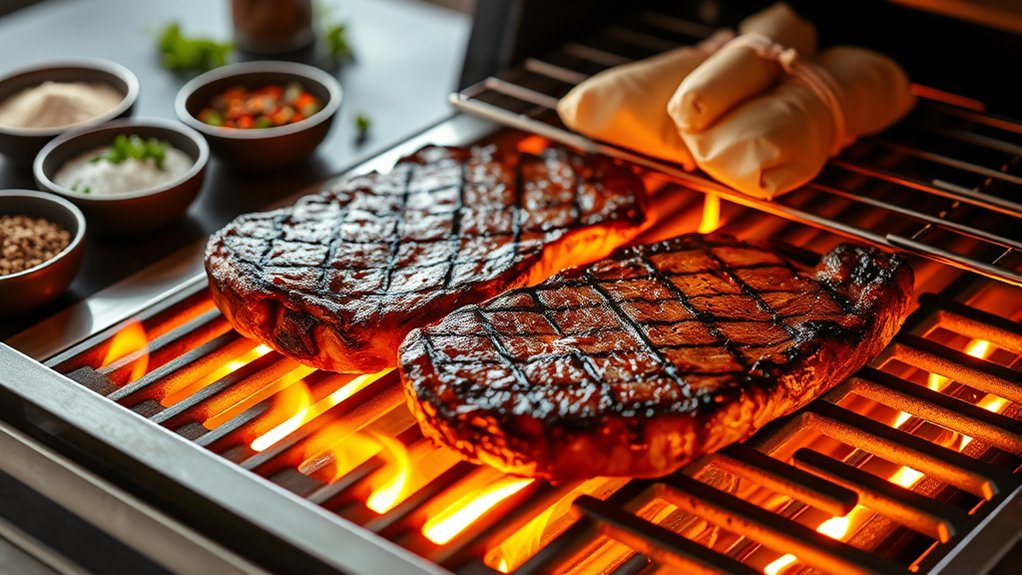
To really bring out the best flavor in your steak, start by choosing some good seasonings. A simple salt and pepper rub works wonders, but you can also get creative with garlic, herbs, or spices if you like. Marinating your steak for a little while can add even more depth and richness—just make sure not to marinate for too long, especially if you’re using acidic ingredients.
And don’t forget the importance of resting your meat after grilling. Giving it a few minutes to sit lets the juices redistribute, making your steak juicy and tender with every bite. Following these simple steps can really take your steak from good to amazing—trust me, it makes a big difference!
Choosing the Right Seasonings
Have you ever wondered how the right seasonings can turn a simple steak into a flavorful masterpiece? Choosing the right seasonings is key. You want to highlight the meat’s natural flavor without overwhelming it.
Use seasoning blends or spice rubs that match your taste—think smoky, spicy, or herbaceous. Keep it simple with salt and pepper, or try garlic powder, paprika, and thyme for more flavor.
Applying a good spice rub creates a tasty crust, so don’t be shy. Remember, less is more—you can always add more later if needed. Pre-made blends save time, but mixing your own spice rubs lets you personalize it.
Focus on balance and quality ingredients for a memorable grilling experience.
Marinating for Flavor Depth
After seasoning your steak, adding a marinade can help deepen its flavor and tenderize the meat. Use simple techniques like mixing oil, acid (like vinegar or citrus juice), and herbs or spices to boost the flavor.
A good marinade lets the meat soak up more richness, making each bite more satisfying. For the best results, marinate your steak in the fridge for at least 30 minutes, up to 2 hours, depending on the cut.
This process breaks down muscle fibers and infuses the meat with complementary flavors. Remember, the key to better flavor isn’t just the marinade ingredients but also the time and even coverage.
Marinating is a great way to enhance your steak’s taste without overpowering its natural qualities.
Resting for Juiciness
Ever wonder why resting your steak matters? Resting lets the juices redistribute, making each bite juicy and flavorful. Skipping this step can leave you with a dry, less satisfying steak.
After grilling, place your steak on a plate, loosely tented with foil, and let it rest for 5–10 minutes. This keeps the moisture in and makes your steak look and taste better.
While it rests, you can prepare garnishes like fresh herbs or a drizzle of sauce to boost presentation. Resting also makes slicing easier and prevents juices from spilling out.
Getting the Right Heat: Controlling Grill Temperature

Controlling the heat on your gas grill is key to cooking perfect steaks. Set your grill to about 450°F to 500°F for that ideal sear.
Use the burners wisely: turn them on high to preheat, then lower or adjust to keep a steady temperature. Good fuel matters—stick with quality propane or natural gas to avoid temp swings that can mess with your cook.
Keep the lid closed as much as possible to hold in heat, but don’t forget to check your grill thermometer regularly. This helps you avoid hot spots that might burn the outside before the inside is done.
Watch out for sudden temperature spikes—they can char your steak’s exterior while leaving the inside undercooked. Staying consistent with your heat makes flare-ups and smoke easier to manage.
Mastering temperature control means better results and safer grilling. It’s all about keeping that steady heat and enjoying a great cook every time.
How to Sear Your Steak for a Perfect Crust
Once your grill hits the right temperature, it’s time to focus on creating that irresistible crust on your steak. Searing locks in juices and boosts flavor, but always keep safety in mind—use long tongs and watch out for flare-ups.
Start with a well-sourced steak to ensure quality cuts for the best crust. To sear perfectly, pat your steak dry with paper towels to remove excess moisture. Lightly coat it with oil to help it brown nicely.
Place the steak on the hot grill and press down slightly. Don’t move it too soon—let the crust develop. Flip only once, then sear the other side briefly.
Following these steps will help you get a flavorful crust while staying safe. Remember, sourcing from reputable providers means better meat for searing. Keep the grill clean and monitor the temperature for top results.
Master these techniques, and you’ll always end up with a perfectly seared, delicious steak.
How Long to Grill Your Steak for Perfect Doneness
To achieve your desired level of doneness, you’ll need to pay close attention to grilling times, which vary depending on the steak’s thickness and your preferred outcome. For perfect results, consider your marbling evaluation—more marbling means more flavor and tenderness, but it also affects cooking time. Use steak knife techniques to check doneness visually: a rare steak is soft and cool inside, while a well-done one feels firm.
Thinner steaks cook faster. Typically, a 1-inch cut takes about 4-5 minutes per side for medium-rare. Thicker cuts, like a 2-inch steak, may need 6-8 minutes per side. Keep in mind that resting time is essential; it allows juices to redistribute.
While timing gives you a good starting point, always pay attention to the steak’s texture and marbling. Adjust your grill time accordingly to reach your perfect doneness.
How to Use a Meat Thermometer for Juicy Results
Using a meat thermometer is the most accurate way to make sure your steak stays juicy and cooked just the way you like it.
Proper use helps you master cooking techniques and pick the right meat for perfect results. Just insert the thermometer into the thickest part of the steak, avoiding bone or fat, for an accurate reading.
Keep a steady hand and check often as the steak gets close to your target temperature. Remember, different cuts and meats cook at different rates. Tender cuts like ribeye cook faster than tougher ones.
Here are some tips to help you get it just right:
- Insert the thermometer before flipping the steak.
- Aim for the target temperature based on your preferred doneness.
- Take the steak off the grill a little before it hits the final temp.
- Clean the thermometer between uses.
- Use a digital thermometer for quick, accurate readings.
Mastering this simple tool will boost your grilling skills and give you juicy, flavorful steaks every time.
Why Resting Steaks Matters and How to Do It
After removing your steak from the grill, it’s tempting to cut right in, but letting it rest makes a big difference in the final result. Steak resting allows the juices to redistribute, resulting in a juicier, more flavorful bite.
Letting your steak rest redistributes juices for a juicier, more flavorful bite.
During cooking, the meat’s internal temperature rises past the resting temperature, causing juices to move to the center. If you cut into it immediately, those juices escape, leaving your steak dry.
Resting time depends on thickness—about 5 minutes for thinner cuts and up to 10 minutes for thicker steaks. Use a meat thermometer to check the resting temperature, which should be close to your target doneness but slightly lower than the temperature at removal.
Cover the steak loosely with foil during resting to retain heat without trapping moisture. Prioritizing steak resting ensures your steak stays tender and flavorful, elevating your grilling game.
Adding Flavor and Presentation Tips for Steak
Enhancing the flavor and presentation of your steak can really take your grilling from good to exceptional. Focus on thoughtful plating and creative garnishes to make your meal stand out.
A well-plated steak not only looks appealing but also invites bites of flavor. Start by letting the steak rest briefly before slicing—this helps the juices settle and results in a juicier presentation.
Use fresh herbs like rosemary or thyme to add aroma and visual appeal. Brighten up the plate with colorful sides such as grilled vegetables or a vibrant salad.
For garnishes, consider drizzling balsamic reduction or spreading flavored butter on top. You can also sprinkle flaky sea salt or freshly cracked pepper for that finishing touch.
Troubleshooting Common Grilling Problems
Even with careful plating and presentation, issues can pop up during grilling that affect the final look and taste. Common problems include steaks that are undercooked or overcooked, often due to inconsistent grill temperature. To fix this, use a meat thermometer and adjust the heat as needed.
Use a meat thermometer to ensure perfectly cooked steaks and maintain consistent grill temperature.
If your steaks turn out tough or dry, try marinating with acids like vinegar or citrus. These help tenderize the meat and add moisture. Sometimes, steaks stick to the grill, ruining the presentation. Lightly oil the grates before cooking to prevent sticking.
Poor plating techniques can also make a well-cooked steak look unappetizing. Focus on even slices and attractive arrangements to boost presentation. If flare-ups happen, move the steak away from the flames and close the lid. This helps regulate the heat and prevents burning.
Troubleshooting these common grilling issues will help ensure your steaks come out tender, juicy, and visually appealing every time.
Frequently Asked Questions
Can I Grill Frozen Steaks on a Gas Grill?
You can grill frozen steaks on a gas grill, but it’s better to thaw them first for more even cooking.
If you choose to grill them frozen, just remember to add extra grilling time and consider using marinade techniques that help seal in the juices.
Keep an eye on the thickness of your steaks because thicker cuts will need more time to cook through.
What’s the Best Way to Prevent Flare-Ups During Grilling?
To prevent flare-ups, it helps to understand what causes them, like excess fat dripping onto the flames. Trim off any extra fat from your steaks and avoid pressing down on them while grilling.
Keep a spray bottle of water nearby for quick control if a flare-up happens. Also, don’t leave the grill unattended so you can react quickly if needed.
Follow some fire safety tips, like keeping a fire extinguisher within reach and making sure your grill is on a stable surface. This way, your grilling stays both safe and fun.
Should I Flip the Steak Multiple Times or Just Once?
You should flip the steak just once for even cooking and better grill marks. Focus on marinating techniques to boost flavor and use seasoning tips to bring out the meat’s natural taste.
When flipping, do it gently to prevent losing juices. Let the steak rest after grilling to keep it tender.
This approach guarantees a perfectly cooked, flavorful steak with appealing sear marks and ideal juiciness.
How Do I Clean My Gas Grill After Cooking Steaks?
After cooking steaks, it’s a good idea to clean your gas grill with proper maintenance techniques. First, turn off the grill and let it cool slightly so you don’t burn yourself.
Next, grab a grill brush and scrub the grates to remove any leftover food debris. Wiping down the exterior with a damp cloth helps keep the outside looking nice.
Regular cleaning prevents buildup, makes sure your grill heats evenly, and helps it last longer. Make it part of your post-cooking routine for the best results.
Can I Cook Thick Steaks Without a Two-Zone Setup?
Yes, you can cook thick steaks without a two-zone setup. Start by marinating your steak to boost flavor and tenderness, especially since thick cuts need extra moisture.
Use direct heat for searing to create a nice crust, then move the steak to indirect heat to finish cooking evenly. Keep in mind that thicker steaks take longer to cook, so watch the internal temperature to reach your preferred doneness.
Conclusion
Grilling the perfect steak is all about mastering heat, timing, and technique. Did you know that resting your steak for just five minutes can boost juiciness and flavor?
With these 10 steps, you’re set to impress every time you fire up your gas grill. Keep practicing, stay patient, and enjoy the delicious results.
Happy grilling — your next mouthwatering steak is just a few steps away!
And remember, mastering the art of grilling steak on a gas grill makes all the difference.