How to Smoke Meat on a Gas Grill?
Many grilling enthusiasts dream of adding that rich, smoky flavor to their meats but often feel overwhelmed by the process. You’re not alone—smoking meat on a gas grill can seem tricky at first, but with a little guidance, you’ll be impressing everyone with perfectly smoked dishes.
To smoke meat on a gas grill, set up a two-zone fire with one side on indirect heat. Use a smoker box or foil pouch with soaked wood chips on the cooler side to create smoke, and maintain a steady temperature around 225-250°F using the vents and burner controls.
Prepare your meat with marinades or rubs to enhance flavor before smoking. Keep a close eye on the internal temperature to ensure your meat turns out tender and juicy.
For more tips and troubleshooting advice, keep exploring how to get the best smoky results.
Key Takeaways
- Use a smoker box or foil pouch with soaked wood chips placed on indirect heat zones. This helps create that smoky flavor without direct contact with flames.
- Maintain your grill temperature around 225-250°F by adjusting vents and burner controls. Keeping a steady temp is key to slow, even cooking.
- Choose the right wood types for your meat and soak the chips beforehand. This ensures a steady stream of smoke throughout the process.
- Prepare your meat with marination or dry brining, and use a digital thermometer to keep an eye on internal temperatures. This helps you achieve perfect doneness.
- Keep an eye on the smoke levels, and adjust the vents as needed. Wrapping the meat during cooking can help retain moisture and improve tenderness.
What Equipment Do You Need to Smoke Meat on a Gas Grill?
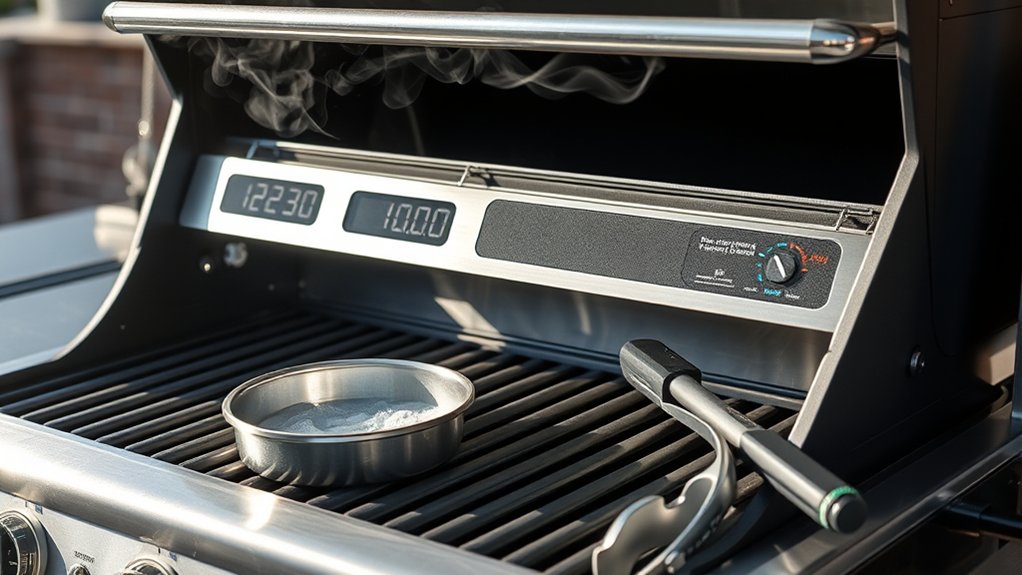
To smoke meat on a gas grill, you’ll need some essential equipment to create a proper smoking environment. First, a smoker box or a foil pouch filled with wood chips is key for adding that smoky flavor to your meat.
Use a smoker box or foil pouch with wood chips to infuse your meat with rich smoky flavor.
You might also want a digital thermometer to monitor the internal temperature, making sure your meat is cooked perfectly. A drip pan helps control flare-ups and keeps your grill clean.
To boost flavor, consider marinating your meat beforehand; it adds depth and tenderness. A good pair of tongs and a basting brush also make handling and flavoring easier during the process.
If your grill doesn’t have a built-in smoker feature, a two-zone setup with indirect heat is essential for controlled smoking. With these tools and techniques, you’ll be set to infuse your meat with rich, smoky flavor and have a successful, delicious grilling experience.
How Does Gas Grill Smoking Work? A Simple Explanation
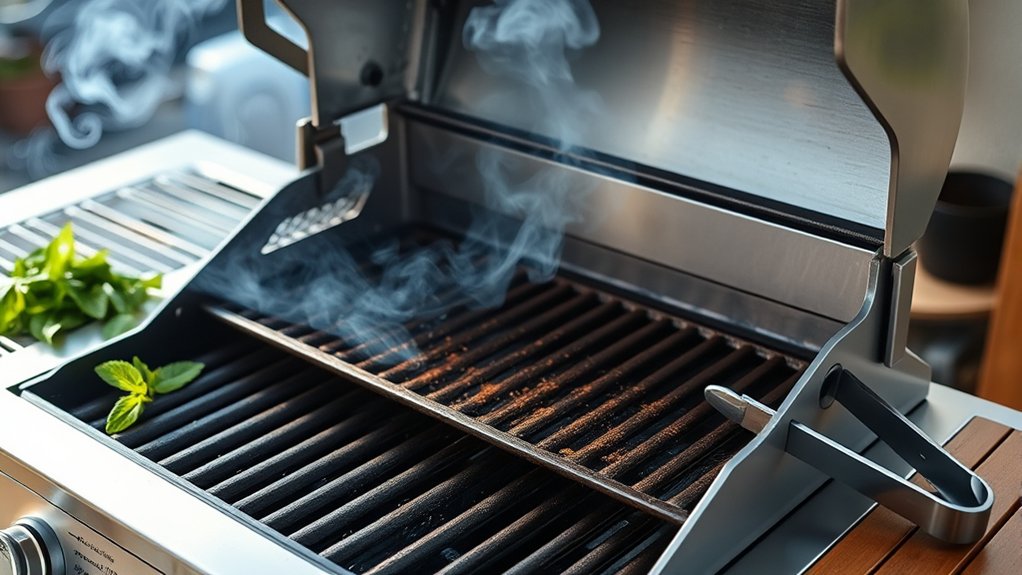
When smoking meat on a gas grill, understanding how the process works helps you control the flavor and tenderness. Gas grilling uses heat from burners, but to smoke, you add wood chips or chunks that produce smoke when heated. This smoke infuses the meat with a rich, smoky taste.
Smoke particles seep into the meat, gradually building up flavor over time. To do this, you set up a two-zone fire: one side with direct heat and the other with indirect heat. The wood smoking box or foil pouch is placed on the indirect side.
The smoke surrounds the meat, infusing it with smoky aroma while the indirect heat gently cooks it. Controlling airflow and keeping a steady temperature ensures consistent smoke production. This way, the smoke penetrates deeply and evenly into your meat.
This simple process turns your gas grill into a flavorful smoker, giving you delicious, smoky results every time.
How to Prepare Your Meat and Marinades for Smoking
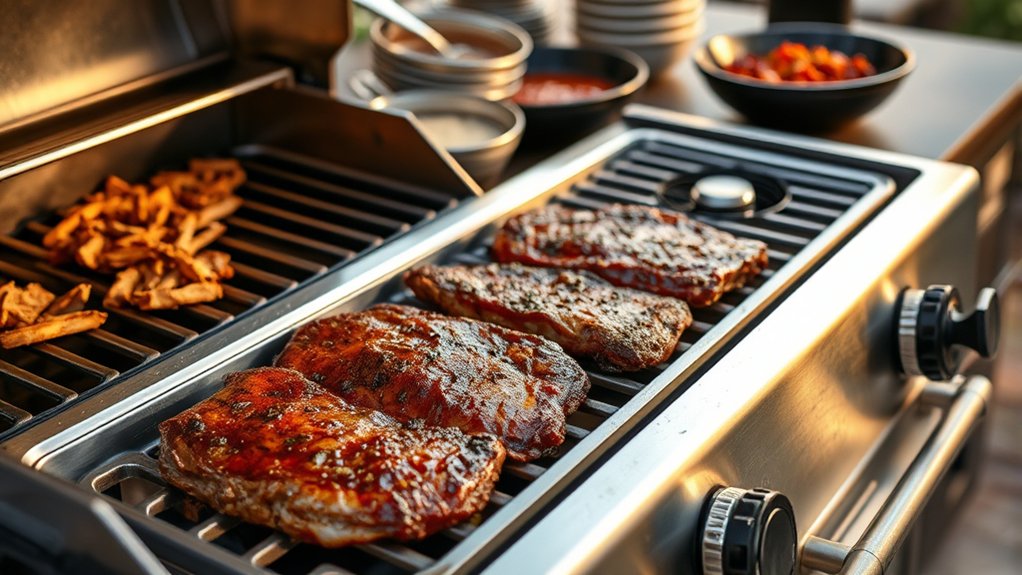
Before you start smoking, properly preparing your meat and marinades is key to getting the best flavor and tenderness. First, pick the right meat by considering the cut quality and fat content, which affect moisture and taste.
Properly preparing meat and marinades is essential for flavorful, tender smoked dishes.
Next, marinate your meat with flavorful ingredients like vinegar or citrus to help tenderize it. Marinate in the fridge for a few hours or overnight for the best results.
Here are some important steps:
- Choose quality meat that’s suitable for smoking, like brisket, ribs, or pork shoulder.
- Marinate with a mixture of salt, sugar, and spices to boost flavor.
- Enhance marinade absorption by poking holes or massaging the meat.
- Remove excess marinade before placing the meat on the smoker to prevent flare-ups and to ensure a good smoky flavor.
How to Choose the Right Gas Grill for Smoking Meat
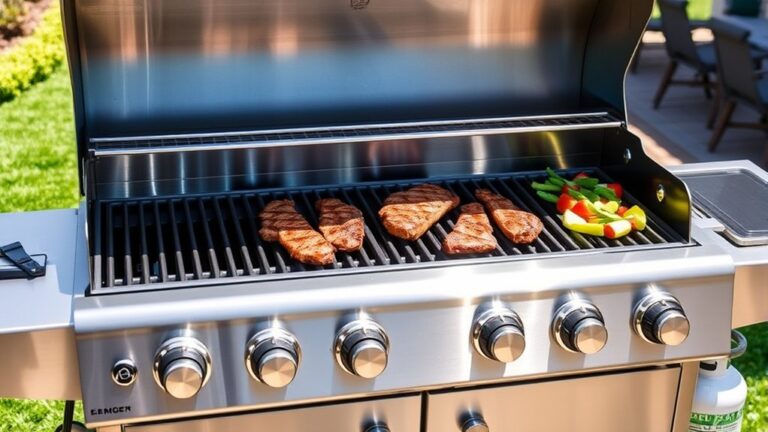
Choosing the right gas grill is key to making your smoked meat flavorful and tender. Look for a grill with good heat control and multiple burners, which let you create separate heat zones for indirect smoking.
A built-in smoker box or the option to add one really helps infuse more smoky flavor into your meat. When picking a grill, think about its size and cooking surface; bigger areas give you more flexibility for different meats and smoking styles.
Material quality also matters. Stainless steel grills tend to last longer and resist rust better. Don’t forget to check for features like adjustable air vents or dampers, which help you control temperature and smoke flow.
The perfect grill gives you precise control over heat and smoke, making it easier to get that ideal smoked meat. It also improves flavor infusion and suits various meat smoking techniques.
How to Set Up Your Gas Grill for Smoking Success
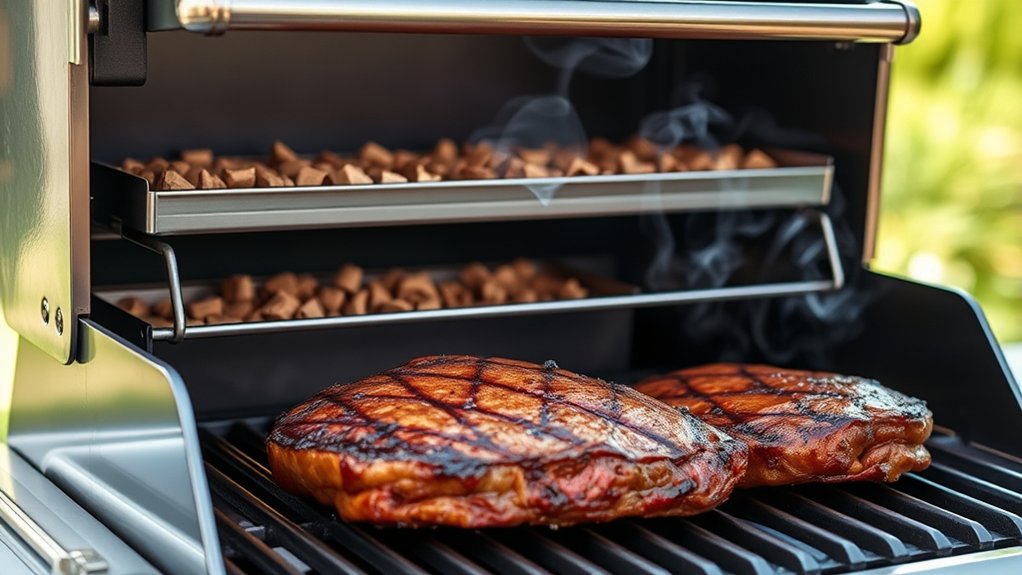
Setting up your gas grill for smoking starts with arranging the heat zones properly. You want to create a two-zone setup: one side with direct heat and the other with indirect heat. This helps you control the temperature and infuse flavors without overcooking.
Create a two-zone setup with direct and indirect heat for perfect smoking control.
To get started:
- Turn on half of the burners to medium or low, leaving the other side off.
- Place a drip pan filled with water on the indirect side to keep humidity high and help develop a good smoke ring.
- Add your wood chips to a smoker box or foil pouch on the hot side for consistent smoke.
- Adjust the vents or burners to keep the temperature steady around 225-250°F for slow, flavorful smoking.
This setup ensures even heat distribution, maximizing smoke exposure on the meat’s surface. It results in a richer smoke ring and better flavor infusion.
What Wood Chips Should You Use for Smoking Meat?
The type of wood chips you select can really impact the flavor of your smoked meat, so it’s important to choose wisely. Different woods give off unique flavor profiles, making your wood choice key to flavor infusion.
For a mild, sweet taste, go for fruit woods like apple or cherry. If you like a stronger, more robust flavor, hickory is a popular pick. Mesquite delivers an intense smoky flavor, perfect for beef and steaks, but use it sparingly so it doesn’t overpower the meat.
Alder is great for a subtle, aromatic smoke, especially with fish and poultry. Keep in mind that the size and moisture content of your wood chips affect how they burn and the flavor they impart. Soaking chips before use can help create cleaner smoke and make them burn longer.
Choosing the right wood based on your meat type and flavor goals will lead to a delicious, well-infused smoked result.
How to Maintain Temperature and Smoke Levels While Smoking
To keep your smoke steady, it’s all about managing the airflow. Just take a peek at the vents on your grill and give them a little adjustment. Opening or closing them slightly can make a big difference in how much air gets in, which in turn controls the smoke and temperature.
When it comes to the wood chips, picking the right kind really matters. Different woods will give you different flavors, and some produce more smoke than others. So, it’s worth experimenting a bit to find what works best for your taste.
And don’t forget to keep an eye on your grill’s temperature. Checking it regularly helps you make sure the heat stays consistent, so your smoke levels stay just right throughout the cooking process.
Controlling Airflow Effectively
Controlling airflow is key to keeping the right temperature and smoke levels when smoking meat on a gas grill. Good airflow management affects flavor and how smoke moves, helping your meat soak up smoky goodness without overcooking.
To control airflow effectively, start by adjusting the grill’s vents to manage oxygen intake, which balances heat and smoke. If the temperature gets too high, keep the lid slightly open to let more airflow in.
Use the burner controls to fine-tune the heat and match the airflow to your desired temperature. Just remember, opening the lid too often can mess up airflow patterns and make it harder to keep a steady temperature.
Choosing Proper Wood Chips
Ever wonder how to choose the right wood chips to keep your smoker at the perfect temperature and flavor? The key is wood selection, which directly influences flavor infusion and smoke production.
Opt for hardwoods like hickory, mesquite, or fruit woods such as apple and cherry, depending on the meat and desired flavor profile. Soak your wood chips for about 30 minutes before use to promote steady smoke without flare-ups.
Using the right wood chips helps maintain consistent smoke levels, which is essential for temperature control and achieving that rich smoky flavor. Avoid softwoods or resinous woods, as they can produce harsh, bitter smoke that ruins your meat’s taste.
Proper wood selection ensures your smoking process stays smooth and flavorful.
Monitoring Temperature Regularly
Maintaining a steady temperature and smoke level during smoking is key to getting perfectly cooked meat with rich flavor. Regular checks help ensure the flavor infuses evenly and the smoke absorption stays consistent. Here’s how to do it:
Use a reliable thermometer to check your grill temperature every 30 minutes. This helps you stay on top of any fluctuations.
Adjust the gas supply or vents to keep the heat steady. Controlling these helps prevent temperature swings that could affect your meat.
Keep an eye on the wood chips and add more as needed. This keeps the smoke level consistent and gives your meat that great smoky flavor.
Use the vent control to manage airflow. Proper airflow ensures continuous smoke without sudden changes, making your smoking process smooth.
How Long Should You Smoke Meat, and When Is It Done?
Figuring out how long to smoke your meat really depends on what kind and how big it is, but generally, most meats need several hours in the smoker to really soak up that smoky flavor. It’s not just about time, though—keeping an eye on the internal temperature is key. For example, pulled pork is usually done around 195°F, while salmon is perfect at about 140°F.
And don’t forget to look for some visual signs too. When your meat has a firm texture and a nice, caramelized bark, it’s usually a good sign that it’s ready to enjoy. So, a combination of temperature and appearance is your best bet for perfectly smoked meat!
Ideal Smoking Duration
The ideal smoking duration for your meat depends on the cut, thickness, and desired tenderness. Usually, you want to smoke until the meat hits a safe internal temperature and develops the flavor and texture you’re after. Keep an eye on timing to get the most flavor infusion and smoke penetration.
Smaller cuts might only take 1-2 hours, while thicker or tougher pieces often need 4-6 hours or more. Use a timer and check the internal temperatures regularly to stay on track.
Remember, the meat’s appearance and aroma can also help you tell when it’s ready. Patience is key—rushing can prevent good flavor absorption, but over-smoking can dry out the meat.
Adjust your timing based on these factors for the best results and enjoy your perfectly smoked meat.
Internal Temperature Targets
Monitoring the internal temperature of your meat is the most reliable way to know when it’s fully cooked and ready to eat. Using a good meat thermometer is key to accuracy and avoiding overcooking.
For the best flavor and that classic smoke ring, aim for specific temps depending on the meat. Brisket should reach about 195-205°F, while pork shoulder is usually best at 195°F for tenderness.
Chicken needs to hit at least 165°F for safety, but many folks prefer 175-180°F for extra flavor. Patience is important—wait until your meat hits the target temp before resting and slicing for the best results.
Visual and Texture Cues
While internal temperatures are important, you can also tell when your meat is done by paying attention to how it looks and feels. These visual and texture clues show proper flavor infusion and the formation of the smoke ring.
Bark Development: A dark, crusty exterior indicates good flavor absorption. It’s a sign your meat is developing that nice, flavorful crust.
Pulling Away: When the meat starts to pull away from the bone, it’s usually ready to serve. This is a good indicator of doneness without needing a thermometer.
Texture: The meat should be tender but still firm. It shouldn’t be mushy or overly tough. It’s all about finding that perfect balance.
Color and Smoke Ring: A pink smoke ring beneath the surface shows proper smoke penetration. It’s a visual cue that your smoking process is on point.
Tips for Achieving Tender, Flavorful Smoked Meat
Achieving tender, flavorful smoked meat hinges on proper technique and attention to detail. To improve flavor infusion, use the right type of wood chips and soak them beforehand to prolong smoke production.
Keep your grill’s temperature steady between 225°F and 250°F, ensuring consistent heat for even cooking. To boost meat tenderness, consider marinating or dry brining your meat overnight; this helps retain moisture and enhances flavor.
Wrapping the meat in foil or butcher paper during the later stages of smoking can also lock in juices and soften the texture. Remember, patience is key—resist the urge to increase heat or cut corners, as these can lead to tougher meat.
Regularly monitor your grill’s temperature and add smoke wood as needed to maintain flavor infusion. With careful temperature control, proper seasoning, and patience, you’ll produce smoked meat that’s both tender and bursting with flavor.
Troubleshooting Common Gas Grill Smoking Problems
Even with careful techniques, issues can come up when smoking meat on a gas grill. Common problems often affect flavor and seasoning techniques, but you can troubleshoot them easily.
- Too little smoke: If your meat isn’t getting that smoky flavor, check your wood chips or chunks. Soak them beforehand and make sure they’re touching the heat directly.
- Uneven cooking: Hot spots can cause inconsistent results. Rotate your meat regularly and keep the grill’s temperature steady.
- Too much smoke: Excess smoke can give a bitter taste. Use a controlled amount of wood and avoid opening the lid too often.
- Flavor loss: High heat for too long can dull your seasoning. Try wrapping your meat in foil or using a water pan to keep moisture in and preserve flavors.
Frequently Asked Questions
Can I Smoke Different Types of Meat Together on a Gas Grill?
Yes, you can smoke different types of meat together on a gas grill, but keep in mind their unique flavor profiles. Some meats might need more or less cooking time to avoid over or undercooking.
Make sure to keep the meats separated to prevent cross-contamination and to ensure each gets the right amount of smoke exposure. Monitoring temperatures and timing closely is key to getting delicious results with various meats on one grill.
How Often Should I Add Wood Chips During Smoking?
You should add wood chips every 30 to 45 minutes during smoking. Soaking your wood chips beforehand helps them smolder longer, providing consistent smoke.
Keep an eye on your smoke chamber design. A well-designed chamber guarantees proper airflow and smoke circulation, reducing the need for frequent refills.
Replenishing chips at regular intervals maintains a steady smoke, which enhances flavor without overwhelming your meat.
Is It Necessary to Rotate the Meat While Smoking?
Rotating the meat isn’t always necessary, but it can help ensure even smoke infusion and consistent meat temperature. If your grill heats unevenly, turning the meat occasionally can prevent overcooking on one side and promote a more uniform flavor.
Use a meat thermometer to keep track of the internal temperature. Rotate the meat if you notice uneven cooking to help achieve perfectly smoked meat with balanced smoke flavor and ideal tenderness.
What Safety Precautions Should I Take When Smoking on a Gas Grill?
Did you know that improper grilling causes over 10,000 fires annually? When smoking on a gas grill, it’s important to keep a close eye on the temperature to avoid flare-ups.
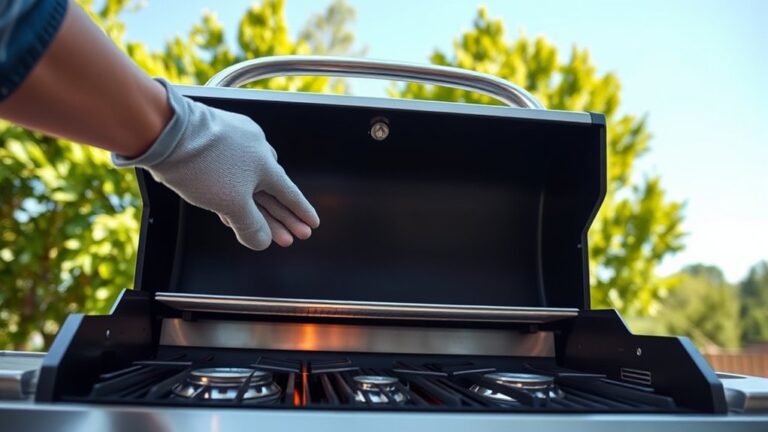
Always wear safety gear like heat-resistant gloves and safety glasses. Keep a fire extinguisher nearby, just in case. Make sure your area has good ventilation so fumes don’t build up.
Never leave the grill unattended while you’re smoking. Before you light it up, check for gas leaks to stay safe. These simple precautions will help make your smoking experience both safe and enjoyable.
Can I Use a Smoker Box With a Gas Grill for Better Smoke Flavor?
Yes, you can definitely use a smoker box with your gas grill for better smoke flavor. Fill it with your choice of wood chips like hickory, mesquite, or apple, depending on the flavor you want.
The smoker box concentrates the smoke, which helps boost the overall smoke flavor and aroma. It’s an easy way to add that smoky taste without needing a dedicated smoker.
Conclusion
Smoking meat on a gas grill is like charting a flavorful voyage—you’re the captain steering through smoky seas. With the right equipment, preparation, and patience, you’ll create tender, flavorful results that rival any smoked delicacy.
Remember, each step is your compass guiding you toward culinary success. So fire up your grill, follow the process, and enjoy the delicious reward of your smoky masterpiece.
Your journey to perfect smoked meat starts now. Get ready to master the art of smoking on a gas grill and impress everyone with your skills.