5 Simple Steps to Turn On Your Gas Grill Safely
Many people love grilling outdoors, but figuring out how to do it safely can be stressful. You’re not alone in feeling unsure about handling gas grills properly. Ensuring safety is key to enjoying delicious meals without worries.
To turn on your gas grill safely, start by inspecting it for damage, cleaning the burners and hoses, and making sure the fuel connections are tight and leak-free.
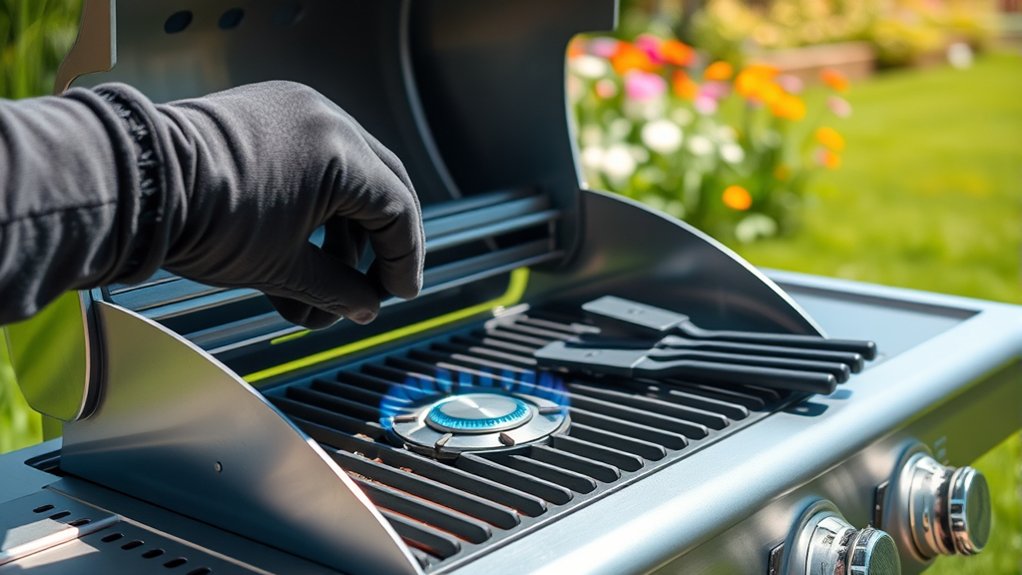
Next, open the gas valve slowly and ignite the burners using an igniter or long match, keeping your face and hands clear.
After lighting, check for leaks and proper flame. Once everything looks good, you’re ready to cook.
Learning these detailed steps guarantees complete safety and makes grilling a fun, worry-free experience.
Key Takeaways
- Inspect and clean burners, hoses, and connections for damage before starting.
- Check for gas leaks using soapy water and tighten all connections securely.
- Open the gas valve slowly and make sure the burners are off before ignition.
- Use an igniter or a long match to safely light the burners with the lid open.
- Before cooking, verify the grill is leak-free, the burners are clean, and the temperature is just right.
How to Prepare Your Gas Grill Safely Before Ignition
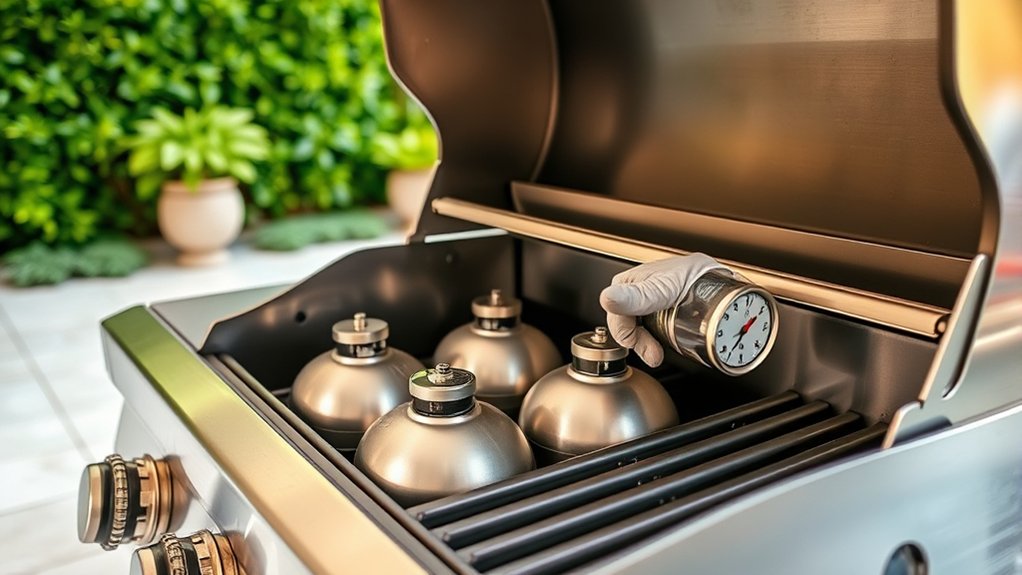
Before igniting your gas grill, it’s important to prepare it properly to ensure safe use. Start by inspecting your grill for any signs of damage or wear, which is part of regular maintenance.
Make sure all parts, including the burners and hoses, are clean and in good shape. Check that you’re using the right fuel—whether propane, natural gas, or others—and that it’s compatible with your grill.
If you’re using a propane tank, double-check that the connections are tight and there are no leaks. For natural gas grills, ensure the supply line is secure and undamaged.
Clear the area around your grill of any debris or flammable materials. Taking these steps helps prevent accidents and keeps your grill running smoothly.
Proper prep not only extends your grill’s lifespan but also makes your grilling experience safer and more enjoyable every time.
Check Gas Leaks and Secure Connections
To make sure your grill is safe to use, check for gas leaks and secure all connections properly. Start by inspecting the gas hose and regulator for any signs of wear, cracks, or damage.
Next, perform a gas leak test by applying a soapy water solution to the connections. If bubbles form, there’s a leak that needs fixing before you proceed.
Apply soapy water to connections; bubbles indicate leaks that must be fixed before use.
Make sure all connection points are tight and secure, but avoid overtightening, which could cause damage. Check that the propane tank valve is closed tightly before attaching it to the regulator.
When connecting the gas hose, do so firmly to prevent leaks, but don’t force it. Regularly checking that everything is secure helps prevent dangerous leaks and keeps your grill running safely.
Always double-check these components before igniting. If you spot a leak, fix it immediately or consult a professional.
Open the Gas Valve and Ignite the Grill
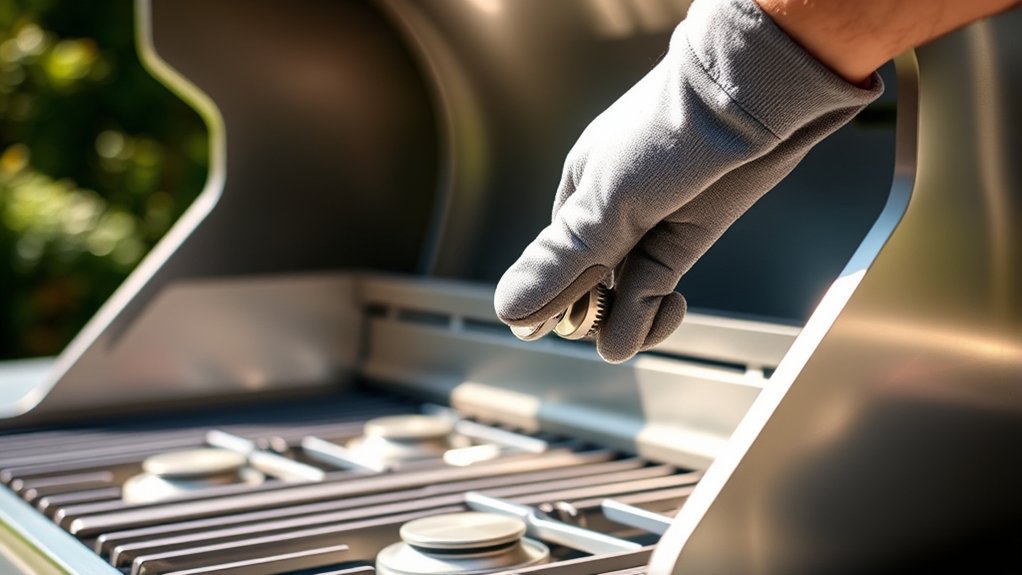
Wondering how to safely start your grill? Once you’ve checked for gas leaks and secured connections, it’s time to open the gas valve and ignite the grill.
This step is vital for safe operation and effective grill maintenance. Turn the valve slowly to prevent any sudden gas release.
Before igniting, verify the burners are off and the lid is open to prevent gas buildup. When you’re ready, follow your grill’s ignition instructions—usually pressing the igniter button.
Remember, consistent cleaning techniques help keep your grill in top shape, reducing the risk of flare-ups. Regular maintenance not only prolongs your grill’s lifespan but also guarantees safe operation.
Always open the gas valve gradually to avoid pressure surges. Keep the lid open to prevent gas buildup during ignition.
Regularly clean burners and grates for safer, more efficient grilling.
Step-by-Step: Igniting Your Gas Grill Safely
When you’re ready to ignite your gas grill, start by making sure the burners are off and the lid is open. This prevents gas buildup and lets you see inside the grill easily.
Before lighting, check that your grill has been well maintained. Clean out grease buildup and debris to prevent flare-ups.
To ignite, turn the gas valve to the ON position. Then, use the igniter button or a long match to light the burners. Keep your face and hands clear of the opening.
Once the burners are lit, close the lid and set the heat to medium-high. This helps distribute heat evenly and improves your cooking.
Proper maintenance is key to safe ignition and good performance. As you get more comfortable, you’ll learn to control the heat better.
This makes grilling more efficient and enjoyable. Always stay attentive during ignition to prevent accidents and start your barbecue safely.
How to Confirm Your Grill Is Safe and Ready to Cook
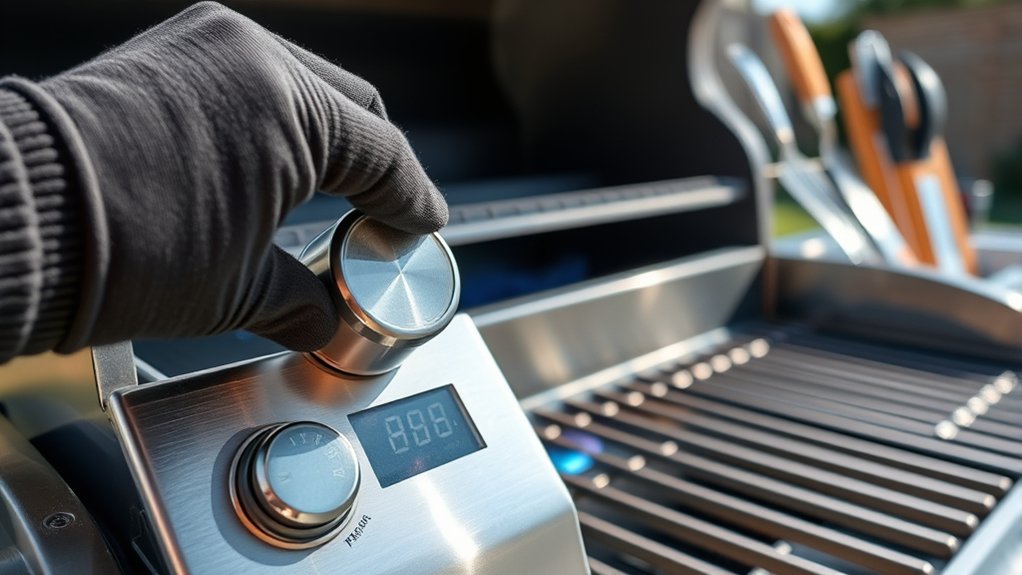
Before placing food on your grill, it’s important to make sure it’s safe and ready to go. Checking your grill properly helps keep it working well and promotes good maintenance habits.
Start by inspecting for gas leaks. Apply a soap solution to the hose and connections—bubbles mean there’s a leak. Make sure everything is secure before turning on the gas.
Next, check the burners. Clean off any debris and look for blockages, which can cause flare-ups and affect your cooking. Keeping burners clean helps everything cook evenly.
Finally, verify the grill’s temperature. Use the built-in thermometer or an external probe to make sure it’s at the heat level you need for your recipe.
Frequently Asked Questions
What Should I Do if My Grill Doesn’t Ignite?
If your grill doesn’t ignite, start by turning off the gas and checking for leaks with a soap and water solution around the connections. Look for bubbles—that’s a sign of a leak.
For ignition troubleshooting, make sure the igniter is clean and properly connected. If it still won’t spark, you can try lighting the grill manually with a long match or lighter.
Just remember to prioritize safety and avoid opening the lid too quickly.
How Often Should I Clean My Gas Grill?
You might think cleaning your grill is a hassle, but regular maintenance is key. You should clean your grill after every 5-6 uses to prevent grease buildup and keep it safe to cook on.
Make it part of your routine to scrub the grates and clean the burners. This helps keep your grill in top shape and extends its lifespan.
Doing this regularly also guarantees flavorful, safe meals every time you fire it up. It’s a small effort that makes a big difference.
Can I Use a Grill Indoors Safely?
You shouldn’t use a gas grill indoors because it poses serious safety risks. Guarantee proper indoor ventilation if you’re using a grill in a covered outdoor space, but never indoors.
Carbon monoxide safety is critical—you could unknowingly poison yourself. Always use grills in open, well-ventilated areas to prevent dangerous buildup.
For indoor cooking, opt for electric or indoor-safe grills designed specifically for indoor use.
What Safety Equipment Is Recommended When Grilling?
Imagine your grill as a trusted friend in your backyard adventure. To keep it safe, always have essential safety gear nearby.
A fire extinguisher is a must-have, ready to handle any flare-ups quickly. Regular grill maintenance also helps prevent accidents and keeps everything running smoothly.
Keep a smoke detector close by, and don’t forget to wear heat-resistant gloves. These simple precautions let you enjoy your grilling safely and with confidence.
How Do I Store Propane Tanks Safely After Use?
After using your propane tank, store it upright in a well-ventilated area away from direct sunlight and heat sources.
Make sure the tank is turned off and check for leaks or damage during regular maintenance.
Keep it outside, away from living spaces, and never store it indoors or in enclosed areas.
Proper storage helps prevent accidents and extends the life of your tank, keeping your grilling safe and fun.
Conclusion
Now that you’ve mastered these simple steps, your grill is ready to bring sizzling flavors and smoky goodness to life. Think of it as igniting a fiery friendship—trustworthy, warm, and full of potential.
With safety as your guiding star, you can confidently create culinary masterpieces that bring friends together around a flickering flame.
So, fire up your gas grill and let it become the heart of unforgettable moments, one delicious bite at a time.