How to Use a Gas Grill: Tips for Beginners
Many people struggle with grilling safely on a gas grill for the first time, feeling overwhelmed by the setup and safety precautions. You’re not alone—getting started can feel daunting, but with a few simple tips, you’ll be confidently grilling in no time.
To use a gas grill safely, start by setting it up on a flat, stable surface away from flammable objects. Check all connections for leaks with soapy water.
Turn on the gas slowly and ignite using your grill’s starter, watching for stable, blue flames.
Preheat for 10-15 minutes, then create heat zones for different cooking styles. Manage the temperature carefully and keep safety equipment nearby.
If you keep these tips in mind, you’ll be grilling like a pro in no time.
Key Takeaways
- Read and follow the manufacturer’s instructions before operating the grill.
- Check for gas leaks and make sure all connections are secure before lighting.
- Preheat the grill for 10-15 minutes to clean the grates and help stabilize the temperature.
Use heat zones: high for searing and low or off for indirect cooking.
Always supervise the grill, keep a fire extinguisher nearby, and make sure you’re in a well-ventilated area.
How to Safely Set Up Your Gas Grill
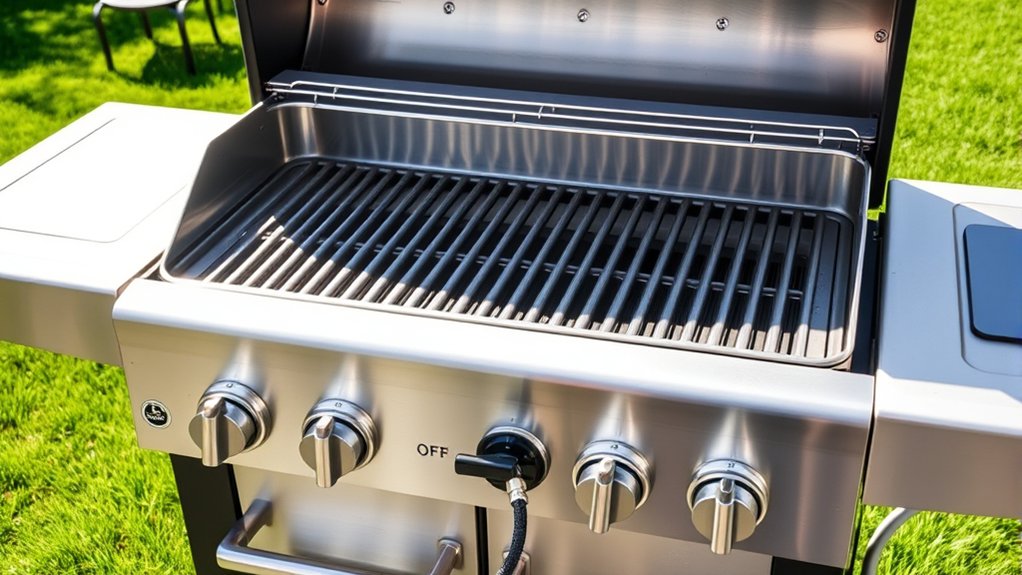
Before you start grilling, it’s essential to set up your gas grill safely. First, read the manufacturer’s instructions thoroughly.
Place your grill on a stable, flat surface away from flammable objects and overhangs. Check that all grill accessories, like propane tanks, hoses, and regulators, are in good condition—no cracks or leaks.
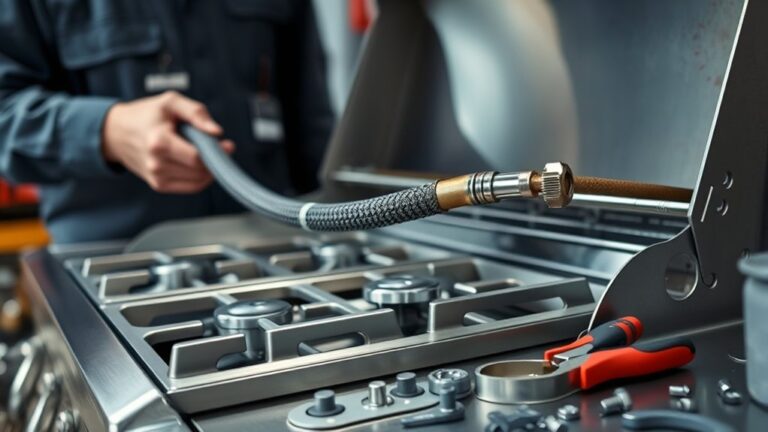
Conduct a quick leak test by applying soapy water to connections; bubbles mean leaks that need fixing before use. Verify the propane tank is securely attached but don’t overtighten.
Clear the area of any debris or combustible materials. Keep a fire extinguisher nearby, just in case. Proper outdoor cooking setup also involves locating your grill in a well-ventilated space to prevent gas buildup.
Taking these safety steps guarantees a secure environment and makes grilling more enjoyable from the start. Remember, safety always comes first when setting up your gas grill.
Learn How to Use Your Gas Grill’s Controls and Features
Getting started with your gas grill is all about understanding the controls. The knobs are your main tools—they control the heat and help you set up different cooking zones. Take a moment to get comfortable with how these knobs feel and move.
Next, it’s really important to know how to operate the ignition system safely. Whether you’re using an electric or manual igniter, make sure you understand the steps to light your grill properly. Doing this confidently will help you start grilling quickly and without any hassle.
Once you’re familiar with these features, you’ll be able to cook with confidence and keep everything under control. Happy grilling!
Understanding Control Knobs
Understanding your gas grill’s control knobs is key to safe and effective cooking. These knobs control the gas flow, which in turn manages the heat levels and cooking temperature.
To use them correctly, turn the control knob slowly to prevent sudden gas flow that could cause flare-ups. Always start with the knob in the “off” position before turning on the gas supply.
Adjust the knobs until you reach your preferred heat, usually between low, medium, and high. Make sure the flame is steady and blue, which shows the gas flow is proper.
Using Ignition System
Using the ignition system is the easiest and safest way to start your gas grill without matches or lighters. Modern grills usually have different ignition types, like push-button electric starters or battery-powered igniters.
To keep things safe, make sure the control knobs are turned off before igniting. Turn on the gas supply, then press or turn the ignition button firmly. You should hear a clicking sound, which means the spark is happening.
If your grill has multiple burners, light one at a time, starting with the main burner. Always stay close by during ignition, and if the flame doesn’t light within a few seconds, turn everything off and wait before trying again.
Using the ignition system properly keeps your grilling safe and easy.
Getting Your Grill Ready: Cleaning and Preheating
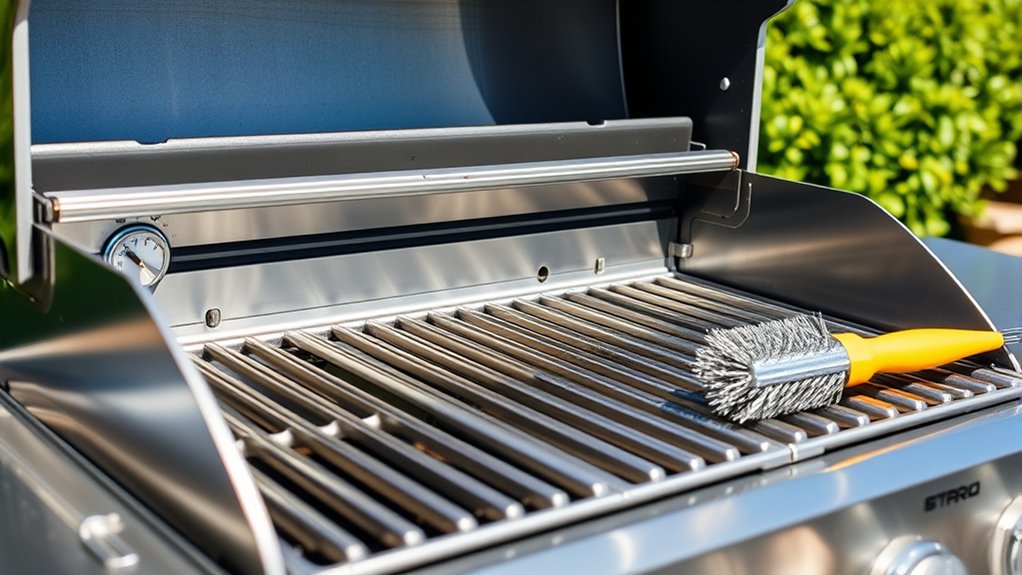
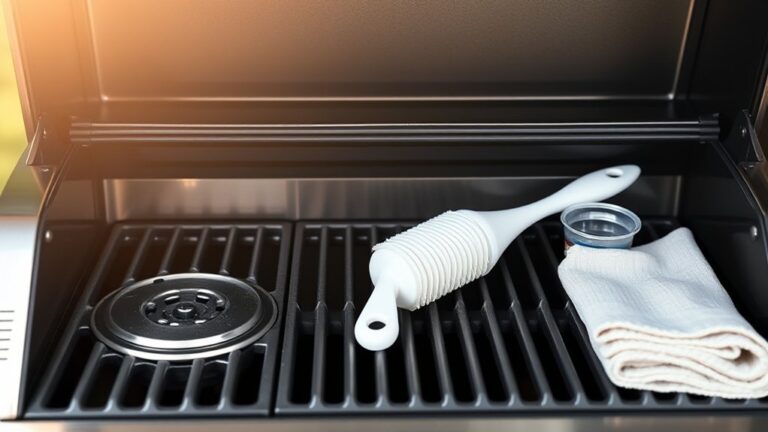
Before firing up your gas grill, it’s important to clean and preheat it to ensure safe and efficient cooking. Cleaning removes grease and residue that can cause flare-ups or impact flavor. Use a wire brush or scraper to thoroughly clean the grates.
Next, check your fuel options—whether propane or natural gas—and make sure your tank is full and connected securely. Preheating helps burn off any remaining debris and stabilizes the temperature.
Here are the key steps:
- Remove leftover debris and grease from the grill surface.
- Scrub the grates with a wire brush for a clean cooking surface.
- Check fuel connections for leaks or blockages.
- Turn on the grill and let it preheat for 10 to 15 minutes before cooking.
Following this process makes sure your grill is ready, safe, and ready for even heat distribution.
How to Light Your Gas Grill Properly
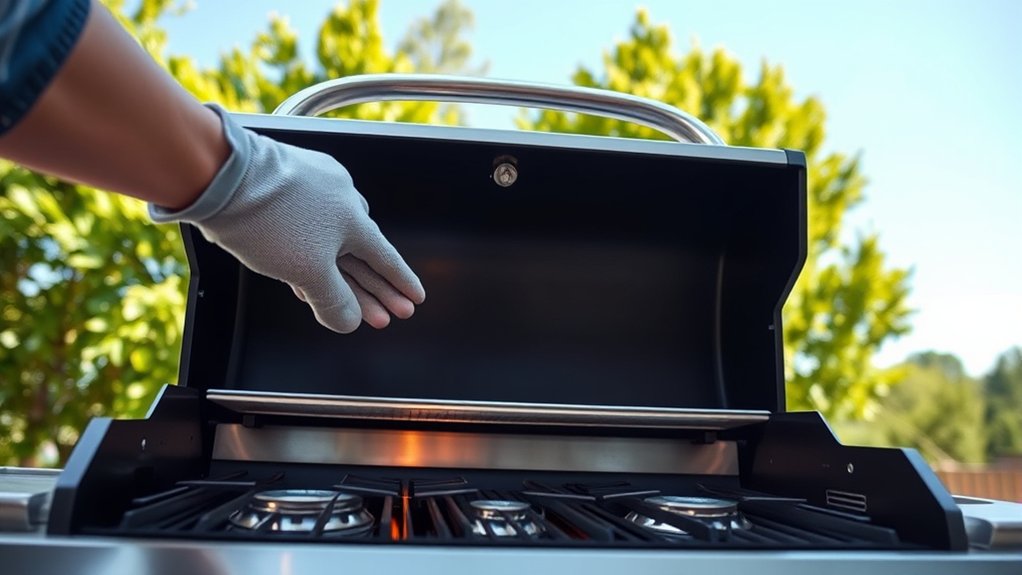
To light your gas grill safely and effectively, start by making sure the burners are turned off and the lid is open. This helps prevent gas buildup and allows you to see clearly.
Next, turn on the gas supply. Before lighting, double-check that the control knobs are off. Always follow safety precautions: keep your hands away from the burners when igniting, and check for leaks first.
To ignite the burners, use the built-in ignition button or a long match. Make sure flames are stable after lighting, and adjust as needed if flames are irregular.
Proper lighting techniques and safety precautions will give you a safe start to your grilling session.
Controlling Temperature for Perfect Grilling
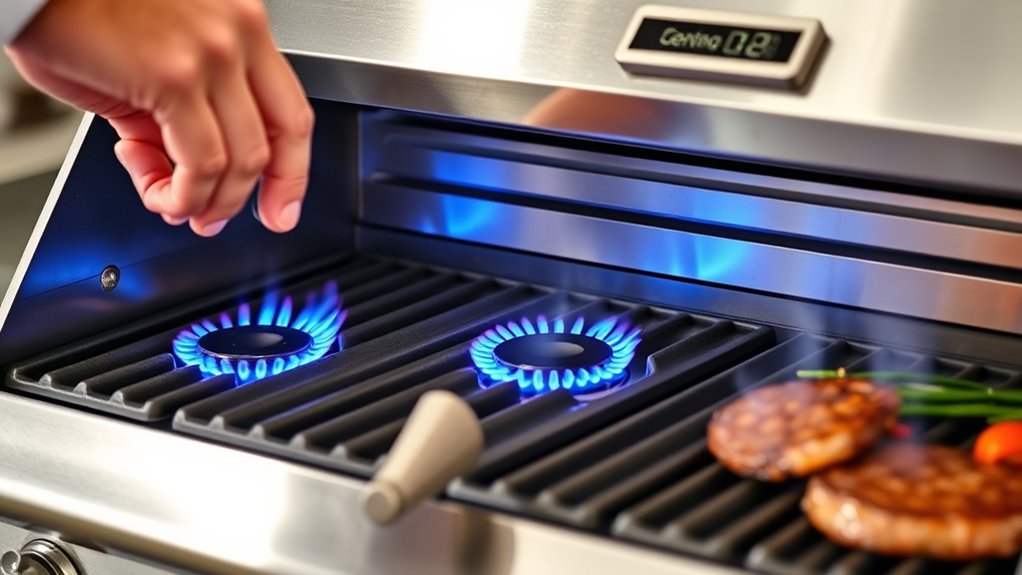
To get that perfect grilled taste, it’s all about controlling the heat just right. Start by adjusting your burner settings—you want to find that sweet spot. Using the two-zone method is a great trick; it lets you manage direct and indirect heat easily, giving you more control over how your food cooks.
And don’t forget to keep a thermometer nearby. It’s super helpful for keeping an eye on the temperature, so your food cooks evenly without any surprises. With a bit of practice, you’ll be grilling like a pro!
Adjust Burner Settings
Wondering how to achieve the perfect grill temperature? Adjusting burner settings is key. First, turn your burners to your desired heat level, then watch the flame size: bigger flames mean higher heat, smaller flames mean lower heat.
To improve fuel efficiency and ensure even cooking, regularly check and clean your burners. Clogged burners can waste fuel and cause uneven heat.
Remember these steps:
- Set the burners to your target temperature.
- Keep an eye on the flame size for quick adjustments.
- Regularly clean your burners for the best performance.
- Practice small adjustments for precise control.
Proper burner management not only delivers consistent heat but also helps extend your grill’s lifespan through good maintenance. This way, you’ll get perfect results every time.
Use Two-Zone Method
Using the two-zone method allows you to control the temperature on your grill more effectively, helping you cook different foods at their ideal heat levels. To set up, turn on one side of your grill to high heat and leave the other side off or on low. This creates a hot zone for searing and a cooler zone for finishing.
Your fuel options, like propane or natural gas, give quick adjustments, making this method easy to use. Invest in grill accessories like a two-zone divider or heat-resistant gloves to improve control and safety.
Monitor With a Thermometer
Ever wondered how to guarantee your grilled foods come out perfectly cooked every time? The secret is consistent temperature monitoring. Use a good-quality thermometer to keep track of your grill’s temperature.
Make sure to regularly check and calibrate your grill to ensure accurate readings. This process is called grill calibration, and it helps you cook with confidence.
To control your heat effectively, place the thermometer in the grill’s lid vent or on the grates for precise readings. Adjust the burners as needed to maintain your target temperature.
Keep an eye on the thermometer throughout cooking, not just at the beginning. If the temperatures seem off or inconsistent, recalibrate your grill to stay on track.
Using Heat Zones for Versatile Cooking
Creating different heat zones on your gas grill lets you cook more precisely and flexibly. By adjusting each burner’s flame, you can set high, medium, and low heat areas across the grill.
This setup allows you to quickly sear foods over a hot zone while keeping delicate items warm or gently cooking in cooler zones. Proper heat distribution ensures even cooking without burning or undercooking.
To create these zones, turn on one or two burners to high and leave the others on low or off. Use the heat differently depending on what you’re cooking, like searing steaks over direct high heat and then moving them to indirect heat to finish.
Managing the flames carefully helps prevent flare-ups and keeps temperatures steady. With well-planned heat zones, you’ll have better control over your grilling, making it easier to get perfect results every time.
What to Cook on Your Gas Grill: Tips for Meats, Veggies, and More
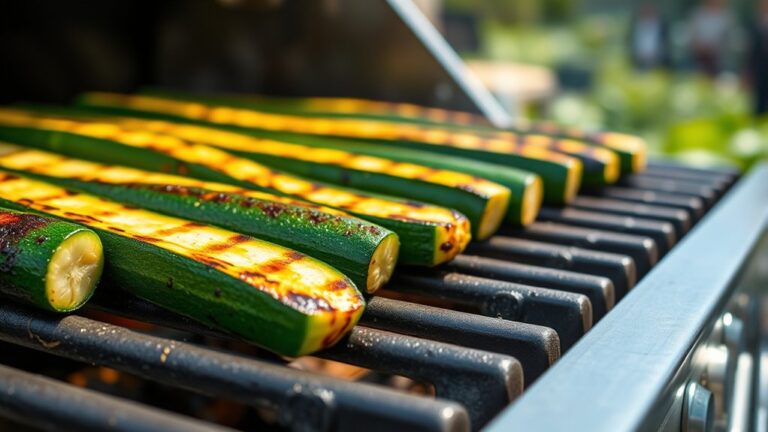
Thinking about what to cook on your gas grill? It’s a great idea to go for classic meats like steaks, burgers, and chicken—they turn out juicy and full of flavor every time. And don’t forget about adding some vibrant veggies like peppers, zucchini, and corn to really bring your meal to life with color and freshness.
When you pick your ingredients, just keep in mind that a mix of meats and veggies will give your grill feast a nice variety. It’s all about balancing hearty bites with fresh, colorful sides. With the right choices, you’ll end up with a delicious and well-rounded meal that everyone will enjoy!
Best Meats for Grilling
Looking to impress at your next barbecue? Choosing the right meats is key. Opt for cuts with good marbling, like ribeye or pork chops, for juicy results.
When considering meat selection, focus on freshness and quality. Here are four tips to help:
- Select meats with even thickness for consistent cooking.
- Use marinade techniques to boost flavor and tenderness.
- Choose cuts suitable for quick grilling, like sirloin or chicken breasts.
- Avoid overly lean meats that might dry out quickly.
Perfect Veggie Options
Wondering what vegetables work best on your gas grill? Opt for firm, hearty options like zucchini, bell peppers, mushrooms, asparagus, and cherry tomatoes.
To boost flavor, marinate your veggies in a vegetable marinade for at least 30 minutes before grilling. Grilled vegetable skewers are a fantastic way to serve colorful, flavorful bites.
Use the table below to choose your veggies and get tips on how to prepare and cook them:
| Vegetable | Best Preparation | Cooking Time |
|---|---|---|
| Zucchini | Slice into rounds, marinate briefly | 4-6 minutes per side |
| Bell Peppers | Cut into chunks, marinate if desired | 8-10 minutes |
| Mushrooms | Thread onto skewers, brush with marinade | 5-7 minutes |
| Asparagus | Toss with oil and seasoning | 3-5 minutes |
| Cherry Tomatoes | Skewer whole, lightly marinate | 2-3 minutes |
Enjoy vibrant grilled veggie skewers as a healthy, delicious addition to your grill!
Troubleshooting Common Gas Grill Problems
Gas grill problems can be frustrating, but many issues have simple solutions if you know what to look for. Common problems often come from clogged burners, leaks, inconsistent heat, or faulty ignition.
Gas grill issues are common but often easy to fix with simple checks and maintenance.
To troubleshoot, start by checking for blockages in the burners and clean them with a wire brush. Next, inspect hoses and connections for leaks using a soap solution; tighten or replace parts as needed.
Make sure your gas supply is steady and the pressure is adequate. If your ignition system is old or faulty, replacing it with compatible gas grill accessories can help ensure reliable lighting.
Regular maintenance keeps your grill running smoothly. Keep an eye on wear and tear, especially on hoses and valves. Using quality accessories can prevent many common issues.
When problems pop up, these quick checks save you time and frustration. They let you get back to grilling your favorite foods quickly. Proper troubleshooting helps keep your gas grill dependable for all your outdoor cooking adventures.
Essential Safety Tips for Gas Grilling
Ever considered how to keep your outdoor cooking safe while enjoying the flavors of a gas grill? First, always check for gas leaks before igniting. Use soap and water on connections—bubbles mean a leak. Keep your grill in a well-ventilated area, away from structures and overhanging branches, to prevent fire hazards.
Use safety equipment like heat-resistant gloves and long-handled tools to avoid burns. For fuel efficiency, avoid opening the lid frequently while cooking. This conserves gas and helps maintain the right temperature.
Never leave the grill unattended when it’s on. Keep a fire extinguisher nearby just in case of emergencies. Regularly inspect hoses and connections for cracks or damage, and replace them if needed.
Keep a safe distance from children and pets. Always turn off the gas supply after you’re done grilling. Following these safety tips will help you enjoy a secure and fun outdoor cooking experience every time you light up your gas grill.
Maintaining Your Gas Grill for Long-Term Performance
Regular maintenance is essential to keep your gas grill working its best over the years. Proper care guarantees consistent outdoor cooking results and helps it last longer.
First, clean the grates after each use with a wire brush to prevent buildup. Second, check and tighten all connections, including fuel lines and burners, to avoid leaks or malfunctions.
Third, inspect and replace worn or damaged grill accessories like thermometers or warming racks to keep everything performing well. Fourth, deep-clean the interior periodically by removing grease and debris, which can cause flare-ups.
Keeping the exterior clean with a mild soap solution also helps preserve its appearance. Regular maintenance not only improves your cooking experience but also keeps it safe.
A well-maintained grill performs better, lasts longer, and is safer to use. It’s definitely worth the effort for any grill enthusiast.
Frequently Asked Questions
How Often Should I Check for Gas Leaks?
You should check for gas leaks before each use of your grill to ensure safety.
Perform gas leak detection by applying a soap and water solution to hose connections and valves.
If bubbles form, that means there’s a leak. Always follow safety precautions, like turning off the gas supply and inspecting hoses regularly.
Regular checks help prevent accidents and give you peace of mind whenever you fire up your grill.
Can I Use a Gas Grill in the Rain?
Did you know that nearly 80% of grill fires happen because of not protecting your grill from the weather? You can use a gas grill in the rain, but it’s a good idea to be prepared first.
Keep your grill dry by using a sturdy cover. This helps prevent water damage and keeps your grill safe. If heavy rain is coming, think about postponing your cookout or moving everything to a sheltered spot for safety and better results.
What Tools Are Essential for Gas Grilling?
You need essential tools like a sturdy grill brush to keep your grates clean and a reliable meat thermometer to guarantee perfect doneness. The grill brush helps remove residue and prevents flare-ups, making your grilling safer.
A good meat thermometer is key to monitoring internal temperatures for juicy, safe-to-eat meat. These tools make your grilling more efficient and help you achieve delicious results every time.
Don’t forget to keep them handy during your cookout! Having the right tools on hand makes all the difference for a successful and enjoyable grilling experience.
How Do I Store Propane Tanks Safely?
Propane safety isn’t just important. It’s life-saving! To store tanks safely, keep them upright in a cool, well-ventilated area away from direct sunlight or heat sources.
Follow storage tips like keeping tanks outside, away from living spaces, and never indoors or in basements. Always check for leaks before use, and make sure valves are closed tightly.
Proper storage protects you and prolongs your tank’s lifespan.
Is It Okay to Leave the Gas on When Not in Use?
You should never leave the gas on when your grill isn’t in use. It’s really important for safety to turn off the propane tank and the burners after you’re done cooking.
Proper propane tank maintenance means checking for leaks and making sure the valves are closed tightly. This helps prevent dangerous leaks or accidents.
Conclusion
Now that you’re practically a gas grill guru, go forth and conquer the backyard barbecue! Remember, mastery comes with practice and a healthy respect for that fiery beast.
So, keep calm, stay safe, and don’t forget: the only thing better than perfect grilled steaks is bragging about your skills while flipping them.
Happy grilling, and may your barbecue adventures be as legendary as your neighbor’s mysterious smoke cloud!