How to Cook Juicy Spare Ribs on a Pellet Grill?
If you love juicy, flavorful spare ribs but struggle to get that perfect tenderness at home, you’re not alone. Many people find it tricky to master the art of grilling ribs that are both tender and packed with smoke flavor.
To cook juicy spare ribs on a pellet grill, start by selecting ribs with good marbling and even bone spacing. Trim excess fat and apply your favorite dry rub or marinade.
Preheat your grill to 225°F–250°F and use quality wood pellets like hickory or apple. Keep the temperature steady, smoke low and slow for several hours, then wrap the ribs with a splash of juice to lock in moisture.
Finish with sauce and let them rest. Learning each step will help you achieve tender, flavorful ribs every time.
Key Takeaways
- Preheat your pellet grill to 225°F to 250°F and choose quality wood pellets like hickory or apple for consistent smoke flavor.
- Properly trim and season your ribs, then let them rest for at least 30 minutes so they can absorb all those tasty flavors.
- Keep the temperature steady and maintain good smoke flow during the 4 to 6 hours of cooking to get tender, juicy ribs.
- When they’re partway done, wrap the ribs with a splash of apple juice or honey to lock in moisture and add more flavor.
- Before applying sauce, let the ribs rest for 10 to 15 minutes so the juices can redistribute for maximum juiciness.
Why Pellet Grills Make Ribs Juicier and Easier to Cook
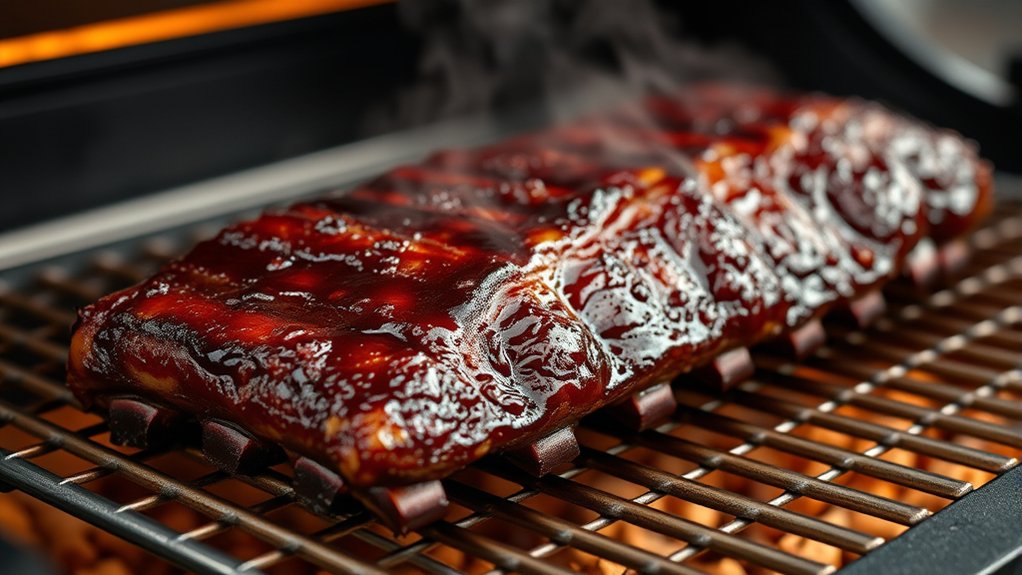
Pellet grills are popular for making ribs juicy and easy to cook because they maintain a consistent temperature throughout the process. This steady heat helps you get tender meat without drying out the ribs.
Pellet grills keep ribs tender and juicy with consistent, steady heat for perfect results every time.
When you apply a good rib seasoning, the consistent temperature lets the flavors penetrate deeply, making the taste even better. Pellet grills also distribute heat evenly, so your ribs cook uniformly and stay tender enough to pull apart easily.
Since these grills regulate temperature automatically, you don’t have to worry about fluctuations that can make meat tough or overcooked. This control makes it easier to focus on seasoning and timing, keeping your ribs moist.
The steady heat combined with even smoke infusion helps you achieve that melt-in-your-mouth tenderness. That’s why pellet grills are a favorite for flavorful, juicy ribs every time.
How to Choose the Best Spare Ribs for Smoking
When you’re picking out spare ribs for smoking, the first thing to pay attention to is the quality of the meat and the marbling. You want ribs that have nice streaks of fat running through them because that fat helps keep the meat moist and packed with flavor as it cooks. It’s kind of like choosing a good cut of steak—you want that marbling to give your ribs that juicy, tender finish.
Next, take a look at the bone structure and thickness. Ideally, the bones should be evenly spaced and intact. Ribs with consistent bone placement tend to cook more evenly, which means they’ll stay tender from start to finish. When you pick the right ribs, you’re setting yourself up for some seriously delicious, juicy results when it’s all said and done.
Meat Quality and Marbling
Choosing high-quality spare ribs starts with inspecting the meat’s marbling and overall appearance. Look for ribs with good marbling distribution—thin streaks of fat evenly spread through the meat. This fat melts during cooking, which helps make the meat tender and flavorful.
Avoid ribs with large, uneven fat pockets or too much surface fat, as these can prevent the meat from cooking evenly. Ribs with steady marbling tend to be more tender and juicy after smoking. The meat should look bright and moist, not dull or dry.
When selecting ribs, focus on those with consistent marbling to ensure a flavorful, tender bite. Use this table as a quick guide:
| Marbling Level | Meat Tenderness | Appearance |
|---|---|---|
| Light | Less juicy | Lean, pale |
| Moderate | Juicy, tender | Even streaks |
| Heavy | Very tender | Well-marbled |
| Excessive | Fatty, greasy | Large fat pockets |
Choose wisely for the best smoking results!
Bone Structure and Thickness
Examining the bone structure and thickness of spare ribs helps you pick cuts that will cook evenly and stay tender. Look for ribs with consistent bone density; evenly spaced bones mean the thickness is uniform, which helps with even cooking.
Thicker ribs are more forgiving because they’re less likely to dry out during smoking. Pay attention to how the marbling is distributed around the bones—well-marbled ribs give more flavor and moisture.
Avoid cuts with sparse bone density or irregular spacing, as these can lead to uneven heat penetration and tougher meat. The best spare ribs have a good balance of bone structure and thickness, making sure your smoking results are juicy and tender.
Choosing ribs with these qualities sets a solid foundation for flavorful, perfectly cooked spare ribs.
Prepare Your Ribs: Trimming, Seasoning, and Resting
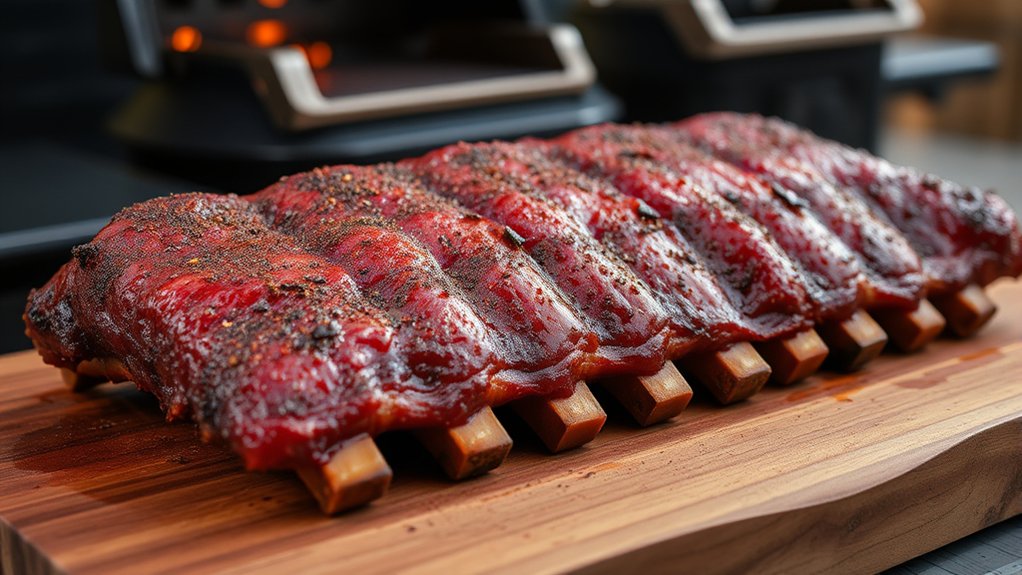
Before cooking, it’s essential to prepare your ribs properly by trimming excess fat and silver skin. This helps prevent the meat from becoming greasy and allows the seasoning to penetrate better.
Rib trimming is crucial; remove any thick layers of fat and silver skin on the bone side. This ensures even cooking and better flavor absorption.
Next, apply your preferred marination techniques—whether a dry rub or a marinade—to infuse flavor and tenderize the meat.
Let the ribs rest after seasoning for at least 30 minutes or up to overnight in the refrigerator. This resting period helps the flavors meld and the meat relax.
Proper preparation guarantees your ribs will be juicy and flavorful after cooking. Remember, trimming reduces excess fat that can cause flare-ups, while marination boosts taste and tenderness.
With these steps, your ribs will be ready for the perfect pellet grill session.
Set Up Your Pellet Grill for Perfect Ribs
First things first, preheat your pellet grill to the perfect temperature so it’s nice and ready for some slow cooking magic. Don’t forget to pick the right wood pellets — they really make a difference by adding that rich, smoky flavor to your ribs. Once your grill is all set up and firing on all cylinders, you’re good to go. Now, just sit back and wait for those juicy, tender spare ribs to cook to perfection!
Preheat Your Grill Properly
To guarantee your spare ribs turn out juicy and flavorful, it’s essential to preheat your pellet grill properly before cooking. Proper preheating ensures even heat distribution, which is crucial for tender, flavorful ribs.
Set your grill to the desired temperature, usually around 225°F to 250°F, and let it heat up before placing the ribs on. This step helps develop a good bark and keeps the meat moist.
Remember, regular grill maintenance like cleaning the grates and checking for blockages helps with even heat transfer. Preheating also prevents hot spots, reducing uneven cooking.
Taking the time to preheat properly sets the stage for perfectly cooked, juicy ribs every time.
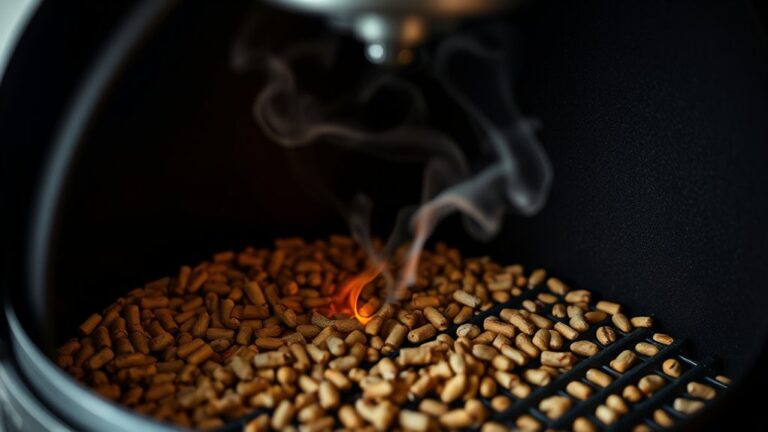
Select the Right Wood Pellets
Choosing the right wood pellets is key to infusing your ribs with rich, smoky flavor. The type of pellets you select directly impacts flavor infusion, so opt for high-quality hardwoods like hickory, apple, or mesquite.
These woods produce distinct, robust aromas that complement pork ribs perfectly. Remember, pellet maintenance is essential; clean your grill regularly to prevent residue buildup that can affect flavor and smoke production.
Using the right pellets guarantees consistent smoke and flavor, making your ribs tender and juicy. Avoid softer woods or blends that may introduce unwanted flavors or hinder proper smoke output.
Select the Right Wood Pellets to Enhance Flavor
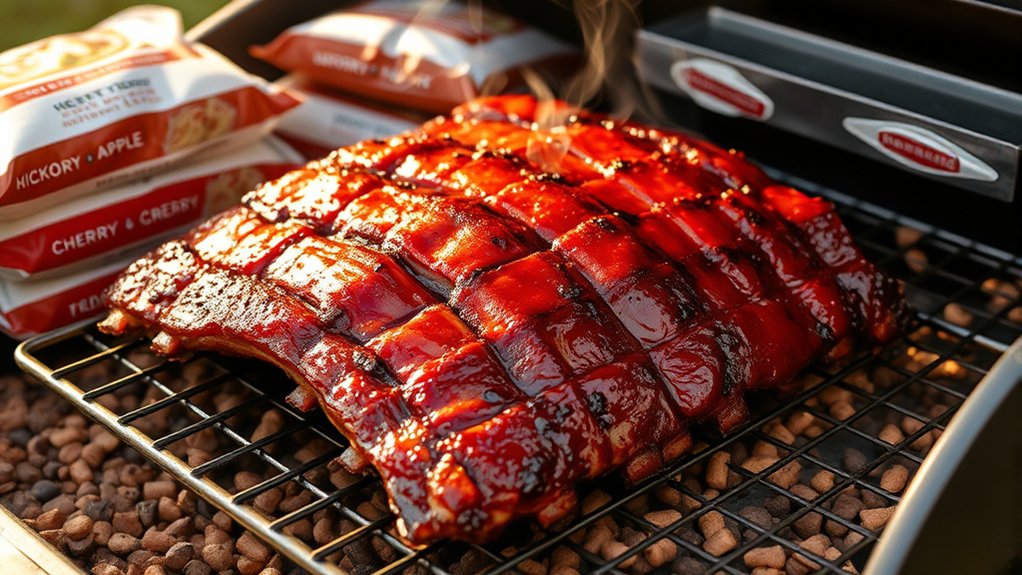
Selecting the right wood pellets can greatly boost the flavor of your spare ribs, so it’s worth choosing carefully. Different woods offer unique tastes—hickory gives a smoky richness, while apple adds a sweet, fruity touch.
Think about what flavor profile complements your rub and sauce for a balanced taste. When choosing pellets, also consider how well they burn; high-quality pellets burn more evenly, produce less ash, and give consistent smoke.
This consistency helps develop a deeper, more complex flavor in your ribs. Woods like cherry or pecan add subtle nuances that enhance the meat without overpowering it.
Always pick pellets made for grilling because cheaper options can create off-flavors or too much smoke. Paying attention to flavor pairings and keeping a good supply of quality pellets will help you get the most out of your grill.
In the end, you’ll serve irresistibly flavorful, juicy spare ribs everyone will love.
How to Smoke Ribs Low and Slow for Tenderness
If you want your ribs to come out tender and packed with flavor, the key is to smoke them low and slow. That means keeping your smoker’s temperature steady—think around 225°F to 250°F—and letting the magic happen over several hours.
Using quality wood smoke is also a game-changer. Whether you prefer hickory, apple, or cherry, the right wood adds that smoky depth that makes your ribs stand out. And don’t forget to wrap the ribs partway through cooking. This helps lock in moisture, keeping the meat juicy and tender.
Follow these simple steps, and you’ll end up with ribs that are perfectly cooked, juicy, and full of flavor every single time.
Maintain Consistent Temperature
Maintaining a consistent temperature is key when smoking ribs low and slow. Fluctuations can lead to uneven cooking and dry out the meat.
A stable heat helps the flavor from your rub and marinade develop fully, making the ribs tender and juicy. Use your pellet grill’s temperature controls to keep things steady, ideally around 225°F to 250°F.
Keeping the heat consistent also makes planning side dishes easier, so your meal prep goes smoothly. If the temperature dips or spikes, adjust the vents or add pellets gradually to stay on track.
This control prevents overcooking or undercooking, helping your ribs stay moist and flavorful. Steady temperature is the secret to perfectly smoked ribs with great tenderness and taste.
Use Quality Wood Smoke
Using high-quality wood smoke elevates the flavor and tenderness of your ribs. Opt for woods like hickory, apple, or cherry to create a balanced flavor pairing that complements the meat’s natural richness.
These woods produce a subtle smoky aroma without overpowering the ribs. As you smoke low and slow, the smoke infuses deeply, resulting in tender, juicy meat.
To improve presentation tips, brush on a little sauce or glaze during the final stages. This adds shine and visual appeal.
Keep the smoke steady but don’t overdo it, as too much smoke can create a bitter taste. Remember, the goal is a harmonious blend of smoky flavor and tender texture that will impress everyone at your table.
Wrap for Moisture Retention
Wrapping your ribs during the smoking process helps trap moisture and keeps them tender and juicy. Using marinade techniques beforehand can boost flavor and moisture, making the ribs even more succulent.
When wrapping, consider adding a splash of apple juice, honey, or your favorite marinade to help retain moisture. This method also lets you infuse extra flavors, ensuring the meat stays moist during the long cook.
After removing the wrap, you can brush on your preferred sauce, like tangy barbecue or a sweet glaze, to complement the tender meat. Wrapping keeps the ribs moist and flavorful throughout the low-and-slow process.
The result? Ribs that are fall-off-the-bone tender and packed with taste.
Monitor Temperature for Juicy, Fall-Off-The-Bone Ribs
Monitoring the temperature of your spare ribs is key to making sure they turn out tender and fall-off-the-bone delicious. Use a reliable meat thermometer to keep an eye on the internal temperature, aiming for about 190-203°F. This range helps the connective tissues break down properly.
While cooking, think about your marinade pairings. Acidic marinades can impact how the meat retains moisture, so adjust your cooking time if needed. Proper rib storage is also important—keep raw ribs refrigerated and bring them to room temperature before grilling to ensure even cooking.
As the ribs cook, keep your pellet grill steady at around 225°F and check the internal temperature regularly. This helps prevent overcooking or undercooking, both of which can affect how juicy and tender the ribs are.
Ultimately, consistent temperature monitoring guarantees your ribs reach that perfect, melt-in-your-mouth texture without drying out.
Apply BBQ Sauce and Final Glaze for Maximum Flavor
Once your ribs have reached the right internal temperature and are tender, it’s time to add that irresistible layer of flavor with BBQ sauce and a final glaze. Start by choosing your preferred BBQ sauce variations—whether smoky, tangy, or spicy—to complement the meat.
Brush a generous layer of sauce onto the ribs, ensuring even coverage. To improve flavor and appearance, use final glaze techniques like applying multiple light coats, allowing each to set slightly before adding the next.
For a glossy finish, brush on the sauce during the last 10-15 minutes of grilling, turning up the heat slightly if needed. This helps the glaze caramelize, creating a sticky, flavorful crust.
Rest Your Ribs Before Serving for Juiciness
Allowing your ribs to rest after cooking is key to locking in their juices and making them tender. During this time, the temperature stabilizes, helping the meat reabsorb its natural juices, which makes each bite juicier.
Resting also stops the quick loss of moisture when you cut into the ribs. Just keep in mind, though, that leaving them to rest too long can lead to bacterial growth if they’re at unsafe temperatures.
Aim for about 10 to 15 minutes of resting time. During this period, the internal temperature stays high enough to prevent bacteria from developing. This pause helps the juices redistribute evenly throughout the meat, making each bite super tasty.
Be careful not to cover the ribs tightly with foil for too long, as this can make them soggy. Proper resting is the final step to ensure your ribs stay tender, juicy, and flavorful.
Troubleshoot Common Ribs Cooking Problems
Even with careful preparation, you might encounter common issues when cooking ribs, such as them turning out tough, dry, or undercooked. To fix tough ribs, check your cooking techniques—avoid overcooking or cooking at too high a temperature, which can dry out the meat.
If your ribs are dry, consider wrapping them in foil with a bit of liquid during the cooking process to retain moisture. For undercooked ribs, extend the cooking time and use a meat thermometer to ensure they reach the proper internal temperature.
Flavor pairing also plays a role; using the right rubs and sauces improves tenderness and juiciness. If the flavor isn’t developing well, adjust your seasoning or add a basting sauce during cooking.
Frequently Asked Questions
What Is the Ideal Internal Temperature for Perfectly Cooked Spare Ribs?
The ideal internal temperature for perfectly cooked spare ribs is around 190°F to 203°F. As you cook, keep an eye on this range with a meat thermometer to make sure the ribs are just right.
When they hit this temperature, the meat should be fall-off-the-bone tender. Don’t forget to apply your favorite rib seasoning before cooking—it boosts the flavor and pairs perfectly with the natural tenderness for a delicious result every time.
How Long Should I Preheat My Pellet Grill Before Cooking?
Think of your pellet grill as a sleeping dragon, needing some time to wake up fully. Usually, you should preheat it for about 15-20 minutes.
Set it to your desired grill temperature, typically around 225°F to 250°F for spare ribs. During this time, the smoke starts to build up, which helps with even heat and adds that rich smoky flavor.
Preheating properly ensures your ribs cook evenly and stay juicy from start to finish, making all your efforts worth it.
Can I Cook Spare Ribs Directly From the Refrigerator?
You can cook spare ribs directly from the refrigerator, but it’s better to let them sit at room temperature for about 30 minutes first. Proper meat storage keeps ribs fresh, but cold meat might cook unevenly.
Before grilling, apply your favorite ribs seasoning evenly. This helps boost flavor and ensures a delicious, juicy result. Allowing the ribs to warm slightly improves cooking consistency on your pellet grill.
What Are Some Common Mistakes to Avoid When Smoking Ribs?
You’ll want to avoid common mistakes like rushing the cooking process or using too much smoke wood, which can overpower the ribs. Stick to proper cooking techniques, like maintaining a consistent temperature and wrapping at the right time.
How Do I Store Leftover Ribs to Maintain Freshness?
To keep leftover ribs fresh, wrap them tightly in foil or plastic wrap, then store in an airtight container or resealable bag in the fridge.
Before storing, consider brushing the ribs lightly with a marinade to help lock in moisture.
When you’re ready to reheat, re-season with your favorite ribs seasoning to bring back the flavor and keep the meat juicy.
This simple method helps your ribs stay tasty and tender for days.
Conclusion
Cooking ribs on a pellet grill is like orchestrating a symphony of flavors and textures. With the right tips, you’ll craft tender, juicy ribs that melt in your mouth.
Trust your grill, choose quality ribs, and don’t rush the process. Patience is key to getting that perfect smoky flavor and tender meat.
When done right, you’ll have a meal that sings with smoky goodness—a true masterpiece on your plate. So fire up that pellet grill and let your culinary magic unfold with juicy spare ribs!