10 Easy Steps to Smoke Prime Rib on a Pellet Grill
Cooking a prime rib just right can be tricky, especially if you’re new to smoking or grilling. Many people struggle with getting that perfect crust or knowing when it’s truly done. But don’t worry—you’re not alone, and with a little guidance, you can master the art of smoking prime rib on a pellet grill.
To smoke prime rib on a pellet grill, start by choosing a high-quality, well-marbled cut, then season it generously and let it rest.
Preheat your grill to around 225°F, fill the hopper with wood pellets, and place the meat on the grates.
Smoke until the internal temp hits about 10-15°F below your desired doneness.
Then, wrap it and let it rest for 15-20 minutes.
For tips on getting a perfect crust and avoiding common issues, keep going.
Key Takeaways
- Select a high-quality, well-marbled prime rib and season it with your preferred rub. Let it rest before smoking.
- Preheat your pellet grill to 225°F, fill the hopper with wood pellets, and make sure the grill is clean.
- Place the prime rib on the grill, keeping a steady temperature and smoke level during the entire cooking process.
- Keep an eye on the internal temperature, aiming for 10-15°F below your desired doneness. Then wrap the meat and let it rest.
- Carve, present, and serve the smoked prime rib after resting for juicy, flavorful slices.
Why Smoke Prime Rib on a Pellet Grill?
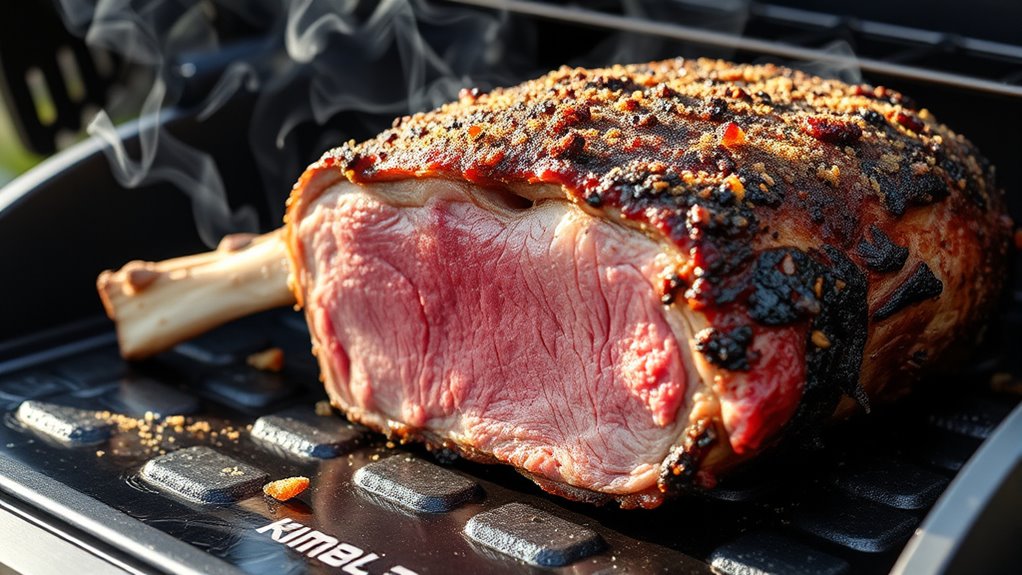
Smoking prime rib on a pellet grill is a convenient and flavorful way to get tender, smoky meat with minimal effort. It gives you great control over temperature and smoke levels, so you get consistent results every time.
The pellet grill’s ability to keep a steady heat helps the smoke penetrate the meat evenly. This means the prime rib absorbs rich, smoky flavors throughout, making it more delicious.
Plus, the wood pellets add an extra layer of flavor that enhances the natural richness of the prime rib. It creates a more complex, mouthwatering taste profile.
Using a pellet grill makes the process easier because it automatically manages temperature adjustments. That frees you from constantly monitoring your grill.
The end result is perfectly smoked prime rib with a beautifully seasoned crust and juicy interior. Whether you’re new to smoking or a seasoned pro, this method makes it simple and reliable.
It’s a hassle-free way to enjoy restaurant-quality smoked meat at home, with deep smoke flavor and tender texture every time.
Choosing the Best Prime Rib Cut for Smoking
When you’re picking out a prime rib for smoking, it’s good to think about the grade—things like Prime, Choice, or Select. This really impacts how tender and flavorful your meat will be. So, take a moment to decide what kind of quality you’re after; it makes all the difference in the end.
Next up, consider whether you want a bone-in or boneless cut. Each has its perks—bone-in tends to add more flavor and can make for a beautiful presentation, while boneless is easier to handle and carve. Your choice here will set the stage for a juicy, delicious prime rib experience that’s just right for you.
Prime Rib Grades
Choosing the right prime rib grade is key to getting the best flavor and tenderness when smoking. Prime grades, like USDA Prime, have the highest marbling, meaning more intramuscular fat.
This marbling melts during cooking, keeping the meat juicy and flavorful. Choice grades have less marbling but can still turn out great if cooked carefully.
Select grade has even less fat and isn’t the best for smoking prime rib. When picking your cut, aim for prime or at least choice grades to ensure rich flavor and tenderness.
The amount of marbling directly affects how juicy and high-quality your prime rib will be. That’s why it’s worth choosing the best grade possible for your smoking session.
Bone-In vs Boneless
The decision between bone-in and boneless prime rib can really change your smoking experience. Bone-in cuts often have better marbling, which means more flavor and juiciness when you smoke them. The bone also acts like a natural heat shield, helping the meat cook evenly.
But keep in mind, bone-in cuts require more prep work, like removing the bone if you want boneless for easier carving. Boneless prime rib is usually easier to handle and cooks faster, but it might not have quite the same rich flavor as the bone-in version.
Think about how you want your prime rib to look and how easy you want it to slice. If you go with bone-in, be ready for extra prep, but you’ll get more flavor. For simplicity, boneless is more convenient, but you might lose some of that deep, meaty taste.
How to Prepare and Season Your Prime Rib
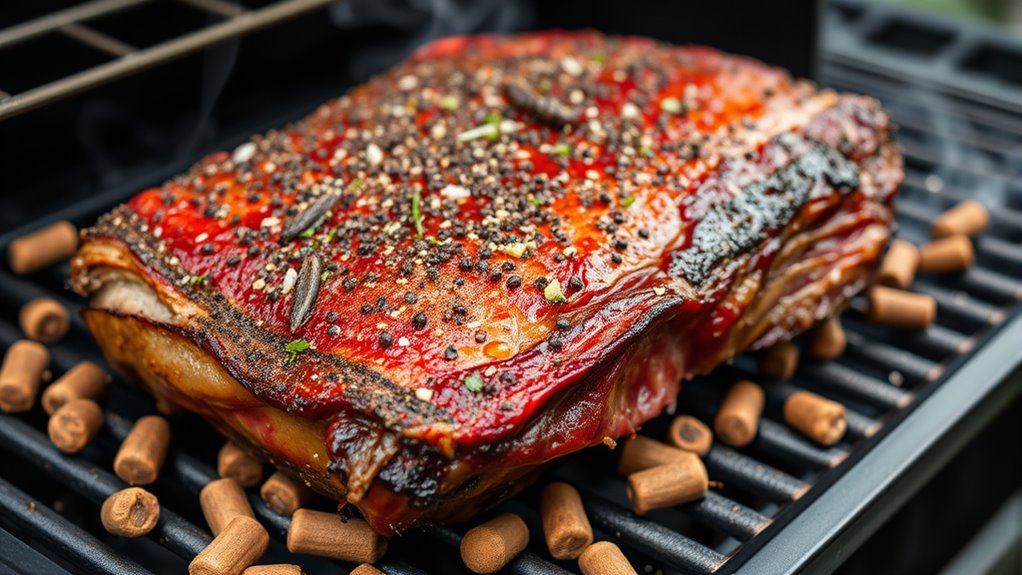
First things first, pick a really good quality prime rib—something with plenty of marbling for that rich flavor. If there’s too much fat on the outside, feel free to trim some off, but don’t go overboard. Next, it’s time to give it a good rub—think of it as your secret weapon to boost the meat’s natural deliciousness. You can use a simple mix of salt, pepper, garlic, and herbs, or get creative with your favorite spices.
Once it’s seasoned, cook your prime rib to perfection—whether you’re roasting it in the oven or using another method. When it’s done, don’t skip this step: let the meat rest for at least 15-20 minutes before slicing. This helps the juices settle, making every bite tender and flavorful. And there you have it—perfectly prepared and seasoned prime rib ready to impress!
Choosing the Right Cut
Selecting the right cut of prime rib is key to getting tender, flavorful results. Look for a roast with good marbling—those streaks of fat within the meat—that help keep it juicy and rich.
When choosing, go for a well-marbled cut that feels firm but not too soft. The size matters too—a thicker cut stays moist and cooks evenly.
Think about your cooking temperature because it impacts how the marbling adds to tenderness. A steady, moderate heat helps the fat render properly, boosting flavor.
Avoid cuts that are too lean, as they can dry out during smoking. Picking a prime rib with the right marbling and cooking it at the right temperature sets you up for a perfect smoked prime rib.
Applying Flavorful Rubs
Once you’ve chosen your perfect, well-marbled prime rib, applying a flavorful rub is the next step to improve its taste. Start by creating fun flavor combos—think herbs, spices, garlic, or even coffee for extra depth.
Rub the mixture evenly over the meat, making sure all surfaces are coated. Feel free to experiment with other seasoning methods, like injecting marinade or using a dry brine beforehand.
These techniques can boost moisture and help flavors soak in better. Be patient—let the rub sit for at least an hour or overnight if you can. This gives the flavors time to really penetrate.
Whether you prefer a simple salt and pepper or a bold spice blend, a good rub sets the stage for a mouthwatering prime rib.
Letting It Rest
After you’ve seasoned your prime rib, letting it rest is key to bringing out its full flavor and tenderness. Resting helps the juices redistribute, making each bite juicy and flavorful. Wrap the meat loosely in foil and let it sit for at least 15-20 minutes.
This pause also makes your presentation look better, giving the prime rib a more even and appealing color on the outside. During this time, the meat continues to cook slightly, so it reaches perfect doneness. Avoid slicing right away; patience locks in moisture and richness.
Resting turns a good prime rib into a mouthwatering, tender masterpiece. It ensures every slice is bursting with flavor and looks impressive. Take a moment to admire your work before serving.
How to Set Up Your Pellet Grill for Perfect Smoke
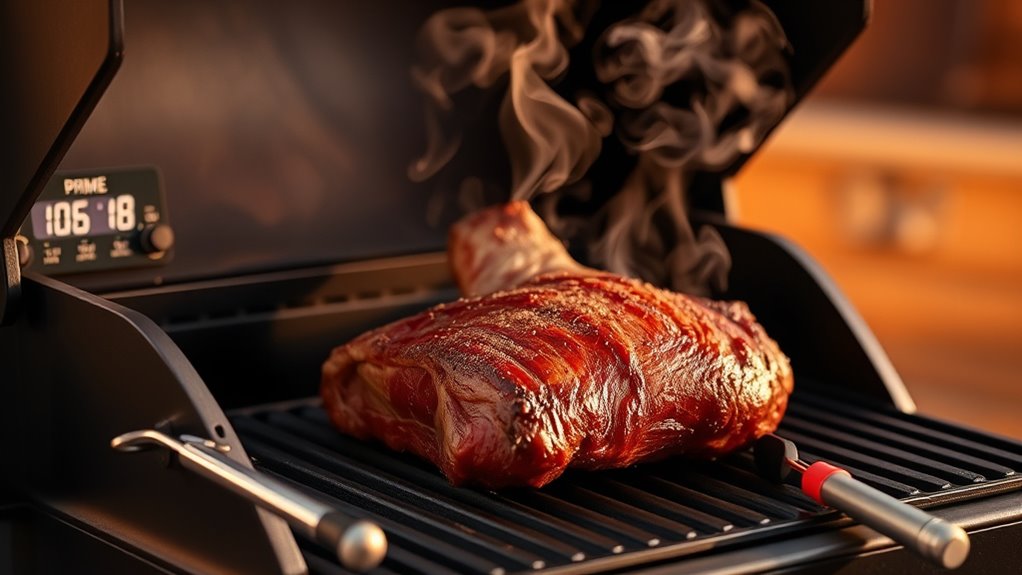
To get that perfect smoky flavor, start by properly setting up your pellet grill. Make sure your equipment is clean and well-maintained; this helps prevent unwanted flavors and keeps everything running smoothly.
Fill the hopper with good-quality wood pellets suitable for smoking prime rib, and check that the firepot is free of debris. Set your grill to around 225°F, which is great for low-and-slow cooking.
Use the digital controller to keep the temperature steady, adjusting as needed. Place the prime rib on the grill grates, making sure there’s good airflow around the meat.
Keep the lid closed as much as possible to stabilize temperature and smoke levels. Regularly check your setup to prevent temperature swings.
Proper setup and maintenance are key to getting even smoke infusion and tender, flavorful prime rib.
What Temperature Should You Use for Smoking Prime Rib?
Smoking prime rib requires maintaining a steady temperature to guarantee tender, flavorful results. For the best outcome, set your pellet grill to around 225°F to 250°F.
This low-and-slow method allows the meat to develop a rich smoky flavor while staying juicy. If you’re using marinade techniques beforehand, aim to marinate the rib for several hours or overnight to improve tenderness and taste.
Keep in mind that alternative cooking methods, like oven roasting or sous vide, have different temperature ranges, but smoking calls for this lower temperature to break down connective tissues gradually.
During smoking, avoid cranking up the heat prematurely, as it can lead to uneven cooking or dryness. Consistency is key, so monitor your grill’s temperature and adjust as needed.
This steady heat ensures your prime rib cooks evenly, resulting in a beautifully smoked, flavorful crust and a perfectly tender interior.
Monitoring and Maintaining the Right Internal Temperature
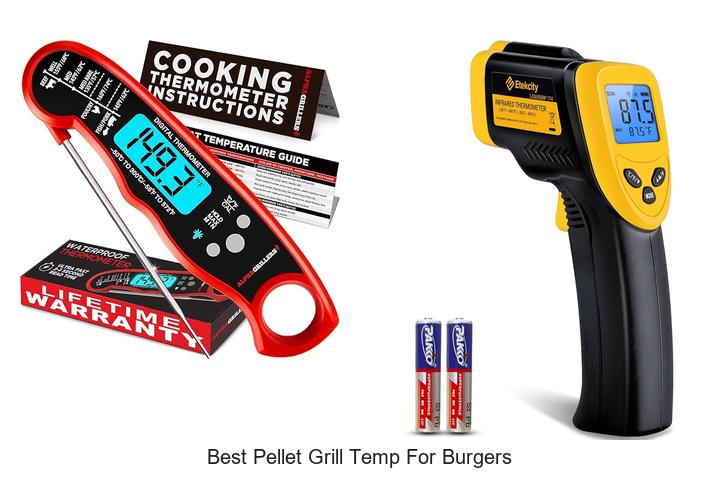
Maintaining the correct internal temperature is key to achieving a perfectly smoked prime rib. When you monitor it carefully, you guarantee ideal flavor infusion and smoke penetration. Use a reliable meat thermometer inserted into the thickest part of the roast, avoiding bone contact for accuracy.
Keep your pellet grill’s temperature steady and adjust vents if needed to prevent fluctuations. As the prime rib cooks, check the internal temperature regularly, aiming for your desired level of doneness. This consistency helps develop a rich, smoky flavor while preventing overcooking.
Remember, the goal isn’t just reaching a specific temperature but doing so gradually, allowing the smoke to penetrate deeply into the meat. Proper temperature control ensures your prime rib stays juicy and tender, with that perfect balance of smoky flavor.
When to Wrap and Rest Your Prime Rib
Timing is everything when it comes to wrapping your prime rib. The best moment to do it is once it hits that perfect internal temperature, so you lock in all that juicy goodness. After you wrap it up, letting it rest for at least 15-20 minutes is really helpful. This gives the juices a chance to redistribute throughout the meat, making each bite tender and super flavorful.
Now, when it comes to wrapping materials, you’ve got a couple of options—foil or butcher paper. Each one has its own pros and cons depending on what kind of crust and moisture you’re aiming for. So, think about what matters most to you—whether it’s a crisp crust or extra juicy meat—and choose the wrap that suits your style!
Optimal Wrapping Timing
Knowing the right moment to wrap your prime rib can make a big difference in its final texture and flavor. You should consider wrapping when the internal temperature is about 10-15°F below your target, usually around 130-135°F for medium rare.
Wrapping too early can prevent the crust from developing properly, while waiting too long might lead to overcooking. This is also when marinade techniques come into play—adding moisture helps keep the meat tender.
Once wrapped, you can finish cooking or let it rest. Resting is essential for easier carving and better juices. Proper timing keeps your prime rib juicy and flavorful, making it easier to carve clean slices.
Paying attention to these cues guarantees a perfectly cooked, delicious prime rib every time.
Resting Duration Benefits
Have you ever wondered why resting your prime rib is just as important as cooking it? Resting lets the meat’s juices redistribute, which boosts flavor and makes every bite juicy.
It also helps stabilize the temperature, so you don’t lose too much moisture. During this time, the smoke continues to subtly influence the flavor, deepening the smoky notes.
If you wrap the prime rib too early, you trap heat and moisture, which can lessen the smoke’s impact. Waiting about 15 to 20 minutes helps maximize smoke absorption and tenderness.
During this rest, the meat’s natural juices settle, giving you a richer, more flavorful slice. Proper resting is key to enjoying a prime rib that’s tender, flavorful, and infused with smoky goodness.
Wrap Materials Comparison
Choosing the right wrap material can really affect how your prime rib finishes and rests.
In a wrap materials comparison, aluminum foil is popular because it retains heat and locks in moisture, helping keep your prime rib juicy and tender.
If you prefer a slightly crisper crust, butcher paper allows some smoke and moisture to escape, which enhances the flavor of your seasoning.
When you wrap depends on what kind of outcome you want—wrap earlier for more tenderness or later for a firmer crust.
Resting is essential no matter what material you use. Wrap tightly to hold in heat and juices.
Ultimately, your choice comes down to your flavor preferences and the texture you want to achieve.
Tips for Getting a Great Crust and Juicy Inside
Achieving a perfect crust while keeping the inside juicy starts with proper temperature management and seasoning. To develop that irresistible crust, start by patting the prime rib dry and applying a seasoned rub. When you smoke, aim for a high initial heat to sear the outside, then lower the temperature to let the meat cook evenly.
Resting the meat after smoking helps redistribute juices, ensuring each bite stays moist. For flavor, consider herbs like rosemary or garlic to boost the crust’s taste. Pair your prime rib with sides like roasted vegetables or creamy mashed potatoes to balance the richness.
Use a hot grill surface during the initial sear to develop a crisp, flavorful crust. Maintain a consistent temperature to prevent overcooking the interior. During the last few minutes, apply a finishing glaze or butter for added richness and shine.
Troubleshooting Common Prime Rib Smoking Issues
Even with careful planning, you might run into common issues when smoking prime rib, like uneven cooking, too much smoke flavor, or not enough crust. To fix these, tweak your cooking techniques and flavor strategies a bit.
If your meat isn’t cooking evenly, try rotating it or adjusting your grill’s heat zones. For too much smoke, cut back on the smoking time or use fewer wood pellets so the flavor doesn’t overpower the meat.
When the crust isn’t forming, bump up the oven temperature slightly or finish with a quick sear at the end. Here’s a quick guide:
| Issue | Cause | Solution |
|---|---|---|
| Uneven cooking | Hot spots or poor heat circulation | Rotate the meat often or tweak grill temperature |
| Too smoky flavor | Over-smoking | Cut back on smoke time or use fewer pellets |
| Lack of crust | Low initial heat or no searing | Sear at higher heat after smoking |
| Flavor infusion | Insufficient seasoning | Marinate or apply rub earlier for better flavor |
| Dry meat | Overcooking | Use a thermometer to monitor internal temp |
Serving and Presenting Your Smoked Prime Rib
Once your smoked prime rib reaches the perfect internal temperature, the next step is to serve and present it in a way that highlights its rich flavor and impressive appearance. Start by letting it rest for at least 15 minutes; this allows juices to redistribute, ensuring each slice is tender and flavorful.
When carving, use a sharp knife—regularly sharpened—to get clean, precise slices. Consider marinating techniques beforehand to improve tenderness and flavor complexity, but avoid over-marinating, which can overpower the natural meat taste.
For presentation, arrange slices neatly on a platter, garnished with fresh herbs or roasted vegetables for color contrast. Use a high-quality, sharpened knife for clean cuts, incorporate marinating techniques to boost flavor, and garnish with herbs or vegetables for visual appeal.
Frequently Asked Questions
Can I Use Different Wood Pellets for Smoking Prime Rib?
Yes, you can use different wood pellets for smoking prime rib. The wood flavor really influences the meat’s taste, so pick pellet varieties like hickory, oak, or mesquite for richer, smoky flavors.
Feel free to experiment with blends to find your perfect flavor profile. Just make sure the pellets you choose are high-quality and suitable for smoking.
Using the right pellets can really enhance the prime rib’s tenderness and flavor with each variety you try.
How Long Should I Let the Prime Rib Rest Before Slicing?
Patience is a virtue, especially with prime rib. Let it rest for at least 15 to 20 minutes after cooking before slicing.
During this time, the meat’s juices redistribute, which helps make it more tender. Keep the cooking temperature steady, around 225°F to 250°F, to ensure even cooking.
Resting allows the meat to reach its ideal tenderness, so resist the temptation to cut into it right away. Your taste buds will definitely thank you.
What’s the Best Way to Carve a Smoked Prime Rib?
To carve a smoked prime rib, start with a sharp carving knife and follow the meat’s grain for clean slices. Let the meat reach about 125°F internally for medium-rare, then give it a rest before carving.
Use steady, even strokes while carving, avoiding saw-like motions. This helps keep the meat tender and full of flavor.
Can I Smoke Prime Rib Overnight on a Pellet Grill?
Yes, you can smoke prime rib overnight on a pellet grill. Set your cooking temperature around 225°F for slow, even smoking. Use high-quality meat, like a well-marbled prime rib, for the best results.
Make sure your grill stays consistent all night, and keep an eye on the internal temperature of the meat. This slow smoking process will give you tender, flavorful prime rib without needing constant attention.
How Do I Store Leftover Smoked Prime Rib Safely?
Leftover smoked prime rib is like a treasure chest waiting to be opened, so store it carefully. Wrap slices tightly in plastic wrap or put them in airtight containers to keep them fresh.
For food safety, refrigerate leftovers within two hours of cooking. Try to eat them within three to four days for the best quality.
If you’re not planning to eat it soon, freeze the meat. This helps preserve the flavor and prevents spoilage.
Conclusion
By following these simple steps, you’ll master the art of smoking prime rib on your pellet grill and impress everyone with your culinary skills.
Remember, patience and attention to detail make all the difference. So, are you ready to boost your grilling game and create unforgettable meals?
With a little practice, you’ll turn a simple cut into a mouthwatering masterpiece that keeps everyone coming back for more.
Happy smoking!