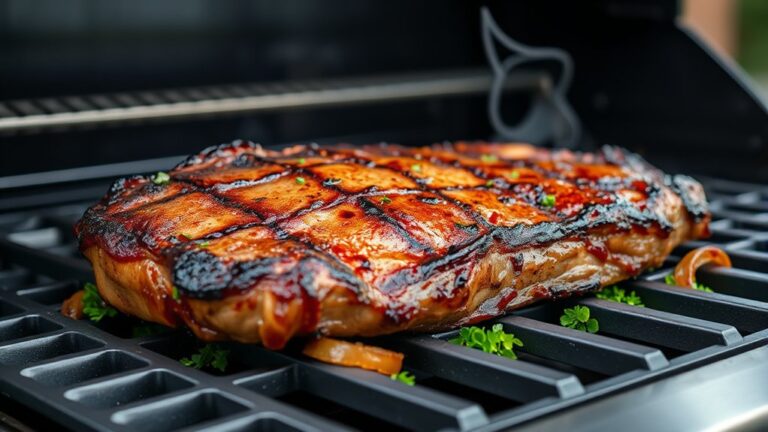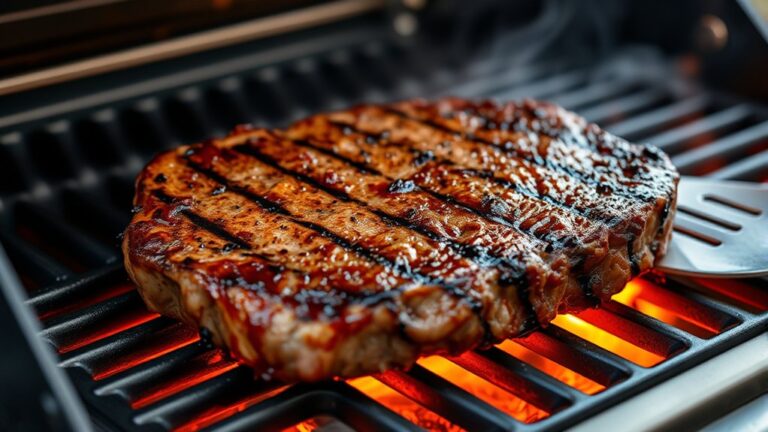
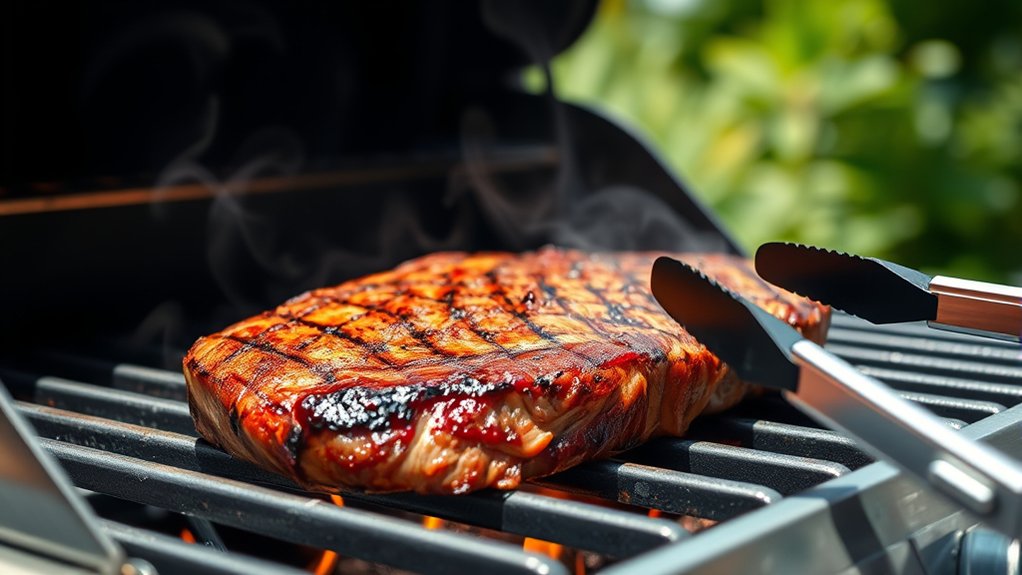
7 Simple Steps to Grill Ribeye on a Gas Grill
Cooking the perfect ribeye on a gas grill can feel tricky, especially if you’re new to grilling or aiming for that restaurant-quality crust. You’re not alone—many people struggle with getting the timing just right or achieving that ideal sear. But don’t worry, with a few simple steps, you’ll be grilling like a pro in no time.
To grill a perfect ribeye on a gas grill, start by preparing the steak—let it reach room temperature and season generously.
Preheat your grill on high and create direct heat zones.
Sear the steak for 2-3 minutes per side until a crust forms, then move it to indirect heat to finish cooking to your desired doneness, checking internal temps.
Rest the steak for a few minutes to retain juices.
Keep following for detailed tips to master each step.
Key Takeaways
- Preheat your gas grill to high (450-500°F) and make sure to clean the grates before cooking.
- Season the ribeye generously and let it sit at room temperature so it cooks evenly.
- Sear the steak over direct heat for 2-3 minutes per side until it turns a nice deep brown.
- Use a meat thermometer to check for your preferred doneness, then take it off a little before reaching that temperature.
- Rest the steak for 5-10 minutes, loosely covered with foil, before slicing and serving.
How to Prepare Your Ribeye for Grilling
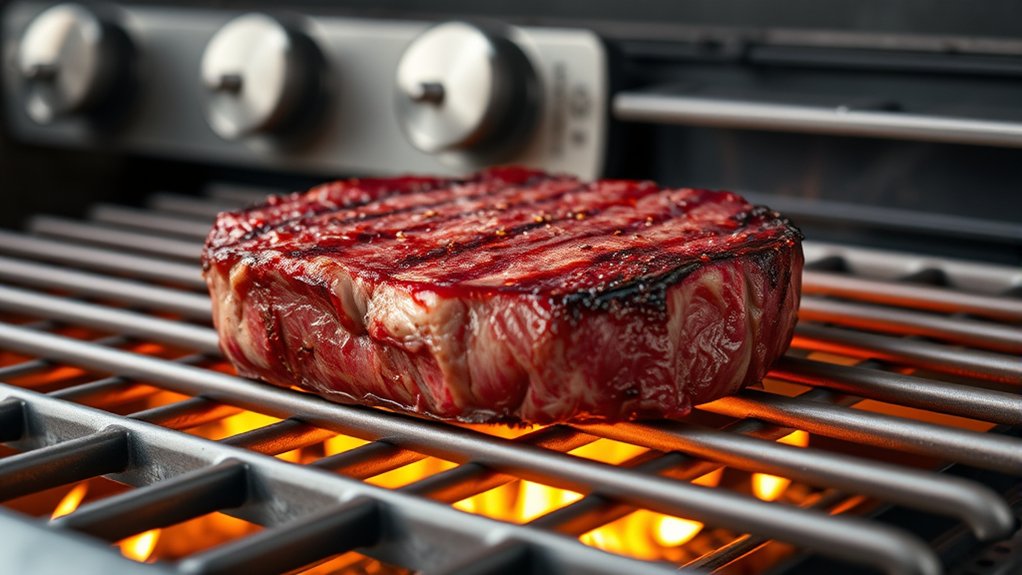
Before you start grilling, making sure to properly prepare your ribeye helps it cook evenly and stay flavorful. Begin by evaluating the marbling; look for streaks of fat within the meat, since better marbling equals more flavor and juiciness. A well-marbled ribeye will melt during cooking, keeping the steak tender.
Next, check the ribeye’s thickness—aim for about 1 to 1.5 inches for even cooking. Thicker steaks need a slightly longer cook time, while thinner ones can dry out quickly. Before seasoning, let the steak reach room temperature, which promotes uniform heat distribution.
Season generously with salt and pepper, or your favorite spices, and gently pat them into the surface. This step boosts flavor and helps create a delicious crust. Properly evaluating marbling and thickness before grilling sets the foundation for perfectly cooked, flavorful ribeye.
Setting Up Your Gas Grill for Perfect Steaks
First off, give your grill a good cleaning and get it preheated. This helps ensure you’re working with a nice, clean surface for cooking. Once it’s hot, adjust the burners or charcoal so you can set up different zones—one for direct heat and another for indirect heat. This way, you can sear your steaks perfectly and then finish cooking them just right.
Clean and Preheat Grills
Ensuring your gas grill is clean and preheated is essential for perfectly cooked ribeye steaks. A clean grill prevents flare-ups and helps cook your steaks evenly, which keeps them juicy.
Regular maintenance, like scrubbing the grates and checking for blockages, keeps your grill safe and makes it last longer. Before cooking, turn on the grill and let it preheat for 10-15 minutes, so the grates reach the right temperature.
This step helps your steaks sear properly and develop a tasty crust. Plus, a well-preheated, clean grill makes flipping and handling your steaks easier by preventing sticking.
Adjust Temperature Settings
To achieve perfectly cooked ribeye, you need to adjust your grill’s temperature settings to match the desired level of doneness. Start by creating distinct temperature zones—one side with high heat for searing and another with medium or low heat for finishing.
Proper heat distribution ensures your steak gets a good sear without overcooking the interior. Use the grill’s control knobs to set the burners accordingly, aiming for about 450-500°F in the high zone for searing.
Maintain a lower temperature, around 250-350°F, on the other side for indirect cooking if needed. Consistent heat distribution is key to even cooking, so monitor the temperature using a grill thermometer.
Adjust the knobs as necessary to keep the heat steady throughout the grilling process.
Arrange Charcoal or Gas Zones
Setting up your gas grill with distinct heat zones is key to perfectly cooked ribeye. First, turn one side to high heat for searing and leave the other on low or medium for indirect cooking. This way, you can develop a nice crust and then finish the steak gently.
If you’re using charcoal, arrange the coals on one side of the grill for direct heat, and leave the other side empty for indirect heat. This creates a two-zone fire, giving you control over how quickly your steak cooks.
Proper zone setup lets you sear the ribeye first and then move it to a cooler area to finish without burning. Mastering this setup results in a juicy, perfectly cooked steak every time.
How to Sear Ribeye for an Irresistible Crust
Creating a perfect crust starts with a hot grill and a well-prepared steak. To get that irresistible sear, make sure your ribeye has good marbling. The fat helps develop richer flavor and helps form that beautiful crust.
Start by preheating your gas grill on high heat, around 500°F. Pat your steak dry to remove excess moisture, which can stop the crust from forming properly. Lightly oil the surface, just enough to prevent sticking, but don’t overdo it.
Place the ribeye directly over the heat, pressing down slightly to ensure contact with the grates. Don’t flip the steak too often; let each side sear for about 2-3 minutes until it’s deep brown. Use tongs to flip gently, keeping contact with the grill.
This high-temperature searing locks in juices and creates a flavorful, crusty exterior. Follow these steps, and you’ll have a perfectly crusted, juicy ribeye ready to enjoy.
Cooking Ribeye to the Perfect Internal Temperature
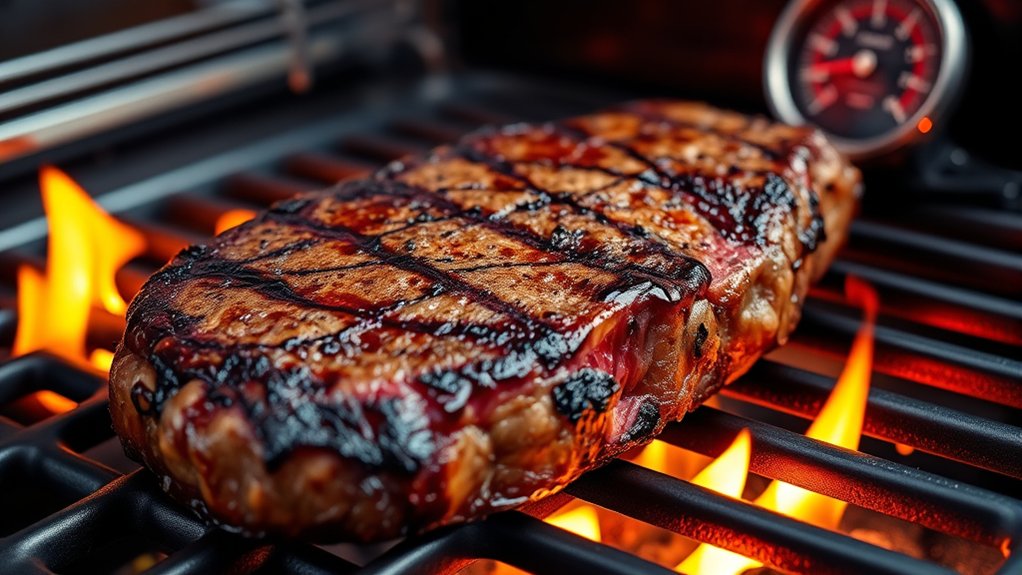
Getting the internal temperature just right is key to a perfectly cooked ribeye. To do this, you need to keep an eye on the cooking temperature carefully.
Use a reliable meat thermometer inserted into the thickest part of the steak to check the internal temperature during grilling. For rare, aim for about 120°F to 125°F; for medium-rare, 130°F to 135°F; for medium, 140°F to 145°F; and for medium-well, 150°F to 155°F.
Remove the ribeye from the grill a few degrees before reaching your target temperature because carryover heat will continue to cook the meat. Checking the internal doneness regularly helps prevent overcooking and keeps your steak juicy and tender.
Resting Your Ribeye for Juiciness and Flavor
Once you’ve taken the ribeye off the grill, it’s important to let it rest before slicing. Resting helps the juices spread out, making the steak juicier and more flavorful.
Skipping this step can leave you with dry, less tasty meat. Aim for about 5–10 minutes of rest, depending on how thick your steak is.
During this time, the meat’s temperature will rise a little more, finishing the cooking naturally. Keep the steak loosely covered with foil to keep it warm.
Resting keeps the juices inside, so each bite stays tender and full of flavor.
- Wrap the steak loosely with foil to keep the heat in
- Let it rest without touching or slicing to lock in the juices
- Use this time to prepare sides or sauces if you like
Following these simple steps makes sure your ribeye turns out juicy and delicious every time.
Best Seasonings and Marinades for Ribeye
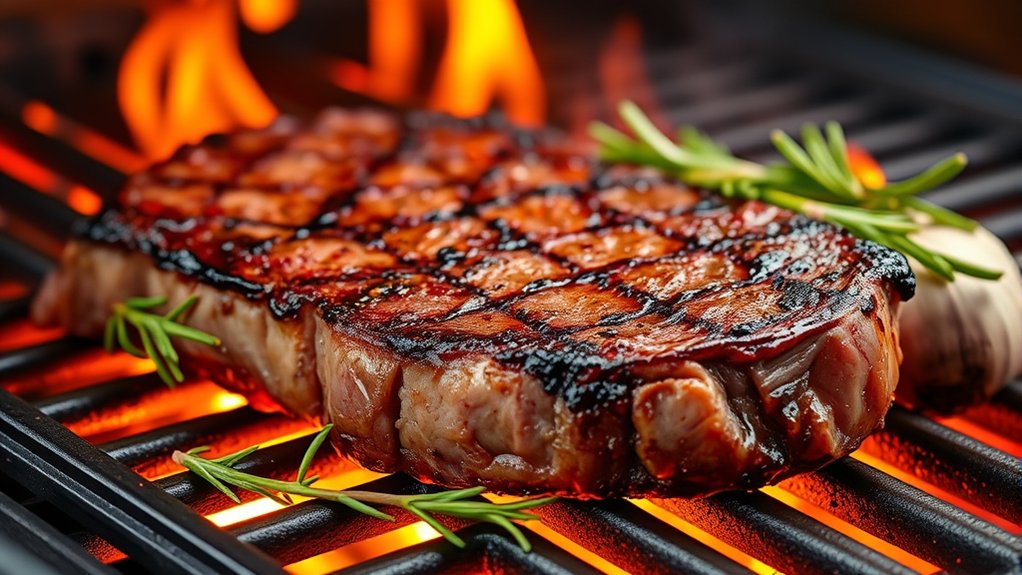
The right seasonings and marinades can really boost your ribeye, bringing out its rich, beefy flavor. A good marinade adds depth and complexity, making each bite more exciting.
Simple seasoning blends like salt, pepper, garlic powder, and onion powder are great for enhancing natural flavors without overpowering.
Simple seasonings like salt, pepper, garlic, and onion powder enhance natural beef flavors without overpowering.
For more punch, try a marinade with soy sauce, Worcestershire, and a splash of balsamic vinegar for a savory, tangy twist.
Herbs like rosemary, thyme, or oregano bring aromatic notes that perfectly complement the beef.
If you’re into bold flavors, spice blends with paprika, cayenne, or cumin can add a smoky or fiery kick.
Marinate for at least 30 minutes so the flavors can penetrate, but a couple of hours gives the best results.
Keep it simple and remember, the seasoning should boost, not mask, the ribeye’s natural richness.
Troubleshooting Common Grilling Problems
Even experienced grillers run into common issues that can throw off your cookout, but many of these problems are easy to fix. To keep things running smoothly, focus on grill safety and regular maintenance.
If your grill isn’t heating evenly, check for grease buildup and give the grates a good clean. Flare-ups happen when excess fat ignites, so trimming meat and keeping a spray bottle nearby to douse flames can help.
If the flame suddenly goes out, make sure your propane tanks are full and all connections are secure. Low heat might mean dirty burners or blocked vents—clean these parts regularly.
To troubleshoot these problems effectively, remember to:
- Clean your grill regularly to prevent flare-ups and promote even heat
- Check fuel levels and connections before you start grilling
- Adjust vents to control airflow and temperature
- Practice proper grill safety, like keeping a fire extinguisher nearby
Taking care of your grill and following safety rules makes cooking safer and more fun.
Frequently Asked Questions
How Long Should I Let the Steak Rest Before Slicing?
You should let your ribeye rest for about 5-10 minutes before slicing. This helps the juices settle back into the meat, making each bite juicy and flavorful.
During this resting time, you might want to consider marinating techniques to boost the flavor, or think about serving suggestions like garlic herb butter or fresh herbs.
Resting the steak prevents it from losing moisture when you cut into it, which means your steak will be more tender and delicious.
What Wood Chips or Charcoal Can Enhance Flavor on a Gas Grill?
Imagine elevating your gas grill experience. What wood chips or charcoal options create that irresistible smoky aroma?
For wood flavor, try hickory, mesquite, or applewood chips. They release rich, bold scents that amplify your ribeye.
Charcoal options like lump charcoal add natural, intense heat and subtle smoky notes. Just toss the wood chips in a smoker box or scatter the charcoal, and watch your grilling game reach new, flavorful heights.
Can I Grill Ribeye Directly From Frozen?
You can grill ribeye directly from frozen, but you’ll need to pay extra attention to safety while grilling.
Start by searing the steak over high heat for a few minutes to develop a nice crust. Then, lower the heat to finish cooking it through.
Keep in mind that frozen steak tips might cook unevenly, so using a meat thermometer is a good idea to check for doneness.
Be patient during the process, and try not to press down on the steak to keep all those tasty juices inside.
What’s the Best Way to Clean and Maintain My Gas Grill?
Think of your grill as a trusty steed; to keep it running smoothly, you need to care for its health regularly. Start by setting the right grill temperature, so you can cook safely and efficiently.
Use effective cleaning techniques, like brushing the grates after each use. Deep cleaning periodically is also important to keep everything in top shape.
Clear away grease and debris to prevent flare-ups and maintain flavor. Be sure to inspect your grill for rust or damage, so any issues can be addressed early.
Proper maintenance guarantees your grill’s longevity and ensures perfect flavor every time you fire it up. A little attention goes a long way in keeping your grill ready for your next cookout.
How Do I Prevent Flare-Ups While Grilling Ribeye?
To prevent flare-ups when grilling ribeye, control your grill’s heat and keep the lid closed. This helps maintain steady temperatures and reduces the chance of fat igniting.
Using marinades with oil and acid can also help. They create a barrier that minimizes flare-ups and keeps your steak juicy.
Choose seasonings that aren’t too sugary or oily. Excess sugar or oil can cause more flames, so keep it simple for a cleaner cook.
Trim any excess fat from your steak before grilling. Less fat dripping means fewer flare-ups and a more even cook.
Keep a spray bottle of water nearby. If flare-ups happen, quickly douse the flames to prevent charring and ensure your steak cooks perfectly.
Conclusion
Now that you’ve mastered the art of grilling ribeye, you’re all set to create a symphony of flavors right in your backyard. With just a few simple steps, you’ll turn your grill into a stage for juicy, perfectly seared steaks that impress every time.
So, fire up your gas grill and let the enticing aroma guide you to a memorable feast. Your next delicious adventure with grilled ribeye is just a grill away.