7 Steps to Cook Baby Back Ribs on a Pellet Grill
As an Amazon Associate, I earn from qualifying purchases. This post contains affiliate links. Which means I may earn a small commission when make a purchase through my links, at no additional cost to you.
Cooking perfect baby back ribs on a pellet grill can feel intimidating, especially if you’re new to grilling or struggle to get that tender, smoky flavor just right.
Many people find themselves frustrated with uneven cooking or dry ribs, but don’t worry—you’re not alone. With a few simple steps, you can master the art of grilling juicy, flavorful ribs every time.
To cook baby back ribs on a pellet grill, start by cleaning your grill and preheating it to 225°F.
Select high-quality ribs, season them with your favorite rub, and let them rest before cooking.
Set your pellet grill to maintain a steady temperature, monitor the internal temp aiming for around 190-203°F, and manage smoke for flavor.
Wrap and rest the ribs after cooking for tenderness.
If you keep going, you’ll uncover all the tips for perfect, juicy ribs.
Key Takeaways
- Preheat your pellet grill to 225°F and make sure the temperature controller is accurate for consistent cooking.
- Choose high-quality, well-marbled baby back ribs, then season with your favorite rub and let them sit to absorb the flavors.
- Keep a steady temperature and add quality wood like hickory or apple for smoke, gradually adding pellets to maintain continuous smoke.
- Cook the ribs until the internal temperature reaches 190°F to 203°F, keeping a close eye and avoiding opening the lid too often.
- Once done, let the ribs rest, then carve and serve with your favorite sides. You can also brush them with BBQ sauce for extra flavor if you like.
Preparing Your Pellet Grill for Ribs
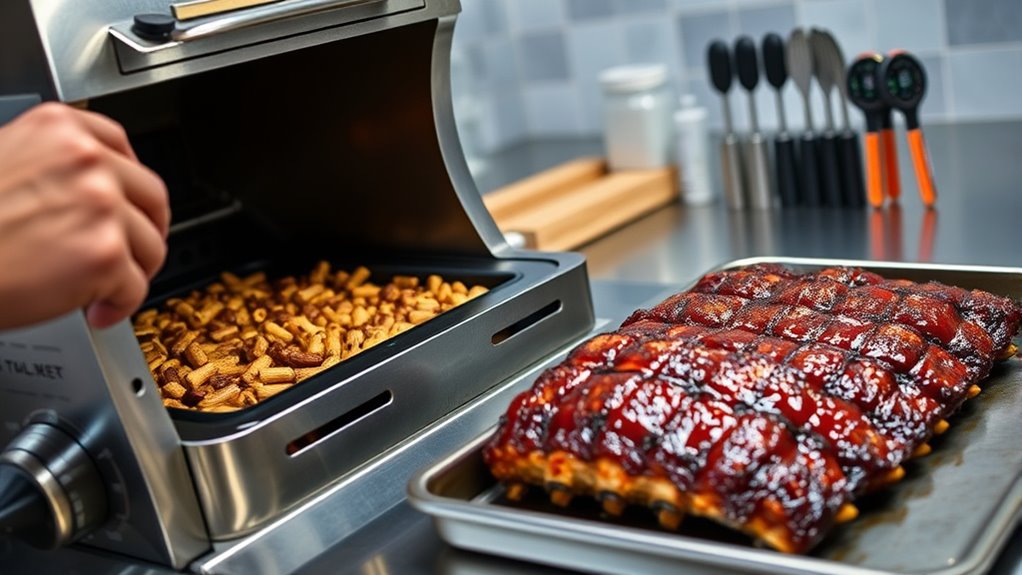
Before you start cooking, it’s essential to prepare your pellet grill properly. Good pellet grill maintenance guarantees your smoker runs smoothly and produces flavorful ribs every time.
Begin by cleaning out any old ash and residue from previous cooks, and check that the firepot is clear. Make sure the grease tray is clean to prevent flare-ups and promote even heat distribution.
Fill the hopper with high-quality pellets suitable for smoking ribs, as this influences flavor. Preheat the grill to your desired temperature, usually around 225°F, and verify that the temperature controller is working correctly.
Proper preparation not only improves your ribs’ taste but also helps with storage tips—like storing leftovers properly—that keep your meat fresh longer.
Taking these steps guarantees your pellet grill is in top shape, making your rib-cooking process more consistent and enjoyable.
Picking the Best Baby Back Ribs for Smoking
Choosing the right baby back ribs is key to getting tender, flavorful smoked meat. Start by picking high-quality meat; look for ribs with meaty, pinkish-red flesh and good marbling.
Selecting high-quality, meaty ribs with good marbling ensures tender, flavorful smoked results.
Avoid ribs that seem dry or have dark spots. When choosing flavors, think about whether you want smoky, sweet, spicy, or savory notes.
Make sure the ribs are labeled “baby back” so you’re getting the right cut. Check the freshness by inspecting how the meat looks and smells. Fresh ribs should have a clean smell and feel moist and firm.
If possible, buy from a trusted butcher or meat market for the best quality. High-quality ribs with good marbling and your preferred flavor profile give you the best start for delicious smoked ribs.
Following these steps ensures you start with the best meat for your smoking session.
Seasoning and Applying Your Rib Rub
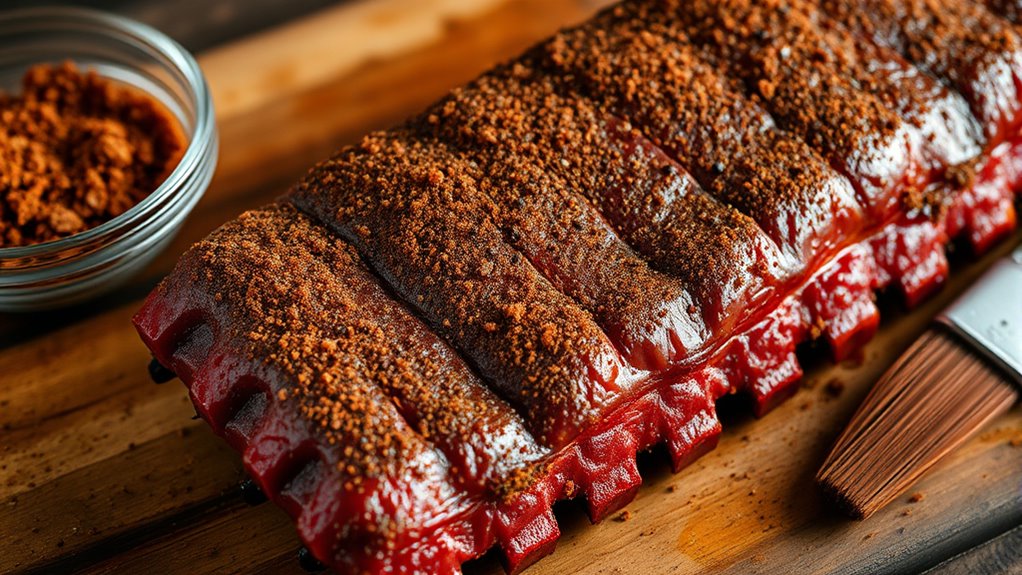
Once you’ve picked out the perfect ribs, the next step is to season them. Applying a good rub adds flavor and helps form a tasty crust.
Use your hands to coat both sides of the ribs evenly with your chosen rub, making sure every inch is covered. This ensures consistent flavor in every bite.
For the best results, press the seasoning into the meat. Let the ribs sit for at least 30 minutes to let the flavors soak in.
This resting time helps the seasonings penetrate deeply, boosting the overall flavor.
Here’s a quick guide to the key techniques:
| Technique | Effect |
|---|---|
| Even coating | Creates a uniform flavor and crust |
| Pressing into meat | Improves adhesion and flavor infusion |
| Resting after rub | Enhances flavor absorption |
| Gentle handling | Keeps the meat tender and intact |
Mastering these steps makes sure your ribs are flavorful, well-seasoned, and ready to grill. Your careful application is what makes the ribs juicy and delicious.
Setting Up Your Pellet Grill for Perfect Ribs
Setting up your pellet grill correctly is key to getting tender, flavorful ribs. First, check that your grill has enough pellets and is clean and well-maintained.
Regular maintenance helps prevent flare-ups and keeps the heat steady, which is crucial for perfect smoking. Preheat your grill to around 225°F, and use an accurate thermometer to verify the temperature.
Maintaining proper heat ensures your ribs cook evenly and get that smoky flavor you want. Also, store your ribs properly before cooking—keep them refrigerated and let them come to room temperature before placing them on the grill.
If you’re storing ribs for a short time, wrapping them in plastic wrap can help retain moisture. By preparing your pellet grill well and following these storage tips, you’ll create the perfect environment for irresistibly tender, flavorful baby back ribs.
Mastering Smoking Technique and Temperature
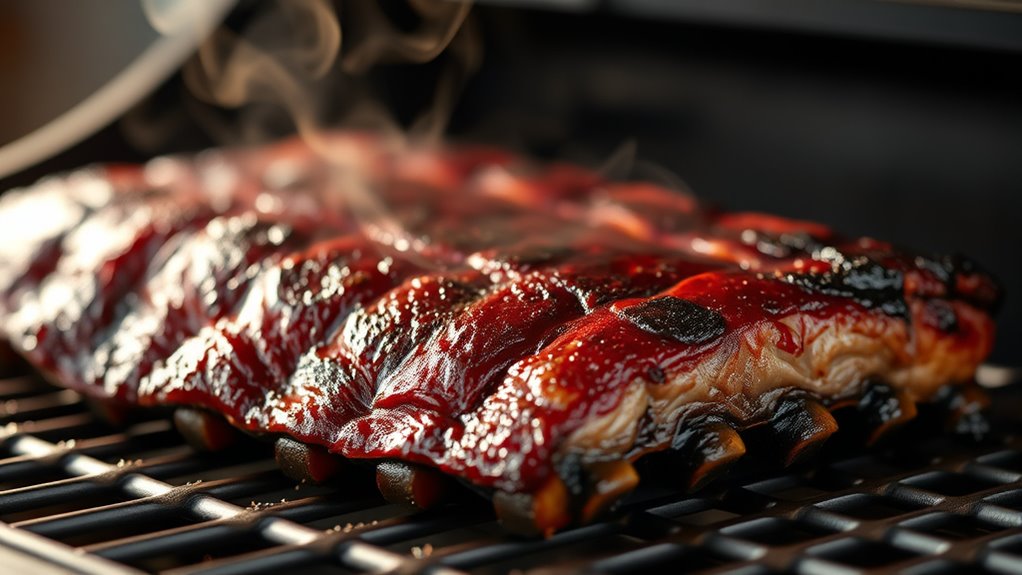
Getting perfect ribs is all about keeping the temperature steady while you cook. It’s really important to choose the right kind of smoke and keep an eye on your internal temperature. That way, you’ll end up with ribs that are tender and full of flavor.
Paying attention to these details makes a big difference and helps you get consistent, delicious results every time you make ribs.
Maintaining Consistent Temperature
Maintaining a consistent temperature is key to perfectly smoked baby back ribs, since fluctuations can cause uneven cooking and less tender meat. Focus on keeping the heat stable and evenly distributed.
Use your pellet grill’s digital controller to set and keep an eye on the temperature. Try not to open the lid too often, as this can cause temperature swings. Keep extra pellets or a fire starter nearby to help maintain steady heat.
Here’s a quick comparison:
| Temperature Control Tip | Effect on Heat | Best Practice |
|---|---|---|
| Use a PID controller | Keeps temperature steady | Set and forget |
| Preheat grill | Ensures even heat | Allow full warm-up |
| Add pellets gradually | Maintains consistent heat | Don’t dump in a lot at once |
| Monitor regularly | Catch fluctuations early | Use a good thermometer |
Choosing the Right Smoke
Ever wondered how the type and amount of smoke affect your ribs? Your wood choice directly influences the smoke flavor, so pick woods like hickory or apple for a balanced taste.
Using too much smoke can overpower the natural flavors of the meat, while too little might leave your ribs lacking that smoky aroma. Aim for a steady, thin stream of smoke to develop a rich, layered flavor without overwhelming the palate.
Keep the smoke consistent by maintaining your pellet grill’s temperature and ensuring your wood chips are fresh and properly sized. Remember, the goal is to add depth to the ribs, not mask their natural goodness.
Choosing the right wood and controlling your smoke output ensures your ribs develop a delicious, well-rounded smoky flavor.
Monitoring Internal Temp
How can you guarantee your baby back ribs are perfectly cooked and tender? Monitoring the internal temperature is key. Use a reliable meat thermometer to track the ribs’ progress, aiming for about 190°F to 203°F for ideal tenderness.
This ensures proper flavor infusion and helps develop that desirable smoke ring formation, which indicates good smoke penetration. Keeping a close eye on the temp prevents overcooking, which can dry out the meat, or undercooking, which leaves it tough.
Adjust your pellet grill’s heat as needed, maintaining a steady temperature throughout the cooking process. By monitoring the internal temp carefully, you’re making sure your ribs reach the perfect balance of tenderness, flavor, and visual appeal—resulting in a mouthwatering, expertly smoked finish.
Wrapping and Resting Ribs for Juiciness
Wrapping your ribs is an essential step to lock in moisture and improve tenderness after they’ve cooked for a while. Use aluminum foil or butcher paper to tightly wrap the ribs, sealing in juices and flavors.
This step also helps break down connective tissues, making the ribs more tender. During the wrap, you can add a little bit of sauce if you like, which boosts flavor and keeps the meat moist.
Once wrapped, return the ribs to the pellet grill or move them to a cooler spot to rest. Resting techniques are critical—let the ribs sit for at least 15-30 minutes before slicing.
This allows the juices to redistribute evenly throughout the meat, ensuring each bite stays juicy and flavorful. Avoid cutting into the ribs immediately after cooking, as this releases the moisture you’ve carefully preserved.
Proper wrapping and resting make a noticeable difference in the final tenderness and overall eating experience.
Serving and Enjoying Your Pellet-Grilled Baby Back Ribs
Once your ribs are cooked to perfection, it’s time to get ready to serve and enjoy them. Carving them just right makes all the difference — you want those beautiful, tender ribs to look tempting and be easy to eat. Picking the right sides to go with your ribs can really elevate the whole meal, so think about classic options like coleslaw, baked beans, or cornbread.
When it’s time to serve, use your best techniques to impress your guests. A good tip is to let the ribs rest for a few minutes after cooking — it helps keep all those juicy flavors in. Then, slice between the bones, and don’t forget to brush on a little extra BBQ sauce if you like! With a little presentation flair and some tasty sides, every bite will be memorable and sure to have everyone asking for seconds.
Perfectly Carved Ribs
After your ribs are perfectly cooked and tender, it’s time to carve and serve them so everyone can enjoy that mouthwatering flavor. Use a sharp knife for clean rib carving; start by slicing between the bones to create individual or small rib portions.
For a neat presentation, hold the rib steady with a fork as you cut. Apply sauce generously after carving, ensuring each piece is coated with your favorite glaze to boost flavor.
Be careful to slice against the grain to keep the meat tender and easy to chew. Serve the carved ribs on a platter, allowing their juicy, smoky aroma to shine.
Proper carving and sauce application elevate your rib experience, making each bite satisfying and flavorful.
Pairing With Sides
Pairing your perfectly carved baby back ribs with the right sides can elevate your meal and create a memorable dining experience. Classic options like coleslaw, baked beans, or cornbread complement the smoky, tender ribs perfectly.
For dessert pairings, think light and revitalizing—watermelon slices, fruit salads, or a tangy lemon tart help cleanse the palate after rich ribs.
When it comes to beverages, cold beers like lagers or pale ales work well, balancing the smoky flavors. If you prefer non-alcoholic drinks, try sparkling water with a splash of citrus or iced tea.
These thoughtful side dishes and drinks not only amplify the flavors but also make your meal feel complete and satisfying from start to finish.
Best Serving Techniques
To truly enjoy your pellet-grilled baby back ribs, presentation and serving techniques make a big difference. Arrange the ribs neatly on a clean platter, letting the glaze shimmer invitingly.
Consider cutting the racks into individual or half-rack portions for easier serving and a more appealing look. Adding fresh herbs, lemon wedges, or colorful sides can create a nice visual contrast.
Don’t forget to serve with your favorite barbecue sauce on the side for extra flavor. Use tongs for a tidy presentation, and make sure the ribs are warm when served.
A well-presented dish builds anticipation and makes your delicious ribs even more enjoyable.
Frequently Asked Questions
How Long Should I Preheat My Pellet Grill Before Cooking?
You should preheat your pellet grill for about 15-20 minutes before cooking. This gives the grill enough time to reach the right temperature.
Preheating ensures even heat distribution and creates the ideal environment for cooking. Proper preheating is a key step that helps improve flavor and consistency.
During this time, you can also add wood pellets for extra flavor. This way, your ribs will cook perfectly every time.
Can I Use Wood Pellets Other Than Hickory or Apple?
Think of your pellet grill as a painter’s palette—alternative wood flavors add new hues to your smoky masterpiece. Yes, you can use wood pellets beyond hickory or apple. Maple, cherry, and pecan are fantastic options to try.
Experiment with pellet flavor combinations to create unique layers of taste. Just make sure the pellets are food-grade and suitable for smoking.
This way, you can craft ribs with a personalized, flavorful touch that’s truly your own.
What’s the Ideal Internal Temperature for Perfectly Cooked Baby Back Ribs?
You should aim for an internal temperature of about 190-203°F for perfectly cooked baby back ribs. At this range, the meat gets tender and pulls away from the bone easily.
To boost flavor, try your favorite marinade and rib seasoning, then cook until just right. Keep an eye on the temperature with a reliable meat thermometer.
With the right temp, you’ll get juicy, flavorful ribs every time.
Should I Remove the Membrane From the Ribs Before Grilling?
Did you know that removing the membrane can improve your ribs’ tenderness by up to 30%? Yes, you should remove the membrane before grilling. It helps seasonings penetrate better and makes your ribs easier to bite.
Use a paper towel to grip and peel it off smoothly. This simple step guarantees your ribs are juicier, more flavorful, and melt-in-your-mouth tender every time.
How Do I Prevent Ribs From Drying Out During Cooking?
To prevent Ribs from drying out during cooking, you should keep them moist by spritzing them regularly with a mixture of apple juice or vinegar. This helps maintain moisture and keeps the ribs tender.
Keep the smoke infusion steady by maintaining a consistent temperature and adding wood pellets as needed. This ensures your ribs get that delicious smoky flavor without drying out.
Wrap the ribs in foil halfway through cooking to lock in moisture. Just be careful not to overcook them, as that can also cause dryness.
Following these steps will help your ribs stay tender, juicy, and full of smoky goodness.
Conclusion
Now that you know the steps, you’re ready to master pellet grill baby back ribs. Remember, cooking times and temperatures are key—most ribs hit that perfect spot around 225°F for about 3 hours.
Did you know that properly smoked ribs can hold up to 60% more moisture? That’s why following these steps is so important. Enjoy the process and savor every juicy, tender bite.
Your friends and family will be super impressed, and you’ll quickly become the go-to grill master with your pellet grill baby back ribs.