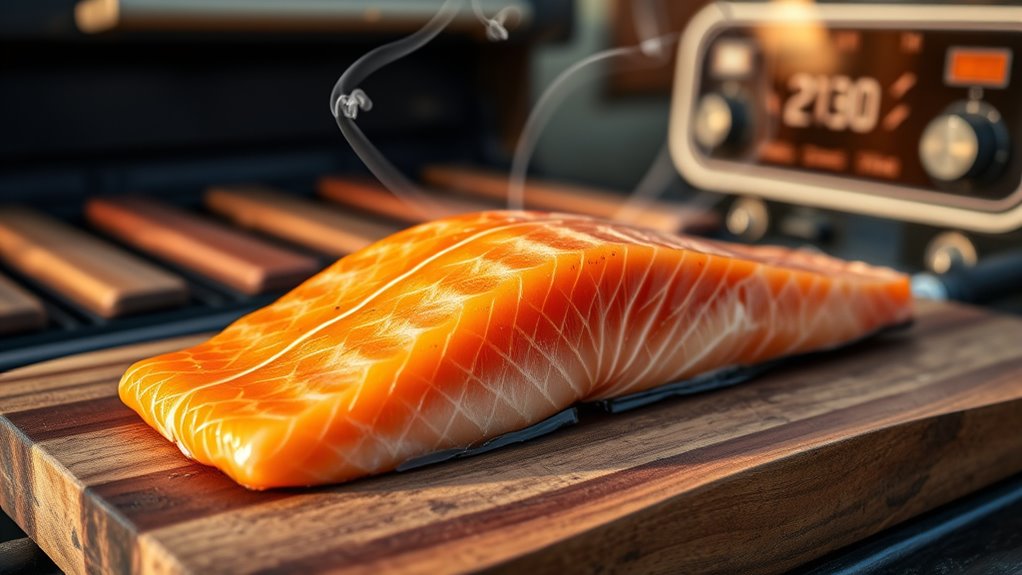
The Ultimate Guide to Smoke Salmon on a Pellet Grill
Many people dream of perfectly smoked salmon, but the process can feel intimidating or tricky to get just right. You’re not alone—smoking fish on a pellet grill might seem challenging at first, but with a few simple steps, you’ll be turning out restaurant-quality results at home.
To master smoked salmon on a pellet grill, start by choosing fresh, high-quality fish—wild or sustainably farmed—and prep it by trimming and seasoning with herbs or brine.
Set your grill to 180-200°F, using mild woods like alder or cherry for delicate flavor, and smoke for 1-3 hours until it reaches 140°F inside.
Proper resting and simple presentation improve flavor and appearance. Keep these tips in mind, and you’ll find out how to create restaurant-quality smoked salmon every time.
Key Takeaways
- Select fresh, high-quality salmon and prepare it with brine or seasoning, then let it rest to boost flavor and moisture.
- Preheat your pellet grill to 180-200°F, making sure it maintains steady heat and produces light, bluish smoke.
- Use mild hardwood pellets like alder, cherry, or maple for a gentle, balanced smoke flavor. Avoid woods that are too overpowering.
- Smoke the salmon for 1-2 hours per inch of thickness until the internal temperature hits 140°F for the best tenderness.
- Let the smoked salmon rest briefly, then slice it up and serve with fresh garnishes for a beautiful presentation and great flavor.
How to Choose the Best Salmon for Smoking on a Pellet Grill
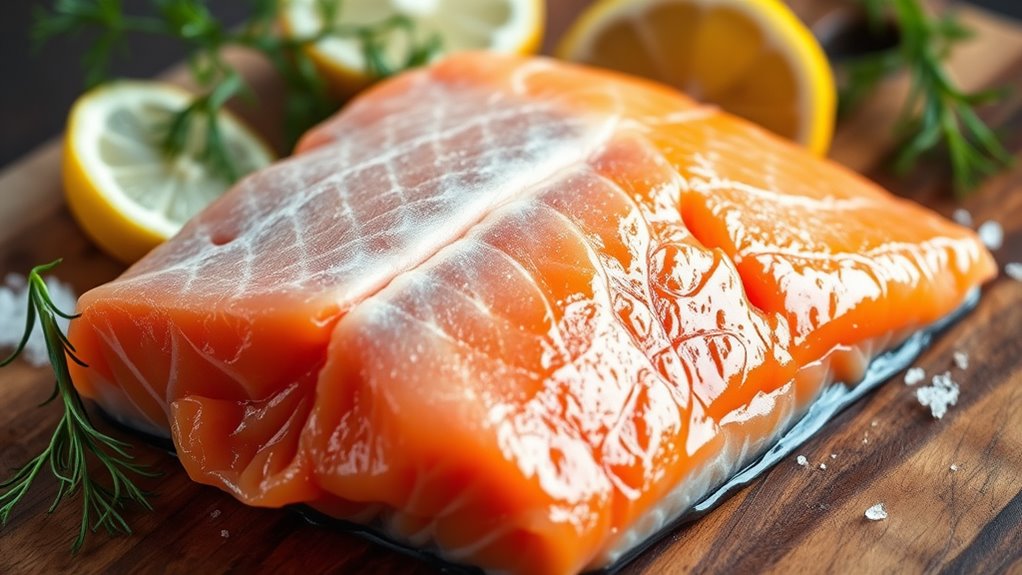
Choosing the right salmon is essential for getting flavorful, tender smoked results on your pellet grill. When picking your fish, think about where it comes from—wild-caught salmon often has richer flavor, but farmed salmon can be more sustainable.
Look for salmon from reputable sources that focus on seafood sustainability. Check labels for certifications like MSC or ASC, which show the seafood is farmed responsibly.
Freshness is key, so pick salmon with firm flesh, vibrant color, and a clean smell. Avoid fish that looks dull or has a strong fishy odor.
The type of salmon matters too. Atlantic salmon is common, but Pacific varieties like sockeye or king have unique flavors and textures that can really elevate your smoked dish.
Preparing Salmon: Trimming, Brining, and Seasoning Tips
Before you start smoking, properly preparing your salmon is key for the best results. First, pick a quality salmon fillet that’s fresh and has skin on for added flavor. Trim off any uneven edges or excess fat so it cooks evenly.
Brining helps lock in moisture and boosts flavor. You can use ingredients like salt, sugar, soy sauce, or lemon juice. This step keeps your salmon juicy and gives it a richer taste.
Next, season your salmon. Keep it simple with salt, pepper, and herbs, or add spices like paprika or dill for extra flavor. A quick guide to prepping:
| Salmon Fillet Selection | Brine Ingredient Options | Seasoning Tips |
|---|---|---|
| Fresh, firm flesh | Salt, sugar, soy sauce | Herbs, black pepper |
| Skin-on preferred | Lemon juice, honey | Spices, garlic |
| Even thickness | Water, apple cider vinegar | Salt, dill, paprika |
Getting trimming, brining, and seasoning right sets you up for tender, flavorful smoked salmon.
How to Set Up Your Pellet Grill for Perfect Smoked Salmon
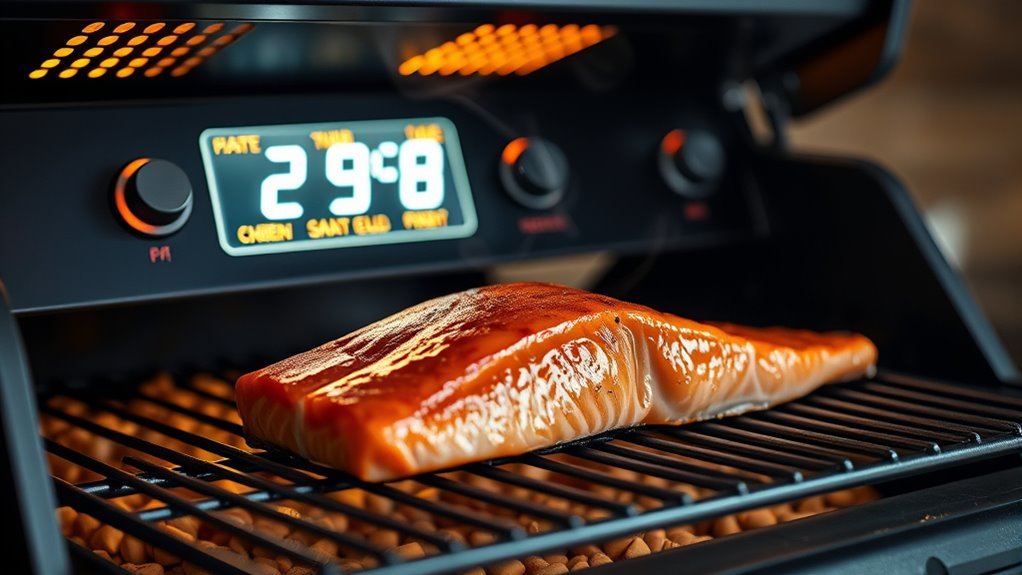
To get perfect smoked salmon on your pellet grill, start by setting up the grill properly for consistent heat and good smoke infusion. It’s important to calibrate your grill—check the temperature controls and make sure it stays steady at 180-200°F.
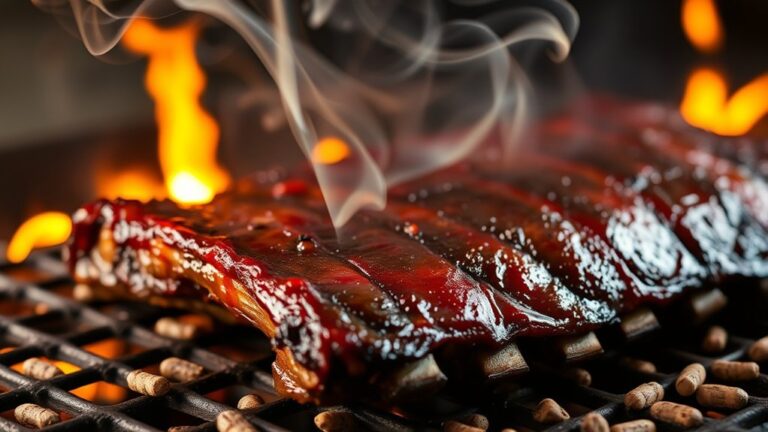
This steady heat helps the fish cook evenly without drying out. Next, preheat the grill with your chosen wood pellets to jumpstart the flavor infusion. Aim for thin, bluish smoke—thick or white smoke means the combustion isn’t right.
Place the salmon skin-side down on the grill grates, and adjust the vents if needed to control airflow. This setup lets the smoke penetrate the fish deeply, giving you that rich, smoky flavor.
Which Wood Pellets Are Best for Smoking Salmon?
When selecting wood pellets for smoking salmon, it’s important to choose varieties that improve the fish’s delicate flavor without overpowering it. For the best results, go for hardwoods like alder, cherry, or maple.
Alder is a classic choice, offering a mild, sweet wood flavor that perfectly complements salmon’s natural richness. Cherry adds a subtle fruity note, giving the fish a touch of sweetness.
Maple provides a gentle, caramel-like aroma that pairs really well with the fish’s texture. Avoid strong woods like mesquite or hickory, which can overpower the salmon’s delicate profile.
Your goal is to enhance the flavor, not mask it. Using the right wood pellets lets the smoke infuse the salmon with a gentle, aromatic aroma that elevates your smoking experience.
What Temperature and Time Are Ideal for Smoked Salmon?
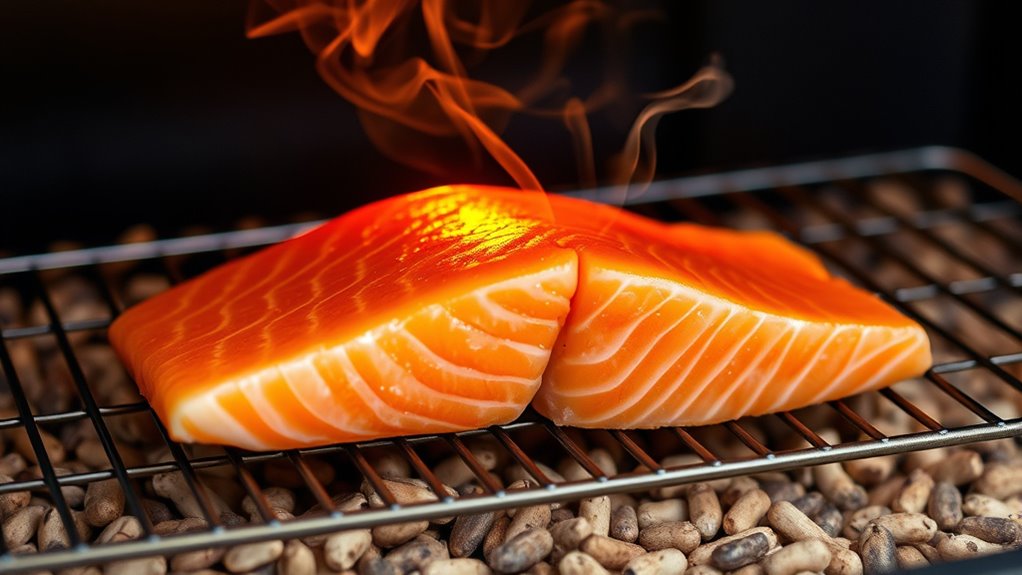
Sure! When you’re smoking salmon, the ideal temperature is usually between 180°F and 200°F. It’s a good idea to keep an eye on the smoker’s temperature to make sure it stays within that range. As for the smoking time, it generally takes about 1 to 3 hours, but this can vary depending on how thick your fillet is. Thicker pieces might need a little more time to cook through properly.
It’s pretty important to monitor both the temperature and the time so your salmon turns out tender, flavorful, and perfectly cooked. Just take your time, and you’ll have delicious smoked salmon in no time!
Ideal Cooking Temperature
Achieving the perfect smoked salmon hinges on maintaining the right temperature, which typically falls between 180°F and 200°F. Keeping your grill steady within this range allows the salmon to gently cook, enhancing flavor infusion without drying out.
This temperature range ensures a tender, moist texture while allowing the smoke to penetrate deeply. For presentation tips, let the salmon rest briefly after smoking to settle flavors and improve appearance.
An even temperature promotes consistent cooking, making your dish look appealing and taste great. Avoid raising the heat too high, as it can cause uneven cooking or toughen the fish.
Staying within this ideal temperature zone guarantees a beautifully smoked salmon with excellent flavor and texture, elevating your grilling game.
Recommended Smoking Duration
Wondering how long to smoke salmon at the right temperature? For the best flavor, aim to smoke at 180°F to 200°F.
It usually takes about 1 to 2 hours per inch of thickness. Thinner fillets cook faster, while thicker cuts need more time to develop that smoky flavor.
To ensure perfect doneness, look for an internal temperature of 140°F. The quality of your salmon also affects cooking time and flavor.
Fresh, wild salmon offers a more delicate taste, while farmed varieties might need a bit longer to cook through. Here’s a quick guide:
| Salmon Thickness | Smoking Time |
|---|---|
| 1 inch | 1 hour |
| 2 inches | 2 hours |
| 3 inches | 3 hours |
| Adjust as needed | Based on internal temp |
How to Monitor and Maintain Smoke and Temperature During Smoking
Keeping a close eye on smoke and temperature levels is key to a successful smoked salmon. Consistent temperature ensures even cooking and the right texture.
Controlling smoke density influences flavor without overpowering the fish. Use a reliable digital thermometer to monitor the grill’s internal temperature, aiming for around 180-200°F.
Adjust the pellet feed or vent settings to keep this temperature steady. For smoke, keep the pellet grill’s smoke control or damper slightly open to produce a gentle, steady smoke.
Too much smoke can cause bitterness, so it’s best to keep it light. Regularly check the pellet hopper to make sure you have a consistent supply.
Add more wood pellets if smoke production drops. Stable temperature and smoke levels help your salmon absorb the perfect amount of smoke for a beautifully flavored, tender finish.
Stay attentive throughout the process so you can adapt quickly and get the best results.
How to Know When Your Salmon Is Perfectly Smoked
Knowing when your smoked salmon is perfectly done is all about paying attention to its appearance and internal temperature. First, check the color—your salmon should have a rich, opaque hue with a slightly flaky texture.
Don’t rely solely on visuals, though; internal temperature is key. Aim for 140°F to 145°F (60°C to 63°C). Insert a probe thermometer into the thickest part of the fillet without touching the bone for an accurate reading.
Many salmon myths suggest that the fish must be well-done, but smoking myths tell us that perfect smoked salmon remains moist and tender at slightly lower temperatures. Overcooking dries it out, so keep an eye on your thermometer and look for a gentle flake test.
When it flakes easily and reaches the right temperature, your salmon is ready to enjoy.
Resting and Serving Your Smoked Salmon for Maximum Flavor
Once you’ve taken the smoked salmon off the grill, give it a few minutes to rest. This little break helps it stay juicy and really brings out its flavor.
When it’s time to serve, you can slice it thin for a delicate bite or go for thicker chunks if you prefer something heartier. Whatever style you choose, taking that extra moment to rest and selecting the right serving method will ensure you get the most delicious, flavorful experience from your smoked salmon.
Proper Resting Techniques
Once your smoked salmon reaches the desired internal temperature and develops a beautiful, flaky texture, it’s essential to let it rest before serving. Resting allows the flavors to fully infuse, enhancing the overall taste and guaranteeing maximum flavor.
During this time, keep the salmon uncovered or loosely tented with foil to prevent moisture loss while maintaining its presentation appeal. Proper resting also stabilizes the juices, making each bite more succulent.
Use presentation techniques such as slicing against the grain for neat, attractive servings. Resting time varies from 10 to 15 minutes, depending on thickness.
This step ensures your smoked salmon looks professional and tastes perfectly balanced, elevating your dish to a restaurant-quality experience.
Ideal Serving Styles
Have you ever wondered how to serve smoked salmon for maximum flavor and visual appeal? The key is in your presentation tips. To highlight its natural beauty, slice the salmon thinly and arrange it neatly on a platter.
Consider garnishing with fresh herbs, lemon wedges, or capers to add color and contrast. Resting your smoked salmon briefly after cooking allows the flavors to settle, making each bite more tender.
As for flavor pairing, serve it alongside crisp crackers, cream cheese, or a light dill sauce to complement its smoky richness. Keep the presentation simple yet elegant, focusing on highlighting the salmon’s vibrant color and flaky texture.
This approach ensures your smoked salmon impresses both the eyes and the palate for an unforgettable tasting experience.
Common Mistakes to Avoid When Smoking Salmon on a Pellet Grill
Smoking salmon on a pellet grill can produce delicious results, but it’s easy to make mistakes that can ruin the flavor or texture. One common error is over-smoking, which can overpower the delicate taste of the fish. Keep the smoke light and steady to preserve salmon’s nutrition and avoid overpowering the natural flavors.
Another mistake is incorrect temperature control; smoking salmon too hot can dry it out, while too low can lead to uneven cooking. Use a reliable thermometer to keep the temperature steady around 180-200°F.
Neglecting salmon sustainability considerations can also be a problem. Choosing non-sustainable sources can harm the environment. Always pick responsibly farmed or wild-caught salmon for better flavor and to support sustainable practices.
Finally, skipping the brining or marinating process can lead to less flavorful fish. Take your time with preparation, and you’ll enjoy perfectly smoked salmon that’s both tasty and environmentally conscious.
Creative Smoked Salmon Recipes and Serving Ideas
Creative smoked salmon recipes and serving ideas can really elevate your gatherings and everyday meals, turning a simple ingredient into a culinary masterpiece. Salmon’s health benefits make it a nutritious choice, and exploring fishing techniques can help you find the freshest catch.
You can serve smoked salmon on bagels with cream cheese, capers, and red onion for a classic brunch, or get creative with sushi rolls for a flavorful dinner. For a unique appetizer, try smoked salmon mousse on crostini, adding herbs for extra zest.
Pair it with fresh salads or grain bowls for a light, healthy meal. Here are some ideas to inspire you:
| Recipe Idea | Serving Suggestion | Key Benefit |
|---|---|---|
| Smoked Salmon Bagel | Breakfast or brunch | Rich in omega-3, promotes heart health |
| Salmon Sushi Rolls | Dinner or snack | Showcases fishing techniques for freshness |
| Smoked Salmon Mousse | Appetizer on crostini | Elegant presentation, flavorful bite |
Frequently Asked Questions
Can I Use Frozen Salmon for Smoking on a Pellet Grill?
Yes, you can use frozen salmon for smoking on a pellet grill. Before you start, make sure to properly thaw the salmon in the fridge for even cooking.
Once thawed, pat it dry and apply your favorite fish seasoning. Proper salmon thawing guarantees better smoke absorption and flavor.
How Do I Prevent Salmon From Sticking to the Grill Grates?
To prevent your salmon from sticking to the grill grates, make sure your grill is properly preheated to the right cooking temperature, around 225-250°F.
Lightly oil the grates before placing the fish, and consider using a fish basket or foil for extra protection.
Regular grill maintenance helps keep the grates smooth and clean, reducing sticking issues.
These steps make smoking salmon easier and help you get perfectly cooked, non-sticky fish.
Is It Necessary to Skin the Salmon Before Smoking?
Did you know that 80% of professional chefs prefer skin-on salmon for smoking? You don’t have to skin it beforehand, since the skin helps keep the fish moist and adds flavor during the process.
Using proper smoking techniques, like keeping the temperature steady, makes sure the skin turns crispy and tasty. If you want easier cleanup or a different texture, you can remove the skin after smoking.
But keeping the skin on initially gives the salmon extra protection and flavor throughout the process.
What’s the Best Way to Store Smoked Salmon Leftovers?
You should store smoked salmon leftovers in airtight containers to keep them fresh. Proper wrapping, like wrapping the salmon tightly in plastic wrap or aluminum foil, helps prevent exposure to air and moisture.
For longer storage, place the wrapped salmon in a container. Keep it refrigerated at or below 40°F and try to consume it within 3-4 days.
When in doubt, freezing leftovers is a good way to extend their shelf life.
Can I Add Marinades or Glazes During Smoking?
Yes, you can add marinades or glazes during smoking to boost flavor with different marinade styles and glaze techniques.
While the smoke is infusing the salmon, applying a glaze near the end creates a shiny, tasty finish that goes well with the smoky flavor.
Just be careful not to add too much liquid early on, as it can slow down the smoke absorption process.
Timing and method are key—this way, you’ll turn your smoked salmon into a real culinary treat.
Conclusion
So, you’ve mastered the art of smoking salmon on a pellet grill—who knew it could be so easy? Now, you’re all set to impress with perfectly smoky, tender fish. Just remember, even the best salmon can’t save a burnt mess or a missed temp.
But hey, if all else fails, at least you’ll have a delicious excuse to try again. Happy smoking—your taste buds are in for a treat, especially with that perfectly smoked salmon on your pellet grill!