What Happens If You Use Charcoal in a Gas Grill?
Are you tired of dealing with uneven cooking, flare-ups, or unexpected grill damage? Many grill enthusiasts struggle with these issues, especially when trying to mix fuels or experiment with different flavors. If you’re considering using charcoal in a gas grill, you’re not alone — but there are important things to know.
Using charcoal in a gas grill can lead to safety risks, damage, and unpredictable cooking results. It causes uneven heat, flare-ups, and can clog vents with ash, reducing efficiency.
The intense heat may warp parts or cause rust, shortening your grill’s lifespan. Plus, mixing fuels increases the chance of gas leaks and explosions.
If you want to understand how to avoid these issues and safely enjoy smoky flavor, keep exploring for more helpful tips.
Key Takeaways
- Using charcoal in a gas grill can cause uneven heating and temperature swings, making it harder to control your cook.
- It also increases the risk of flare-ups and safety hazards like fires or even explosions.
- Charcoal ash and soot can clog vents, damage internal parts, and lower the grill’s efficiency.
- Over time, residue buildup may lead to rust and corrosion, shortening the lifespan of your grill.
- Managing heat and smoke becomes trickier, so you’ll need to be extra careful with maintenance and control.
What Happens When You Use Charcoal in a Gas Grill?
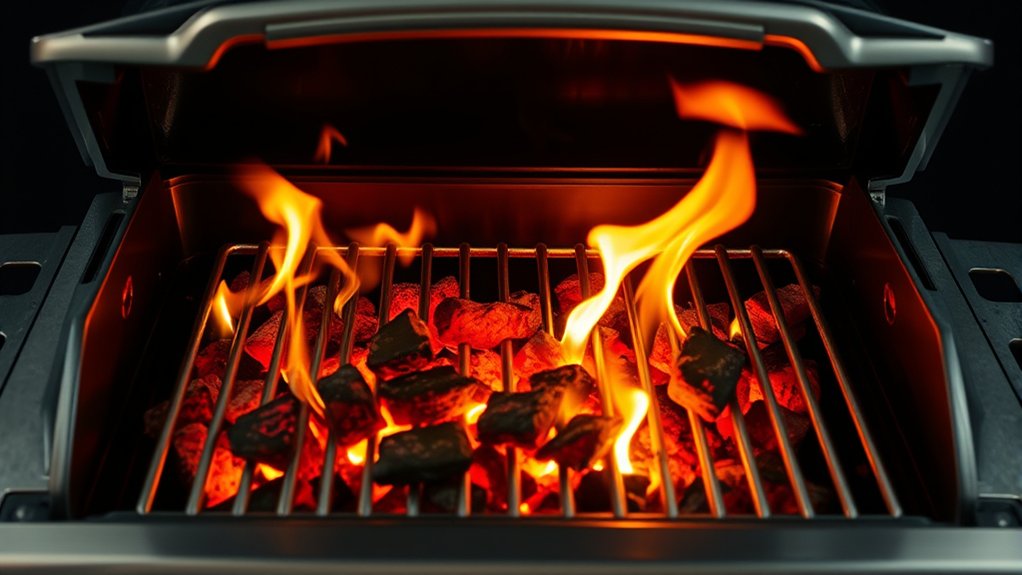
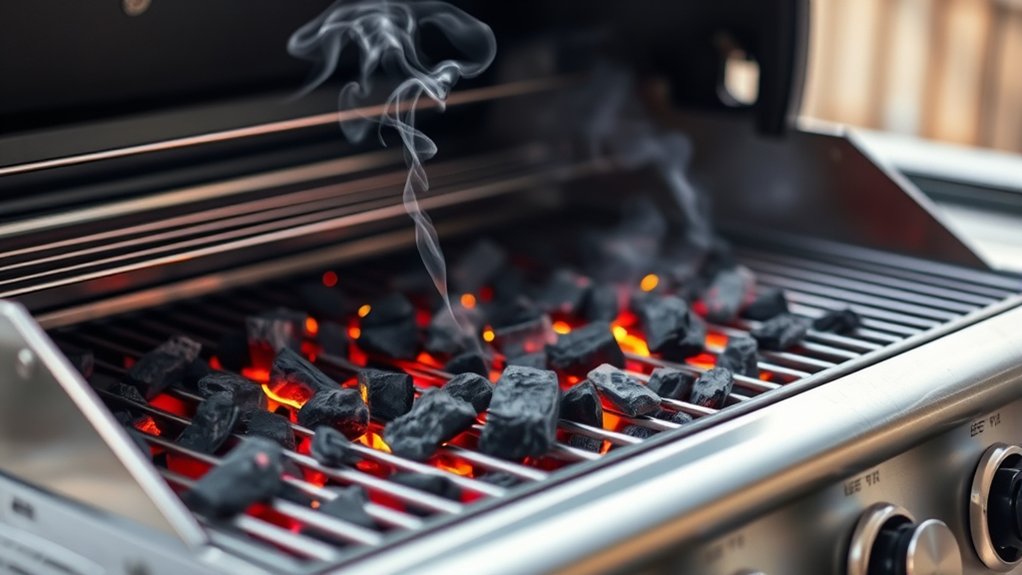
When you add charcoal to a gas grill, you’re introducing a different heat source that can change how your grill works. This can make cleaning more tricky since ash and residue tend to build up, so you’ll need to put in extra effort to keep your grill tidy.
Using charcoal as a fuel can give your food a smoky flavor and higher heat, but it also affects how evenly it cooks. Direct contact with charcoal might cause flare-ups or uneven heating, which can be hard to control with a gas grill’s usual setup.
Since charcoal produces different combustion byproducts, it may also impact the lifespan of your grill’s parts. Keep in mind that mixing fuels might mean adjusting your grill’s setup and maintenance routines.
Risks of Using Charcoal in a Gas Grill
Using charcoal in a gas grill might seem like a good idea, but it actually comes with some risks. For one, it can increase the chances of gas leaks or even fires if you’re not careful. And let’s be honest, dealing with unexpected flare-ups is no fun!
Plus, using charcoal can sometimes damage parts of your grill, which might lead to costly repairs down the line. It’s just not worth risking your grill’s health or safety. Being aware of these potential dangers is the best way to prevent accidents and keep your grilling experience safe and enjoyable.
Gas Leak Risks
Have you considered the risks of gas leaks when trying to use charcoal in a gas grill? Mixing charcoal with a gas grill can mess up proper maintenance and increase the chance of leaks.
Since gas grills are designed for propane or natural gas, adding charcoal creates potential pathways for leaks or pressure build-up. If the gas lines or connections aren’t sealed correctly after trying this, you could have gas escaping without noticing.
Even small leaks can lead to dangerous situations over time. Always make sure your grill’s connections are tight and check for leaks regularly, especially if you change the fuel type.
Using a grill outside its intended design raises the risk of gas leaks, which can cause serious safety issues.
Fire Hazard Increase
Introducing charcoal into a gas grill significantly increases the risk of fire hazards. Charcoal produces more intense and unpredictable flames, which can quickly cause flare-ups if not carefully managed. This puts your grill and surrounding area at risk.
Uncontrolled fires can damage grill components or create unsafe conditions. Using charcoal as a fuel in a gas grill can lead to sudden flare-ups that are hard to control, along with grease fires caused by unpredictable flames.
It can also produce excess smoke that might ignite nearby surfaces. Plus, controlling the temperature becomes more difficult, increasing the fire risk even further.
Always remember that mixing fuels can create dangerous situations. If you prefer charcoal, it’s safer to stick with a dedicated charcoal grill. Combining different fuels can compromise safety and greatly raise fire hazards.
Grill Damage Potential
Adding charcoal to a gas grill can cause serious damage to its parts, risking both how well it works and safety. The intense heat from charcoal can warp or melt plastic components, harm the burners, and weaken the grill’s structure.
This damage can lead to expensive repairs and shorten your grill’s lifespan. Using charcoal also messes up proper maintenance because leftover ashes and soot can clog vents and gas lines, making the grill less efficient.
To stay safe, always use your grill as intended and avoid modifications that can harm its internal parts. Ignoring these risks can cause malfunctions or dangerous flare-ups.
Mixing charcoal with a gas grill ultimately damages its design, which can lead to costly repairs and unsafe cooking conditions.
Can Using Charcoal Damage Your Gas Grill?
Using charcoal in your gas grill can actually cause some issues if you’re not careful. For example, it can lead to corrosion in the gas lines, which might cause leaks down the line. That’s definitely something you want to avoid for safety reasons.
Plus, the intense heat from charcoal can sometimes damage the burners and other parts of your grill over time. It’s good to be aware of these potential risks before you start mixing fuels or using charcoal in a gas grill.
Gas Line Corrosion Risks
Even though gas grills are designed to handle propane or natural gas, using charcoal can sometimes lead to corrosion of the gas lines. When you add charcoal, residues and ash can settle into the connections, causing damage over time.
This corrosion can block gas flow, making your grill less efficient, or cause leaks from weakened or rusted lines. It also poses safety hazards, as gas might escape unexpectedly.
Plus, damage to internal parts can make repairs costly and complicated. If you’re into indoor grilling, electric grills are a safer choice since they don’t have gas lines to worry about.
Using charcoal in a gas grill speeds up deterioration, so it’s best to avoid it if you want your grill to last. Proper maintenance and sticking to the recommended fuels help keep your grill safe and working well for years to come.
Potential Gas Leaks
Does placing charcoal in a gas grill increase the risk of gas leaks? Yes, it can, especially if you neglect proper grill upkeep. Mixing fuel types can cause connections to loosen or seals to degrade, leading to potential leaks. Using charcoal might also block vents or damage internal components if misused.
To better understand, here’s a quick overview:
| Issue | Cause | Solution |
|---|---|---|
| Gas leaks | Incorrect fuel compatibility | Use only compatible fuels |
| Blocked vents | Charcoal debris obstructing airflow | Regular cleaning and inspection |
| Seal damage | Rough handling or improper use | Handle grill components carefully |
| Connection looseness | Over-tightening or wear | Tighten connections properly |
| Corrosion | Lack of maintenance | Routine grill maintenance |
Stay vigilant with grill upkeep to prevent leaks and ensure safe, efficient grilling.
Damage to Burners
Placing charcoal in your gas grill can cause more than just gas leaks; it can also damage the burners. Burners are made for specific fuels, like gas, not charcoal.
When you use charcoal, ash and debris can settle on the burners, causing clogs and uneven heat. This makes cleaning harder and can shorten the burner’s lifespan.
Over time, buildup of ash can lead to rust or corrosion, especially if moisture gets trapped. To avoid this, always stick to your grill’s recommended fuel type.
Cleaning your grill properly after each use helps prevent ash buildup. Using charcoal can reduce burner efficiency and lead to costly repairs.
How Does Charcoal Change the Combustion in Your Gas Grill?
Introducing charcoal into a gas grill changes the way it burns by adding a different heat source that gets much hotter than gas alone. It brings a traditional touch back into modern grilling.
When you add charcoal, the fire shifts from just gas to a mix of gas and charcoal, which creates hotter and more uneven flames. This can cause temperature swings and produce more smoke.
Because charcoal burns slower and produces higher heat, it affects how your grill heats up and spreads that heat. This can make controlling your cooking a bit more tricky.
How Does Charcoal Affect Flavor and Temperature?
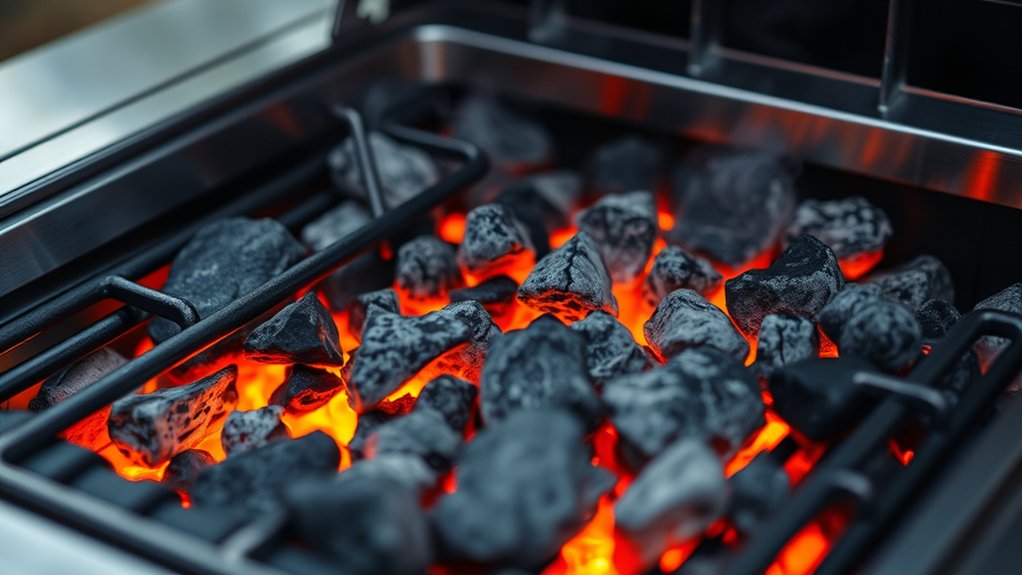
Adding charcoal to your gas grill can really boost the flavor of your food. It gives a smoky richness that gas alone just can’t match. This makes your grilling experience more authentic and satisfying.
But keep in mind, managing the temperature becomes more important because charcoal can cause uneven heat. To get the best of both worlds—flavor and temperature control—try these tips:
- Use a charcoal basket for controlled, indirect heat.
- Adjust the gas burners to balance out the extra heat from the charcoal.
- Keep the lid closed to stay consistent with temperature and smoky flavor.
- Add small amounts of charcoal gradually to prevent overheating.
Is It Safe to Mix Charcoal and Gas When Grilling?
While it might seem convenient to combine charcoal and gas in your grill, it’s important to understand the safety considerations involved. Mixing these fuels can pose serious risks if not done properly.
Gas grills are designed with specific fuel compatibility in mind, and adding charcoal can lead to unpredictable flare-ups or even dangerous explosions.
For proper grill maintenance, always follow the manufacturer’s guidelines, which typically recommend sticking to one fuel type.
Combining charcoal and gas can also cause uneven heat distribution, making it harder to control cooking temperatures safely.
If you’re tempted to create a hybrid setup, consider using a grill specifically designed for dual fuel use.
Otherwise, mixing fuels can compromise your safety and damage your grill.
Always prioritize safety by using the correct fuel and maintaining your grill properly, ensuring a safe and enjoyable grilling experience.
How Using Charcoal Impacts Your Gas Grill’s Efficiency and Longevity
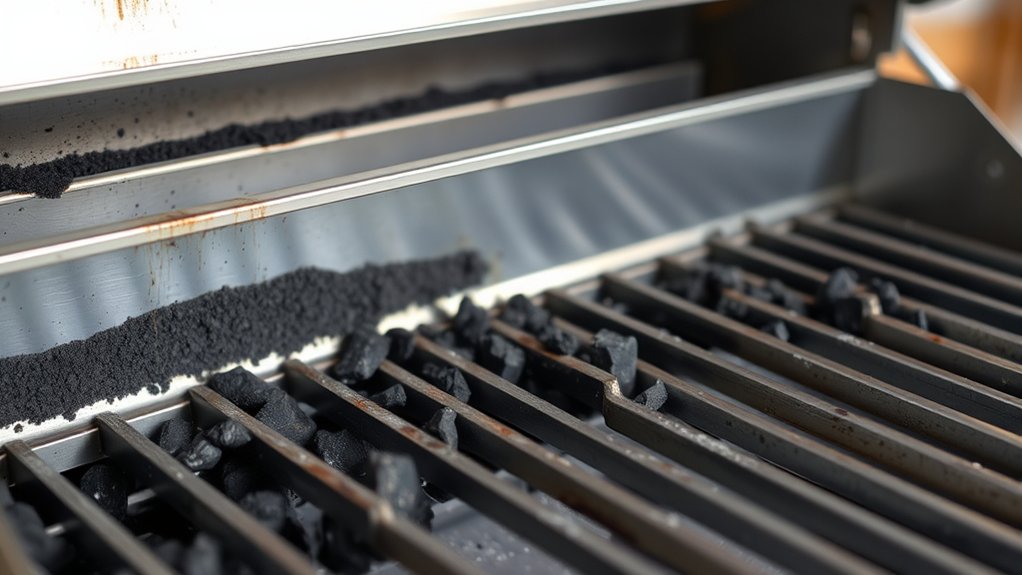
Using charcoal in your gas grill can significantly impact its efficiency and lifespan if you’re not careful. Combining charcoal with gas can cause extra wear and tear on your grill components.
Using charcoal in a gas grill can harm its efficiency and shorten its lifespan if not used properly.
This mix can lead to problems like clogged burners because charcoal creates more ash and residue. Over time, this can block heat flow and reduce how well your grill heats.
Ash and soot can also speed up rusting, especially if you don’t clean your grill regularly. This corrosion can weaken the metal and shorten your grill’s lifespan.
Obstructions from ash can cause uneven heating, meaning you might have to run the grill longer to cook your food properly. It’s not just inefficient—it can also be frustrating.
Continuously misusing your grill with charcoal can speed up the wear on parts, making your grill less durable over time. To keep it running smoothly longer, proper maintenance is key.
Understanding how charcoal affects your grill and maintaining it well can help extend its life. Considering alternative fuels might also be a smart move for better longevity.
Signs You’re Using Charcoal Incorrectly in a Gas Grill?
If your gas grill isn’t working like it should, you might be using charcoal the wrong way. One sign is uneven heating or inconsistent temperatures. This can happen if you’re not using the right grill accessories or cooking techniques.
Another clue is too much smoke or flare-ups. These often happen if you overload the charcoal or place it incorrectly in the grill. If your food isn’t cooking evenly or you can’t get good sear marks, it’s a sign you’re not managing the charcoal properly.
Also, if the flavor seems off—either too smoky or not smoky enough—you might be using charcoal incorrectly. Make sure you’re using proper accessories like a charcoal basket or chimney starter.
Following the right techniques and placing the charcoal correctly makes a big difference. Proper handling helps avoid these issues and gives you the best results from your grill.
Safe Ways to Add Smoky Flavor Without Risks
If you want to add a smoky flavor to your food safely, one great way is to use smoke pellets that are made specifically for grilling. Just make sure to follow the instructions on the package—that way, you’ll get that delicious smoky taste without any issues.
Another tip is to use wood chips the right way. Soak them in water first, then place them in a foil packet with some holes punched in it. This helps prevent flare-ups and keeps things safe while adding that nice smoky aroma.
And don’t forget about ventilation! Keeping good airflow ensures the smoke stays where you want it and helps reduce any risks during your grilling session. It’s all about enjoying that smoky flavor without any worries.
Use Smoke Pellets Safely
Adding smoke pellets to your gas grill can boost flavor, but it’s important to do it safely. Always check if your grill’s manufacturer approves pellet use to avoid damage.
Use only pellets meant for grilling, steering clear of those with binders or additives. Place the pellets in a smoker box or a foil pouch with holes so the smoke can circulate.
Light the pellets carefully and keep an eye on the grill to prevent flare-ups or too much smoke. Following these steps helps keep your grilling safe while giving your food that smoky flavor.
Incorporate Wood Chips Properly
Incorporating wood chips into your gas grill can give your food a rich smoky flavor, but you need to do it safely and the right way.
Start by soaking the chips in water for about 30 minutes. This helps prevent flare-ups when you add them to the grill.
Place the damp chips in a smoker box or wrap them in aluminum foil with holes punched in it. Then, put them over the heat source.
This method works great for activities like roasting marshmallows or planning picnics, where a smoky taste adds to the experience.
Try not to open the grill too often, as it can cause flare-ups or let heat escape.
Adding wood chips thoughtfully allows you to enjoy authentic smoky flavor without risking safety or damaging your grill.
Proper incorporation makes your outdoor cooking both flavorful and safe.
Control Ventilation Effectively
Controlling the airflow in your gas grill is key to adding smoky flavor safely without flare-ups or uneven cooking. Proper ventilation helps you manage both heat and smoke, making your grilling safer and tastier.
To get the best results, adjust the vents to control oxygen flow, balancing heat and smoke. Keep the grill’s lid closed when adding things like wood chips or charcoal to prevent flare-ups.
Make sure to regularly clean the vents and inside of the grill. This keeps the airflow clear and ensures your grill works properly. Also, keep an eye on the temperature to avoid overheating or flare-ups caused by poor ventilation.
Should You Follow the Manufacturer’s Recommendations for Fuel?
Following the manufacturer’s recommendations for fuel is crucial to ensure your grill works safely and efficiently. Using the right fuel type helps you achieve the best cooking results without risking damage or safety issues.
Following manufacturer’s fuel recommendations ensures safe, efficient grilling and the best cooking results.
When you stick to the recommended fuels, you also help extend your grill’s lifespan and avoid costly repairs. Ignoring these guidelines can lead to problems like corrosion or buildup, which can mess with heat distribution and make cooking inconsistent.
Manufacturers test their grills with specific fuels, so using anything else—like charcoal in a gas grill—could cause malfunctions or safety hazards. Always read the owner’s manual and follow their advice on fuel types.
Doing so keeps your grill in top shape and helps you cook food evenly and safely. Overall, following the manufacturer’s fuel recommendations makes your grilling experience safer and more enjoyable.
Frequently Asked Questions
Will Using Charcoal Void My Gas Grill’s Warranty?
Using charcoal in your gas grill can void the warranty if it wasn’t designed for it, so check your manufacturer’s guidelines first. Charcoal alternatives like lump charcoal can cause damage or affect grill maintenance, especially if it blocks vents or damages components.
Always follow your grill’s instructions to prevent voiding warranties and guarantee safe, effective grilling. Proper use helps maintain your grill’s longevity and performance.
Can Charcoal Cause Gas Leaks or Fires?
Using charcoal in a gas grill can cause charcoal contamination, which may lead to safety issues like gas leaks or fires. The buildup of ash and residue might block vents or gas lines, increasing the risk.
If you decide to use charcoal, always clean your grill thoroughly afterward and check for leaks before igniting.
Prioritizing grill safety helps prevent dangerous situations and keeps your grill in good shape.
Is It Possible to Use Charcoal Safely With a Smoker Grill?
Using charcoal safely in a smoker grill is like adding a secret ingredient to a recipe—if done correctly. You can enjoy that rich charcoal flavor and desired smoke production by placing charcoal in a dedicated smoker box or using lump charcoal designed for smoking.
Guarantee proper ventilation, monitor temperature, and avoid direct contact with flames. This way, you’ll achieve delicious, smoky results without risking safety or equipment damage.
How Does Charcoal Affect the Grill’s Temperature Control?
Using charcoal in a gas grill affects temperature control because it makes it harder to regulate heat precisely.
Charcoal adds a smoky flavor that enhances your food, but it can also cause uneven heating, leading to hot spots.
You might find it more challenging to keep the temperature steady, so you’ll need to make frequent adjustments.
While it gives your grilling a richer flavor, it also means you need to stay more attentive to avoid overcooking or undercooking.
Can Charcoal Ash Damage the Grill’s Components?
Think of charcoal ash as silent troublemakers that can quietly damage your grill. Charcoal residue, especially if left uncleaned, can cause grill corrosion over time, weakening metal parts and compromising safety.
Ash buildup can clog vents or cause uneven heating. Regularly cleaning out ash prevents corrosion and keeps your grill functioning smoothly.
This way, your cookouts stay safe and enjoyable. Don’t let neglected residue ruin your grilling experience.
Conclusion
Using charcoal in your gas grill is like trying to fit a square peg in a round hole. You risk damaging your grill and compromising safety. Stick to the recommended fuels to keep your grill running smoothly and flavorful.
If you crave smoky goodness, consider safer alternatives like wood chips or smoker boxes. They can give you that rich, smoky flavor without the risks.
Think of your grill as a trusted partner. Treating it properly guarantees many delicious barbecues ahead. Avoid rushing into risky shortcuts like using charcoal in a gas grill. It could turn your backyard into a smoky disaster zone.