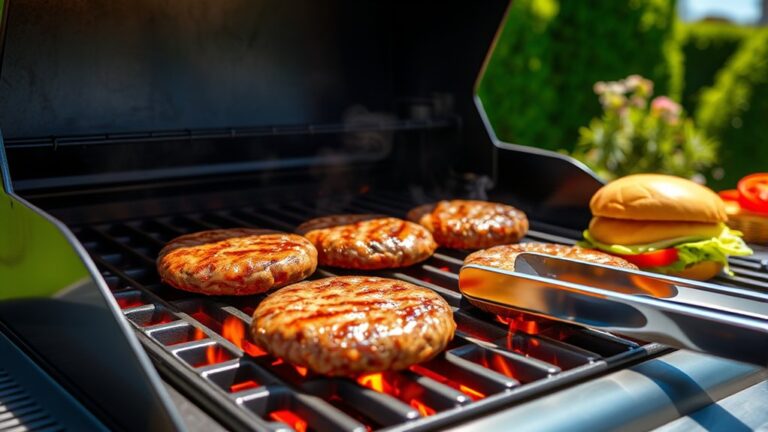
How Long to Cook Burgers on a Gas Grill
Many people struggle with grilling the perfect burger—getting that juicy, flavorful patty without overcooking or drying it out. You’re not alone; mastering the art of grilling on a gas grill can feel tricky at first. But with a few simple tips, you’ll be turning out mouthwatering burgers every time.
For juicy burgers on a gas grill, preheat to 375-450°F.
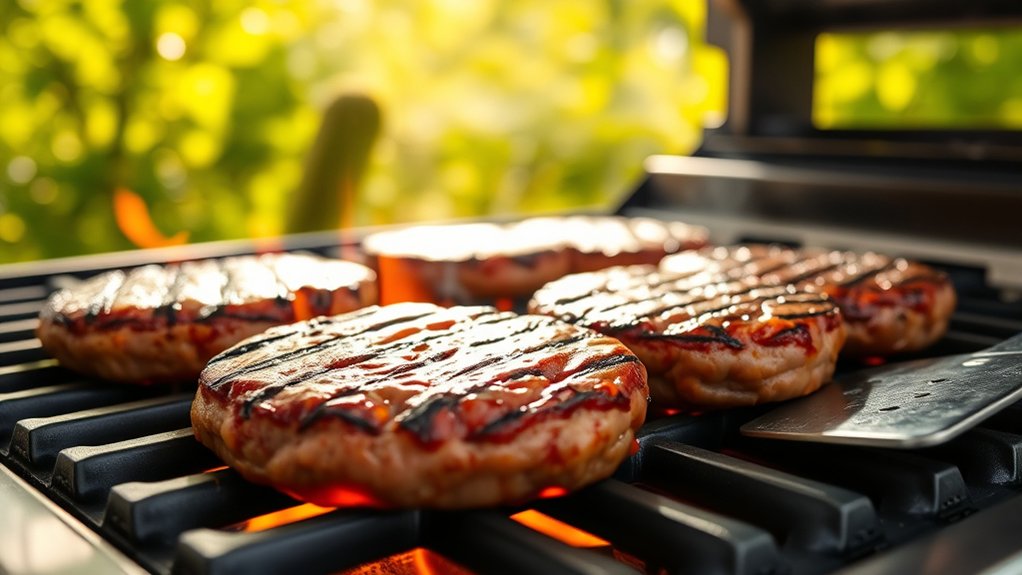
Cook thin patties (¼ inch) for about 2-3 minutes per side, while thicker ones (¾ inch) need approximately 4-6 minutes per side.
Use a meat thermometer to check for 160°F internal temp for safety.
Avoid pressing the patties and let them rest a few minutes after grilling to keep juices in.
If you want expert tips, learn more about perfecting your grilling technique.
Key Takeaways
- Cook thin burgers (~¼ inch) for 2-3 minutes per side. Thicker patties (~¾ inch) take longer, about 4-6 minutes per side.
- Preheat your gas grill to 375-450°F for the best searing and even cooking.
- Use a meat thermometer to make sure the internal temperature hits 160°F for safety.
- Let your burgers rest for 5 minutes after grilling to keep the juices in and boost flavor.
- Adjust the cooking time based on how well-done you want your burger, from rare to well-done.
How to Grill Juicy Burgers on a Gas Grill
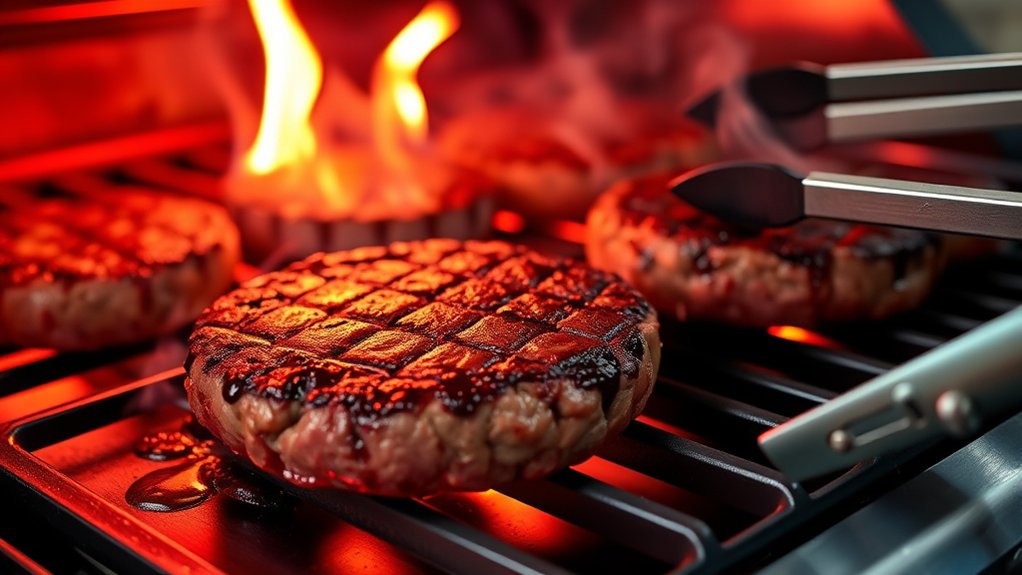
To grill juicy burgers on a gas grill, start with the right prep. First, make sure your grill is clean because leftover residue can cause sticking and uneven cooking. A clean grill helps develop a nice sear, which locks in the juices.
Before grilling, season your burger patties with salt and pepper or your favorite toppings for extra flavor. Preheat your grill to medium-high heat, around 375-400°F, so it’s ready to go.
When placing the patties on the grill, avoid pressing down on them. Squeezing out the juices can make the burgers dry. Let the heat do its work instead. Use a meat thermometer to check for doneness.
For extra flavor, add toppings like cheese, onions, or lettuce during the last few minutes of cooking. Keep the lid closed to maintain heat and ensure even cooking. With these tips, you’ll serve up juicy, flavorful burgers every time.
Determine Your Burger’s Thickness for Perfect Results
Knowing the thickness of your burger patties is key to cooking them perfectly. Thicker patties, around ¾ inch, need more time on the grill, while thinner ones cook faster.
Use your grilling accessories, like a meat thermometer, to check doneness accurately. When preparing your burger toppings, keep in mind that thicker patties can support more toppings without falling apart.
If you’re adding cheese, for example, thicker patties hold the melt better. Conversely, thinner patties cook quickly and are ideal if you prefer a quicker meal or lighter toppings.
Measure your burger’s thickness before grilling to plan your cooking time precisely. This step guarantees you avoid undercooking or overcooking, leading to juicy, flavorful results.
Adjust your grilling approach based on thickness, and you’ll enjoy perfectly cooked burgers, no matter how many toppings or grilling accessories you use.
Set the Right Grill Temperature for Cooking Burgers
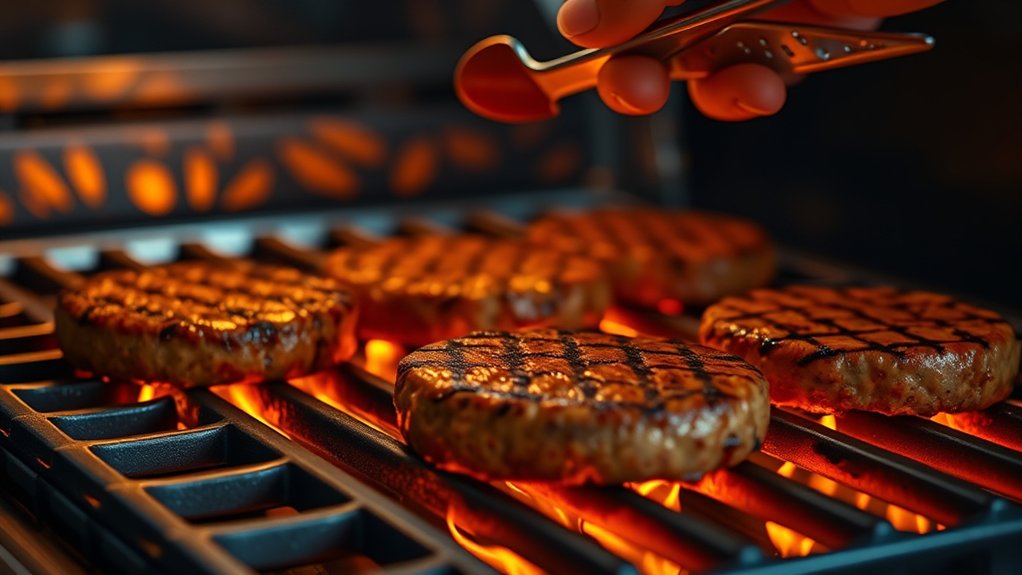
Want juicy, perfectly cooked burgers? Just set your grill to a nice range between 375°F and 450°F. Before you toss those patties on, make sure to preheat the grill well—nothing beats a hot grill for even cooking. Using a grill thermometer is a game-changer; it helps you keep the temperature just right so your burgers turn out absolutely delicious every time.
Ideal Temperature Range
Setting the right grill temperature is essential for perfectly cooked burgers. Aim for an ideal temperature range of 375°F to 450°F. This helps your burgers develop a nice sear while staying juicy inside.
Using quality grill accessories, like a thermometer, helps maintain consistent heat. If you’re marinating your patties, avoid high heat, as marinades with sugars can cause flare-ups.
Keep the grill at medium-high to high heat for the best results. Too low, and your burgers may become dry or take too long to cook. Too high, and they might burn on the outside before cooking through.
Adjust your grill to stay within this temperature range to achieve a perfect balance of flavor, texture, and doneness.
Preheat Properly First
Preheating your grill sets the stage for perfectly cooked burgers. Before placing the patties on, turn on your gas grill and let it heat to about 400-450°F. This helps you get a good sear and prevents sticking, making flipping easier.
Use your grilling tools, like a grill brush, to clean the grates thoroughly. Keep burger buns nearby so you can toast them during the last few minutes of grilling if you want.
Proper preheating also helps lock in flavors and juices, giving you juicy, evenly cooked burgers. Avoid cooking on a cold or uneven grill, which can lead to burnt or undercooked results.
Once the grill reaches the right temperature, you’re ready to cook your burgers to perfection.
Use a Grill Thermometer
Using a grill thermometer guarantees you hit the perfect temperature for cooking burgers safely and evenly. Maintaining the right grill temperature is essential for grill safety and achieving juicy, flavorful burgers.
Aim for a medium-high heat, around 375-400°F, to ensure proper searing and thorough cooking. A thermometer helps you monitor the grill’s temperature consistently, preventing overcooking or undercooking.
Proper temperature control also helps preserve your burger seasoning, allowing the flavors to develop without burning. Insert the thermometer probe into the grill, not the burgers, for an accurate reading.
This simple step guarantees you cook your burgers to the correct internal temperature while keeping safety a priority. Using a grill thermometer is an easy way to improve your grilling skills and enjoy perfect burgers every time.
How Long Should You Cook Burgers at Different Thicknesses?
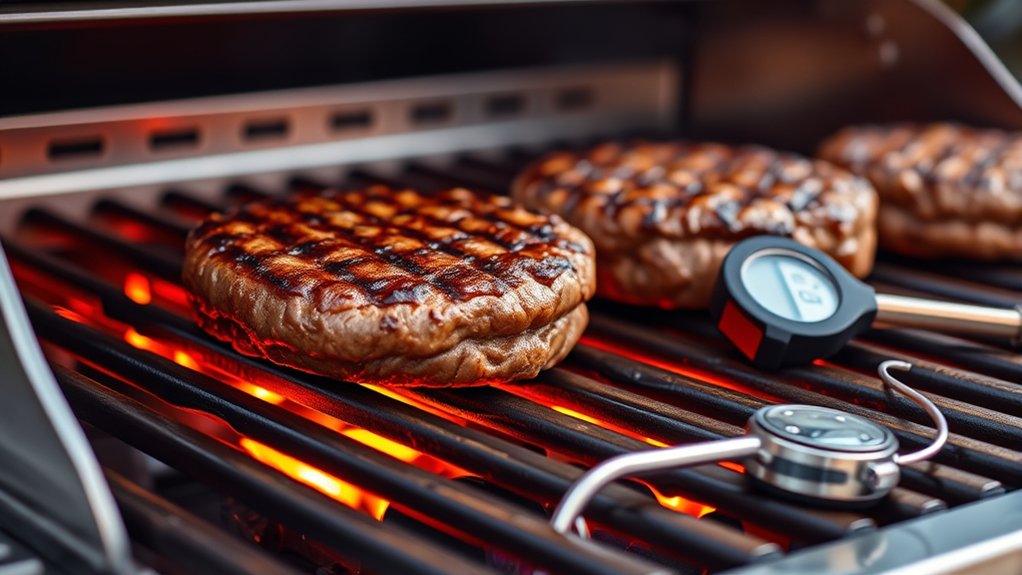
The thickness of your burger really makes a difference in how long it needs to cook. If you’ve got thin patties, they’ll cook pretty fast—sometimes in just a few minutes per side. But if your burgers are thicker, you’ll want to give them a bit more time so they cook all the way through without burning on the outside.
Basically, the key is to keep an eye on the clock and use a meat thermometer if you can. That way, you’ll get your burgers cooked to your preferred level of doneness, whether that’s rare, medium, or well-done. It’s all about finding that perfect balance so your burger stays juicy and cooked just right.
Cooking Time for Thin Burgers
When cooking thin burgers on a gas grill, you’ll want to keep an eye on the timing to make sure they’re cooked through without drying out. Thin patties, about ¼ inch thick, cook quickly—usually 2 to 3 minutes per side.
For a flavorful meal, consider vegetarian options like veggie or black bean burgers, which also require similar timing. Use grill accessories like a spatula to flip evenly and prevent sticking.
Here’s a quick guide to help you keep track:
| Thickness | Cooking Time | Internal Temp |
|---|---|---|
| Thin (¼ inch) | 2–3 minutes | 160°F (70°C) |
| Vegetarian options | 2–3 minutes | 160°F (70°C) |
| Regular burgers | 4–5 minutes | 160°F (70°C) |
Adjust the times as needed for your preferred level of doneness.
Adjustments for Thick Patties
As you move from thin to thicker patties, you’ll need to adjust the cooking times. This helps ensure your burgers are cooked through without burning the outside.
For thicker patties, add a few extra minutes per side on the grill and aim for an internal temperature of 160°F. Keep the grill clean and maintain steady heat to prevent flare-ups and mess.
When marinating, remove excess marinade before grilling to avoid flare-ups and promote even cooking. Thicker patties might also need indirect heat after searing each side to cook evenly all the way through.
Stay attentive while grilling and use a meat thermometer for accuracy. After cooking, clean your grill thoroughly to prevent flare-ups, maintain consistent heat, and keep your grill ready for juicy, perfectly cooked burgers every time.
Using a Meat Thermometer to Check Doneness
Using a meat thermometer is the most reliable way to ensure your burgers reach the perfect doneness. When checking the temperature, focus on the thickest part of the patty for accurate results.
For the best meat, choose fresh ground beef with the right fat content—80/20 works well. This helps you get juicy, flavorful burgers and makes temperature control easier.
Once cooked, let your burger rest a few minutes before measuring. This prevents temperature drops that could give false readings.
Aim for an internal temperature of 160°F for well-done burgers, or lower if you prefer medium or rare. Always prioritize food safety, regardless of your preferred doneness.
Remember, the doneness level should match your bun choice. A toasted bun goes well with a medium burger, while a softer bun pairs nicely with well-done.
Using a thermometer helps you achieve consistent, perfect results. It ensures your burger is delicious, safe, and satisfying every time.
Signs That Your Burger Is Fully Cooked
A quick way to tell if your burger is fully cooked is by checking its color and texture. When done right, the meat should be firm but still juicy, with no pink in the center. You can also see if the juices run clear when you press the top with a spatula.
Here’s a simple guide:
| Indicator | What to Look For |
|---|---|
| Color | Uniform brown, no pink or red in the middle |
| Juices | Clear, not red or pink |
| Texture | Firm but still with a little give when pressed |
| Toppings | Melted cheese and crispy bacon often show the burger is done |
| Grilling tools | Use a meat thermometer and a spatula for accurate checks |
Keep an eye on these signs, and your burger will be perfectly cooked and ready for your favorite toppings!
Common Grilling Mistakes That Affect Burger Juiciness
Even when you know how to tell if your burger is cooked through, certain grilling mistakes can still sap its juiciness. One common error is overcooking, which dries out the meat and makes burger toppings less flavorful. Using the wrong grilling tools, like a fork instead of tongs, can puncture the burger and cause juices to escape.
Avoid pressing down on the patties with a spatula, as this also squeezes out moisture. Another mistake is flipping too often, which prevents a proper sear and traps juices inside.
Skipping a preheated grill or not leaving enough space between burgers can lead to uneven cooking and moisture loss. When adding toppings, don’t overload your burger, as excess toppings can make it soggy and hard to handle.
Paying attention to these common mistakes helps maintain the juiciness and flavor, making sure you get a delicious burger every time.
Resting Your Burgers for Maximum Flavor and Juiciness
Once you’ve finished grilling your burgers, give them a few minutes to rest. This helps the juices settle and keeps the flavor locked in. You can tent them with foil or just set them on a plate—whatever works best for you. Just be careful not to let them rest too long, or they might lose their heat and become less tasty.
Taking this little extra step makes sure every bite stays juicy and delicious, so your burgers are always at their best!
Resting Time Importance
Resting your burgers after grilling is key to locking in the juices and boosting flavor. When you let the burgers sit, the heat inside redistributes, preventing juices from spilling out when you take a bite.
Proper resting also helps the flavors from your seasoning settle in, making everything taste better. Keep in mind, good grill maintenance ensures consistent heat, which cooks your burgers evenly and cuts down on resting time.
Skipping this step can lead to dry, less flavorful burgers. Just resting your burgers for a few minutes lets the meat reabsorb its juices, making every bite juicy and delicious.
This simple step really makes a noticeable difference in the flavor and texture of your burgers.
Proper Resting Techniques
After grilling your burgers, how you rest them makes a big difference in keeping them juicy and flavorful. Let the burgers sit for about five minutes before assembling them in buns. This helps the juices spread throughout the meat, so they don’t spill out when you bite in.
Use grilling tools like tongs to carefully transfer the burgers onto a plate or cutting board. Cover them loosely with foil to keep them warm without trapping steam, which can make the crust soggy.
Resting also evens out the temperature, making sure each bite is perfectly cooked. Avoid slicing right away; being patient really boosts the flavor and juiciness.
Proper resting techniques keep your burgers juicy and delicious from the first bite to the last.
Tips for Even Cooking and Avoiding Overcooking
To guarantee your burgers cook evenly and don’t end up overdone, it’s important to manage the heat and handle the patties properly. Keep the grill at a steady medium-high temperature to prevent burning the outside while the inside remains undercooked. Use a meat thermometer to monitor internal temperature and avoid overcooking.
When flipping, handle the patties gently to prevent tearing and uneven cooking. Proper grill maintenance ensures consistent heat distribution, reducing hot spots that cause uneven cooking. Also, consider your burger toppings—they can insulate the meat, so cook times might vary slightly.
To promote even cooking:
- Preheat the grill thoroughly before placing burgers
- Use direct heat for searing, then move to indirect heat to finish
- Avoid pressing down on patties, which can squeeze out juices
- Keep a clean grill surface to prevent sticking and uneven heat
Following these tips helps you achieve juicy, perfectly cooked burgers every time.
Troubleshooting: Why Your Burgers Aren’t Cooking Right
Even with proper heat management and handling, sometimes burgers don’t turn out as expected. Common issues include uneven cooking, dryness, or raw centers. First, check your grill maintenance—residue or rust can cause uneven heat distribution. Also, think about your burger toppings; too many or wet toppings can interfere with proper searing.
Imagine your grill as a grid:
| Grill Condition | Effect on Cooking | Solution |
|---|---|---|
| Dirty grates | Uneven heat, sticking | Clean thoroughly before grilling |
| Inconsistent flame | Hot spots, raw patches | Adjust burners for even heat |
| Excess moisture from toppings | Sizzles loudly, steaming | Pat toppings dry before grilling |
| Worn-out grates | Difficult to sear | Replace or refurbish grates |
Fixing these issues helps your burgers cook evenly and thoroughly. Proper grill maintenance and mindful toppings make all the difference for perfect results every time.
Frequently Asked Questions
How Does Grill Lid Temperature Affect Burger Cooking Time?
Grill lid temperature really affects how long it takes to cook your burger. When the lid is hotter, the grill heats up more, so your burger cooks faster.
If the temperature is lower, it takes more time, but it also helps you cook the burger more evenly. Keeping the lid closed helps circulate heat better, making the cooking more efficient.
To get the perfect burger, keep an eye on the grill’s temperature. Adjust your cooking time based on that to ensure your burger is juicy and cooked just right.
Can You Cook Burgers Directly Over Flames or Should They Be Indirect?
You can cook burgers directly over flames for that smoky, grill flavor, especially if your meat isn’t too thick. The flames dance beneath, searing the outside quickly, but keep an eye to avoid charring.
Thicker burgers benefit from indirect heat, cooking through evenly without burning. Adjust your method based on meat thickness and the flavor you want—direct for that intense sizzle, indirect for tender, juicy perfection.
How Does Adding Cheese Impact Cooking Time?
Adding cheese slightly extends your burger’s cooking time because you need to wait for it to melt. Place the cheese on the patty during the last minute of grilling to make sure it melts properly without overcooking the meat.
Melting cheese not only improves the texture but also boosts the flavor, making your burger more delicious. Keep an eye on it to prevent burning, and you’ll end up with a perfectly cheesy, flavorful burger.
Should I Flip Burgers Multiple Times or Just Once?
You should flip burgers just once for even cooking and a better sear, which helps lock in the flavor from your seasoning.
Flipping multiple times can cause uneven cooking and prevent a nice crust from forming.
Before grilling, make sure your grill is clean to prevent sticking.
Remember, flipping once lets the heat develop a good crust while keeping the inside juicy.
Keep an eye on the heat to avoid overcooking.
What’s the Best Way to Prevent Burgers From Drying Out?
To prevent burgers from drying out, season them well with flavorful burger seasoning before grilling. Keep the patties thick and try not to press down on them while cooking.
Toast your buns lightly for added moisture and flavor. When grilling, flip the burgers only once to allow proper searing.
Cover the grill to help retain moisture, and let the burgers rest for a few minutes before serving. This keeps them juicy and flavorful.
Conclusion
Now that you know how long to cook burgers on a gas grill, you’re all set to master the art of grilling juicy, flavorful patties. Keep an eye on the temperature, use a thermometer, and don’t forget to rest your burgers.
With a little practice, you’ll turn every cookout into a winning feast. Remember, practice makes perfect—so don’t be afraid to learn as you go.
By paying attention to cooking times and temperatures, you’ll get the best results. Happy grilling!