Grilling Tuna Steaks on a Gas Grill in 7 Simple Steps
Cooking perfect tuna steaks on a gas grill can feel tricky, especially if you’re aiming for that ideal juicy, pink center. You’re not alone—many people struggle with getting the timing and technique just right. But don’t worry, with a few simple steps, you’ll be grilling tuna like a pro in no time.
To grill tuna steaks in 7 simple steps, start by choosing fresh, bright-colored fish and trim away silver skin for a cleaner cook.
Preheat your gas grill to 450-500°F, clean, and oil the grates.
Season or marinate the steaks to add flavor, then pat them dry before placing on the grill.
Flip the steaks after 1-2 minutes per side, aiming for a slightly pink, juicy interior.
For more tips on perfecting your tuna, keep exploring the details below.
Key Takeaways
- Preheat the grill to 450-500°F and thoroughly clean the grates before cooking.
- Prepare and trim the tuna steaks for even cooking and a nice presentation.
- Season or marinate the steaks for 15-30 minutes to boost the flavor.
- Pat the steaks dry and grill for 1-2 minutes per side over high heat for a good sear.
- Use a meat thermometer to reach 125°F for medium-rare, then serve with your favorite garnish.
Preparing Tuna Steaks for Grilling: Cleaning and Trimming
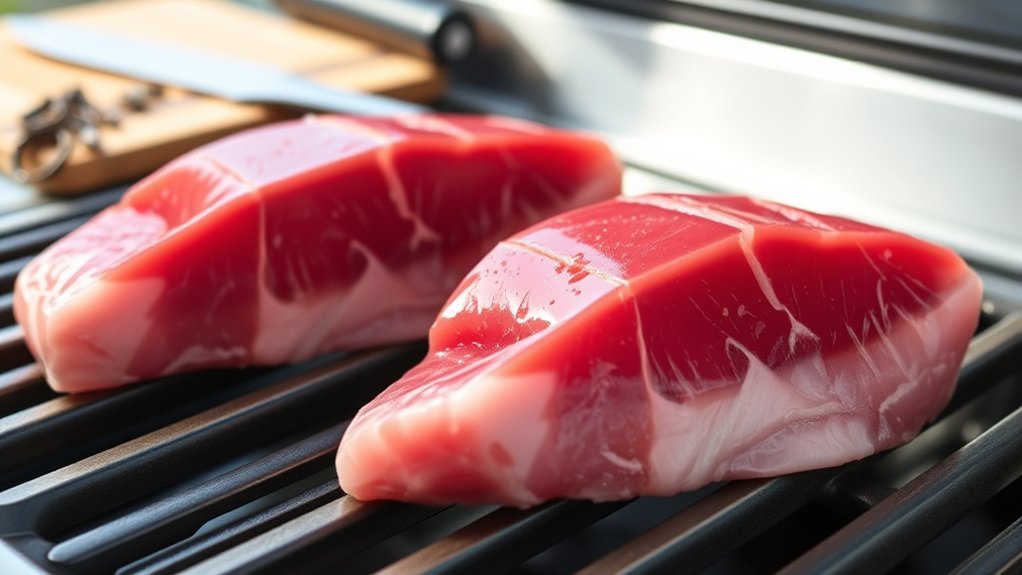
Before grilling, it’s important to properly prepare your tuna steaks by cleaning and trimming them. Start by checking the tuna’s freshness — fresh tuna should have a bright, even color and a clean, ocean-like smell. This guarantees your steaks will taste their best.
Ensure your tuna is fresh with bright color and ocean-like aroma for the best grilling results.
When trimming, use knife techniques to remove any silver skin, connective tissue, or uneven edges. A sharp, precise knife makes this easier and helps maintain the integrity of the meat. Hold the knife at a slight angle and make smooth, controlled cuts to avoid tearing the flesh.
Proper trimming not only improves presentation but also ensures even cooking. Clean your knife regularly during trimming to keep cuts clean and safe. Remember, handling fresh tuna correctly from the start sets the foundation for a delicious, perfectly grilled steak.
Taking these steps guarantees your tuna is prepped for excellent grilling results.
Setting Your Gas Grill for Perfect Tuna
To achieve perfectly grilled tuna, start by setting up your gas grill correctly. First, preheat your grill to a high heat, around 450-500°F, to get a good sear without overcooking the fish. Clean the grates thoroughly to prevent sticking and ensure attractive grill marks.
While the grill heats, think about your marinade options. A simple mix of olive oil, lemon juice, garlic, and herbs works well, but feel free to customize based on your flavor preferences. Once the grill hits the right temperature, lightly oil the grates to help prevent sticking.
Keep the lid closed during preheating to maintain consistent heat. Proper grill temperature is key for searing the tuna quickly, which locks in moisture and flavor. By setting your gas grill right and choosing the right marinade, you’re laying a great foundation for delicious, evenly cooked tuna steaks.
Seasoning and Marinating Tuna for Maximum Flavor
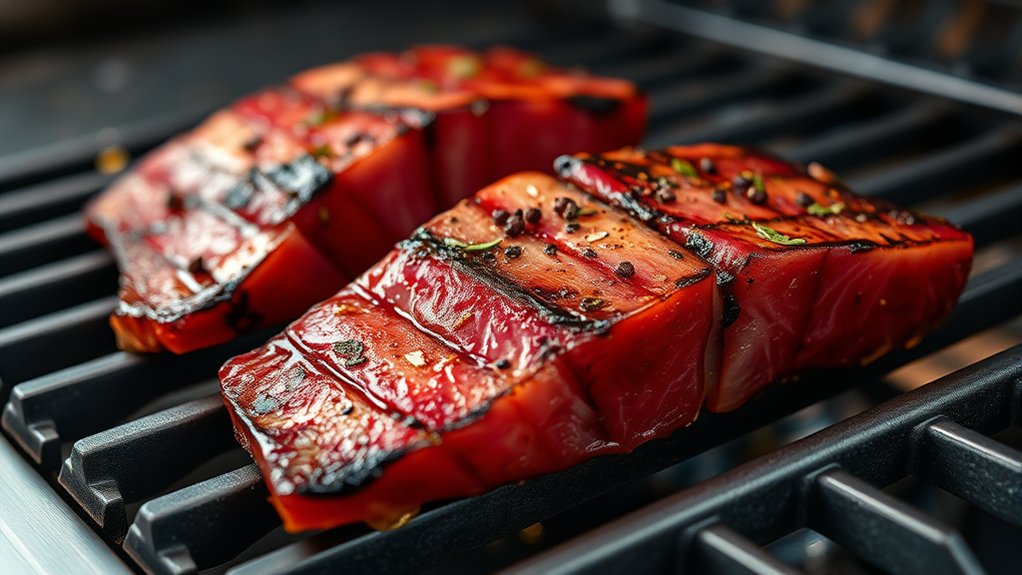
Seasoning and marinating tuna properly can greatly improve its natural flavors and guarantee a delicious grilled result. Start by choosing flavor combinations that complement the fish’s mild taste—think soy sauce, lemon juice, garlic, and a touch of ginger.
Marinating techniques vary, but a simple mix of oil, acid, and seasoning works best. You can marinate the tuna for anywhere from 15 to 30 minutes; avoid overdoing it to keep the fish tender and prevent it from becoming mushy.
Use a resealable bag or shallow dish to evenly coat the steaks, ensuring the marinade penetrates all sides. Remember, the goal is to boost, not overpower, the tuna’s natural flavor.
Feel free to experiment with herbs like thyme or basil, or add a spicy kick with chili flakes. Proper seasoning and marinating will raise your grilling game and deliver a perfectly flavorful tuna steak.
How to Grill Tuna Steaks to Juicy Perfection
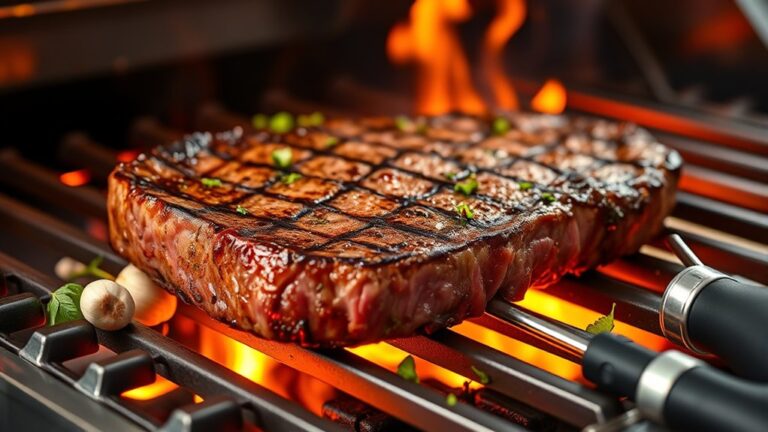
Grilling tuna steaks to juicy perfection takes some attention to timing and heat control. Start by preheating your gas grill to a high temperature, around 450-500°F, to quickly sear the outside and lock in moisture.
For marinades, go for light options like soy sauce, lemon juice, or a simple olive oil and herbs mix. These add flavor without overpowering the tuna’s natural taste.
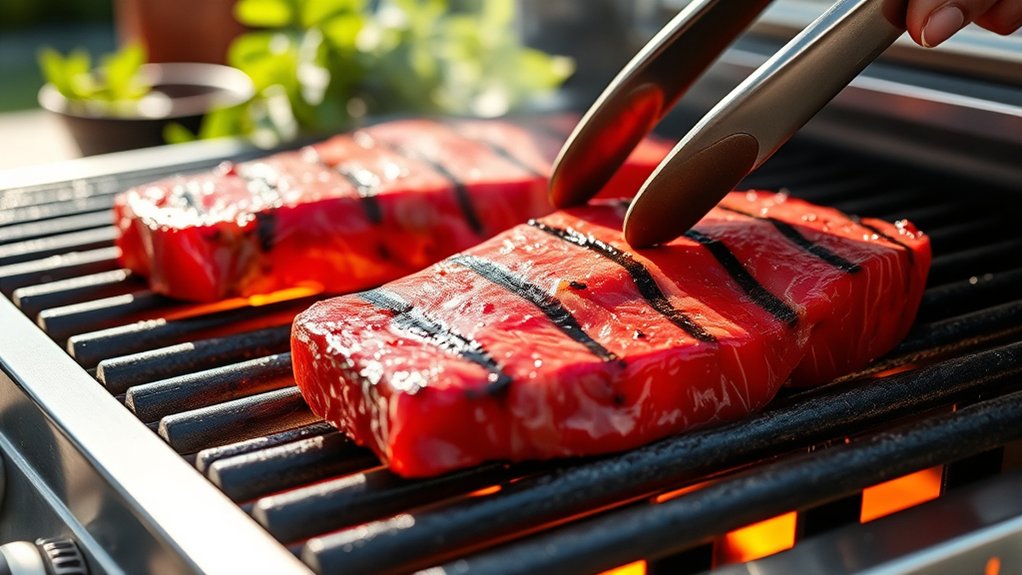
Before grilling, pat the steaks dry to get a good sear. Place them on the hot grill and cook for about 1-2 minutes per side, depending on how thick they are.
Keep a close eye on the grill temperature to avoid overcooking. Tuna is best when it’s still slightly pink inside.
Use tongs to flip the steaks gently and avoid piercing the meat, which can cause juices to escape. With the right heat and marinade choices, you’ll get tender, juicy tuna steaks every time.
How Do You Know When Tuna Is Perfectly Cooked?
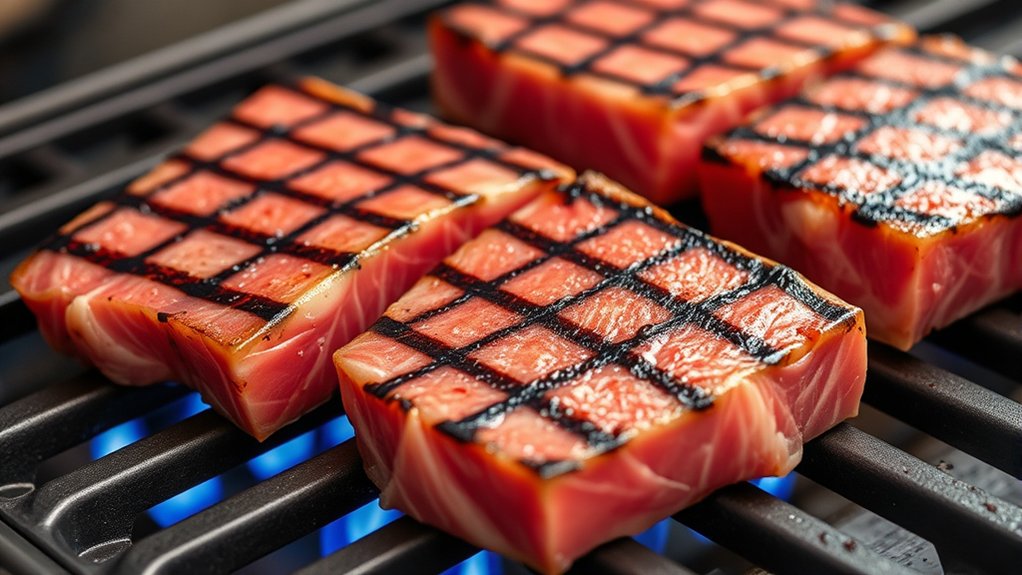
Knowing when tuna is perfectly cooked depends on visual cues and internal temperature because it can quickly go from tender and juicy to dry and overdone. For the best results, aim for a medium-rare center to keep its health benefits and sustainability.
Use a meat thermometer to check that the internal temperature reaches 125°F (52°C). Alternatively, look for visual cues: the tuna should have a slight translucency in the center and a firm texture.
| Visual Cue | Internal Temp |
|---|---|
| Slight translucency in the center | 125°F (52°C) |
| Firm but moist texture | N/A |
| Light grill marks, not charred | N/A |
| Juices are clear | N/A |
Serving and Presenting Grilled Tuna
Once your tuna steaks are perfectly cooked, presentation becomes key to showcasing their vibrant color and tender texture. Start by arranging the steaks on a clean plate or platter, letting their natural beauty shine.
To elevate the dish, try using marinade variations like a soy-ginger glaze or citrus-infused oil. These can be lightly brushed over the steaks or served on the side for dipping.
Garnish ideas are essential too; fresh herbs like cilantro, basil, or thinly sliced green onions add color and freshness. A squeeze of lemon or lime brightens the flavors and creates a nice visual contrast.
For a touch of sophistication, serve with grilled vegetables or a simple salad. The goal is to create a balanced, eye-catching presentation that complements the juicy, tender tuna.
Troubleshooting Common Tuna Grilling Problems
Even with careful preparation, you might run into common issues when grilling tuna, like overcooking or uneven doneness. To prevent drying out the fish, keep an eye on the grill temperature, aiming for medium-high heat.
Monitor grill temperature and avoid overcooking to keep tuna moist and flavorful.
Tuna is healthy, but overcooking can reduce its benefits and flavor. If your tuna turns out too dry or tough, try reducing the cooking time and make sure your grill grates are clean for even heat distribution.
Uneven doneness often happens because of inconsistent heat zones. Rotate the steaks or move them to hotter or cooler spots on the grill as needed.
Supporting sustainable sourcing is important, so buy tuna from reputable suppliers that follow eco-friendly practices, which can influence the quality of the fish.
Using a meat thermometer can help you reach perfect doneness, keeping the tuna tender and flavorful while preserving its nutritional value.
Paying attention to these details makes sure your grilled tuna is both delicious and responsibly sourced.
Frequently Asked Questions
Can I Grill Frozen Tuna Steaks Directly on a Gas Grill?
You can grill frozen tuna steaks directly on a gas grill, but it’s better to thaw them first for even cooking. Thaw the steaks in the fridge or under cold water before grilling.
Set your grill to medium-high heat to get a good sear without overcooking. Keep an eye on the steaks and flip them carefully to keep them tender and flavorful.
What Are the Best Side Dishes to Serve With Grilled Tuna?
You should serve vegetable pairing and citrus accents as the best side dishes with grilled tuna. Bright, fresh vegetables like grilled asparagus, zucchini, or a crisp salad complement the tuna’s smoky flavor.
Add citrus accents with lemon or lime slices, or a tangy citrus vinaigrette, to boost the seafood’s natural taste. These options create a balanced, vibrant meal and elevate your grilled tuna experience.
How Do I Prevent Tuna Steaks From Sticking to the Grill?
To prevent tuna steaks from sticking, start with proper marinade techniques. Brush the steaks with oil or a marinade that contains oil to create a barrier.
Make sure your grill is at the right temperature, medium-high heat. This helps the steaks sear quickly and release easily.
Avoid moving the steaks too soon. Let them develop a crust before flipping. This keeps sticking to a minimum and gives you perfectly grilled tuna.
Is It Safe to Eat Tuna Steaks Rare or Should They Be Fully Cooked?
It’s safe to eat tuna steaks rare if you prefer, since raw tuna is often served that way and stays safe when it’s fresh. Just make sure it comes from a trusted source.
For cooked tuna, aim for a temperature of 125°F to 130°F to ensure it’s properly cooked without drying out. If you like it rare, keep the internal temp lower.
Always use fresh, well-handled tuna to reduce health risks. Proper storage and handling are key to enjoying it safely, whether rare or cooked.
How Long Can Grilled Tuna Steaks Be Stored in the Refrigerator?
You can store grilled tuna steaks in the refrigerator for up to 3 days, following proper food safety and storage guidelines.
Make sure to place them in an airtight container or wrap them tightly with plastic wrap or foil. Keep the temperature below 40°F (4°C) to prevent bacterial growth.
Reheat thoroughly before eating, and always check for any signs of spoilage to ensure safe consumption.
Conclusion
Think of grilling tuna as shaping a story on your grill’s stage. With each step, you’re the artist, turning raw ingredients into a masterpiece of flavor and texture.
When your tuna reaches that perfect, juicy hue, it’s like the final brushstroke—a symbol of your patience and skill.
So, cherish the process, savor the journey, and let your grilled tuna be a proof of your culinary confidence and creativity.