How Long to Grill Wings on a Gas Grill?
Many grilling enthusiasts find themselves wondering, “How long should I cook chicken wings on my gas grill?” You’re not alone—getting that perfect crispy exterior without undercooking the inside can be tricky.
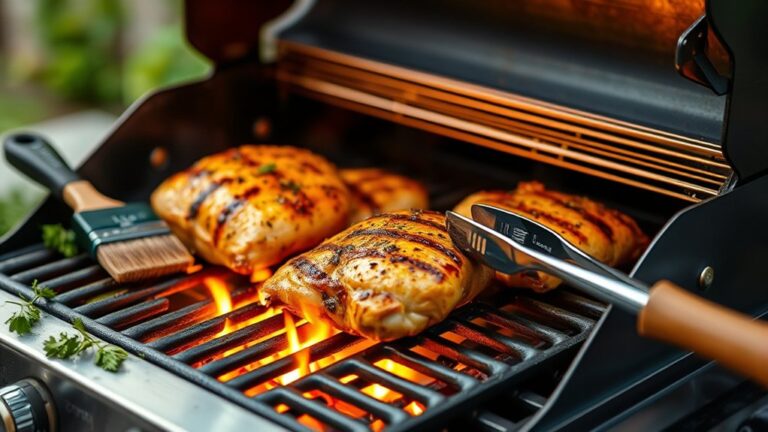
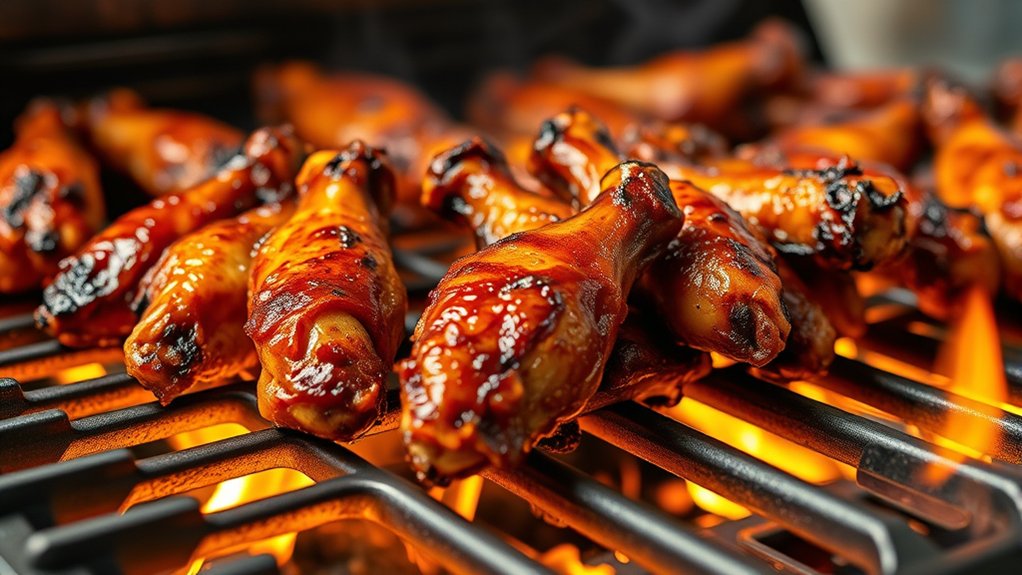
Grilling chicken wings on a gas grill typically takes 20 to 30 minutes, depending on their size, marinade, and grill temperature. Smaller wings cook faster—about 20-25 minutes—while larger ones may need closer to 30 minutes.
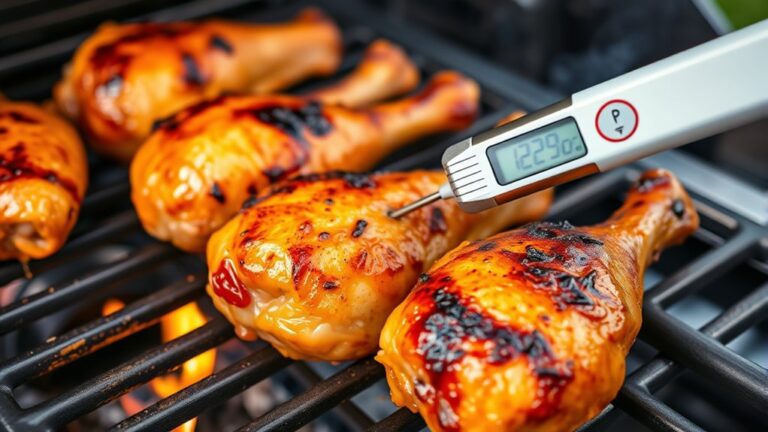
To guarantee they’re fully cooked and safe, check for an internal temperature of 165°F and clear juices.
Keeping an eye on heat, flipping wings often, and managing marinade effects help prevent burning and achieve perfect crispy wings—discover more tips below.
Key Takeaways
- Smaller wings usually take about 20-25 minutes, while larger wings need around 25-30 minutes on a preheated gas grill.
- Keep the grill at 375°F to 400°F for even cooking and a crispy outside.
- Use a meat thermometer to make sure the internal temperature hits 165°F.
- Turn the wings often to get even browning and avoid burning.
- Let the wings rest for 5 minutes after grilling before serving or adding sauce.
How Long Should You Grill Chicken Wings on a Gas Grill?
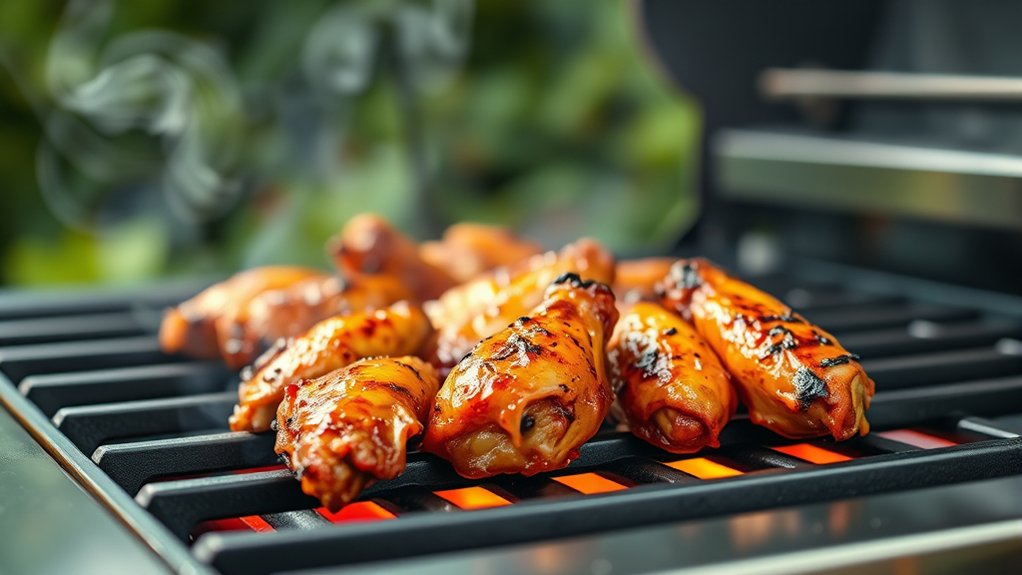
When grilling chicken wings on a gas grill, the key is to cook them until they reach an internal temperature of 165°F. The grilling time depends on wing size and marinade options.
Smaller wings, like drumettes or flats, usually take about 20-25 minutes, while larger wings may need 25-30 minutes. If you’ve marinated your wings, keep in mind that some marinades can add moisture or sugar, which affects cooking time and caramelization.
Smaller wings cook in 20-25 minutes; larger ones take 25-30, especially with marinades affecting caramelization.
Marinated wings often cook slightly faster because they start with extra moisture. To ensure safety and avoid overcooking, use a meat thermometer and check the thickest part of the wing.
Turning them every 5-7 minutes helps promote even cooking and creates a crispy exterior. Remember, the ideal grilling time varies based on wing size and marinade, so stay attentive and monitor the internal temperature for the best results.
What Factors Affect Grilling Time for Chicken Wings?
Several factors can influence how long it takes to grill chicken wings, so paying attention to these variables helps you get perfect results. First, the flavor you’re aiming for matters—marinated wings may need a different grilling time than plain or dry-rubbed ones.
Thicker, larger wings generally take longer to cook through, which affects your grilling technique. The heat level of your gas grill also plays a key role—higher temperatures cook wings faster but can risk burning the exterior, while lower heat takes more time but promotes even cooking.
Whether you’re using direct or indirect grilling impacts the timing too—direct heat sears the wings quickly, while indirect heat ensures thorough cooking. Remember, your grilling techniques, like flipping regularly and maintaining a consistent temperature, directly influence how evenly the wings cook.
All these factors combined determine the perfect timing to achieve that ideal wing flavor and texture.
How Do You Prepare Your Gas Grill for Perfect Wings?
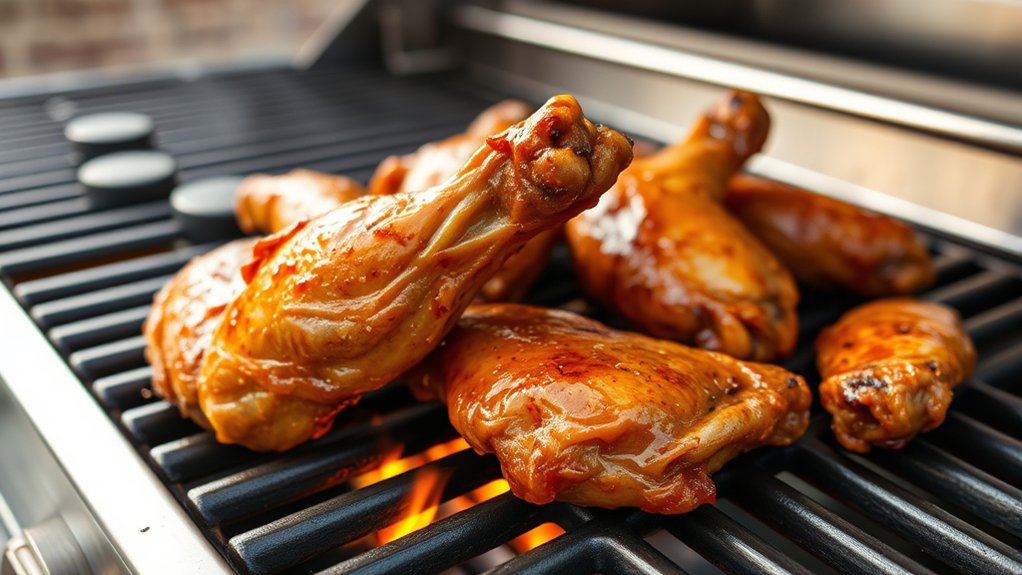
Before you start grilling wings, making sure to properly prepare your gas grill guarantees even cooking and great flavor. First, clean the grates thoroughly to prevent sticking and flare-ups.
Properly prepare your gas grill with clean grates for perfect, flavorful wings.
Second, preheat the grill to medium-high heat, about 375-400°F, ensuring an even cooking surface.
Third, consider your marinade options. Marinate your wings for at least 30 minutes to infuse flavor and keep them moist.
Fourth, store wings properly before grilling—keep them refrigerated if marinating or thawed, and avoid leaving them at room temperature to prevent bacteria growth.
Furthermore, lightly oil the grill grates to help with wing release and prevent sticking.
By following these steps, you’ll set a solid foundation for perfectly cooked wings with juicy interiors and crispy exteriors.
Proper preparation, including choosing the right marinade options and managing wing storage, makes all the difference in achieving flavorful, evenly cooked wings on your gas grill.
What’s the Best Temperature to Grill Chicken Wings?
What’s the ideal temperature to grill chicken wings? Aim for a medium-high heat, around 375°F to 400°F. This range helps cook the wings evenly while giving them a nice, slightly crispy exterior.
Before grilling, think about your marinade and seasoning options. Marinades with sugar or honey can caramelize quickly, so a slightly lower temperature might be better to avoid burning. If you’re using a dry rub, setting the grill to this high heat helps the seasonings stick and creates a tasty crust.
Keeping the temperature steady ensures the wings cook through without drying out. Use a grill thermometer to monitor the heat and avoid turning it too high, which can scorch the outside before the inside is done.
This temperature range helps you get juicy, well-seasoned wings with the perfect outside char. Adjust a bit depending on your grill’s performance and your preferred wing texture.
How Can You Get Crispy Wings Without Burning Them?
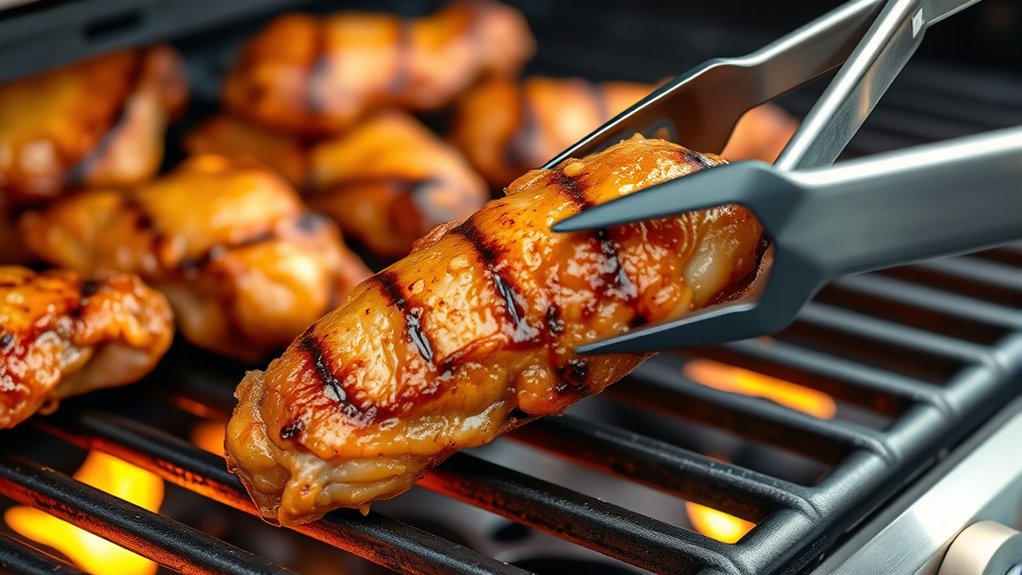
Want crispy wings but worried about burning them? No worries! One trick is to cook them using indirect heat—that way, they get crispy without the risk of charring. Keep an eye on the oil level too; adding a bit more oil if needed helps the skin crisp up evenly and prevents sticking.
Just remember, patience is key. Taking your time and watching the heat can really make a difference. Follow these simple steps, and you’ll end up with perfectly crispy wings that aren’t burnt but still have that amazing crunch.
Use Indirect Heat Method
Using indirect heat is key to getting crispy wings without burning them, especially on a gas grill. It helps you control the grill temperature, preventing flare-ups and uneven cooking.
To do this, preheat your grill by turning on only one side, leaving the other off. Place the wings on the cooler, indirect side, away from direct flames.
Close the lid to keep the heat steady—aim for around 375°F. Marinate the wings beforehand to add flavor and moisture, which helps get crispy skin without overcooking.
This method lets the wings cook through while developing a crispy exterior. It’s perfect for balancing the grill temperature and ensuring evenly cooked, flavorful wings.
Maintain Proper Oil Levels
Maintaining proper oil levels is key to getting crispy wings without burning them. Too little oil can cause sticking and uneven browning, while too much can lead to flare-ups and greasy results.
Regular oil management helps keep your grilling consistent, so your wings cook evenly. Use a light coating of oil on the grill grates to prevent sticking, but don’t overdo it.
If you’re oiling the wings, apply a thin, even layer to avoid excess grease that can cause flare-ups. Keep an eye on the heat and oil levels throughout grilling, adding more if needed.
Proper oil management promotes even heat transfer and crispiness, helping you avoid burning while getting that perfect crispy exterior.
Step-by-Step: How to Grill Chicken Wings Perfectly
First things first, get your wings ready with a simple marinade or dry rub. It’s a great way to boost the flavor and make sure every bite is tasty. Once they’re seasoned, lay them out on the grill, making sure they’re spaced out evenly so they cook nicely and don’t stick together.
Now, as they cook, keep an eye on them and aim for those perfect grill marks—that’s what really makes them look appetizing. With a little patience and the right technique, you’ll end up with juicy, flavorful wings that look just as good as they taste. Enjoy!
Preparing the Wings
Before grilling, you’ll want to prepare your chicken wings properly to guarantee they turn out crispy and flavorful. Start by patting the wings dry with paper towels to remove excess moisture.
Next, apply your favorite wing seasoning evenly over each piece; this improves flavor and helps create a crispy skin. Consider using grill accessories like a wire rack or skewers to keep the wings stable on the grill.
Here’s what to do:
- Pat wings dry for crispness
- Coat wings with a flavorful wing seasoning
- Use grill accessories to prevent sticking
- Let the wings rest briefly to absorb flavors
Proper preparation assures your wings cook evenly and develop that irresistible crispy exterior.
Achieving Perfect Grill Marks
To get perfect grill marks on your chicken wings, focus on positioning and timing while grilling. First, oil the grill grates to prevent sticking, then place the wings at a 45-degree angle to the grates.
Grill for 2-3 minutes, then rotate the wings 90 degrees to create those nice crosshatch marks. Flip the wings and do the same on the other side. Keep an eye on the heat so you don’t burn the wings.
Wait until the wings are almost cooked through before tossing them in your favorite sauce. This helps keep the grill marks intact and looks more appealing. Different types of wings, like bone-in or boneless, might need a bit of adjustment in timing.
Getting those perfect grill marks not only makes your wings look great but also boosts their flavor, making them even more tempting to eat.
How Do You Know When Your Wings Are Fully Cooked and Safe?
Knowing when your wings are fully cooked and safe to eat is key for both flavor and health. To check, rely on these signs:
Ensure wings are fully cooked with clear juices, golden color, and a 165°F internal temperature for safe, flavorful bites.
First, use a meat thermometer. Wings should reach an internal temperature of 165°F (74°C). This is the most reliable way to ensure they’re safe.
Next, look for clear juices. If the juices run clear when you pierce the wing, it’s a good sign they’re done. Also, check the color—fully cooked wings have a nice golden-brown exterior.
Keep in mind, smaller wings cook faster, and marinades can affect the cooking time but not whether they’re done. Larger wings may need a bit more time.
Common Mistakes That Change Cooking Time
Many common mistakes can throw off the cooking time of your wings, leading to undercooked or overcooked results. One mistake is not accounting for marinade variations, which can affect how quickly the wings cook.
Marinades with high sugar content, for example, can cause wings to brown faster, making you think they’re done prematurely. Rushing the process by not preheating your grill properly can also lead to uneven cooking and longer cook times.
Using the wrong wing seasoning or applying it unevenly can impact how quickly the wings cook through. Sometimes, over-seasoning creates a barrier that slows heat penetration, increasing cooking time.
Frequent flipping or poking at the wings disrupts heat transfer, which can extend cooking time and affect doneness. Paying attention to these details helps your wings cook evenly and safely, avoiding common pitfalls that alter the ideal grilling duration.
How to Add Flavor and Achieve a Perfect Char
Achieving a flavorful, perfectly charred wing starts with selecting the right seasoning and applying it thoughtfully. Begin by choosing your marinade—whether a tangy citrus-based one or a spicy BBQ blend—to add depth to your wings.
Next, season your wings with a quality wing seasoning to boost the flavor. To get that perfect char, follow these steps:
- Preheat your grill to high heat, making sure the surface is hot for searing.
- Brush the wings with marinade or oil to help with caramelization.
- Place the wings directly over the flames, turning them occasionally for even charring.
- Keep an eye out for a deep, golden-brown color and a slight crispiness—that’s when you know you’ve got that perfect char.
How Should You Rest and Serve Your Grilled Wings?
Once your wings are grilled to perfection, letting them rest briefly helps the juices settle, so they stay moist and flavorful when you bite in. After removing them from the grill, place them on a platter and cover loosely with foil for about 5 minutes.
This quick rest prevents the juices from spilling out when you take a bite. While the wings rest, get your sauce ready—whether it’s sticky buffalo, tangy barbecue, or sweet honey glaze.
Once rested, toss the wings in your sauce to maximize flavor. If you’re not serving them right away, store leftovers in an airtight container in the fridge for up to 3-4 days.
To reheat, use a quick oven or air fryer to keep the wings crispy. Resting and proper sauce prep make sure your wings stay juicy and delicious from the first bite to leftovers.
Frequently Asked Questions
Can You Grill Chicken Wings Directly From Frozen?
Yes, you can grill frozen chicken wings directly from frozen. Keep in mind that larger wing sizes will take longer to cook thoroughly.
Start by preheating your gas grill, then place the frozen wings on the grill, turning frequently. Expect cooking times to be about 50% longer than fresh wings.
Make sure the internal temperature reaches 165°F for safe eating, and be patient as the ice melts and wings cook evenly.
How Do Different Wing Sizes Affect Grilling Time?
Larger wing sizes need more time on the grill at your chosen temperature, so plan to cook them longer than smaller wings. Smaller wings heat through faster because they have less mass. Keep the grill steady at around 375-400°F.
Use a meat thermometer to check the internal temperature, making sure it hits 165°F. Adjust your grilling time based on wing size to avoid undercooking or charring.
Should You Marinate Wings Before Grilling?
You should marinate wings before grilling to boost their flavor. A good marinade enhances the taste and keeps the meat moist, making your wings more delicious.
Keep the marinade time moderate—about 30 minutes to 2 hours—so the flavors can penetrate without overpowering the meat. Longer marinating can sometimes change the texture, so sticking to this timeframe is best.
This way, you’ll get flavorful, juicy wings perfect for your gas grill.
What’s the Best Way to Prevent Wings From Sticking?
You want perfectly cooked wings without sticking? Start by preheating your grill to the right temperature—medium-high works best.
Before placing your wings, lightly oil the grill grates to create a slick surface.
When it’s time to add sauce, do it towards the end of grilling to prevent sticking and burning.
Keep a close eye on the wings and turn them often; this helps prevent sticking and gives you that crispy, irresistible exterior.
How Do Outdoor Conditions Impact Grilling Times?
Outdoor conditions noticeably impact grilling times. Weather changes like rain, humidity, or extreme cold can slow down heat transfer, making wings cook more slowly.
Wind can cause uneven heat distribution, so you might need to adjust grill vents or reposition the wings. Keep an eye on the temperature and be ready to extend your grilling time.
This way, you can ensure your wings are thoroughly cooked and safe to eat, no matter what the outdoor conditions are like.
Conclusion
Mastering the art of grilling wings on a gas grill takes patience and practice. Paying attention to temperature, timing, and technique will help you perfect crispy, flavorful wings every time.
Remember, proper preparation, precise patience, and passionate pursuit lead to grilling greatness. Don’t rush the process—relish the experience, refine your skills, and savor the smoky, sizzling success.
With consistent care and a bit of culinary courage, you’ll become a grilling guru. Your friends and family will admire your skills, especially when you nail those perfect grilled wings every time.