Mastering Gas Grill Chicken Wings: A Step-by-Step Guide
Cooking perfect gas grill chicken wings can feel tricky, especially when you’re aiming for crispy skin and tender meat. Many people struggle with getting the timing just right or avoiding burnt sauce. You’re not alone—mastering this takes practice and some insider tips.
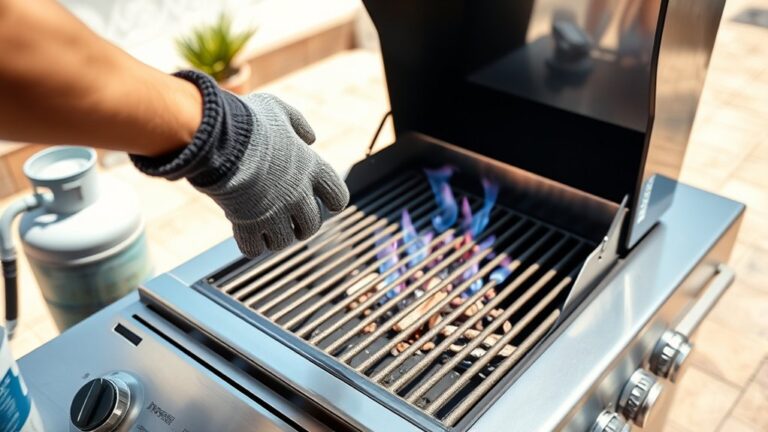
To master gas grill chicken wings, start by properly prepping them—remove excess skin, pat dry, and season or marinate for flavor. Preheat your grill to 375-400°F and create two heat zones for even cooking and crispy skin.
Handle wings gently, flip carefully, and use indirect heat to avoid burning. Apply sauces near the end of grilling to prevent charring.
Keep these tips in mind, and you’ll be on your way to perfect wings every time.
Key Takeaways
- Preheat the grill to 375°F to 400°F and set up two heat zones. This helps with even cooking and getting that perfect crispiness.
- Prepare the wings by drying them off and trimming any excess. Handle them gently to prevent tearing and ensure they cook uniformly.
- Use indirect heat to finish cooking the wings. This way, you avoid burning them and can achieve that crispy, tender texture you’re after.
- Apply sauces during the last five minutes of grilling. Keep the lid closed to lock in moisture and enhance the flavor.
- Keep an eye on the internal temperature with a meat thermometer. Make sure the wings reach at least 165°F for safe and delicious eating.
How to Prep Chicken Wings for Perfect Grilling
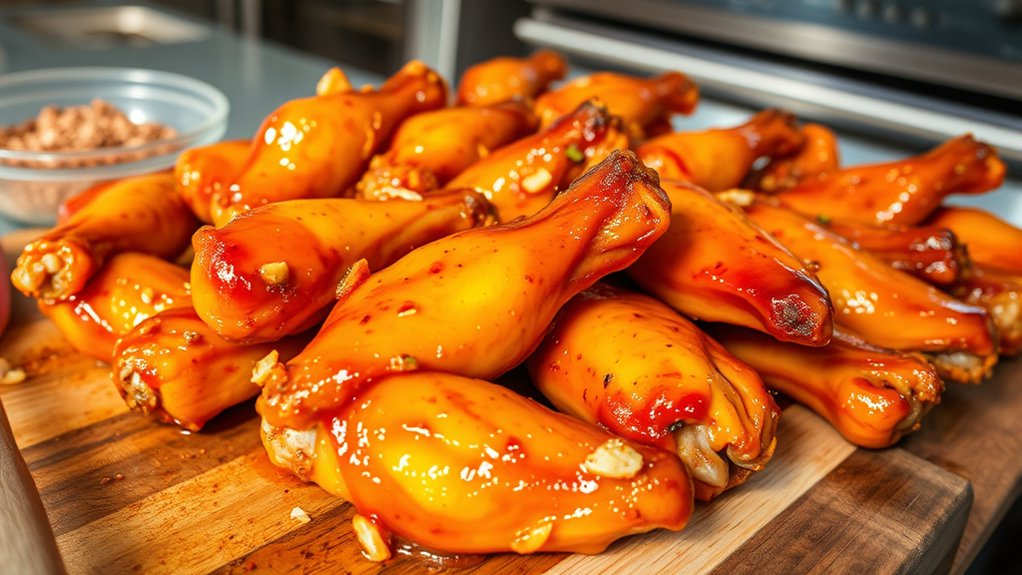
Before you start grilling, it’s essential to properly prep your chicken wings to guarantee they cook evenly and develop great flavor. Begin by inspecting the wings, removing any excess wing shapes or loose skin, which helps ensure even cooking. Pat the wings dry with paper towels because moisture can hinder browning and cause flare-ups.
For poultry safety, always wash your hands thoroughly before and after handling raw chicken, and clean your workspace to prevent cross-contamination. If you prefer, you can cut the wings at the joint to create drumettes and flats, which cook more uniformly and make eating easier.
Marinating or applying a dry rub boosts flavor and tenderizes the meat. Properly prepped wings will cook evenly on the grill, reducing the risk of undercooked poultry. Taking these steps guarantees your wings are safe to eat and deliciously flavorful once grilled to perfection.
Choosing the Best Gas Grill Settings for Wings
To get your wings just right, you want to set your grill to the right temperature. It’s all about managing those heat zones so the wings cook evenly without getting burnt.
And don’t forget about flare-ups! Keeping an eye on those helps prevent charring and keeps your wings looking and tasting great.
Once you know how to control these things, you’ll be able to grill your wings perfectly every single time.
Optimal Temperature Settings
Finding the right temperature is key to perfectly cooked chicken wings on your gas grill. Proper temperature control helps ensure even cooking and crispy skin without burning.
Aim for a grill temperature around 375°F to 400°F for the best results. Managing heat properly prevents flare-ups and hot spots that can ruin your wings.
Use a thermometer to keep an accurate eye on the grill temperature. Preheat your grill so the heat stabilizes before you start cooking.
Adjust the burners as needed to keep the heat consistent. Keep the lid closed to trap heat and promote even cooking.
Good heat management lets you cook wings to juicy perfection with a crispy exterior. Focus on steady temperatures for the best flavor and texture.
Managing Heat Zones
Ever wondered how to create the perfect cooking environment for your chicken wings on a gas grill? Managing heat zones is key. Use your grill’s burners to set different temperature areas—high for searing and low for indirect cooking.
This allows you to cook wings evenly without burning them. Always prioritize grill safety; make sure your equipment is well-maintained to prevent flare-ups and accidents.
Regularly clean grease drippings and check for leaks or rust. By controlling heat zones, you can easily move wings between direct and indirect heat, achieving crispy skin and juicy interiors.
Proper heat management minimizes the risk of flare-ups and keeps your grill functioning safely and efficiently. Mastering this step makes grilling wings both safer and more successful.
Adjusting for Flare-Ups
Flare-ups are a common challenge when grilling chicken wings, but you can handle them effectively by adjusting your gas grill settings. Managing flare-ups involves controlling heat and preventing drippings from causing flames.
To keep flare-ups in check, try these tips:
- Keep the lid closed whenever you can to limit oxygen access.
- Turn down the heat if you notice flames flickering.
- Set up a two-zone grill with indirect heat away from direct flames.
- Keep a spray bottle of water nearby to quickly tame small flare-ups.
How to Season and Marinate Chicken Wings for Maximum Flavor
Want to make your chicken wings burst with flavor? The key is picking the right spices that match your taste and work well together. Don’t be shy with bold seasonings—just make sure they complement each other. Marinating the wings is a game-changer because it gives the flavors time to soak in deeply, making every bite seriously tasty.
Choosing the Right Spices
How you choose your spices can make or break your grilled chicken wings. The key is picking flavor combos that match what you want. Whether smoky, spicy, or tangy, aim for a balance of bold and subtle seasonings.
Consider these options:
- Paprika, garlic powder, onion powder, and cayenne for a smoky, spicy kick.
- Lemon zest, thyme, black pepper, and cumin for a bright, savory flavor.
- Brown sugar, chili powder, smoked paprika, and salt for a sweet and smoky profile.
- Coriander, turmeric, ginger, and cinnamon for an aromatic, warm taste.
Marinating for Deep Flavor
Marinating chicken wings is the secret to infusing them with deep, layered flavor that improves every bite. The right marinade amplifies taste and tenderizes the meat, making your wings irresistible. Use a variety of flavor combinations like smoky paprika with honey or spicy sriracha with lime.
Marinating techniques involve soaking wings for at least 30 minutes or up to overnight for maximum flavor absorption. Remember to keep the marinade balanced—acid, fat, and seasoning work together to create complex layers.
Here’s a quick guide:
| Flavor Combinations | Marinating Techniques |
|---|---|
| Spicy buffalo & blue cheese | Marinate overnight for deep flavor |
| Citrus & herb | Shorter marinate for a fresh burst |
| Sweet & smoky | Use a marinade with honey or molasses |
Tips for Achieving Crispy Skin on Your Wings
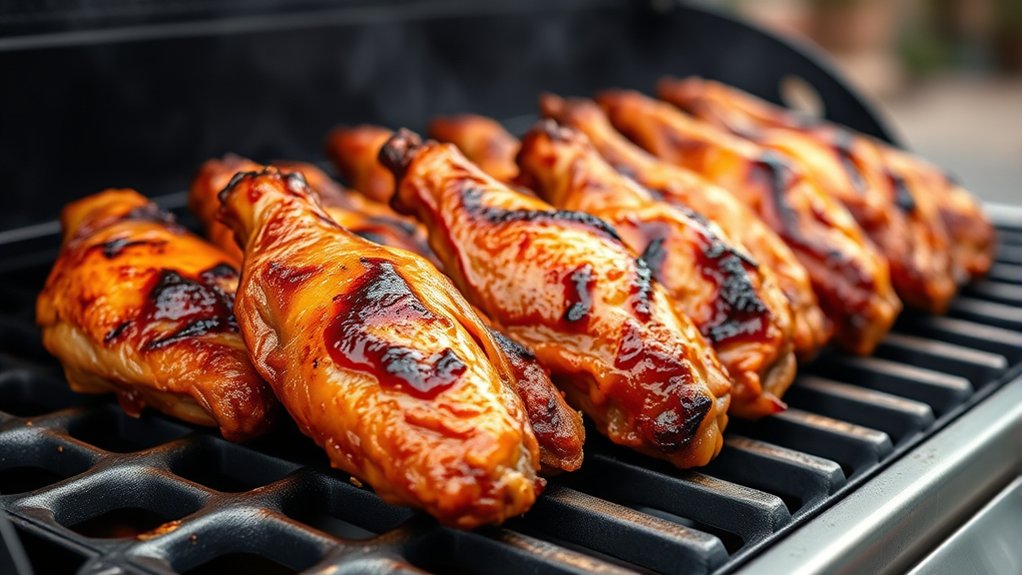
Achieving crispy skin on your chicken wings starts with proper preparation and technique. Begin by patting the wings dry to remove excess moisture; this helps the skin crisp up better.
Set your grill to medium-high and keep the lid closed to maintain consistent heat. To boost crispiness, avoid adding too much sauce until after cooking, since a thick sauce can make the skin soggy.
When dealing with wings of different sizes, cook the larger ones a little longer. Make sure all pieces reach the right internal temperature without burning the skin.
Here are some tips:
- Use a wire rack over the grill to prevent sticking and allow airflow around the wings.
- Pat the wings dry again right before grilling to maximize crispiness.
- Finish with a light brushing of sauce after grilling to keep the skin crisp.
- Keep an eye on the sauce consistency to prevent sogginess during and after cooking.
Using Two-Zone Cooking for Evenly Cooked Chicken Wings
To make sure your chicken wings come out perfectly cooked, try setting up your grill with two zones. One zone should have direct, high heat for that nice sear, and the other should be set to indirect, lower heat for finishing the cooking process.
Just keep an eye on the temperature so you can quickly sear the wings on the hot side to get crispy skin, then move them over to the cooler side to cook all the way through. This little trick helps you get that crispy exterior and juicy, evenly cooked meat every time.
Setting Up Grill Zones
Have you ever wondered why some grilled chicken wings turn out perfectly cooked on the outside but underdone on the inside? Setting up grill zones helps prevent this by creating a controlled cooking environment. To start, turn on half of your gas grill to high heat for direct cooking, and leave the other half on low or off for indirect heat.
This two-zone setup lets you sear the wings over high heat and finish them slowly, making sure they’re cooked evenly. Remember to do regular grill maintenance—clean the grates and check for gas leaks—to keep everything safe.
When setting up, keep these tips in mind: use a two-zone layout for better control, keep a spray bottle handy for flare-ups, maintain good grill ventilation, and always follow safety precautions during setup and operation.
This method promotes even cooking and helps ensure safe, delicious grilling.
Managing Heat for Even Cooking
Managing heat effectively is essential for guaranteeing your chicken wings cook evenly from start to finish. Using two-zone cooking helps you control heat distribution precisely.
First, set up one side of your grill with direct heat—high flames for searing—and the other side with indirect heat—lower flames for gentle cooking. Flame control is key; adjust the burners to keep temperatures steady and avoid hot spots.
Keep an eye on the grill’s thermometer to ensure even heat across both zones. This setup lets you start wings over high heat for that crispy exterior, then move them to indirect heat to finish cooking through without burning.
Mastering two-zone cooking makes sure your chicken wings are perfectly cooked—tender inside and crispy outside.
How to Check the Internal Temperature of Chicken Wings
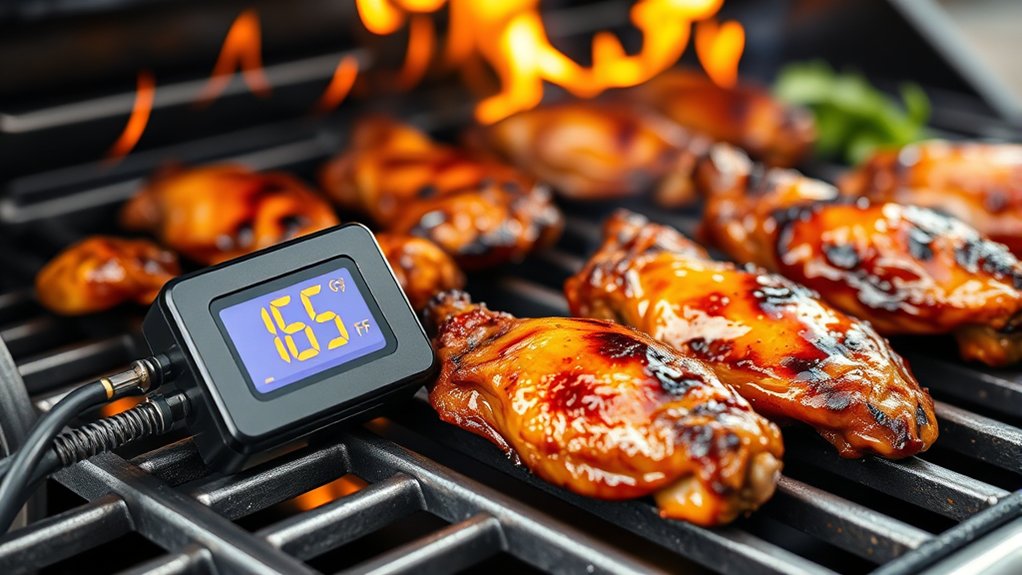
Ensuring your chicken wings are cooked to the right temperature is key for both safety and flavor. To do this, you need to check the internal temperature accurately.
Use a reliable meat thermometer and insert it into the thickest part of a wing, avoiding the bone. This helps prevent undercooking, which can be unsafe, or overcooking, which makes the meat dry.
Keep these tips in mind:
- Insert the thermometer at the thickest part of the wing.
- Wait for the reading to stabilize before checking.
- Make sure the thermometer is clean to avoid cross-contamination.
- Remember, cooked chicken should reach at least 165°F for safe eating.
Checking the temperature makes sure your wings are safe and delicious. It’s a simple step that guarantees perfectly cooked, juicy, and flavorful wings every time.
Best Techniques for Flipping and Handling Wings on the Grill
Once you’ve checked the internal temperature and confirmed your chicken wings are cooked through, the next step is to flip and handle them properly on the grill. Use tongs or a slotted spatula to gently lift each wing, avoiding piercings that could cause juices to escape.
Handle wings gently with tongs or a spatula to prevent tearing and ensure even cooking.
Flip the wings carefully to prevent tearing the skin and make sure they cook evenly on all sides. During grilling, keep in mind that storing wings properly is important; keep them in a clean, covered container if you need to pause, to prevent contamination.
While handling the wings, be mindful of when to add sauce. Wait until near the end of cooking so the sugars don’t burn. Consistent flipping helps promote even heat distribution and helps wings develop that crispy exterior everyone loves.
Practice patience and handle the wings gently to maximize flavor and texture without damaging the skin. This way, you’ll get perfectly cooked, crispy, and delicious wings every time.
How to Apply Sauces Without Burning Your Wings
Applying sauces to your wings at the right time is key to preventing burning and getting that perfect glaze. Wait until your wings are nearly cooked through and at a moderate heat. High heat can cause the sugars in sauces to burn quickly, ruining the flavor and risking flare-ups.
To avoid this, try these tips:
- Brush sauces on during the last 5 minutes of grilling to keep them from burning.
- Use a clean brush or spoon to gently apply the sauce.
- Keep the grill lid closed after applying sauce to lock in moisture and heat.
- Watch for bubbling or burning, and remove the wings if the sauce starts to char.
Troubleshooting Common Grilling Issues With Chicken Wings
Even with careful sauce application, grilling chicken wings can still be tricky. Common issues include uneven cooking, flare-ups, and wings sticking to the grill.
To prevent sticking, make sure your grill is clean. Leftover debris can cause wings to stick and burn. Regular cleaning helps keep hot spots in check and improves heat distribution.
If the wings cook unevenly, adjust the heat or move them to different zones on the grill. Flare-ups happen when fat drips onto flames. Keep a spray bottle nearby to control flames quickly.
Proper wing storage is important too. Keep wings refrigerated until you’re ready to grill. This helps prevent spoilage and bacterial growth.
| Issue | Solution |
|---|---|
| Sticking to grill | Clean grill grates and lightly oil before grilling |
| Uneven cooking | Use indirect heat and monitor temperature closely |
| Flare-ups | Keep a spray bottle handy and trim excess fat |
Serving and Enjoying Your Perfectly Grilled Chicken Wings
After you’ve grilled your chicken wings to perfection, the next step is to serve them in a way that highlights their flavor and makes them easy to enjoy. Presentation tips can really elevate your wings and make the experience more fun.
Arrange the wings on a platter, garnished with fresh herbs or sliced vegetables for a pop of color. Add a side of dipping sauces or a celery and carrot stick arrangement for extra appeal.
When it comes to drinks, go for cold options like craft beers, sparkling sodas, or chilled lemonades that complement the smoky flavor of the wings. Offering a variety of sauces—buffalo, honey BBQ, or garlic parmesan—can cater to different tastes.
Keep the wings warm with a heatproof tray or covered dish until you’re ready to serve. Remember, good presentation and well-chosen beverages turn a simple meal into a memorable feast.
This encourages everyone to dig in and enjoy every bite!
Frequently Asked Questions
Can I Grill Chicken Wings Directly From Frozen?
You can grill chicken wings directly from frozen, but it’s not ideal for even cooking.
For the best results, it’s better to thaw the wings first, especially if you want crispy skin and thorough cooking.
Grilling frozen wings can lead to uneven heat distribution, so consider thawing them in the fridge or using the defrost function before grilling.
This way, the wings will cook evenly and taste much better.
How Long Should I Marinate Chicken Wings for Optimal Flavor?
Sure, marinate chicken wings for at least 30 minutes, but ideally 2-4 hours for maximum flavor infusion—because who doesn’t want their wings bursting with taste?
Marination techniques vary, but patience pays off. Rushing the process? Well, you might end up with bland wings, a tragic culinary oversight.
What Wood or Charcoal Flavors Complement Gas-Grilled Wings?
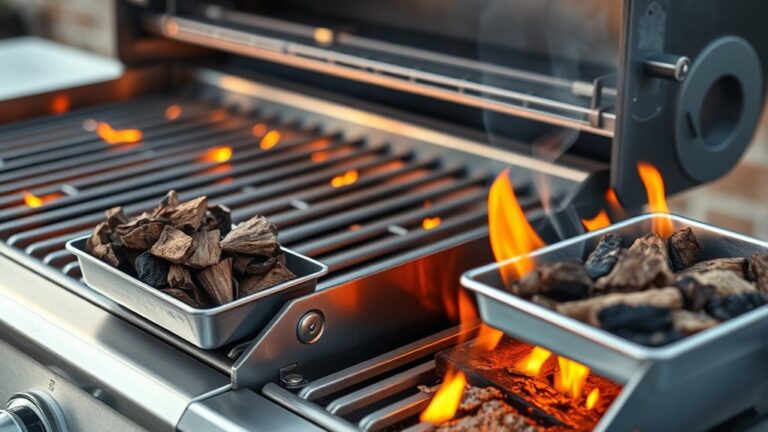
For gas-grilled wings, you can boost flavor with the right wood pairing or charcoal aroma. Hickory and applewood complement chicken wings beautifully, adding a smoky sweetness that balances the marinade.
Using natural charcoal with a hint of mesquite also deepens the flavor profile. These options create a rich, smoky aroma that lifts your wings, making every bite more flavorful and memorable.
How Do I Store Leftover Grilled Chicken Wings Safely?
Think of your leftover wings as treasures to be protected. Store them in airtight containers to keep that fresh flavor locked in.
Make sure to put them in the fridge within two hours of grilling so they stay at a safe temperature.
For best results, enjoy leftovers within 3-4 days. When reheating, heat them thoroughly to enjoy that delicious taste again.
Following these tips helps keep your wings tasty and safe for your next flavorful snack.
Are There Healthy Alternatives to Traditional Wing Sauces?
Yes, you can choose healthy sauces instead of traditional wing sauces. Try natural flavorings like lemon juice, vinegar, or hot sauce with minimal added sugar.
You can also make your own sauces using herbs, spices, and olive oil for a tasty, healthier option. These choices add zest to your wings without sacrificing nutrition.
Conclusion
Think of mastering gas grill chicken wings as tending a delicate garden. With patience, practice, and the right tools, you’ll nurture each wing to perfection—crispy on the outside, juicy inside.
Like a seasoned gardener tending to each plant, your careful attention transforms simple ingredients into a flavorful masterpiece.
Soon, your grill will be your trusted partner, turning raw wings into a delicious harvest everyone will savor.
Mastering gas grill chicken wings takes time, but the results are totally worth it. Happy grilling!