How Long to Grill Burgers on a Gas Grill
Many people struggle with getting the perfect burger on the grill – it’s easy to overcook or undercook, and nobody wants a dry or underdone patty. If you’re tired of guessing and want to master grilling burgers on your gas grill, you’re not alone.
Knowing the right timing and temperature makes all the difference.
Grilling burgers on a gas grill typically takes about 4-5 minutes per side for medium doneness, with thinner patties needing around 2-3 minutes per side on high heat.
For thicker patties, aim for 4-6 minutes per side at medium-high heat.
Always use a meat thermometer to check for the right internal temperature—160°F for well-done or about 130-135°F for medium-rare.
If you want to master perfect grilling, keep exploring these tips.
Key Takeaways
- Grill thick burgers for 4-5 minutes per side at medium-high heat, around 400°F to 425°F, for medium doneness.
- For medium-rare, cook about 3-4 minutes per side at 375°F to 400°F.
- Use a meat thermometer to make sure the internal temperature hits 160°F for well done.
- Adjust the cooking time depending on how thick your patties are and how steady your grill’s temperature stays.
- Let the burgers rest for 5 minutes after grilling so they stay juicy and taste better.
How Long Should You Grill Burgers on a Gas Grill?
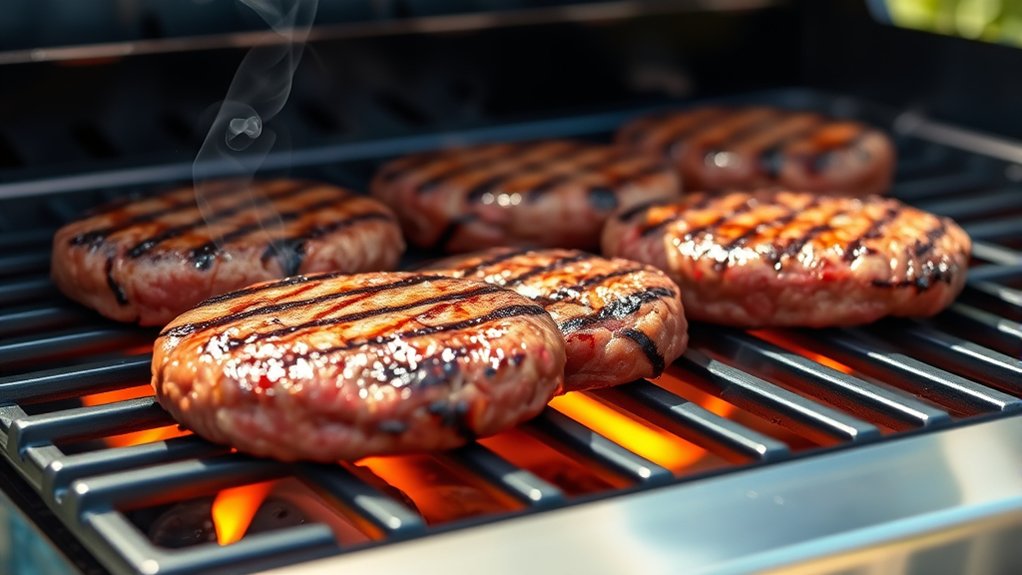
When grilling burgers on a gas grill, the cooking time depends on the thickness of the patties and how well you want them cooked. Usually, for medium doneness, cook the patties for about 4-5 minutes per side.
Cook burgers 4-5 minutes per side for medium, adjusting for thickness and desired doneness.
Thicker patties might need an extra minute or two on each side. To be sure, use a meat thermometer—160°F means it’s well done. Keep an eye on the internal temperature if you like your burgers rare or well-done.
While grilling, make sure you have your accessories like a good spatula and grill mitts to handle the burgers safely. Prepare your toppings ahead of time so you can assemble your burgers quickly once they’re done.
Remember to flip the burgers only once for even cooking and to prevent them from falling apart. Proper timing, the right tools, and toppings will help you make delicious, perfectly cooked burgers.
What Factors Affect Burger Cooking Times?
The thickness of your burger really matters when it comes to cooking time. Thicker patties generally take longer to cook all the way through. It’s also important to keep your grill at a steady temperature. If the heat fluctuates, your burger might cook unevenly, which isn’t ideal.
And don’t forget, the type of meat you’re using makes a difference too. Beef, turkey, and plant-based patties each have different densities and moisture levels, so they can cook at different rates. All these factors together help determine how long your burger needs on the grill.
Burger Thickness Variations
The thickness of your burger really changes how long it takes to cook on a gas grill. Thicker patties need more time, so keep that in mind when planning your grilling session.
If you’re using different types of buns, remember that denser buns might hold up better against longer cooking times. Softer buns, on the other hand, could get soggy if overcooked.
When it comes to melting cheese, thicker patties might need extra time for the cheese to melt fully without overcooking the meat. To get it just right, use a meat thermometer to check doneness.
Thinner patties cook quickly, but thicker ones require patience to cook evenly inside. Adjust your grilling time based on thickness to avoid undercooking or drying out your burger.
Grill Temperature Fluctuations
Grill temperature fluctuations play a big role in how long your burgers take to cook. When temperatures change, it can cause uneven cooking—some burgers get overdone while others stay undercooked.
Factors like wind, ambient temperature, and grill maintenance can cause these fluctuations. For example, poorly maintained grills might have hot spots or uneven heat.
Controlling temperature is also important for flavor. Steady heat helps lock in juices and enhances smoky flavors. To reduce fluctuations, make sure to clean your grill regularly, check the burners, and avoid opening the lid too often.
Keeping a consistent temperature makes your burgers cook evenly and reach the perfect doneness. It also makes grilling more predictable and enjoyable.
Meat Type Differences
Different types of meat need different cooking times on a gas grill because their composition and thickness affect how quickly they heat through. For example, beef burgers cook faster than thicker chicken or turkey patties.
The fat content also plays a role. Higher fat meats stay juicier but may cook a little quicker. To get your burgers and buns just right, using tools like meat thermometers or burger presses can help.
Here’s a quick comparison:
| Meat Type | Approximate Cooking Time |
|---|---|
| Beef | 4-5 minutes per side |
| Chicken | 6-8 minutes per side |
| Turkey | 6-8 minutes per side |
Remember to adjust times based on thickness and always check doneness with a thermometer for the best results.
What Temperature and Time Are Best for Thick and Thin Burgers?
When cooking burgers, adjusting the temperature and time based on their thickness helps ensure they’re perfect without drying out. For thin patties, set your grill to high heat—around 450°F to 500°F—and cook for about 2-3 minutes per side.
Thin burgers develop a nice sear quickly, so keep an eye on them to avoid overcooking. Thick burgers, around ¾ inch or more, do better at medium-high heat—about 400°F to 425°F—and take about 4-6 minutes per side.
Use a meat thermometer to check for 160°F for well-done or 140°F for medium-rare, depending on your preference. While grilling, don’t forget to keep the grill clean and well-heated to prevent sticking and uneven cooking.
Also, consider your toppings. Richer toppings might need a slightly longer cook time to balance flavors. Proper temperature control guarantees juicy, flavorful burgers every time.
How Do You Achieve a Juicy, Medium-Rare Burger?
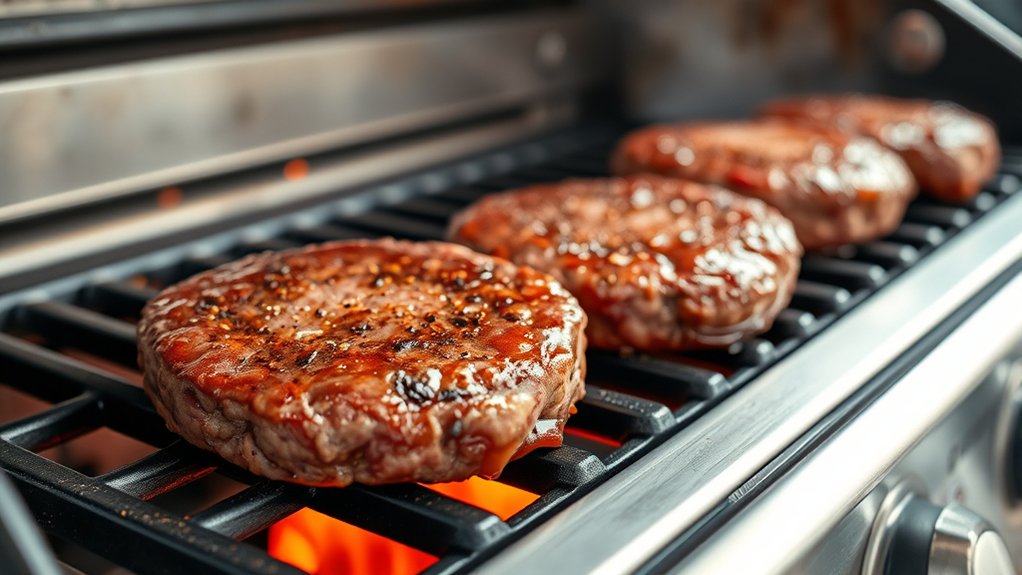
Want to make a juicy, medium-rare burger? It all starts with the meat. Use fresh, high-quality ground beef, and try not to overwork it when forming your patties—that keeps things tender.
When you’re cooking, timing is key. Aim for about 3 minutes on each side, and keep an eye on the temperature to get that perfect medium-rare center. Following these tips will help you enjoy a flavorful, juicy burger every single time.
Proper Meat Handling
Achieving a juicy, medium-rare burger starts with proper meat handling to guarantee safety and flavor. Always start with fresh, high-quality ground beef, ideally with some fat content for juiciness. Keep the meat refrigerated until you’re ready to form your patties, and avoid cross-contamination by using separate utensils and surfaces.
When shaping the burgers, don’t overwork the meat, which can make them dense. Handle the patties gently, making a slight indentation in the center to help them cook evenly. Once cooked, let the burgers rest before assembling them with buns, condiments, and toppings.
Proper meat handling assures your burgers stay juicy and flavorful, making every bite satisfying and safe.
Precise Cooking Times
Getting a juicy, medium-rare burger on a gas grill depends on precise timing and temperature control. Start with well-seasoned burger patties, making sure they’re evenly seasoned and shaped for uniform cooking.
Aim for a grill temperature of about 375°F to 400°F. Cook the patties for roughly 3 minutes per side for medium-rare, flipping only once. Use a meat thermometer to check for an internal temperature of 130°F to 135°F.
Let the burger rest for a few minutes before serving to keep those juices locked in. Remember to preheat the grill for consistent heat, shape the patties slightly larger than the buns, and season just before grilling.
Flip only once during cooking and use a meat thermometer for the most accurate results.
How to Cook Well-Done Burgers Without Burning Them
Cooking well-done burgers without burning them can be tricky, but it’s definitely doable if you pay attention to heat and timing. Keep your grill at a medium heat, around 375°F to 400°F, so the outside doesn’t char before the inside is cooked through.
Use indirect heat if you can, placing the burgers away from direct flames. Flip them carefully and every 2 to 3 minutes to prevent burning and promote even cooking.
Adding toppings later in the process helps prevent overcooking or burning them. Make sure your grill is clean before cooking—removing excess grease and char reduces flare-ups that can burn your burgers.
Cover the grill with a lid during cooking to keep the heat steady and avoid flare-ups. With patience and attention, you’ll end up with juicy, well-done burgers that aren’t burnt on the outside.
How Can You Tell When Your Burger Is Fully Cooked and Safe?
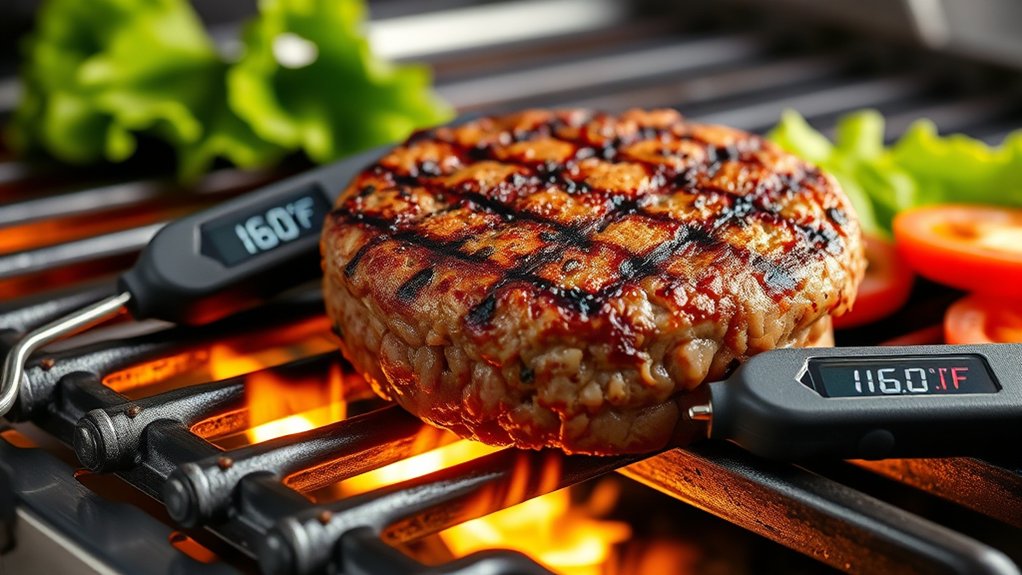
Wondering how to tell when your burger is fully cooked and safe to eat? The best way is to use a meat thermometer—just stick it into the thickest part of the patty, and make sure it hits 160°F. That’s the magic number for safety!
But if you don’t have a thermometer handy, there are other clues to look for. Check the juices—if they run clear instead of pink or red, that’s a good sign it’s cooked through. Also, look at the color—an even, brownish hue on the outside usually means it’s ready.
Using both these methods together gives you a better idea of whether your burger is done, so you can enjoy it without any guesswork.
Use a Meat Thermometer
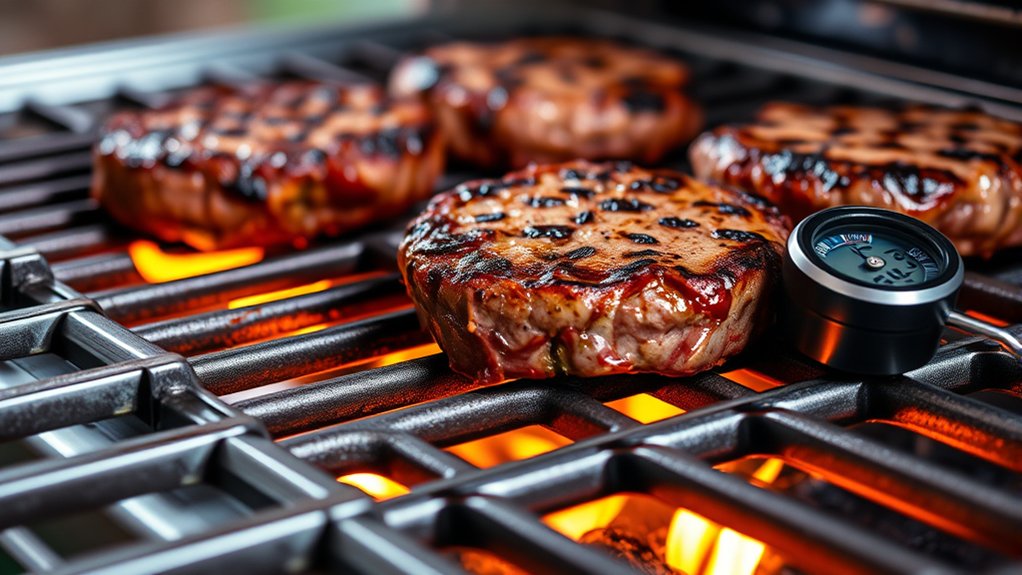
Using a meat thermometer is the most reliable way to tell when your burger is fully cooked and safe to eat. Just stick the thermometer into the thickest part of the patty, avoiding the bun or fat. When it hits 160°F (71°C), your burger’s good to go.
This helps ensure safety, especially if you’ve marinated the meat, since marination can change cooking times. Keep in mind, different buns like brioche or whole wheat might affect how quickly heat gets through.
To really enjoy your burger, aim for the right temperature no matter what bun you’re using. Here are some tips to get the best results:
- Use a digital or instant-read thermometer
- Check the temperature early and then adjust your cooking time
- Avoid pressing down on the patty while cooking
- Let the burger rest for a few minutes before serving
- Practice a few times to get consistent results
Check Juices Run Clear
When checking if your burger is fully cooked, look at the color and clarity of its juices. This quick visual cue helps you determine doneness. If the juices run clear, your burger has likely reached a safe internal temperature.
Juices that are pink or red suggest it’s undercooked. Clear juices indicate the burger is done. Keep an eye out for well-defined grill marks as well, but don’t rely on them alone.
Use the table below to interpret juice clarity and grill marks:
| Juice Clarity | Grill Marks | Doneness Level |
|---|---|---|
| Pink or red | Light or no marks | Rare |
| Slightly pink | Faint marks | Medium-rare |
| Clear | Deep, charred marks | Well done |
| Excessive clear juices | Burnt marks | Overcooked |
This visual check helps you cook burgers to perfection and ensures they’re safe to eat.
Observe External Color Change
As your burger cooks, keep a close eye on its external color change. It’s a key indicator of doneness and safety. When properly grilled, the outside should develop a rich, brown crust with some caramelization, which boosts the flavor.
Use your grilling tools, like tongs and a meat thermometer, to help judge doneness. Look for signs like an even, deep brown color across the surface, and some charring or grill marks.
Make sure there’s no pink visible on the edges, and that juices run clear or are slightly browned. The burger should have a consistent color without raw or pink patches.
These visual cues are a simple way to ensure your burger is both safe and delicious. Observing the external color change helps you perfect your grilling skills and enjoy flavorful, well-cooked burgers.
Using a Meat Thermometer: The Key to Perfect Timing
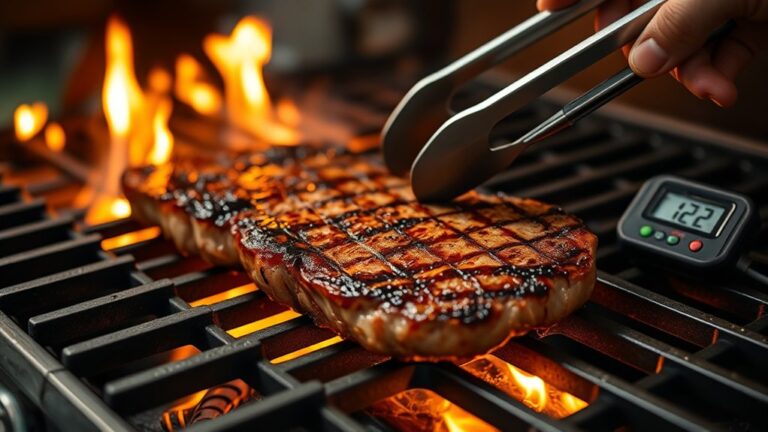
A meat thermometer is your best tool for ensuring burgers are cooked just right, so you avoid undercooking or overcooking them. It’s crucial for keeping grill safety in check, especially when cooking meat from different sources, to make sure harmful pathogens are gone.
Using a thermometer takes the guesswork out of timing, giving you accurate internal temperature readings. For safety, ground beef should reach at least 160°F (71°C). Just insert the thermometer into the thickest part of the burger for a proper reading.
Using a thermometer ensures safe, perfectly cooked burgers every time.
This helps you steer clear of foodborne illnesses and keeps your burgers juicy and cooked properly. Relying on a thermometer also supports meat sourcing guidelines, ensuring you’re cooking meat thoroughly from trusted suppliers.
With a little practice, you’ll quickly learn the perfect internal temperature for your preferred doneness. This simple step guarantees a safe, flavorful burger every time and makes your grilling more consistent and enjoyable.
Resting Your Burgers: Why It Matters for Flavor and Juiciness
Once you’ve used a meat thermometer to ensure your burgers reach the right internal temperature, let them rest to let the juices redistribute. This keeps your burger juicy and flavorful, so the juices don’t all spill out with each bite.
During resting, the temperature stays steady, making sure your burger is perfectly cooked. Think about your bun options—whether it’s a classic sesame, brioche, or lettuce wraps—that complement the burger’s flavor.
Also, consider your condiments—ketchup, mustard, or special sauces—that add extra layers of taste. Here are some tips to maximize flavor and juiciness:
- Let the burger rest for about 5 minutes before serving
- Use sturdy buns to hold toppings and juices
- Choose condiments that enhance the meat’s flavor
- Avoid slicing immediately to keep the juices in
- Add fresh toppings for extra texture and flavor
Common Mistakes That Can Ruin Your Burger’s Perfect Cook
Even small mistakes can sabotage your efforts to cook the perfect burger. One common error is neglecting grill cleaning. Leftover debris can cause uneven cooking and sticking, ruining the burger’s surface.
Avoid pressing down on the patty, which can squeeze out juices and dry out your burger. Overloading with toppings might seem tempting, but too many can cause uneven heat and mess up your grill.
Adding toppings too early can also lead to flare-ups, burning the toppings or even the burger itself. Make sure to preheat the grill properly to prevent sticking and uneven cooking.
Be mindful of flare-ups from grease dripping from toppings or fat, which can char your burger. Finally, using a dull or dirty spatula can damage the burger’s surface, affecting its texture and look.
Keeping your grill clean and paying attention to toppings help you avoid these common mistakes and get that perfect burger.
Tips for Adjusting Cooking Times Based on Grill Conditions
Grill conditions can vary a lot, so you’ll need to adjust your cooking times accordingly. Factors like wind, ambient temperature, and grill heat all affect how quickly your burgers cook. Use your grill accessories, such as thermometers and vents, to monitor and control the heat.
Keep in mind that thicker burger patties will take longer to cook, especially in cooler or windy weather. If your grill isn’t reaching the right temperature, turn up the heat or shield it from the wind. Applying the right seasoning also helps boost flavor when cooking under different conditions.
Here are some tips to help you adapt: check your grill temperature regularly with a reliable thermometer. Use a two-zone setup for better control. Keep the lid closed to maintain consistent heat. Adjust cooking time if the weather is cooler or windier. And don’t forget, adding a bit more seasoning can improve flavor if your burgers need longer on the grill.
Frequently Asked Questions
Can I Grill Burgers Directly Over High Heat or Should I Use Indirect Heat?
You should grill burgers directly over high heat for a nice seared exterior, but using indirect heat helps prevent burning and ensures even cooking.
Place the burger buns on the cooler side of the grill to toast them gently. When you’re melting cheese, add it during the last minute of grilling and cover the grill to help it melt smoothly.
Keep an eye on the heat to avoid overcooking or burning your burgers.
How Do You Prevent Burgers From Sticking to the Grill Grates?
Think of your grill as a stage where burgers perform. To prevent sticking, start with clean, well-oiled grates. Use a sturdy grilling tool to brush oil just before placing your burgers.
Make sure your burgers’ temperature is right—around 160°F for juicy, fully cooked patties. When flipping, do it gently and avoid pressing down. This keeps the burgers intact and prevents sticking, letting them shine on your grill’s stage.
Should I Season My Burgers Before or After Grilling?
You should season your burgers before grilling to get the best flavor. Apply your favorite burger seasoning generously to both sides, then let them sit for a few minutes. This helps the seasoning soak into the meat.
Using proper grilling techniques is also key. Preheat the grill and handle the burgers gently to ensure even cooking and a nice crust.
Adding seasoning after grilling isn’t as effective because the flavors won’t really soak in. It’s better to season beforehand for a tastier burger.
How Does the Type of Meat Impact Grilling Times?
You notice the difference when grilling different meats. Thicker cuts need longer, while leaner options cook faster.
Higher meat quality and grind consistency make a big impact. Premium meats with uniform grind cook evenly, reducing grilling time.
Conversely, tough or processed meats require patience, as their textures influence cooking speed. So, adjust your timing based on meat type to get juicy, perfectly cooked burgers every time.
Is It Better to Grill With the Lid Open or Closed?
It’s better to grill with the lid closed because it helps keep a steady temperature, which means your burgers cook evenly.
Keep an eye on how thick your meat is. Thicker patties usually need a lower heat and a bit more time to cook through.
Closing the lid traps heat and smoke, which boosts flavor and makes sure your burgers are cooked all the way.
Conclusion
Mastering your gas grill is like tuning a fine instrument. Each tweak brings your burger closer to perfection.
Keep an eye on the temperature, use a meat thermometer, and don’t rush the process. With patience and practice, you’ll turn simple patties into juicy symphonies of flavor.
So, fire up your grill, play with timing, and savor every bite. Your perfect burger on a gas grill is just a session away, waiting to dance on your taste buds.