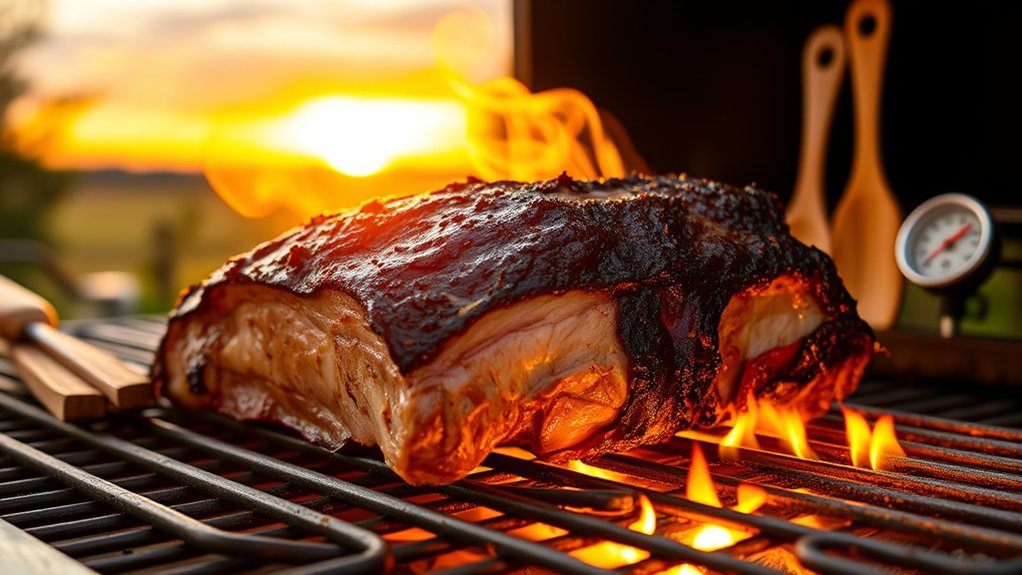
8 Simple Steps to Smoke Pork Shoulder on a Pellet Grill
Many barbecue enthusiasts dream of perfectly smoked pork shoulder but often feel overwhelmed by the process. You’re not alone—smoking great pork takes some know-how and patience.
Luckily, with the right steps, you can master it on your pellet grill and impress everyone with tender, flavorful meat.
Start by marinating your pork shoulder overnight, then trim excess fat and apply a generous dry rub.
Choose wood pellets like hickory or apple to infuse flavor, and preheat your pellet grill to 225°F.
Maintain a steady temperature and monitor the internal temp with a reliable thermometer.
Wrap the meat around 150-160°F to lock in moisture.
Continue cooking until it hits 195-205°F, then rest before slicing.
For more tips on mastering the process, keep going!
Key Takeaways
- Marinate and season the pork shoulder generously, then let it rest before smoking. This helps the flavors soak in and keeps the meat juicy.
- Preheat the pellet grill to 225°F and fill the hopper with compatible wood pellets like hickory or apple. This sets the perfect smoking environment.
- Maintain steady temperature and smoke by keeping the lid closed and refilling pellets as needed. Consistent heat is key to good results.
- Wrap the shoulder at 150-160°F to retain moisture and continue cooking until 195-205°F. This ensures tender, flavorful meat.
- Rest the meat before slicing or shredding, then serve with flavorful sides and sauces. This helps lock in juices and enhances taste.
How to Prepare and Season Your Pork Shoulder for Smoking
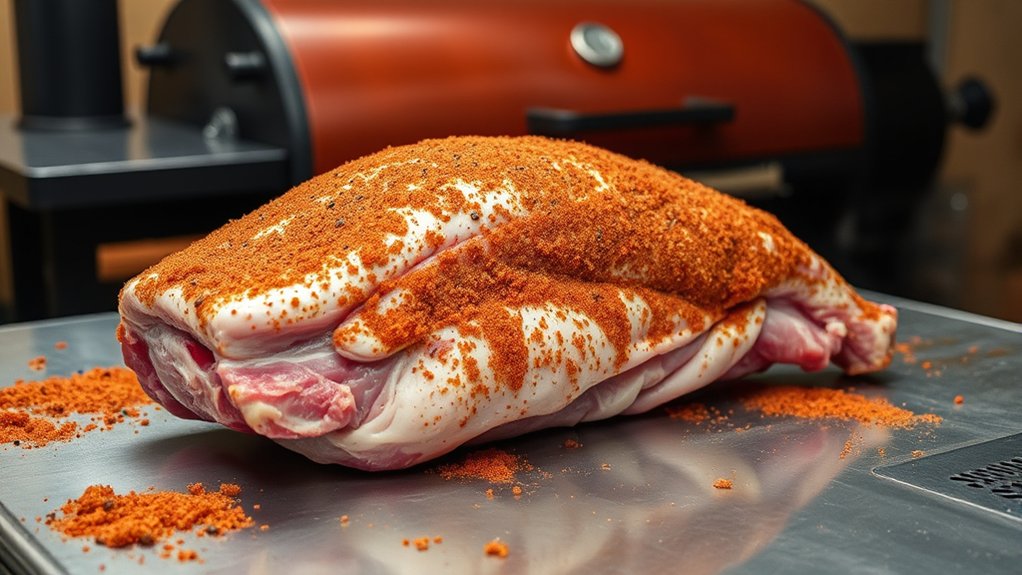
Before you start smoking, it’s important to properly prepare and season your pork shoulder. First, choose a marinade that boosts flavor and keeps the meat moist. You can go with simple combos like apple cider vinegar, olive oil, garlic, and herbs, or get creative with spicy or sweet marinades.
Marinating for at least 4 hours or overnight helps tenderize the meat and infuse it with flavor. Next, trim off any excess fat to prevent flare-ups and ensure even cooking. Once your pork shoulder is marinated, apply a dry rub or seasoning blend to create a flavorful crust.
Be generous but even with your seasoning. Remember, cooking times vary depending on the size of your shoulder, but typically, you’ll need about 1.5 to 2 hours per pound at a low temperature. Proper preparation and seasoning lay the foundation for tender, flavorful smoked pork.
How to Choose Wood Pellets for Smoking Pork Shoulder
When you’re picking out wood pellets for smoking your pork shoulder, think about flavors like hickory or apple—these tend to complement the richness of the meat really well. It’s also a good idea to make sure the pellets you choose are compatible with your specific pellet grill. That way, you’ll get the right burn and smoke production without any hassle. In the end, choosing the right wood can really make a difference in how your smoked pork turns out—better flavor, better quality, and a smile on your face!
Flavor Profiles to Consider
Choosing the right wood pellets is key to developing the flavor profile of your smoked pork shoulder. Different wood types bring unique tastes—hickory adds smoky richness, apple offers sweetness, and mesquite provides boldness.
Think about how strong you want the flavor to be and how it pairs with your spice blends and marinades. If you want a subtle, fruity note, apple pellets work great, especially with a sweet marinade.
For a more intense smoky flavor, go for hickory or mesquite. Combining different woods can also create a more complex taste. Remember, your spice blends and marinades will interact with the smoke, so pick pellets that enhance rather than overpower your seasonings.
Your choice of wood sets the foundation for a flavorful and balanced pork shoulder.
Compatibility With Pork Shoulder
Selecting the right wood pellets for your pork shoulder ensures the smoke complements its rich, tender meat. Knowing the pork shoulder’s history and traditional curing techniques helps you pick the best wood for flavor.
Classic options like hickory and apple add depth and a touch of sweetness. Think about flavor compatibility—match the wood to the pork’s natural richness. Lighter woods like fruit woods give a subtle aroma, perfect if you want a gentle smoky flavor.
Some woods can enhance the smoky, cured flavors of the meat. Consider traditional pairings that have been favored for pork dishes over time. And don’t forget to adjust based on your personal taste and what flavor profile you’re aiming for.
How to Set Up Your Pellet Grill for Perfect Smoking
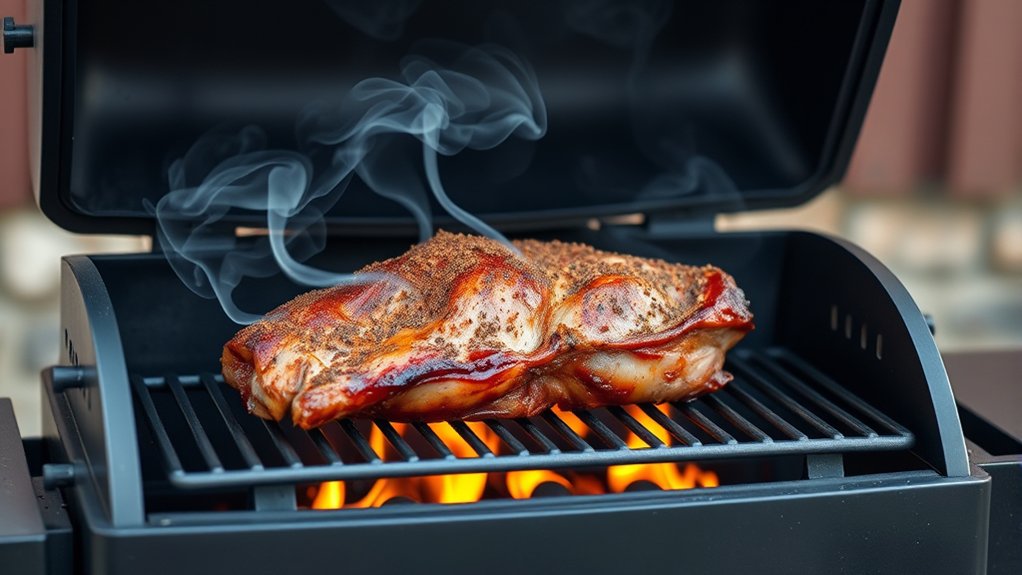
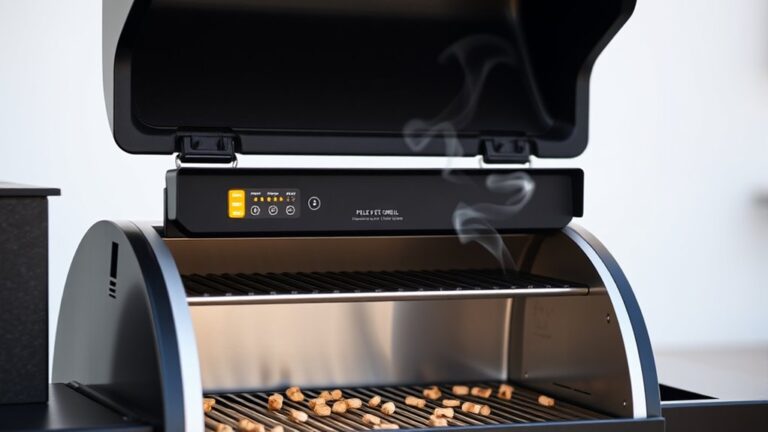
Ever wonder how to get your pellet grill ready for smoking? Proper setup starts with grill maintenance—clean out ash and grease to prevent flare-ups and ensure good airflow.
Start your smoking session with clean grill maintenance for better airflow and safer cooking.
Check that your pellet hopper is filled with quality pellets suited for smoking pork shoulder; storing pellets properly keeps them dry and fresh. Before firing up, verify the grill’s temperature probe is accurate, and give the grates a quick scrub to prevent sticking.
Set your pellet grill to the desired smoking temperature, usually around 225°F, and let it preheat for about 15 minutes. This helps ensure even heat distribution.
Make sure the vents are open enough for good airflow, which is key for smoke production. Once preheated, your grill is ready for smoking.
Regular grill maintenance and careful pellet storage lay the foundation for a successful smoke session and perfectly cooked pork shoulder.
How to Monitor and Maintain Consistent Temperature
Once your pellet grill is preheated and ready, keeping a steady temperature is key to smoking success. Consistent heat helps your pork shoulder cook evenly and reach the perfect tenderness.
Make sure to regularly check your grill’s digital or analog thermometer for accurate readings. Try not to open the lid too often, as this can cause temperature swings.
Keep an eye on your pellet supply and refill as needed to prevent temperature drops. Proper equipment maintenance also helps avoid malfunctions that could affect cooking safety and temperature control.
Here are some tips to stay on track:
- Use a reliable, calibrated thermometer for accurate readings
- Keep the grill lid closed as much as possible
- Adjust the pellet hopper or temperature settings when needed
- Clean vents and fans regularly to ensure good airflow
- Check for signs of equipment wear that could impact performance
Following these steps helps you maintain consistent heat, so you get a perfectly smoked pork shoulder every time.
When and How to Wrap Your Pork Shoulder During Smoking
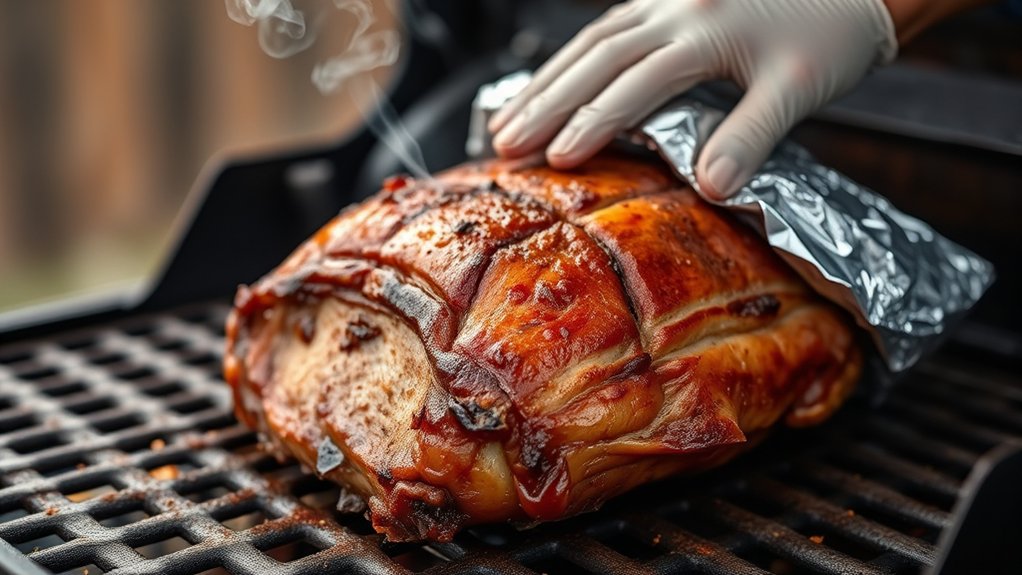
Knowing when to wrap your pork shoulder is super important if you want that meat to turn out tender and juicy. Typically, you want to do it around the stall—when the temperature stalls or slows down—or once it hits an internal temp of about 150-160°F. That’s usually the sweet spot!
When it’s time to wrap, you can use materials like aluminum foil or butcher paper. Just make sure to wrap it tightly so the meat stays moist and the heat stays in. Picking the right wrapping method and material can really make a difference in how your final pulled pork turns out.
Ideal Wrapping Timing
Timing is key when wrapping your pork shoulder during smoking, as it helps lock in moisture and speeds up the cooking process. You want to wrap it when it hits the stall, around 160-170°F, to prevent it from drying out.
This is also a great time to think about marinades that boost flavor and tenderness. If you’re into a sweeter or spicier taste, now’s the moment to add those marinades.
Once wrapped, the pork keeps cooking until it reaches 195-205°F, which is perfect for pulling. During this stage, consider side dishes like coleslaw or baked beans to complete your meal.
Wrapping Techniques and Materials
To effectively wrap your pork shoulder during smoking, choose the right materials and techniques to keep it moist and tender. Wrapping materials like aluminum foil are the most common, sealing in juices and speeding up the cooking process.
For a more textured bark, consider using butcher paper. It allows some smoke and moisture to escape while still protecting the meat.
When wrapping, make sure the wrap is tight but not so tight that it cuts into the meat. Foil alternatives like silicone baking mats or specialized butcher paper can also work well.
Always wrap the pork shoulder when it reaches your desired internal temperature or if the bark is forming too early. Proper wrapping helps maintain moisture and results in a juicy, flavorful shoulder.
How to Know When Your Pork Shoulder Is Done and Ready to Rest
When your pork shoulder reaches the right point, it’s easy to tell it’s done by checking its internal temperature. Use a reliable meat thermometer to ensure accuracy. The USDA recommends an internal temp of at least 195°F to 205°F for tender, pull-apart meat.
Besides temperature, look for these signs: the meat easily pulls apart with a fork, and if there’s a bone, it should start to protrude slightly. Juices should run clear when you pierce the meat, and it should feel tender and moist.
A smoky aroma and a dark, caramelized bark are also good indicators. Once it’s ready, let the pork rest so the juices can redistribute. Resting is crucial for flavor and texture.
Proper storage is important for safety too. Refrigerate leftovers within two hours. Resting also helps prevent bacteria growth. Don’t rush this step — patience leads to a delicious, safe meal.
Best Ways to Slice and Serve Your Smoked Pork Shoulder
Once your smoked pork shoulder is perfectly cooked and rested, the next step is slicing it correctly to guarantee every bite is tender and flavorful. Use a sharp carving knife to cut against the grain, which helps keep the meat tender and easy to chew.
For uniform slices, position the pork shoulder on a stable cutting board and work slowly. If you’ve marinated your pork beforehand, let it sit at room temperature for even slicing. For added flavor, serve with your favorite marinade options like apple cider vinegar or smoky barbecue sauce.
When serving, consider shredding some of the meat for sandwiches or salads. To store leftovers, let the meat cool completely, then wrap tightly in foil or airtight containers. Keep the pork refrigerated for up to four days, or freeze it for longer storage.
Proper slicing and storage tips guarantee your smoked pork shoulder remains flavorful and enjoyable for days to come.
Tips for Enhancing Flavor and Serving the Perfect Meal
After slicing and serving your smoked pork shoulder, the next step is to boost its flavor and present it in an appealing way that excites the palate. Consider simple serving ideas and marinating techniques to elevate your dish. Rest the meat briefly before slicing to lock in juices.
Enhance your smoked pork shoulder with flavorful marinades and appealing presentation for an irresistible meal.
For extra flavor, brush the pork with barbecue sauce or a glaze during the final minutes of resting. This adds a delicious finish and keeps the meat moist.
To make your presentation stand out, try serving with a side of tangy coleslaw or pickles for contrast. Use a sharp carving knife for clean, precise slices.
Garnish with chopped herbs like cilantro or parsley to add color and freshness. Pair the pork with a flavorful marinade or finishing glaze to enhance the taste.
Present your dish on a wooden platter for a rustic, inviting look. Experiment with marinating techniques beforehand to infuse extra flavor.
And remember, appealing serving suggestions really make a difference in how your meal is enjoyed.
Frequently Asked Questions
How Long Does It Typically Take to Smoke a Pork Shoulder?
It usually takes about 8 to 10 hours to smoke a pork shoulder, but this depends on its size and your grill’s temperature.
During this time, aim for a temperature of around 225°F to 250°F. Slow cooking like this makes the meat tender and juicy.
Keep an eye on the internal temp. When it hits 195°F to 205°F, your pork shoulder is perfectly tender and ready to serve.
What Is the Ideal Internal Temperature for Smoked Pork Shoulder?
You should aim for an internal temperature of about 195-205°F when smoking pork shoulder. This ensures the meat becomes tender and easy to pull apart.
Keep a reliable meat thermometer handy and monitor the internal temp closely. Once it hits this range, your pork shoulder will be perfectly cooked, offering ideal tenderness and flavor.
Let it rest before serving for the best results.
Can I Use Different Wood Pellets for Different Flavor Profiles?
Absolutely, you can use different wood pellets for flavor variations, and don’t worry about mixing them up. Many pitmasters experiment with wood pairings to create unique tastes.
For example, apple and cherry give a sweet, fruity profile, while hickory offers a rich, smoky depth. Mixing woods can produce complex flavors and really enhance your smoked pork shoulder.
Should I Marinate the Pork Shoulder Before Smoking?
You don’t have to marinate the pork shoulder before smoking, but doing so can boost the flavor. Marinades like apple cider, soy sauce, or citrus can add moisture and taste.
If you decide to marinate, aim for at least a few hours or overnight to get the most flavor. Otherwise, a dry rub works great too, giving you plenty of flavor.
During smoking, you can add moisture with a mop sauce to keep the meat juicy and flavorful.
How Do I Store Leftover Smoked Pork Shoulder Properly?
Think of leftover smoked pork shoulder as treasure waiting to be rediscovered. To keep its flavor intact, store it in airtight food-safe containers to stay fresh and safe.
Make sure to refrigerate leftovers within two hours of cooking. For food safety, enjoy them within three to four days.
If you’re planning to keep it longer, freeze in sturdy containers. Proper storage prevents spoilage and keeps your pork delicious for later enjoyment.
Conclusion
Smoking pork shoulder is a rewarding process that yields tender, flavorful meat. Did you know that proper temperature control can make all the difference? Studies show that maintaining consistent heat can improve tenderness by up to 30%.
By following these simple steps, you’ll master the art of smoking on a pellet grill. This way, every bite will be perfect and full of flavor. So, fire up your grill and adopt the process.
Enjoy delicious, mouthwatering pork that’ll impress everyone at your table. Remember, when smoking pork shoulder, temperature control is key to getting that ideal juicy and tender result.