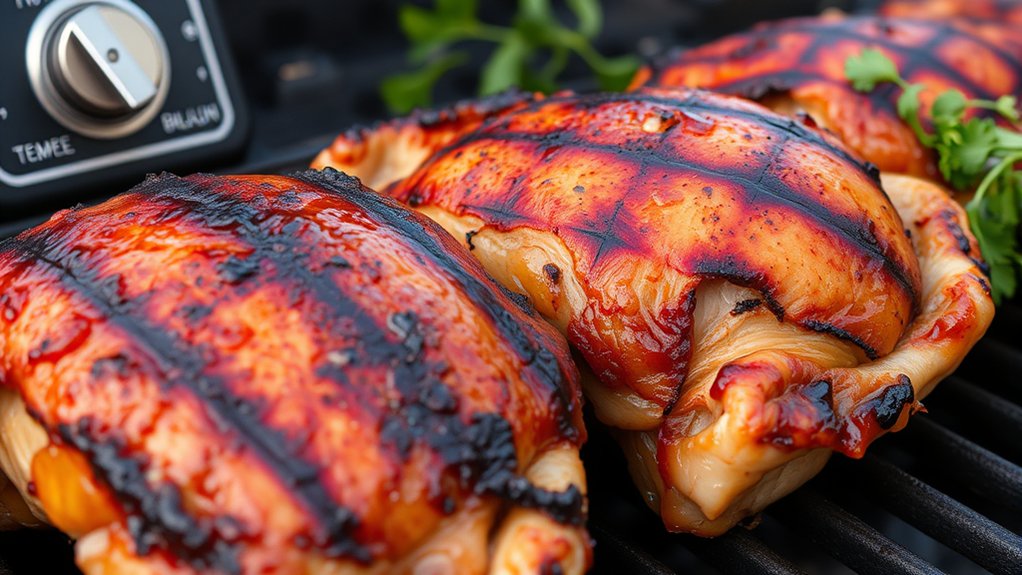
How to Cook Juicy Chicken Thighs on a Pellet Grill?
Cooking juicy chicken thighs on a pellet grill can feel tricky, especially if you’re aiming for tender, flavorful meat every time. Many people struggle with drying out the chicken or getting that perfect, crispy skin. But don’t worry—you’re not alone, and with a few simple steps, you can master delicious, juicy thighs that everyone will love.
To cook juicy chicken thighs on a pellet grill, start by marinating or seasoning them evenly, then pat the skin dry and apply a light oil coating.
Preheat your grill to 375-400°F and choose high-quality pellets for added flavor.
Grill the thighs for 25-30 minutes, flipping halfway, until the internal temperature reaches 165°F.
Let the chicken rest before serving to keep it tender and moist. Keep these steps in mind to achieve perfect results every time.
Key Takeaways
- Marinate chicken thighs with oil, lemon, garlic, and herbs for at least 30 minutes to boost flavor and tenderness.
- Preheat the pellet grill to 375°F–400°F and clean the grates for even heat and good searing.
- Pat the thighs dry, season with spices, and wipe off excess marinade before grilling to get crispy skin and prevent flare-ups.
- Grill for 25–30 minutes, flipping halfway through, until the internal temperature hits 165°F for juicy, fully cooked meat.
- Let the chicken rest for 5–10 minutes after grilling to allow the juices to redistribute, keeping the thighs moist and flavorful.
The Secret to Juicy, Perfect Chicken Thighs on a Pellet Grill
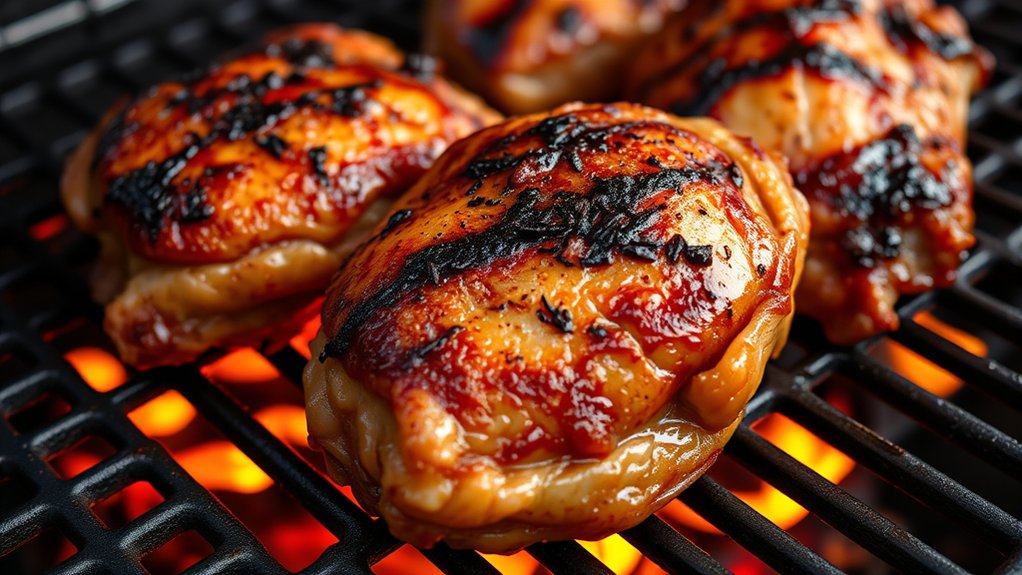
Achieving juicy, flavorful chicken thighs on a pellet grill starts with understanding the importance of proper temperature control. But to truly *enhance* your dish, focus on marinade techniques. Marinating the chicken beforehand allows the flavors to penetrate deeply, keeping the meat moist and tender during grilling.
Use a simple marinade with ingredients like olive oil, lemon juice, garlic, and herbs for the best results. *Furthermore*, investing in the right grilling accessories, such as a meat thermometer and grill mats, can make a huge difference.
A meat thermometer ensures you hit that perfect internal temperature without overcooking, while grill mats help prevent sticking and make cleanup easier. Remember, a well-marinated chicken thigh paired with quality grilling accessories gives you the control and precision needed to achieve juicy, flavorful results every time.
Combine these techniques, and you’ll be well on your way to grilling perfection.
Choose the Right Pellets and Set Your Grill Temperature
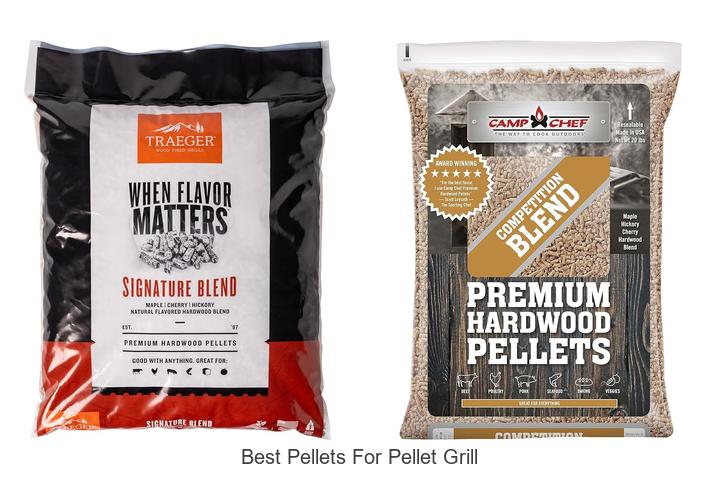
Picking the right pellets and setting your grill temperature just right can really make a difference when you’re cooking juicy chicken thighs. Think about the flavor you want—there are plenty of pellet options out there, so choosing the right one can enhance your dish. And don’t forget to keep your grill at a steady temperature; that way, your chicken turns out tender and perfect every time. Going for quality brands is a smart move too—they tend to burn more reliably and give you better flavor, so it’s worth picking wisely.
Optimal Pellet Types for Flavor
Selecting the right pellets is crucial for adding depth of flavor to your grilled chicken thighs. Different pellet types impart unique flavors, like hickory for smoky richness or apple for a subtle sweetness.
Choosing high-quality pellets also helps keep your grill running smoothly, reducing ash buildup and maintaining consistent heat. Keep in mind that pellet flavors vary, so pick blends that complement chicken without overpowering it.
Proper grill maintenance, including cleaning out old ash and checking the hopper, ensures your pellets burn efficiently and produce the best flavor. Experiment with different wood types to find your favorite.
Temperature Settings for Juiciness
To keep your chicken thighs juicy and flavorful, setting the right grill temperature is key. Aim for a temperature between 375°F and 400°F to cook the meat evenly without drying it out.
Using proper techniques like indirect heat helps retain moisture and keeps the chicken tender. Making sure your grill stays at a consistent temperature is important, so check it regularly and adjust as needed.
Also, keep your grill clean and use fresh pellets for steady heat and good smoke. Avoid opening the lid too often, as it can cause temperature fluctuations and uneven cooking.
Choosing Quality Pellet Brands
Since the quality of your pellets directly impacts flavor and temperature stability, it’s important to choose the right ones for your grill. Picking pellets with good durability helps ensure a consistent burn and reduces the need to refill your hopper too often.
Choosing brands with a strong reputation guarantees you’re getting pellets made from quality hardwoods without fillers or binders. To help you decide, here’s a quick comparison:
| Brand | Pellet Durability | Reputation |
|---|---|---|
| Traeger | High | Excellent |
| Pit Boss | Moderate | Very Good |
| Lumber Jack | High | Good |
Stick with trusted brands known for durability to keep your heat steady and your flavor top-notch during your cook.
Prep Your Chicken Thighs for Grilling
Before you start grilling, preparing your chicken thighs properly is vital. Begin with marinade techniques to infuse flavor and keep the meat juicy. Use a simple marinade with oil, acid like lemon juice or vinegar, and seasonings, then let the thighs sit for at least 30 minutes. This step boosts tenderness and taste.
Next, gather your cooking equipment. Make sure your pellet grill is clean and ready, and have tongs and a meat thermometer on hand for precise cooking. Pat the chicken thighs dry with paper towels to promote even browning.
If you prefer, you can also score the skin or lightly season the surface with salt and pepper before grilling. Proper prep guarantees the chicken cooks evenly, retains moisture, and develops a delicious outer crust.
Taking these steps before grilling guarantees your chicken thighs will be flavorful, tender, and perfectly cooked.
Preheat and Oil Your Pellet Grill for Best Results
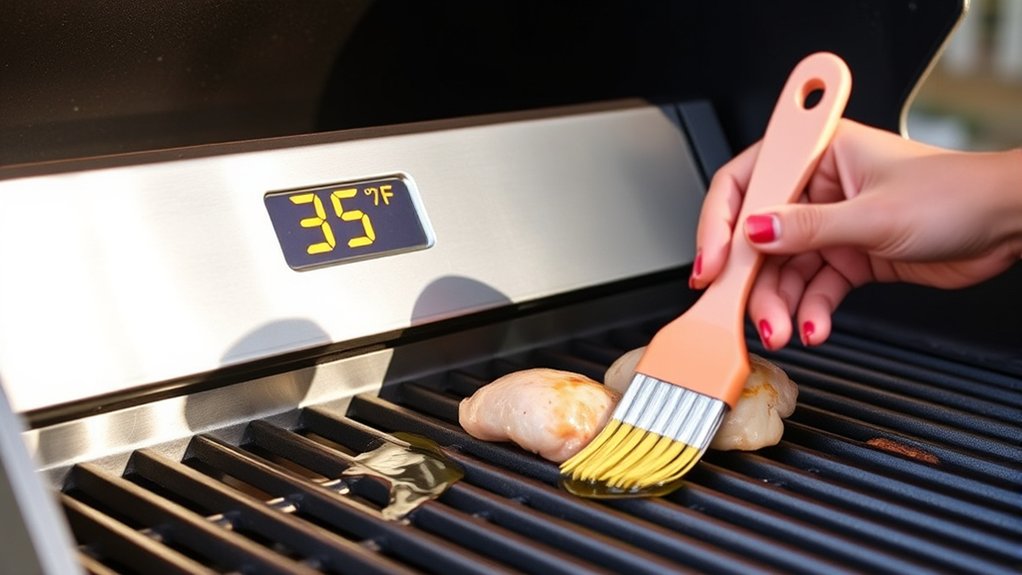
Have you preheated and oiled your pellet grill yet? Proper preheating helps ensure even cooking and that perfect sear. Turn on your grill and set it to your desired temperature, letting it run for about 15-20 minutes.
While it heats up, use this time to do some basic maintenance. Clear out any ash and check your grill’s components. Oiling the grates is key to preventing sticking and boosting flavor.
Use a high-heat oil and a paper towel or brush to coat the cooking surface evenly. Also, think about pellet storage—keeping your pellets dry and well-stored helps maintain consistent heat.
Preheating and oiling now set the foundation for juicy, tender chicken thighs. Skipping these steps can lead to uneven cooking or sticking, making your grilling less successful.
Spend a few minutes on this routine, and you’ll see better results every time.
Season Your Chicken for Maximum Juiciness
If you want your chicken to turn out super juicy, start by picking the right spices that really boost its natural flavor. It’s all about finding that perfect balance!
Next, make sure you spread your marinade evenly all over the chicken. Don’t rush this part—give it enough time to soak in those flavors so every bite is tasty and tender.
When you season and marinate your chicken properly, it stays juicy and flavorful when you cook it on the grill. Trust me, those little extra steps make a big difference!
Use the Right Spices
The right spices can make all the difference in keeping your chicken thighs juicy and flavorful. Using well-chosen spice combinations amplifies the natural taste and helps retain moisture during grilling.
Focus on seasoning techniques that evenly coat the meat, allowing the spices to penetrate and lock in juices. A simple blend of paprika, garlic powder, onion powder, black pepper, and a touch of salt works great, but you can customize it based on your flavor preferences.
Be generous but balanced—you want the spices to complement rather than overpower. Applying spices in a consistent layer ensures maximum flavor absorption.
Apply Proper Marinade Techniques
Applying proper marinade techniques is key to locking in moisture and infusing flavor into your chicken thighs. Make sure your marinade covers every piece evenly for the best results.
Use a balanced mix of acid, oil, and seasonings to tenderize the meat and keep it juicy. Marinate for at least 30 minutes, but up to a few hours if possible, to let the flavors really sink in.
Be careful not to over-marinade, as it can break down the meat’s texture. Use a resealable bag or a shallow dish, turning the chicken occasionally to ensure even coating.
Good marinade techniques not only boost flavor but also help keep your chicken moist during cooking. With the right approach, your chicken thighs will be irresistibly juicy and flavorful.
Cook Chicken Thighs on a Pellet Grill: The Exact Method
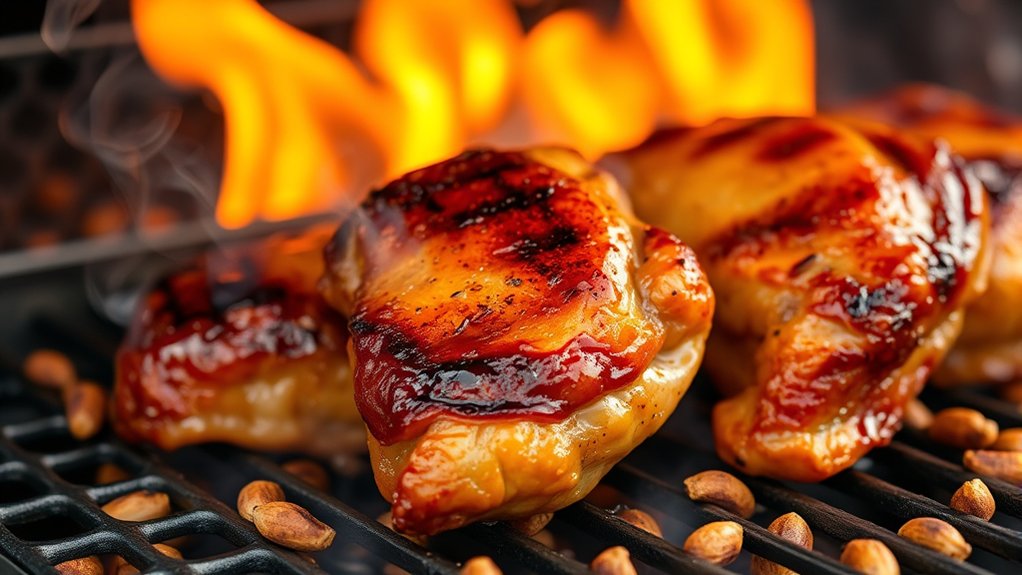
When you’re ready to cook the chicken thighs, start by preheating your pellet grill to a steady 375°F. This temperature ensures even cooking and juicy results.
Next, remove the thighs from the marinade, letting excess drip off. Place them on the grill grates. Remember to clean the grates beforehand for better heat transfer.
To boost flavor, consider your marinade method—whether applying a dry rub or a wet marinade. Cook the chicken thighs for about 25-30 minutes, flipping halfway through.
Cook until they develop a nice char and reach an internal temperature of 165°F. Use a meat thermometer for accuracy. Keep an eye on the grill’s temperature to prevent flare-ups and uneven cooking.
Here’s a quick visual guide:
| Step | Action |
|---|---|
| 1 | Preheat to 375°F |
| 2 | Remove excess marinade |
| 3 | Grill for 25-30 mins |
| 4 | Check internal temp |
Monitor Internal Temperature for Perfect Doneness
To get your chicken thighs just right, you’ll want a good thermometer to keep an eye on their internal temperature. It’s really the best way to make sure they’re cooked through without ending up dry.
Aim for that safe zone of 165°F—that’s the magic number to ensure they’re perfectly done. Using the right tools and targeting the right temperature helps you get juicy, delicious chicken every single time.
Use a Reliable Thermometer
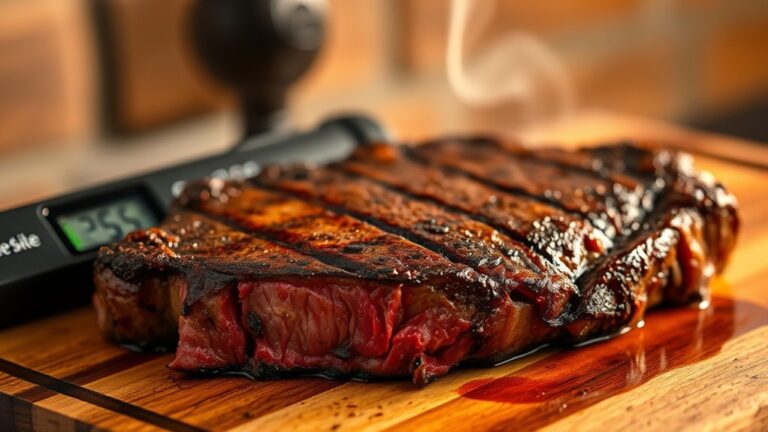
Using a reliable thermometer is essential for achieving perfectly cooked chicken thighs. It guarantees you don’t overcook or undercook, helping you maintain grill performance and proper grill maintenance.
An accurate thermometer gives you real-time readings, so you can monitor internal temperature precisely. This prevents guesswork and ensures meat tenderness, making your chicken juicy and flavorful.
Regularly calibrate your thermometer to keep it accurate, especially if you notice inconsistent readings. When inserted into the thickest part of the thigh, it provides a clear indicator of doneness.
Investing in a quality thermometer simplifies the cooking process, allowing you to focus on controlling your pellet grill more effectively. Ultimately, a good thermometer is your best tool for perfectly cooked, tender chicken thighs every time.
Target Safe Internal Temperature
Monitoring the internal temperature of your chicken thighs is key to making sure they’re safe and perfectly tender. Using a reliable thermometer helps you hit the right temperature without overcooking.
The USDA recommends an internal temperature of 165°F (74°C) for safe chicken, but many people prefer cooking it slightly lower for juiciness. Keep in mind, maintaining a clean grill helps keep the heat steady, making temperature control easier.
Always insert the thermometer into the thickest part of the thigh, avoiding the bone, to get an accurate reading. It’s a good idea to use a calibrated thermometer for precision and check the temperature regularly.
Maintaining a consistent grill temperature and letting the chicken rest for a few minutes before serving will give you better results. Adjust your cooking times based on the temperature readings for the best outcome.
Following these simple tips ensures your chicken is both safe to eat and full of flavor.
Achieve Crispy Skin Without Drying Out the Meat
To get crispy skin on your chicken thighs without drying out the meat, start by patting the skin dry with paper towels. Removing excess moisture helps the skin crisp up nicely.
Use a well-balanced spice blend to boost flavor without adding extra moisture that can prevent crispiness. Applying a light coat of oil can also help achieve even browning.
When choosing sauces, go for thicker options or baste sparingly. Thin sauces can make the skin soggy and prevent that perfect crispy finish.
| Tip | Explanation |
|---|---|
| Use spice blends | Add flavor without moisture, promoting crispiness |
| Apply oil lightly | Ensures even browning without greasy skin |
| Pat dry skin | Removes excess moisture for crisp results |
| Choose thick sauces | Prevent sogginess and maintain crispy skin |
Rest and Serve Your Grilled Chicken Thighs for Juiciness
After you take your chicken thighs off the grill, let them rest for a few minutes. This helps the juices spread evenly throughout the meat, keeping every bite tender and flavorful.
Resting also helps your chicken stay juicy and makes your presentation look more appealing. For a nicer look, try slicing the chicken against the grain—it’s easier to eat and looks better.
To boost flavor without losing moisture, consider marinating with citrus or vinegar. During resting, loosely cover the chicken with foil to keep it warm without steaming.
For the best presentation, serve on a warm, clean plate. Remember to rest for 5–10 minutes before slicing or serving. Following these tips will give you juicy, flavorful chicken that looks great too.
Troubleshoot Common Issues and Explore Flavor Variations
Even with careful preparation, you might encounter issues like dry meat, uneven cooking, or chicken that’s too salty. To prevent dryness, make sure you don’t overcook the thighs and consider using marinade techniques that include natural oils and acids to keep the meat moist.
If your chicken cooks unevenly, check your pellet grill’s temperature and rotate the thighs during cooking. Too salty? Adjust your seasoning blends or rinse marinades thoroughly before applying.
Experiment with flavor variations by adding herbs, spices, or citrus zest to your marinade. For a smoky twist, incorporate wood chips into your pellet grill.
Keep in mind that different seasoning blends can change your chicken’s flavor profile—try sweet, spicy, or savory options based on your taste. Monitoring the internal temperature closely will help you achieve consistent results.
With these troubleshooting tips and flavor ideas, you’ll master juicy, flavorful chicken thighs every time.
Frequently Asked Questions
How Long Should I Marinate Chicken Thighs Before Grilling?
You should marinate chicken thighs for at least 30 minutes to 2 hours to give the flavor time to infuse.
Marination timing really matters; if you go too short, the flavor won’t develop fully. If you wait too long, the texture might turn mushy.
For the best results, aim for about 1 to 2 hours. This allows the marinade to penetrate the meat without harming its texture.
Following this timing helps you get juicy, flavorful chicken thighs right off the grill.
Can I Use Frozen Chicken Thighs on a Pellet Grill?
Yes, you can cook frozen chicken thighs on a pellet grill, but be careful—you’re about to turn your grill into a superhero!
To do it safely, use proper thawing techniques like refrigerating overnight or using cold water.
If you’re in a rush, you can cook directly from frozen, but expect longer cooking times and make sure the internal temperature reaches 165°F for safe, juicy, and delicious results.
What’s the Best Way to Prevent Flare-Ups During Grilling?
To prevent flare-ups during grilling, keep your grill clean and remove excess grease and fat buildup.
Maintain a steady temperature and avoid overloading the grill with greasy foods. Use indirect heat when possible, and keep a spray bottle of water nearby for quick flare-up suppression.
Practicing grill safety, like never leaving the grill unattended and ensuring proper ventilation, helps keep flare-ups in check and keeps your grilling experience safe.
How Do Different Wood Pellet Flavors Affect Chicken Taste?
Imagine your chicken as a blank canvas. Each wood pellet flavor adds a unique brushstroke.
Different wood flavors like hickory or apple significantly influence taste, imparting smoky, sweet, or robust notes.
Choosing the right wood flavor can boost the chicken’s natural juiciness and aroma, making your grilling experience better.
Is It Necessary to Brine Chicken Thighs Before Grilling?
Brining chicken thighs isn’t necessary, but it does have some benefits like making them juicier and more flavorful.
If you decide to brine, keep it for about 1-2 hours. For more flavor, you can leave them longer.
Alternatively, a marinade can also boost taste, usually taking 30 minutes to a few hours.
Brining helps make your grilled chicken tender and moist, especially if you want that extra juicy and flavorful bite.
Conclusion
With these simple steps, you’ll master the art of grilling juicy chicken thighs on your pellet grill, turning every bite into a flavor-packed explosion.
By choosing the right pellets, controlling the temperature, and resting your meat, you’ll create chicken so tender and flavorful it’ll make your taste buds dance!
Think of it as transforming your grill into a culinary wizard’s wand, producing perfect, juicy chicken every single time.
Get ready to impress and indulge with perfectly cooked, juicy chicken thighs on your pellet grill!