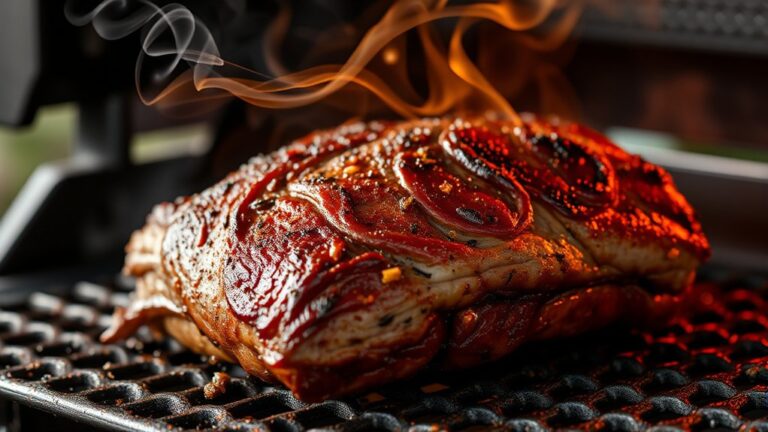
Cook Prime Rib on a Pellet Grill in 8 Simple Steps
Cooking a perfect prime rib on a pellet grill can feel intimidating, especially if you’re new to grilling or trying to get that ideal crust and juicy center. You’re not alone—many people struggle with getting that perfect level of doneness without overcooking or undercooking their roast. But don’t worry, with a little guidance, you’ll be impressing everyone at your next dinner.
Start by letting your prime rib sit at room temperature, then generously season it with a flavorful rub. Preheat your pellet grill to 225°F, add the right wood pellets, and set up your thermometer.
Place the meat on the grill, monitor the internal temperature, and cook until it reaches your desired doneness. Sear the roast at high heat for a crust, then rest, carve against the grain, and serve.
Keep going for more tips to perfect your prime rib mastery.
Key Takeaways
- Preheat your pellet grill to 225°F. Season the prime rib with a generous rub, then let it sit so it can soak up all those flavors.
- Use a meat thermometer to keep an eye on the internal temperature. Aim for about 130°F for rare or 140°F for medium.
- Smoke the prime rib at a low temperature, maintaining steady heat and smoke for that deep, smoky flavor.
- Briefly sear the roast at high heat to develop a nice crust before you finish cooking.
- Rest the meat for 15-20 minutes. Then, carve against the grain for tender, juicy slices.
How to Prepare Your Prime Rib for Grilling
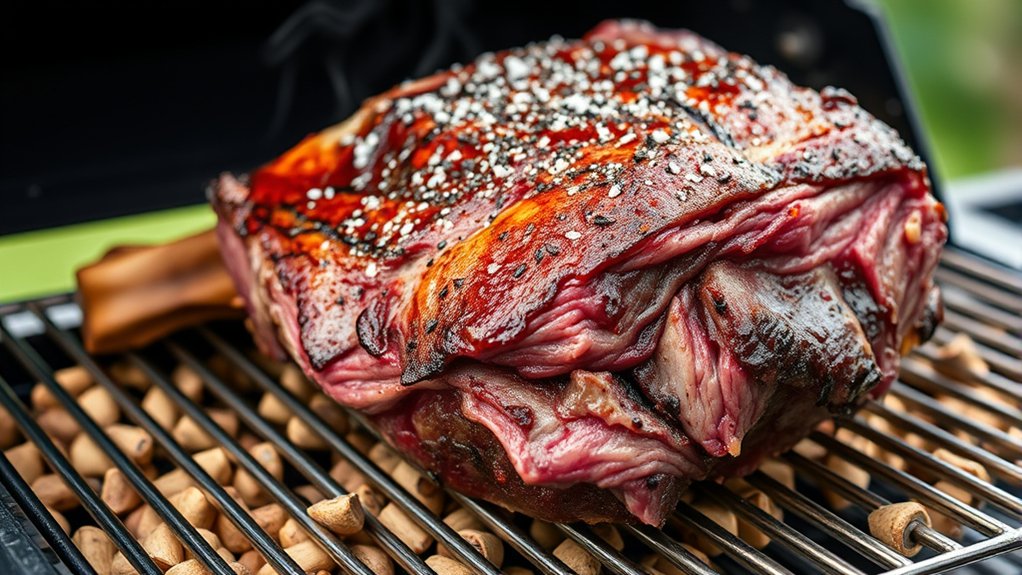
Before you start grilling, it’s important to properly prepare your prime rib to guarantee it’s flavorful and tender. First, focus on food safety by keeping the meat refrigerated until you’re ready to cook. This prevents bacterial growth and keeps everything safe.
When sourcing ingredients, choose high-quality, fresh prime rib from a trusted butcher or supplier. Proper sourcing ensures you’re cooking with safe, flavorful meat that will give you the best results.
Before cooking, let the meat sit at room temperature for about an hour. This helps it cook evenly and results in a more tender roast. Pat the roast dry with paper towels to remove excess moisture, which promotes better browning.
Allow the meat to sit at room temperature for even cooking and pat dry for better browning.
Trim any excess fat if needed, but leave some on for flavor and moisture. Always wash your hands thoroughly after handling raw meat, and clean all surfaces and utensils to avoid cross-contamination.
Proper preparation not only improves flavor but also keeps your cooking environment safe and hygienic.
How to Season and Rub Your Prime Rib for Maximum Flavor
To maximize flavor, focus on creating a flavorful rub that enhances the natural richness of your prime rib. A good seasoning blend combines salt, pepper, garlic powder, and herbs for a balanced taste.
You can also try marinade techniques beforehand to add extra moisture and flavor. When applying your rub, be generous and massage it into the meat for even coverage.
Let the seasoned meat rest for at least an hour so the flavors can really penetrate. Use this table to get inspired by different seasoning ideas:
| Flavor Profile | Marinade Techniques | Emotional Impact |
|---|---|---|
| Bold & Savory | Overnight marinade | Confidence in flavor |
| Herbaceous | Brushing with oil & herbs | Freshness & vitality |
| Spicy & Warm | Short, quick marinade | Excitement & anticipation |
Creating a well-balanced rub with your favorite seasonings makes every bite juicy, flavorful, and unforgettable.
How to Set Up Your Pellet Grill for Prime Rib Cooking
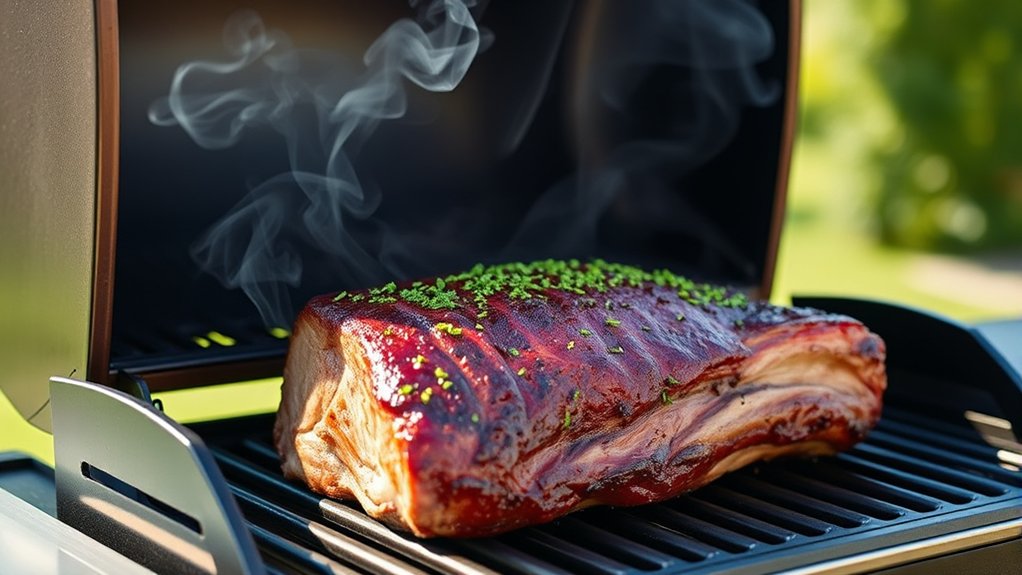
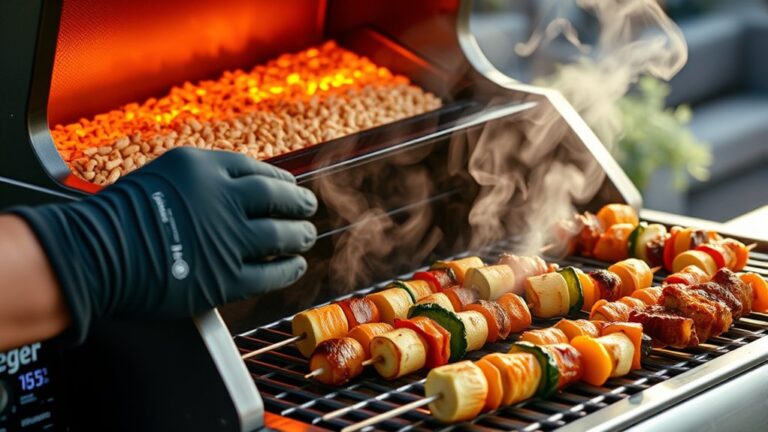
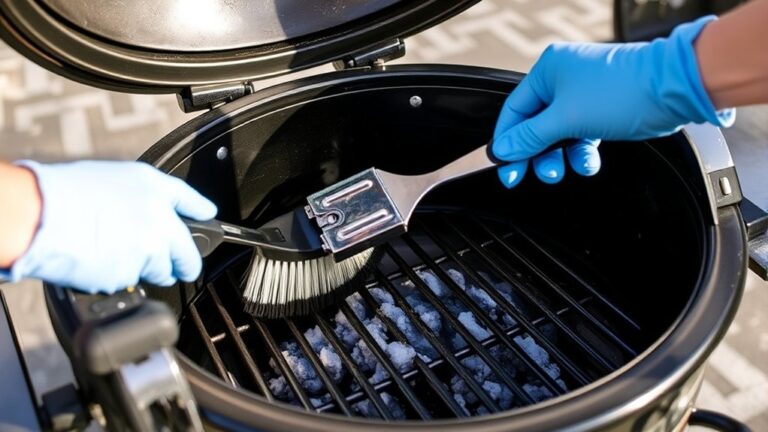
Setting up your pellet grill correctly is key to getting that perfect prime rib. Start by gathering your accessories, like a good meat thermometer and a drip pan to catch drippings. This keeps everything clean and helps with even cooking.
Make sure your pellet hopper is filled with high-quality wood pellets suited for beef, like hickory or mesquite, to add great flavor. Before you start cooking, store your prime rib in the fridge until you’re ready to season and put it on the grill.
When setting up, preheat your pellet grill to about 225°F for slow, even cooking. Use the digital controls to adjust the temperature and turn on the smoke function for extra flavor.
Properly seasoned and stored meat, along with the right accessories and temperature setup, will give you a juicy, tender prime rib. These steps ensure your grill is ready to deliver the best results.
Choosing the Best Pellet Grill Settings for Prime Rib
To get the best results, you want to carefully set your pellet grill’s temperature and smoke levels. It’s all about finding that sweet spot to make your prime rib turn out just right.
And don’t forget, the cooking time will vary depending on the size of your roast and how you like it cooked—whether rare, medium, or well done. Fine-tuning those settings ensures your prime rib stays juicy, flavorful, and perfectly cooked from edge to edge.
Ideal Temperature Settings
Choosing the right temperature settings is key to getting tender, flavorful prime rib on your pellet grill. To achieve that perfect doneness, set your grill to around 225°F (107°C) for low-and-slow cooking, which mimics sous vide precision.
For a medium-rare finish, aim for an internal temperature of 130°F (54°C). Use a reliable meat thermometer to keep an eye on the progress. Rest the roast before plating to let the juices redistribute, making it look and taste better.
You can also experiment with different plating techniques to showcase your perfectly cooked prime rib. Remember, maintaining consistent heat helps prevent overcooking. Adjustments might be needed based on your specific pellet grill model.
In the end, precise temperature control is what leads to a juicy, evenly cooked prime rib every time.
Smoke Intensity Control
Controlling the smoke intensity during your prime rib cook helps you achieve the perfect flavor balance. Too much smoke can overpower the meat, while too little may lack that desirable smoky aroma.
To adjust smoke density, set your pellet grill to a lower temperature or choose a pellet flavor with a milder smoke flavor. Using a blend of hardwood pellets can also help fine-tune the smoke flavor without overwhelming the meat.
| Smoke Level | Description |
|---|---|
| Low | Light smoke, subtle flavor, ideal for delicate cuts |
| Medium | Balanced smoke flavor, enhances natural beef taste |
| High | Intense smoke, suitable for very smoky flavor fans |
| Off | No smoke, for a clean, pure beef flavor |
| Custom | Adjust to your preferences, blend pellets for perfect smoke density |
Cooking Time Adjustments
Adjusting your pellet grill settings ensures your prime rib cooks evenly and reaches the perfect level of doneness. To fine-tune cooking time, consider factors like meat thickness, initial temperature, and desired doneness. Use a meat thermometer to monitor internal temperature closely.
For marinade options, go with a simple garlic and herb blend or a bold horseradish sauce, which can slightly influence cooking time. Think about side dishes like roasted vegetables or creamy mashed potatoes to complement your timing.
Keep these tips in mind:
- Adjust pellet grill temperature based on how well-done you want the meat
- Use a probe thermometer for precise internal temperature readings
- Let the meat rest before carving, as this affects the final temperature
- Consider marinade soaking time, since it may slightly extend cooking
- Match side dishes to your prime rib’s cooking progress for perfect timing
How to Monitor Temperature and Achieve Perfect Doneness
To guarantee your prime rib turns out perfectly, monitoring its internal temperature is essential. Use a reliable meat thermometer to check the thickest part of the roast without touching the bone.
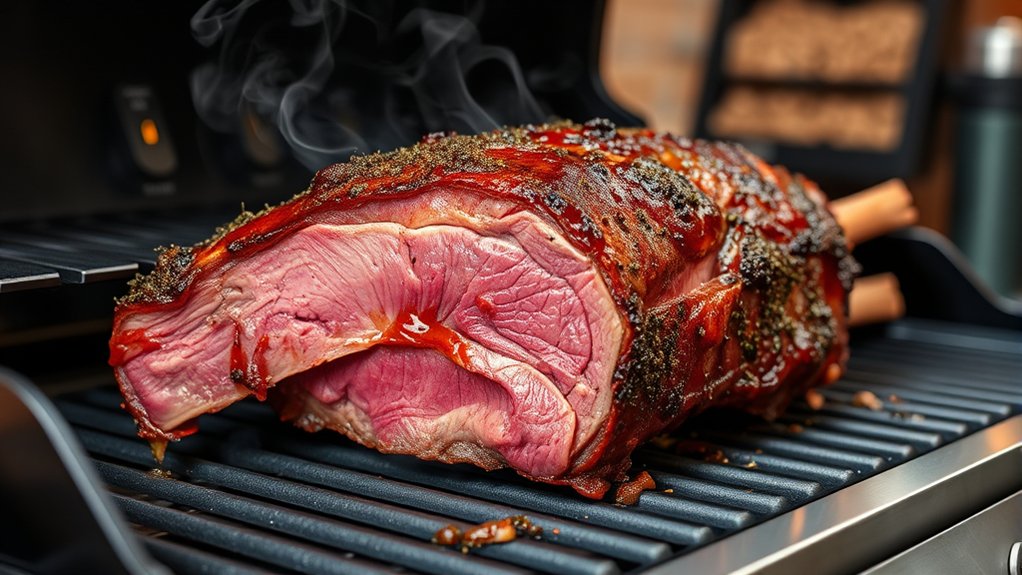
For medium-rare, aim for about 130°F, and for medium, around 140°F. Remove the meat from the grill a few degrees early, as it will continue to cook during resting.
This precision ensures your prime rib reaches the ideal doneness, enhancing flavor pairing opportunities with sides like horseradish or red wine sauce.
As you prepare to serve, consider presentation tips that highlight the meat’s rich color and juicy texture, such as slicing against the grain and arranging slices neatly.
Correct temperature monitoring not only guarantees perfect doneness but also elevates the overall dining experience, making your prime rib the centerpiece of a memorable meal.
How to Create a Delicious Crust and Infuse Smoke Flavor
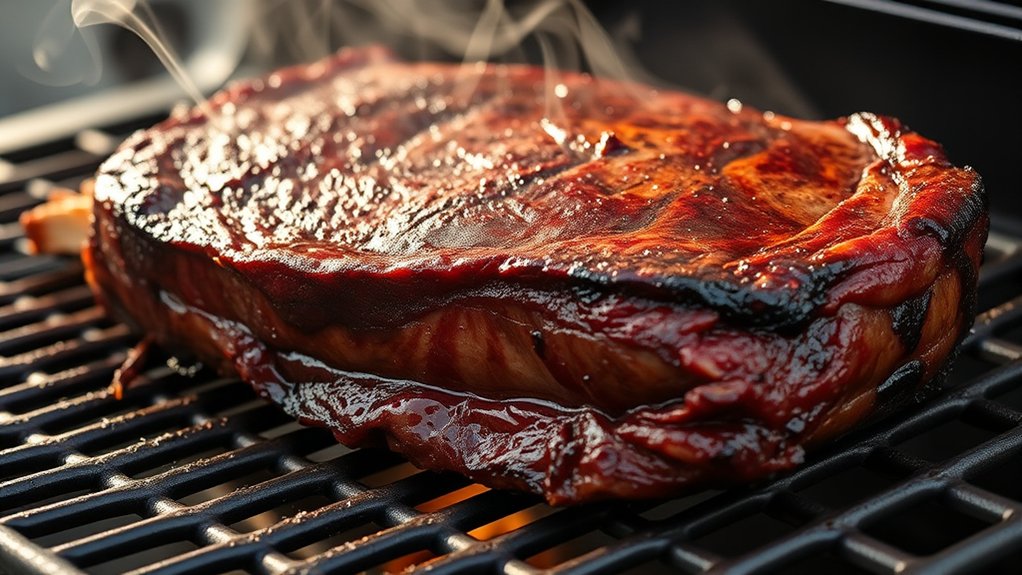
Want to create a delicious crust? Start with a high-quality rub to give it that perfect flavor kick. Then, sear the meat at a high temperature—this helps develop that beautiful, crispy crust and locks in all those juicy flavors.
If you’re looking to add a smoky twist, try using a wood pellet blend that complements the richness of your prime rib. It’ll give you that steady, smoky aroma that makes every bite even more irresistible.
Achieving a Perfect Crust
Creating a perfect crust on your prime rib starts with making sure the surface is dry and well-seasoned. To get that tasty, crispy outer layer, focus on marbling techniques that help distribute fat evenly, which helps with browning.
Try using different seasonings beyond just salt and pepper — like a spice rub or herb crust — to add more flavor. Managing the heat properly is essential: start with high heat to sear quickly, then lower it to finish cooking.
Remember to rest the meat afterward so the crust can set and the flavors settle in. Here are some additional tips:
- Pat dry the surface thoroughly before seasoning
- Use a high-quality marinade or rub for better flavor
- Sear at high heat for a few minutes on each side
- Avoid overcrowding the grill to keep the heat steady
- Let the prime rib rest before slicing to keep that crust and flavor intact
Enhancing Smoke Infusion
Ever wondered how to infuse your prime rib with rich smoke flavor while still achieving that perfect crust? To boost smoke infusion, start by choosing the right wood pellets—oak, hickory, or mesquite are great for deep flavor. Keep the grill lid closed as much as possible to trap smoke and develop a robust taste.
For presentation, consider slicing the prime rib against the grain and arranging the slices neatly. This makes your dish look as good as it tastes. To enhance flavor, add a light seasoning rub before smoking to complement the smoky notes.
Use this table to understand smoke intensity and flavor pairing:
| Smoke Intensity | Flavor Pairing |
|---|---|
| Light | Herbs, lemon zest |
| Medium | Garlic, rosemary |
| Heavy | Spicy rubs, bold sauces |
This method creates a delicious crust while infusing a rich, smoky flavor.
Resting and Carving Your Prime Rib for Juiciness
After removing your prime rib from the pellet grill, let it rest for at least 15 to 20 minutes. Resting helps the juices redistribute, so each bite stays tender and flavorful. Cover the roast loosely with foil to keep it warm, but avoid tight wrapping that traps steam.
When carving, use a sharp knife to slice against the grain for maximum tenderness. Resting also makes carving easier and cleaner. Plus, it helps you get neat, even slices.
For serving, think about classic sides like roasted vegetables or creamy mashed potatoes. Pair your prime rib with a full-bodied red wine like Cabernet Sauvignon or Malbec to enhance the rich flavors.
Remember to let the meat rest before carving, and use a sharp, serrated knife for clean slices. Slice against the grain for the best tenderness. Serve with hearty sides and robust wine, and present slices on a warm platter for optimal juiciness.
Troubleshooting Common Prime Rib Grilling Problems
Even with careful planning, you might run into some common issues when grilling prime rib, but most problems are easy to fix with a quick adjustment.
If your meat isn’t reaching the right internal temperature, double-check your grill’s heat and use a reliable meat thermometer. Under- or overcooking can affect safety and flavor, so keep a close eye on it.
If the crust isn isn’t browning properly, try increasing the grill’s heat or finishing with a quick sear. Sometimes, ingredient substitutions like a different cut or seasoning can change cook times and taste, so adjust accordingly.
For uneven cooking, rotate the roast or move it around on the grill. Remember, maintaining good food safety practices is key, especially if you’re swapping ingredients or using different cuts.
Keep an eye on the internal temperature and tweak your grill settings as needed. With these quick fixes, you’ll be able to serve a delicious, safe prime rib every time.
Frequently Asked Questions
How Long Does It Take to Cook Prime Rib on a Pellet Grill?
You’ll typically spend about 2 to 3 hours cooking prime rib on a pellet grill, depending on its size and your desired doneness.
Set your grill to around 225°F and keep an eye on the internal temperature. Aim for 125°F for rare or 135°F for medium.
Using proper techniques and temperature control is key. Rest the meat before slicing to ensure juicy, flavorful results.
Can I Cook Frozen Prime Rib on a Pellet Grill?
You absolutely can cook frozen prime rib on a pellet grill, but be prepared for a flavor explosion that might blow your mind! To do it right, use proper thawing techniques like refrigerator thawing or cold water baths beforehand.
Cooking from frozen requires extra time, so adjust your grill’s temperature and be patient. This method guarantees even cooking and a juicy, tender result. Just remember, thawing first is the best way to assure perfection!
What Wood Pellets Are Best for Prime Rib Flavor?
For prime rib, cherry or oak wood pellets are your best bets. Cherry adds a subtle sweetness that complements the rich meat, while oak provides a balanced, smoky flavor without overpowering.
These wood pairings enhance the pellet flavor, giving your prime rib a delicious, aromatic taste. Stick with these options for a refined, flavorful finish.
Enjoy the perfect smoky aroma with each bite!
Do I Need to Use a Meat Thermometer Throughout Cooking?
Did you know that using a meat thermometer can improve your prime rib cooking accuracy by up to 50%? Yes, you should definitely use a meat thermometer throughout cooking.
It’s essential for precise cooking techniques and making sure your meat reaches the perfect doneness. Proper meat preparation involves monitoring internal temperature so you don’t overcook or undercook.
Keep the thermometer handy, and you’ll enjoy consistently tender, juicy prime rib every time.
How Do I Store Leftover Prime Rib Safely?
To store leftover prime rib safely, wrap it tightly in aluminum foil or place it in an airtight container.
Make sure to refrigerate it within two hours of cooking to keep it safe to eat.
For longer storage, freeze the leftovers, and ensure they’re well-sealed to prevent freezer burn.
Proper storage helps preserve the flavor and prevents bacteria growth.
This way, your leftover prime rib stays safe and delicious for later.
Conclusion
Think of your prime rib as a masterpiece, each step adding a brushstroke to perfection. When you master the grill, you’re not just cooking—you’re crafting a symphony of flavors, textures, and aromas.
The grill becomes your canvas, smoke your colors, and the final slice your masterpiece. With patience and care, you’ll create a culinary portrait that speaks of mastery.
Your prime rib on a pellet grill transforms into a delicious work of art. Everyone will be in awe of your skill and the mouthwatering flavor you’ve crafted.