7 Simple Steps to Cook Turkey on a Pellet Grill
Many people struggle with getting that perfectly cooked turkey, especially when using a pellet grill. It can be tricky to achieve tender, flavorful meat without overcooking or drying it out. But don’t worry—you’re not alone, and with a few simple steps, you can master the art of smoking a delicious turkey.
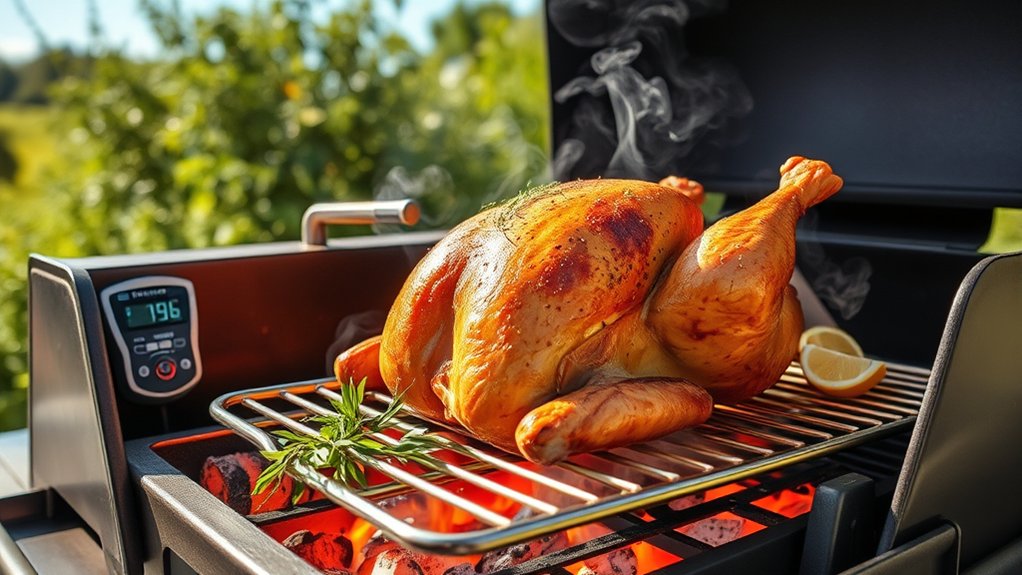
To cook a turkey on your pellet grill, start by cleaning and preheating it to 225-275°F. Choose a quality bird and season it with rubs or brines for flavor.
Set the grill to 225-250°F and maintain steady heat, monitoring with a thermometer. Cook until the turkey reaches 165°F in the breast, then rest before carving.
For tips on perfect results and troubleshooting, keep exploring how to make your smoked turkey turn out just right.
Key Takeaways
- Preheat your pellet grill to 225°F to 275°F and give all components a good clean before you start.
- Pick a high-quality, properly thawed or fresh turkey, and season or brine it however you like.
- Place the turkey on the grill and keep the temperature steady between 225°F and 250°F for even cooking.
- Use a meat thermometer to check that the breast hits 165°F and the thighs reach 175°F.
- Let the turkey rest for 20 to 30 minutes before carving so the juices can settle and give you maximum flavor.
How to Prepare Your Pellet Grill for Smoking a Turkey
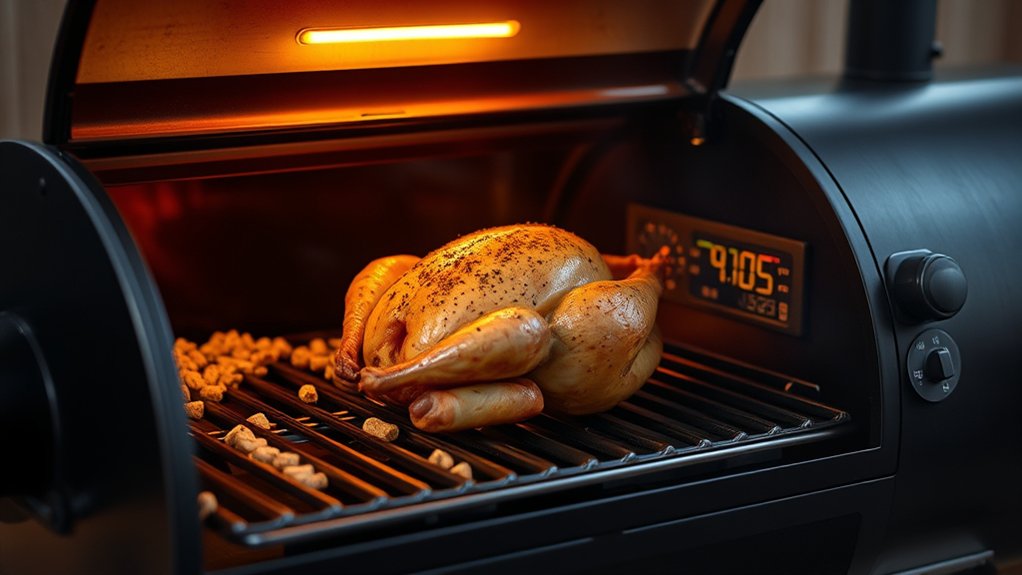
Before you start smoking your turkey, it’s important to get your pellet grill ready. Begin by cleaning the grill grates and making sure the firepot is free of ash or debris. Regular maintenance helps prevent flare-ups and ensures even cooking, which is key for a juicy turkey.
Next, fill the hopper with high-quality pellets that match your flavor preference—like fruitwood for sweetness or hickory for a smoky taste. Preheat your grill to around 225°F to 275°F and wait for it to stabilize before placing your turkey inside.
Check the drip tray and clean it if needed to avoid excess smoke or flare-ups. Proper prep guarantees consistent heat, enhances your flavor pairing, and keeps your pellet grill running smoothly during the smoking process. These simple steps set the stage for perfectly smoked turkey.
Choosing the Best Turkey and Prep Tips for Smoking Success
Picking the right turkey is really the first step to smoking success. You want to go for a fresh one if you can, or a high-quality frozen bird. It’s worth the extra effort to start with good ingredients! Before you get started, make sure to remove any excess fat and give the skin a good pat dry. This helps the seasoning stick better and ensures a crispy, delicious skin.
Once your turkey is prepped and seasoned just right, it’s ready to hit the smoker. When done properly, your turkey will come out juicy, flavorful, and perfect for any occasion. Happy smoking!
Selecting the Perfect Turkey
Selecting the right turkey is key to a successful smoke. Go for a fresh or thawed bird, ideally weighing between 12 to 16 pounds for even cooking.
When choosing, focus on poultry safety—make sure the turkey is stored properly and comes from a reputable source. Look for unblemished skin and a firm texture.
Before seasoning, think about how the turkey’s flavor will complement your spices. A well-chosen bird really boosts the overall taste.
Organic and free-range options often deliver better quality but might cost a bit more. Remember, the quality of your turkey impacts the final result.
Take the time to pick a fresh, safe, and appropriately sized bird. This way, you’ll end up with juicy, flavorful meat perfect for your pellet grill.
Essential Prep Tips
Ever wondered how to guarantee your turkey turns out perfectly juicy and flavorful on the pellet grill? Start with choosing a fresh or properly thawed bird, prioritizing poultry safety to prevent any health risks. For holiday traditions, selecting the right size ensures everyone’s satisfied.
Brine your turkey beforehand to boost moisture and flavor, but always keep food safety in mind. Avoid cross-contamination and keep it refrigerated. Pat the turkey dry to help the rub adhere better.
Use a reliable thermometer to monitor internal temperature, ensuring it reaches the safe minimum. By preparing your turkey properly, you set the stage for a successful smoking session, resulting in juicy, flavorful meat that’s a hit at any celebration.
How to Set the Right Temperature and Smoke Level for Juicy Turkey
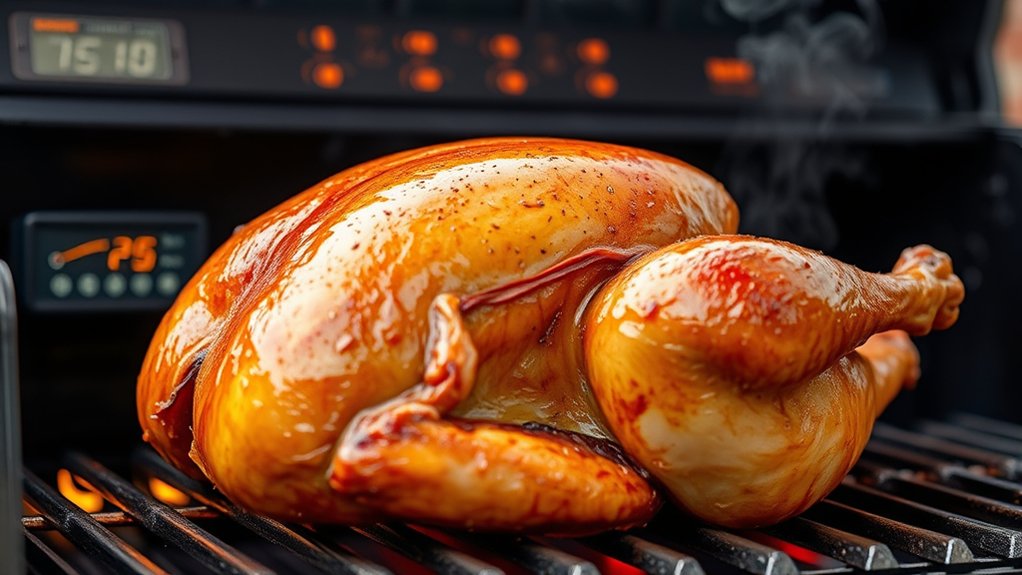
To guarantee your turkey stays juicy and flavorful, it’s essential to set the right temperature and smoke level on your pellet grill. Maintain a temperature around 225°F to 250°F to promote even cooking and moisture retention. This low-and-slow approach allows the turkey to cook gently, ensuring tenderness.
For ideal flavor infusion, keep the smoke level moderate. Too much smoke can overpower the meat’s natural taste. A steady, light smoke encourages good smoke absorption without overwhelming the turkey’s delicate flavor.
Use hardwood pellets like hickory or apple for balanced smoke and aroma. Keep an eye on the grill’s temperature with a reliable thermometer, adjusting the pellet feed rate if necessary.
This careful control creates the perfect environment for flavorful smoke absorption while preserving juiciness. By setting the right temperature and smoke level, you’ll achieve a tender, moist turkey with a subtle smoky aroma.
Applying Rubs, Marinades, and Brines to Boost Flavor
Applying rubs, marinades, and brines is a great way to give your turkey that extra boost of flavor and juiciness. Think about selecting ingredients that work well together and enhance the natural taste of the meat—things like herbs, spices, or citrus are always good choices.
Just a quick tip: make sure you spread them evenly all over the turkey so every bite is packed with flavor. And don’t forget to give it enough time to soak up all those tasty flavors before you start cooking. It’s worth the wait!
Enhancing Flavor Depth
Enhancing the flavor of your turkey starts with selecting the right seasonings and liquids to infuse during preparation. Using well-chosen spices and herbs creates a deep, layered taste, while marinades and brines add moisture and richness.
Think about spice pairing—complementing flavors like sage, thyme, or rosemary can elevate your bird. Citrus or apple juices in marinades brighten the profile and add freshness.
Brines help lock in moisture, making sure the meat stays juicy. Don’t forget presentation ideas; a beautifully glazed turkey with herbs and slices of citrus can make your dish even more appealing.
Choosing the Right Ingredients
Choosing the right ingredients is key to getting the most flavor out of your turkey. Start with quality seasoning blends to add depth and aroma. These can include herbs, spices, and salt tailored to your taste.
If you don’t have a specific seasoning, you can easily improve flavor with substitutions like garlic powder or smoked paprika. Marinating or brining your turkey beforehand also helps keep it moist and tasty, especially if you want a tender result.
Keep in mind that ingredients like citrus or honey can add brightness or sweetness, so pick based on the flavor profile you’re aiming for. Remember, choosing the right ingredients lays the foundation for a delicious, flavorful turkey.
Don’t be afraid to experiment with different seasoning blends and substitutions to find your perfect combination.
Proper Application Techniques
To maximize flavor, it’s essential to properly apply your rubs, marinades, and brines to the turkey. Start by thoroughly patting the bird dry to ensure even flavor infusion.
When applying rubs, coat the surface evenly and press gently to help the seasoning stick. For marinades and brines, submerge the turkey completely and refrigerate for the recommended time to improve moisture and taste.
Proper application techniques allow flavors to penetrate deeply, resulting in a juicy, flavorful turkey. Additionally, calibrate your pellet grill’s equipment to maintain consistent heat, which helps the seasonings set properly.
Cooking and Monitoring Your Turkey for Perfect Tenderness
Monitoring the temperature of your turkey throughout the cooking process is essential for achieving perfect tenderness. Using a reliable meat thermometer, keep a close eye on the internal temperature, aiming for about 165°F in the breast and 175°F in the thighs. This precise monitoring guarantees your turkey stays juicy and tender, preventing overcooking.
Monitor your turkey’s internal temperature closely—aim for 165°F in the breast and 175°F in the thighs for perfect tenderness.
To boost flavor infusion, consider brining or applying a marinade before grilling; this adds moisture and depth of flavor. Maintaining a consistent temperature in your pellet grill helps evenly cook the meat, resulting in superior tenderness.
Avoid opening the lid too often, as fluctuations can disrupt the cooking process. When your turkey hits the target temperature, it’s ready to come off the grill. Proper monitoring not only guarantees a moist, tender result but also helps you achieve that flavorful, smoky profile that makes your turkey stand out.
Stay attentive, and your turkey will be perfectly cooked every time.
Resting and Carving Your Smoked Turkey for Maximum Flavor
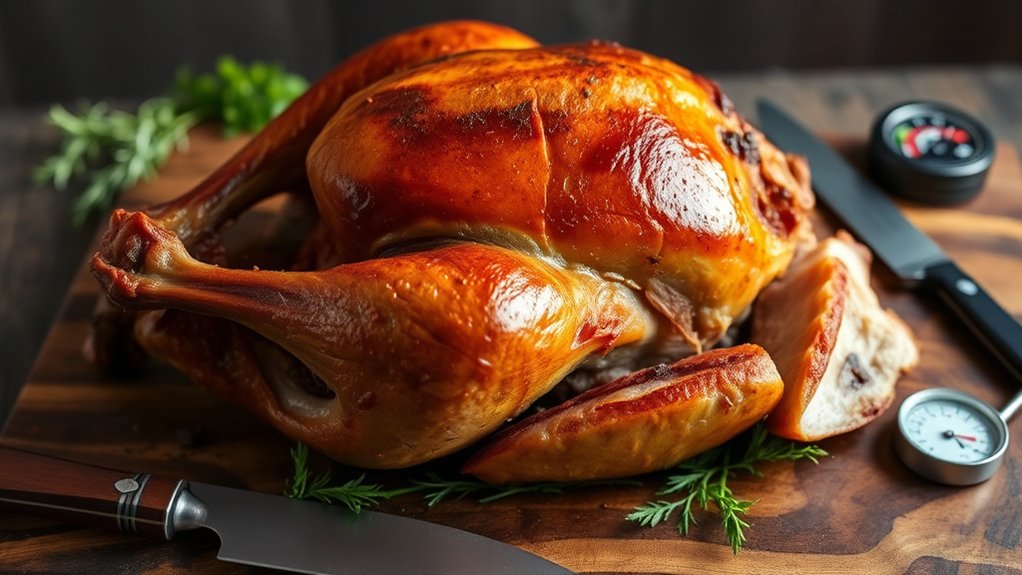
After removing the turkey from the pellet grill, it’s important to let it rest. This helps lock in moisture and maximize flavor. Resting allows the juices to redistribute, so each bite stays tender and full of flavor.
Cover the turkey loosely with foil and wait at least 20 minutes before carving. This step boosts flavor infusion and makes every slice juicy and delicious.
When carving, follow presentation tips to create an inviting display. Slice against the grain for tenderness and arrange the slices neatly on a platter.
Use the table below for quick guidance:
| Step | Duration | Tips |
|---|---|---|
| Rest | 20-30 minutes | Cover loosely with foil |
| Carving | Just before serving | Use a sharp knife |
| Presentation | Immediately | Arrange slices attractively |
| Flavor infusion | During resting | Let juices settle |
| Serving | After carving | Serve promptly for best flavor |
Mastering resting and carving techniques ensures your smoked turkey looks impressive and tastes exceptional.
Troubleshooting Common Issues When Smoking a Turkey on Your Pellet Grill
While smoking a turkey on your pellet grill can produce amazing flavors, sometimes issues pop up that mess with your results. A common problem is uneven cooking, which often happens if the grill’s temperature isn’t set correctly or the pellets aren’t feeding evenly.
To fix this, double-check your grill’s temperature and make sure the pellets are feeding properly. Equipment problems, like a faulty thermostat or sensor, can also cause inconsistent heat, so it’s good to keep everything in check.
Regularly cleaning your grill’s parts helps prevent buildup that might interfere with operation. If your turkey isn’t smoking or cooking evenly, make sure the smoke flow isn’t blocked and that the temperature probe is accurate.
If your grill isn’t holding the right temperature, check the power source and consider replacing any faulty parts. Tackling these issues early will help you get juicy, flavorful smoked turkey every time.
Frequently Asked Questions
How Long Does It Typically Take to Smoke a Turkey on a Pellet Grill?
It usually takes about 30 to 40 minutes per pound to smoke a turkey on a pellet grill at 225°F. Keep an eye on the internal temperature, aiming for 165°F to ensure it’s fully cooked.
Choose wood chips like apple or cherry that complement poultry flavors. Keep the grill lid closed as much as possible to maintain consistent heat and smoke.
This helps ensure your turkey stays juicy and flavorful from start to finish.
Can I Smoke a Frozen Turkey, or Should It Be Thawed First?
Think of your turkey as a story waiting to unfold; starting with a frozen bird is like reading the ending first. You can smoke a frozen turkey, but it’s better to thaw it first for even cooking.
Frozen versus thawed affects cooking temperature and time. A thawed turkey cooks evenly at around 325°F, ensuring juicy meat.
Thawing allows heat to penetrate, making your smoky masterpiece tender and flavorful.
What Wood Pellet Flavors Are Best for Smoking Turkey?
For smoking turkey, you want wood pellet flavors that enhance its natural taste. Hickory and apple wood are great choices because they offer a balanced smoky sweetness that pairs well with poultry.
Cherry wood also adds a mild, fruity flavor that complements the turkey’s richness. Think about your flavor preferences and pick a wood that boosts your desired taste profile.
This way, your smoked turkey will turn out flavorful and delicious.
How Do I Ensure the Turkey Skin Becomes Crispy?
Think of your turkey skin as a canvas waiting to crackle with perfection. To get that crispy skin, start by patting the turkey dry so there’s no moisture to steam it.
Next, apply a light coating of oil or butter to help the skin crisp up nicely. Seasoning can also make a difference—sprinkle some salt or baking powder on the skin before roasting.
Finally, crank up the heat at the end of cooking. This gives the skin that golden, irresistible crunch you’re after.
Is It Necessary to Brine My Turkey Before Smoking?
Brining your turkey isn’t necessary, but it’s highly recommended for flavor infusion and moisture retention.
Brining improves the natural flavors and keeps the meat juicy during smoking.
If you choose to brine, use a simple solution with salt, water, and optional herbs or spices.
This easy technique results in a more flavorful, tender turkey.
Otherwise, seasoning generously and cooking carefully will still produce a delicious smoked bird.
Conclusion
Now, armed with these seven simple steps, your pellet grill will transform into a culinary masterpiece. As the smoke gently wraps around your turkey, remember that patience and attention turn a good meal into an unforgettable feast.
Cherish each stage with confidence because every note in this flavor symphony matters. So, fire up that grill and let the aroma of your perfectly smoked turkey weave its way into cherished memories.
By following these steps, you’ll master the art of cooking turkey on a pellet grill and create a meal everyone will rave about.